seamus dubhghaill

Promoting Irish Culture and History from Little Rock, Arkansas, USA


Leave a comment

Birth of Edward Hand, Soldier, Physician & Politician

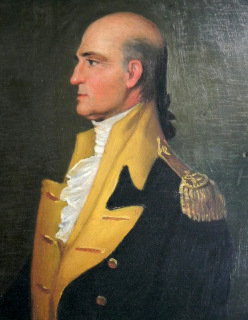
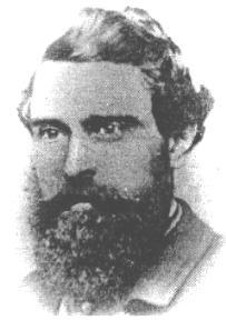
Edward Hand, Irish soldier, physician, and politician who serves in the Continental Army during the American Revolutionary War, is born in Clyduff, King’s County (now County Offaly) on December 31, 1744. He rises to the rank of general and later is a member of several Pennsylvania governmental bodies.

Hand, the son of John Hand, is baptised in Shinrone. Among his immediate neighbours are the Kearney family, ancestors of United States President Barack Obama. He is a descendant of either the families of Mag Fhlaithimh (of south Ulaidh and Mide) or Ó Flaithimhín (of the Síol Muireadaigh) who, through mistranslation became Lavin or Hand.

Hand earns a medical certificate from Trinity College, Dublin. In 1767, he enlists as a Surgeon’s Mate in the 18th (Royal Irish) Regiment of Foot. On May 20, 1767, he sails with the regiment from Cobh, County Cork, arriving at Philadelphia on July 11, 1767. In 1772, he is commissioned an ensign. He marches with the regiment to Fort Pitt, on the forks of the Ohio River, returning to Philadelphia in 1774, where he resigns his commission.

In 1774, Hand moves to Lancaster, Pennsylvania, where he practices medicine. On March 13, 1775, he marries Catherine Ewing. Lancaster is the region of some of the earliest Irish and Scotch-Irish settlements in Pennsylvania. As a people, they are well known for their anti-English and revolutionary convictions. He is active in forming the Lancaster County Associators, a colonial militia. He is a 32nd degree Freemason, belonging to the Montgomery Military Lodge number 14.

Hand enters the Continental Army in 1775 as a lieutenant colonel in the 1st Pennsylvania Regiment under Colonel William Thompson. He is promoted to colonel in 1776 and placed in command of the 1st Continental, then designated the 1st Pennsylvania. Promoted to brigadier general in March 1777, he serves as the commander of Fort Pitt, fighting British loyalists and their Indian allies. He is recalled, after over two years at Fort Pitt, to serve as a brigade commander in Major General La Fayette‘s division.

In 1778, Hand attacks the Lenape, killing Captain Pipe‘s mother, brother, and a few of his children during a military campaign. Failing to distinguish among the Native American groups, he had attacked the neutral Lenape while trying to reduce the Indian threat to settlers in the Ohio Country, because other tribes, such as the Shawnee, had allied with the British.

After a few months, he is appointed Adjutant General of the Continental Army and serves during the Siege of Yorktown in that capacity. In recognition of his long and distinguished service, he is promoted by brevet to major general in September 1783. He resigns from the Army in November 1783.

Hand returns to Lancaster and resumes the practice of medicine. A Federalist, he is also active in civil affairs. Beginning in 1785, he owns and operates Rock Ford plantation, a 177-acre farm on the banks of the Conestoga River, one mile south of Lancaster, Pennsylvania. The Georgian brick mansion remains today, and the farm is a historic site open to the public.

Hand dies from typhoid fever, dysentery or pneumonia at Rock Ford on September 3, 1802, although medical records are unclear with some sources stating he died of cholera. There is no evidence Lancaster County suffered from a cholera epidemic in 1802. He is buried in St. James’s Episcopal Cemetery in Lancaster, the same church where he had served as a deacon.
2 Comments

Birth of Michael Corcoran, Union Army General

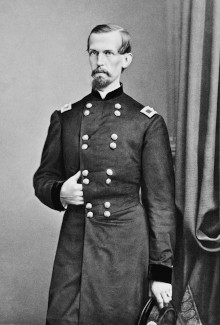
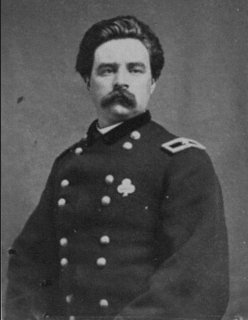
Michael Corcoran, Irish American general in the Union Army during the American Civil War and a close confidant of President Abraham Lincoln, is born in Carrowkeel, near Ballymote, County Sligo, on September 21, 1827. As its colonel, he leads the 69th Infantry Regiment (New York) to Washington, D.C. and is one of the first to serve in the defense of Washington by building Fort Corcoran. He then leads the 69th into action at the First Battle of Bull Run. After promotion to brigadier general, he leaves the 69th and forms the Corcoran Legion, consisting of at least five other New York regiments.

Corcoran is the only child of Thomas Corcoran, an officer in the British Army, and Mary McDonagh. Through his mother, he claims descent from Patrick Sarsfield, hero of the Williamite War in Ireland and leader of the Wild Geese. In 1846 he takes an appointment to the Revenue Police, enforcing the laws and searching for illicit stills and distilling activities in Creeslough, County Donegal. He also joins a guerrilla group called the Ribbonmen.

On August 30, 1849, Corcoran emigrates from Sligo to the United States and settles in New York City where he finds work as a clerk in the tavern owned by John Heaney, whose niece, Elizabeth, he marries in 1854.

Corcoran enlists as a Private in the 69th New York Militia. By 1859 he is appointed colonel of the regiment. The regiment is a state militia unit at the time composed of citizens, not soldiers, and is involved in the maintenance of public order. On October 11, 1860, he refuses to march the regiment on parade for the 19-year-old Prince of Wales, who is visiting New York City at the time, protesting the British imposition of the Irish Famine. He is removed from command and a court martial is pending over that matter when the Civil War begins.

Corcoran also becomes involved in Democratic politics at Tammany Hall. He becomes district leader, a member of the judicial nominations committee, an elected school inspector for his ward, and a member of the Fourteenth Ward General Committee. He is one of the founders of the Fenian Brotherhood in America.

With the outbreak of war, the court martial is dropped and Corcoran is restored to his command because he had been instrumental in bringing other Irish immigrants to the Union cause. He leads the 69th to Washington, D.C. and serves for a while in the Washington defenses building, Fort Corcoran. In July 1861 he leads the regiment into action at the First Battle of Bull Run and is taken prisoner.

While Corcoran is imprisoned, the United States makes threats to execute captured Confederate privateers. Corcoran and several other Union prisoners are selected by lot for execution if the United States carries out its threats against the privateers. This event is known as the Enchantress Affair, but no executions are ever carried out by either side. Corcoran is then offered a parole under the conditions that he does not take up arms against the Confederacy. Intending to resume his place in the Union army upon his release he refuses the offer of parole. He is appointed Brigadier General of volunteers in July and exchanged in August 1862. His role in the Enchantress Affair and his refusal for parole gains him some attention and upon his release he is invited to dinner with President Abraham Lincoln.

In April 1863 Corcoran is involved in an incident that ends with Corcoran shooting and killing Edgar A. Kimball, commander of the 9th New York Volunteer Infantry Regiment. Corcoran attempts to pass through the 9th New York’s area without giving the required password after receiving the challenge from a sentry. When Kimball intervenes on the side of the sentry, Corcoran shoots him. Corcoran is not charged with a crime or reprimanded and continues to serve.

Corcoran returns to the army and sets about recruiting more Irish volunteers. He raises and takes command of what becomes known as the Corcoran Legion. Placed in command of the 1st Division, VII Corps he is engaged in the Battle of Deserted House and takes part in the Battle of Suffolk. In late 1863 he is placed in command of a division in the XXII Corps and returns to serve in the Washington defenses. While riding alone in Fairfax, Virginia he is thrown from a runaway horse and suffers a fractured skull. He dies at the age of 36 at the William Gunnell House on December 22, 1863.

New York City Mayor Michael Bloomberg unveils Ireland’s national monument to the Fighting 69th in Ballymote on August 22, 2006. The monument is sculpted by Philip Flanagan. The inscription around the top of the monument reads “Michael Corcoran 1827–1863” Around the base is inscribed “New York Ballymote Creeslough Bull Run.” Underneath the monument is a piece of steel from the World Trade Center, donated by the family of Michael Lynch, who died in the tower on September 11, 2001. Lynch’s family are also from County Sligo.


Leave a comment

Death of U.S. Union Army Colonel Patrick Kelly

colonel-patrick-kelly

Colonel Patrick Kelly of the Union Army‘s Irish Brigade (The Fighting Irish) dies on June 16, 1864, at the Siege of Petersburg during the American Civil War while leading the Irish Brigade forward against a Confederate position.

Kelly is born in Castlehacket, Tuam, County Galway and emigrates to the United States, landing in New York City. His wife Elizabeth is also from Tuam.

At the outset of the American Civil War, Kelly enlists in the Union Army and sees action as captain of Company E of the 69th New York Infantry at the First Battle of Bull Run. He briefly is a captain in the 16th U.S. Infantry. On September 14, 1861, he is named lieutenant colonel of the 88th New York Volunteer Infantry Regiment and fights in the Irish Brigade’s major battles in 1862. He commands the regiment at the Battle of Antietam. While stationed at Harpers Ferry, West Virginia following the Maryland campaign, he is promoted to colonel on October 20, 1862. He leads the regiment in the ill-fated attacks in front of Marye’s Heights in the Battle of Fredericksburg. He is acting commander of the Irish Brigade at the end of 1862.

After the 1863 Battle of Chancellorsville, Kelly is promoted to command the Irish Brigade following the resignation of Brigadier General Thomas Francis Meagher. He leads the heavily depleted brigade of fewer than 600 men in an attack at the Wheatfield during the Battle of Gettysburg. The brigade loses 198 of 532 troops engaged, approximately 37%.

Kelly resumes his role as colonel of his regiment as more senior officers return to the brigade. However, with the death of Colonel Richard Byrnes at the Battle of Cold Harbor in 1864, he again commands the brigade. At the age of 42, he dies during the Siege of Petersburg on June 16, 1864, when he is shot through the head while leading the Irish Brigade forward against Confederate earthworks. His body is recovered and sent back to New York for his funeral. He is buried in Calvary Cemetery in Woodside, Queens, New York.


Leave a comment

Birth of Brigadier General Thomas Alfred Smyth

thomas-alfred-smyth

Thomas Alfred Smyth, brigadier general in the Union Army during the American Civil War, is born in Ballyhooly, County Cork on December 25, 1832. He is the last Union general killed in the war. In March 1867, he is nominated and confirmed a brevet major general of volunteers posthumously to rank from April 7, 1865.

Smyth works on his father’s farm in Ireland as a youth. He emigrates to the United States in 1854, settling in Philadelphia, Pennsylvania. He participates in William Walker‘s expedition to Nicaragua. He is employed as a wood carver and coach and carriage maker. In 1858, he moves to Wilmington, Delaware.

In 1861 Smyth enlists in the Union army in an Irish American three-months regiment, the 24th Pennsylvania, and is quickly made a captain. He is later commissioned as a major of the 1st Delaware Infantry, a three-years regiment. He serves at the battles of Chancellorsville and Fredericksburg, following which he is promoted to lieutenant colonel and then to colonel. During the Gettysburg campaign, he commands the 2nd Brigade, 3rd Division of the II Corps. During the Battle of Gettysburg, his men help defend Cemetery Ridge and advance to the area of the Bliss farm to oust enemy sharpshooters. He is wounded on the third day of the battle and relinquishes command briefly.

Smyth retains brigade command during the reorganization of II Corps before Ulysses S. Grant‘s Overland Campaign. He leads the second brigade of the first division from March 25 to May 17, 1864. When Colonel Samuel S. Carroll is wounded, Smyth is transferred to his command, the third brigade of second division, the Gibraltar Brigade. In October 1864, he is promoted to brigadier general during the Siege of Petersburg. He retains command of his brigade throughout the siege.

Between July 31, 1864, and August 22, 1864, and between December 23, 1864, and February 25, 1865, Smyth commands the 2nd division of the corps. In April 1865 near Farmville, Virginia, he is shot through the mouth by a sniper, with the bullet shattering his cervical vertebra and paralyzing him. He dies two days later at Burke’s Tavern, concurrent with the surrender of Robert E. Lee and his Confederate States Army at Appomattox Court House.

On March 18, 1867, President Andrew Johnson nominates Smyth for posthumous appointment to the grade of brevet major general of volunteers to rank from April 7, 1865, the date he was mortally wounded, and the United States Senate confirms the appointment on March 26, 1867. He is the last Union general killed or mortally wounded during the war and is buried in Wilmington and Brandywine Cemetery in Wilmington, Delaware.


Leave a comment

Death of Colonel James Hagan

james-hagan

James Hagan, Irish American captain in the United States Army during the Mexican–American War and a Confederate States Army colonel during the American Civil War, dies in Mobile, Alabama on November 6, 1901.

Hagan is born in County Tyrone on June 17, 1822. His family moves to a farm near Philadelphia, Pennsylvania when he is still at an early age, and he is educated at Clermont Academy. He moves to Alabama in 1837. His prosperous uncle, John Hagen of New Orleans, Louisiana, takes him into the family business and sets him up in Mobile to manage the Hagan business there.

Hagan serves in John Coffee Hays‘s Texas Rangers, a cavalry unit in Major General Zachary Taylor‘s army during the Mexican–American War. He is recognized for his gallantry at the Battle of Monterrey. He is commissioned a captain in the 3rd U.S. Dragoons in 1848 and is discharged on July 31, 1848. After the war, he returns to Mobile where he purchases and subsequently manages a plantation rather than remaining in the family mercantile business. In 1854, he marries Bettie Oliver, daughter of Alabama’s attorney general.

At the beginning of the American Civil War, Hagan organizes and is elected captain of a cavalry company for the Alabama Militia, the “Mobile Dragoons,” which serves on guard duty along the Gulf Coast. At the rank of major he transfers to the 1st Mississippi Cavalry Regiment on October 26, 1861. The regiment fights at the Battle of Shiloh on April 6–7, 1862. He leads his men in a mounted charge at the Battle of Perryville, which is highly commended by his brigade commander, Brigadier General Joseph Wheeler.

Hagan is promoted to colonel of a new regiment, the 3rd Alabama Cavalry Regiment, on July 1, 1862. The regiment fights in all of the campaigns of the Army of Tennessee. In July 1863, He is assigned to command Brigade 1 of Brigadier General William T. Martin‘s Division of the Cavalry Corps of the Army of Tennessee, which is Major General Joseph Wheeler’s old brigade. During the spring and summer of 1863, the brigade screens the left front of General Braxton Bragg‘s army. Wheeler recommends that Hagan be promoted to brigadier general, but Bragg blocks the promotion because he says Hagan is in a state of “dissipation”, a reference to drunkenness or alcoholism. Hagan is wounded near Franklin, Tennessee in the winter of 1862 and again near Kingston, Tennessee in November 1863. In November 1863, he resigns and returns to Mobile to recover from his wounds and his disappointment from not being promoted.

After he recuperates, Hagan asks that his resignation be revoked. The resignation is revoked, and he returns to his regiment for the Atlanta campaign, where the regiment fights as infantry in the trenches. When Brigadier General William Wirt Adams is promoted to command of the Division, Hagan is assigned to permanent command of the brigade, consisting of five regiments and one battalion of Alabama cavalry. His brigade is part of Wheeler’s force which opposes Major General William Tecumseh Sherman‘s March to the Sea and Campaign of the Carolinas. He is wounded again at the Battle of Monroe’s Crossroads, near Kinston, North Carolina on March 10, 1865, and again at Fayetteville, North Carolina the next day.

Although Hagan is assigned as acting brigadier general in early 1865, he never receives an official appointment from Jefferson Davis or confirmation by the Confederate States Senate of an appointment as a general officer. Major General Wheeler later writes that he had been told unofficially by Confederate States War Department officials that brigadier general commissions had been issued for Hagan, Henry Marshall Ashby and Moses Wright Hannon near the end of the war, but no such commissions ever were delivered.

Hagan returns to Mobile after the war but is penniless since his fortune had been converted to Confederate money. He works as manager of a plantation on the Alabama River in the 1870s and early 1880s. President Grover Cleveland appoints him crier of the United States District Court in Alabama in 1885.

James Hagan dies on November 6, 1901, at Mobile, Alabama. He is buried in Magnolia Cemetery in Mobile.


Leave a comment

Birth of Thomas Francis Meagher, Irish Nationalist

thomas-francis-meagher

Thomas Francis Meagher, Irish nationalist and leader of the Young Irelanders in the Rebellion of 1848, is born on August 3, 1823, at Waterford, County Waterford, in what is now the Granville Hotel on the Quay.

Meagher is educated at Roman Catholic boarding schools. When he is eleven, his family sends him to the Jesuits at Clongowes Wood College in County Kildare. It is at Clongowes that he develops his skill of oratory, becoming at age 15 the youngest medalist of the Debating Society. After six years, he leaves Ireland for the first time, to study in Lancashire, England, at Stonyhurst College, also a Jesuit institution. He returns to Ireland in 1843, with undecided plans for a career in the Austrian army, a tradition among a number of Irish families.

Meagher becomes a member of the Young Ireland Party in 1845 and in 1847 is one of the founders of the Irish Confederation, dedicated to Irish independence. In 1848 he is involved, along with William Smith O’Brien, in an abortive attempt to mount an insurrection against English rule. Arrested for high treason, he is condemned to death, but his sentence is commuted to life imprisonment in Van Diemen’s Land, now Tasmania.

Meagher escapes in 1852 and makes his way to the United States. After a speaking tour of U.S. cities, he settles in New York City, studies law and is admitted to the bar in 1855. He soon becomes a leader of the Irish in New York and, from 1856, edits the Irish News.

At the outbreak of the American Civil War, Meagher becomes a captain of New York volunteers and fights at the First Battle of Bull Run in July 1861. He then organizes the Irish Brigade, and in February 1862 is elevated to the rank of brigadier general. After his brigade is decimated at the Battle of Chancellorsville in May 1863, he resigns his commission, however in December he returns to command the military district of Etowah, with headquarters at Chattanooga, Tennessee.

At the close of the war, Meagher is appointed secretary of Montana Territory where, in the absence of a territorial governor, he serves as acting governor.

In the summer of 1867, Meagher travels to Fort Benton, Montana, to receive a shipment of guns and ammunition sent by General William Tecumseh Sherman for use by the Montana Militia. On the way to Fort Benton, the Missouri River terminus for steamboat travel, he falls ill and stops for six days to recuperate. When he reaches Fort Benton, he is reportedly still ill.

Sometime in the early evening of July 1, 1867, Meagher falls overboard from the steamboat G. A. Thompson, into the Missouri River. His body is never recovered. Some believe his death to be suspicious and many theories circulate about his death. Early theories included a claim that he was murdered by a Confederate soldier from the war, or by Native Americans. In 1913 a man claims to have carried out the murder of Meagher for the price of $8,000 but then recants. In the same vein, American journalist and novelist Timothy Egan, who publishes a biography of Meagher in 2016, claims Meagher may have been murdered by Montana political enemies or powerful and still active vigilantes. On the frontier men are quick to kill rather than adjudicate. A similar theory shown on Death Valley Days (1960) has him survive the assassination attempt because his aide had been mistakenly murdered when he accepted one of his trademark cigars, and Meagher uses his apparent death as leverage over his political opponents.


6 Comments

Death of Colonel Dennis O’Kane

dennis-o-kane

Colonel Dennis O’Kane, officer in the Union Army during the American Civil War, dies on July 4, 1863, of wounds sustained the previous day when fighting with the 69th Pennsylvania Irish Brigade at the Battle of Gettysburg.

Born in Coleraine, County Londonderry, O’Kane is a tavern owner in Philadelphia, Pennsylvania and a member of the 2nd Pennsylvania Militia regiment prior to the Civil War. When the conflict starts, he helps recruit the 24th Pennsylvania Volunteer Infantry, a unit that has the 2nd Pennsylvania Militia as its nucleus. Commissioned Major, Field and Staff, on May 1, 1861, he is with his regiment as it serves first in Maryland and then Virginia before their enlistment expires in July 1861.

In August 1861 O’Kane joins with many of the men from the 24th Pennsylvania in re-enlisting to continue the war effort, and they form the basis of what becomes the 69th Pennsylvania Infantry Regiment. Commissioned Lieutenant Colonel, Field and Staff on August 19, 1861, his new regiment is composed largely of Irish immigrants like himself, and they emblazon the Irish harp on their flag. The unit eventually is joined with the 71st, 72nd and 106th Pennsylvania Infantry Regiments to form the famous Philadelphia Brigade.

O’ Kane serves as second-in-command through 1862, participating in the Peninsular Campaign of May and June, the Second Battle of Bull Run in August, and the September 1862 Battle of Antietam, where his brigade is caught in the West Woods area and takes heavy losses. In November 1862, the 69th Pennsylvania’s commander, Colonel Joshua T. Owen, is promoted to Brigadier General, US Volunteers. O’Kane is advanced to Colonel on December 1, 1862, to fill the vacancy.

At the Battle of Fredericksburg on December 14, 1862, O’Kane leads his men in the third of four waves of futile Union charges on strong Confederate positions at Marye’s Heights south of the town, and sees his regiment sustain fifty-one casualties. In May 1863 during the Battle of Chancellorsville, his brigade is held in reserve and sees limited action.

During the Battle of Gettysburg in July 1863, O’Kane finds the 69th Pennsylvania positioned along a rock fencing in the middle of the Union lines that becomes famous as “The Angle.” That position becomes the epicenter of Pickett’s Charge on July 3, the third day of the battle, as the remnants of the Confederate forces, having been much devastated from Union artillery fire, crash over the rock walls and engage the Philadelphia Brigade in brutal hand-to-hand fighting.

O’Kane is shot in the head at the wall and dies the following day. His regiment again takes high casualties but succeeds in helping to repulse the rebels and defeat the charge. The monument for the 69th Pennsylvania Infantry in Gettysburg National Military Park stands on the spot where O’Kane was mortally wounded.


Leave a comment

The Battle of Malvern Hill

battle-of-malvern-hill

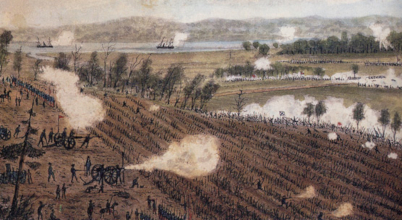
Irish take up arms against each other in the American Civil War as the Irish Brigade of the Union Army and the Confederate 6th Regiment, Louisiana Infantry take part in the Battle of Malvern Hill on July 1, 1862.

Also known as the Battle of Poindexter’s Farm, the Battle of Malvern Hill is fought between the Confederate Army of Northern Virginia, led by General Robert E. Lee, and the Union Army of the Potomac under Major General George B. McClellan. It is the final battle of the Seven Days Battles, taking place on a 130-foot elevation of land known as Malvern Hill, near the Confederate capital of Richmond, Virginia and just one mile from the James River. Including inactive reserves, more than fifty thousand soldiers from each side take part, using more than two hundred pieces of artillery and three warships.

The Seven Days Battles are the climax of the Peninsula Campaign, during which McClellan’s Army of the Potomac sails around the Confederate lines, lands at the tip of the Virginia Peninsula, southeast of Richmond, and strikes inland towards the Confederate capital. Confederate commander-in-chief Joseph E. Johnston fends off McClellan’s repeated attempts to take the city, slowing Union progress on the peninsula to a crawl. When Johnston is wounded, Lee takes command and launches a series of counterattacks, collectively called the Seven Days Battles. These attacks culminate in the action on Malvern Hill.

The Union’s V Corps, commanded by Brigadier General Fitz John Porter, takes up positions on the hill on June 30. McClellan is not present for the initial exchanges of the battle, having boarded the ironclad USS Galena and sailed down the James River to inspect Harrison’s Landing, where he intends to locate the base for his army. Confederate preparations are hindered by several mishaps. Bad maps and faulty guides cause Confederate Major General John B. Magruder to be late for the battle, an excess of caution delays Major General Benjamin Huger, and Major General Stonewall Jackson has problems collecting the Confederate artillery.

The battle occurs in stages: an initial exchange of artillery fire, a minor charge by Confederate Brigadier General Lewis Armistead, and three successive waves of Confederate infantry charges triggered by unclear orders from Lee and the actions of Major Generals Magruder and Daniel Harvey Hill, respectively. In each phase, the effectiveness of the Federal artillery is the deciding factor, repulsing attack after attack, resulting in a tactical Union victory.

After the battle, McClellan and his forces withdraw from Malvern Hill to Harrison’s Landing, where he remains until August 16. His plan to capture Richmond has been thwarted. In the course of four hours, a series of blunders in planning and communication had caused Lee’s forces to launch three failed frontal infantry assaults across hundreds of yards of open ground, unsupported by Confederate artillery, charging toward firmly entrenched Union infantry and artillery defenses. These errors provide Union forces with an opportunity to inflict heavy casualties.

The human toll of the Battle of Malvern Hill and the Seven Days Battles is shown clearly as both capitals, Washington and Richmond, set up numerous provisional hospitals to care for the dead and wounded. Ships sails from the Peninsula to Washington carrying the wounded. Richmond is nearest to the battlefields of the Seven Days, and the immense number of casualties overwhelms hospitals and doctors. People from about the Confederacy descend upon Richmond to care for the conflict’s casualties. Graves cannot be dug quickly enough. In total, the Confederacy counts some 5,650 casualties while the Union Army estimates approximately 3,000 casualties.

In the aftermath of the battle the Confederate press heralds Lee as the savior of Richmond. In stark contrast, McClellan is accused of being absent from the battlefield, a harsh criticism that haunts him when he runs for president in 1864.

(Pictured: A watercolor painting of the Battle of Malvern Hill, made by Robert Sneden during the American Civil War at Malvern Hill in Henrico County, Virginia. Sneden was the mapmaker for Samuel P. Heintzelman’s III Corps.)


Leave a comment

Birth of James Shields, U.S. Politician & Army Officer

james-shields

James Shields, Irish American Democratic politician and United States Army officer, is born in Altmore, County Tyrone, in what is now Northern Ireland, on May 10, 1806. He is the only person in U.S. history to serve as a Senator for three different states. He represents Illinois from 1849 to 1855, in the 31st, 32nd, and 33rd Congresses, Minnesota from 1858 to 1859, in the 35th Congress, and Missouri in 1879, in the 45th Congress.

Born and initially educated in Ireland, Shields emigrates to the United States in 1826. He is briefly a sailor and spends time in Quebec before settling in Kaskaskia, Illinois, where he studies and practices law. In 1836, he is elected to the Illinois House of Representatives, and later as State Auditor. His work as auditor is criticized by a young Abraham Lincoln, who with his then fiancée, Mary Todd, publishes a series of inflammatory pseudonymous letters in a local paper. Shields challenges Lincoln to a duel, and the two nearly fight on September 22, 1842, before making peace and eventually becoming friends.

In 1845, Shields is appointed to the Supreme Court of Illinois, from which he resigns to become Commissioner of the U.S. General Land Office. At the outbreak of the Mexican–American War, he leaves the Land Office to take an appointment as brigadier general of volunteers. He serves with distinction and is twice wounded.

In 1848, Shields is appointed to and confirmed by the Senate as the first governor of the Oregon Territory, which he declines. After serving as Senator from Illinois, he moves to Minnesota and there founds the town of Shieldsville. He is then elected as Senator from Minnesota. He serves in the American Civil War and, at the Battle of Kernstown, his troops inflict the only tactical defeat of Stonewall Jackson in the war. He resigns his commission shortly thereafter. After moving multiple times, he settles in Missouri and serves again for three months in the Senate.

Shields dies unexpectedly in Ottumwa, Iowa on June 1, 1879, while on a lecture tour, after reportedly complaining of chest pains. His body is transferred to Carrollton, Missouri by train, where a funeral is held at the Catholic church, and his body escorted to St. Mary’s Cemetery by two companies of the Nineteenth Infantry, the Craig Rifles, and a twenty-piece brass band. His grave remains unmarked for 30 years, until the local government and the U.S. Congress fund a granite and bronze monument there in his honor.

A bronze statue of Shields is given by the State of Illinois to the United States Capitol in 1893 and represents the state in the National Statuary Hall. The statue is sculpted by Leonard Volk and dedicated in December 1893. Statues of Shields also stand in front of the Carroll County Court House in Carrollton, Missouri and on the grounds of the Minnesota State Capitol in Saint Paul.


Leave a comment

Birth of St. Clair Mulholland, Union Army Colonel

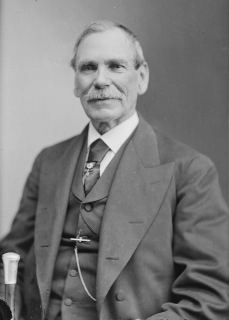
File source: http://commons.wikimedia.org/wiki/File:St_Clair_Mulholland.jpg

St. Clair Augustine Mulholland, colonel in the Union Army in the American Civil War and Medal of Honor winner, is born in Lisburn, County Antrim on April 1, 1839.

Mulholland emigrates to Philadelphia with his parents while a boy. His youthful tastes incline him to military affairs, and he becomes active in the ranks of the militia. At the outbreak of the Civil War, he is commissioned lieutenant colonel of the 116th Pennsylvania Infantry Regiment, which is attached to Thomas Francis Meagher‘s Irish Brigade. When the regiment‘s size is reduced to a battalion, he accepts a reduction in rank to major.

Mulholland is wounded during the famous charge of the Irish Brigade up Marye’s Heights at the Battle of Fredericksburg on December 13, 1862. At the Battle of Chancellorsville on May 3 and 4, 1863, he leads his regiment and distinguishes himself by saving the guns of the 5th Maine Battery that had been abandoned to the enemy. For this he is complimented in general orders and later receives the Medal of Honor from the United States Congress. In this campaign he is given the command of the picket line by Major General Winfield Scott Hancock and covers the retreat of the Army of the Potomac across the Rappahannock River.

Although Mulholland later claims that at the Battle of Gettysburg on July 2, 1863, he personally took command of the 140th Pennsylvania Infantry and led it into action, this fact is mentioned in neither his own official report of the battle, nor that of the lieutenant colonel commanding the 140th. When the 116th is returned to full strength in early 1864, he is promoted to colonel. He is wounded a second time at the Battle of the Wilderness on May 5, 1864. At the Battle of Spotsylvania Court House, he is wounded a third time but remains in the hospital only ten days. Resuming his command, he is dangerously wounded again at the Battle of Totopotomoy Creek. He recovers rapidly and commands his brigade in all the actions around the Siege of Petersburg, particularly distinguishing himself by storming a fort on the Boydton Plank Road. He is mustered out of the volunteer service on June 3, 1865.

On May 4, 1866, President Andrew Johnson nominates Mulholland for the brevet grade of brigadier general of volunteers to rank from March 13, 1865, for his conduct at the Battle of the Wilderness and the U.S. Senate confirms the appointment on May 18, 1866. On January 13, 1869, President Johnson nominates Mulholland for appointment to the brevet grade of major general of volunteers, to rank from March 13, 1865, for his actions on the Boydton Plank Road and the Senate confirms the appointment on February 16, 1869. The brevet is issued February 20, 1869. It is the last brevet of major general issued for service during the Civil War.

Returning to civilian life after the war, Mulholland is appointed Chief of Police in Philadelphia in 1868 and signalizes his administration by the good order in which he keeps both the force and the city. President Grover Cleveland appoints him United States Pension Agent, in which office he is continued by Presidents William McKinley and Theodore Roosevelt. He is considered an authority on the science of penology and also devotes much of his leisure time to art studies, and as a lecturer and writer on the Civil War and its records. He compiles a history of the 116th Regiment, and another of those to whom Congress voted the Medal of Honor. In the Catholic affairs of Philadelphia, he is always active and a leader among the best-known laymen.

St. Clair Augustin Mulholland dies on February 17, 1910, in Philadelphia, Pennsylvania. He is buried at Old Cathedral Cemetery, Philadelphia.