seamus dubhghaill

Promoting Irish Culture and History from Little Rock, Arkansas, USA


Leave a comment

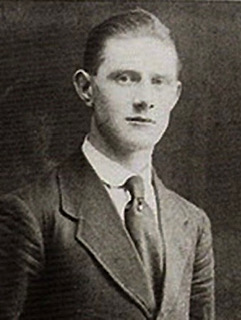
Death of Vincent “Vinnie” Byrne, Member of “The Squad”

Vincent (‘Vinnie’) Byrne, a member of the Irish Republican Army and a senior figure in the assassination group known as The Squad, dies at the age of 92 on December 13, 1992, in Artane, Dublin.

Byrne is born on November 23, 1900, in the National Maternity Hospital, Holles Street, Dublin, the elder among one son and one daughter of Vincent Byrne, carpenter, of 33 Denzille Street (now Fenian Street), and his wife Margaret (née White). By 1911 the family is living with maternal relatives at 1 Anne’s Lane. Educated at St. Andrew’s national school, Westland Row, he is apprenticed as a cabinet maker under Thomas Weafer, a company captain in the Irish Volunteers, who is subsequently killed in the 1916 Easter Rising. At the age of fourteen, he joins the Irish Volunteers in January 1915, and is posted to the 2nd Battalion of the Dublin Brigade. His training includes lectures on street fighting by James Connolly. During the 1916 rising he serves with the 2nd Battalion in Jacob’s biscuit factory under Thomas MacDonagh. At the surrender he is slipped out a factory window to safety by a priest who is acting as an intermediary. Arrested in his home a week later, he is held in Richmond Barracks with other youngsters, all of whom are released after an additional week. Active in the post-rising reorganisation of the Dublin Brigade, he claims to have voted twenty times for Sinn Féin candidates in the 1918 United Kingdom general election in Ireland.

In November 1919, Byrne is recruited to an elite counter-intelligence squad of the Dublin Brigade, whose primary mission is the assassination of plainclothes detectives of the Dublin Metropolitan Police’s (DMP) political (‘G’) division. He participates in the attempted ambush of the Lord Lieutenant of IrelandJohn French, at Ashtown, Dublin, on December 19, 1919, a combined operation of the Dublin and the 3rd Tipperary brigades. In March 1920, he leaves his civilian employment with the Irish Woodworkers, Crow Street, when the squad is constituted as a full-time, paid, GHQ guard, under direct orders from Michael Collins. Dubbed “The Twelve Apostles,” the squad also includes James Slattery, a workmate of Byrne since their apprenticeships. For the duration of the Irish War of Independence, Byrne takes part in the stakeouts and killings of police detectives and military intelligence agents. His witness statement to the Bureau of Military History recounts his participation in some fifteen such operations. On Bloody Sunday he commands an IRA detail that kills two of the “Cairo Gang“ agents in their boarding house at 38 Upper Mount Street on November 21, 1920. He takes part in The Custom House raid on May 25, 1921.

Owing largely to his devoted allegiance to Collins, Byrne supports the Anglo–Irish Treaty of December 1921, regarding it as a stepping stone to complete independence. Enlisting in the National Army, he serves in the Dublin Guard. Promoted five times from January 1922 to February 1923, he rises in rank from company sergeant to commandant. He is OC of the guard at the handover of Dublin Castle from British to Irish authority on January 16, 1922. During ensuing months he commands guard details at government buildings and the Bank of Ireland, College Green, Dublin. In March 1922, he foils an attempt by Anti-Treaty forces to seize the bank with the aid of mutinous soldiers within the building’s guard. Having displayed courage and presence of mind throughout the incident, he is promoted captain in the field. Resenting the role given to ex-British-army officers in the National Army, and feeling that the political elite of the Free State are betraying the national interest, he is among the group of officers involved in the failed army mutiny of 1924, and accordingly is forced to resign his commission on March 21. He then works as a carpenter on the industrial staff of the Office of Public Works (OPW), and in the post office stores, St. John’s Road, Kilmainham, Dublin, until his retirement.

Byrne is a founding member of both the Association of Dublin Brigades and the 1916–1921 Club. Long lived, and a willing raconteur with a colourful turn of phrase, he becomes probably the best known of Collins’s squad (of which he is the last surviving member), granting many interviews to journalists and historians. He expresses no misgivings about his role as a revolutionary hit man, arguing the necessity of the ruthless methods employed, which deterred potential informers, and eventually won the struggle by crippling British intelligence.

Byrne lives in Dublin at 59 Blessington Street, and later at 227 Errigal Road, Drimnagh. His last address is 25 Lein Road, Artane. His wife Eileen predeceases him. He dies on December 13, 1992, survived by two daughters and one son. He is buried at Balgriffin Cemetery, Balgriffin, County Dublin.

(From: “Byrne, Vincent (‘Vinnie’)” by Lawrence William White and Pauric J. Dempsey, Dictionary of Irish Biography, http://www.dib.ie, October 2009)

Leave a comment

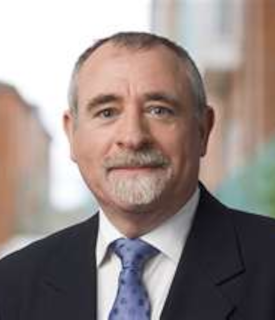
Birth of Eric Byrne, Former TD and Labour Party Politician

Eric Joseph Byrne, former Labour Party politician who serves as a Teachta Dála (TD) for the Dublin South-Central constituency from 1989 to 1992, 1994 to 1997 and 2011 to 2016, is born in Dublin on April 21, 1947. He is formerly a member of Official Sinn Féin, the Workers’ Party and Democratic Left.

Byrne is educated at Synge Street CBS and the Bolton Street College of Technology. A carpenter before entering politics, he stands unsuccessfully for election to Dáil Éireann as a Workers’ Party candidate for Dublin Rathmines West at the 1977 Irish general election and Dublin South-Central at the 1981, February 1982, November 1982 and 1987 Irish general elections.

He is elected in 1985 as a Workers’ Party member of Dublin City Council for CrumlinKimmage area, and is re-elected at subsequent local elections until 2011, when he is forced to resign his seat due to dual mandate. He is finally elected at the 1989 Irish general election. He joins with Workers’ Party members who form Democratic Left in 1992. He unexpectedly loses his seat at the 1992 Irish general election. Labour’s Pat Upton is unexpectedly returned on the first count, with Byrne finally losing the last seat to Fianna Fáil‘s Ben Briscoe by five votes after a marathon 10-day count.

Byrne is elected to the 27th Dáil at a by-election on June 9, 1994, following the resignation of long-serving Fianna Fáil TD John O’Connell, who had previously been a Labour TD for the same constituency. He is a backbench supporter of the Rainbow government led by Fine Gael‘s John Bruton.

He loses his seat again at the 1997 Irish general election. Although the Labour Party and the Democratic Left merge in 1999, he is not selected to contest the Dublin South-Central by-election which follows Pat Upton‘s death later that year. Upton’s sister Mary is elected for the Labour Party.

Byrne contests the 2002 Irish general election on the Labour Party ticket as Mary Upton’s running-mate but is unsuccessful. Along with Upton, he contests the Dublin South-Central constituency at the 2007 Irish general election advocating a Labour Party/Fine Gael government but misses the final seat by 69 votes. He is nominated by the Labour Party to contest the Seanad election in the Labour panel but is not elected. In 2009, he is re-elected to Dublin City Council. At the 2011 Irish general election he is re-elected to the Dáil, after a fourteen-year absence.

In January 2015, Byrne becomes involved in an altercation with Sinn Féin TD, Jonathan O’Brien. During ministers’ questions, O’Brien criticises Tánaiste Joan Burton over homelessness in Ireland, citing the experiences of his brother, a recovering heroin addict. Byrne asks of O’Brien, “Why doesn’t his good family give him a home?” This infuriates O’Brien. The Irish Times journalist Miriam Lord criticizes Byrne, remarking that “You sense the relief rising in the chamber. They don’t like it when the real world intrudes. These sort of things don’t really happen to TDs.”

Byrne loses his seat at the 2016 Irish general election.


Leave a comment

Death of Charles Donnelly, Poet & Republican Political Activist

Charles Patrick Donnelly, Irish poet, republican and left-wing political activist, is killed on February 27, 1937, fighting on the republican side during the Spanish Civil War.

Donnelly is born in Killybrackey, near Dungannon, County Tyrone, on July 10, 1914, into a family of cattle breeders. His father, Joseph Donnelly, sells his farm in 1917 and the family moves to Dundalk and opens a greengrocer‘s shop. Joseph Donnelly becomes quite prosperous, running his shop, dealing cattle and buying and selling property in the Dundalk area. In addition to Charles, the Donnellys have five other sons and two daughters. His mother, Rose, dies in 1927, when he is 13 years old.

Donnelly receives his early education in the Christian Brothers school in Dundalk. When he is fourteen in 1928, the family moves again, this time to Dublin, where his father purchases a house on Mountjoy Square in the north inner city. He enrolls in O’Connell School on North Frederick Street but is expelled after only a few weeks. He spends the next few months wandering the streets of Dublin during school time before his father discovers what had happened. Also at this time, he meets and is befriended by radical political activists from the Irish Republican Army (IRA), the Communist Party of Ireland and the left-Republican group Saor Éire.

Donnelly’s father and aunts get him an apprenticeship with a carpenter, but he gives this up after a year to enroll in University College Dublin (UCD) in 1931, where he studies Logic, English, History and the Irish language. In university he begins writing poetry and prose for student publications but fails his first-year examinations. At this time, he also becomes deeply involved in radical left-wing and republican politics. He drops out of university in 1934, having failed his first-year exams three times and joins the radical group, the Republican Congress. There he befriends veteran republicans Frank Ryan and George Gilmore. He also becomes involved in a romantic relationship with another republican activist, Cora Hughes, Éamon de Valera‘s goddaughter and later partner of George Gilmore. In July 1934, he is arrested and imprisoned for two weeks for his role in picketing a Dublin bakery with other Congress members. After this, his father expells him from the family home and he spends a period sleeping in parks around Dublin.

The Republican Congress splits at its first annual meeting in September 1934, but the 20-year-old Donnelly is elected to the National Executive of the truncated organisation. Thereafter, he writes for the Congress newspaper on political and social questions. In January 1935, he is again arrested for assaulting a Garda at a Congress demonstration and is imprisoned for a month. In February 1935, he leaves Ireland for London. In the British capital he forms the first Republican Congress branch in London and becomes its first chairman. He finds employment variously as a dishwasher in pubs and cafes and as a reporter with an international news agency. While in London he remains a regular contributor to the Republican Congress newspaper and various left-wing publications. Together with two other poets, Leslie Daiken and Ewart Milne, he is one of the founders of a duplicated publication called Irish Front, the London journal of the Republican Congress. Daiken admits that many of the Irish Front editions are written almost entirely by Donnelly.

Eoin McNamee recalls Donnelly as “a frail looking Dublin man with a Tyrone background…he was something of an intellectual and clearly the theorist of the Irish Republican Congress in London at that time. He was well versed in Marxism, wrote for the Congress and Communist press, and frequently appeared on left-wing public platforms.”

In July 1936, on the outbreak of the Spanish Civil War, Donnelly urges the Republican Congress to send fighters to the International Brigades. He himself returns to Dublin with the intention of organising such a force. By the end of 1936, he has gone again to London and joins the Brigades. He reaches Spain on January 7, 1937, and at Albacete, meets up with an Irish contingent, led by Frank Ryan, known as the Connolly Column, who had come to Spain to fight on the Republican side. He and his comrades are attached to the American Lincoln Battalion. On February 15, after receiving only rudimentary military training, the Lincoln Battalion is thrown into the Battle of Jarama, near Madrid. Donnelly reaches the front on February 23, where he is promoted to the rank of field commander. On February 27, his unit is sent on a frontal assault on the Nationalist positions on a hill named Pingarrón. The object of the attack is to take the enemy trenches and ultimately to drive them across the Jarama River. He and his unit are pinned down by machine gun fire all day. In the evening, the Nationalists launch a counterattack.

A Canadian veteran recalls, “We ran for cover, Charlie Donnelly, the commander of an Irish company is crouched behind an olive tree. He has picked up a bunch of olives from the ground and is squeezing them. I hear him say something quietly between a lull in machine gun fire: Even the olives are bleeding.” The line later becomes famous.

A few minutes later, as his unit retreats, Donnelly is caught in a burst of gunfire. He is struck three times, in the right arm, the right side and the head. He collapses and dies instantly. His body lay on the battlefield until it is recovered by fellow Irish Brigadier Peter O’Connor on March 10. He is buried at Jarama in an unmarked grave with several of his comrades.

Written by Donnelly’s brother Joseph, a collection of his work, Charlie Donnelly: the Life and Poems, is published in 1987 by Dedalus Press. On the eve of the 71st anniversary of his death, February 26, 2008, he is commemorated with the unveiling of a plaque at his alma mater, UCD, attended by 150 people. The commemoration, organised jointly by a group of UCD students and the Donnelly family, is hosted by the School of English and also includes a lecture by Gerald Dawe on Donnelly’s life and poetry. In April 2008, the UCD branch of the Labour Party is renamed the Charlie Donnelly Branch in his honour.

Donnelly’s friend Blanaid Salkeld commemorates him in her poem “Casualties,” writing “That Charlie Donnelly small and frail/ And flushed with youth was rendered pale/ But not with fear, in what queer squalor/ Was smashed up his so-ordered valour.” A 1976 documentary about the Civil War by Cathal O’Shannon is entitled Even the Olives are Bleeding.

Donnelly is survived by a brother, Joseph, who manages to get many of his poems published in 1987; only five or six are published during his lifetime. Discussing his work, Colm Tóibín says it “mixed an Audenesque exactitude with a youthful romanticism… his poem “The Tolerance of Crows” belongs in any anthology of modern poetry.” In 1992, Donnelly has work included in Dedalus Irish Poets: An Anthology from Dedalus Press.

In 1992 New Island Books publishes Even the Olives Are Bleeding: The Life and Times of Charles Donnelly by Joseph O’Connor. The book is launched by future Irish President Michael D. Higgins.

Donnelly is commemorated in the Christy Moore song Viva La Quinta Brigada.


Leave a comment

Death of Paddy Daly, IRA Volunteer & National Army Officer

Paddy Daly, sometimes referred to as Paddy O’Daly, dies at his home in County Dublin on January 16, 1957. He serves in the Irish Republican Army (IRA) during the Irish War of Independence (1919–1921) and subsequently holds the rank of major general in the Irish National Army from 1922 to 1924.

Daly is born in Dublin in 1888. He fights in the 1916 Easter Rising under the command of his namesake Edward Daly, leading the unsuccessful attempt to destroy the Magazine Fort in the Phoenix Park. He is later wounded in the particularly vicious fighting near the Linenhall. He is subsequently interned in Frongoch internment camp for his part in the rebellion until 1918, when he is released as part of a general amnesty for Irish prisoners.

During the Irish War of Independence, Daly serves as leader of the “Squad,” Michael Collins‘ assassination unit.

On December 19, 1919, Daly along with Dan Breen lead an abortive ambush, at Ashtown railway station near the Phoenix Park, on the British Viceroy, Lord Lieutenant of Ireland and Supreme Commander of the British Army in Ireland, Lord French, as he returns from a private party which he had hosted the previous evening at his country residence in Frenchpark, County Roscommon. Lord French escapes the ambush, but Martin Savage is shot dead.

Daly and the men under his command are responsible for the killing of many British intelligence officers, in particular District Inspector Redmond, who had been putting increasing pressure on the Squad. Daly himself personally kills several people, including Frank Brooke, director of Great Southern and Eastern Railway, who serves on an advisory council to the British military, in June 1920. He does not directly lead any of the attacks on Bloody Sunday but is on standby in one of the Squad’s safe houses. In the aftermath, November 23, 1920, he is arrested and interned in Abercorn Barracks in Ballykinler, County Down.

Daly is released on parole from Ballykinler in March 1921, the British apparently being unaware of his senior position within the Dublin Brigade of the IRA. After his release, he, along with Emmet Dalton, is also involved in the attempt to free Seán Mac Eoin from Mountjoy Prison on May 14, 1921. He and his men hijack a British Army Peerless armoured car in Clontarf at the corporation abattoir, while it is escorting a consignment of meat to a barracks and shoot dead two soldiers in the process. The plan involves Dalton and Joe Leonard impersonating two British army officers and using forged documents to “transfer” MacEoin to Dublin Castle. They gain entry to Mountjoy but are discovered before they can free MacEoin and have to shoot their way out. They later abandon the armoured car after removing the Hotchkiss machine guns and setting fire to what they can. Toward the end of the war, in May 1921, the two principal fighting units of the IRA’s Dublin Brigade, the “Squad” and the “Active Service Unit” are amalgamated after losses suffered in the burning of the Custom House. Daly is named Officer Commanding (OC) of this new unit, which is named the Dublin Guard.

Daly’s own account of his activities during the Irish War of Independence is held at the Bureau of Military History in Cathal Brugha Barracks.

After the Anglo-Irish Treaty splits the IRA, Daly and most of his men side with the pro-treaty party, who go on to found the Irish Free State. He is appointed to the rank of brigadier in the newly created Irish National Army, which is inaugurated in January 1922. When the Irish Civil War breaks out in June 1922, he commands the Free State’s troops who secure Dublin, after a week of fighting.

In August 1922, during the Irish Free State offensive that re-takes most of the major towns in Ireland, Daly commands a landing of 450 troops of the Dublin Guard at Fenit, County Kerry, which goes on to capture Tralee from the anti-treaty forces. Acting with severe brutality in Kerry, he comments that, “nobody had asked me to take kid-gloves to Kerry, so I didn’t.” As the Civil War develops into a vicious guerrilla conflict, he and his men are implicated in a series of atrocities against anti-treaty prisoners, culminating in a series of killings with land mines in March 1923. Daly, and others under his command, claim that those killed were accidentally blown up by their own mines. Statements by the Garda Síochána, two Free State lieutenants on duty, W. McCarthy and Niall Harrington, and one survivor, Stephen Fuller, maintain the claims are fabricated.

Daly resigns from the Free State army in 1924 after an incident in Kenmare, County Kerry, concerning the daughters of a doctor. A court martial is held but collapses as no one is prepared to give evidence. He volunteers his services for the Irish Army again in 1940 and is appointed as a Captain to the non-combatant Construction Corps.

Daly is a carpenter by trade. He marries Daisy Gillies in 1910. His brother James (Seamus) marries Daisy’s sister Nora, a Cumann na mBan activist, in a joint wedding ceremony. After Daisy’s death in 1919, Daly marries Bridget Murtagh, also a Cumann na mBan activist, in 1921. Murtagh and Nora O’Daly carry out intelligence gathering for the planned attack on the Magazine Fort in 1916. She is a sister of Elizabeth Murtagh, the first wife of Commandant Michael Love who serves with Daly in the Collins Squad of the IRA, in the Irish Free State Army of the 1920s and during the Emergency period. Murtagh dies in childbirth in 1930. Daly subsequently marries Norah Gillies, his first wife’s niece.

On his death on January 16, 1957, Daly is buried with full military honours in Mount Jerome Cemetery. He is survived by his brothers, Comdt Seamus O’Daly and Capt Frank O’Daly, his sons Patrick and Colbert, and his daughters Brede and Philomena.


Leave a comment

Death of Philanthropist Thomas John Barnardo

Thomas John Barnardo, philanthropist and founder and director of homes for poor children, dies in London on September 19, 1905. From the foundation of the first Barnardo’s home in 1867 to the date of his death, nearly 60,000 children are taken in.

Barnardo is born in Dublin on July 4, 1845. He is the fourth of five children of John Michaelis Barnardo, a furrier who is of Sephardic Jewish descent, and his second wife, Abigail, an Englishwoman and member of the Plymouth Brethren. In the early 1840s, John emigrates from Hamburg to Dublin, where he establishes a business. Barnardo moves to London in 1866. At that time he is interested in becoming a missionary.

Barnardo establishes “Hope Place” ragged school in the East End of London in 1868, his first attempt at aiding the estimated 30,000 ‘destitute’ children in Victorian London. Many of these children are not only impoverished, but orphaned, as the result of a recent cholera outbreak. For those unable to afford private education, the school offers education which, although Christian-based in nature, is not exclusively religion-focused, and works to provide tutelage on various common trades of that time.

In 1870, Barnardo is prompted to form a boys’ orphanage at 18 Stepney Causeway after inspecting the conditions within which London’s orphaned population sleep. This is the first of 122 such establishments, caring for over 8,500 children, founded before his death in 1905. Significant provisions are available to occupants. Infants and younger children are sent to rural districts in attempt to protect them from industrial pollution. Teenagers are trained in skills such as carpentry and metalworking, to provide them a form of basic financial stability.

In June 1873, Barnardo marries Sara Louise Elmslie, known as Syrie, the daughter of an underwriter for Lloyd’s of London. She shares her husband’s interests in evangelism and social work. The couple settles at Mossford Lodge, Essex, where they have seven children, three of whom die in early childhood.

Barnardo’s homes do not just accommodate boys. In 1876 the “Girls’ Village Home” is established and by 1905 accommodates 1,300 girls, who are trained for “domestic occupation.” Another establishment, the “rescue home for girls in serious danger,” aims to protect girls from the growing tide of child prostitution.

Barnardo’s work is carried on by his many supporters under the name Dr. Barnardo’s Homes. Following societal changes in the mid-20th century, the charity changes its focus from the direct care of children to fostering and adoption, renaming itself Dr. Barnardo’s. Following the closure of its last traditional orphanage in 1989, it takes the still simpler name of Barnardo’s.

Barnardo dies of angina pectoris in London on September 19, 1905, and is buried in front of Cairn’s House, Barkingside, Essex. The house is now the head office of the children’s charity he founded, Barnardo’s. A memorial stands outside Cairn’s House.

After Barnardo’s death, a national memorial is instituted to form a fund of £250,000 to relieve the various institutions of all financial liability and to place the entire work on a permanent basis. At the time of his death, his charity is caring for over 8,500 children in 96 homes.

At the time of the Whitechapel murders, due to the supposed medical expertise of the Ripper, various doctors in the area are suspected. Barnardo is named a possible suspect long after his death. Ripperologist Gary Rowlands theorises that due to Barnardo’s lonely childhood he had anger which may have led him to murder prostitutes. However, there is no evidence whatsoever that he committed the murders. Critics have also pointed out that his age and appearance do not match any of the descriptions of the Ripper.


4 Comments

Birth of Philip Embury, Methodist Preacher

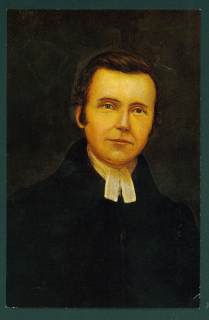
Philip Embury

Philip Embury, Methodist preacher and a leader of one of the earliest Methodist congregations in the United States, is born in Ballingrane, County Limerick on September 21, 1729.

Embury’s parents are members of the colony of Germans that emigrate from the Palatinate to Ireland early in the eighteenth century, and in which Methodism co-founder John Wesley labors with great success. The colony forms from refugees from the War of the Spanish Succession. Embury is educated at a school near Ballingrane and learns the carpentry trade. He is converted on Christmas day 1752, becomes a local preacher at Court-Matrix in 1758 and marries Margaret Switzer that fall.

In 1760, due to rising rents and scarce land, he goes to New York City and works as a schoolteacher. In common with his fellow emigrants, he begins to lose interest in religious matters and does not preach in New York until 1766 when, moved by the reproaches of his cousin Barbara Heck, sometimes called the “mother of American Methodism,” he begins to hold services first in his own house on Barrack Street, now Park Place, and then in a rigging loft on what is now William Street. The congregation thus forms what is probably the first Methodist congregation in the United States, though it is a disputed question whether precedence should not be given to Robert Strawbridge, who begins laboring in Maryland about this time. Before this, he and Barbara Heck worship along with other Irish Palatines at Trinity Church in Manhattan, where three of his children are baptized.

The first Methodist church is built under Embury’s charge in 1768, in association with Thomas Webb and others, on the site of the present John Street United Methodist Church. He himself works on the building as a carpenter and afterward preaches there gratuitously. In 1769, preachers sent out by John Wesley arrive in New York City, and Embury goes to work in the vicinity of Albany at Camden Valley, New York, where he continues to work at his trade during the week and preaches every Sunday. He and several others receive a grant of 8,000 acres to develop for the manufacture of linen. He organizes among Irish emigrants at Ashgrove, near Camden Valley, the first Methodist society within the bounds of what becomes the flourishing and influential Troy Conference.

Philip Embury dies suddenly in Camden, New York in August 1775, in consequence of an accident in mowing. He is buried on a neighboring farm but in 1832 his remains are removed to Ashgrove churchyard and in 1866 to Woodland cemetery, Cambridge, New York, where a monument to him is unveiled in 1873, with an address by Bishop Matthew Simpson.

(Pictured: Portrait of Philip Embury by John Barnes, Salem, 1773)