seamus dubhghaill

Promoting Irish Culture and History from Little Rock, Arkansas, USA


Leave a comment

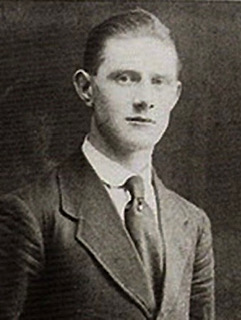
Death of Vincent “Vinnie” Byrne, Member of “The Squad”

Vincent (‘Vinnie’) Byrne, a member of the Irish Republican Army and a senior figure in the assassination group known as The Squad, dies at the age of 92 on December 13, 1992, in Artane, Dublin.

Byrne is born on November 23, 1900, in the National Maternity Hospital, Holles Street, Dublin, the elder among one son and one daughter of Vincent Byrne, carpenter, of 33 Denzille Street (now Fenian Street), and his wife Margaret (née White). By 1911 the family is living with maternal relatives at 1 Anne’s Lane. Educated at St. Andrew’s national school, Westland Row, he is apprenticed as a cabinet maker under Thomas Weafer, a company captain in the Irish Volunteers, who is subsequently killed in the 1916 Easter Rising. At the age of fourteen, he joins the Irish Volunteers in January 1915, and is posted to the 2nd Battalion of the Dublin Brigade. His training includes lectures on street fighting by James Connolly. During the 1916 rising he serves with the 2nd Battalion in Jacob’s biscuit factory under Thomas MacDonagh. At the surrender he is slipped out a factory window to safety by a priest who is acting as an intermediary. Arrested in his home a week later, he is held in Richmond Barracks with other youngsters, all of whom are released after an additional week. Active in the post-rising reorganisation of the Dublin Brigade, he claims to have voted twenty times for Sinn Féin candidates in the 1918 United Kingdom general election in Ireland.

In November 1919, Byrne is recruited to an elite counter-intelligence squad of the Dublin Brigade, whose primary mission is the assassination of plainclothes detectives of the Dublin Metropolitan Police’s (DMP) political (‘G’) division. He participates in the attempted ambush of the Lord Lieutenant of IrelandJohn French, at Ashtown, Dublin, on December 19, 1919, a combined operation of the Dublin and the 3rd Tipperary brigades. In March 1920, he leaves his civilian employment with the Irish Woodworkers, Crow Street, when the squad is constituted as a full-time, paid, GHQ guard, under direct orders from Michael Collins. Dubbed “The Twelve Apostles,” the squad also includes James Slattery, a workmate of Byrne since their apprenticeships. For the duration of the Irish War of Independence, Byrne takes part in the stakeouts and killings of police detectives and military intelligence agents. His witness statement to the Bureau of Military History recounts his participation in some fifteen such operations. On Bloody Sunday he commands an IRA detail that kills two of the “Cairo Gang“ agents in their boarding house at 38 Upper Mount Street on November 21, 1920. He takes part in The Custom House raid on May 25, 1921.

Owing largely to his devoted allegiance to Collins, Byrne supports the Anglo–Irish Treaty of December 1921, regarding it as a stepping stone to complete independence. Enlisting in the National Army, he serves in the Dublin Guard. Promoted five times from January 1922 to February 1923, he rises in rank from company sergeant to commandant. He is OC of the guard at the handover of Dublin Castle from British to Irish authority on January 16, 1922. During ensuing months he commands guard details at government buildings and the Bank of Ireland, College Green, Dublin. In March 1922, he foils an attempt by Anti-Treaty forces to seize the bank with the aid of mutinous soldiers within the building’s guard. Having displayed courage and presence of mind throughout the incident, he is promoted captain in the field. Resenting the role given to ex-British-army officers in the National Army, and feeling that the political elite of the Free State are betraying the national interest, he is among the group of officers involved in the failed army mutiny of 1924, and accordingly is forced to resign his commission on March 21. He then works as a carpenter on the industrial staff of the Office of Public Works (OPW), and in the post office stores, St. John’s Road, Kilmainham, Dublin, until his retirement.

Byrne is a founding member of both the Association of Dublin Brigades and the 1916–1921 Club. Long lived, and a willing raconteur with a colourful turn of phrase, he becomes probably the best known of Collins’s squad (of which he is the last surviving member), granting many interviews to journalists and historians. He expresses no misgivings about his role as a revolutionary hit man, arguing the necessity of the ruthless methods employed, which deterred potential informers, and eventually won the struggle by crippling British intelligence.

Byrne lives in Dublin at 59 Blessington Street, and later at 227 Errigal Road, Drimnagh. His last address is 25 Lein Road, Artane. His wife Eileen predeceases him. He dies on December 13, 1992, survived by two daughters and one son. He is buried at Balgriffin Cemetery, Balgriffin, County Dublin.

(From: “Byrne, Vincent (‘Vinnie’)” by Lawrence William White and Pauric J. Dempsey, Dictionary of Irish Biography, http://www.dib.ie, October 2009)

Leave a comment

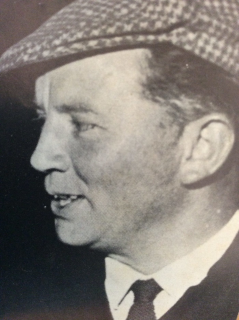
Birth of Pat “Beag” McGeown, Provisional IRA Volunteer

Pat “Beag” McGeown, a volunteer in the Provisional Irish Republican Army (IRA) who takes part in the 1981 Irish hunger strike, is born in the Beechmount area of BelfastNorthern Ireland, on on September 3, 1956.

McGeown joins the IRA’s youth wing, Fianna Éireann, in 1970. He is first arrested at the age of 14, and in 1973 he is again arrested and interned in Long Kesh Detention Centre until 1974. In November 1975, he is arrested and charged with possession of explosives, bombing the Europa Hotel, and IRA membership. At his trial in 1976 he is convicted and receives a five-year sentence for IRA membership and two concurrent fifteen-year sentences for the bombing and possession of explosives, and is imprisoned at Long Kesh with Special Category Status.

In March 1978, McGeown attempts to escape along with Brendan McFarlane and Larry Marley. The three have wire cutters and dress as prison officers, complete with wooden guns. The escape is unsuccessful, and results in McGeown receiving an additional six-month sentence and the loss of his Special Category Status.

McGeown is transferred into the Long Kesh Detention Centre’s H-Blocks where he joins the blanket protest and dirty protest, attempting to secure the return of Special Category Status for convicted paramilitary prisoners. He describes the conditions inside the prison during the dirty protest in a 1985 interview:

“There were times when you would vomit. There were times when you were so run down that you would lie for days and not do anything with the maggots crawling all over you. The rain would be coming in the window and you would be lying there with the maggots all over the place.“

In late 1980, the protest escalates and seven prisoners take part in a fifty-three-day hunger strike, aimed at restoring political status by securing what are known as the “Five Demands:”

  1. The right not to wear a prison uniform.
  2. The right not to do prison work.
  3. The right of free association with other prisoners, and to organise educational and recreational pursuits.
  4. The right to one visit, one letter and one parcel per week.
  5. Full restoration of remission lost through the protest.

The strike ends before any prisoners die and without political status being secured. A second hunger strike begins on March 1, 1981, led by Bobby Sands, the IRA’s former Officer Commanding (OC) in the prison. McGeown joins the strike on July 9, after Sands and four other prisoners have starved themselves to death. Following the deaths of five other prisoners, his family authorises medical intervention to save his life after he lapses into a coma on August 20, the 42nd day of his hunger strike.

McGeown is released from prison in 1985, resuming his active role in the IRA’s campaign and also working for Sinn Féin, the republican movement’s political wing. In 1988, he is charged with organising the Corporals killings, an incident where two plain-clothes British Army soldiers are killed by the IRA. At an early stage of the trial his solicitorPat Finucane, argues there is insufficient evidence against McGeown, and the charges are dropped in November 1988. McGeown and Finucane are photographed together outside Crumlin Road Courthouse, a contributing factor to Finucane being killed by the Ulster Defence Association (UDA) in February 1989. Despite suffering from heart disease as a result of his participation in the hunger strike, McGeown is a member of Sinn Féin’s Ard Chomhairle and is active in its Prisoner of War Department. In 1993, he is elected to Belfast City Council.

McGeown is found dead in his home on October 1, 1996, after suffering a heart attack. Sinn Féin chairman Mitchel McLaughlin says his death is “a great loss to Sinn Féin and the republican struggle.” McGeown is buried in the republican plot at Belfast’s Milltown Cemetery. His death is often referred to as the “11th hunger striker.” In 1998, the Pat McGeown Community Endeavour Award is launched by Sinn Féin president Gerry Adams, with Adams describing McGeown as “a modest man with a quiet, but total dedication to equality and raising the standard of life for all the people of the city.” A plaque in memory of McGeown is unveiled outside the Sinn Féin headquarters on the Falls Road on November 24, 2001, and a memorial plot on Beechmount Avenue is dedicated to the memory of McGeown, Kieran Nugent and Alec Comerford on March 3, 2002.


Leave a comment

Death of Billy McMillen, Official Irish Republican Army Officer

William McMillen, Irish republican activist and an officer of the Official Irish Republican Army (OIRA) from Belfast, Northern Ireland, is killed during a feud with the Irish National Liberation Army (INLA) on April 28, 1975.

McMillen is born in Belfast on May 19, 1927, and joins the Irish Republican Army (IRA) at age 16 in 1943. During the IRA’s border campaign (1956–62), he is interned and held in Crumlin Road Gaol. In 1964, he runs in the British general election as an Independent Republican candidate. When he places the Irish tricolour in the window of his election office in the lower Falls Road area, this sparks a riot between republicans, loyalists and the Royal Ulster Constabulary (RUC). There have been tensions on the issue since the government of Northern Ireland banned the flying of the tricolour under the Flags and Emblems (Display) Act (Northern Ireland) 1954.

In October 1964, during the general election campaign, a photo of McMillen is placed in the window of the election office in Divis Street flanked on one side by the Starry Plough flag and on the other by the tricolour. His campaign draws national attention after Ian Paisley demands that police remove the tricolour from McMillen’s election offices. The RUC raids the premises and confiscates the flag, sparking several days of rioting during which McMillen leads several thousand protesters in defiantly displaying the tricolour. He recalls the IRA gaining a “couple of dozen recruits” following the election, but he finishes at the bottom of the poll with 3,256 votes (6%). Around this time, he succeeds Billy McKee as the Officer commanding (OC) of the Belfast Brigade.

McMillen is keen to work for the unity of Protestant and Catholic workers. Roy Garland recalls that McMillan’s grandfather was master of an Orange lodge in Edinburgh and McMillan knew of that heritage and the meaning of the colours of the Irish flag. He prominently displays in his election offices a verse of a poem by John Frazier, a Presbyterian from County Offaly: “Till then the Orange lily be your badge my patriot brother. The everlasting green for me and we for one and other.”

In 1967, McMillen is involved in the formation of the Northern Ireland Civil Rights Association (NICRA) and is a member of a three-man committee which draws up the Association’s constitution. The NICRA’s peaceful activities result in violent opposition from many unionists, leading to fears that Catholic areas will come under attack. In May 1969, when asked at an IRA army council meeting by Ruairí Ó Brádaigh how many weapons the Belfast Brigade has for defensive operations, McMillen states they have only one pistol, a machine gun and some ammunition.

By August 14, 1969, serious rioting has broken out in Belfast and Catholic districts come under attack from both civilian unionists and the RUC. McMillen’s IRA command by this point still has only a limited number of weapons because the leadership in Dublin are reluctant to release guns. While he is involved in some armed actions on this day, he is widely blamed by those who established the Provisional IRA for the IRA’s failure to adequately defend Catholic neighbourhoods from Ulster loyalist attack. He is arrested and temporarily detained by the RUC on the morning of August 15 but is released shortly afterward.

McMillen’s role in the 1969 riots is very important within IRA circles, as it is one of the major factors contributing to the split in the movement in late 1969. In a June 1972 lecture organised by Official Sinn Féin in Dublin, he defends his conduct, stating that by 1969 the total membership of the Belfast IRA is approximately 120 men, and their armaments have increased to a grand total of 24 weapons, most of which are short-range pistols.

In September, McMillen calls a meeting of IRA commanders in Belfast. Billy McKee and several other republicans arrive at the meeting armed and demand McMillen’s resignation. He refuses, but many of those unhappy with his leadership break away and refuse to take orders from him or the Dublin IRA leadership. Most of them join the Provisional Irish Republican Army, when this group splits off from the IRA in December 1969. McMillen himself remains loyal to the IRA’s Dublin leadership, which becomes known as the Official IRA. The split rapidly develops into a bitter rivalry between the two groups. In April 1970, he is shot and wounded by Provisional IRA members in the Lower Falls area of Belfast.

In June 1970, McMillen’s Official IRA have their first major confrontation with the British Army, which had been deployed to Belfast in the previous year, in an incident known as the Falls Curfew. The British Army mounts an arms search in the Official IRA stronghold of the Lower Falls, where they are attacked with a grenade by Provisional IRA members. In response, the British flood the area with troops and declare a curfew. This leads to a three-day gun battle between 80 to 90 Official IRA members led by McMillen and up to 3,000 British troops. Five civilians are killed in the fighting and about 60 are wounded. In addition, 35 rifles, 6 machine guns, 14 shotguns, grenades, explosives and 21,000 rounds of ammunition, all belonging to the OIRA, are seized. McMillen blames the Provisionals for instigating the incident and then refusing to help the Officials against the British.

This ill-feeling eventually leads to an all-out feud between the republican factions in Belfast in March 1971. The Provisionals attempt to kill McMillen again, as well as his second-in-command, Jim Sullivan. In retaliation, McMillen has Charlie Hughes, a young PIRA member, killed. Tom Cahill, brother of leading Provisional Joe Cahill, is also shot and wounded. After these deaths, the two IRA factions in Belfast negotiate a ceasefire and direct their attention instead at the British Army.

When the Northern Ireland authorities introduce internment in August 1971, McMillen flees Belfast for Dundalk in the Republic of Ireland, where he remains for several months. During this time, the Official IRA carries out many attacks on the British Army and other targets in Northern Ireland. However, in April 1972, the organisation in Belfast is badly weakened by the death of their commander in the Markets area, Joe McCann. In May of that year, the Dublin leadership of the OIRA calls a ceasefire, a move which McMillen supports. Nevertheless, in the year after the ceasefire, his command kills seven British soldiers in what they term “retaliatory attacks.” McMillen serves on the Ard Chomhairle (leadership council) of Official Sinn Féin.

By 1974, a group of OIRA members around Seamus Costello are unhappy with the ceasefire. In December 1974, they break away from the Official movement, forming the Irish Republican Socialist Party (IRSP) and the Irish National Liberation Army (INLA). Some OIRA members under McMillen’s command, including the entire Divis Flats unit, defect to the new grouping. This provokes another intra-republican feud in Belfast. The feud begins with arms raids on OIRA dumps and beatings of their members by the INLA. McMillen, in response is accused of drawing up a “death list” of IRSP/INLA members and even of handing information on them over to the loyalist Ulster Volunteer Force (UVF).

The first killing comes on February 20, 1975, when the OIRA shoot dead an INLA member named Hugh Ferguson in west Belfast. A spate of shootings follows on both sides.

On April 28, 1975, McMillen is shot dead by INLA member Gerard Steenson, as he is shopping in a hardware shop on Spinner Street with his wife Mary. He is hit in the neck and dies at the scene. His killing is unauthorised and is condemned by INLA/IRSP leader Seamus Costello. Despite this, the OIRA tries to kill Costello on May 9, 1975, and eventually kills him two years later. McMillen’s death is a major blow to the OIRA in Belfast.


Leave a comment

Sinking of the SS Tuscania

ss-tuscania

The SS Tuscania, a luxury liner of the Cunard Line subsidiary Anchor Line converted for troop use, is torpedoed and sunk on February 5, 1918 off Rathlin Island, north of Ireland by the German U-boat UB-77. The ship is transporting over 2,000 American troops to the war in Europe. Over 200 people lose their lives.

SS Tuscania carries passengers between New York City and Glasgow while in service with the Anchor Line, on a route that had previously been assigned to her sister ship SS Transylvania. She continues to run this route even as World War I breaks out in Europe in August 1914 and Germany initiates a submarine campaign against merchant shipping in waters near the United Kingdom.

SS Tuscania makes international headlines for rescuing passengers and crew from the burning Greek steamer SS Athinai on September 20, 1915. In 1916, SS Tuscania is refitted and pressed into service as a troopship. She makes the news again in March 1917 by evading a submarine and a suspected Imperial German Navy armed merchant cruiser.

On January 24, 1918, SS Tuscania departs Hoboken, New Jersey, with 384 crew members and 2,013 United States Army personnel aboard. On the morning of February 5, 1918, she turns south for the North Channel en route to Liverpool. The German submarine UB-77 sights SS Tuscania′s convoy during the day and stalks it until early evening. Under the cover of darkness at about 6:40 PM, the submarine′s commanding officer, Korvettenkapitän Wilhelm Meyer, orders two torpedoes fired at SS Tuscania. The second of these strikes home, sending her to the bottom of the Irish Sea within about four hours. SS Tuscania sinks nearly three years to the day after her maiden voyage as a passenger liner. Approximately 210 of the troops and crew are lost, while many others are rescued by the Royal Navy destroyers HMS Mosquito and HMS Pigeon.

Three notable passengers who survive the sinking are British critic Sydney Brooks, Leonard Read, founder of the Foundation for Economic Education, and Harry Randall Truman who later dies in the 1980 eruption of Mount St. Helens.

The wreck of SS Tuscania lies between Scotland‘s Islay and Northern Ireland′s Rathlin Island, about 7 nautical miles north of Rathlin lighthouse, at roughly 55.41°N 06.185°W in 328 feet of water.