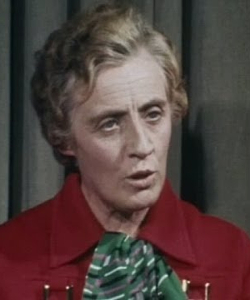
Drumm is born to a staunchly Irish republican family. Drumm’s mother has been active in the Irish War of Independence and the Irish Civil War. Drumm grows up in the village of Killean, County Armagh, where she plays camogie. She is active in the republican movement after meeting her husband, a republican prisoner. She begins to speak at many rallies and protest meetings and is soon elected as Vice President of Sinn Fein. She becomes involved in the Northern Ireland Civil Rights Association in the 1960s and works to rehouse Irish Catholics forced from their homes by loyalist intimidation.
Drumm is jailed twice for seditious speeches. After she is released from HM Prison Armagh, raids on her house by the security forces escalate. She is widely demonised in the British media and is already a target for assassination when she is admitted to Belfast’s Mater Hospital for eye treatment in October 1976.
While recovering from the operation, Drumm is shot at point blank range on October 28, 1976, in a joint operation by the Ulster Volunteer Force and the Ulster Defence Association who are dressed as doctors enabling them to enter and leave the hospital undisturbed. No one has ever been convicted of her murder.
Drumm’s speeches and quotations can be found on murals across Northern Ireland, including:
“The only people worthy of freedom are those who are prepared to go out and fight for it every day, and die if necessary.”
“We must take no steps backward, our steps must be onward, for if we don’t, the martyrs that died for you, for me, for this country will haunt us forever.”
Leslie Alexander Montgomery, playwright, humorist, and writer who writes under the pen name “Lynn Doyle,” dies in Dublin on August 18, 1961. He adopts the pseudonym for his writing, using a homophone of “linseed oil.” Supposedly, he chooses the name after seeing a large tin of linseed oil in a paint shop, initially signing “Lynn C. Doyle” but later dropping the “C.”
Born in Downpatrick, County Down on October 5, 1873, Montgomery is educated at Dundalk in County Louth. He commences work as a bank clerk at the age of 16, and remains with the Northern Banking Company, working in locations such as Keady and Cushendall before a transfer to the quaint seaside town of Skerries in County Armagh. There he becomes branch manager until his retirement in 1934.
Aside from this rather strait-laced, white-collar career, however, Montgomery fosters a life-time passion for writing in various forms and genres, and his contribution to Ulster literature in the early part of the 20th century should not be underestimated.
Montgomery is part of the Ulster Literary Theatre movement founded by Bulmer Hobson and David Parkhill in 1902, and early works include Love and Land, a play that is produced at the Little Theatre in London and represents Montgomery’s first critical success.
Other works during this decade include The Summons and The Lilac Ribbon. By the beginning of the 1920s, Montgomery is a leading northern playwright. He is best known, however for the Ballygullion series, twenty books which fondly caricature Northern Irish village life. The first in the series is published in 1908 and the last in 1957.
Montgomery writes the first book, which would lend its title to the rest of the series, in Dublin. This is followed by other works every few years such as Mr. Wildridge of the Bank, Lobster Salad, Dear Ducks, Me and Mr. Murphy and Rosabelle and Other Stories.
Written in the dialect of the east Ulster region, the stories celebrate an imaginary townland area in the Slieve Gullion region of County Down. They reflect Montgomery’s early years there and in Dundalk. The books also reveal a lot about contemporary Ulster life.
The versatile writer also produces poetry during the 1930s. Ballygullion Ballads, published in 1936 is illustrated by the famous Belfast artist William Conor, as are several of the later editions of his books.
In 1936, Montgomery has the somewhat dubious honour of being the first Irish writer to be appointed to the Censorship Board. He resigns within two years of accepting the job, however, claiming that it is “so terribly easy to read only the marked passages, so hard to wade through the whole book afterwards.”
Following his retirement from the Northern Banking Company, he gains further notoriety as a lecturer, and also regularly broadcasts his stories for the fledgling BBC in Belfast. Indeed, his most productive period as a writer is in his 1960s, during which time he writes his autobiography, An Ulster Childhood, in 1954.
Montgomery dies in Dublin on August 18, 1961, but his legacy is preserved in the Lynn Doyle Collection at Belfast Central Library, which consists of a series of archival boxes which were purchased by the library. The collection is extensive, and includes broadcasts and lecture transcripts, manuscripts, essays, short stories, poetry, personal correspondence, photographs, land leases and legal documents.
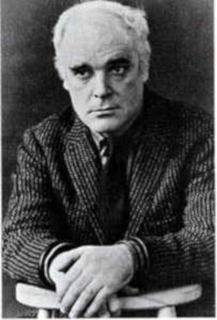
McGee’s first stage experience in Ireland is with Anew McMaster’s touring company, performing the works of William Shakespeare. It is here that he first works with Pinter. He is then brought to London by Tyrone Guthrie for a series of Irish plays. He meets Beckett in 1957 and soon records passages from the novel Molloy and the short story From an Abandoned Work for BBC Radio. Impressed by “the cracked quality of Magee’s distinctly Irish voice,” Beckett requests copies of the tapes and writes Krapp’s Last Tape especially for the actor. First produced at the Royal Court Theatre in London on October 28, 1958, the play stars McGee and is directed by Donald McWhinnie. A televised version is later broadcast by BBC Two on November 29, 1972.
In 1964, McGee joins the Royal Shakespeare Company, after Pinter, directing his own play, The Birthday Party, specifically requests him for the role of McCann. In 1965 he appears in Peter Weiss‘s Marat/Sade, and when the play transfers to Broadway he wins a Tony Award. He also appears in the 1966 RSC production of Staircase opposite Paul Scofield.
McGee’s early film roles include Joseph Losey‘s The Criminal (1960) and The Servant (1963), the latter an adaptation scripted by Pinter. He also appears as Surgeon-Major James Henry Reynolds in Zulu (1964), Séance on a Wet Afternoon (1964), Anzio (1968), and in the film versions of Marat/Sade (1967) and The Birthday Party (1968). He is perhaps best known for his role as the victimised writer Frank Alexander, who tortures Alex DeLarge with Ludwig van Beethoven‘s music, in Stanley Kubrick’s film A Clockwork Orange (1971). His other role for Kubrick is as Redmond Barry’s mentor, the Chevalier de Balibari, in Barry Lyndon (1975).
Patrick McGee dies from a heart attack at his flat in Fulham, London on August 14, 1982, at the age of 60, according to obituaries in The Herald and The New York Times. On July 29, 2017, a blue plaque is unveiled in Edward Street, Armagh to mark Patrick McGee’s birthplace.
An announcement of the death, issued by the church’s press office in both Belfast and Dublin, says Ó Fiaich had appeared unwell to doctors accompanying the group of 600 pilgrims from his seat at Armagh in Northern Ireland.
Ó Fiaich is admitted first to a hospital in Lourdes, then flown by helicopter to Toulouse. Philippe Giovanni, director of the Rangueil Hospital there, says the cardinal died of a brutal cardiac arrest soon after being admitted.
While calling for a unified Ireland and criticizing British policy in Northern Ireland, Ó Fiaich, whose name is pronounced O’Fee, also castigates the violence of the Irish Republican Army, the predominantly Catholic outlawed guerrilla army that seeks to end British rule in Northern Ireland and unite it with the Republic of Ireland.
Ó Fiaich is appointed spiritual leader of Ireland’s four million Catholics in in 1977. Two years later Pope John Paul II makes him one of the first cardinals of his papacy.
Tributes to Ó Fiaich poured in from some both sides of the Irish border. In Dublin, TaoiseachCharles Haughey says he is “devastated, … deeply grieved.” Britain’s top official in Northern Ireland, Secretary of StatePeter Brooke, also expresses sadness. “We did not always agree about everything, but he treated me with the greatest possible courtesy, friendliness and warmth.”
However hardline Protestant leader Ian Paisley of Northern Ireland’s Democratic Unionist Party says Ó Fiaich is “the mallet of Rome against the Protestants of Northern Ireland.” He claims Ó Fiaich had “made an outrageous statement that the majority of bigotry in Ulster stemmed from the Protestant section of the community” and added, “He did not seem to realize that the IRA, which is carrying out the most atrocious of outrages … were the people who needed to be indicted with bigotry.”
In Belfast, Ulster Television suspends scheduled programs for an hour and airs a religious program and a news program about the cardinal.
Ó Fiaich retains close ties to Armagh, which had been dubbed “bandit country” because of the IRA activity. From the time he becomes primate, he speaks publicly of his wishes for a united Ireland. He visits IRA guerrillas in jail, calls the British Army’s fatal shooting of an Irish civilian murder, and says the border dividing Ireland is “unnatural.”
Following his death, Ó Fiaich lies in state at St. Patrick’s Cathedral, Armagh, where thousands of people line up to pay their respects.
The bombing occurs during a period of heightened IRA activity. The previous two years are some of the less active and less violent years during the Troubles. The British policy of criminalization seems to be working but the IRA is gearing up for a new offensive. In 1976, 295 people are killed compared with 111 in 1977 and 80 in 1978 but in 1979 the number increases to 120 with 76 being British security force members compared to just 34 in 1978. The entire IRA “battalion structure” has been reconstructed using more smaller, tight knit cells making the IRA more secretive, harder to infiltrate and makes them much more effective at carrying out larger operations. The only brigade area which does not go under this reconstruction is the South Armagh Brigade which is viewed by the IRA Army Council as an independent Republic. In fact, by the mid-1970s South Armagh has become so dangerous for the British security forces, who are snipped at and have bombs thrown at them whenever they enter the area on foot, they have to be airlifted into the area and ground patrols are stopped altogether effectively giving up the ground to the South Armagh PIRA.
While the four Protestant members of the Royal Ulster Constabulary are on an evening patrol, they are all killed when a Provisional IRA unit detonates a remote-controlled bomb hidden in a parked van. The IRA unit detonates the well-hidden bomb at the exact second the RUC mobile patrol is passing giving the officers no chance of survival. The dead RUC men are, Paul Gray (25), Robert Lockhart (44), Richard Baird (28) and Noel Webb (30). The bomb is estimated at 1,000 lbs. and is believed to be the largest bomb used by the IRA up to that date.
In January 1981, Patrick Joseph Traynor (27) from Crossmaglen is found guilty of the four murders and a range of other charges. He is jailed for life on each of the four murder charges and is sentenced to 12 years for the related crimes.
The IRA continues to intensify their campaign. On August 29, 1979, the IRA carries out two separate attacks in Northern Ireland and the Republic of Ireland that shock the world and give huge media coverage to their campaign. The first is the killing of Lord Mountbatten and his grandson when the boat they are on off the County Sligo coast is blown up by a remote-controlled bomb. The second is the Warrenpoint Ambush where the IRA kills 18 British soldiers in a double bomb attack, the highest loss of life for the British Army during the Troubles. The IRA carries out several of these type of large attacks against the British forces throughout the 1980s like the 1983 Ballygawley land mine attack which kills four soldiers, the 1988 Lisburn van bombing which kills six soldiers and the Ballygawley bus bombing also carried out in 1988 which kills eight soldiers and injures 28.
The Baltic Exchange bombing, an attack by the Provisional Irish Republican Army (PIRA) on London‘s financial centre, takes place on April 10, 1992, the day after the General Election which re-elects John Major from the Conservative Party as Prime Minister. The one-ton bomb, concealed in a large white truck and consisting of a fertilizer device wrapped with a detonation cord made from 100 lbs. of Semtex, is the biggest detonated on mainland Britain since World War II. The bombing kills three people, injures 91 others, and causes massive damage, destroying the Baltic Exchange building and severely damaging surroundings.
Since the PIRA’s campaign in the early 1970s, many commercial targets are attacked on the mainland which cause economic damage and severe disruption. Since 1988, Gerry Adams of Sinn Féin and John Hume of the Social Democratic and Labour Party are engaged in private dialogue to create a broad Irish nationalist coalition. British Prime Minister John Major refuses to openly enter into talks with Sinn Féin until the IRA declares a ceasefire. The risk of an IRA attack on London increases due to the lack of progress with political talks, resulting in a warning being circulated to all police forces in Britain highlighting intelligence reports of a possible attack, as it is believed that the IRA has enough personnel, equipment and funds to launch a sustained campaign in England.
On April 10, 1992, at 9:20 PM, a huge bomb is detonated in front of the Baltic Exchange building at 24-28 St. Mary Axe. The façade of the offices is partially destroyed, and the rest of the building is extensively damaged. The bomb also causes heavy damage to surrounding buildings. It causes £800 million worth of damage, £200 million more than the total damage caused by the 10,000 explosions that had occurred during the Troubles in Northern Ireland up to that point.
The IRA gives a telephone warning twenty minutes before the explosion, saying there is a bomb inside a van outside the London Stock Exchange. This is a half mile away from the actual location by the Baltic Exchange.
The homemade explosive is inside a white Ford Transit van parked in St. Mary Axe. The components are developed in South Armagh, shipped from Ireland, and assembled in England. The attack is planned for months and marks a dangerous advance to the British of the IRA’s explosives manufacturing capabilities. The bomb is described as the most powerful to hit London since the Luftwaffe raids of World War II.
A few hours later another similarly large bomb goes off in Staples Corner in north London, also causing major damage.
The next day, the IRA claims responsibility in a statement from Dublin. It is believed the IRA are trying to send a message to the Conservative Party who won the election, which also sees Sinn Féin leader Gerry Adams lose his unused seat in the Westminster Parliament.
Many of the damaged buildings are once again badly damaged by the Bishopsgate bombing the following year. Both incidents contribute to the formation of the “Ring of Steel” in the city to protect it from further terrorism.
The Exchange sells its badly damaged historic building to be redeveloped under the auspices of English Heritage as a Grade II* site. However, the City and English Heritage later allow it to be demolished, seeking instead a new landmark building. The site, together with that of the UK Chamber of Shipping at 30–32 St. Mary Axe, is now home to the skyscraper commissioned by Swiss Re commonly referred to as The Gherkin.
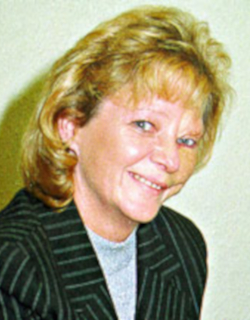
Rosemary Nelson, née Magee, obtains her law degree at Queens University Belfast. She works with other solicitors for a number of years before opening her own practice. She represents clients in a number of high-profile cases, including Michael Caraher, one of the South Armagh Snipers, as well as a republican paramilitary accused of killing two Royal Ulster Constabulary (RUC) officers. She also represents the Garvaghy Road Residents’ Coalition in nearby Portadown in the long-running Drumcree conflict against the Orange Order and RUC.
Nelson claims she has received death threats from members of the RUC as a result of her legal work. Some RUC officers make abusive and threatening remarks about her to her clients, which become publicly known. In 1998, the United Nations Special Rapporteur on the Independence of Judges and Solicitors, Param Cumaraswamy, notes these threats in his annual report, and states in a television interview that he believes her life could be in danger. He makes recommendations to the British government concerning threats from police against Solicitors, which are not acted upon. Later that year, Nelson testifies before a committee of the United States Congress investigating human rights in Northern Ireland, confirming that death threats have been made against her and her three children.
Nelson is assassinated, at the age of 40, by a car bomb outside her home in Lurgan on March 15, 1999. A loyalist paramilitary group calling itself the Red Hand Defenders claim responsibility for the killing. She is survived by her husband and their three children.
In 2004, the Cory Collusion Inquiry recommends that the UK Government hold an inquiry into the circumstances of Nelson’s death. She is posthumously awarded the Train Foundation‘s Civil Courage Prize, which recognises “extraordinary heroes of conscience.”
The resulting inquiry into her assassination opens at the Craigavon Civic Centre, Craigavon, County Armagh, in April 2005. In September 2006 the British Security Service MI5 announces it would be represented at the inquiry. This move provokes criticism from Nelson’s family, who reportedly express concerns that MI5 would remove sensitive or classified information.
The results of the inquiry are published on May 23, 2011. The inquiry finds no evidence that state agencies (the RUC, British Army and MI5) had “directly facilitated” her murder, but “could not exclude the possibility” that individual members had helped the perpetrators. It finds that state agencies had failed to protect her and that some RUC intelligence about her had been leaked. Both of these, it says, increased the danger to her life. The report also states that RUC officers had publicly abused and assaulted her in 1997, and made threatening remarks about her to her clients, which became publicly known. It concludes that this helped “legitimise her as a target in the eyes of loyalist terrorists.”
The Continuity IRA smashes a window with a brick knowing the PSNI would respond. At about 9:45 PM two police vehicles arrive at the scene. The officers are fired upon as they attempt to exit their vehicles. A gunman shoots Carroll from 50 metres away with an AK-47 while in his patrol car. Carroll is shot in the head.
The Continuity IRA claims responsibility saying their North Armagh Battalion is responsible for the attack and that “As long as there is British involvement in Ireland, these attacks will continue.”
On March 10 there is a one-minute silence in the Northern Ireland Assembly. Prime MinisterGordon Brown states that “These are murderers who are trying to distort, disrupt and destroy a political process that is working for the people of Northern Ireland.” Chief Constable Sir Hugh Orde calls it a “sad day” and says the gunmen are “criminal psychopaths.”
Richard Walsh, the spokesman for Republican Sinn Féin, a party linked to the Continuity IRA, says the killings are “an act of war” rather than murder. “We have always upheld the right of the Irish people to use any level of controlled and disciplined force to drive the British out of Ireland. We make no apology for that.” He also describes the PSNI as “an armed adjunct of the British Army.”
Deputy First Minister of Northern IrelandMartin McGuinness says those responsible are “traitors to the island of Ireland” and that “they have betrayed the political desires, hopes and aspirations of all of the people who live on this island.”
Benn’s grandfather, Jonn Benn, came from Cumberland about 1760 as engineer of the Newry Canal. His father, also John Benn (1767-1853), was proprietor of a brewery in Belfast. He is educated at the Belfast Academy, under Rev. Dr. Bruce and afterwards under Sheridan Knowles, then a teacher of English at Belfast. He enters the collegiate classes of the Royal Belfast Academical Institution in 1816, being one of the original alumni, and takes gold medals in logic (1817) and moral philosophy (1818).
In 1819 the faculty prize is offered for the “best account of a parish.” Benn is the successful essayist, with the parish of Belfast as his theme. He also gains in 1821 the faculty prize (The Crusades), and Dr. Tennant’s gold medal (Sketch of Irish Authors in the Seventeenth and Eighteenth Centuries). His essay of 1819 attracts the attention of James M’Knight, LL.D., then editor of the Belfast News-Letter who offers to print and publish it. It is issued anonymously in an enlarged form in 1823, with three maps and sixteen engravings by J. Thomson. For so young a writer it is a work of uncommon judgment and research, exceedingly well written, with an eye for scenery and a taste for economics as well as for antiquities. It is not superseded by Benn’s later labours.
Benn, with his brother Edward (1798- 1874), engages in distilling near Downpatrick. Subsequently the brothers spend the prime of their days on an estate they purchase at Glenravel, near Ballymena. Here, in an unimproved district, they plant the hillsides, plough the moors, build good houses, and collect a valuable library. They endeavour to create a new industry by an experiment in the manufacture of potato spirit, but excise regulations in place at the time frustrate their object. The cost of the experiment, and the losses from potato disease, induce the brothers to undertake a business in Liverpool for some years. Returning to Glenravel, a casual circumstance leads to a rich discovery of iron ore in the Glenravel hills. The first specimen is smelted in 1851 under Edward Benn’s direction. In 1866 an agreement is made with James Fisher, of Barrow-in-Furness, to work the mineral beds. Hence comes a new and valuable addition to the commercial products of Ulster, which has since attained important proportions.
Meanwhile, Edward Benn is contributing antiquarian articles to various journals and forming a fine archaeological collection, now in the Ulster Museum. It his proposed to George to resume and complete the history of Belfast. He modestly indicates, as more fit for the task, William Pinkerton, who collects some materials, but dies in 1871 without having begun the history. Pinkerton’s papers are submitted to Benn for publication, but he finds employment of them impracticable, and states in his preface to his history, “It is all my own work from beginning to end.”
Benn returns to Belfast after his brother’s death in 1874, publishing A History of the Town of Belfast in 1877. A second volume appears in 1880. This supplementary volume, though the proof-sheets are “corrected by a kind friend,” the late John Carlisle, head of the English department in the Royal Academical Institution, bears evidence of the author’s affecting statement: “Before I had proceeded very far, my sight entirely failed.” Benn dies on January 8, 1882.
Edward and George Benn are members of the nonsubscribing presbyterian body, but wide in their sympathies and broad in their charities beyond the limits of their sect. Edward is the founder, and George the benefactor, of three hospitals in Belfast and their gifts to educational institutions are munificent.
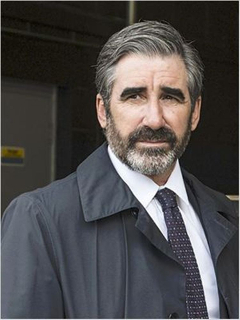
Lynch is the eldest of five children of an Irish father and an Italian mother from Trivento in the Province of Campobasso. His younger sister Susan and his nephew Thomas Finnegan are also actors. He attends St. Colman’s College, Newry and begins acting in Irish language-medium plays at school during the early years of the conflict in Northern Ireland.
Lynch plays the part of football legend George Best in the 2000 film Best. He plays the lead in the Australian feature Angel Baby, winning the Australian Film Institute award for best leading actor and the Australian Film Critics Association award for best actor of 1995. He is nominated for a Satellite Film Award for the film Moll Flanders in 1996. He works with acclaimed Belgian director Marion Hänsel on her adaptation of Booker-nominated author Damon Galgut‘s novel, The Quarry (1998), which wins Best Film at the Montreal World Film Festival. He wins Best Actor for the lead role in Best at the Fort Lauderdale Film Festival in 2000.
Lynch is also a novelist. His first novel, Torn Water, is published in November 2005 by the 4th Estate, a literary imprint of HarperCollins Publishers LLC, and his second, Falling Out of Heaven, is published on May 13, 2010, by the same publisher.






 seamus dubhghaill