seamus dubhghaill

Promoting Irish Culture and History from Little Rock, Arkansas, USA


Leave a comment

Birth of Maurice Walsh, Author of “The Quiet Man”

maurice-walsh

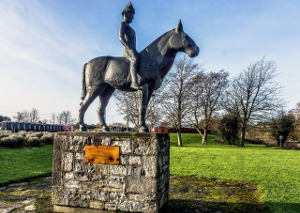
Maurice Walsh, Irish novelist best known for the short story The Quiet Man which is later made into an Oscar-winning movie, is born on April 21, 1879, in Ballydonoghue near Listowel, County Kerry.

Walsh is the third child of ten and the first son born to John Walsh, a local farmer, and his wife Elizabeth Buckley who live in a three-room thatched farmhouse. John Walsh’s main interests are books and horses and he himself does little work about the farm, preferring to have a hired man. The most famous of these hired men is Paddy Bawn Enright, whose name is immortalised by Walsh in his story The Quiet Man, although the name is not used in the later motion picture. John Walsh passes on to his son not only a love of books but also legends and folk tales that are later featured of many of Walsh’s books.

Walsh goes to school in Lisselton, a mile or so up the road from Ballydonoghue, and later goes to St. Michael’s College in Listowel to prepare for the Civil Service examination. He enters the service on July 2, 1901, as an Assistant Revenue Officer in the Customs and Excise Service. He is posted to Scotland before the year is out and, although he subsequently has a number of postings outside Scotland, he spends most of his time there while in the British service.

Walsh has a life-long interest in writing and, during his early years in Scotland, this interest starts to bear fruit. He submits some of his stories and has two published in the Irish Emerald in 1908. Later that year, on August 8, 1908, Walsh marries Caroline Begg in Dufftown, Banffshire, Scotland.

When the Irish Free State is formed in 1922, Walsh transfers to its excise service and moves to Dublin. Fighting is still going on there at the time, and he leaves his family in Scotland until it is safe for them to join him in 1923. The story The Key Above the Door is written during the months of separation although it is not published until some years later, appearing first in Chambers Journal as a serial between December 1925 and May 1926 and then in book form, published by W & R Chambers Ltd., in July 1926.

Sales of Walsh’s books grow steadily, especially in the wake of an unsolicited and generous letter from J. M. Barrie, the creator of Peter Pan, praising The Key Above the Door, which Chambers is subsequently able to use on dust covers of Walsh’s books.

Walsh retires from government service in 1933 but his success as a writer continues. In that same year he sells a story to The Saturday Evening Post, then a well-known weekly magazine published in the United States. That story, later to be incorporated in the collection of stories published under the title Green Rushes, is The Quiet Man.

Director John Ford reads the story in 1933 and soon purchases the rights to it for $10. Walsh is paid another $2,500 when Republic Pictures buys the idea and receives a final payment of $3,750 when the film is actually made. Filming commences on June 7, 1951, with John Wayne and Maureen O’Hara in the leading roles. All of the outdoor scenes are shot on location in County Mayo and County Galway. The inside scenes are filmed in late July at the Republic Studios in Hollywood. The Quiet Man wins the Academy Award for Best Director for John Ford, his fourth, and for Best Cinematography.

Walsh becomes President of the Irish branch of PEN International in 1938 and visits the United States for an international meeting that year as the Irish delegate. His wife Caroline is able to accompany him although she has been in failing health for some years and ultimately dies in January 1941. Walsh himself dies on February 18, 1964, in Blackrock, a suburb of Dublin, and is buried in the Esker cemetery at Lucan, County Dublin. President Éamon de Valera attended Walsh’s funeral Mass.

In 2013, The Quiet Man is selected for preservation in the United States National Film Registry by the Library of Congress as being “culturally, historically, or aesthetically significant.”


Leave a comment

Death of Richard de Clare, 2nd Earl of Pembroke

strongbow-effigy-christ-church-dublin

Richard de Clare, 2nd Earl of Pembroke, Lord of Leinster, Justiciar of Ireland, and Cambro-Norman lord notable for his leading role in the Norman invasion of Ireland, dies in Dublin on April 20, 1176. Like his father, he is also commonly known by his nickname “Strongbow.”

As the son of Gilbert de Clare, 1st Earl of Pembroke, Richard succeeds to his father’s estates after his death in 1148 but is deprived of the title by King Henry II of England in 1154 for siding with King Stephen of England against Henry’s mother, the Empress Matilda. He sees an opportunity to reverse his bad fortune in 1168 when he meets Diarmait Mac Murchada, the deposed King of Leinster.

In 1167, Diarmait Mac Murchada is deprived of the Kingdom of Leinster by the High King of Ireland, Ruaidrí Ua Conchobair. To recover his kingdom, Mac Murchada solicits help from King Henry II of England. Henry provides a letter of comfort for willing supporters of Mac Murchada’s cause in his kingdom. However, after his return to Wales, he fails to rally any forces to his standard. He eventually meets Richard de Clare and other barons of the Welsh Marches. Mac Murchada comes to an agreement with de Clare where, for the Earl’s assistance with an army the following spring, he can have Mac Murchada’s eldest daughter, Aoife, in marriage and the succession to Leinster.

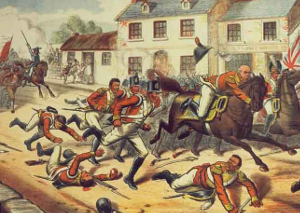
Mac Murchada and Richard de Clare raise a large army, which includes Welsh archers and arranges for Raymond FitzGerald to lead it. The force takes the Ostman towns of Wexford, Waterford, and Dublin in rapid succession between 1169 and 1170. Richard de Clare, however, is not with the first invading party and arrives later, in August 1170.

In May 1171, Diarmait Mac Murchada dies and his son, Donal MacMurrough-Kavanagh claims the kingdom of Leinster in accordance with his rights under the Brehon Laws. Richard de Clare also claims the kingship in the right of his wife. At this time, Strongbow sends his uncle, Hervey de Montmorency, on an embassy to Henry II, which is necessary to appease the King who is growing restive at the count’s increasing power. Upon his return, de Montmorency conveys the King’s terms – the return of Richard de Clare’s lands in France, England, and Wales as well as leaving him in possession of his Irish lands. In return, Richard de Clare surrenders Dublin, Waterford, and other fortresses to the English king. Henry’s intervention is successful and both the Gaelic and Norman lords in the south and east of Ireland accept his rule. Richard de Clare also agrees to assist Henry II in his upcoming war in France.

Richard de Clare dies on April 20, 1176, of an infection in his leg or foot. He is buried in Holy Trinity Church in Dublin with his uncle-in-law, Lorcán Ua Tuathail, Archbishop of Dublin, presiding. King Henry II takes all of Strongbow’s lands and castles for himself and places a royal official in charge of them.


Leave a comment

First Performance of Handel’s Messiah

george-friedrich-handel

George Friedrich Handel’s Messiah is performed for the first time at Mr. Neale’s Great Musick Hall on Fishamble Street in Dublin on April 13, 1742. It receives its London premiere nearly a year later. After an initially modest public reception, the oratorio gains in popularity, eventually becoming one of the best known and most frequently performed choral works in Western music.

Handel decides to give a season of concerts in Dublin in the winter of 1741–42 arising from an invitation from the Duke of Devonshire, then serving as Lord Lieutenant of Ireland. After arriving in Dublin on November 18, 1741, Handel arranges a subscription series of six concerts, to be held between December 1741 and February 1742 at the Great Musick Hall on Fishamble Street. These concerts are so popular that a second series is quickly arranged. Messiah figures in neither series.

In early March, Handel begins discussions with the appropriate committees for a charity concert, to be given in April, at which he intends to present Messiah. He seeks and is given permission from St. Patrick’s Cathedral and Christ Church Cathedral to use their choirs for this occasion. The women soloists are Christina Maria Avoglio, who sang the main soprano roles in the two-subscription series, and Susannah Cibber, an established stage actress and contralto who sang in the second series. The performance, also in the Fishamble Street hall, is originally announced for April 12, but is deferred for one day “at the request of persons of Distinction.” The orchestra in Dublin, the exact size of which is unknown, is comprised of strings, two trumpets, and timpani. Handel has his own organ shipped to Ireland for the performances.

The three charities benefit from the performance – the prisoners’ debt relief, the Mercer’s Hospital, and the Charitable Infirmary. In its report on a public rehearsal, the Dublin News-Letter describes the oratorio as “… far surpassing anything of that Nature which has been performed in this or any other Kingdom.” Seven hundred people attend the premiere on April 13. In order to accommodate the largest possible audience, gentlemen are requested to remove their swords and ladies are asked not to wear hoops in their dresses. The performance earns unanimous praise from the assembled press: “Words are wanting to express the exquisite delight it afforded to the admiring and crowded Audience.” A Dublin clergyman, Rev. Delaney, is so overcome by Susanna Cibber’s rendering of “He was despised” that he reportedly leaps to his feet and cries, “Woman, for this be all thy sins forgiven thee!” The takings amount to around £400, providing about £127 to each of the three nominated charities and securing the release of 142 indebted prisoners.

Handel remains in Dublin for four months after the premiere. He organises a second performance of Messiah on June 3, which is announced as “the last Performance of Mr. Handel’s during his Stay in this Kingdom.” In this second Messiah, which is for Handel’s private financial benefit, Cibber reprises her role from the first performance, although details of other performers are not recorded.


Leave a comment

William Gladstone Introduces the First Home Rule Bill

gladstone-introduces-home-rule-bill-1886

William Gladstone introduces the Government of Ireland Bill 1886, commonly known as the First Home Rule Bill, in the Parliament of England on April 8, 1886. It is the first major attempt by a British government to enact a law creating home rule for part of the United Kingdom of Great Britain and Ireland. The bill proposes to create a devolved assembly for Ireland which will govern Ireland in specific areas. The Irish Parliamentary Party under Charles Stewart Parnell has been campaigning for home rule for Ireland since the 1870s.

The Bill, like his Landlord and Tenant (Ireland) Act 1870, is very much the work of Gladstone, who excludes both the Irish MPs and his own ministers from participation in the drafting.

If passed, the 1886 Bill would create a unicameral assembly consisting of two Orders which could meet either together or separately. The first Order would consist of the 28 Irish representative peers plus 75 members elected through a highly restricted franchise. It could delay the passage of legislation for up to 3 years. The second Order would consist of either 204 or 206 members. All Irish MPs would be excluded from Westminster altogether.

Executive power would be possessed by the Lord Lieutenant of Ireland whose executive would not be responsible to either Order.

Britain would still retain control over a range of issues including peace, war, defence, treaties with foreign states, trade, and coinage. No special provision would be made for Ulster. Britain would retain control of the Royal Irish Constabulary (RIC) until it deems it safe for control to pass to Dublin. The Dublin Metropolitan Police would pass to Irish control.

When the bill is introduced, Charles Stewart Parnell has mixed reactions. He says that it has great faults but is prepared to vote for it. In his famous Irish Home Rule speech, Gladstone beseeches Parliament to pass it and grant Home Rule to Ireland in honour rather than being compelled to one day in humiliation. Unionists and the Orange Order are fierce in their resistance. For them, any measure of Home Rule is denounced as nothing other than Rome Rule.

The vote on the Bill takes place on 8 June 1886, after two months of debate. The Government of Ireland Bill is defeated by a vote of 341-311. In the staunchly loyalist town of Portadown, the so-called “Orange Citadel” where the Orange Order is founded in 1795, Orangemen and their supporters celebrate the Bill’s defeat by “Storming the Tunnel.”

Parliament is dissolved on June 26 and the U.K. general election of 1886 is called. Historians have suggested that the 1886 Home Rule Bill was fatally flawed by the secretive manner of its drafting, with Gladstone alienating Liberal figures like Joseph Chamberlain who, along with a colleague, resigned in protest from the ministry, while producing a Bill viewed privately by the Irish as badly drafted and deeply flawed.


1 Comment

Birth of Musician Gary Moore in Belfast

gary-moore

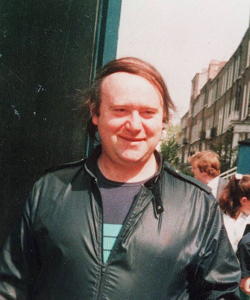
Robert William Gary Moore, Northern Irish musician, most widely recognised as a singer, songwriter, and virtuoso rock and blues guitarist, is born in Belfast on April 4, 1952.

In a career dating back to the 1960s, Moore plays with musicians including Phil Lynott and Brian Downey during his teenage years, leading him to memberships of the Irish bands Skid Row and Thin Lizzy, and British band Colosseum II. Moore shares the stage with such blues and rock musicians as B.B. King, Albert King, Jack Bruce, Albert Collins, George Harrison, and Greg Lake, as well as having a successful solo career. He guests on a number of albums recorded by high-profile musicians.

Moore starts performing at a young age, having picked up a battered acoustic guitar at the age of eight. He gets his first quality guitar at the age of 14, learning to play the right-handed instrument in the standard way despite being left-handed.

At the age of 16, aiming to become a musician, he moves to Dublin. Moore’s greatest influence in the early days is guitarist Peter Green of Fleetwood Mac who is a mentor to Moore when performing in Dublin. Other early musical influences are artists such as Albert King, Elvis Presley, The Shadows, and The Beatles. Later, having seen Jimi Hendrix and John Mayall’s Bluesbreakers in his hometown of Belfast, his own style is developing into a blues-rock sound that becomes the dominant form of his career in music.

In Dublin, Moore joins the group Skid Row with Noel Bridgeman and Brendan “Brush” Shiels. It is with this group that he earns a reputation in the music industry, and his association with Phil Lynott begins.

Moore moves to England in 1970 and in 1973, under the name “The Gary Moore Band,” he releases his first solo album, Grinding Stone. Grinding Stone receives “Album of the Year” accolades on KTAC-FM/Seattle-Tacoma, Washington, in 1974.

In 1974 he joins Thin Lizzy after the departure of founding member Eric Bell. From 1975 to August 1978, he is a member of Colosseum II. In 1977, Moore rejoins Thin Lizzy, first as a temporary replacement for Brian Robertson, and on a permanent basis a year later.

In July 1979, he leaves the band permanently to focus on his solo career, again with help from Phil Lynott. After a series of rock records, Moore returns to blues music with Still Got the Blues (1990), with contributions from Albert King, Albert Collins, and George Harrison. Other collaborations during his solo years include a broad range of artists including Trilok Gurtu, Dr. Strangely Strange, Jimmy Nail, Mo Foster, Ginger Baker, Jack Bruce, Jim Capaldi, B.B. King, Vicki Brown, Cozy Powell, Rod Argent, The Beach Boys, Paul Rodgers, Keith Emerson, Roger Daltrey, and Otis Taylor.

Gary Moore dies of a heart attack in his sleep at the age of 58 during the early hours of February 6, 2011. At the time, he is on holiday with a girlfriend at the Kempinski Hotel in Estepona, Spain. Moore is laid to rest in St. Margaret’s Churchyard, Rottingdean, East Sussex, England, in a private ceremony with only family and close friends in attendance.


Leave a comment

Birth of Scientific Writer Dionysius Lardner in Dublin

dionysius-lardner

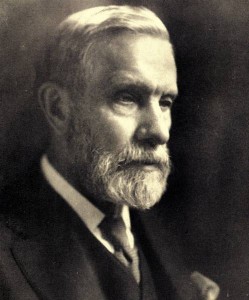
Dionysius Lardner, scientific writer who popularised science and technology and edited the 133-volume Cabinet Cyclopædia, is born in Dublin on April 3, 1793.

Lardner’s father was a solicitor in Dublin, who wishes his son to follow the same calling. After some years of uncongenial desk work, Lardner enters Trinity College, Dublin in 1812, obtains a B.A. in 1817 and an M.A. in 1819, winning many prizes. While in Dublin, Lardner begins to write and lecture on scientific and mathematical matters, and to contribute articles for publication by the Irish Academy.

In 1828, Lardner is elected professor of natural philosophy and astronomy at University College, London, a position he holds until he resigns his professorship in 1831. He is the author of numerous mathematical and physical treatises on such subjects as algebraic geometry, differential and integral calculus, and the steam engine. He also writes handbooks on various departments of natural philosophy, but it is as the editor of Lardner’s Cabinet Cyclopædia that he is best remembered.

The Cabinet Cyclopædia eventually comprises 133 volumes with many of the ablest savants of the day contributing to it, including Sir Walter Scott, Thomas Moore, Connop Thirlwall, and Robert Southey. Lardner himself is the author of the treatises on arithmetic, geometry, heat, hydrostatics and pneumatics, mechanics, and electricity. The Cabinet Library and the Museum of Science and Art are his other chief undertakings.

In 1840, Lardner’s career receives a major setback as a result of his involvement with Mary Spicer Heaviside, the wife of Captain Richard Heaviside, of the Dragoon Guards. Lardner runs off to Paris with Mrs. Heaviside and is pursued by her husband. When he catches up with them, Heaviside subjects Lardner to a flogging but is unable to persuade his wife to return with him. Later that year Heaviside successfully sues Lardner for “criminal conversation” (adultery) and receives a judgment of £8,000. The Heavisides are divorced in 1845 and Lardner marries Mary Heaviside in 1846. The scandal effectively ends his career in England, so Lardner and his wife remained in Paris until shortly before his death in 1859. He is able to maintain his career by lecturing in the United States between 1841 and 1844, which proves financially rewarding.

Lardner dies in Naples, Italy, on April 29, 1859, and is buried in the Cimitero degli Inglesi there.


Leave a comment

The Founding of Cumann na mBan

cumann-na-mban

Cumann na mBan, an Irish republican women’s paramilitary organisation, is formed in Dublin on April 2, 1914.

In 1913, a number of women decide to hold a meeting in Wynn’s Hotel, Dublin, for the purpose of discussing the possibility of forming an organisation for women who would work in conjunction with the recently formed Irish Volunteers. A meeting led by Kathleen Lane-O’Kelly on April 2, 1914, marks the foundation of Cumann na mBan. Branches, which pledge to the Constitution of the organisation, are formed throughout the country and are directed by the Provisional Committee.

The primary aims of Cumann na mBan, as stated in its constitution, are to “advance the cause of Irish liberty and to organize Irishwomen in the furtherance of this object,” to “assist in arming and equipping a body of Irish men for the defence of Ireland” and to “form a fund for these purposes, to be called ‘The Defence of Ireland Fund.'”

Recruits come from diverse backgrounds, mainly white-collar workers and professional women, but with a significant proportion also from the working class. In September 1914, the Irish Volunteers split over John Redmond‘s appeal for its members to enlist in the British Army. The majority of Cumann na mBan members support the 10,000 to 14,000 volunteers who rejected this call and who retain the original name, the Irish Volunteers.

On April 23, 1916, when the Military Council of the Irish Republican Brotherhood finalises arrangements for the Easter Rising, it integrates Cumann na mBan, along with the Irish Volunteers and Irish Citizen Army, into the “Army of the Irish Republic.”

On the day of the Rising, Cumann na mBan members arrive armed with both a Webley revolver and a typewriter, entering the General Post Office (GPO) on O’Connell Street in Dublin with their male counterparts. By nightfall, women insurgents are established in all the major rebel strongholds throughout the city. The majority of the women work as Red Cross workers, are couriers, or procure rations for the men. Members also gather intelligence on scouting expeditions, carry despatches, and transfer arms from dumps across the city to insurgent strongholds. A number of Cumann na mBan members die during the Rising.

At the Four Courts, they help to organise the evacuation of buildings at the time of surrender and destroy incriminating papers. On April 29, the leaders at the GPO decide to negotiate surrender. Patrick Pearse, the overall Commandant-General, asks Cumann na mBan member Elizabeth O’Farrell to act as a go-between. Under British military supervision she brings Pearse’s surrender order to the rebel units still fighting in Dublin. Over 70 women, including many of the leading figures in Cumann na mBan, are arrested after the insurrection, and many of the women who are captured fighting are imprisoned in Kilmainham Gaol. All but twelve are released by May 8, 1916.

Revitalized after the Rising and led by Countess Markievicz, Cumann na mBan takes a leading role in popularising the memory of the 1916 leaders, organising prisoner relief agencies, opposing conscription, and canvassing for Sinn Féin in the 1918 general election, in which Markievicz is elected Teachta Dála.

Cumann na mBan supports the Provisional wing in the 1969-1970 split in the Irish Republican Army (IRA) and Sinn Féin. In Northern Ireland, Cumann na mBan is integrated into the mainstream IRA during the conflict, although they continue to exist as a separate organisation in the Republic of Ireland. In 1986, Cumann na mBan opposes the decision by the IRA and Sinn Féin to drop the policy of abstentionism and aligns itself with Republican Sinn Féin and the Continuity IRA.

In 2014, Cumann na mBan celebrates the Centenary of its foundation in Wynn’s Hotel, Dublin, the site of their founding in 1914. The U.K. Home Office in March 2015 lists Cumann na mBan as a group linked to Northern Ireland related terrorism. However, it is not so listed in 2008 by the U.S. State Department.


Leave a comment

Birth of Father Ted, Dermot John Morgan

dermot-john-morgan

Dermot John Morgan, Irish comedian and actor who achieves international renown for his role as Father Ted Crilly in the Channel 4 sitcom Father Ted, is born in Dublin on March 31, 1952.

Educated at Oatlands College, Stillorgan, and University College, Dublin (UCD), Morgan comes to prominence as part of the team behind the highly successful RTÉ television show The Live Mike. Morgan makes his debut in the media on the Morning Ireland radio show produced by Gene Martin. Between 1979 and 1982 Morgan, who has been a teacher at St. Michael’s College, Ailesbury Road, plays a range of comic characters who appear between segments of the show, including Father Trendy, an unctuous trying-to-be-cool Catholic priest given to drawing ludicrous parallels with non-religious life in two-minute ‘chats’ to camera.

Morgan’s success as Father Trendy and other characters leads him to leave teaching and become a full-time comedian.

Morgan’s biggest Irish broadcasting success occurs in the late 1980s on the Saturday morning radio comedy show Scrap Saturday, which mocks Ireland’s political, business, and media establishment. The show’s treatment of the relationship between the ever-controversial Taoiseach Charles Haughey and his press secretary P.J. Mara prove particularly popular. When RTÉ axes the show in the early 1990s a national outcry ensues. Morgan lashes the decision, calling it “a shameless act of broadcasting cowardice and political subservience.”

Already a celebrity in Ireland, Morgan’s big break comes in Channel 4‘s Irish sitcom Father Ted, which runs for three series from April 21, 1995 until May 1, 1998. Writers Graham Linehan and Arthur Mathews audition many actors for the title role, but Morgan’s enthusiasm wins him the part.

Father Ted centres on three disparate characters. Father Ted Crilly, played by Morgan, lives a frustrated life trapped on the fictional Craggy Island. Irish TV comedy actor Frank Kelly plays Father Jack Hackett, a foul-mouthed and apparently brain-damaged alcoholic, while child-minded Father Dougal McGuire is played by comedian Ardal O’Hanlon. The three priests are looked after by their housekeeper, Mrs. Doyle, played by Pauline McLynn, with whom Morgan had worked on Scrap Saturday. Father Ted enjoys widespread popularity and critical acclaim. In 1998, the show wins a BAFTA award for the best comedy, Morgan wins a BAFTA for best actor, and McLynn is named best actress.

On February 28, 1998, one day after recording the last episode of Father Ted, Morgan has a heart attack while hosting a dinner party at his home in southwest London. He is rushed to hospital but dies soon afterwards. Morgan’s Requiem Mass in St. Therese’s Church in Mount Merrion, south Dublin, is attended by the President of Ireland Mary McAleese, her predecessor, Mary Robinson, and by political and church leaders, many of whom had been the targets of his humour in Scrap Saturday. He is cremated at Glasnevin Cemetery and his ashes are buried in the family plot in Deansgrange Cemetery.


3 Comments

Birth of Henry Wilfrid Brambell in Dublin

henry-wilfred-brambell

Henry Wilfrid Brambell, Irish film and television actor best known for his role in the British television series Steptoe and Son, is born in Dublin on March 22, 1912.

Brambell is the youngest of three sons born to Henry Lytton Brambell, a cashier at the Guinness Brewery, and his wife, Edith Marks, a former opera singer. His first appearance is as a child, entertaining the wounded troops during World War I. Upon leaving school he works part-time as a reporter for The Irish Times and part-time as an actor at the Abbey Theatre before becoming a professional actor for the Gate Theatre. He also does repertory at Swansea, Bristol and Chesterfield. In World War II, he joins the British military forces entertainment organisation Entertainments National Service Association (ENSA).

His television career begins during the 1950s, when he is cast in small roles in three Nigel Kneale/Rudolph Cartier productions for BBC Television, The Quatermass Experiment (1953), Nineteen Eighty-Four (1954), and Quatermass II (1955). All of these roles earn him a reputation for playing old men, though he is only in his forties at the time.

It is this ability to play old men that leads to his casting in his best remembered role, as Albert Steptoe, the irascible father in Steptoe and Son. This begins as a pilot on the BBC’s Comedy Playhouse, and its success leads to a full series being commissioned, running from 1962 to 1974 including a five-year hiatus. There are two feature film spin-offs, a stage show, and an American incarnation entitled Sanford and Son, some episodes of which are almost exact remakes of the original British scripts.

The success of Steptoe and Son makes Brambell a high-profile figure on British television, and earns him the supporting role of Paul McCartney‘s grandfather in The Beatles‘ first film, A Hard Day’s Night (1964). In 1965, Brambell tells the BBC that he does not want to do another series of Steptoe and Son and, in September that year, he goes to New York City to appear in the Broadway musical Kelly at the Broadhurst Theatre, however, it closes after just one performance.

Apart from his role as the older Steptoe, Brambell achieves recognition in many films. His performance in The Terence Davies Trilogy wins him critical acclaim, far greater than any achieved for Steptoe and Son. Although he appears throughout the full 94-minute piece, Brambell does not speak a single word.

After the final series of Steptoe and Son is made in 1974, Brambell has some guest roles in films and on television. He and Harry H. Corbett also undertake a tour of Australia in 1977 in a Steptoe and Son stage show.

Brambell dies of cancer in Westminster, London, on January 18, 1985, at the age of 72. He is cremated on January 25, 1985 at Streatham Park Cemetery, where his ashes are scattered.


Leave a comment

Birth of Sir Samuel Ferguson, Irish Poet & Barrister

sir-samuel-ferguson

Sir Samuel Ferguson, Irish poet, barrister, antiquarian, artist, and public servant, is born at 23 High Street in Belfast on March 10, 1810. Ferguson is perhaps the most important Irish poet of the 19th century. Due to his interest in Irish mythology and early Irish history he is seen as a forerunner of William Butler Yeats and the other poets of the Irish Literary Revival.

Ferguson lives at a number of addresses, including Glenwhirry, where he acquires the love of nature that informs his later work. He is educated at the Belfast Academy and the Belfast Academical Institution and then moves to Dublin to study law at Trinity College, obtaining his bachelor’s degree in 1826 and his master’s degree in 1832.

Because his father has exhausted the family property, Ferguson is forced to support himself through his student years. He turns to writing and is a regular contributor to Blackwood’s Magazine by the age of 22. He is called to the bar in 1838, but continues to write and publish, both in Blackwood’s and in the newly established Dublin University Magazine.

Ferguson settles in Dublin, where he practises law. In 1848, he marries Mary Guinness, a great-great-niece of Arthur Guinness and the eldest daughter of Robert Rundell Guinness, founder of Guinness Mahon bank. At the time he is defending the Young Irelander poet Richard Dalton Williams.

In addition to his poetry, Ferguson contributes a number of articles on topics of Irish interest to antiquarian journals. In 1863, he travels in Brittany, Ireland, Wales, England, and Scotland to study megaliths and other archaeological sites. These studies are important to his major antiquarian work, Ogham Inscriptions in Ireland, Wales and Scotland, which is edited after his death by his widow and published in 1887.

His collected poems, Lays of the Western Gael is published in 1865, resulting in the award of a degree LL.D. honoris causa from Trinity College. He writes many of his poems in both Irish and English translations. In 1867, Ferguson retires from the bar to take up the newly created post of Deputy Keeper of the Public Records in Ireland. As reward for his services, he receives a knighthood in 1878.

Ferguson’s major work, the long poem Congal is published in 1872 and a third volume, Poems, in 1880. In 1882, he is elected President of the Royal Irish Academy, an organisation dedicated to the advancement of science, literature, and antiquarian studies. His house in North Great George’s St., Dublin, is open to everyone interested in art, literature or music.

Ferguson dies on August 9, 1886, in Howth, just outside Dublin city, and is buried in Donegore near Templepatrick, County Antrim.