seamus dubhghaill

Promoting Irish Culture and History from Little Rock, Arkansas, USA


Leave a comment

Birth of John Bruton, Fine Gael Politician & 10th Taoiseach of Ireland

John Gerard Bruton, Irish Fine Gael politician who serves as Taoiseach from 1994 to 1997 and Leader of Fine Gael from 1990 to 2001, is born to a wealthy, Catholic farming family in Dunboyne, County Meath, on May 18, 1947. He plays a crucial role in advancing the process that leads to the Good Friday Agreement in 1998.

Bruton is educated at Clongowes Wood College and then goes on to study economics at University College Dublin (UCD), where he receives an honours Bachelor of Arts degree and qualifies as a barrister from King’s Inns, but never goes on to practice law. He joins the Fine Gael party in 1965 and is narrowly elected to Dáil Éireann in the 1969 Irish general election, as a Fine Gael TD for Meath. At the age of 22, he is one of the youngest ever members of the Dáil at the time. He serves as a parliamentary secretary in the government of Liam Cosgrave (1973–77).

Following Fine Gael’s defeat at the 1977 Irish general election, the new leader, Garret FitzGerald, appoints Bruton to the front bench as Spokesperson on Agriculture. He is later promoted as Spokesperson for Finance. He plays a prominent role in Fine Gael’s campaign in the 1981 Irish general election, which results in another coalition with the Labour Party, with FitzGerald as Taoiseach. He receives a personal vote in Meath of nearly 23%, and at the age of only 34 is appointed Minister for Finance, the most senior position in the cabinet. In light of overwhelming economic realities, the government abandons its election promises to cut taxes. The government collapses unexpectedly on the night of January 27, 1982, when Bruton’s budget, that was to impose an unpopular value-added tax (VAT) on children’s shoes, is defeated in the Dáil.

The minority Fianna Fáil government which follows only lasts until November 1982, when Fine Gael once again returns to power in a coalition government with the Labour Party. However, when the new government is formed, Bruton is moved from Finance to become Minister for Industry and Energy. After a reconfiguration of government departments in 1983, he becomes Minister for Industry, Trade, Commerce and Tourism. In a cabinet reshuffle in February 1986, he is appointed again as Minister for Finance. Although he is Minister for Finance, he never presents his budget. The Labour Party withdraws from the government due to a disagreement over his budget proposals leading to the collapse of the government and another election.

Following the 1987 Irish general election, Fine Gael suffers a heavy defeat. Garret FitzGerald resigns as leader immediately, and a leadership contest ensues between Alan Dukes, Peter Barry and Bruton himself, with Dukes being the ultimate victor. Dukes’s term as leader is lackluster and unpopular. The party’s disastrous performance in the 1990 Irish presidential election, in which the party finishes in a humiliating and then unprecedented third in a national election, proves to be the final straw for the party and Dukes is forced to resign as leader shortly thereafter. Bruton, who is the deputy leader of Fine Gael at the time, is unopposed in the ensuing leadership election.

Bruton’s election is seen as offering Fine Gael a chance to rebuild under a far more politically experienced leader. However, his perceived right-wing persona and his rural background are used against him by critics and particularly by the media. However, to the surprise of critics and of conservatives, in his first policy initiative he calls for a referendum on a Constitutional amendment permitting the enactment of legislation allowing for divorce in Ireland.

By the 1992 Irish general election, the anti-Fianna Fáil mood in the country produces a major swing to the opposition, but that support goes to the Labour Party, not Bruton’s Fine Gael, which actually loses a further 10 seats. Even then, it initially appears that Fine Gael is in a position to form a government. However, negotiations stall in part from Labour’s refusal to be part of a coalition which would include the libertarian Progressive Democrats, as well as Bruton’s unwillingness to take Democratic Left into a prospective coalition. The Labour Party breaks off talks with Fine Gael and opts to enter a new coalition with Fianna Fáil.

In late 1994, the government of Fianna Fáil’s Albert Reynolds collapses. Bruton is able to persuade Labour to end its coalition with Fianna Fáil and enter a new coalition government with Fine Gael and Democratic Left. He faces charges of hypocrisy for agreeing to enter government with Democratic Left, as Fine Gael campaigned in the 1992 Irish general election on a promise not to enter government with the party. Nevertheless, on December 15, 1994, aged 47, he becomes the then youngest ever Taoiseach. This is the first time in the history of the state that a new government is installed without a general election being held.

Bruton’s politics are markedly different from most Irish leaders. Whereas most leaders had come from or identified with the independence movement Sinn Féin (in its 1917–22 phase), Bruton identifies more with the more moderate Irish Parliamentary Party (IPP) tradition that Sinn Féin had eclipsed at the 1918 Irish general election.

Continued developments in the Northern Ireland peace process and Bruton’s attitude to Anglo-Irish relations come to define his tenure as Taoiseach. In February 1995, he launches the Anglo-Irish “Framework Document” with the British prime minister John Major. It foreshadows the 1998 Good Friday Agreement, which, among other things, establishes an elected, power-sharing executive authority to be run by these onetime adversaries, ending 30 years of bloodletting that had claimed more than 3,000 lives. However, he takes a strongly critical position on the British Government‘s reluctance to engage with Sinn Féin during the Irish Republican Army‘s 1994–1997 ceasefire. He also establishes a working relationship with Gerry Adams of Sinn Féin; however, both are mutually distrustful of each other.

Bruton presides over a successful Irish Presidency of the European Union in 1996, and helps finalise the Stability and Growth Pact, which establishes macroeconomic parameters for countries participating in the single European currency, the euro. He is the fifth Irish leader to address a joint session of the United States Congress on September 11, 1996. He presides over the first official visit by a member of the British royal family since 1912, by Charles, Prince of Wales.

The coalition remains in force to contest the 1997 Irish general elections, which are indecisive, and Bruton serves as acting taoiseach until the Dáil convenes in late June and elects a Fianna Fáil–Progressive Democrats government. He retires from Irish politics in 2004 and serves as the European Union Ambassador to the United States (2004–09).

Bruton dies at the age of 76 on February 6, 2024, at the Mater Private Hospital in Dublin, following a long bout with cancer. A state funeral is held on February 10 at St. Peter’s and St. Paul’s Church in Dunboyne.
Leave a comment

The Maastricht Treaty Comes into Effect

The Treaty on European Union, commonly known as the Maastricht Treaty, comes into effect on November 1, 1993, formally establishing the European Union (EU).

The international agreement is approved by the heads of government of the states of the European Community (EC) in Maastricht, Netherlands, in December 1991. Ratified by all EC member states (voters in Denmark reject the original treaty but later approve a slightly modified version), the treaty is signed on February 7, 1992. The treaty is signed on Ireland’s behalf by Minister for Foreign Affairs Gerry Collins and Minister for Finance Bertie Ahern.

Concluded in 1992 between the then-twelve member states of the European Communities, the treaty announces “a new stage in the process of European integration.” The treaty establishes a European Union (EU), with EU citizenship granted to every person who is a citizen of a member state. EU citizenship enables people to vote and run for office in local and European Parliament elections in the EU country in which they live, regardless of their nationality. The treaty also provides for the introduction of a central banking system and a common currency (the euro), commits members to implement common foreign and security policies, and calls for greater cooperation on various other issues, including the environment, policing, and social policy.

Although these provisions are widely seen to presage a “federal Europe,” the focus of constitutional debate shifts to the later 2007 Treaty of Lisbon. In the wake of the European debt crisis unfolding from 2009, the most enduring reference to the Maastricht Treaty has been to the rules of compliance – the “Maastricht criteria” – for the currency union.

Against the background of the end of the Cold War and the reunification of Germany, and in anticipation of accelerated globalisation, the treaty negotiates tensions between member states seeking deeper integration and those wishing to retain greater national control. The resulting compromise faces what is to be the first in a series of EU treaty ratification crises.

The twelve members of the European Communities signing the Treaty are represented by:

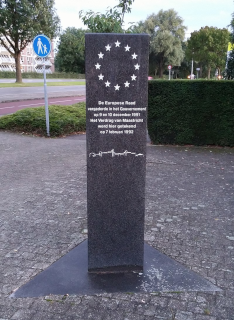
(Pictured: Stone memorial in front of the entry to the Limburg Province government building in Maastricht, Netherlands, commemorating the signing of the Maastricht Treaty)


1 Comment

Birth of Irish Republican Thomas “Slab” Murphy

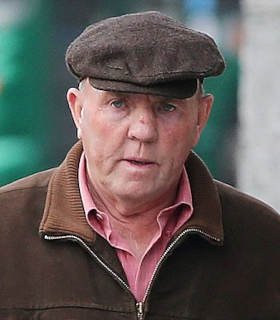
Thomas Murphy, Irish republican also known as “Slab” and believed to be a former Chief of Staff of the Provisional Irish Republican Army, is born on August 26, 1949. His farm straddles County Armagh and County Louth on the border between Northern Ireland and the Republic of Ireland. One of three brothers, he is a lifelong bachelor who lives on the Louth side of his farm prior to his imprisonment in February 2016 following a tax evasion conviction.

Murphy is allegedly involved with the South Armagh Brigade of the IRA before being elected Chief of Staff by the IRA Army Council. Toby Harnden, ex-correspondent for The Daily Telegraph, names him as planning the Warrenpoint ambush of 1979, in which 18 British soldiers are killed. He is also allegedly implicated in the Mullaghmore bombing the same day, which kills four people, including two children and Louis Mountbatten, 1st Earl Mountbatten of Burma. He is involved in smuggling huge stockpiles of weapons from Libya in the 1980s and is a member of the Army Council that decides to end its first ceasefire with the 1996 Docklands bombing in London that kills two men.

Accused by The Sunday Times of directing an IRA bombing campaign in Britain, in 1987 Murphy unsuccessfully sues the paper for libel in Dublin. The original verdict is overturned by the court of appeal because of omissions in the judge’s summing up and there is a retrial, which he also loses. At the retrial, both Sean O’Callaghan and Eamon Collins, former members of the Provisional Irish Republican Army, testify against Murphy, as do members of the Gardaí, Irish customs officials, British Army and local TD Brendan McGahon. Collins, who had also written a book about his experiences, Killing Rage, is beaten and killed by having a spike driven through his face near his home in Newry eight months later. In 1998, a Dublin court dismisses Murphy’s case after a high-profile trial, during which Murphy states that he has “never been a member of the IRA, no way” and claims not to know where the Maze prison is located. The jury rules, however, that he is an IRA commander and a smuggler.

The Sunday Times subsequently publishes statements given by Adrian Hopkins, the skipper who ferries weapons from Libya to the IRA, to the French authorities who intercept the fifth and final Eksund shipment. Hopkins details how Murphy met a named Libyan agent in Greece, paid for the weapons to be imported, and helped unload them when they arrived in Ireland. According to A Secret History of the IRA by Ed Moloney, Murphy has been the IRA Army Council’s chief of staff since 1997. Toby Harnden’s Bandit Country: The IRA & South Armagh also details Murphy’s IRA involvement.

On September 20, 2016, the BBC‘s Spotlight airs a programme in which an alleged British spy who had infiltrated the IRA claims that in 2006, Murphy had demanded the killing of Denis Donaldson, an IRA member and British informer, in order to maintain discipline. The BBC says it had tried to contact Murphy but had received no reply. He has yet to respond to the allegation. On September 23, 2016, the Donaldson family’s solicitor says that the allegation is “absolute nonsense.”

In October 2005, officers of the British Assets Recovery Agency and the Irish Criminal Assets Bureau carry out raids on a number of businesses in Manchester and Dundalk. It is extensively reported in the media that the investigation is aimed at damaging the suspected multi-million-pound empire of Murphy, who according to the BBC’s Underworld Rich List, has accumulated up to £40 million through smuggling oil, cigarettes, grain and pigs, as well as through silent or partial ownership in legitimate businesses and in property.

A large, purpose-built underground chamber that Gardaí believes the IRA used for interrogation is discovered close to Murphy’s home.

In his first-ever press release, issued on October 12, 2005, Murphy denies he owned any property and denies that he had any links with co-accused Cheshire businessman Dermot Craven. Furthermore, he claims that he had to sell property to cover his legal fees after his failed libel case against The Sunday Times, and that he made a living from farming.

On March 9, 2006, police, soldiers and customs officials from both sides of the Irish border launch a large dawn raid on Murphy’s house and several other buildings in the border region. Three persons are arrested by the Gardaí but are released three days later. A fleet of tankers, computers, documents, two shotguns, more than 30,000 cigarettes and the equivalent of 800,000 euros in sterling bank notes, euro bank notes and cheques are seized. Four diesel laundering facilities attached to a major network of storage tanks, some of which are underground, are also found. The Irish Criminal Assets Bureau later obtains seizure orders to take possession of euro cash and cheques and sterling cash and cheques, together worth around one million Euros.

Sinn Féin President Gerry Adams makes a public statement in support of Murphy following the March 2006 raids. Under political and media pressure over allegations of the IRA’s continued presence in South Armagh, Adams says, “Tom Murphy is not a criminal. He’s a good republican and I read his statement after the Manchester raids, and I believe what he says and also and very importantly he is a key supporter of Sinn Féin’s peace strategy and has been for a very long time.” He adds, “I want to deal with what is an effort to portray Tom Murphy as a criminal, as a bandit, as a gang boss, as someone who is exploiting the republican struggle for his own ends, as a multimillionaire. There is no evidence to support any of that.”

Commenting in Armagh on Murphy’s imprisonment for tax fraud, Arlene Foster, First Minister of Northern Ireland says, “Whilst some people refer to Murphy as a ‘good republican’ the people of this area know him to be a criminal.”

Murphy is arrested in Dundalk, County Louth, on November 7, 2007, by detectives from the Criminal Assets Bureau, on charges relating to alleged revenue offences. The following day, he is charged with tax evasion under the Tax Consolidation Act. He is later released on his own bail of €20,000 with an independent surety of €50,000.

On October 17, 2008, in an agreed legal settlement, Murphy and his brothers pay over £1 million in assets and cash to the authorities in Britain and the Republic in settlement of a global crime and fraud investigation relating to proceeds of crime associated with smuggling and money laundering. After an investigation involving the Irish Criminal Assets Bureau and the UK’s Serious Organised Crime Agency, more than 625,000 euros (£487, 000) in cash and cheques is confiscated by the Republic’s courts, while nine properties in North West England worth £445,000 are confiscated by British courts. Murphy is still fighting a claim in the Republic’s courts for tax evasion, relating to non-completion of tax returns for eight years from 1996. On April 26, 2010, he is further remanded on bail.

In 2011, there are claims that Murphy had become disillusioned with the Northern Ireland peace process and that he had fallen out with Sinn Féin. However, there is no evidence to support he is sympathetic to any dissident republican groups. In March 2013, the Garda and the Police Service of Northern Ireland (PSNI), along with members of the Irish Customs Authority and HM Revenue and Customs (HMRC), raid his farm on the Louth-Armagh border. The Sunday World reports that two hours prior to the raid, at approximately 4:00 a.m., fire is seen coming from Murphy’s yard. There are serious concerns within the Garda and PSNI that a mole may have tipped off Murphy about the raid hours earlier as laptops, computer disks and a large amount of documentation is destroyed in the fires. As a result, an internal Garda investigation takes place.

On December 17, 2015, Murphy is found guilty on nine charges of tax evasion by a three-judge, non-jury Special Criminal Court trial sitting in Dublin, lasting nine weeks. He is tried under anti-terrorist legislation due to the belief by the Director of Public Prosecutions (DPP) that there would not be a fair trial because of the potential of the intimidation of prosecution witnesses and jurors, and the security surrounding the trial.

Murphy is found guilty on all charges of failing to furnish tax returns on his income as a “cattle farmer” between 1996 and 2004. He is prosecuted following a 14-year-long Criminal Assets Bureau investigation, which during a raid of his property uncovers bags with more than €250,000 and more than £111,000 sterling in cash, along with documents, diaries and ledgers. He is remanded on bail until early 2016 for sentencing.

On February 26, 2016, Murphy is sentenced to 18 months in prison. None of the jail term is suspended. Following sentencing, he is immediately transferred from court to Ireland’s highest-security prison, Portlaoise Prison, reserved for terrorists, dissident republicans and serious gangland criminals, under a heavily armed Garda and Irish Army escort due to security concerns.

Murphy appeals the conviction in November 2016. His lawyer, John Kearney, claims that the tax Murphy had not paid had in fact been paid by his brother, Patrick. The Court of Appeal dismisses the appeal on all grounds in January 2017.

In January 2017, and scheduled for release in April 2018, Murphy is moved from Midlands Prison in Portlaoise to the Loughan House low-security prison in County Cavan.


Leave a comment

Birth of Kian Egan, Pop Singer, Songwriter & Musician

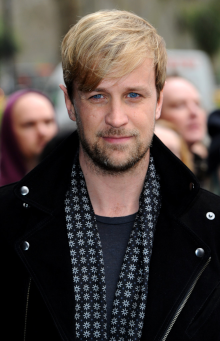
Kian John Francis Egan, Irish pop singer, songwriter and musician, best known as a member of pop group Westlife, is born on April 29, 1980, in Sligo, County Sligo. Westlife has released twelve albums, embarked on thirteen world tours, and won numerous awards, becoming one of the most successful musical groups of all time.

Egan is born to Kevin Egan and Patricia Egan (née Moore). He is the fifth of their seven children. He attends Summerhill College secondary school in Sligo, where he meets fellow band members Mark Feehily and Shane Filan. He is the cousin of Filan’s wife, Gillian Walsh. Before Westlife, he works at a jeans store.

In his early musical years, Egan is part of a rock band named Skrod. He can play at least five musical instruments, including guitar, piano, and drums. He is a grade 8 pianist and was taught piano by his brother Gavin Egan, a university music graduate and full-time teacher of music in the UK. Before he is in Westlife, he is part of a pop group called Six as One, which later changes its name to IOYOU, with fellow Westlife members Mark Feehily and Shane Filan, alongside Graham Keighron, Michael “Miggles” Garrett and Derrick Lacey.

After IOUYOU is signed by Louis Walsh, its lineup changes to include Egan, Mark Feehily, Shane Filan and two new members – Nicky Byrne and Brian McFadden. The band’s name changes to Westside and later to Westlife. Westlife splits up in 2012 after a Greatest Hits Tour.

During a year long hiatus from Westlife in 2008, Egan launches a new venture with Louis Walsh to put together and co-manage girlband, Wonderland, which includes Jodi Albert, who on May 8, 2009, becomes Egan’s wife. Wonderland’s debut album reaches number 6 on the Irish Albums Chart and number 8 on the UK Albums Chart, however, just four months later, they are dropped by Mercury Records and eventually split up.

In June 2012, Egan announces in an interview with the Sunday Life that he is “looking at doing a TV show with Sky on surfing.” Later reports suggest that the show would be eight episodes long and would broadcast on Sky One later in the year.

In July 2012, Egan presents the British programme This Morning’s Hub on a regular basis, standing in for the regular hosts. Later that year, every Friday morning in October, he begins giving reports on another British programme, This Morning, about the remaining contestants in the ninth series of The X Factor, before the competition’s live shows that weekend.

On October 21, 2012, Egan co-presents the revamped version of Surprise Surprise, but does not return the following year.

In 2013, Egan appears on the thirteenth series of I’m A Celebrity…Get Me Out Of Here! He is ultimately crowned King Of The Jungle, which contributes to an invitation to being signed by Rhino Records to create his Home album.

In January 2014, Egan signs with Rhino Records of Warner Music Group and his debut album Home is released on March 14 of that year in Ireland and March 17 in the UK. His debut single “Home“, a cover of a song by the band Daughtry, has its first exclusive play on BBC Radio 2 on lunch time with Terry Wogan‘s show. The album peaks at number 2 on the Irish Albums Chart and number 9 on the UK Albums Chart. In May 2014, he releases the second single from the album, “I’ll Be,” a cover of the track by Edwin McCain.

In October 2018, Westlife announces the group’s reunion as a four-piece. In 2019, the group headlines “The Twenty Tour,” named in honour of Westlife’s 20th anniversary since its formation and the release of its first single, “Swear It Again,” in 1999. In addition to touring, Westlife also releases new music. “Hello My Love,” the first single from the group’s upcoming album, debuts on The Graham Norton Show in January 2019.

Egan is one of four coaches on The Voice of Ireland. However, his dreams of winning the show go to tatters as he throws his lot in with Jim Devine from Northern Ireland. This immediately puts him at a disadvantage to the other contestants as, ahead of the final, viewers in Northern Ireland cannot download his single, the tally of which contributes to his vote. He is left fuming and in need of support from Sharon Corr as he expresses his opinion on the unfairness of it all and has “huge rows” about it but to no avail.

Egan and his wife and three sons live in Strandhill, County Sligo. He is ranked number five on Ireland’s Sexiest Man of 2014. As of 2017, his net worth is 18 million euros.


Leave a comment

Guinness Registers Harp as Official Symbol

On April 5, 1862, Guinness formally registers the harp as its official symbol, long before Ireland even has its own government.

The first Guinness labels featuring the now-iconic harp are printed in August of that year according to Guinness’s Brewery in the Irish Economy 1759 – 1876 by Patrick Lynch and John Vaizey.

The harp, which serves as the emblem of Guinness, is based on a famous 14th-century Irish harp known as the “O’Neill harp” or “Brian Boru’s harp,” which is now preserved in the Library of Trinity College Dublin. The harp is also the official national emblem of the Republic of Ireland and can be found on the Republic’s coinage that was phased out when the Euro currency was introduced. The harp symbol is also featured on Irish flags during the 1916 Easter Rising.

However, there is a difference between the Irish government harp and the Guinness harp. As Guinness had trademarked the harp symbol in 1876, the Irish Free State Government of 1922 has to reverse the official government harp so that it can be differentiated from the trademarked Guinness harp. As such, the Guinness Harp always appears with its straight edge (the sound board) to the left, and the government harp is always shown with its straight edge to the right.

It is because of the harp trademark that the Guinness company names its first lager Harp in 1960.

The harp is one of three elements that make up the Guinness brand livery. The other two elements are the word “Guinness” and Arthur Guinness’s famous signature. There have been a number of changes to the design of the harp device over the years including a reduction in the number of strings shown. The current harp is introduced in 2005 when a new brand livery is launched.

The famous Downhill Harp, dating back to 1702, is purchased by Guinness in 1963 to ensure its continued preservation and is on display in the advertising gallery in Guinness Storehouse. The Downhill Harp is made in 1702 by Cormac O’Kelly of Ballinascreen and played in the 18th century by the harpist Donnchadh Ó hAmhsaigh, known in English as Denis Hampsey, Denis Hampson or Denis Hempson. Ó hAmhsaigh plays in the traditional style, plucking the strings with his long fingernails. At age 97, he is the oldest harpist at the Belfast Harp Festival in July 1792, although he is perhaps most famous for his concert for Prince Charles Edward Stuart, or ‘Bonnie Prince Charlie’, in 1745.

The harp bears the inscription:

In the time of Noah I was green,
Since his flood I had not been seen,
Until Seventeen hundred and two I was found By Cormac O’Kelly underground:
He raised me up to that degree
That Queen of Musick you may call me.

(From: “When Guinness trademarked symbol of the harp,” IrishCentral, http://www.irishcentral.com, April 5, 2022)


Leave a comment

Ireland Joins the European Monetary System

counting cashIreland joins the new European Monetary System (EMS) on March 13, 1979. The EMS is an arrangement established in 1979 under the Jenkins Commission where most nations of the European Economic Community (EEC) link their currencies to prevent large fluctuations relative to one another.

After the demise of the Bretton Woods system in 1971, most of the EEC countries agree in 1972 to maintain stable exchange rates by preventing exchange rate fluctuations of more than 2.25%. In March 1979, this system is replaced by the European Monetary System, and the European Currency Unit (ECU) is defined.

The basic elements of the arrangement are:

  • The ECU: With this arrangement, member currencies agree to keep their foreign exchange rates within agreed bands with a narrow band of +/− 2.25% and a wide band of +/− 6%
  • An Exchange Rate Mechanism (ERM)
  • An extension of European credit facilities
  • The European Monetary Cooperation Fund: created in April 1973 and allocates ECUs to members’ central banks in exchange for gold and US dollar deposits

Although no currency is designated as an anchor, the Deutsche Mark and German Deutsche Bundesbank soon emerge as the centre of the EMS. Because of its relative strength, and the low-inflation policies of the bank, all other currencies are forced to follow its lead if they want to stay inside the system. Eventually, this situation leads to dissatisfaction in most countries, and is one of the primary forces behind the drive to a monetary union.

Periodic adjustments raise the values of strong currencies and lower those of weaker ones, but after 1986 changes in national interest rates are used to keep the currencies within a narrow range. In the early 1990s the European Monetary System is strained by the differing economic policies and conditions of its members, especially the newly reunified Germany, and the permanent withdrawal of the United Kingdom and Italy from the system in September 1992. Speculative attacks on the French franc during the following year lead to the so-called Brussels Compromise in August 1993 which establishes a new fluctuation band of +15%.

In May 1998, the European Monetary System is no longer a functional arrangement as the member countries fix their mutual exchange rates when participating in the euro. Its successor however, the ERM-II, is launched on January 1, 1999. In ERM-II the ECU basket is discarded and the new single currency euro becomes an anchor for the other currencies participating in the ERM-II. Participation in the ERM-II is voluntary and the fluctuation bands remain the same as in the original ERM, i.e. +15 percent, once again with the possibility of individually setting a narrower band with respect to the euro. Denmark and Greece become new members at this time.


Leave a comment

Ireland Becomes Founder Member of the Council of Europe

council-of-europe-logo

On May 5, 1949, Ireland becomes one of ten founder members of the Council of Europe, an international organisation whose stated aim is to uphold human rights, democracy and the rule of law in Europe.

The Council of Europe currently has 47 member states, covers approximately 820 million people and operates with an annual budget of approximately half a billion euros.

The organisation is distinct from the 28-nation European Union (EU), although it is sometimes confused with it, partly because the EU has adopted the original European Flag which was created by the Council of Europe in 1955, as well as the European Anthem. No country has ever joined the EU without first belonging to the Council of Europe, which is an official United Nations Observer.

Unlike the EU, the Council of Europe cannot make binding laws, but it does have the power to enforce select international agreements reached by European states on various topics. The best known body of the Council of Europe is the European Court of Human Rights, which enforces the European Convention on Human Rights.

The Council’s two statutory bodies are the Committee of Ministers, comprising the foreign ministers of each member state, and the Parliamentary Assembly, composed of members of the national parliaments of each member state. The Commissioner for Human Rights is an independent institution within the Council of Europe, mandated to promote awareness of and respect for human rights in the member states. The Secretary General heads the secretariat of the organisation. Other major CoE bodies include the European Directorate for the Quality of Medicines.

The headquarters of the Council of Europe are in Strasbourg, France. English and French are its two official languages. The Committee of Ministers, the Parliamentary Assembly and the Congress also use German, Italian, Russian, and Turkish for some of their work.


Leave a comment

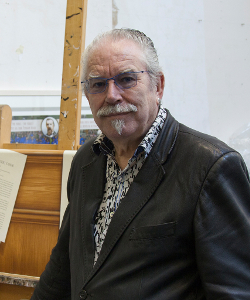
Birth of Robert Ballagh, Artist, Painter & Designer

Robert “Bobby” Ballagh, artist, painter and designer, is born in Dublin on September 22, 1943. His painting style is strongly influenced by pop art. He is particularly well known for his hyperealistic renderings of well-known Irish literary, historical or establishment figures.

Ballagh grows up in a ground-floor flat on Elgin Road in Ballsbridge, the only child of a Presbyterian father and a Catholic mother. He studies at Bolton Street College of Technology and becomes an atheist while attending Blackrock College. Before turning to art as a profession, he is a professional musician with the Irish showband Chessmen. He meets artist Michael Farrell during this period, and Farrell recruits him to assist with a large mural commission, which is painted at Ardmore Studios.

Ballagh represents Ireland at the 1969 Biennale de Paris. Among the theatre sets he has designed are sets for Riverdance, I’ll Go On, Gate Theatre (1985), Samuel Beckett‘s Endgame (1991) and Oscar Wilde‘s Salomé (1998). He also designs over 70 Irish postage stamps and the last series of Irish banknotes, “Series C,” before the introduction of the euro. He is a member of Aosdána and his paintings are held in several public collections of Irish painting including the National Gallery of Ireland, the Hugh Lane Gallery, the Ulster Museum, Trinity College, Dublin, and Nuremberg‘s Albrecht Dürer House.

In 1991, he co-ordinates the 75th anniversary commemoration of the 1916 Easter Rising, during which he claims he is harassed by the Special Branch of the Garda Síochána.

He is the president of the Ireland Institute for Historical and Cultural Studies, which promotes international republicanism. It is based at the new Pearse centre at 27 Pearse Street, Dublin, which is the birthplace of Pádraig Pearse in 1879.

In July 2011 it is reported that he might consider running for the 2011 Irish Presidential election with the backing of Sinn Féin and the United Left Alliance. A Sinn Féin source confirms there has been “very informal discussions” and that Ballagh’s nomination is “a possibility” but “very loose at this stage.” However, on July 25 Ballagh rules out running in the election, saying that he has never considered being a candidate. His discussions with the parties had been about the election “in general” and he has no ambitions to run for political office.

That same month, Ballagh breaks ranks with his colleagues in the travelling production of Riverdance in their decision to perform in Israel. He is an active member of the Ireland Palestine Solidarity Campaign, which insists that artists and academics participate in boycotts of Israeli businesses and cultural institutions.

In July 2012, Ballagh says he is “ashamed and profoundly depressed” at the en masse closure of Irish galleries and museums. He cites an example of some Americans and Canadians on holiday in Ireland. “They described most of the National Gallery as being closed along with several rooms in the Hugh Lane Gallery. I’m glad they didn’t bother going out to the Museum of Modern Art in Kilmainham because that’s closed too. At the point I met them, they were returning from Galway where they had found the Nora Barnacle Museum closed too.” He condemns the hypocrisy of political leaders, saying, “I know arts funding is not a big issue for people struggling to put food on the table, but we are talking about the soul of the nation.”


Leave a comment

Establishment of the Central Bank of Ireland

central-bank-of-ireland

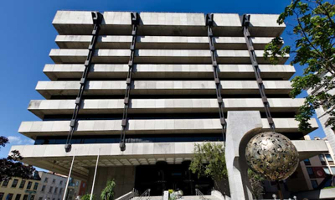
The Central Bank of Ireland is established on February 1, 1943, when the Central Bank Act 1942 comes into effect which renames the Currency Commission.

The Central Bank of Ireland is Ireland’s central bank, and as such part of the European System of Central Banks (ESCB). It is also the country’s financial services regulator for most categories of financial firms. It is the issuer of Irish pound banknotes and coinage until the introduction of the euro currency and now provides this service for the European Central Bank.

The Central Bank, however, does not initially acquire many of the characteristics of a central bank:

  • It is not given custody of the cash reserves of the commercial banks
  • It has no statutory power to restrict credit, though it can promote it
  • The Bank of Ireland remains the government’s banker
  • The conditions for influencing credit through open-market operations does not yet exist
  • Ireland’s external monetary reserves are largely held as external assets of the commercial banks

The mid-1960s see the Bank take over the normal day-to-day operations of exchange control from the Department of Finance. The Central Bank broadens its activities over the decades, but it remains in effect a currency board until the 1970s.

Since January 1, 1972, the Central Bank has been the banker of the Government of Ireland in accordance with the Central Bank Act 1971, which can be seen in legislative terms as completing the long transition from a currency board to a fully functional central bank.

Its head office is located on Dame Street, Dublin, where the public may exchange non-current Irish coinage and currency, both pre- and post-decimalization, for euros. It also operates from premises in Spencer Dock, Iveagh Court, and College Green. The Currency Centre at Sandyford is the currency manufacture, warehouse, and distribution site of the bank.

By March 2017 its city centre staff moves to a new building at North Wall Quay.