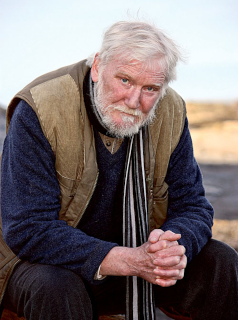
Healy is the son of a Guard. As a child the family moves to Cavan, where he attends the local secondary school. In his late teens he moves to London and works in a succession of jobs, including barman, security man and as a labourer. He later returns to Ireland, settling in Ballyconnell, County Sligo, a small settlement on the Atlantic coast.
Often overlooked due to his relatively low public profile, Healy’s work is admired by his Irish literary predecessors, peers and successors alike, many of whom idolise him. Among the writers to have spoken highly of him are Seamus Heaney, Eugene McCabe, Roddy Doyle, Patrick McCabe and Anne Enright.
Healy dies at his home in Ballyconnell on June 29, 2014, while awaiting an ambulance after suddenly being taken ill. He is laid to rest at Carrigans Cemetery following funeral mass by Fr. Michael Donnelly at St. Patrick’s Church in Maugherow.
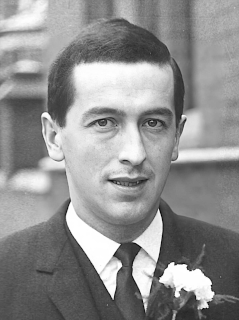
Stagg is the seventh child in a family of thirteen children. His father, Henry, and his uncle had both fought in the Irish War of Independence and Irish Civil War. His brother, Emmet Stagg, becomes a Labour Party politician and a Teachta Dála (TD) for Kildare North. He is educated to primary level at Newbrook Primary School and at CBS Ballinrobe to secondary level. After finishing his schooling, he works as an assistant gamekeeper with his uncle prior to emigrating to England in search of work. Once in England, he gains employment as a bus conductor in North London and later becomes a bus driver. While in England he meets and marries fellow Mayo native, Bridie Armstrong from Carnacon in 1970.
In 1972, Stagg joins the Lutoncumann of Sinn Féin and soon after becomes a volunteer in the Provisional Irish Republican Army (IRA).
In April 1973, Stagg is arrested with six others alleged to comprise an IRA unit planning bombing attacks in Coventry. He is tried at BirminghamCrown Court. The jury finds three of the seven not guilty. The remaining four are all found guilty of criminal damage and conspiracy to commit arson. Stagg and English-born priest, Father Patrick Fell, are found to be the unit’s commanding officers. Stagg is given a ten-year sentence and Fell is given twelve years. Thomas Gerald Rush is given seven years and Anthony Roland Lynch, who is also found guilty of possessing articles with intent to destroy property, namely nitric acid, balloons, wax and sodium chlorate, is given ten years.
Following the hunger strike that results in the death of Michael Gaughan, the Price sisters, Feeney and Kelly are granted repatriation to Ireland. Stagg is denied repatriation and is transferred to Long Lartin Prison. During his time there he is subject to solitary confinement for refusing to do prison work and is also subjected, along with his wife and sisters during visits, to humiliating body searches. In protest against this, he begins a second hunger strike that lasts for thirty-four days. This ends when the prison governor agrees to an end of the strip-searches on Stagg and his visitors. He is bed-ridden for the rest of his incarceration in Long Lartin, due to a kidney complaint.
In 1975 Stagg is transferred to Wakefield Prison, where it is demanded that he again do prison work. He refuses and is placed in solitary confinement. On December 14, 1975, he embarks on a hunger strike in Wakefield, along with a number of other republican prisoners, after being refused repatriation to Ireland during the IRA/British truce. His demands are an end to solitary confinement, no prison work and repatriation to prison in Ireland. The British government refuses to meet any of these demands and Stagg dies on February 12, 1976, after 62 days on hunger strike.
Stagg’s burial causes considerable controversy. Republicans and two of his brothers seek to have him buried in the republican plot in Ballina beside the grave of Michael Gaughan, in accordance with his wishes. His widow, his brother Emmet Stagg and the Irish government wish to have him buried in the family plot in the same cemetery and to avoid republican involvement in the funeral.
In order to prevent the body from being disinterred and reburied by republicans, the grave is covered with concrete. Local Gardaí keep an armed guard by the grave for six months. However, unknown to them, the plot beside the grave is available for purchase. Stagg’s brother George purchases the plot and places a headstone over it, with it declaring that the “pro-British Irish government” had stolen Frank’s body. In November 1977, a group of republicans dig down into the plot that George had purchased, then dig sideways and recover Stagg’s coffin from the adjacent plot under cover of darkness, before reburying it in the republican plot beside the body of Michael Gaughan. The Republicans hold their own version of a funeral ceremony before disappearing back into the night.
The IRA swears revenge over Stagg’s death, warning the British public it is going to attack indiscriminately. They explode about 13 bombs throughout England within a month after his death.
Matt Connor, one of the most legendary Gaelic footballers of all time, is born in Walsh Island, County Offaly, on July 9, 1960. He plays with his local club Walsh Island and is a member of the Offaly senior inter-county team from 1978 until 1984 when he is seriously injured in a car crash, resulting in his needed use of a wheelchair.
In a six-year career with Offaly Connor scores a massive 13-142 and his performance in the 1980 All Ireland Senior Football Championship semi-final against Kerry when he scores 2-9 is regarded as one of the great individual performances.
Connor is a key player on the Offaly side that famously denies Kerry five-in-a-row in 1982 when he is joined by his brother Richie, who captains the side, and by his cousins Liam and Tomas, all from the small Walsh Island club just a couple of miles beyond Portarlington.
Connor is cruelly paralysed from the waist down following a car accident on Christmas Day 1984. He is only 24 years old at the time. Despite having his career cut short by injury, he remains heavily involved in Offaly GAA and serves as minor manager, senior selector and is also involved with the Irish international rules football team.
The Walsh Island native serves in TullamoreGarda station for many years and is remembered as one of the classiest forwards to ever have played the game. He retires following a 40-year career as a member of An Garda Síochána.
The Connor family has a long association with Laois through school, work and football. Connor is a regular in the press box in O’Connor Park which shares a facility with the wheelchair section and the VIP area. His older brother Richie is currently principal of Shanahoe National School and previously served as manager of the Laois and Offaly senior football teams.
In May 2020, the Irish Independent names Connor at number six in its “Top 20 footballers in Ireland over the past 50 years.”
Article 38 of the Constitution of Ireland empowers Dáil Éireann to establish “special courts” with wide-ranging powers when the “ordinary courts are inadequate to secure the effective administration of justice.” The Offences against the State Act 1939 leads to the establishment of the Special Criminal Court for the trial of certain offences. The scope of a “scheduled offence” is set out in the Offences Against the State (Scheduled Offences) Order 1972.
On May 26, 1972, the Government of Ireland exercises its power to make a proclamation pursuant to Section 35(2) of the Offences against the State Act 1939 which leads to the establishment of the Special Criminal Court for the trial of certain offences. The current court is first established by the Dáil under the Offences against the State Act 1939 to prevent the Irish Republican Army (IRA) from subverting Ireland’s neutrality during World War II and the Emergency. The current incarnation of the Special Criminal Court dates from 1972, just after the Troubles in Northern Ireland began.
Although the court is initially set up to handle terrorism-related crime, its remit has been extended and it has been handling more organised crime cases after the Provisional Irish Republican Armyceasefire in the 1990s. For instance, members of the drugs gang which murdered journalistVeronica Guerin were tried in the Special Criminal Court.
Section 35(4) and (5) of the Offences against the State Act 1939 provide that if at any time the Government or the Parliament is satisfied that the ordinary courts are again adequate to secure the effective administration of justice and the preservation of public peace and order, a rescinding proclamation or resolution, respectively, shall be made terminating the Special Criminal Court regime. To date, no such rescinding proclamation or resolution has been promulgated. Following the introduction of a regular Government review and assessment procedure on January 14, 1997, reviews taking into account the views of the relevant State agencies are carried out on February 11, 1997, March 24, 1998, and April 14, 1999, and conclude that the continuance of the Court is necessary, not only in view of the continuing threat to State security posed by instances of violence, but also of the particular threat to the administration of justice, including jury intimidation, from the rise of organised and ruthless criminal gangs, principally involved in drug-related and violent crime.
The Special Criminal Court has been criticised by the Irish Council for Civil Liberties, Amnesty International and the United Nations Commission on Human Rights for its procedures and for being a special court, which ordinarily should not be used against civilians. Among the criticisms are the lack of a jury and the increasing use of the court to try organised “ordinary” crimes rather than the terrorist cases it was originally set up to handle. Critics also argue that the court is now obsolete since there is no longer a serious terrorist threat to the State, although others disagree and cite the continuing violence from dissident republican terrorism, international terrorism and serious gangland crime.
Under the law, the court is authorised to accept the opinion of a Garda Síochána chief-superintendent as evidence that a suspect is a member of an illegal organisation. However, the court has been reluctant to convict on the word of a garda alone, without any corroborating evidence.
The Sinn Féin political party in the past has stated that it is their intention to abolish the Special Criminal Court as they believed it was used to convict political prisoners in a juryless court, however Sinn Féin are no longer in favour of its abolition. Some prominent Sinn Féin members, including Martin Ferris and Martin McGuinness, have been convicted of offences by it. In 1973 McGuinness was tried at the SCC, which he refused to recognise, after being arrested near a car containing 250 pounds (110 kg) of explosives and nearly 5,000 rounds of ammunition. He was convicted and sentenced to six months imprisonment.
(Pictured: The Criminal Courts of Justice complex in Dublin where Special Criminal Court (SCC) sittings are usually held)
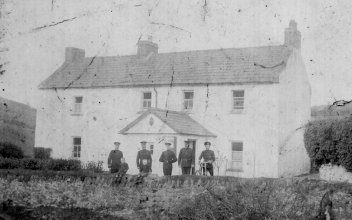
In 1920 twelve RIC Constables, or Peelers as they are called, are stationed in the barracks in Hollyford. They are regarded as the eyes and ears of the British establishment and therefore a thorn in the side of the local IRA. Since the previous year, the IRA has developed a policy of attacking police barracks throughout the country and forcing their closure thereby reducing the flow of information to Dublin Castle.
On the night of May 11, 1920, it is the turn of Hollyford Barracks. The local IRA with its leaders assembles at Phil Shanahan’s house on the Glenough road. At this time Shanahan is a member of the First Dáil, elected from a Dublin constituency as he is living and running a public house there. He fought in the Jacob’s Biscuit Factory under Thomas MacDonagh during the 1916 Easter Rising. It is decided the attack will be led by Ernie O’Malley, an organiser for the IRA who moves around to various Brigades throughout the country. His second in command is Séumas Robinson, commanding officer of the 3rd Tipperary Brigade. Other officers are Seán Treacy, whose mother Bridget Allis is from Lacknacreena, Dan Breen who is quartermaster general (QMG) of the Brigade, Comdt. Tadgh O’Dwyer, Captain Paddy O’Dwyer and Lt. Jim O’Gorman.
Roads are blocked in the vicinity and telephone lines are cut. Robinson and O’Malley, with the help of ladders, get on the roof and with lump hammers break holes in the slates. They then drop hand grenades and petrol in through the holes. They also ignite turf sods soaked in petrol and drop them through the holes. The fire on the upper floor escalates. While all this is happening, Seán Treacy, with his covering party, concentrate their fire on the port holes which keeps the occupants pinned down. The battle goes on all night and, as daylight approaches on the morning of May 12, the attackers have to withdraw without dislodging the police. While they do not achieve their aim to capture guns and ammunition, they do enough damage to ensure the RIC leaves Hollyford immediately never to return.
The next occupants, following the Anglo-Irish Treaty, are the Gárda Síochána in 1948. Various changes in personnel take place in the 1950s until Gárda Maurice Slattery is the only Gárda left in Hollyford. In 1965, after a lifetime in the Gárdí, he retires, and he and his family move to Limerick. He is the last Gárda to serve in Hollyford.
(From: “The Burning of Hollyford Barracks,” Third Tipperary Brigade Memorial (www.thirdtippbrigade.ie), July 12, 2018)
The Games are hosted in Dublin, with participants staying in 177 towns, cities and villages and the Aran Islands in the lead up to the Games before moving to Dublin for the events. Events are held from June 21-29, 2003 at many venues including Morton Stadium, the Royal Dublin Society, the National Basketball Arena, all in Dublin. Croke Park serves as the central stadium for the opening and closing ceremonies, even though no competitions take place there. Belfast is the venue for roller skating events at the King’s Hall, as well as the Special Olympics Scientific Symposium held on June 19-20.
Approximately 7,000 athletes from 150 countries compete in the Games in 18 official disciplines and three exhibition sports. The participants from Kosovo are the region’s first team at an international sporting event. A 12-member team from Iraq receives special permission to attend the games, despite ongoing war in their home nation. This is the largest sporting event held in 2003.
The Games Flame is lit at the culmination of the Law Enforcement Torch Run, in which more than 2,000 members of the Garda Síochána and the Police Service of Northern Ireland participate. This is a series of relays carrying the Special Olympics Torch, the “Flame of Hope,” from Europe to the Games’ official opening.
The 2003 Games are the first to have their opening and closing schemes broadcast on live television, and Raidió Teilifís Éireann provides extensive coverage of the events through their ‘Voice of the Games’ radio station which replaces RTÉ Radio 1 on medium wave for the duration of the event. There is also a nightly television highlight programme. A daily newspaper, the Games Gazette, was published for each day of the Games.
Among the activities carried out during the Games are thorough medical checks on the athletes, some of whom have previously undiagnosed conditions uncovered, as some of the athletes come from countries with limited medical facilities or have difficulty communicating their symptoms.
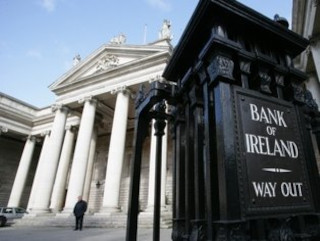
The 2009 Bank of Ireland robbery is a large robbery of cash from the College Green cash centre of the Bank of Ireland in Dublin on February 27, 2009. It is the largest bank robbery in the Republic of Ireland‘s history. Criminals engage in the tiger kidnapping of a junior bank employee, 24-year-old Shane Travers, and force him to remove €7.6 million (US$9 million) in cash from the bank as his girlfriend and two others are held hostage.
Late on the night of February 26, Travers, whose father is a member of the Garda Síochána based at Clontarf, Dublin, is alone watching television at the home of his girlfriend near Kilteel, County Kildare. The woman and her mother are out shopping together. When they arrive home with the five-year-old nephew of Travers, six heavily built masked men, dressed in black and carrying handguns, jump from the bushes.
The family is held overnight by the armed gang, during which time their mobile phones are confiscated, and Travers’ girlfriend is hit across the back of her head with a vase by one of the men. As dawn approaches, the gang orders all but Travers to enter their dark Volkswagen Golf family car. They are then bound together and driven to Ashbourne, County Meath.
The bank employee is given a mobile phone, ordered to collect €20, €50, €100 and €200 bank notes from his workplace, and supplied with a photograph of the rest of the family at gunpoint to convince his colleagues that their lives are under threat. Travers drives to Dublin in his red Toyota Celica, acquires the cash through the assistance of colleagues who viewed the photo, and carries the money out of the building in four laundry bags. He takes it to Clontarf Road railway station, whereupon he surrenders the cash and his sports car to a waiting gang member.
Travers then enters a Garda station, the first point at which Gardaí are notified that the robbery had taken place. One hour after this, the other family members succeed in freeing themselves and walk to a nearby garda station. Travers’ girlfriend requires immediate medical treatment for a head wound she received during a struggle with her captors, and the family are reported to be “traumatised” by their ordeal. Travers’s car is later found burned out in an apartment block near Tolka House Pub in Glasnevin.
Minister for Justice, Equality and Law ReformDermot Ahern says “proper procedures” were not followed during the course of the robbery, saying that Gardaí should have been contacted before the money had left the bank. He also questions how such a large sum of money could be taken as a result of one man being targeted.
The bank’s chief executive, Richie Boucher, appointed just two days earlier, immediately writes to all his staff to remind them that protocol should be followed in the event of future robberies, saying “Our priority is always for the safety and well-being of all staff. I am sure this incident will raise concerns. Our best defence is to follow tried and tested procedures. I would ask everybody to remind themselves of these procedures, which are there to protect you, your families and the bank.”
€1.8 million of the stolen cash is recovered and seven people are arrested by Gardaí in a number of incidents on February 28. A house in Phibsborough is sealed off and ten more houses are searched. A total of five cars and one van are seized by Gardaí. One of the men is arrested following a chase along the M50 motorway near the Navan road, with two bales of packed cash being discovered in his car. Four other men are arrested in a car in Monk Place and in Great Western Square, Phibsborough, and two more are seized in a house on Great Western Villas, Phibsborough. Cash is also found in a car in Phibsborough.
The six men and one woman are believed to be members of a well-known gang from Dublin’s north inner city and have connections to a major Dublin gangland figure. On March 2, those arrested appear before the High Court to challenge the lawfulness of their detention, viewing the warrants issued by the District Court the day before as invalid. That day, two of those arrested are released.
An unidentified bank employee is arrested on January 28, 2010, based on suspicion that the robbery had been an inside job.
Donal Billings of St. Bridget’s Court in Drumlish, County Longford, a 66-year-old man who put a bomb on a bus during Britain’s Queen Elizabeth‘s visit to Ireland in May 2011, is convicted on December 15, 2016 at the Special Criminal Court of possessing explosives and is sentenced to eight-and-a-half years in prison.
Justice Tony Hunt describes it as an outrageous, dangerous and highly irresponsible act, which recklessly exposed the 31 people on the bus, as well as the emergency services, to the very significant risk of injury or death. He says it was no thanks to Billings that this did not occur.
The court hears that on May 16, 2011, following a phone call to LongfordGarda station, gardaí stopped a bus travelling from Ballina to Dublin at Maynooth. They find a well-made bomb in a bag in the luggage hold with gunpowder, petrol, a timing power unit, battery and a fuse, which if it had exploded could have caused seriously injured or killed the passengers and driver. Threats were also made that there were bombs on another bus and at the Sinn Féin headquarters in Dublin but none were found.
Billings is identified as the caller though phone records, notes, a SIM card and a mobile phone. Two days later he makes another call saying that two mortars have been left in Dublin Castle set for 8:00 PM, during the State banquet for the queen. “I am a member of the Republican Brotherhood Squad A”, he says. “This is for the Queen of Blood, War in Iraq.” Because of the first bomb, the threat is taken very seriously, but no more explosive devices are found.
Two days later a third call threatens there are two more bombs in the toilets in Cork Airport, but again nothing is found.
Billings is identified as a suspect that day and put under surveillance before being arrested at a supermarket car park in Longford. He tells gardaí he had found the SIM card in the car park.
Following the trial, during which interpreters are used to translate proceedings into Irish, Billings is convicted of making bomb threats and possessing explosives. He has previous convictions for possessing explosives in Northern Ireland in 1973 and is sentenced to eight years in prison. He also spent four years in Libya.
(From: “Man sentenced over bomb on bus during Queen Elizabeth’s visit,” RTÉ.ie, the website of Raidió Teilifís Éireann, Thursday, December 15, 2016)
Kerins is born in Caherina, Tralee, County Kerry and attends Balloonagh Mercy Convent School and then the CBS, Edward Street. At the age of 13, he wins a Kerry County Council scholarship and completes his secondary education at the Green Christian Brothers and the Jeffers Institute. In 1930, he passes the Intermediate Certificate with honours and the matriculation examination to the National University of Ireland (NUI). He later does a commercial course and takes up employment in a radio business in Tralee.
In 1940, Kerins is sworn into the IRA and is appointed to the GHQ staff in May 1942. At the time, the Fianna Fáil government of Éamon de Valera is determined to preserve Irish neutrality during World War II. Therefore, the IRA’s bombing campaign in England, its attacks against targets in Northern Ireland, and its ties to the intelligence services of Nazi Germany are regarded as severe threats to Ireland’s national security. IRA men who are captured by the Gardaí are interned for the duration of the war by the Irish Army in the Curragh Camp in County Kildare.
On the morning of September 9, 1942, Garda Detective Sergeant Denis O’Brien is leaving his home in Ballyboden, Dublin. He is between his front gate and his car when he is cut down with Thompson submachine guns. O’Brien, an Anti-Treaty veteran of the Irish Civil War, had enlisted in the Garda Síochána in 1933. He is one of the most effective Detectives of the Special Branch division, which has its headquarters at Dublin Castle. The shooting greatly increases public feeling against the IRA, particularly as the murder is carried out in full view of his wife.
Following the arrest of Hugh McAteer in October 1942, Kerins is named Chief of Staff of the IRA. Despite a massive manhunt by Gardaí, he remains at large for two years. He stays at a County Waterford home for two weeks while he is on the run, having given his name as Pat Carney. He is captured several months after he leaves the home.
Kerins had previously left papers and guns hidden at Kathleen Farrell’s house in the Dublin suburb of Rathmines. He telephones the house, as he intends to retrieve them. However, Farrell’s telephone had been tapped by the Gardaí. On June 15, 1944, he is arrested in an early morning raid. He is sleeping when the Gardaí enter his bedroom and does not have an opportunity to reach the Thompson submachine gun which is hidden under his bed.
At a trial before the Special Criminal Court in Collins Barracks, Dublin, Kerins is formally charged on October 2, 1944 for the “shooting at Rathfarnham of Detective Dinny O’Brien.” At the end of his trial, the president of the Military Court delays sentence until later in the day to allow Kerins, if he wishes, to make an application whereby he might avoid a capital sentence. When the court resumes, he says, “You could have adjourned it for six years as far as I am concerned, as my attitude towards this Court will always be the same.” He thus deprives himself of the right to give evidence, to face cross-examination, or to call witnesses.
Despite legal moves initiated by Seán MacBride, public protests, and parliamentary intervention by TDs from Clann na Talmhan, Labour, and Independent Oliver J. Flanagan in Leinster House, the Fianna Fáil government of Éamon de Valera refuses to issue a reprieve. On December 1, 1944 in Mountjoy Prison, Kerins is hanged by British chief executioner Albert Pierrepoint, who is employed by the Irish Government for such occasions.
Kerins is the last IRA member to be executed in the Republic of Ireland. He is buried in the prison yard. In September 1948, his remains are exhumed and released to his family. He is buried in the Republican plot at Rath Cemetery, Tralee, County Kerry.
As commander of the 2nd Northern Division of the IRA, O’Duffy sees action in Belfast when defending Catholic ghettoes from attacks by Protestant pogromists. He also leads the Free State forces into Limerick city.
In 1933, O’Duffy becomes associated with Cumann na nGaedheal by taking on the leadership of their security organization the Army Comrades Association, later to be known colloquially as the Blueshirts. This organization is to become a participant in many street brawls with anti-treaty sympathizers who try to break up pro-treaty political meetings. When the pro-treaty parties merge in 1933 to become Fine Gael, he is the party President for a short period of time.
After the 1933 Irish general election, which again sees de Valera in power, O’Duffy is dismissed from his post as Garda Commissioner on the grounds that due to his past political affiliations, he will be unable to carry out his duties without bias.
In Europe, the new phenomenon of fascism is gaining ground and O’Duffy, like many of his pro-treaty colleagues, is drawn to it. His Army Comrades Association is renamed the National Guard, and they begin to take on many of the symbols of fascism such as the outstretched arm salute and the blue uniforms.
When O’Duffy plans a massed march for August 1933 in Dublin to commemorate the deaths of Arthur Griffith and Michael Collins, de Valera, fearing a coup, has it banned. Possibly de Valera is also testing the loyalty of the army and the Garda Síochána. In September the National Guard itself is banned although it reforms under the title The League of Youth.
In 1934 O’Duffy suddenly and inexplicably resigns as president of Fine Gael although it is known that many of its members are growing worried by his actions and statements. The Blueshirt movement begins to unravel at the seams. That same year he forms his own fascist movement, the National Corporate Party.
In 1936, supported by the Catholic Church in Ireland, O’Duffy leads 700 of his followers to Spain to help General Francisco Franco in the Spanish Civil War against the republican government. They form part of the XV Bandera Irlandesa del Terico, a part of the Spanish Legion. The Bandera sees little or no action and are returned to Ireland in 1937.
Although O’Duffy has some low-level dalliance with the Nazis he never does regain any of his political influence. His health is on the decline, and he dies on November 30, 1944. De Valera grants him a state funeral and he is interred in Glasnevin Cemetery in Dublin.