Members of Sinn Féin, the political wing of the republican Irish Republican Army (IRA), vote to accept the Good Friday Agreement on May 10, 1998, effectively acknowledging the north-south border. This marks a major shift in modern republicanism as, up until now, Sinn Féin has regarded participation in a Northern Ireland body as a tacit acceptance of partition.
The agreement comes at the party’s annual conference, which includes about thirty IRA prisoners granted special leave in order to vote.
The British and Irish governments welcome the decision to formally approve the peace agreement signed at Stormont in April to create the Northern Ireland Assembly and new cross-border institutions. TaoiseachBertie Ahern says he now looks forward to an overwhelming “yes” vote in referendums on the deal later in the month. The British government praises Sinn Féin leader Gerry Adams saying the decision marks a final realisation that violence does not pay.
Secretary of State for Northern IrelandMo Mowlam expresses her delight at the outcome, “I recognise how significant this decision is for republicans and pay tribute to the leadership of Gerry Adams in bringing his party to support the agreement, north and south of the border.” In what she describes as an “exceptional decision,” the IRA’s commanding officer, Patrick Wilson, who is confined in HM Prison Maze, is among the 30 republican inmates freed for the conference in an effort to bring about a “Yes” vote.
Sinn Féin also votes to amend its constitution to allow members to sit in a new Northern Ireland Assembly after Adams tells his members they have a real chance to influence the strategy of the party and the way towards a united Ireland.
Martin McGuinness, one of Sinn Féin’s UK Members of Parliament (MP), tells the BBC he is optimistic about achieving a “Yes” vote in the referendum due to be held on May 22. “I think there are concerns naturally among a small section of the Sinn Féin membership, but I have to say I think the mood all over the island is that moving into the assembly to further our republican objectives towards our ultimate goal of a united Ireland is at this moment in time the sensible thing to do,” he says.
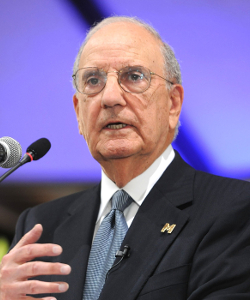
(Pictured: Sinn Féin MP Martin McGuinness and Sinn Féin president Gerry Adams)
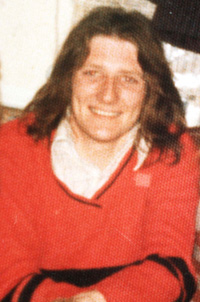
Born in Belfast on March 9, 1954, Sands is the oldest of four children born to John and Rosaleen Sands, and the couple’s first son. Sands grows up in Belfast under the cloud of nationalist and loyalist divisions. At an early age, Sands’s life is affected by the sharp divisions that shape Northern Ireland. At the age of ten, he is forced to move with his family out of their neighborhood due to repeated intimidation by loyalists.
“I was only a working-class boy from a Nationalist ghetto,” Sands later writes about his childhood. “But it is repression that creates the revolutionary spirit of freedom.” Loyalist intimidation proves to be a theme throughout Sands’ life. At the age of 18, he is forced out of his job as an apprentice car builder. Not long afterwards, he and his family have to move again, as a result of political trouble.
The steady number of conflicts pushes Sands to join the republican movement in 1972. His ties to the movement soon capture the attention of the authorities, and later that year, he is arrested and charged with possessing firearms in his house. He spends the next three years of his life in prison. Upon his release, Sands immediately returns to the Republican Movement. He signs on as a community activist in Belfast’s rough Twinbrook area, quickly becoming a popular go-to person for a range of issues affecting the neighborhood.
In late 1976, authorities arrest Sands again, this time in connection with the bombing of a large furniture company and an ensuing gun battle. After weathering a brutal interrogation and then a court proceeding that offers up questionable evidence connecting Sands and three others to the attack, a judge sentences Sands to 14 years in prison at Long Kesh Prison, a facility used to house Republican prisoners from 1971 until 2000, located just outside of Belfast.
As a prisoner, Sands’s stature only grows. He pushes hard for prison reforms, confronting authorities, and for his outspoken ways he is frequently given solitary confinement sentences. Sands contention is that he and others like him, who are serving prison sentences, are actually prisoners of war, not criminals as the British government insists.
Beginning on March 1, 1981, Sands leads nine other Republican prisoners in the H Block section of the Maze prison on a hunger strike that lasts until death. Their demands range from allowing prisoners to wear their own clothes to permitting visits and mail, all of which are central in improving the inmates’ way of life.
Unable to move authorities to give in to his requests, and unwilling himself to end his hunger strike, Sands’s health begins to deteriorate. During the first seventeen days of the strike alone, he loses 16 pounds. A hero among his fellow nationalists, Sands is elected as a Member of Parliament (MP) for Fermanagh and South Tyrone while in prison. Sands becomes the youngest MP at the time. However, he dies less than one month later without ever having taken his seat in the House of Commons.
Only days after slipping into a coma, on the morning of May 5, 1981, Sands dies from malnutrition due to starvation. He is 27 years old and has refused to eat for 66 days. He becomes so fragile over his final weeks that he spends his final days on a waterbed to protect his deteriorating and fragile body. At time of his death, Sands is married to Geraldine Noade, with whom he has one son, Gerard.
The announcement of Sands’s death prompts several days of rioting in nationalist areas of Northern Ireland. Over 100,000 people line the route of Sands’s funeral. He is buried in the ‘New Republican Plot’ alongside 76 others. Their graves are maintained by the National Graves Association, Belfast.
While loyalists dismiss Sands’s death, others are quick to recognize its significance. Over the next seven months, nine other IRA supporters die on hunger strike. Eventually, the British government gives proper political recognition to the prisoners, many of them earning their release under the 1998 Good Friday Agreement.
This meeting is very important, as it is Tony Blair’s last chance at intensive negotiation before his attention is totally caught up in the Iraq War. Progress cannot afford to slip further as the Stormont Assembly election has to be formally declared by March 21 if it is to take place as scheduled on May 1.
David Trimble, representing the unionists, has said the Irish Republican Army (IRA) must “go out of business” before his party will re-enter a coalition government with Sinn Fein. In late 2002, he uses the word “disbandment” but he is now careful to avoid being overly prescriptive.
He wants visible, verifiable decommissioning to restore unionist confidence, severely damaged by the IRA spy ring allegations which led to the collapse of devolution in October 2002. Trimble is also urging sanctions to punish republican politicians if the Provisionals renege.
The key demands of the republicans are demilitarisation, guarantees that unionists cannot pull down the Stormont Assembly again, devolution of policing and criminal justice, further police reforms, and a dispensation for 30-40 fugitive IRA members to go back to Northern Ireland without prosecution.
Republicans insist discussions must not revolve around getting rid of the IRA. They prefer to interpret the prime minister’s talk of “acts of completion” as an admission of failure to implement his obligations under the Good Friday Agreement, shortcomings they outlined in a 57-page dossier handed in to Downing Street.
Tony Blair claims he does not want to get involved in a bartering game – but in fact the government is prepared make major moves in return for IRA concessions. The prime minister is offering a radical three-year plan to withdraw 5,000 of the 13,000 soldiers in Northern Ireland and tear down a large number of border watchtowers and military bases.
Sinn Fein wants written guarantees on troop withdrawal and police reform, criminal justice and on-the-run terrorists. But important details need ironing out.
Policing and the return of fugitive paramilitaries are extremely sensitive issues for both republicans and unionists. A balance must be struck so that on-the-runs, mostly republican, are freed on licence after some sort of judicial process but not given amnesty, unacceptable to unionists.
Government sources claim Sinn Fein is poised to join the policing board, endorsing the police service for the first time, but this too will require delicate handling to ensure unionists don’t walk away.
One British government source states, “Everybody knows what has to be done, the question is if the will is there to achieve it. One of the problems is no one is absolutely clear what the IRA is prepared to do.”
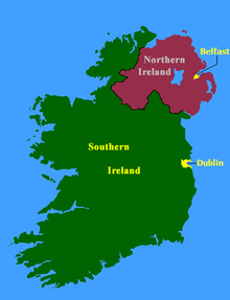
The Act is intended to establish separate Home Rule institutions within two new territories of Ireland – the six northeastern counties of Antrim, Armagh, Down, Fermanagh, Londonderry, and Tyrone are to form “Northern Ireland,” while the remaining 26 counties of the country are to form “Southern Ireland.” Each territory is to be self-governing, except in areas specifically reserved to the Parliament of the United Kingdom such as defence, foreign affairs, international trade, and currency. Provision is made for their future reunification under common Home Rule institutions.
Home Rule never takes effect in Southern Ireland due to the Irish War of Independence, which results instead in the Anglo-Irish Treaty and the establishment in 1922 of the Irish Free State. However, the institutions set up under this Act for Northern Ireland continue to function until they are suspended by the British parliament in 1972 as a consequence of the Troubles.
The Northern Ireland Assembly Bill resulting from the White paper becomes law on May 3, 1973, and elections for the new assembly are held on June 28. Republicans boycott the elections and the Irish Republican Army (IRA) continued its campaign of opposition throughout the outcome.
After the Assembly elections, negotiations between the pro-White Paper parties on the formation of a “power-sharing Executive” begin. The main concerns are internment, policing, and the question of a Council of Ireland. On November 21, an agreement is reached on a voluntary coalition of pro-agreement parties. This new power-sharing Executive take up office and have its very first meeting on January 1, 1974. The Ulster Unionist Party (UUP) is deeply divided – its Standing Committee votes to participate in the executive by a margin of only 132 to 105.
Provisions for a Council of Ireland exist in the Government of Ireland Act 1920, but these have never been enacted. Unionists resent the idea of any “interference” by the Republic of Ireland in their newly established region. In 1973, after agreement has been reached on the formation of an executive, agreement is sought to re-establish a Council of Ireland to stimulate co-operation with the Republic of Ireland. Talks are held between December 6-9 in the Berkshire town of Sunningdale between the British Prime MinisterEdward Heath, the Irish TaoiseachLiam Cosgrave and the three pro-agreement parties. On December 9, a communiqué announcing the agreement is issued, which later becomes known as the “Sunningdale Agreement.”
In January 1974, the Ulster Unionist Party narrowly votes against continued participation in the Assembly and Brian Faulkner resigns as leader. He is succeeded by the anti-Sunningdale Harry West. In March 1974, pro-agreement unionists withdraw their support for the agreement, calling for the Republic of Ireland to remove the Articles 2 and 3 of its constitution first. These Articles are not revised until the Good Friday Agreement of 1998.
Following the defeat of a motion condemning power-sharing in the Northern Ireland Assembly, the Ulster Workers’ Council, a loyalist organisation, calls a general strike for May 15. After two weeks of barricades, shortages, rioting, and intimidation, Faulkner resigns as chief executive and the Sunningdale Agreement collapses on May 28, 1974.
(Pictured: Unionist Party leader and designated leader of Ulster’s new executive, Brian Faulkner, sits with SDLP leader Gerry Fitt and John Hume, during talks at Sunningdale, Berkshire, to establish a Council of Ireland.)
The Good Friday Agreement, a major political development in the Northern Ireland peace process, comes into operation on December 2, 1999, as the British and Irish governments formally notify each other that all the necessary arrangements are in place.
Northern Ireland‘s present devolved system of government is based on the agreement. The agreement also creates a number of institutions between Northern Ireland and the Republic of Ireland, and between the Republic of Ireland and the United Kingdom.
The agreement is made up of two inter-related documents, both agreed upon in Belfast on Good Friday, April 10, 1998. The first is a multi-party agreement by most of Northern Ireland’s political parties. The second is an international agreement between the British and Irish governments, known as the British-Irish Agreement.
The agreement sets out a complex series of provisions, or strands, relating to a number of areas:
Strand 1 addresses the status and system of government of Northern Ireland within the United Kingdom and establishes two major institutions – the Northern Ireland Assembly and the Northern Ireland Executive.
The agreement is approved by voters across the island of Ireland in two referendums held on May 22, 1998. In Northern Ireland, voters are asked whether they support the multi-party agreement. In the Republic of Ireland, voters are asked whether they will allow the state to sign the agreement and allow necessary constitutional changes to facilitate it. The people of both jurisdictions need to approve the agreement in order to give effect to it.
The Good Friday Agreement comes into force on December 2, 1999. The Democratic Unionist Party (DUP) is the only major political group in Northern Ireland to oppose the Good Friday Agreement.
(Pictured: British Prime Minister Tony Blair and Irish Taoiseach Bertie Ahern sign the Good Friday Agreement)
Republican Sinn Féin (Irish: Sinn Féin Poblachtach), an unregistered Irish Republican political organisation, is founded at the West County Hotel in Dublin on November 2, 1986.
Republican Sinn Féin (RSF) claim to be heirs of the Sinn Féin party founded in 1905 and take its present form in 1986 following a split with Provisional Sinn Féin. RSF members take seats when elected in local Irish councils but do not recognise the partition of Ireland and subsequently the legitimacy of the Northern Ireland or Republic of Ireland governments, so does not register itself under them.
The decision to form, or to reorganise or reconstitute as its supporters see it, the organisation was taken in response to Gerry Adams-led Sinn Féin’s decision at its 1986 ardfheis to end its policy of abstentionism and to allow elected Sinn Féin Teachtaí Dála take their seats in Leinster House‘s Dáil Éireann. The supporters of Ruairí Ó Brádaigh and Dáithí Ó Conaill who go on to form RSF oppose this move as it signals a departure from the traditional republican analysis which views the parliament of the Republic of Ireland as an illegal assembly, set up by an act of the British parliament. They argue that republicans owe their allegiance to the All-Ireland (32 County) Irish Republic, maintaining that this state exists de jure and that its authority rests with the IRA Army Council. Hence, if elected, its members refuse to take their seats in the Oireachtas.
The organisation views itself as representing “true” or “traditional” Irish republicanism, while in the mainstream media the organisation is portrayed as a political expression of “dissident republicanism.” Republican Sinn Féin rejects the Good Friday Agreement and indeed the Anglo-Irish Treaty. As part of this they refuse to discount Irish republicans using militant means to “defend the Irish Republic” and considers the Continuity Irish Republican Army (IRA) to be the legitimate army of the Irish Republic. The CIRA is designated as a terrorist organisation by the governments of the United Kingdom and Republic of Ireland.
Bulldozers begin demolishing Northern Ireland‘s notorious HM Prison Maze, previously known as Long Kesh Detention Centre, on October 31, 2006. The prison once housed the most dangerous guerrillas from both sides of the province’s sectarian conflict.
Among the inmates at Maze are ten Irish nationalisthunger strikers who starved themselves to death in 1981. The prison has been empty since 2000, after the release of most guerrilla prisoners under the Good Friday Agreement, which ushered in relative peace after 30 years of fighting in which 3,600 people died.
A sports stadium, equestrian center, hotel, and shopping center are originally proposed for the 360-acre site in County Antrim. In January 2009, however, Sports Minister Gregory Campbell rules out the plan for a multi-sports stadium which has divided political and sporting opinion, opting instead to explore alternatives with the soccer, rugby, and Gaelic Athletic Association (GAA) authorities.
Northern Ireland first and deputy first ministers, Peter Robinson and Martin McGuinness, announce in 2010 that an agreement has been reached on building a peace and conflict resolution facility at the Maze site. It will also host the Royal Ulster Agricultural Society’s annual show. On February 2, 2012, European funding of £18m is approved for building the contentious conflict resolution centre.
Planning permission for the peace centre on the site of the former prison is granted on April 18, 2013. However, in June the Orange Order calls on unionist politicians to halt the peace centre plan, objecting to its location on the former prison site.
On August 15, 2013, Peter Robinson calls a halt to the peace centre plan. In a letter to Democratic Unionist Party (DUP) members, he says it would be wrong to proceed without a consensus about how it will operate. As a result, in October 2013 the European Union funding programme withdraws its £18m offer in financial support for the Maze peace centre.
That the Maze Prison development remains unrealised 16 years after the site’s closure testifies to the complexities involved. That the prospect of redevelopment has never been taken off the table affirms the ineluctable power ideas of profit still hold.
Francis McCloskey, a 67-year-old Catholic civilian, dies on July 14, 1969, one day after being hit on the head with a baton by an officer of the Royal Ulster Constabulary (RUC) during street disturbances in Dungiven, County Derry. McCloskey is sometimes considered to be the first fatality of The Troubles.
McCloskey is found unconscious on July 13 near the Dungiven Orange Hall following a police baton charge against a crowd who had been throwing stones at the hall. Witnesses later say they had seen police beating a figure with batons in the doorway where McCloskey is found, although police claim he had been unconscious before the baton charge and may have been hit with a stone.
The conflict is primarily political, but it also has an ethnic or sectarian dimension, although it is not a religious conflict. A key issue is the constitutional status of Northern Ireland. Unionists and loyalists, who are mostly Protestants and consider themselves British, generally want Northern Ireland to remain within the United Kingdom. Irish nationalists and republicans, who are mostly Catholic and consider themselves Irish, generally want it to leave the United Kingdom and join a united Ireland. The conflict begins amid a campaign to end discrimination against the Catholic/nationalist minority by the Protestant/unionist government and police force in 1968. The campaign is met with violence, eventually leading to the deployment of British troops and subsequent warfare.
The main participants in the Troubles are republican paramilitaries such as the Provisional Irish Republican Army (IRA) and Irish National Liberation Army (INLA), loyalist paramilitaries such as the Ulster Volunteer Force (UVF) and Ulster Defence Association (UDA), the British Army and Royal Ulster Constabulary (RUC), and political activists and politicians. The security forces of the Republic of Ireland play a smaller role. More than 3,500 people are killed in the conflict, of whom 52% were civilians, 32% are members of the British security forces, and 16% are members of paramilitary groups. There has been sporadic violence since the signing of the Good Friday Agreement, including a campaign by anti-ceasefire republicans.
The 30-pound bomb is planted behind a bath in a room on the sixth floor more than three weeks prior to the Prime Minister’s visit. Timed to go off on the final day of the conference, it explodes in the early morning hours of October 12, 1984 and nearly wipes out most of Thatcher’s cabinet, killing five prominent Conservatives and injuring thirty-four.
The bomb destroys a bathroom that Mrs. Thatcher had been in just a few minutes earlier.
Magee stays in the hotel four weeks previously under the false name of Roy Walsh, during the weekend of September 14-17, 1984. He plants the bomb, which includes a long-delay timer, in the bathroom wall of his room, number 629. Magee becomes the primary suspect when forensic officers find his palm print on a hotel registration card following the blast.
Magee is arrested in the Queen’s Park area of Glasgow on June 22, 1985 with other members of an active service unit, including Martina Anderson, while planning other bombings.
Sentenced to a minimum 35 years in jail, he is released from prison in 1999 as part of the Good Friday Agreement early release program. Magee is one of many on both sides of the conflict whose release raises differing emotions.
In one of the more compelling twists associated with the Northern Irelandtroubles, Magee works diligently since his release to ease tensions in Northern Ireland and develops a strong working relationship with Jo Berry, daughter of Sir Anthony Berry MP who was killed in the Grand Brighton Hotel blast. They first meet publicly in November 2000 in an effort at achieving reconciliation. They have met publicly on more than one hundred occasions since that date.