seamus dubhghaill

Promoting Irish Culture and History from Little Rock, Arkansas, USA


Leave a comment

Birth of Francis Rawdon-Hastings, 1st Marquess of Hastings

Francis Rawdon-Hastings, 1st Marquess of Hastings, Anglo-Irish politician and military officer, is born on December 9, 1754, at Moira, County Down. As Governor-General of India, he conquers the Maratha states and greatly strengthens British rule in India.

Rawdon-Hastings is the son of John Rawdon, 1st Earl of Moira, and Elizabeth Hastings, 13th Baroness Hastings, who is a daughter of Theophilus Hastings, 9th Earl of Huntingdon. He is baptised at St. Audoen’s Church, Dublin, on January 2, 1755. He grows up in Moira and in Dublin. He attends Harrow School and matriculates at University College, Oxford, but drops out. While there, he becomes friends with Banastre Tarleton.

He joins the British Army on August 7, 1771, as an ensign in the 15th Regiment of Foot. With his uncle Francis Hastings, 10th Earl of Huntingdon, he goes on the Grand Tour. On October 20, 1773, he is promoted to lieutenant in the 5th Regiment of Foot. He returns to England to join his regiment, and sails for America on May 7, 1774.

He serves in the American Revolutionary War (1775–81), first seeing action at the Battles of Lexington and Concord and the Battle of Bunker Hill. He is rewarded with an English peerage in 1783. He succeeds his father as Earl of Moira in 1793. When the Whigs come to power in 1806, he is appointed Master-General of the Ordnance, a post he resigns on the fall of his party in 1807. Taking an active part in the business of the House of Lords, he belongs to the circle of the Prince of Wales (later George IV), through whose influence he is appointed Governor-General of India, on November 11, 1812. He lands at Calcutta (Kolkata) and assumes office in October 1813. Facing an empty treasury, he raises a loan in Lucknow from the nawab-vizier there and defeats the Gurkhas of Nepal in 1816. They abandon disputed districts, cede some territory to the British, and agree to receive a British resident (administrator). For this success, in 1817 he is raised to the rank of Marquess of Hastings together with the subsidiary titles Viscount Loudoun and Earl of Rawdon.

He then has to deal with a combination of Maratha powers in western India whose Pindaris, bands of horsemen attached to the Maratha chiefs, are ravaging British territory in the Northern Sarkars, in east-central India. In 1817, he offers the Marathas the choice of cooperation with the British against the Pindaris or war. The Peshwa, the Prime Minister of the Maratha Confederacy, the raja of Nagpur, and the army under Holkar II, ruler of Indore, chose war and are defeated. The Pindari bands are broken up, and, in a settlement, the Peshwa’s territories are annexed, and the Rajput princes accept British supremacy. By 1818 these developments establish British sovereignty over the whole of India east of the Sutlej River and Sindh. Rawdon-Hastings also suppresses pirate activities off the west coast of India and in the Persian Gulf and the Red Sea. In 1819, Sir Stamford Raffles, under his authority, obtains the cession by purchase of the strategic island of Singapore.

In internal affairs, Rawdon-Hastings begins the repair of the Mughal canal system and brings the pure water of the Yamuna River (Jumna) into Delhi, encourages education in Bengal, begins a process of Indianization by raising the status and powers of subordinate Indian judges, and takes the first measures for the revenue settlement of the extensive “conquered and ceded” provinces of the northwest.

Rawdon-Hastings’s competent administration, however, ends under a cloud because of his indulgence to a banking house. Though he is cleared of any corrupt motive, the home authorities censure him. He resigns and returns to England in 1823, receiving the comparatively minor post of Governor of Malta in 1824. He dies at sea off Naples on November 28, 1826, aboard HMS Revenge, while attempting to return home with his wife. She returns his body to Malta, and following his earlier directions, cuts off his right hand and preserves it, to be buried with her when she dies. His body is then laid to rest in a large marble sarcophagus in Hastings Gardens, Valletta. His hand is eventually interred, clasped with hers, in the family vault at Loudoun Kirk.

In 1828, two years after Rawdon-Hastings’s death, members of the India House, to make some amends for their vote of censure, give £20,000 to trustees for the benefit of Hastings’s son.

(Pictured: “Portrait of Francis Rawdon, 2nd Earl of Moira, later 1st Marquess of Hastings (1754 – 1826)” possibly by Martin Archer Shee, oil on canvas, National Gallery of Ireland)


Leave a comment

Birth of Richard Colley Wellesley, 1st Marquess Wellesley

Richard Colley Wellesley, 1st Marquess Wellesley, Anglo-Irish politician and colonial administrator, is born on June 20, 1760, at Dangan Castle, County Meath. He, as governor of Madras (now Chennai) and governor-general of Bengal (both 1797–1805), greatly enlarges the British Empire in India and, as Lord Lieutenant of Ireland (1821–28, 1833–34), attempts to reconcile Protestants and Roman Catholics in a bitterly divided country. Throughout his life he displays an ever-increasing jealousy of his younger brother Arthur Wellesley, 1st Duke of Wellington, despite his own achievements.

Born Richard Colley Wesley, he is the eldest son of Garret Wesley, 1st Earl of Mornington (he changes the family surname to Wellesley in 1789). He is educated at the Royal School, Armagh, Harrow School, Eton College, and Christ Church, Oxford, although he leaves the latter in 1781, following his father’s death, before completing his degree. He enters the Irish House of Commons in 1780 and, after he inherits his father’s Irish titles in 1781, moves to the Irish House of Lords. A moderately liberal disciple of Prime Minister William Pitt the Younger, he wins a seat in the British House of Commons in 1784 and serves there until 1797. From 1793 he is a member of the British Privy Council and a commissioner of the India Board of Control.

As Governor-General of India, Wellesley uses military force and diplomacy to strengthen and expand British authority. East India Company forces defeat and kill Tipu Sultan, Indian Muslim ruler of the Kingdom of Mysore (present-day Mysuru) and sympathizer for Revolutionary France, in the Fourth Anglo-Mysore War (1799), and he then restores the Hindu dynasty there that had been deposed by Tipu’s father, Hyder Ali. He annexes much territory after his brother Arthur and General Gerard Lake defeat the Maratha Confederacy of states in the Deccan Plateau (peninsular India). In addition, he forces the Oudh State to surrender numerous important cities to the British, and he contracts with other states a series of “subsidiary alliances” by which all parties recognize British preponderance. He receives a barony in the British peerage in 1797 at the time of his appointment as governor-general, and in 1799 he is awarded a marquessate in the Irish peerage for his victory in the Mysore War.

When Wellesley is faced with an invasion by Zaman Shah Durrani, ruler (1793–1800) of Kabul (Afghanistan), he utilizes his envoy, Captain John Malcolm, to induce Fatḥ-Alī Shah Qajar of Qajar Iran to restrain Zaman Shah Durrani and to give British political and commercial interests preference over the French. On receiving a British government order to restore to France its former possessions in India, he refuses to comply. His policy is vindicated when the Treaty of Amiens (1802) is violated, and Great Britain resumes war against Napoleonic France.

Wellesley’s annexations and the vast military expenditure that he had authorized alarms the court of directors of the East India Company. In 1805, he is recalled, and soon afterward he is threatened with impeachment, although two years later he refuses an offer of the foreign secretaryship. In 1809, he goes to Spain to make diplomatic arrangements for the Peninsular War against France and later that year becomes foreign secretary under Prime Minister Spencer Perceval. In that office he antagonizes his colleagues, who consider him an indolent megalomaniac and welcome his resignation in February 1812. Unlike most of them, however, he had urged a stronger war effort in Spain and had advocated political rights for British Roman Catholics. After Perceval’s assassination on May 11, 1812, he attempts unsuccessfully to form a government at the request of the prince regent (the future King George IV).

As Lord Lieutenant of Ireland, Wellesley disappoints the anti-Catholic George IV, and he is about to be removed when his brother, Arthur, is appointed prime minister in January 1828. He then resigns because his brother is opposed to Roman Catholic emancipation, although the duke is constrained to accept that policy as a political necessity in 1829. His second term as Lord Lieutenant of Ireland (1833–34) ends with the fall of Charles Grey, 2nd Earl Grey’s reform government. When the Whig Party returns to power in April 1835, he is not sent back to Ireland, and in his rage, he threatens to shoot the prime minister, William Lamb, 2nd Viscount Melbourne. He wants to be created Duke of Hindustan so that his rank will equal that of his brother.

Wellesley dies at the age of 82 on September 26, 1842, at Knightsbridge, London. He is buried in Eton College Chapel, at his old school. He and Arthur, after a long estrangement, had been once more on friendly terms for some years. Arthur weeps at the funeral and says that he knows of no honour greater than being Lord Wellesley’s brother.

Wellesley’s library is sold at auction in London by R. H. Evans on January 17, 1843 (and three following days); a copy of the catalogue, annotated with prices and buyers’ names, is held at Cambridge University Library.

Wellesley has several children, including three sons, but none are legitimate. The marquessate thus becomes extinct upon his death. The earldom of Mornington goes to his next surviving brother, William Wellesley-Pole.

(From: “Richard Colley Wellesley, Marquess Wellesley, British statesman,” written and fact-checked by the Editors of Encyclopaedia Britannica, http://www.britannica.com, April 2024 | Pictured: “Richard Colley Wellesley, Marquess of Wellesley (1760-1842),” oil on canvas portrait by Thomas Lawrence, 1812-13)


Leave a comment

Birth of Alfred Denis Godley, Scholar & Poet

Alfred Denis Godley, Anglo-Irish classical scholar and author of humorous poems is born on January 22, 1856, at Ashfield, County Cavan.

Godley is the eldest son of Rev. James Godley, rector of Carrigallen, County Leitrim, and Eliza Frances Godley (née La Touche). After attending Tilney Basset’s preparatory school in Dublin, he goes to Harrow College and Balliol College, Oxford, graduating BA in 1878. At Oxford he becomes known for his classical scholarship and wins several prizes, including the Craven scholarship and the Gaisford Prize for Greek Verse. In 1879 he is appointed assistant classical master at Bradfield College. He returns to Oxford in 1883 as tutor and fellow of Magdalen College (1883–1912). Serving as deputy public orator of Oxford (1904–06), he is elected public orator in 1910, a post he holds until his death.

Godley also enjoys renown as a writer of satiric verse and prose, beginning his literary career as a contributor to The Oxford Magazine in 1883. In 1890 he becomes its editor, and two years later publishes his first book of poems, Verses to Order (1892). Later publications include Lyra Frivola (1899), Second Strings (1902) and The Casual Ward (1912). His work is very popular and two volumes, Reliquiae (1926) and Fifty Poems (1927), are published posthumously. He also publishes numerous works of serious scholarship including Socrates and Athenian Society in His Day (1896) and Oxford in the Eighteenth Century (1908). Noted as a translator of Herodotus, Tacitus, and Horace, he serves as joint-editor of The Classical Review (1910–20). He also edits and publishes volumes of the poetry of Thomas Moore and Winthrop Mackworth Praed.

Active in political life, Godley serves as an alderman on Oxford City Council. During the Second Boer War (1899–1901) he organises volunteer forces, commanding a battalion of the 4th Oxfordshire Light Infantry (1900–05). He serves in this capacity again during World War I and is lieutenant-colonel of the Oxfordshire Volunteer Corps (1916–19). A staunch unionist, during the Home Rule Crisis, he supports the formation of the Ulster Volunteer Force (UVF) and writes some political verse, notably The Arrest, which is popular among unionists. A pioneer in the sport of mountaineering, he is a founding member of the Alpine Club and a committee member (1908–11). He is also a member of the governing body of Harrow School. Towards the end of his career he is awarded honorary doctorates from Princeton (1913) and Oxford (1919).

In 1925 Godley goes on a tour of the Levant and contracts a fever which ultimately leads to his death on June 27, 1925, at his Oxford home, 27 Norham Road. He is buried at Wolvercote Cemetery.

In 1894 Godley marries Amy Hope Cay, daughter of Charles Hope Cay, fellow of Gonville and Caius College, Cambridge. They have no children.

(From: “Godley, Alfred Denis” by David Murphy, Dictionary of Irish Biography, http://www.dib.ie, October 2009)


Leave a comment

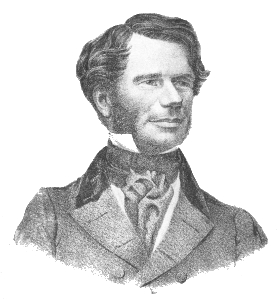
Birth of William Smith O’Brien, Young Ireland Leader

William Smith O’Brien, Irish nationalist Member of Parliament (MP) and leader of the Young Ireland movement, is born in Dromoland, Newmarket-on-Fergus, County Clare, on October 17, 1803.

O’Brien is the second son of Sir Edward O’Brien, 4th Baronet, of Dromoland Castle. His mother is Charlotte Smith, whose father owns a property called Cahirmoyle in County Limerick. He takes the additional surname Smith, his mother’s maiden name, upon inheriting the property. He lives at Cahermoyle House, a mile from Ardagh, County Limerick. He is a descendant of the eleventh century Ard Rí (High King of Ireland), Brian Boru. He receives an upper-class English education at Harrow School and Trinity College, Cambridge. Subsequently, he studies law at King’s Inns in Dublin and Lincoln’s Inn in London.

From April 1828 to 1831 O’Brien is Conservative MP for Ennis. He becomes MP for Limerick County in 1835, holding his seat in the House of Commons of the United Kingdom until 1849.

Although a Protestant country-gentleman, O’Brien supports Catholic emancipation while remaining a supporter of British-Irish union. In 1843, in protest against the imprisonment of Daniel O’Connell, he joins O’Connell’s anti-union Repeal Association.

Three years later, O’Brien withdraws the Young Irelanders from the association. In January 1847, with Thomas Francis Meagher, he founds the Irish Confederation, although he continues to preach reconciliation until O’Connell’s death in May 1847. He is active in seeking relief from the hardships of the famine. In March 1848, he speaks out in favour of a National Guard and tries to incite a national rebellion. He is tried for sedition on May 15, 1848 but is not convicted.

On July 29, 1848, O’Brien and other Young Irelanders lead landlords and tenants in a rising in three counties, with an almost bloodless battle against police at Ballingarry, County Tipperary. In O’Brien’s subsequent trial, the jury finds him guilty of high treason. He is sentenced to be hanged, drawn, and quartered. Petitions for clemency are signed by 70,000 people in Ireland and 10,000 people in England. In Dublin on June 5, 1849, the sentences of O’Brien and other members of the Irish Confederation are commuted to transportation for life to Van Diemen’s Land (Tasmania in present-day Australia).

O’Brien attempts to escape from Maria Island off Tasmania, but is betrayed by the captain of the schooner hired for the escape. He is sent to Port Arthur where he meets up with John Mitchel.

O’Brien is a founding member of the Ossianic Society, which is founded in Dublin on St. Patrick’s Day 1853, whose aim is to further the interests of the Irish language and to publish and translate literature relating to the Fianna. He writes to his son Edward from Van Diemen’s Land, urging him to learn the Irish language. He himself studies the language and uses an Irish-language Bible, and presents to the Royal Irish Academy Irish-language manuscripts he has collected.

In 1854, after five years in Tasmania, O’Brien is released on the condition he never returns to Ireland. He settles in Brussels. In May 1856, he is granted an unconditional pardon and returns to Ireland that July. He contributes to The Nation newspaper, but plays no further part in politics.

In 1864 he visits England and Wales, with the view of rallying his failing health, but no improvement takes place and he dies in Bangor, Gwynedd, Wales on June 18, 1864.

A statue of William Smith O’Brien stands in O’Connell Street, Dublin. Sculpted in Portland limestone, it is designed by Thomas Farrell and erected in D’Olier Street, Dublin, in 1870. It is moved to its present position in 1929.

(Pictured: Portrait of William Smith O’Brien by George Francis Mulvany, National Gallery of Ireland)


Leave a comment

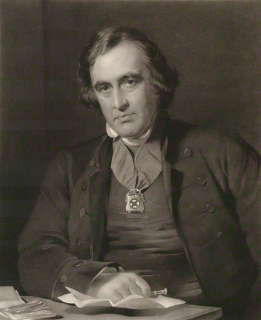
Birth of Richard Chenevix Trench, Anglican Archbishop & Poet

Richard Chenevix Trench, Anglican archbishop and poet, is born in Dublin on September 9, 1807.

Trench is the son of Richard Trench (1774–1860), barrister-at-law, and the Dublin writer Melesina Chenevix (1768–1827). His elder brother is Francis Chenevix Trench. He is educated at Harrow School, and graduates from Trinity College, Cambridge in 1829. In 1830 he visits Spain. While incumbent of Curdridge Chapel near Bishop’s Waltham in Hampshire, he publishes The Story of Justin Martyr and Other Poems (1835), which is favourably received, and is followed by Sabbation, Honor Neale, and other Poems (1838), and Poems from Eastern Sources (1842). These volumes reveal the author as the most gifted of the immediate disciples of William Wordsworth, with a warmer colouring and more pronounced ecclesiastical sympathies than the master, and strong affinities to Alfred, Lord Tennyson, John Keble and Richard Monckton Milnes.

In 1841 Trench resigns his living to become curate to Samuel Wilberforce, then rector of Alverstoke, and upon Wilberforce’s promotion to the deanery of Westminster Abbey in 1845 he is presented to the rectory of Itchen Stoke. In 1845 and 1846 he preaches the Hulsean Lectures, and in the former year is made examining chaplain to Wilberforce, now Bishop of Oxford. He is shortly afterwards appointed to a theological chair at King’s College London.

Trench joins the Canterbury Association on March 27, 1848, on the same day as Samuel Wilberforce and Wilberforce’s brother Robert.

In 1851 Trench establishes his fame as a philologist by The Study of Words, originally delivered as lectures to the pupils of the Diocesan Training School, Winchester. His stated purpose is to demonstrate that in words, even taken singly, “there are boundless stores of moral and historic truth, and no less of passion and imagination laid up” — an argument which he supports by a number of apposite illustrations. It is followed by two little volumes of similar character — English Past and Present (1855) and A Select Glossary of English Words (1859). All have gone through numerous editions and have contributed much to promote the historical study of the English tongue. Another great service to English philology is rendered by his paper, read before the Philological Society, On some Deficiencies in our English Dictionaries (1857), which gives the first impulse to the great Oxford English Dictionary. He envisages a totally new dictionary that is a “lexicon totius Anglicitatis.” As one of the three founders of the dictionary, he expresses his vision that it will be “an entirely new Dictionary; no patch upon old garments, but a new garment throughout.”

Trench’s advocacy of a revised translation of the New Testament (1858) helps promote another great national project. In 1856 he publishes a valuable essay on Pedro Calderón de la Barca, with a translation of a portion of Life is a Dream in the original metre. In 1841 he had published his Notes on the Parables of our Lord, and in 1846 his Notes on the Miracles, popular works which are treasuries of erudite and acute illustration.

In 1856 Trench becomes Dean of Westminster Abbey, a position which suits him. Here he introduces evening nave services. In January 1864 he is advanced to the post of Archbishop of Dublin. Arthur Penrhyn Stanley had been first choice, but is rejected by the Church of Ireland, and, according to Bishop Wilberforce’s correspondence, Trench’s appointment is favoured neither by the Prime Minister nor the Lord Lieutenant. It is, moreover, unpopular in Ireland, and a blow to English literature, yet it turns out to be fortunate. He cannot prevent the disestablishment of the Church of Ireland, though he resists with dignity. But, when the disestablished communion has to be reconstituted under the greatest difficulties, it is important that the occupant of his position should be a man of a liberal and genial spirit.

This is the work of the remainder of Trench’s life. It exposes him at times to considerable abuse, but he comes to be appreciated and, when he resigns his archbishopric because of poor health in November 1884, clergy and laity unanimously record their sense of his “wisdom, learning, diligence, and munificence.” He finds time for Lectures on Medieval Church History (1878), and his poetical works are rearranged and collected in two volumes (last edition, 1885). He dies at Eaton Square, London, on March 28, 1886, after a lingering illness. He is buried at Westminster Abbey.

George W. E. Russell describes Trench as “a man of singularly vague and dreamy habits” and recounts the following anecdote of his old age:

“He once went back to pay a visit to his successor, Lord Plunket. Finding himself back again in his old palace, sitting at his old dinner-table, and gazing across it at his wife, he lapsed in memory to the days when he was master of the house, and gently remarked to Mrs. Trench, ‘I am afraid, my love, that we must put this cook down among our failures.'”


Leave a comment

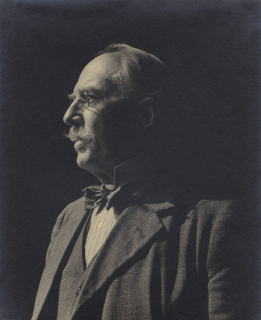
Death of Painter William Dermod O’Brien

William Dermod O’Brien, Irish painter commonly known as Dermod O’Brien, dies in Dublin on October 3, 1945. Most of his paintings are landscapes and portraits. His work is part of the painting event in the art competition at the 1928 Summer Olympics in Amsterdam, Netherlands.

O’Brien is born on June 10, 1865, at Mount Trenchard House near Foynes in County Limerick, the son of Edward William O’Brien and Hon. Mary Spring Rice, granddaughter of Thomas Spring Rice, 1st Baron Monteagle of Brandon. For a time after his mother’s death, he is raised by his aunt Charlotte Grace O’Brien, along with his sisters, Nelly and Lucy. His father subsequently remarries in 1880. He is educated at Harrow School and Trinity College, Cambridge.

O’Brien marries Mabel Emmeline Smyly, daughter of Sir Philip Crampton Smyly, on March 8, 1902. Together they have five children. His son Brendan, a surgeon in Dublin, marries artist Kitty Wilmer O’Brien. His daughter Rosaleen Brigid becomes an artist, also known as Brigid Ganly after her marriage to Andrew Ganly. Another artistic relative is Geraldine O’Brien.

Unlike many of his Irish contemporaries, after graduating from Cambridge O’Brien does not study art in Dublin, opting instead to travel to Paris, where he studies the paintings at the Louvre. In 1887, he visits galleries in Italy and then enrolls at the Royal Academy of Fine Arts in Antwerp, Belgium. At the Academy he is a fellow student of Walter Osborne. He leaves Antwerp in 1891 and returns to Paris, where he studies at Académie Julian. He relocates to London in 1893 and then Dublin in 1901.

O’Brien is designated an associate of the Royal Hibernian Academy in 1906, a member in 1907, and is later president between 1910 and 1945. He is made an honorary member of the Royal Academy of Arts, London in 1912.

O’Brien holds the office of High Sheriff of County Limerick in 1916 and serves as Deputy Lieutenant of County Limerick. He serves in the Artists Rifles during World War I.

(Pictured: Dermod O’Brien by Howard Coster, print, late 1930s, given to the National Portrait Gallery, London by the estate of Howard Coster, 1978)


Leave a comment

Birth of Richard “Humanity Dick” Martin

richard-martin

Colonel Richard Martin, Irish politician and campaigner against cruelty to animals, is born in Ballynahinch, County Galway on January 15, 1754. He is known as “Humanity Dick,” a nickname bestowed on him by King George IV. He succeeds in getting the pioneering Cruel Treatment of Cattle Act 1822, nicknamed ‘Martin’s Act,’ passed into British law.

Martin is brought up at Dangan House, situated on the River Corrib, four miles upriver from the town of Galway. The Martins are one of the Tribes of Galway. They own one of the biggest estates in all of Great Britain and Ireland as well as much of the land in Connemara. He studies at Harrow School in London and then gains admission to Trinity College, Cambridge on March 4, 1773. He does not graduate with a degree but studies for admission to the bar and is admitted to Lincoln’s Inn on February 1, 1776. He serves as a lawyer in Ireland and becomes High Sheriff of Galway Town in 1782.

Martin is elected to represent County Galway in Parliament in 1800. He is very popular with people in Galway and is well known as a duelist and as a witty speaker in the houses of Parliament. He campaigns for Catholic emancipation but is best remembered for his work to outlaw cruelty to animals. He earns the nickname “Humanity Dick” because of his compassion for the plight of animals at that time.

Through Martin’s work the Cruel Treatment of Cattle Act is enacted in 1822. This is the first piece of legislation which aims to protect animals from cruelty. Most people do not recognise animal rights in those days and people often make fun of him. Cartoons of him with donkey ears appears in the newspapers of the day.

After having the Bill passed by Parliament, Martin actively seeks out cases where cruelty has been inflicted on animals on the streets of London. He is responsible for bringing many people to court for cruelty against horses. He often pays half the fine of the accused in cases where the accused cannot afford it and seems genuinely sorry for his actions.

Due to Martin’s profile as a politician and as the drafter of the anti-cruelty legislation, a public perception develops that he is the initiator and creator of the Royal Society for the Prevention of Cruelty to Animals (RSPCA). At the Society’s first anniversary meeting he sets the public record straight and gives credit to Rev. Arthur Broome, although he maintains an interest in the Society.

After the election of 1826, Martin, now a heavy gambler, loses his parliamentary seat because of a petition which accuses him of illegal intimidation during the election. He flees into hasty exile to Boulogne-sur-Mer, France, because he can no longer enjoy a parliamentary immunity to arrest for debt. He dies there peacefully in the presence of his second wife and their three daughters on January 6, 1834. A year after Martin’s death, the Cruel Treatment of Cattle Act is extended to cover cruelty to all domestic animals.

Martin’s work continues today. The RSPCA now has members all over the world. In Ireland it is known as the Irish Society for the Prevention of Cruelty to Animals (ISPCA). Many other groups have been set up which protect animals from cruelty.


Leave a comment

Birth of Sir Aubrey (Hunt) de Vere

aubrey-hunt-de-vere

Sir Aubrey (Hunt) de Vere, 2nd Baronet, Anglo-Irish poet and landowner, is born on August 28, 1788.

De Vere is the son of Sir Vere Hunt, 1st Baronet and Eleanor Pery, daughter of William Pery, 1st Baron Glentworth. He is educated at Harrow School, where he is a childhood friend of Lord Byron, and Trinity College, Dublin. He marries Mary Spring Rice, the daughter of Stephen Edward Rice and Catherine Spring, and sister of Thomas Spring Rice, 1st Baron Monteagle of Brandon, in 1807. He succeeds to his father’s title in 1818.

The Hunt/de Vere family estate of 300 years (1657–1957), including the period of the de Vere Baronetcy of Curragh, is the present day Curraghchase Forest Park, in County Limerick. De Vere spends most of his life on the estate and is closely involved in its management. He suffers much trouble from his ownership of the island of Lundy, which his father, who was not much of a businessman, had unwisely purchased in 1802, and which becomes a heavy drain on the family’s finances. Sir Vere is never able to find a purchaser for Lundy, and it takes his son until 1834 to dispose of it.

De Vere stands for election in the 1820 General Election and comes in third with 2,921 votes.

De Vere changes his surname from Hunt to de Vere in 1832, in reference to his Earl of Oxford ancestors, dating back to Aubrey de Vere I, a tenant-in-chief in England of William the Conqueror in 1086. He serves as High Sheriff of County Limerick in 1811.

De Vere is a poet. William Wordsworth calls his sonnets the most perfect of the age. These and his drama, Mary Tudor: An Historical Drama, are published by his son, the poet Aubrey Thomas de Vere, in 1875 and 1884.

De Vere produces numerous works over his lifetime. The most notable are Ode to the Duchess of Angouleme (1815), Julian the Apostate: A Dramatic Poem (1822), The Duke of Mercia: An Historical Drama [with] The Lamentation of Ireland, and Other Poems (1823), A Song of Faith: Devout Exercises and Sonnets and his most famous work, Mary Tudor: An Historical Drama.

Sir Aubrey de Vere dies on July 5, 1846.


Leave a comment

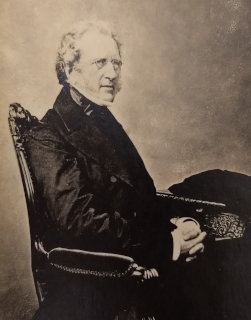
Death of Historian Richard Bagwell

richard-bagwell-ireland-under-the-tudors

Richard Bagwell, noted historian of the Stuart and Tudor periods in Ireland and a political commentator with strong Unionist convictions, dies on December 4, 1918 at Marlfield, Clonmel, County Tipperary. He is the eldest son of John Bagwell, M.P. for Clonmel from 1857 to 1874. His son John Philip Bagwell follows the family tradition in politics becoming a Senator in the government of the Irish Free State in 1923.

Bagwell is educated at Harrow School and the University of Oxford in England and is called to the Bar, being admitted to Inner Temple in 1866. He serves as a special local government commissioner (1898–1908) and as a commissioner of national education (1905–18).

As a historian of sixteenth- and seventeenth-century Ireland, Bagwell works for nearly sixty years to produce his two three-volume works, Ireland under the Tudors (1885–90) and Ireland under the Stuarts (1909–16), using manuscript sources throughout. He is the first to treat this period in a systematic and scholarly fashion. For this solid work he is made Member of the Royal Irish Academy (MRIA) and honoured by the University of Dublin and the University of Oxford in 1918. He also writes the historical entry on “Ireland” for the Encyclopædia Britannica (Chicago 1911).

A one-time liberal, Bagwell is a founder member (1885) of the Irish Loyal and Patriotic Union, renamed the Irish Unionist Alliance (IUA) in 1891. A “diehard” unionist, he is one of the most prominent and respected southern unionists. A tireless political publicist, he is an assiduous letter-writer to the newspapers, a didactic pamphleteer, and a regular speaker at political meetings throughout Ireland. He opposes the majority report of the Irish Convention (1917) and is one of the original signatories of the “Call to unionists” that splits the IUA.

Bagwell serves as a Commissioner on National Education between 1905 and 1918 and a member of the Patriotic Union (Southern Unionists). He holds the position of High Sheriff of Tipperary in 1869. He is a Justice of the Peace for County Tipperary, and later for County Waterford, and holds the office of Deputy Lieutenant of Tipperary. He is also Special Local Government Commissioner between 1898 and 1903 and President of the Borstal Association of Ireland.

Bagwell marries Harriet Philippa Joscelyn, fourth daughter of P. J. Newton of Dunleckney Manor, County Carlow, on January 9, 1873. The couple has one son, John Philip Bagwell, and three daughters, Emily Georgiana, Margaret and Lilla Minnie.

Richard Bagwell dies one hundred years ago today on December 4, 1918 at Marlfield, having suffered from gout for many years.


Leave a comment

Death of William Smith O’Brien, Young Ireland Leader

william-smith-obrien

William Smith O’Brien, Irish nationalist Member of Parliament (MP) and leader of the Young Ireland movement, dies in Bangor, Gwynedd, Wales on June 18, 1864.

Born in Dromoland, Newmarket-on-Fergus, County Clare, O’Brien is the second son of Sir Edward O’Brien, 4th Baronet, of Dromoland Castle. His mother is Charlotte Smith, whose father owns a property called Cahirmoyle in County Limerick. He takes the additional surname Smith, his mother’s maiden name, upon inheriting the property. He lives at Cahermoyle House, a mile from Ardagh, County Limerick. He is a descendant of the eleventh century Ard Rí (High King of Ireland), Brian Boru. He receives an upper-class English education at Harrow School and Trinity College, Cambridge. Subsequently, he studies law at King’s Inns in Dublin and Lincoln’s Inn in London.

From April 1828 to 1831 O’Brien is Conservative MP for Ennis. He becomes MP for Limerick County in 1835, holding his seat in the House of Commons of the United Kingdom until 1849.

Although a Protestant country-gentleman, O’Brien supports Catholic emancipation while remaining a supporter of British-Irish union. In 1843, in protest against the imprisonment of Daniel O’Connell, he joins O’Connell’s anti-union Repeal Association.

Three years later, O’Brien withdraws the Young Irelanders from the association. In January 1847, with Thomas Francis Meagher, he founds the Irish Confederation, although he continues to preach reconciliation until O’Connell’s death in May 1847. He is active in seeking relief from the hardships of the famine. In March 1848, he speaks out in favour of a National Guard and tries to incite a national rebellion. He is tried for sedition on May 15, 1848, but is not convicted.

On July 29, 1848, O’Brien and other Young Irelanders lead landlords and tenants in a rising in three counties, with an almost bloodless battle against police at Ballingarry, County Tipperary. In O’Brien’s subsequent trial, the jury finds him guilty of high treason. He is sentenced to be hanged, drawn, and quartered. Petitions for clemency are signed by 70,000 people in Ireland and 10,000 people in England. In Dublin on June 5, 1849, the sentences of O’Brien and other members of the Irish Confederation are commuted to transportation for life to Van Diemen’s Land (Tasmania in present-day Australia).

O’Brien attempts to escape from Maria Island off Tasmania but is betrayed by the captain of the schooner hired for the escape. He is sent to Port Arthur where he meets up with John Mitchel.

O’Brien is a founding member of the Ossianic Society, which is founded in Dublin on St. Patrick’s Day 1853, whose aim is to further the interests of the Irish language and to publish and translate literature relating to the Fianna. He writes to his son Edward from Van Diemen’s Land, urging him to learn the Irish language. He himself studies the language and uses an Irish-language Bible and presents to the Royal Irish Academy Irish-language manuscripts he has collected.

In 1854, after five years in Tasmania, O’Brien is released on the condition he never returns to Ireland. He settles in Brussels. In May 1856, he is granted an unconditional pardon and returns to Ireland that July. He contributes to the Nation newspaper but plays no further part in politics.

In 1864 he visits England and Wales, with the view of rallying his failing health, but no improvement takes place, and he dies at Bangor, in Wales on June 16, 1864.

A statue of William Smith O’Brien stands in O’Connell Street, Dublin. Sculpted in Portland limestone, it is designed by Thomas Farrell and erected in D’Olier Street, Dublin, in 1870. It is moved to its present position in 1929.