seamus dubhghaill

Promoting Irish Culture and History from Little Rock, Arkansas, USA


Leave a comment

Death of John Redmond, Politician & Barrister

john-edward-redmond

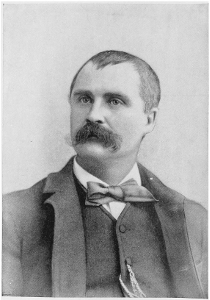
John Edward Redmond, Irish nationalist politician, barrister, and Member of Parliament (MP) in the House of Commons of the United Kingdom, dies on March 6, 1918, in London, England. He is best known as leader of the moderate Irish Parliamentary Party (IPP) from 1900 until his death. He is also leader of the paramilitary organisation the National Volunteers.

Redmond is born to an old prominent Catholic family in Kilrane, County Wexford on September 1, 1856. Several relatives are politicians. He takes over control of the minority IPP faction loyal to Charles Stewart Parnell after Parnell dies in 1891. He is a conciliatory politician who achieves the two main objectives of his political life: party unity and, in September 1914, the passing of the Irish Home Rule Act.

The Irish Home Rule Act grants limited self-government to Ireland, within the United Kingdom. However, implementation of Home Rule is suspended by the outbreak of the World War I. Redmond calls on the National Volunteers to join Irish regiments of the New British Army and support the British and Allied war effort to restore the “freedom of small nations” on the European continent, thereby to also ensure the implementation of Home Rule after a war that is expected to be of short duration. However, after the Easter Rising of 1916, Irish public opinion shifts in favour of militant republicanism and full Irish independence, resulting in his party losing its dominance in Irish politics.

In sharp contrast to Parnell, Redmond lacks charisma. He works well in small committees but has little success in arousing large audiences. Parnell had always chosen the nominees to Parliament. Now they are selected by the local party organisations, giving Redmond numerous weak MPs over whom he has little control. He is an excellent representative of the old Ireland but grows increasingly old-fashioned because he pays little attention to the new forces attracting younger Irishmen, such as Sinn Féin in politics, the Gaelic Athletic Association in sports, and the Gaelic League in cultural affairs.

Redmond never tries to understand the unionist forces emerging in Ulster. He is further weakened in 1914 by the formation of the Irish Volunteers by Sinn Féin members. His enthusiastic support for the British war effort alienates many Irish nationalists. His party has been increasingly hollowed out, and a major crisis, notably the Easter Rising, is enough to destroy it.

Redmond is increasingly eclipsed by ill-health after 1916. An operation in March 1918 to remove an intestinal obstruction appears to progress well initially, but he then suffers heart failure. He dies a few hours later at a London nursing home on March 6, 1918.

Condolences and expressions of sympathy are widely expressed. After a funeral service in Westminster Cathedral his remains are interred, as requested in a manner characteristic of the man, in the family vault at the old Knights Templars‘ chapel yard of Saint John’s Cemetery, Wexford, amongst his own people rather than in the traditional burial place for Irish statesmen and heroes in Glasnevin Cemetery. The small, neglected cemetery near the town centre is kept locked to the public. His vault, which has been in a dilapidated state, has been only partially restored by Wexford County Council.

Leave a comment

Birth of Phil Lynott, Thin Lizzy Vocalist & Bassist

Philip Parris “Phil” Lynott, Irish musician, singer, songwriter, and a founding member, principal songwriter, lead vocalist, and bassist of Thin Lizzy, is born on August 20, 1949, in Hallam Hospital in West Bromwich, Staffordshire, England.

Lynott goes to live with his grandmother, Sarah Lynott, in Crumlin, Dublin when he is four years old. He is introduced to music through his uncle Timothy’s record collection and becomes influenced by Tamla Motown and The Mamas and the Papas.

Growing up in Dublin in the 1960s, Lynott fronts several bands as a lead vocalist, most notably teaming up with bassist Brendan ‘Brush’ Shiels to form Skid Row in early 1968. It is during this period that Lynott learns to play the bass guitar.

Toward the end of 1969, Lynott, now confident enough to play bass himself in a band, teams with Brian Downey, Eric Bell, and Eric Wrixon to form Thin Lizzy. The band’s first top ten hit comes in 1973 with a rock version of the well-known Irish traditional song “Whiskey in the Jar.” With the release of the Jailbreak album in 1976, Lynott and Thin Lizzy become international superstars on the strength of the album’s biggest hit, “The Boys Are Back in Town.” The song reaches the Top 10 in the United Kingdom, No. 1 in Ireland, and is a hit in the United States and Canada.

Having finally achieved mainstream success, Thin Lizzy embarks on several consecutive world tours. However, the band suffers from personnel changes. By the early 1980s, Thin Lizzy is starting to struggle commercially and Lynott starts showing symptoms of drug abuse, including regular asthma attacks. After the resignation of longtime manager Chris O’Donnell, Lynott decides to disband Thin Lizzy in 1983.

In 1984, Lynott forms a new band, Grand Slam, with Doish Nagle, Laurence Archer, Robbie Brennan, and Mark Stanway. The band tours various clubs but suffers from being labeled a poor version of Thin Lizzy due to the inclusion of two lead guitarists. Grand Slam disbands at the end of the year due to a lack of money and Lynott’s increasing addiction to heroin.

Lynott’s last years are dogged by drug and alcohol dependency leading to his collapse on December 25, 1985, at his home in Kew. He is taken to Salisbury Infirmary where he is diagnosed as suffering from septicemia. His condition worsens by the start of the new year, and he is put on a respirator. He dies of pneumonia and heart failure due to septicemia in the hospital’s intensive care unit on January 4, 1986, at the age of 36.

Lynott’s funeral is held at St. Elizabeth of Portugal Church, Richmond, London on January 9, 1986, with most of Thin Lizzy’s ex-members in attendance, followed by a second service at Howth Parish Church on January 11. He is buried in St. Fintan’s Cemetery, Sutton, Dublin.


Leave a comment

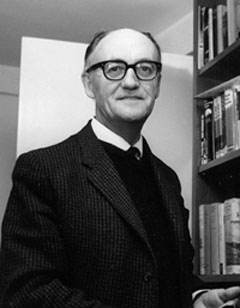
Birth of Writer John Boyle O’Reilly

John Boyle O’Reilly, poet, journalist and fiction writer, is born in Dowth, County Meath on June 28, 1844.

O’Reilly is the third child of a headmaster and a schoolteacher. When he is fifteen, he moves to Lancashire and lives with his aunt and uncle. There he becomes a reporter with a local newspaper and joins the 11th Lancashire Rifle Volunteers in 1861. He returns to Ireland in 1863 and enlists with the 10th Royal Hussars in Dublin. However, after realising the way the British are treating his fellow people, he leaves the army and joins the Irish Republican Brotherhood around 1865.

In 1866 O’Reilly, along with many other members of the Brotherhood, are arrested and put on trial for treason. O’Reilly is found guilty and sentenced to death however, due to his young age, his sentence is reduced to 20 years penal servitude. He spends a year and a half in some English prisons before being transported to Western Australia in 1867, arriving in 1868.

A month after arriving O’Reilly is moved to the town of Bunbury where he starts receiving attention for protesting the chopping down of a tree. A year after arriving he decides to escape from the colony with the help of a local Catholic priest and some farmers from the nearby town of Dardanup. In February 1869 O’Reilly absconds from his convict camp and makes his way towards the Leschenault Peninsula where he waits for a ship to arrive. After approximately two weeks O’Reilly escapes on the Gazelle bound for the United States, arriving there in November 1869.

O’Reilly moves to Boston and becomes a well-known figure in the town where he becomes involved in civil rights, sports, and Irish American causes. He also becomes part owner of The Pilot newspaper. He publishes four books of poetry – Songs from the Southern Seas (1873), Songs, Legends and Ballads (1878), The Statues in the Block (1881) and In Bohemia (1886). He also publishes a novel Moondyne (1879) based on the convict of the same name and O’Reilly’s experiences in Western Australia. It becomes his most popular work. He also writes one last book of poems entitled Watchwords, which is released after his death.

John Boyle O’Reilly dies in Hull, Massachusetts on August 10, 1890, from heart failure after overdosing on his wife’s medication. His sudden death receives an outpouring of grief and tributes from the Boston community and also globally.

His funeral is held at St. Mary’s Church in Charlestown on August 13 and is attended by thousands. The streets near the church are lined with mourners. His wife does not attend the funeral due to grief and is unable to leave her bed. He is originally buried at Calvary Cemetery in Roxbury, but in November 1890 his remains are exhumed and moved to Holyhood Cemetery in Brookline.


Leave a comment

Birth of Writer Walter Macken

Walter Macken, writer of short stories, novels and plays, is born at 18 St. Joseph’s Terrace in GalwayCounty Galway on May 3, 1915.

Macken’s father, Walter Macken, Sr., formerly a carpenter, joins the British Army in 1915 and is killed in March of the following year at St Eloi. The family therefore has to rely on lodgers and a small service pension to sustain them.

Macken attends the Presentation Convent for Infants from (1918-1921), St. Mary’s, a Diocesan College where they train people who want to become priests (1923-1924), and Patrician Brothers both Primary and Secondary (1921-1922 and 1924-1934), where he takes his Leaving Certificate. He is writing short stories, novels, and plays in exercise books from the age of eight and carries on these works well into his teens.

Macken is originally an actor, principally with the Taibhdhearc na Gaillimhe in Galway, where he meets his wife Peggy, and The Abbey Theatre in Dublin. He also plays lead roles on Broadway in M. J. Molloy‘s The King of Friday’s Men and his own play Home Is the Hero. The success of his third book, Rain on the Wind, winner of the Literary Guild award in the United States, enables him to focus his energies on writing.

Macken also acts in films, notably in Arthur Dreifuss‘ adaptation of Brendan Behan‘s The Quare Fellow. He is perhaps best known for his trilogy of Irish historical novels Seek the Fair LandThe Silent People, and The Scorching Wind.

His son Ultan Macken is a well-known journalist in the print and broadcast media of Ireland, and wrote a biography of his father, Walter Macken: Dreams on Paper.

Walter Macken dies of heart failure at the age of 51 in Menlo, County Galway, on April 22, 1967.


Leave a comment

Annie Moore Departs Queenstown for the United States

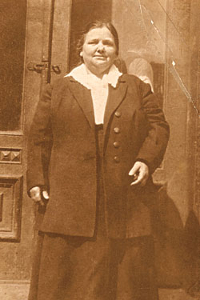
annie-moore

Fifteen-year-old Annie Moore departs Queenstown, now Cobh, County Cork, on December 20, 1891, and becomes the first immigrant to the United States to pass through the Ellis Island facility in New York Harbor.

Her parents, Matthew and Julia Moore, had come to the United States in 1888 and are living at 32 Monroe Street in Manhattan. Moore departs from Queenstown aboard the S.S. Nevada, one of 148 steerage passengers. Accompanied by her brothers, Anthony and Philip, she spends twelve days at sea, including Christmas Day, arriving in New York City on Thursday evening, December 31. It is reported that her arrival is on her 15th birthday, but records in Ireland reveal that her birthday is in May, and she is actually seventeen.

Ellis Island officially opens on January 1, 1892, and, as the first person to be processed at the newly opened facility, Moore is presented with an American $10 gold piece from an American official. All three children are soon reunited with their parents in New York. From 1820 to 1920, more than 4 million people leave their native shores of Ireland bound for the Port of New York and a new life in America.

Moore marries a son of German immigrants, Joseph Augustus Schayer, an employee at Manhattan’s Fulton Fish Market, with whom she has at least eleven children. She dies of heart failure on December 6, 1924, and is buried in Calvary Cemetery, Queens. Her previously unmarked grave is identified in August 2006. On October 11, 2008, a dedication ceremony is held at Calvary which celebrates the unveiling of a marker for her grave, a Celtic cross made of Irish Blue Limestone.

The Irish American Cultural Institute presents an annual Annie Moore Award “to an individual who has made significant contributions to the Irish and/or Irish American community and legacy.” Moore’s story is told in the song “Isle of Hope, Isle of Tears,” written by Brendan Graham. The song has been performed by Ronan Tynan and by The Irish Tenors, of which Tynan was formerly a member. Other artists performing the song include Seán Keane, Sean & Dolores Keane, Daniel O’Donnell, Celtic Thunder, Irish tenor Brian Dunphy, Celtic Woman, and Tommy Fleming.

A woman named “Annie Moore” who died near Fort Worth, Texas in 1924 had long been thought to be the one whose arrival marked the beginning of Ellis Island. Further research, however, established that the Annie Moore in Texas was born in Illinois.


Leave a comment

Birth of Eamonn Andrews, Radio & Television Presenter

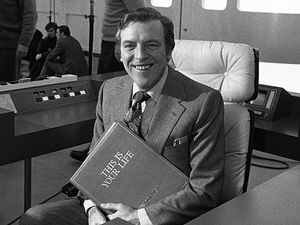
eamonn-andrewsEamonn Andrews, radio and television presenter considered to be Ireland’s first media superstar, is born in Synge Street, Dublin, on December 19, 1922.

Andrews is educated at Synge Street CBS and begans his career as a clerk in an insurance office. He is a keen amateur boxer and wins the Irish junior middleweight title in 1944.

In 1946, he becomes a full-time freelance sports commentator, working for Radio Éireann, Ireland’s national broadcaster. In 1950, he begins presenting programmes for the BBC, being particularly well known for boxing commentaries, and soon becomes one of television’s most popular presenters. He begins hosting the game show What’s My Line? in 1951.

Throughout the 1950s, he commentates on the major British heavyweight fights on the BBC Light Programme, with inter-round summaries by W. Barrington Dalby. On January 20, 1956, he reaches No. 18 in the UK Singles Chart with a “spoken narrative” recording named “The Shifting Whispering Sands (Parts 1 & 2),” which is produced by George Martin with musical backing by the Ron Goodwin Orchestra. The song later reappears on Kenny Everett‘s compilation album The World’s Worst Record Show, which is released in June 1978.

Between 1955 and 1964, Andrews presents the long-running Sports Report on BBC’s Light Programme, now Radio 2. In 1965, he leaves the BBC to join the ITV contractor ABC, where he pioneers the talk show format in the UK. He hosts a chat show on ITV, The Eamonn Andrews Show, for five years. He is known for coming up with off-the-cuff linkings that do not work such as, “Speaking of cheese sandwiches, have you come far?” This is parodied by the character Seamus Android on Round the Horne in the 1960s, performed by Bill Pertwee. In the 1960s he presents Thames Television‘s Today news magazine programme.

Andrews is probably best known as the presenter of the UK’s version of This Is Your Life, between its inception in 1955 and his death in 1987, when he is succeeded by Michael Aspel, who had also succeeded Andrews as host of Crackerjack more than two decades earlier. Andrews becomes the very first This Is Your Life subject on British television when he is surprised by the show’s creator, Ralph Edwards. Andrews also creates a long-running panel game called Whose Baby? that originally runs on the BBC and later on ITV. He is a regular presenter of the early Miss World pageants.

Andrews’ chairs the Radio Éireann Authority, now the RTÉ Board, between 1960 and 1964, overseeing the introduction of State television to Ireland and establishing the Irish State broadcaster as an independent semi-state body. About this time, he also acquires a number of business interests in Ireland, including recording studios and a dance hall.

After months of illness during 1987, originally caused by a virus contracted during an airline flight, but which is not recognised at the time, he dies from heart failure on November 5, 1987, at the age of 64, at Cromwell Hospital, London. He had recorded his last edition of This Is Your Life six days previously on October 30, 1987, surprising Crossroads actress Jane Rossington. After his death, the show, and two others that have yet to be broadcast, are postponed until, with his widow’s permission, they are broadcast in January 1988. His widow, Gráinne, whom he married in 1951, dies 18 months later. They had three adopted children.

His contribution to U.K. radio is commemorated in the The Radio Academy Hall of Fame. Andrews appears as the linking narrator who introduces the unrelated segments that comprise the portmanteau film, Three Cases of Murder (1955).


Leave a comment

Final Concert by Phil Lynott & Thin Lizzy

thin-lizzy-1983

Although a version of the band still tours today, the definitive Thin Lizzy lineup, according to the official Thin Lizzy website, plays its last concert at the Monsters Of Rock festival in Nuremburg, Germany, on September 4, 1983. Afterwards the band members go their separate ways.

Formed in 1969 featuring bass guitarist and lead vocalist Phil Lynott and drummer Brian Downey, the band goes through various members including Gary Moore before Scott Gorham and Brian Robertson join the band in the mid-1970s. Thin Lizzy’s big breakthrough comes with the Jailbreak album in 1976 featuring the hit single The Boys Are Back In Town.

After the success of the Jailbreak album, Thin Lizzy’s popularity begins to subside in the United States, with each successive album finding less success. They manage, however, to maintain a presence in the United Kingdom. Another problem contributing to the band’s demise is Lynott’s drug use, which begins to escalate around this time and eventually ruins his marriage.

Two more Thin Lizzy albums, Renegade and Thunder and Lightning, follow over the next two and half years, as does a second solo offering by Lynott, The Phillip Lynott Album. Despite this, things continue to unravel for Lynott and company.

They plan a farewell tour to coincide with the March 1983 release of Thunder and Lightning, which features a heavier approach and proves to be their most popular album in some time. This ends up being a year-long adventure whose high point is a special performance at the legendary Hammersmith Odeon. For the show, Lynott brings in former band members Brian Robertson, Eric Bell, and Gary Moore as special guests.

The final concert in the United Kingdom takes place on August 28, 1983, at the Reading Festival, while their final concert with Lynott in the lineup finds them in Nuremberg on a bill that includes Whitesnake, Ozzy Osbourne, Blue Öyster Cult, Motörhead, and others. Lizzy’s set features old favorites along with a few new songs.

Lynott dies on January 4, 1986, of heart failure and pneumonia. Although the band eventually regroups with various ex-members trying to sail the ship, it never rekindles its past success without their leader.


Leave a comment

Death of Irish Actor Barry Fitzgerald

© Copyright 2010 CorbisCorporation

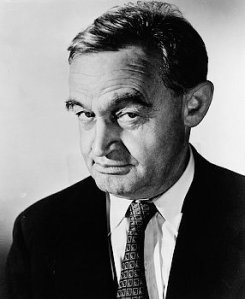
Barry Fitzgerald, Irish stage, film, and television actor, dies on January 14, 1961.

Fitzgerald is born William Joseph Shields in Walworth Road, Portobello, Dublin, Ireland, on March 10, 1888. He is the older brother of Irish actor Arthur Shields. He goes to Skerry’s College in Dublin before going on to work in the civil service while also working at the Abbey Theatre.

Unknown to many, Fitzgerald is also a patriot. In 1916 he is a member of the Irish Volunteers and is prepared to fight in the Easter Rising on Easter Sunday when the orders are countermanded. On Easter Monday the revolution is on again, and Shields goes to the Abbey Theatre and retrieves his rifle from under the stage. He goes around the corner to Liberty Hall and joins with James Connolly’s Irish Citizen Army.

He then marches to the General Post Office on Sackville Street where he fights before evacuating on Friday. He is sent to Stafford Prison in England with another famous rebel, Michael Collins, and from there they are both sent to the Frongoch internment camp in Wales. Both return to Dublin by the end of 1916, Collins to terrorise the British and Shields to return to the Abbey Theatre stage.

By 1929, he turns to acting full-time. He is briefly a roommate of famed playwright Sean O’Casey and stars in such plays as O’Casey’s Juno and the Paycock and the premiere of The Silver Tassie.

Fitzgerald goes to Hollywood to star in another O’Casey work, The Plough and the Stars (1936), directed by John Ford. He has a successful Hollywood career in such films as The Long Voyage Home (1940), How Green Was My Valley (1941), And Then There Were None (1945), The Naked City (1948), and The Quiet Man (1952). Fitzgerald achieves a feat unmatched in the history of the Academy Awards. He is nominated for both the Best Actor Oscar and the Best Supporting Actor Oscar for the same performance, as Father Fitzgibbon in Going My Way (1944). He wins the Best Supporting Actor Award. This feat will likely never be matched as the Academy Award rules have since been changed to prevent this. During World War II, Oscar statues are made of plaster rather than gold due to wartime metal shortages. Being an avid golfer, Fitzgerald later breaks the head off his Oscar statue while practicing his golf swing.

Fitzgerald has two stars on the Hollywood Walk of Fame, one for films located at 6220 Hollywood Blvd. and one for television located at 7001 Hollywood Blvd.

Fitzgerald returns to live in Dublin in 1959. He dies of heart failure on January 14, 1961, and is buried at Deansgrange Cemetery in Dublin.


Leave a comment

Death of Phil Lynott

phil-lynott

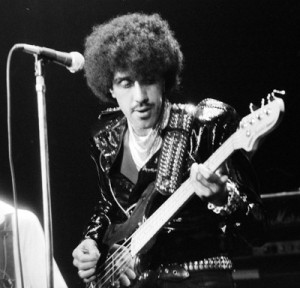
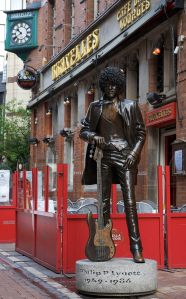
Philip Parris “Phil” Lynott, Irish musician, singer, songwriter, and a founding member, principal songwriter, lead vocalist, and bassist of Thin Lizzy, dies on January 4, 1986, in Salisbury, Wiltshire, England.

Born in West Bromwich, Staffordshire, England on August 20, 1949, Lynott goes to live with his grandmother, Sarah Lynott, in Crumlin, Dublin, when he is four years old. He is introduced to music through his uncle Timothy’s record collection and becomes influenced by Motown and The Mamas and the Papas.

Growing up in Dublin in the 1960s, Lynott fronts several bands as a lead vocalist, most notably teaming up with bassist Brendan ‘Brush’ Shiels to form Skid Row in early 1968. It is during this period that Lynott learns to play the bass guitar.

Toward the end of 1969, Lynott, now confident enough to play bass himself in a band, teams with Brian Downey, Eric Bell, and Eric Wrixon to form Thin Lizzy. The band’s first top ten hit comes in 1973 with a rock version of the well-known Irish traditional song “Whiskey in the Jar.” With the release of the Jailbreak album in 1976, Lynott and Thin Lizzy become international superstars on the strength of the album’s biggest hit, “The Boys Are Back in Town.” The song reaches the Top 10 in the United Kingdom, No. 1 in Ireland, and is a hit in the United States and Canada.

Having finally achieved mainstream success, Thin Lizzy embarks on several consecutive world tours. However, the band suffers from personnel changes. By the early 1980s, Thin Lizzy is starting to struggle commercially and Lynott starts showing symptoms of drug abuse, including regular asthma attacks. After the resignation of longtime manager Chris O’Donnell, Lynott decides to disband Thin Lizzy in 1983.

phil-lynott-statue

In 1984, Lynott forms a new band, Grand Slam, with Doish Nagle, Laurence Archer, Robbie Brennan, and Mark Stanway. The band tours various clubs but suffers from being labeled a poor version of Thin Lizzy due to the inclusion of two lead guitarists. Grand Slam disbands at the end of the year due to a lack of money and Lynott’s increasing addiction to heroin.

Lynott’s last years are dogged by drug and alcohol dependency leading to his collapse on December 25, 1985, at his home in Kew. He is taken to Salisbury Infirmary where he is diagnosed as suffering from septicemia. His condition worsens by the start of the new year, and he is put on a respirator. He dies of pneumonia and heart failure due to septicemia in the hospital’s intensive care unit on January 4, 1986, at the age of 36.

Lynott’s funeral is held at St. Elizabeth of Portugal Church, Richmond, London, on January 9, 1986, with most of Thin Lizzy’s ex-members in attendance, followed by a second service at Church of the Assumption, Howth, on January 11. He is buried in St. Fintan’s Cemetery, Sutton, Dublin.