seamus dubhghaill

Promoting Irish Culture and History from Little Rock, Arkansas, USA


Leave a comment

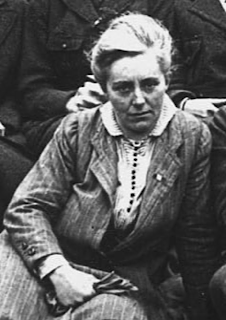
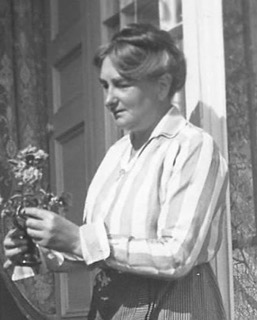
Death of Madeleine ffrench-Mullen, Revolutionary & Labour Activist

Madeleine ffrench-Mullen, Irish revolutionary and labour activist who takes part in the Easter Rising in Dublin in 1916, dies in Dublin on May 26, 1944.

Ffrench-Mullen is born on December 30, 1880, in Malta, where her father, St. Lawrence ffrench-Mullen, a Royal Navy surgeon, is stationed. She has two brothers, St. Lawrence Patrick Joseph (1890–1891) and Douglas (1893–1943).

Ffrench-Mullen’s interest in politics starts young. Her father is a committed Parnellite and their Dundrum home is a campaign headquarters. She is a radical feminist and republican during her life. Like many others of the time, she regards it as a woman’s right to vote. She joins the suffrage movement, and meets women with a similar worldview and values. The women’s suffrage movement is included in the Movements of Extremists reports of the Dublin Metropolitan Police. Ffrench-Mullen goes on to join Inghinidhe na hÉireann, a radical nationalist women’s group founded by Maud Gonne in 1900. The organisation develops into Cumann na mBan in 1913. Suffragist values are central to Cumann na mBan’s goal of standing side-by-side with men in the fight for the Irish Republic. Some members see this as women regaining the rights that had belonged to them in pre-invasion Gaelic civilisation. She is on the socialist wing of the moment, holding to the ideals of universal social equality of the syndicalist James Connolly and the Irish Citizen Army (ICA).

During the 1916 Easter Rising, ffrench-Mullen serves as a lieutenant in the Irish Citizen Army. She sees action with the St. Stephen’s Green and Royal College of Surgeons garrison. In St. Stephen’s Green she is in command of the 15 Citizen Army women who set up a medical station and field kitchen. While occupying St. Stephen’s Green, she and her comrades come under sustained heavy fire from the Shelbourne Hotel and buildings on the north side of the Green. After the surrender of the College of Surgeons garrison, ffrench-Mullen is one of the 77 women who had fought in the Rising who are imprisoned, among them her life partner Kathleen Lynn. While in captivity ffrench Mullen is moved three times, spending time in Richmond BarracksKilmainham Gaol and Mountjoy Prison. She is released on June 5, 1916.

Ffrench-Mullen meets Kathleen Lynn through Inghinidhe na h-Éireann. In 1915, she moves into Lynn’s home in Belgrave Road, Rathmines, where they live together for thirty years, until ffrench-Mullen’s death in 1944.

Ffrench-Mullen records in her prison diary in 1916 that she can face prison without fear once Lynn (whom she refers to as “the Doctor”) and she are together. Katherine Lynch of the Women’s Studies Centre at University College Dublin (UCD) describes them as partners, calling them part of a network of lesbians living in Dublin—which includes Helena MolonyLouie Bennett and Elizabeth O’Farrell—who meet through the suffrage movement and later become involved with the national and trade union movement. These women are featured, along with Eva Gore-Booth and others, in a 2023 TG4 documentary about “the radical queer women at the very heart of the Irish Revolution”: Croíthe Radacacha (Radical Hearts).

In 1919, Madeleine ffrench-Mullen and Kathleen Lynn establish Saint Ultan’s Children’s Hospital, also known as Teach Ultan, which is a female-run hospital for infants at 37 Charlemont Street, Dublin. The hospital focuses on children’s health and wellbeing, an area that is perceived at the time as women’s concern. In the aftermath of World War I many health problems have arisen including a rise in venereal diseases such as syphilis, carried from soldiers returning home from war. Many of Ireland’s infants of the time suffer from congenital syphilis (inherited disease from mother at birth), and this is a driving factor in the opening of St Ultan’s hospital. Tuberculosis is endemic in Ireland during its time as a British colony. Against steadfast opposition by the State and the Catholic Church, Lynn and ffrench-Mullen establish a vaccination project, vaccinating thousands of impoverished children who would have died of tuberculosis without their vaccines. Their success leads to the foundation of Ireland’s BCG vaccine programme, which has vaccinated all babies since the 1950s.

Ffrench-Mullen dies at the age of 63 in a Dublin nursing home on May 26, 1944. She is interred with her parents as well as her younger brothers (whom she outlives) in the ffrench-Mullen family plot in Glasnevin Cemetery. Her funeral takes place on the same day as the 1944 Irish general election.


Leave a comment

The Founding of Na Fianna Éireann

Na Fianna Éireann (The Fianna of Ireland), known as the Fianna (“Soldiers of Ireland”), an Irish nationalist youth organization, is founded by Constance Markievicz on August 16, 1909, with later help from Bulmer Hobson. Fianna members are involved in setting up the Irish Volunteers and have their own circle of the Irish Republican Brotherhood (IRB). They take part in the 1914 Howth gun-running and, as Volunteer members, in the 1916 Easter Rising. They are active in the Irish War of Independence, and many take the anti-Treaty side in the Irish Civil War.

An earlier “Fianna” is organised “to serve as a Junior Hurling League to promote the study of the Irish Language” on June 26, 1902, at the Catholic Boys’ Hall, Falls Road, in West Belfast, the brainchild of Bulmer Hobson. Hobson, a Quaker influenced by suffragism and nationalism, joins the Irish Republican Brotherhood in 1904 and is an early member of Sinn Féin during its monarchist-nationalist period, alongside Arthur Griffith and Constance Markievicz. Hobson later relocates to Dublin and the Fianna organisation collapses in Belfast. Markievicz, inspired by the rapid growth of Robert Baden-Powell‘s Boy Scouts, forms sometime before July 1909 the Red Branch Knights, a Dublin branch of Irish National Boy Scouts. After discussions involving Hobson, Markievicz, suffragist and labour activist Helena Molony and Seán McGarry, the Irish National Boy Scouts change their name to Na Fianna Éireann at a meeting in 34 Lower Camden Street, Dublin, on August 16, 1909, at which Hobson is elected as president, thus ensuring a strong IRB influence, Markievicz as vice-president and Pádraig Ó Riain as secretary. Seán Heuston is the leader of the Fianna on Dublin’s north side, while Cornelius “Con” Colbert is the leader on the south side. The Fianna forms as a Nationalist alternative to Powell’s Scouts with the aim to achieve the full independence of Ireland by training and teaching scouting and military exercises, Irish history, and the Irish language.

The Fianna finds its first years difficult and by 1912 has barely 1,000 members and a skeleton structure outside of the cities of Dublin, Cork, Belfast and Galway. But in the next couple of years the momentum of events carries the Fianna forward. It is involved in initiating the militarisation of the IRB, the launch of the Irish Volunteers and showing solidarity with the striking Irish Transport and General Workers’ Union (ITGWU). It is also crucial to the success of the Howth and Kilcoole gun-running operations. Alongside these headline-grabbing activities, the Fianna continues with classes, drilling, camps and protests and reaps the benefits of an expanding membership and structure. When the fighting starts, the Fianna are not found wanting either. In 1916, Na Fianna members are present in all areas that mobilise and fight alongside all the other Republican organisations. They continue to fight throughout the Irish War of Independence and Irish Civil War. Seeing comrades being killed in action or executed or suffering imprisonment does not dim their enthusiasm for the fight. In Na Fianna Éireann’s March 1922 Árd Fheis, the 187 delegates representing 30,000 members vote unanimously to reject the Anglo-Irish Treaty.

The Fianna are declared an illegal organisation by the government of the Irish Free State in 1931. This is reversed when Fianna Fáil comes to power in 1932 but re-introduced in 1938. During the splits in the Republican movement of the later part of the 20th century, the Fianna and Cumann na mBan support Provisional Sinn Féin in 1969 and Republican Sinn Féin in 1986. The Fianna have been a proscribed organisation in Northern Ireland since 1920.

While the events in which the Fianna members are involved over the revolutionary years have a special place in Irish history, the specific role of the Fianna is absent from most written histories. This, allied with the failure to adequately commemorate the organisation’s centenary, marks a kind of revisionism of omission.


Leave a comment

Death of Rosie Hackett, Trade Union Leader & Insurgent

Rosanna “Rosie” Hackett, Irish insurgent and trade union leader, dies on May 4, 1976, at St. Vincent’s Hospital, Fairview, Dublin. She is a founder-member of the Irish Women Workers’ Union (IWWU) and supports strikers during the 1913 Dublin lock-out. She later becomes a member of the Irish Citizen Army and is involved in the 1916 Easter Rising. In the 1970s, the labour movement awards her a gold medal for decades of service, and in 2014 a Dublin city bridge is named in her memory.

Hackett is born into a working-class family in Dublin on July 25, 1893, the daughter of John Hackett, a hairdresser, and Roseanna Dunne. According to the 1901 census, she is living with her widowed mother and five other family members in a tenement building on Bolton Street in Dublin. The available documents suggest that her father dies when she is still very young. She joins the Irish Transport and General Workers’ Union (ITGWU) when it is established in 1909 by James Larkin, which marks the beginning of her lifelong activity in trade unionism. By 1911 she is living with her family in a cottage on Old Abbey Street, and her mother has remarried to Patrick Gray.

Hackett fights for many decades for the rights of workers. Through her affiliation and work with the ITGWU, the IWWU and the Irish Citizen Army, she helps carve out and secure modern-day working conditions. Her career begins as a packer in a paper store, then becoming a messenger for Jacob’s biscuits. At that time the working conditions in the factory are poor.

On August 22, 1911, Hackett helps organise the withdrawal of women’s labour in Jacob’s factory to support their male colleagues who are already on strike. With the women’s help, the men secure better working conditions and a pay rise. Two weeks later, at the age of eighteen, she co-founds the IWWU with Delia Larkin. During the 1913 lock-out she helps mobilise the Jacob’s workers to come out in solidarity with other workers. They, in turn, are locked out by their own employers. This does not stop her work to help others, and she, along with several of her IWWU colleagues, set up soup kitchens in Liberty Hall to help feed the strikers. However, in 1914 her Jacob’s employers sack her over her role in the lock-out.

Hackett begins work as a clerk in the printshop in Liberty Hall, and it is here she becomes involved with the Irish Citizen Army. She is involved in preparations for the 1916 Rising, working in a union shop, helping with printers, and making first-aid kits and knap-sacks.

If other members of the ITGWU were looking for James Connolly, Hackett aids in bringing them to him. She “worked as canvasser and traveler and was called on to carry out many confidential jobs.”

Hackett takes up first aid training provided by Dr. Kathleen Lynn for six months before the Rising and attends night marches organised by the Irish Citizen Army. According to her own account, she says, “A week before Easter, I took part in the ceremony of hoisting the challenge flag over Hall.” Like other girls and women who are involved in the Rising, she carries messages and guns and prepares uniforms and food for Irish Republican Army (IRA) members “and sometimes risky work.”

Three weeks before the Easter Rising, the Royal Irish Constabulary (RIC) raid a shop where Hackett is working. She is alone when they come, and they are looking for a copy of “Gael.” She says to them, “wait until I get the head” and she calls for Connolly. The police are stopped by Connolly and Helena Molony who are armed, and Hackett immediately hides everything, so that when the police come back, they cannot get anything.

Through her experience of working in the printshop, Hackett helps to print the Proclamation of the Irish Republic. She is in the printing room in Liberty Hall as a trusted messenger in 1916 when the Proclamation is printed, and it is the first time she is allowed in. Three men are there when she enters the room and one comes over to her, shakes her hand and congratulates her. It makes her very proud, especially since no one else is allowed to get in. She subsequently tells family members of handing it still wet to James Connolly before it is read by Patrick Pearse outside the entrance to the General Post Office (GPO).

Hackett is an active member of the Irish Citizen Army. On Easter Tuesday, under the command of Constance Markievicz, she takes part in the 1916 Rising and is located in the area of St. Stephen’s Green and the Royal College of Surgeons in Ireland. This position is heavily attacked with guns, short of first aid and “looked like a death trap.” However, after moving from an initially overlooked position in St. Stephen’s Green, it is one of the last positions to surrender. In the Royal College, as a first-aid practitioner, she is allowed entry to the lecture room sanctioned to the Red Cross only. Another first-aider, Aider Nora O’Daily, later reports that during those days, “I have a very kind remembrance of Little Rosie Hackett of the Citizen Army, always cheerful and always willing; to see her face about the place was a tonic itself.”

After surrendering, the rebels are taken to Dublin Castle. Hackett is imprisoned in Kilmainham Gaol for ten days.

In 1917, on the anniversary of Connolly’s death, Hackett, together with Helena Molony, Jennie Shanahan and Brigid Davis, print and hang a poster detailing the anniversary. After the first poster displayed by the ITGWU members is taken down by the police, they work to ensure that their poster will stay on Liberty Hall much longer by staying on top of the roof to defend it. They barricade the door using a ton of coal and nails on the windows. The poster is hanging there until 6:00 p.m. and thousands of people can see it.

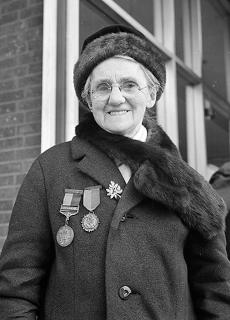
After the Rising, Hackett returns to the IWWU which, at its strongest, organises over 70,000 women. After the 1945 laundry strike, they win an extra week of paid holidays for the workers. She attends many important labour union events such as the opening of the new Liberty Hall on May 2, 1965, and Arbour Hill memorial services. Until her retirement, she runs the trade union shops resulting in over five decades of active participation in the Irish trades union movement work to improve conditions for Irish workers. In 1970 she is awarded a gold medal for fifty years of ITGWU membership.

In the 1970s, Walter McFarlane, then branch secretary of the ITGWU, awards an honorary badge for Hackett’s fifty years contribution to the union.

Hackett never marries and lives in Fairview, Dublin, with her brother Tommy until her death on May 4, 1976. She is buried at St. Paul’s plot in Glasnevin Cemetery next to her mother and stepfather. At her burial, she is honoured with a military salute and her coffin is covered with the Irish flag. After her passing, her legacy is remembered in the union’s newspaper, a tale of the strife of Hackett together with the rest of Dublin’s working class, for which she fought to change.

In May 2014, the Rosie Hackett Bridge is officially opened by the Lord Mayor of Dublin. The Hackett Bridge Campaign began in October 2012, led by three women Angelina Cox, an active member of Labour Youth, Jeni Gartland and Lisa Connell. The final shortlist of contending names for the new bridge were Rosie Hackett, Kathleen Mills, Willie Bermingham, Bram Stoker and Frank Duff.

In April 2015, a plaque is unveiled on Foley Street by the North Inner City Folklore Project to commemorate the women of the Irish Citizen Army. The plaque lists Hackett as a member of the St. Stephen’s Green/College of Surgeons garrison during the 1916 Easter Rising.


Leave a comment

The Founding of Córas na Poblachta

Córas na Poblachta (English: Republican System), a minor Irish republican political party, is founded on February 21, 1940.

The idea for a new party is discussed at a meeting in Dublin on February 21, 1940, attended by 104 former officers of the pro- and anti-Treaty wings of the Irish Republican Army (IRA). The inaugural meeting of the new party takes place on March 2, 1940. Simon Donnelly, who had fought in Boland’s Mill under Éamon de Valera in the 1916 Easter Rising, the former leader of the Dublin section of the IRA, and former chief of the Irish Republican Police (IRP), is elected as president of a central committee of fifteen members. Other leaders are Seán Fitzpatrick, another Irish War of Independence veteran; Con Lehane, who had recently left the IRA; Séamus Gibbons; Tom O’Rourke; Seán Dowling, one of Rory O’Connor‘s principal lieutenants in the Irish Civil War; Colonel Roger McCorley, one of the principal IRA leaders in Belfast during the Irish War of Independence who had taken the Irish Free State side in the Irish Civil War; Frank Thornton, one of Michael Collins‘ top intelligence officers; Roger McHugh, a lecturer in English at University College Dublin (UCD) and later professor; Captain Martin Bell and Peter O’Connor.

Also in attendance at the first meeting is Seamus O’Donovan, Director of Chemicals on IRA Headquarters Staff in 1921 and architect of the IRA Sabotage Campaign in England by the IRA in 1939–40. Indeed, O’Donovan proposes several of the basic resolutions. Additionally, the meeting is attended by Eoin O’Duffy and several former leaders of the Irish Christian Front.

Many members of the Irish far-right join Córas na Poblachta including Gearóid Ó Cuinneagáin, who becomes the leader of the party’s youth wing Aicéin and goes on to found Ailtirí na hAiséirghe, Alexander McCabe, Maurice O’Connor and Reginald Eager from the Irish Friends of Germany, George Griffin, Patrick Moylett, his brother John and Joseph Andrews of the People’s National Party, Dermot Brennan of Saoirse Gaedheal, and Hugh O’Neill and Alexander Carey of Córas Gaedhealach. As a result, the party assumes a pro-German and antisemitic attitude which is frequently expressed in party functions, and Gardaí suspects Córas na Poblachta members of daubing the walls of Trinity College Dublin in antisemitic slogans following the visit of British politician Leslie Hore-Belisha to Ireland in 1941.

Socialist republicans Nora Connolly O’Brien and Helena Molony take an interest in the group. Reflecting divisions within the IRA, a minority of the party’s leaders sympathise with communism rather than fascism.

The main aim of Córas na Poblachta is the formal declaration of a Republic. It also demands that the Irish language be given greater prominence in street names, shop signs, and government documents and bank notes. It proposes to introduce national service in order that male citizens understand their responsibilities. The party’s economic policy is the statutory right to employment and a living wage. It proposes breaking the link with the British pound, the nationalisation of banks and the making of bank officials into civil servants. In the area of education, the party espouses free education for all children over primary age as a right, and university education when feasible. It also calls for the introduction of children’s allowances. In addition, Córas na Poblachta advocates for “the destruction of the Masonic Order in Ireland” and during its founding meeting reporters are told that the party will be ready to take over the government of Ireland “on either a corporate or fascist basis.”

The party has close ties with the Irish nationalist and pro-fascist party Ailtirí na hAiséirghe, whose leader, Gearóid Ó Cuinneagáin, had led Córas na Poblachta’s youth wing Aicéin until its independence is terminated in 1942. There is talk of a merger, however, while the majority of the party’s executive committee, noted by G2 to be made up of “four ex-Army men, old IRA, ex-Blueshirts and a number of IRA who had been active up until comparatively recently”, desires a combination of Ireland’s extreme nationalist movements, the three most prominent leaders, Simon Donnelly, Sean Dowling and Roger McCorley, oppose one due to the fear that the party will be submerged in a joint organisation. Ó Cuinneagáin is dismissive of Córas na Poblachta’s prospects and discussions between him and the party’s leaders reinforce their fears that Ó Cuinneagáin seeks an outright takeover by Ailtirí na hAiséirghe. Proposals for a merging of the two parties are dropped though they continue to maintain cordial relations and co-operate in the 1943 Irish general election.

The party is not successful and fails to take a seat in a by-election held shortly after the party’s foundation. The party slowly falls apart, and Tim Pat Coogan notes that: “Dissolution occurred because people tended to discuss the party rather than join it.” Importantly, the party is not supported by the hardcore of republican legitimatists, such as Brian O’Higgins, who views the IRA Army Council as the legitimate government of an existing Irish Republic. Indeed, in March 1940, O’Higgins publishes a pamphlet entitled Declare the Republic lambasting the new party as making what he regards as false promises that will be compromised on following the party’s election to the Oireachtas.

Córas na Poblachta fields candidates in the 1943 Irish General Election but none are elected, receiving a total of 3,892 votes between them.

Although a failure, Tim Pat Coogan argues Córas na Poblachta was the “nucleus” of the Clann na Poblachta party which emerges to help take power from Fianna Fáil in 1948.

(Pictured: IRA veteran Simon Donnelly who serves as President of Córas na Poblachta)


Leave a comment

Birth of Rosie Hackett, Trade Union Leader & Insurgent

Rosanna “Rosie” Hackett, Irish insurgent and trade union leader, is born into a working-class family in Dublin on July 25, 1893. She is a founder-member of the Irish Women Workers’ Union (IWWU) and supports strikers during the 1913 Dublin lock-out. She later becomes a member of the Irish Citizen Army and is involved in the 1916 Easter Rising. In the 1970s, the labour movement awards her a gold medal for decades of service, and in 2014 a Dublin city bridge is named in her memory.

Hackett is the daughter of John Hackett, a hairdresser, and Roseanna Dunne. According to the 1901 census, she is living with her widowed mother and five other family members in a tenement building on Bolton Street in Dublin. The available documents suggest that her father dies when she is still very young. She joins the Irish Transport and General Workers’ Union (ITGWU) when it is established in 1909 by James Larkin, which marks the beginning of her lifelong activity in trade unionism. By 1911 she is living with her family in a cottage on Old Abbey Street, and her mother has remarried to Patrick Gray.

Hackett fights for many decades for the rights of workers. Through her affiliation and work with the ITGWU, the IWWU and the Irish Citizen Army, she helps carve out and secure modern-day working conditions. Her career begins as a packer in a paper store, then becoming a messenger for Jacob’s biscuits. At that time the working conditions in the factory are poor.

On August 22, 1911, Hackett helps organise the withdrawal of women’s labour in Jacob’s factory to support their male colleagues who are already on strike. With the women’s help, the men secure better working conditions and a pay rise. Two weeks later, at the age of eighteen, she co-founds the IWWU with Delia Larkin. During the 1913 lock-out she helps mobilise the Jacob’s workers to come out in solidarity with other workers. They, in turn, are locked out by their own employers. This does not stop her work to help others, and she, along with several of her IWWU colleagues, set up soup kitchens in Liberty Hall to help feed the strikers. However, in 1914 her Jacob’s employers sack her over her role in the lock-out.

Hackett begins work as a clerk in the printshop in Liberty Hall, and it is here she becomes involved with the Irish Citizen Army. She is involved in preparations for the 1916 Rising, working in a union shop, helping with printers, and making first-aid kits and knap-sacks.

If other members of the ITGWU were looking for James Connolly, Hackett aids in bringing them to him. She “worked as canvasser and traveller and was called on to carry out many confidential jobs.”

Hackett takes up first aid training provided by Dr. Kathleen Lynn for six months before the Rising and attends night marches organised by the Irish Citizen Army. According to her own account, she says, “A week before Easter, I took part in the ceremony of hoisting the challenge flag over Hall.” Like other girls and women who are involved in the Rising, she carries messages and guns and prepares uniforms and food for Irish Republican Army (IRA) members “and sometimes risky work.”

Three weeks before the Easter Rising, the Royal Irish Constabulary (RIC) raid a shop where Hackett is working. She is alone when they come, and they are looking for a copy of “Gael.” She says to them, “wait until I get the head” and she calls for Connolly. The police are stopped by Connolly and Helena Molony who are armed, and Hackett immediately hides everything, so that when the police come back, they cannot get anything.

Through her experience of working in the printshop, Hackett helps to print the Proclamation of the Irish Republic. She is in the printing room in Liberty Hall as a trusted messenger in 1916 when the Proclamation is printed, and it is the first time she is allowed in. Three men are there when she enters the room and one comes over to her, shakes her hand and congratulates her. It makes her very proud, especially since no one else is allowed to get in. She subsequently tells family members of handing it still wet to James Connolly before it is read by Patrick Pearse outside the entrance to the General Post Office (GPO).

Hackett is an active member of the Irish Citizen Army. On Easter Tuesday, under the command of Constance Markievicz, she takes part in the 1916 Rising and is located in the area of St. Stephen’s Green and the Royal College of Surgeons in Ireland. This position is heavily attacked with guns, short of first aid and “looked like a death trap.” However, after moving from an initially overlooked position in St. Stephen’s Green, it is one of the last positions to surrender. In the Royal College, as a first-aid practitioner, she is allowed entry to the lecture room sanctioned to the Red Cross only. Another first-aider, Aider Nora O’Daily, later reports that during those days, “I have a very kind remembrance of Little Rosie Hackett of the Citizen Army, always cheerful and always willing; to see her face about the place was a tonic itself.”

After surrendering, the rebels are taken to Dublin Castle. Hackett is imprisoned in Kilmainham Gaol for ten days.

In 1917, on the anniversary of Connolly’s death, Hackett, together with Helena Molony, Jennie Shanahan and Brigid Davis, print and hang a poster detailing the anniversary. After the first poster displayed by the ITGWU members is taken down by the police, they work to ensure that their poster will stay on Liberty Hall much longer by staying on top of the roof to defend it. They barricade the door using a ton of coal and nails on the windows. The poster is hanging there until 6:00 p.m. and thousands of people can see it.

After the Rising, Hackett returns to the IWWU which, at its strongest, organises over 70,000 women. After the 1945 laundry strike, they win an extra week of paid holidays for the workers. She attends many important labour union events such as the opening of the new Liberty Hall on May 2, 1965, and Arbour Hill memorial services. Until her retirement, she runs the trade union shops resulting in over five decades of active participation in the Irish trades union movement work to improve conditions for Irish workers. In 1970 she is awarded a gold medal for fifty years of ITGWU membership.

In the 1970s, Walter McFarlane, then branch secretary of the ITGWU, awards an honorary badge for Hackett’s fifty years contribution to the union.

Hackett never marries and lives in Fairview, Dublin, with her brother Tommy until her death on July 4, 1976. She is buried at St. Paul’s plot in Glasnevin Cemetery next to her mother and stepfather. At her burial, she is honoured with a military salute and her coffin is covered with the Irish flag. After her passing, her legacy is remembered in the union’s newspaper, a tale of the strife of Hackett together with the rest of Dublin’s working class, for which she fought to change.

In May 2014, the Rosie Hackett Bridge is officially opened by the Lord Mayor of Dublin. The Hackett Bridge Campaign began in October 2012, led by three women Angelina Cox, an active member of Labour Youth, Jeni Gartland and Lisa Connell. The final shortlist of contending names for the new bridge were Rosie Hackett, Kathleen Mills, Willie Bermingham, Bram Stoker and Frank Duff.

In April 2015, a plaque is unveiled on Foley Street by the North Inner City Folklore Project to commemorate the women of the Irish Citizen Army. The plaque lists Hackett as a member of the St. Stephens Green/College of Surgeons garrison during the 1916 Easter Rising.


Leave a comment

The Founding of Saor Éire

Saor Éire, a left-wing political organisation, is established on September 26, 1931 by communist-leaning members of the Irish Republican Army, with the backing of the IRA leadership. Notable among its founders is Peadar O’Donnell, former editor of An Phoblacht and a leading left-wing figure in the IRA. Saor Éire describes itself as “an organization of workers and working farmers.”

It is believed that the support of the then IRA chief of staff Moss (Maurice) Twomey is instrumental in the organisation’s establishment. However, Tim Pat Coogan claims that Twomey is doubtful about the organisation, worrying about involvement in electoral politics and possible communist influence.

During its short existence Saor Éire uses the republican publication An Phoblacht, under the editorship of Frank Ryan, to report on its progress and to promote its radical, left-wing republican views.

On the weekend of September 26-27, 1931, Saor Éire holds its first conference in Dublin at Iona Hall. One hundred and fifty delegates from both the Irish Free State and Northern Ireland attend the conference against a background of police raids on the houses and offices connected with Saor Éire and An Phoblacht. Seán Hayes is chairman, while David Fitzgerald acts as secretary.

The conference elects an executive of Hayes, Fitzgerald, Sean McGuinness, May Laverty, Helena Molony, Sheila Dowling, Sheila Humphreys, D. McGinley, Mick Fitzpatrick, Seán MacBride, Michael Price, Peadar O’Donnell, Mick Hallissey, M. O’Donnell, Patrick McCormack, Tom Kenny, L. Brady, Nicholas Boran, John Mulgrew and Tom Maguire. George Gilmore and Frank Ryan are also involved.

The constitution elaborates upon the aims by describing a two-phase programme. The first phase is described as being one of organisation and propagandising in order to organise a solid front for mass resistance to the oppressors. This is to build upon the day-to-day resistance and activity towards “rents, annuities, evictions, seizures, bank sales, lock-outs, strikes and wage-cuts.” This challenge, it is believed, would lead to power passing from the hands of the imperialists to the masses. The second phase is one of consolidation of power through the organisation of the economy and a workers’ and working farmers’ republic.

Ideologically Saor Éire adheres to the Irish socialist republicanism developed by James Connolly and Peadar O’Donnell. As a consequence of the heavy influence of O’Donnell, Saor Éire strongly advocates the revival of Gaelic culture and the involvement of the poorer rural working communities in any rise against the Irish capitalist institutions and British imperialism.

The organisation is attacked by the centre-right press and the Catholic Church as a dangerous communist group, and is quickly banned by the Free State government. The strength of reaction against it prevents it from becoming an effective political organisation. O’Donnell and his supporters attempt a similar initiative two years later with the establishment of the Republican Congress in 1933.


Leave a comment

Death of Helena Molony, Feminist & Labour Activist

helena-moloney

Helena Mary Molony, prominent Irish republican, feminist and labour activist, dies in Dublin on January 28, 1967. She fights in the 1916 Easter Rising and later becomes the second woman president of the Irish Trades Union Congress (ITUC).

Molony is born in Dublin on January 15, 1883, to Michael Molony, a grocer, and Catherine McGrath. Her mother dies early in her life. Her father later remarries, but both became alcoholics, something which influences her years later.

In 1903, inspired by a pro-nationalist speech given by Maud Gonne, Molony joins Inghinidhe na hÉireann and begins a lifelong commitment to the nationalist cause. In 1908 she becomes the editor of the organisation’s monthly newspaper, Bean na hÉireann (Woman of Ireland). The newspaper brings together a nationalist group – Constance Markievicz designs the title page and writes the gardening column, Sydney Gifford writes for the paper and is on its production team and contributors include Eva Gore-Booth, Susan L. Mitchell, and Katharine Tynan, as well as Patrick Pearse, Thomas MacDonagh, George William Russell, Roger Casement, Arthur Griffith and James Stephens.

Molony is central to the school meals activism of the movement. With Maud Gonne, Marie Perolz and others, she organises the supply of daily school meals to children in impoverished areas, and pressures Dublin Corporation and other bodies to provide proper meals to the starved children of Dublin city.

Molony also has a career as an actress and is a member of the Abbey Theatre. However, her primary commitment is to her political work. She is a strong political influence, credited with bringing many into the movement, including Constance Markievicz and Dr. Kathleen Lynn.

As a labour activist, Molony is a close colleague of Markievicz and of James Connolly. In November 1915 Connolly appoints her secretary of the Irish Women Workers’ Union, in succession to Delia Larkin. This union had been formed during the strike at Jacob’s Biscuit Factory that was part of the 1913 Dublin lock-out. She manages the union’s shirt factory in Liberty Hall, founded to give employment to the strikers put out of work and blacklisted after the strike. She is friendly with the family of Thomas MacDonagh and his wife, Muriel, and is the godmother of their daughter Barbara, whose godfather is Patrick Pearse.

Fianna Éireann, the cadet body of the Irish Volunteers, is founded by Constance Markievicz in Molony’s home at 34 Lower Camden Street, Dublin, on August 16, 1909. Markievicz works closely with Molony and Bulmer Hobson in organising the fledgling Fianna. It is during this period of working together in building the Fianna that Molony and Hobson grow close and became romantically linked. However, the relationship does not last.

Molony is a prominent member of Cumann na mBan, the republican women’s paramilitary organisation formed in April 1914 as an auxiliary of the Irish Volunteers. Members of Cumann na mBan train alongside the men of the Irish Volunteers in preparation for the armed rebellion against the English forces in Ireland.

During the 1916 Easter Rising, Molony is one of the Citizen Army soldiers who attacks Dublin Castle. During the defence of City Hall, her commanding officer, Sean Connolly, is killed and she is captured and imprisoned until December 1916.

After the Irish Civil War, Molony becomes the second female president of the Irish Trades Union Congress. She remains active in the republican cause during the 1930s, particularly with the Women’s Prisoner’s Defense League and the People’s Rights Association.

Molony retires from public life in 1946 but continued to work for women’s labour rights. She dies in Dublin on January 28, 1967.


Leave a comment

Birth of Suffragist Winifred Carney

winifred-carney

Maria Winifred Carney, also known as Winnie Carney, suffragist, trade unionist and Irish independence activist, is born into a lower-middle class Catholic family in Bangor, County Down on December 4, 1887. Her father is a Protestant who leaves the family. Her mother and six siblings move to Falls Road in Belfast when she is a child.

Carney is educated at St. Patrick’s Christian Brothers School in Donegall Street in Belfast, later teaching at the school. She enrolls at Hughes Commercial Academy around 1910, where she qualifies as a secretary and shorthand typist, one of the first women in Belfast to do so. However, from the start she is looking towards doing more than just secretarial work.

In 1912 Carney is in charge of the women’s section of the Northern Ireland Textile Workers’ Union in Belfast, which she founds with Delia Larkin in 1912. During this period, she meets James Connolly and becomes his personal secretary. She becomes Connolly’s friend and confidant as they work together to improve the conditions for female labourers in Belfast. Carney then joins Cumann na mBan, the women’s auxiliary of the Irish Volunteers, and attends its first meeting in 1914.

Carney is present with Connolly in Dublin‘s General Post Office (GPO) during the Easter Rising in 1916. She is the only woman present during the initial occupation of the building. While not a combatant, she is given the rank of adjutant and is among the final group to leave the GPO. After Connolly is wounded, she refuses to leave his side despite direct orders from Patrick Pearse and Connolly. She leaves the GPO with the rest of the rebels when the building becomes engulfed in flames. They make their new headquarters in nearby Moore Street before Pearse surrenders.

After her capture, Carney is held in Kilmainham Gaol before being moved to Mountjoy Prison and finally to an English prison. By August 1916 she is imprisoned in HM Prison Aylesbury alongside Nell Ryan and Helena Molony. The three request that their internee status be revoked so that they could be held as normal prisoners with Countess Markievicz. Their request is denied, however Carney and Molony are released two days before Christmas 1916.

Carney is a delegate at the 1917 Belfast Cumann na mBan convention. She stands for Parliament as a Sinn Féin candidate for Belfast Victoria in the 1918 United Kingdom general election but loses to the Labour Unionists. Following her defeat, she decides to continue her work at the Irish Transport and General Workers’ Union until 1928. By 1924 she has become a member of the Labour Party. In the 1930s she joins the Socialist Party of Northern Ireland.

Following the Irish Civil War, Carney becomes much more disillusioned with politics. She is very critical and outspoken of Éamon de Valera and his governments.

In 1928 she marries George McBride, a Protestant Orangeman and former member of the Ulster Volunteers. Ironically, the formation of the Ulster Volunteers prompts the formation of the Irish Volunteers, of which Carney was a member. She alienates anyone in her life that does not support her marriage to McBride.

A number of serious health problems limit Carney’s political activities in the late 1930s. She dies in Belfast on November 21, 1943, and is buried in Milltown Cemetery. Her resting place is located years later, and a headstone is erected by the National Graves Association, Belfast. Because she married a Protestant and former Orangeman, she is not allowed to have his name on her gravestone due to the religious differences.

In 2013, the Seventieth Anniversary of Carney’s death is remembered by the Socialist Republican Party. Almost one hundred people attend as a short parade follows, marking and commemorating the work she did for the cause. She is placed in high esteem among the other hundreds of radical women, who stand up for what they believe in, regardless of the consequences they face.


Leave a comment

The Founding of Saor Éire

saor-eire

Saor Éire, a left-wing political organisation, is established on September 26, 1931 by communist-leaning members of the Irish Republican Army, with the backing of the IRA leadership. Notable among its founders is Peadar O’Donnell, former editor of An Phoblacht and a leading left-wing figure in the IRA. Saor Éire describes itself as “an organization of workers and working farmers.”

It is believed that the support of the then IRA chief of staff Moss (Maurice) Twomey is instrumental in the organisation’s establishment. However, Tim Pat Coogan claims that Twomey is doubtful about the organisation, worrying about involvement in electoral politics and possible communist influence.

During its short existence Saor Éire uses the republican publication An Phoblacht, under the editorship of Frank Ryan, to report on its progress and to promote its radical, left-wing republican views.

On the weekend of September 26-27, 1931, Saor Éire holds its first conference in Dublin at Iona Hall. One hundred and fifty delegates from both the Irish Free State and Northern Ireland attend the conference against a background of police raids on the houses and offices connected with Saor Éire and An Phoblacht. Seán Hayes is chairman, while David Fitzgerald acts as secretary.

The conference elects an executive of Hayes, Fitzgerald, Sean McGuinness, May Laverty, Helena Molony, Sheila Dowling, Sheila Humphreys, D. McGinley, Mick Fitzpatrick, Seán MacBride, Michael Price, Peadar O’Donnell, Mick Hallissey, M. O’Donnell, Patrick McCormack, Tom Kenny, L. Brady, Nicholas Boran, John Mulgrew and Tom Maguire. George Gilmore and Frank Ryan are also involved.

The constitution elaborates upon the aims by describing a two-phase programme. The first phase is described as being one of organisation and propagandising in order to organise a solid front for mass resistance to the oppressors. This is to build upon the day-to-day resistance and activity towards “rents, annuities, evictions, seizures, bank sales, lock-outs, strikes and wage-cuts.” This challenge, it is believed, would lead to power passing from the hands of the imperialists to the masses. The second phase is one of consolidation of power through the organisation of the economy and a workers’ and working farmers’ republic.

Ideologically Saor Éire adheres to the Irish socialist republicanism developed by James Connolly and Peadar O’Donnell. As a consequence of the heavy influence of O’Donnell, Saor Éire strongly advocates the revival of Gaelic culture and the involvement of the poorer rural working communities in any rise against the Irish capitalist institutions and British imperialism.

The organisation is attacked by the centre-right press and the Catholic Church as a dangerous communist group, and is quickly banned by the Free State government. The strength of reaction against it prevents it from becoming an effective political organisation. O’Donnell and his supporters attempt a similar initiative two years later with the establishment of the Republican Congress in 1933.