seamus dubhghaill

Promoting Irish Culture and History from Little Rock, Arkansas, USA


Leave a comment

Birth of Sir Shane Leslie, 3rd Baronet

Sir John Randolph Leslie, 3rd Baronet, Anglo-Irish diplomat and writer commonly known as Sir Shane Leslie, is born in Glaslough, County Monaghan, on September 24, 1885. He is a first cousin of Sir Winston Churchill. In 1908, he becomes a Roman Catholic and supports Irish Home Rule.

Leslie is born into a wealthy Anglo-Irish landowning family. His father is Sir John Leslie, 2nd Baronet, and his mother, Leonie Jerome, is the sister of Winston Churchill’s mother, Jennie. Both are daughters of Leonard W. Jerome. His ancestor, The Right Reverend John Leslie, Bishop of the Isles, moves from Scotland to Ireland in 1633 when he is made Bishop of Raphoe in County Donegal and is made Bishop of Clogher in 1661. Bishop Leslie is a vocal opponent of Oliver Cromwell.

Together with his brother Norman, Leslie’s early education begins at home where a German governess, Clara Woelke, is their first teacher. As children the brothers have more contact with servants than they have with their parents. His own daughter, Anita, says, “In my parents’ view schools performed the same functions that kennels did for dogs. They were places where pets could be conveniently deposited while their owners travelled.”

Leslie is educated at Ludgrove School, then Eton College and King’s College, Cambridge. While at Cambridge University he becomes a Roman Catholic and a supporter of Irish Home Rule. He adopts an anglicised Irish variant of his name (“Shane”). Not overly impressed by Eton, as a lower boy he and his roommates occupy “an old, battered warren betwixt the chapel cemetery and Wise’s horse yard … [T]he food was wretched and tasteless … As for thrashings which tyrannised rather than disciplined our house, they were excessive. Bullying was endemic and Irish boys were ridiculed, especially on St Patrick’s Day.”

Leslie refuses to send his own sons to Eton. They are educated at Roman Catholic Benedictine schools: Jack at Downside School and Desmond at Ampleforth College.

In the January 1910 United Kingdom general election Leslie stands as the Irish Parliamentary Party (IPP) candidate for the Londonderry City constituency, losing by just 57 votes. In the second general election later that year he is again narrowly defeated by the Unionist candidate.

Before World War I, Leslie travels extensively and in 1912 he marries Marjorie Ide, the youngest daughter of Henry Clay Ide, then United States ambassador to Spain and former Governor-General of the Philippines. His parents and other family members move temporarily to London at the outbreak of war.

During the war Leslie is in a British Ambulance Corps, until invalided out. He is then sent to Washington, D.C. to help the British Ambassador, Sir Cecil Spring Rice, soften Irish American hostility toward England and obtain American intervention in the war in the aftermath of the 1916 Easter Rising in Dublin and the execution of its leaders. But he also looks to Ireland for inspiration when writing and edits a literary magazine that contains much Irish verse. He becomes a supporter of the ideals of Irish nationalism, although not physical force republicanism.

In the 1918 United Kingdom general election in Ireland, the Irish Parliamentary Party loses massively to Sinn Féin, putting an end to Leslie’s political career, but as the first cousin of Winston Churchill he remains a primary witness to much that is said and done outside the official record during the negotiation of the Anglo-Irish Treaty of 1921. Disappointed, he feels unwanted in Ireland and abandoned by the British. Like many members of the landed gentry from the 1880s who were obliged to turn to other occupations, he can no longer rely on income from landholdings.

Leslie writes extensively, in a wide range of styles, in verse, prose, and polemic, over several decades. His writings include The End of a Chapter (1916), while hospitalised during World War I, The Oppidan (1922), a roman à clef about his life and contemporaries at Eton, an edition of the Letters of Herbert Cardinal Vaughan to Lady Herbert of Lea (1942), and a biography Mrs. Fitzherbert: a life chiefly from unpublished sources (1939), together with an edition of her letters (with Maria Anne Fitzherbert), The letters of Mrs. Fitzherbert and connected papers; being the second volume of the life of Mrs. Fitzherbert (1944). He also writes Mark Sykes: His Life and Letters (1923), a biography of the English traveler, Conservative Party politician and diplomatic advisor. He advises budding novelist Scott Fitzgerald on the title of his first novel, they share correspondence with the future Mnsg. William A. Hemmick, who is Fitzgerald’s teacher at the Newman School.

A passionate advocate of reforestation, Leslie finds the business of running an estate uncreative and boring, and transfers the estate entailed to him to his eldest son, John Norman Leslie, who succeeds as the 4th Baronet. He transfers St. Patrick’s Purgatory on Lough Derg to the Roman Catholic Bishop of Clogher, Eugene O’Callaghan.

The wealth of the Leslies wanes by the 1930s following the Wall Street crash of 1929 and a farm that is loss making. In his unpublished memoirs, Leslie writes “a gentleman’s standing in his world was signalled by his list of clubs and it was worth paying hundreds of pounds in subs.” They continue to maintain their lifestyle, involving attendance at the London season and the entertainment of distinguished visitors, including Anthony Eden at Glaslough. At the outbreak of World War II in 1939 he joins the Home Guard. He spends the remainder of his life between Glaslough and London.

Leslie’s first wife, Marjorie, dies on February 8, 1951. On May 30, 1958, at the Catholic Church of St. Peter & Edward, Westminster, he marries Iris Carola Frazer, who is the daughter of Charles Miskin Laing and Etheldreda Janet Laing.

Leslie dies at the age of 85 at 15b Palmeira Court, Hove, East Sussex, on April 14, 1971. A Requiem Mass is held for him in Westminster Cathedral on October 12, 1971.


Leave a comment

Birth of Richard Sankey, Officer in the Madras Engineer Group

Lieutenant-General Sir Richard Hieram Sankey KCB, officer in the Madras Engineer Group in the East India Company‘s army in British India, is born on March 22, 1829, at Rockwell Castle, County Tipperary.

Sankey is the fourth son of Eleanor and Matthew Sankey. His mother is herself from a family of military men, her father being Colonel Henry O’Hara, J.P of O’Hara Broom, County Antrim. His father is a barrister at Bawnmore, County Cork and Modeshil, County Tipperary. He does his schooling at Rev. Flynn’s School on Harcourt Street in Dublin and enters the East India Company’s Addiscombe Military Seminary at Addiscombe, Surrey in 1845. At Addiscombe he is awarded for his excellence at painting.

Sankey is commissioned as a second lieutenant in the Madras Engineer Group in November 1846 and is then trained in military engineering with the Royal Engineers at Chatham, Kent from January 1, 1847, holding temporary rank as an ensign in the British Army. He then arrives in India in November 1848. After two years of service at Mercatur, he officiates in 1850 as Superintending Engineer at Nagpur. During this time, he makes a small collection of fossils of Glossopteris from the Nagpur district and writes a paper on the geology of the region in 1854. The collection is moved from the Museum of Practical Geology to the British Museum in 1880.

In 1856, Sankey is promoted as the Superintendent of the East Coast Canal at Madras. In May 1857, he is promoted Under-Secretary of the Public Works Department under Col. William Erskine Baker in Calcutta. During the Indian Rebellion of 1857, he is commissioned as the Captain of the Calcutta Cavalry Volunteers but is soon despatched to Allahabad where he leads the construction of several embankments and bridges across the Yamuna and Ganges. He is involved in the construction of shelters to advancing troops along the Grand Trunk Road to aid the quelling of the Indian Rebellion of 1857. He arrives in course of this work at Cawnpore (now Kanpur) a day before the Second Battle of Cawnpore. He also is involved in crucial civil works that aid the quelling of the rebellion by bridging the Ghaghara and Gomti rivers at Gorakhpur and Phulpur that enable the Gurkha regiment to cross these rivers.

Sankey receives several commendations from his commanders here and later in the taking of the fort at Jumalpur, Khandua nalla and Qaisar Bagh, vital actions in the breaking of the Siege of Lucknow. For his actions at Jumalpur he is recommended for the Victoria Cross, although he does not receive this honour. He receives a medal for the Indian Rebellion of 1857 and is promoted to second captain on August 27, 1858, and given brevet promotion to major the following day for his services in the quelling of the rebellion. He is sent to the Nilgiris due to ill-health during this time.

Sankey spends a year in Burma as the executive engineer and Superintendent of the jail at Moulmein. On June 29, 1861, he is promoted to substantive captain and is posted as the Garrison Engineer at Fort William, Calcutta and later as the assistant to Chief Engineer, Mysore until 1864, when he is made the Chief Engineer. During this period, he creates a system within the irrigation department to deal with old Indian water catchment systems, surveying the catchment area and determining the area drained and the flows involved. Due to the reorganisation of the armed forces following the assumption of Crown rule in India he is transferred to the Royal Engineers on April 29, 1862.

In 1870, at the request of the Victorian Colonial Government in Australia, in view of his experience with hydrological studies in Mysore, Sankey is invited to be Chairman of the Board of Enquiry on Victorian Water Supply. During this visit, he also gives evidence to the Victorian Select Committee on Railways, as well as reports on the Yarra River Floods, and the Coliban Water Supply, and later contributes to the report on the North West Canal. While in Australia, he is also invited to the colony of South Australia to report on the water supply of Adelaide.

Sankey is appointed as an under-secretary to the Government of India in 1877, which earns him the Afghanistan Medal. In 1878, he is promoted as the Secretary in the public works department at Madras and is promoted substantive colonel on December 30. He is appointed Companion of the Order of the Bath on July 25, 1879, and also commands the Royal Engineers on the advance from Kandahar to Kabul during the Second Anglo-Afghan War. For about five years he is in Madras where he becomes a member of the legislative council in Madras and is elected as a Fellow of the University of Madras. He also helps in the creation and improvements of the Marina, the gardens and the Government House grounds. He is promoted major general on June 4, 1883, and retires from the army on January 11, 1884, with the honorary rank of lieutenant general. He also receives the distinguished service award in India.

After retirement, Sankey returns to Ireland, where he becomes the Chairman of the Board of Works. He is promoted Knight Commander of the Order of the Bath on May 25, 1892, for his work in Ireland. He also undertakes projects in Mexico. Later he settles in London where he dies at St. George’s Hospital on November 11, 1908, and is interred at Hove, East Sussex.

Sankey is memorialised in Phoenix Park, Dublin. A circle of trees bears the name Sankey’s Wood. A plaque dated 1894 lies half-hidden in the undergrowth there.


Leave a comment

Death of Captain William O’Shea

william-o-sheaCaptain William Henry O’Shea, Irish soldier and Member of Parliament (MP), dies in Hove on the south coast of England on April 22, 1905. He is best known for being the ex-husband of Katharine O’Shea, the long-time mistress of the Irish nationalist leader Charles Stewart Parnell.

Born in Dublin in 1840, O’Shea is a captain in the 18th Royal Hussars of the British Army.

Around 1880, O’Shea’s wife, Katharine O’Shea, enters into a relationship with the Irish nationalist leader Charles Stewart Parnell, with whom she has three children. O’Shea, who is already separated from his wife, is aware of the relationship.

In 1882 when the Liberal Government is secretly negotiating with Parnell for the terms of his release from Kilmainham Gaol where he is being held on suspicion of “treasonable practices”, the President of the Board of Trade Joseph Chamberlain chooses O’Shea as its intermediary, unaware of Parnell’s affair with Mrs. O’Shea or of the fact that the newly born first child of their liaison is dying. O’Shea spends six hours negotiating with Parnell in the prison, extracting the surprising concession that Parnell would tacitly support the Government after his release. It has been suggested that O’Shea won this concession, which reflected well on him, by threatening Parnell with public exposure of his affair with Mrs O’Shea.

In 1886, following insinuations of the Parnell affair and O’Shea’s complicity in it appearing in The Pall Mall Gazette, O’Shea abstains from voting on the Irish Home Rule bill and resigns his parliamentary seat the following day. However, he only files for divorce in 1890 after his wife’s aunt, from whom he is expecting a large inheritance, dies in 1889 leaving her estate in trust for his wife, thus allegedly violating the terms of O’Shea’s marriage contract. However, that will is overturned upon appeal, and the aunt’s legacy is shared among Katharine O’Shea’s siblings.

After the divorce the two surviving children of Parnell and Katharine O’Shea are given into Captain O’Shea’s custody.

O’Shea is MP for Clare from 1880 to 1885 and Galway Borough for a short period in 1886. Although supported by Parnell, he is never a member of the Irish Parliamentary Party.


Leave a comment

Birth of Katharine O’Shea Parnell

katharine-oshea

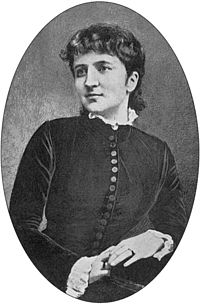
Katharine O’Shea (née Wood), English woman of aristocratic background, whose decade-long secret adultery with Charles Stewart Parnell leads to a widely publicized divorce in 1890 and his political downfall, is born in Braintree, Essex on January 30, 1846.

Katharine is the daughter of Sir John Page Wood, 2nd Baronet (1796–1866), and granddaughter of Sir Matthew Wood, a former Lord Mayor of London. She has an elder brother who becomes Field Marshal Sir Henry Evelyn Wood and is also the niece of both Western Wood MP (1804–1863) and Lord William Wood, William Ewart Gladstone‘s first Liberal Lord Chancellor.

Katharine marries Captain William O’Shea in 1867, a Catholic Nationalist MP for Clare from whom she separates around 1875. She first meets Parnell in 1880 and begins a relationship with him. Three of her children are fathered by Parnell. Although Captain O’Shea keeps publicly quiet for several years, he is aware of the relationship. He challenges Parnell to a duel in 1881 and initially forbids his estranged wife to see him, although she says that he encouraged her in the relationship. Although their relationship is a subject of gossip in London political circles from 1881, later public knowledge of the affair in an England governed by “Victorian morality” with a “nonconformist conscience” creates a huge scandal, as adultery is prohibited by the Ten Commandments.

Out of her family connection to the Liberal Party, Katharine acts as liaison between Parnell and Gladstone during negotiations prior to the introduction of the First Irish Home Rule Bill in April 1886. Parnell moves to her home in Eltham, close to the London-Kent border, that summer.

Captain O’Shea files for divorce in 1889 and his reasons are a matter for speculation. Some say he may have political motives. Alternatively, it is claimed that he has been hoping for an inheritance from Katharine’s rich aunt whom he had expected to die earlier, but when she dies in 1889 her money is left in trust to cousins. After the divorce the court awards custody of Katharine O’Shea and C.S. Parnell’s two surviving daughters to her ex-husband.

Katharine’s November divorce proceedings from Captain O’Shea, in which Parnell is named as co-respondent, leads to Parnell’s being deserted by a majority of his own Irish Parliamentary Party and to his downfall as its leader in December 1890. Catholic Ireland feels a profound sense of shock when Katharine breaks the vows of her previous Catholic marriage by marrying Parnell on June 25, 1891. With his political life and his health essentially ruined, Parnell dies at the age of 45 in Hove on October 6, 1891 in her arms, less than four months after their marriage. The cause is stomach cancer, possibly complicated by coronary artery disease inherited from his grandfather and father, who also died prematurely.

Though to her friends Katharine is known as Katie O’Shea, Parnell’s enemies, in order to damage him personally, call her “Kitty O’Shea” because at that time “kitty,” as well as being an Hiberno-English version of Catherine/Katherine/Katharine, is also a slang term for a prostitute. She lives the rest of her life in relative obscurity. She dies on February 5, 1921, at the age of 75, and is buried in Littlehampton, Sussex, England, apparently never once setting foot on Irish soil.

Captain Henry Harrison, MP, who had acted as Parnell’s bodyguard and aide-de-camp, devotes himself after Parnell’s death to the service of his widow. From her he hears a completely different version of the events surrounding the divorce issue from that which had appeared in the press, and this is to form the seed of his later two books defending Parnell published in 1931 and 1938. They have a major impact on Irish historiography, leading to a more favourable view of Parnell’s role in the O’Shea affair.


Leave a comment

Death of Charles Stewart Parnell

charles-stewart-parnell

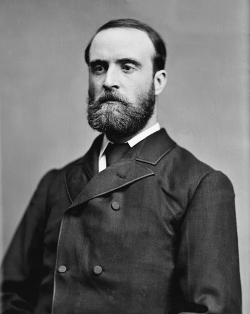
Charles Stewart Parnell, Irish nationalist politician and one of the most powerful figures in the British House of Commons in the 1880s, dies of pneumonia at age 45 in Hove, East Sussex, England on October 6, 1891.

Born into a wealthy and powerful Anglo-Irish Protestant landowning family in County Wicklow on June 27, 1846, Parnell enters the House of Commons in 1875. He is a land reform agitator and becomes leader of the Home Rule League in 1880, insisting on operating independently of the Liberals, and winning great influence by his balancing of constitutional, radical, and economic issues, and by his skillful use of parliamentary procedure. He is imprisoned in Kilmainham Gaol in 1882 but, being a very capable negotiator, is released when he renounces violent extra-Parliamentary action in an informal agreement, the Kilmainham Treaty, with British Prime Minister William Ewart Gladstone. That same year he reforms the Home Rule League as the Irish Parliamentary Party, which he controls minutely as Britain’s first disciplined democratic party.

The hung Parliament of 1885 sees him hold the balance of power between Gladstone’s Liberals and Robert Gascoyne-Cecil, 3rd Marquess of Salisbury‘s Conservatives. His power is one factor in Gladstone’s adoption of Home Rule as the central tenet of the Liberal Party. His reputation peaks in 1889-1890 when letters published in The Times linking him to the Phoenix Park murders of 1882 are shown to have been forged by Richard Pigott. However, the Irish Parliamentary Party splits in 1890 after the revelation of Parnell’s long adulterous love affair, causing many English Liberals, many of them nonconformists, to refuse to work with him, and strong opposition from Catholic bishops. He heads a small minority faction until his death in 1891.

parnell-marker

In describing Parnell, Gladstone says, “I do not say the ablest man; I say the most remarkable and the most interesting. He was an intellectual phenomenon.” Liberal leader H. H. Asquith calls him as one of the three or four greatest men of the 19th century, while Richard Haldane, 1st Viscount Haldane describes him as the strongest man the House of Commons has seen in 150 years. Historian A.J.P. Taylor says, “More than any other man he gave Ireland the sense of being an independent nation.”

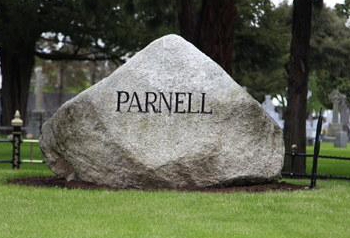
Charles Stewart Parnell dies of pneumonia at age 45 in his home at 10 Walsingham Terrace, Hove, England on October 6, 1891, in the arms of his wife Katharine. Though an Anglican, his funeral on October 11 is at the Irish National nondenominational Glasnevin Cemetery in Dublin and is attended by more than 200,000 people. His notability is such that his gravestone of unhewn Wicklow granite, erected in 1940, reads only “Parnell.”


Leave a comment

Birth of Composer Sir Herbert Hamilton Harty

herbert-hamilton-harty

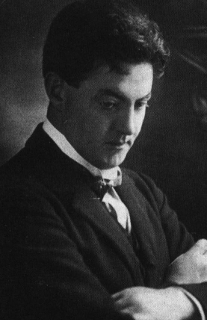
Sir Herbert Hamilton Harty, composer, conductor, pianist and organist, is born on December 4, 1879, in Hillsborough, County Down.

Harty’s father teaches him the viola, the piano and counterpoint, and, at the age of twelve, he follows his father’s profession and is appointed organist of Magheracoll Church, County Antrim.

Harty takes further posts in his teenage years as a church organist in Belfast and Bray. While in the latter, he comes under the influence of Michele Esposito, professor of piano at the Royal Irish Academy of Music, who encourages him to pursue a career as a piano accompanist. As Bray is only twelve miles from Dublin, Harty is able go into the city to hear an orchestra for the first time in his life.

After his early career as a church organist in his native Ireland, Harty moves to London at about age 20, soon becoming a well-known piano accompanist. The Musical Times calls him “the prince of accompanists.” As a composer he writes throughout his career, many of his works being well received, though few are regularly performed in the 21st century.

In his career as a conductor, which begins in 1904, Harty is particularly noted as an interpreter of the music of Hector Berlioz. From 1920 to 1933 he is the chief conductor of The Hallé symphony orchestra in Manchester, which he returns to the high standards and critical acclaim that it had enjoyed under its founder, Charles Hallé. His last permanent post is with the London Symphony Orchestra, but it lasts only two years, from 1932 to 1934, as Harty does not prove to be a box-office draw. According to a historian of the orchestra, Richard Morrison, Harty is “brutally and hurtfully” dropped in 1934.

During his conducting career, Harty makes some recordings with his orchestras. Shortly after his dismissal by the London Symphony Orchestra, Harty begins to suffer the symptoms of a brain tumor. After surgery which includes the removal of his right eye, he resumes his career until 1940, but the tumour returns to cause his death at the age of 61 in Hove on February 19, 1941. He is cremated, and his ashes are interred in the grounds of Hillsborough parish church, near the front door. There is a separate memorial in the church.


Leave a comment

Birth of Charles Stewart Parnell

charles-stewart-parnell

Charles Stewart Parnell, Irish nationalist politician and one of the most powerful figures in the British House of Commons in the 1880s, is born on June 27, 1846, in County Wicklow.

Born into a wealthy and powerful Anglo-Irish Protestant landowning family, Parnell enters the House of Commons in 1875. He is a land reform agitator and becomes leader of the Home Rule League in 1880, insisting on operating independently of the Liberals, and winning great influence by his balancing of constitutional, radical, and economic issues, and by his skillful use of parliamentary procedure. He is imprisoned in Kilmainham Gaol in 1882 but, being a very capable negotiator, is released when he renounces violent extra-Parliamentary action in an informal agreement, the Kilmainham Treaty, with British Prime Minister William Ewart Gladstone. That same year he reforms the Home Rule League as the Irish Parliamentary Party, which he controls minutely as Britain’s first disciplined democratic party.

The hung Parliament of 1885 sees him hold the balance of power between Gladstone’s Liberals and Lord Salisbury‘s Conservatives. His power is one factor in Gladstone’s adoption of Home Rule as the central tenet of the Liberal Party. His reputation peaks in 1889-1890 when letters published in The Times linking him to the Phoenix Park murders of 1882 are shown to have been forged by Richard Pigott. However, the Irish Parliamentary Party splits in 1890 after the revelation of Parnell’s long adulterous love affair, causing many English Liberals, many of them nonconformists, to refuse to work with him, and strong opposition from Catholic bishops. He heads a small minority faction until his death in 1891.

parnell-marker

In describing Parnell, Gladstone says, “I do not say the ablest man; I say the most remarkable and the most interesting. He was an intellectual phenomenon.” Liberal leader H. H. Asquith calls him as one of the three or four greatest men of the 19th century, while Lord Haldane describes him as the strongest man the House of Commons has seen in 150 years. Historian A.J.P. Taylor says, “More than any other man he gave Ireland the sense of being an independent nation.”

Charles Stewart Parnell dies of pneumonia at age 45 in his home at 10 Walsingham Terrace, Hove, England on October 6, 1891, in the arms of his wife Katharine. Though an Anglican, his funeral on October 11 is at the Irish National nondenominational Glasnevin Cemetery in Dublin and is attended by more than 200,000 people. His notability is such that his gravestone of unhewn Wicklow granite, erected in 1940, reads only “Parnell.”