seamus dubhghaill

Promoting Irish Culture and History from Little Rock, Arkansas, USA


Leave a comment

Death of Joseph Cooper Walker, Irish Antiquarian & Writer

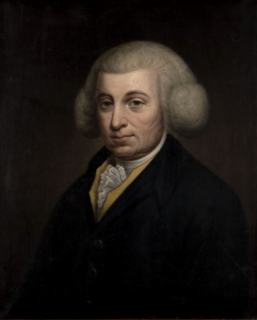
Joseph Cooper Walker, Irish antiquarian and writer, dies on April 12, 1810, in Enniskerry, County Wicklow.

Walker is born in Dublin, son of Cooper Walker, merchant, and educated by Thomas Ball. He suffers from asthma, which prevents him from attending college. Instead he travels to Italy, where he possibly receives some private tuition in Latin, Greek, French, Italian, and Spanish. He takes a special interest in Italian literature and Irish antiquities, and on his return to Ireland (where he is employed in the Irish treasury as third clerk in the upper department) resides in an Italianate villa, St. Valerie, on the road from Bray to Enniskerry.

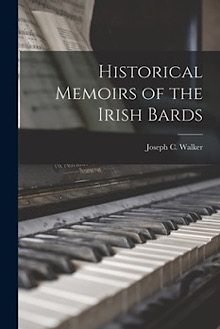
In 1785, Walker is elected one of the original members of the Royal Irish Academy (RIA) and on March 17, 1786, is requested to sit on its committee of antiquities. In this capacity he submits several essays to the Academy’s Transactions. However, his best-known work is Historical Memoirs of the Irish Bards (1786). His interest in poetry, and in eighteenth-century vernacular survivals of the ancient bardic tradition, suggests important new contemporary and literary dimensions for what had previously been antiquarian and scholarly pursuits. He also breaks new ground by considering modern as well as historical Irish culture, and introduces it to an Anglo-Irish audience by providing English translations of Gaelic songs and poems.

The authorities Walker cites covers the entire range of Irish and Anglo-Irish scholarship on Irish antiquities. He includes excerpts from his correspondence with Charles O’ConorCharles Vallancey, and Sylvester O’Halloran and carries out an extensive correspondence with Thomas Percy after he becomes Bishop of Dromore in 1782. He focuses on both poetry and music, which according to the popular eighteenth-century view has been the two traditional pursuits of the Irish bards. He presents a historical outline of their progress from the earliest times to the eighteenth century and ends with nine appendices, which are almost as lengthy as the main text. In these, his appreciation of what he considers to be the contemporary survivals of the ancient Irish bardic tradition is apparent in his including an account of Cormac Common, a blind eighteenth-century poet from Mayo, as well as a lengthy biographical notice of Turlough O’Carolan, together with translations of several of his songs. The book brings together many of the literary, scholarly, popular, Celtic, antiquarian, political, and musical dimensions of eighteenth-century Irish culture and prefigures the synthesis of literary modes, cultural theories, and musical styles that would occur in the literary productions of the United Irishmen.

Despite his linguistic skills, Walker has little knowledge of the Irish language, yet he (a member of the Anglo-Irish elite) is consistent in his praise of Gaelic culture, portraying it as sophisticated and literate and, although he highly romanticises his work, he does help to challenge negative appraisals of the Irish character. By the standards of the time it is a work of great erudition. However, today the book is judged to be of limited academic merit as Walker is severely hampered by a shortage of primary documents and by his limited grasp of the Irish language. This is illustrated by his ambiguous use of James Macpherson‘s volumes of Ossianic poems, published in the 1760s, which he quotes as authentic in the text while hinting in the footnotes that they are unreliable.

Charlotte Brooke translates three poems, and in return Walker encourages her to produce her Reliques of Irish Poetry (1789). Her work reflects Walker’s influence and she thanks him in the preface for affording her “every assistance which zeal, judgment and extensive knowledge, could give” as well as for prevailing on people to subscribe to her work and for being a subscriber himself. He is part of a literary circle that includes Edward Ledwich, Charles O’Conor, Edward BerwickJohn Philpot Curran, and Henry Grattan. He also writes Historical essay on the dress of the ancient and modern Irish (1788), dedicated to his friend James Caulfeild, 1st Earl of Charlemont, for which he interviews the older generation, consults manuscripts, and even visits tombs to examine the clothing of corpses, and admits he has received copious aid from Elizabeth Rawdon, Countess of Moira. The English Review receives it warmly but Richard Gough, the reviewer for The Gentleman’s Magazine, states he is “much disappointed in the perusal of this high priced history.” Other works by Walker include “an historical essay on the Irish stage,” RIA Trans., ii (1788), Historical Memoir on Italian Tragedy (1799) and contributions to Vallancey’s Collectanea de rebus Hibernicis (Dublin, 1770–1804). In the 1790s he subscribes to Anthologia Hibernica: a monthly collection of science, belles lettres and history and in December 1794 submits an “Historical essay on the Irish stage” which surveys Irish drama from bardic times through to contemporary folk plays.

Walker dies on April 12, 1810, in Enniskerry, County Wicklow, leaving a fine gallery of pictures, a library containing Irish manuscripts, and a collection of antiquities. He is buried on April 14 in St. Mary’s Churchyard, Dublin. His memoirs of Alessandro Tassoni are published posthumously in London in 1815 (with a lengthy preface by his brother Samuel), as is the second edition of Historical Memoirs of the Irish Bards (2 vols., Dublin, 1818).

(From: “Walker, Joseph Cooper” by Rosemary Ritchie, Dictionary of Irish Biography, http://www.dib.ie, October 2009)


Leave a comment

Birth of Sylvester O’Halloran, Surgeon & Historian

Sylvester O’Halloran, Irish surgeon with an abiding interest in Gaelic poetry and history, is born on December 31, 1728, at Caherdavin, County Limerick. For most of his life he lives and practises in Limerick and is later elected a member of the Royal Irish Academy (RIA).

O’Halloran is the third son of Michael O’Halloran, a prosperous farmer, and his wife Mary McDonnell. He is named after Sylvester Lloyd, the titular Catholic bishop of Killaloe (1728–39). His mother’s cousin, Sean Claragh McDonnell, teaches him much at an early age, including some Greek and Latin. He goes on to a Limerick school run by Robert Cashin, a Protestant clergyman, which is unusual at the time as the O’Hallorans are Roman Catholics during the difficult time of the Penal Laws.

O’Halloran and his brothers engage successfully in areas of life that work around the restrictions of the Penal Laws. Joseph becomes a Jesuit and holds chairs in rhetoric, philosophy and divinity at the Jesuit College at Bordeaux in France. George becomes a jeweler and in time a property-owner. O’Halloran goes to London to learn medicine at the age of 17, particularly studying the methods of Richard Mead, as well as the oculists Taylor and Hillmer. After further study at Leiden, and in Paris under the anatomist and academician Antoine Ferrein, he sets up practice as a surgeon in Limerick in early 1749.

O’Halloran writes several learned treatises on medical matters, and his fame is acknowledged by his membership of the RIA in 1787. He is a founder of the County Limerick Infirmary that starts with four beds in 1761 before moving to larger premises at St. Francis’s Abbey in 1765. The foundation stone of the original infirmary is now preserved in the Sylvester O’Halloran Post Graduate Centre at the Mid-Western Regional Hospital, Limerick.

While in France, O’Halloran is very impressed with the Académie Royale de Chirurgie, which had been founded in Paris in 1731 during the reign of Louis XV. He is subsequently instrumental in founding the Royal College of Surgeons in Ireland (RCSI), by writing its blueprint, Proposals for the Advancement of Surgery in Ireland, in 1765. In 1780, he is made an honorary member of the new Dublin Society of Surgeons and, when the RCSI receives its charter in 1784, is again elected an honorary member, equivalent to a Fellowship today.

As well as his scientific knowledge, O’Halloran’s interest in the arts begins with his collection of Gaelic poetry manuscripts and this leads on to an interest in Irish history. Given his background, he argues to validate the pre-Norman history of Ireland which had often been dismissed as a period of barbarism.

O’Halloran’s correspondents include Edmund Burke on early history. With Charles O’Conor of Bellanagare he discusses James Macpherson‘s translated version of Ossian and advises him about an eye complaint.

In 1789, Charlotte Brooke publishes the first English-language compendium of Irish poetry, the seminal “Reliques of Irish Poetry”, giving full due to O’Halloran for lending her his manuscript collection and for having written the essential history underlying her anthology.

In 1752, O’Halloran marries Mary Casey of Ballycasey, County Limerick, and they have four sons and a daughter. Their homes are in Change Lane and then on Merchants’ Quay. One of their sons is Major-General Sir Joseph O’Halloran, the father of Thomas Shuldham O’Halloran, after whom the Adelaide, South Australia suburb of O’Halloran Hill is named. Mary dies in 1782.

After a stroke, O’Halloran is infirm and confined to his chair for some time before his death on August 11, 1807, at his home on Limerick’s Merchant Quay. His is buried at St. Munchin’s graveyard at Killeely, which is now a suburb of Limerick.

Though politically restricted in his life by the Penal Laws, O’Halloran helps establish the county Infirmary, is elected President of the city’s Free Debating Society in 1772 and is elected to a committee in 1783 that examines the River Shannon navigation. Appropriately, a Limerick bridge over the River Shannon has been named after him.


Leave a comment

Birth of Standish James O’Grady, Author, Journalist & Historian

Standish James O’Grady (Irish: Anéislis Séamus Ó Grádaigh), Irish author, journalist, and historian, is born in Castletownbere, County Cork, on September 18, 1846. He is inspired by Sylvester O’Halloran and plays a formative role in the Celtic Revival, publishing the tales of Irish mythology, as the History of Ireland: Heroic Period (1878), arguing that the Gaelic tradition has rival only from the tales of Homeric Greece.

O’Grady’s father is the Reverend Thomas O’Grady, the scholarly Church of Ireland minister of Castletown Berehaven, County Cork, and his mother Susanna Doe (or Dowe). The Glebe, his childhood home, lies a mile west of Castletownbere near a famine mass grave and ruined Roman Catholic chapel. He is a cousin of Standish Hayes O’Grady, another noted figure in Celtic literature, and of Standish O’Grady, 1st Viscount Guillamore. After a rather severe education at Tipperary Grammar School, he follows his father to Trinity College, Dublin, where he wins several prize medals and distinguishes himself in several sports.

O’Grady is a paradox for his times, proud of his Gaelic heritage, he is also a member of the Church of Ireland, a champion of aristocratic virtues (particularly decrying bourgeois values and the uprooting cosmopolitanism of modernity) and at one point advocates a revitalised Irish people taking over the British Empire and renaming it the Anglo-Irish Empire.

O’Grady proves too unconventional of mind to settle into a career in the church, and takes a job as a schoolmaster at Midleton College, then in a period of expansion. He also qualifies as a barrister, while earning much of his living by writing for the Irish newspapers. Reading Sylvester O’Halloran’s A general history of Ireland (1778) sparks an interest in early Irish history. After an initial lukewarm response to his writing on the legendary past in History of Ireland: The Heroic Period (1878) and Early Bardic Literature of Ireland (1879), he realises that the public wants romance, and so follows the example of James Macpherson in recasting Irish legends in literary form, producing historical novels including Finn and his Companions (1891), The Coming of Cuculain (1894), The Chain of Gold (1895), Ulrick the Ready (1896) and The Flight of the Eagle (1897), and The Departure of Dermot (1913).

O’Grady also studies Irish history of the Elizabethan period, presenting in his edition of Sir Thomas Stafford‘s Pacata Hibernia (1896) the view that the Irish people had made the Tudors into kings of Ireland to overthrow their unpopular landlords, the Irish chieftains. His The Story of Ireland (1894) is not well received, as it sheds too positive a light on the rule of Oliver Cromwell for the taste of many Irish readers. He is also active in social and political campaigns in connection with such issues as unemployment and taxation.

Until 1898, O’Grady works as a journalist for the Daily Express of Dublin, but in that year, finding Dublin journalism in decline, he moves to Kilkenny to become editor of the Kilkenny Moderator, which is printed at 28 High Street. It is here he becomes involved with Ellen Cuffe, Countess of Desart, and Captain Otway Cuffe. He engages in the revival of the local woolen and woodworking industries. In 1900 he founds the All-Ireland Review and returns to Dublin to manage it until it ceases publication in 1908. He also contributes to James LarkinsThe Irish Worker paper.

O’Grady’s influence crosses the divide of the Anglo-Irish and Irish-Ireland traditions in literature. His influence is explicitly stated by the Abbey Theatre set with Lady Gregory, W. B. Yeats and George William Russell attributing their interest in the Fenian Cycle of Gaelic tradition in part to him. This leads to him being known as the “Father of the Celtic Revival.” Some of the figures associated with the political party Sinn Féin, including its founder Arthur Griffith, have positive things to say about his efforts in helping to retrieve from the past the Gaelic heroic outlook.

O’Grady marries Margaret Allen Fisher, daughter of William Allen Fisher, and they have three sons. Advised to move away from Ireland for the sake of his health, they leave Ireland in 1918. After living in the north of France and Northamptonshire, they move to the Isle of Wight. He is working on a final exposition of his ideas when he dies suddenly on May 18, 1928.

O’Grady’s eldest son, Hugh Art O’Grady, is for a time editor of the Cork Free Press before he enlists in World War I in early 1915. He becomes better known as Dr. Hugh O’Grady, later Professor of the Transvaal University College, Pretoria (later the University of Pretoria), who writes the biography of his father in 1929.


Leave a comment

Birth of Charles O’Conor, Writer & Antiquarian

charles-o-conor-of-belanagareCharles O’Conor, Irish writer and antiquarian who is enormously influential as a protagonist for the preservation of Irish culture and history in the eighteenth century, is born on January 1, 1710 in Killintrany, County Sligo. He combines an encyclopaedic knowledge of Irish manuscripts and Gaelic culture in demolishing many specious theories and suppositions concerning Irish history.

O’Conor is born into a cadet branch of the land-owning family of O’Conor Don and is sent for his education to Father Walter Skelton’s school in Dublin. He grows up in an environment that celebrates Gaelic culture and heritage. He begins collecting and studying ancient manuscripts at an early age.

His marriage brings him financial stability so that he can devote himself to his writing, but he is widowed in 1750, within a year of his father’s death. When his eldest son Denis marries in 1760, he gives up the residence at Bellanagare to him and moves into a small cottage that he had built on the estate. He devotes the remainder of his life to the collection and study of Irish manuscripts, to the publication of dissertations, and especially to the cause of Irish and Catholic emancipation.

O’Conor is well known in Ireland from his youth as a civil-tongued, but adamant, advocate of Gaelic culture and history. He garners fame outside Ireland through his Dissertations on the ancient history of Ireland (1753), which is generally well received. When Samuel Johnson is made aware of it, he is moved to write a letter to O’Conor in 1755, complimenting the book, complimenting the Irish people, and urging O’Conor to write on the topic of Celtic languages.

The book is less well received in some Scottish circles, where there exists a movement to write Celtic history based upon Scottish origins. When James Macpherson publishes a spurious story in 1761 about having found an ancient Gaelic (and Scottish) cycle of poems by a certain “Ossian“, among the critics who rejects it as false is O’Conor, as an inclusion in the 1766 rewrite of his 1753 work. While the issue was laid to public rest by others, notably Samuel Johnson, the issue is laid to intellectual rest by O’Conor in 1775, with the publication of his Dissertation on the origin and antiquities of the antient Scots. The fact that the issue occurs provides O’Conor the opportunity to establish Ireland as the source of Gaelic culture in the minds of the non-Irish general public.

O’Conor’s later life is that of the respected dean of Irish historians. He continues to write as always in favour of ideas that he favours and are consistent with the historical record, and against any and all ideas that are inconsistent with the historical record, including those of other Irish historians. Such is his esteemed reputation that even those whom he challenges would include his challenges in the next edition of their own books. He continues to collect, study, and annotate Irish manuscripts. Upon his death in Bellanagare, County Roscommon on July 1, 1791, his collection becomes the first part of the Annals of the Four Masters at the Stowe Library. In 1883 these are returned to the Royal Irish Academy library.

His unfinished History of Ireland, that Johnson had encouraged in 1777, is destroyed on his instructions at his death.


Leave a comment

Death of Author & Journalist Standish James O’Grady

Standish James O’Grady, author, journalist, and historian, dies on May 18, 1928, at ShanklinIsle of WightHampshireEngland.

O’Grady is born on March 22, 1846, at Castletown, County Cork, the son of Reverend Thomas O’Grady, the scholarly Church of Ireland minister of Castletown Berehaven, County Cork, and Susanna Doe. After a rather severe education at Tipperary Grammar School, O’Grady follows his father to Trinity College, Dublin, where he wins several prize medals and distinguishes himself in several sports.

O’Grady proves too unconventional of mind to settle into a career in the church and earns much of his living by writing for the Irish newspapers. Reading Sylvester O’Halloran‘s General history of Ireland sparks an interest in early Irish history. After an initial lukewarm response to his writing on the legendary past in History of Ireland: Heroic Period (1878–81) and Early Bardic Literature of Ireland (1879), he realizes that the public wants romance, and so follows the example of James Macpherson in recasting Irish legends in literary form, producing historical novels including Finn and his Companions (1891), The Coming of Cuculain (1894), The Chain of Gold (1895), Ulrick the Ready (1896) and The Flight of the Eagle (1897), and The Departure of Dermot (1913).

O’Grady also studies Irish history of the Elizabethan period, presenting in his edition of Sir Thomas Stafford‘s Pacata Hibernia (1896) the view that the Irish people have made the Tudors into kings of Ireland in order to overthrow their unpopular landlords, the Irish chieftains. His The Story of Ireland (1894) is not well received, as it sheds too positive a light on the rule of Oliver Cromwell for the taste of many Irish readers. He is also active in social and political campaigns in connection with such issues as unemployment and taxation.

Until 1898, he works as a journalist for the Daily Express of Dublin, but in that year, finding Dublin journalism in decline, he moves to Kilkenny to become editor of the Kilkenny Moderator. It is here he becomes involved with Ellen Cuffe, Countess of Desart and Captain Otway Cuffe. He engages in the revival of the local woolen and woodworking industries. In 1900 he founds the All-Ireland Review and returns to Dublin to manage it until it ceases publication in 1908. O’Grady contributes to James Larkin‘s The Irish Worker paper.

O’Grady’s works are an influence on William Butler Yeats and George Russell and this leads to him being known as the “Father of the Celtic Revival.” Being as much proud of his family’s Unionism and Protestantism as of his Gaelic Irish ancestry, identities that are increasingly seen as antithetical in the late 1800s, he is described by Augusta, Lady Gregory as a “fenian unionist.”

Advised to move away from Ireland for the sake of his health, O’Grady passes his later years living with his eldest son, a clergyman in England, and dies on the Isle of Wight on May 18, 1928.

O’Grady’s eldest son, Hugh Art O’Grady, is for a time editor of the Cork Free Press before he enlists in World War I early in 1915. He becomes better known as Dr. Hugh O’Grady, later Professor of the Transvaal University College, Pretoria, who writes the biography of his father in 1929.