seamus dubhghaill

Promoting Irish Culture and History from Little Rock, Arkansas, USA


Leave a comment

Birth of Sir Shane Leslie, 3rd Baronet

Sir John Randolph Leslie, 3rd Baronet, Anglo-Irish diplomat and writer commonly known as Sir Shane Leslie, is born in Glaslough, County Monaghan, on September 24, 1885. He is a first cousin of Sir Winston Churchill. In 1908, he becomes a Roman Catholic and supports Irish Home Rule.

Leslie is born into a wealthy Anglo-Irish landowning family. His father is Sir John Leslie, 2nd Baronet, and his mother, Leonie Jerome, is the sister of Winston Churchill’s mother, Jennie. Both are daughters of Leonard W. Jerome. His ancestor, The Right Reverend John Leslie, Bishop of the Isles, moves from Scotland to Ireland in 1633 when he is made Bishop of Raphoe in County Donegal and is made Bishop of Clogher in 1661. Bishop Leslie is a vocal opponent of Oliver Cromwell.

Together with his brother Norman, Leslie’s early education begins at home where a German governess, Clara Woelke, is their first teacher. As children the brothers have more contact with servants than they have with their parents. His own daughter, Anita, says, “In my parents’ view schools performed the same functions that kennels did for dogs. They were places where pets could be conveniently deposited while their owners travelled.”

Leslie is educated at Ludgrove School, then Eton College and King’s College, Cambridge. While at Cambridge University he becomes a Roman Catholic and a supporter of Irish Home Rule. He adopts an anglicised Irish variant of his name (“Shane”). Not overly impressed by Eton, as a lower boy he and his roommates occupy “an old, battered warren betwixt the chapel cemetery and Wise’s horse yard … [T]he food was wretched and tasteless … As for thrashings which tyrannised rather than disciplined our house, they were excessive. Bullying was endemic and Irish boys were ridiculed, especially on St Patrick’s Day.”

Leslie refuses to send his own sons to Eton. They are educated at Roman Catholic Benedictine schools: Jack at Downside School and Desmond at Ampleforth College.

In the January 1910 United Kingdom general election Leslie stands as the Irish Parliamentary Party (IPP) candidate for the Londonderry City constituency, losing by just 57 votes. In the second general election later that year he is again narrowly defeated by the Unionist candidate.

Before World War I, Leslie travels extensively and in 1912 he marries Marjorie Ide, the youngest daughter of Henry Clay Ide, then United States ambassador to Spain and former Governor-General of the Philippines. His parents and other family members move temporarily to London at the outbreak of war.

During the war Leslie is in a British Ambulance Corps, until invalided out. He is then sent to Washington, D.C. to help the British Ambassador, Sir Cecil Spring Rice, soften Irish American hostility toward England and obtain American intervention in the war in the aftermath of the 1916 Easter Rising in Dublin and the execution of its leaders. But he also looks to Ireland for inspiration when writing and edits a literary magazine that contains much Irish verse. He becomes a supporter of the ideals of Irish nationalism, although not physical force republicanism.

In the 1918 United Kingdom general election in Ireland, the Irish Parliamentary Party loses massively to Sinn Féin, putting an end to Leslie’s political career, but as the first cousin of Winston Churchill he remains a primary witness to much that is said and done outside the official record during the negotiation of the Anglo-Irish Treaty of 1921. Disappointed, he feels unwanted in Ireland and abandoned by the British. Like many members of the landed gentry from the 1880s who were obliged to turn to other occupations, he can no longer rely on income from landholdings.

Leslie writes extensively, in a wide range of styles, in verse, prose, and polemic, over several decades. His writings include The End of a Chapter (1916), while hospitalised during World War I, The Oppidan (1922), a roman à clef about his life and contemporaries at Eton, an edition of the Letters of Herbert Cardinal Vaughan to Lady Herbert of Lea (1942), and a biography Mrs. Fitzherbert: a life chiefly from unpublished sources (1939), together with an edition of her letters (with Maria Anne Fitzherbert), The letters of Mrs. Fitzherbert and connected papers; being the second volume of the life of Mrs. Fitzherbert (1944). He also writes Mark Sykes: His Life and Letters (1923), a biography of the English traveler, Conservative Party politician and diplomatic advisor. He advises budding novelist Scott Fitzgerald on the title of his first novel, they share correspondence with the future Mnsg. William A. Hemmick, who is Fitzgerald’s teacher at the Newman School.

A passionate advocate of reforestation, Leslie finds the business of running an estate uncreative and boring, and transfers the estate entailed to him to his eldest son, John Norman Leslie, who succeeds as the 4th Baronet. He transfers St. Patrick’s Purgatory on Lough Derg to the Roman Catholic Bishop of Clogher, Eugene O’Callaghan.

The wealth of the Leslies wanes by the 1930s following the Wall Street crash of 1929 and a farm that is loss making. In his unpublished memoirs, Leslie writes “a gentleman’s standing in his world was signalled by his list of clubs and it was worth paying hundreds of pounds in subs.” They continue to maintain their lifestyle, involving attendance at the London season and the entertainment of distinguished visitors, including Anthony Eden at Glaslough. At the outbreak of World War II in 1939 he joins the Home Guard. He spends the remainder of his life between Glaslough and London.

Leslie’s first wife, Marjorie, dies on February 8, 1951. On May 30, 1958, at the Catholic Church of St. Peter & Edward, Westminster, he marries Iris Carola Frazer, who is the daughter of Charles Miskin Laing and Etheldreda Janet Laing.

Leslie dies at the age of 85 at 15b Palmeira Court, Hove, East Sussex, on April 14, 1971. A Requiem Mass is held for him in Westminster Cathedral on October 12, 1971.


Leave a comment

Death of John Arden, English Playwright

John Arden, English playwright, dies on March 28, 2012, in Galway, County Galway. At the time of his death, he is lauded as “one of the most significant British playwrights of the late 1950s and early 60s.”

Arden is born in Barnsley, South Yorkshire, England, on October 26, 1930. He is the son of the manager of a glass factory. He is educated at Sedbergh School in Cumbria, King’s College, Cambridge and the Edinburgh College of Art, where he studies architecture. He first gains critical attention for the radio play The Life of Man in 1956 shortly after finishing his studies.

Arden is initially associated with the English Stage Company at the Royal Court Theatre in London. His 1959 play, Serjeant Musgrave’s Dance, in which four army deserters arrive in a northern mining town to exact retribution for an act of colonial violence, is considered to be his best. His work is influenced by Bertolt Brecht and epic theatre as in Left-Handed Liberty (1965, on the anniversary of Magna Carta). Other plays include Live Like Pigs, The Workhouse Donkey, and Armstrong’s Last Goodnight, the last of which is performed at the 1963 Chichester Festival by the Royal National Theatre after it was rejected by the Royal Court.

Arden’s 1978 radio play Pearl is considered in a Guardian survey to be one of the best plays in that medium. He also writes several novels, including Silence Among the Weapons, which is shortlisted for the Booker Prize in 1982, and Books of Bale, about the Protestant apologist John Bale. He is a member of the Royal Society of Literature.

With his wife and co-writer Margaretta D’Arcy, Arden pickets the Royal Shakespeare Company (RSC) premiere of his Arthurian play The Island of the Mighty, because they believe the production to be pro-imperialist. They write several plays together which are highly critical of British presence in Ireland, where he and D’Arcy live from 1971 onward.

In 1961, Arden is a founder member of the anti-nuclear Committee of 100, and he also chairs the pacifist weekly Peace News. In Ireland, he is for a while a member of Official Sinn Féin. He is an advocate of civil liberties, and opposes anti-terror legislation, as demonstrated in his 2007 radio play The Scam.

Arden is elected to Aosdána in 2011 before dying in Galway on March 28, 2012. He is waked in a wicker casket.

(Pictured: Photograph of John Arden, 1960 bromide print on card mount, credit to Roger Mayne, National Portrait Gallery, London)


Leave a comment

Death of George Derwent Thomson, Philosopher & Scholar of the Irish Language

George Derwent Thomson (Irish: Seoirse Mac Tomáis), English classical scholar, Marxist philosopher, and scholar of the Irish language, dies on February 3, 1987, at his home in Moseley, Birmingham, England.

Thomson is born on August 19, 1903, in West Dulwich, London, the eldest of a family of three sons and two daughters born to William Henry Thomson, an accountant, and his wife Minnie (née Clements). Inheriting an interest in Ireland from his maternal grandfather, an Ulsterman of Orange stock, and his mother, he attends Irish language classes run by the Gaelic League in London while a pupil at Dulwich College (1916–22).

Awarded a scholarship to King’s College, Cambridge, in 1922, Thomson studies classics, where he attains First Class Honours in the Classical Tripos and subsequently wins a scholarship to Trinity College, Dublin (TCD). At TCD he works on his first book, Greek Lyric Metre, and begins visiting the Blasket Islands in the early 1920s. He becomes lecturer and then Professor of Greek at University College Galway.

Thomson moves back to England in 1934, when he returns to King’s College, Cambridge, to lecture in Greek. He becomes a professor at the University of Birmingham in 1936, the year he joins the Communist Party of Great Britain. He pioneers a Marxist interpretation of Greek drama. His Aeschylus and Athens (1941) and Marxism and Poetry (1945) win him international attention. In the latter book he argues a connection between the work song and poetry, and that pre-industrial songs are connected to ritual.

Thomson befriends and is an important influence on Alfred Sohn-Rethel and his theory of the genesis of occidental thought in Ancient Greece through the invention of coining.

Thomson first visits the Blasket Islands off the west coast of Ireland in 1923. Mac Tomáis, as he quickly becomes known to the islanders, had attended rudimentary Irish classes at a branch of Conradh na Gaeilge in London before he went to Cambridge. When he arrives on the island, he immerses himself in the language. In six weeks of walking around, talking with Muiris Ó Súilleabháin and others, he achieves near complete fluency in the language.

Thomson spends several years with the people of the islands studying their language, history and culture. He maintains a special study of the now extinct community in Ireland, in which he perceives elements of surviving cultural resonances with historical society prior to the development of private property as a means of production. He becomes a champion of the Irish language.

Thomson has a role in the publication of the memoirs of Muiris Ó Súilleabháin, Fiche Bliain Ag Fás (Twenty Years Growing) in 1933. The introduction to Ó Súilleabháin’s autobiography by E. M. Forster can also be attributed to Thomson.

When Thomson applies for the new position of lecturer of Greek at the National University of Ireland, Galway, in 1931 he, in the words of Richard Roche, “astonished the interview board with a flow of Blasket Irish” and is awarded the post.

In 1951, Thomson is the only member of the Communist Party’s Executive Committee to vote against the Party’s programme, The British Road to Socialism, because “the dictatorship of the proletariat was missing.” He also serves on the Party’s Cultural Committee.

The Chinese revolution of 1949 has a profound effect on Thomson and leads to differences with the British Communist Party, from which he eventually drifts. He never loses his political beliefs. He is committed to working class education, including giving lectures to factory workers at Birmingham’s Austin car plant. He also maintains a special affection and support for the Morning Star in his later years.

Thomson authors three popular expositions on Marxism published by the China Policy Study Group in the early 1970s. From Marx to Mao Tse-tung: A study in revolutionary dialectics (1971), Capitalism and After: The rise and fall of commodity production (1973), and The Human Essence: The sources of science and art (1974). He is also the author of Marxism and Poetry (1945).


Leave a comment

Birth of English Playwright John Arden

John Arden, English playwright, is born in Barnsley, South Yorkshire, England, on October 26, 1930. At the time of his death he is lauded as “one of the most significant British playwrights of the late 1950s and early 60s.”

Arden is the son of the manager of a glass factory. He is educated at Sedbergh School in Cumbria, King’s College, Cambridge and the Edinburgh College of Art, where he studies architecture. He first gains critical attention for the radio play The Life of Man in 1956 shortly after finishing his studies.

Arden is initially associated with the English Stage Company at the Royal Court Theatre in London. His 1959 play, Serjeant Musgrave’s Dance, in which four army deserters arrive in a northern mining town to exact retribution for an act of colonial violence, is considered to be his best. His work is influenced by Bertolt Brecht and epic theatre as in Left-Handed Liberty (1965, on the anniversary of Magna Carta). Other plays include Live Like Pigs, The Workhouse Donkey, and Armstrong’s Last Goodnight, the last of which is performed at the 1963 Chichester Festival by the Royal National Theatre after it was rejected by the Royal Court.

Arden’s 1978 radio play Pearl is considered in a Guardian survey to be one of the best plays in that medium. He also writes several novels, including Silence Among the Weapons, which is shortlisted for the Booker Prize in 1982, and Books of Bale, about the Protestant apologist John Bale. He is a member of the Royal Society of Literature.

With his wife and co-writer Margaretta D’Arcy, Arden pickets the Royal Shakespeare Company (RSC) premiere of his Arthurian play The Island of the Mighty, because they believe the production to be pro-imperialist. They write several plays together which are highly critical of British presence in Ireland, where he and D’Arcy live from 1971 onward.

In 1961, Arden is a founder member of the anti-nuclear Committee of 100, and he also chairs the pacifist weekly Peace News. In Ireland, he is for a while a member of Official Sinn Féin. He is an advocate of civil liberties, and opposes anti-terror legislation, as demonstrated in his 2007 radio play The Scam.

Arden is elected to Aosdána in 2011 before dying in Galway, County Galway on March 28, 2012. He is waked in a wicker casket.

(Pictured: Photograph of John Arden in 1966, credit to Sam Falk/The New York Times)


Leave a comment

Birth of Walter Gordon Wilson, Co-inventor of the Tank

walter-gordon-wilson

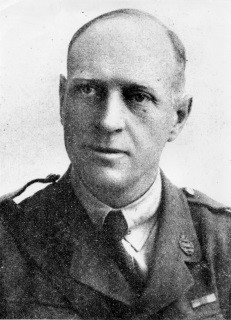
Major Walter Gordon Wilson, mechanical engineer, inventor and member of the British Royal Naval Air Service, is born in Blackrock, County Dublin, on April 21, 1874. He is credited by the 1919 Royal Commission on Awards to Inventors as the co-inventor of the tank, along with Sir William Tritton.

Wilson is a naval cadet on HMS Britannia. In 1894 he entered King’s College, Cambridge, where he studies the mechanical sciences tripos, graduating with a first-class degree, B.A., in 1897. He acts as ‘mechanic’ for the Hon. Charles Stewart Rolls on several occasions while they are undergraduates in Cambridge.

Interested in powered flight, Wilson collaborates with Percy Sinclair Pilcher and the Hon. Adrian Verney-Cave to attempt to make an aero-engine from 1898. The engine is a flat-twin air-cooled and weighs only 40 lbs., but shortly before a demonstration flight planned for September 30, 1899, it suffers a crankshaft failure. Unwilling to let down his backers, Pilcher opts to demonstrate a glider, which crashes, and he is fatally injured. The shock of Pilcher’s death ends Wilson’s plans for aeroengines.

Following Pilcher’s death, Wilson switches to building the Wilson–Pilcher motor car, which is launched in 1900. This car is quite remarkable in that it is available with either flat-four or flat-six engines, which are very well balanced, and with a low centre of gravity making good stability. Each water-cooled cylinder is separate and identical for either engine. Cylinders are slightly offset with separate crankpins, and the crankshaft has intermediate bearings between each pair of cylinders.

The gearbox of the car is also novel, having dual epicyclic gears and being bolted directly to the engine. This allows four speeds, with direct drive in top gear. All the gears are helical, and enclosed in an oil bath, making for very silent transmission. Reverse gear is built into the rear axle, as is the foot operated brake drum, all of which are housed in a substantial aluminum casing.

After marrying in 1904 Wilson joins Armstrong Whitworth who takes over production of the Wilson-Pilcher car. From 1908 to 1914 he works with J & E Hall of Dartford designing the Hallford lorry which sees extensive service with the army during World War I.

The sole known surviving Wilson-Pilcher car is a four-cylinder version that is retained by the Amstrong Whitworth factory and after restoration in the 1940s is presented to W.G. Wilson in the 1950s. It stays in the Wilson family until 2012 when it is sold at auction to a private collector.

With the outbreak of World War I, Wilson rejoins the navy and the Royal Naval Armoured Car Division, which protects the Royal Naval Air Service in France. When the Admiralty begins investigating armoured fighting vehicles under the Landship Committee in 1915, 20 Squadron is assigned to it and Wilson is placed in charge of the experiments. He works with the agricultural engineer William Tritton resulting in the first British tank called “Little Willie.” At Wilson’s suggestion the tracks are extended right round the vehicle. This second design becomes the prototype for the Mark I tank.

Designing several of the early British tanks, Wilson incorporates epicyclic gearing which is used in the Mark V tank to allow it to be steered by a single driver rather than the four previously needed. In 1937, he provides a new steering design which gives a larger turning radius at higher speeds.

Wilson transfers to the British Army in 1916, becoming a Major in the Heavy Branch of the Machine Gun Corps. He is mentioned twice in dispatches and is appointed Companion of the Order of St. Michael and St. George in 1917.

In 1928, Wilson invents a self-changing gearbox, and forms Improved Gears Ltd. with John Davenport Siddeley to develop the design commercially. Improved Gears later becomes Self-Changing Gears. The self-changing gearboxes are available on most subsequent Armstrong Siddeley automobiles, manufactured up to 1960, as well as on Daimler, Lanchester, Talbot, ERA, AC, Invicta and Riley automobiles as well as buses, railcars and marine launches.

Walter Gordon Wilson dies in Coventry, West Midlands, England on July 1, 1957.


Leave a comment

Birth of Conel Hugh O’Donel Alexander, Cryptanalyst & Chess Player

Conel Hugh O’Donel Alexander, Irish-born British cryptanalyst, chess player, and chess writer, is born in CorkCounty Cork, on April 19, 1909. He works on the German Enigma machine at Bletchley Park during World War II, and is later the head of the cryptanalysis division at Government Communications Headquarters (GCHQ) for over 20 years. In chess, he twice wins the British Chess Championship and earns the title of International Master. He is usually referred to as C.H.O’D. Alexander in print and Hugh in person.

Alexander is born into an Anglo-Irish family, the eldest child of Conel William Long Alexander, an engineering professor at University College Cork (UCC), and Hilda Barbara Bennett. His father dies during the Irish War of Independence in 1920, and the family moves to Birmingham in England where he attends King Edward’s School. He wins a scholarship to study mathematics at King’s College, Cambridge, in 1928, graduating with a first in 1931. He represents the University of Cambridge in the Varsity chess matches of 1929, 1930, 1931 and 1932.

From 1932, Alexander teaches mathematics in Winchester and marries Enid Constance Crichton Neate on December 22, 1934. In 1938 he leaves teaching and becomes head of research at the John Lewis Partnership.

In February 1940 Alexander arrives at Bletchley Park, the British codebreaking centre during the World War II. He joins Hut 6, the section tasked with breaking German Army and Air Force Enigma messages. In 1941, he transfers to Hut 8, the corresponding hut working on Naval Enigma. He becomes deputy head of Hut 8 under Alan Turing and formally becomes the head of Hut 8 in November 1942. In October 1944, Alexander is transferred to work on the Japanese JN-25 code.

In mid-1946, Alexander joins GCHQ, which is the post-war successor organisation to the Government Code and Cypher School (GC&CS) at Bletchley Park. By 1949, he has been promoted to the head of “Section H” (cryptanalysis), a post he retains until his retirement in 1971.

Alexander is twice a winner of the British Chess Championship, in 1938 and 1956. He represents England in the Chess Olympiad six times, in 1933, 1935, 1937, 1939, 1954 and 1958. At the 1939 Olympiad in Buenos AiresArgentina, Alexander has to leave part-way through the event, along with the rest of the English team, due to the declaration of World War II, as he is required at home for codebreaking duties. He is also the non-playing captain of England from 1964 to 1970. He is awarded the International Master title in 1950 and the International Master for Correspondence Chess title in 1970. He wins the Hastings International Chess Congress 1946/47 with the score 7½/9, a point ahead of Savielly Tartakower. His best tournament result may have been first equal Hastings 1953/54, where he goes undefeated and beats Soviet grandmasters David Bronstein and Alexander Tolush in individual games. He is also the chess columnist of The Sunday Times in the 1960s and 1970s.

Many knowledgeable chess people believe that Alexander had Grandmaster potential, had he been able to develop his chess abilities further. Many top players peak in their late twenties and early thirties, but for Alexander this stretch coincided with World War II, when high-level competitive opportunities were unavailable. After this, his professional responsibilities as a senior cryptanalyst limited his top-class appearances. He defeats Mikhail Botvinnik in one game of a team radio match against the Soviet Union in 1946, at a time when Botvinnik is probably the world’s top player. Alexander makes important theoretical contributions to the Dutch Defence and Petrov’s Defence.

Conel Hugh O’Donel Alexander dies on February 15, 1974, in CheltenhamGloucestershire, England.