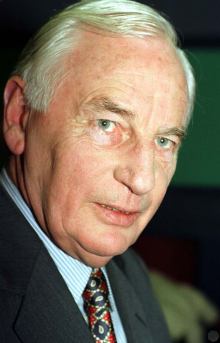
Cowen is married with four children and is a full-time politician. His father, Bernard Cowen, was also a TD, Senator and Minister of State. His grandfather, Christy Cowen, was an Offaly County Councillor and a member of the Fianna Fáil National Executive. Another relation, Ernest Cowen, was also a member of the Fianna Fáil National Executive having been elected to its Committee of 15.
In July 2020, it emerges that Cowen has a conviction for drunk driving. He is fined €200 and is disqualified from driving for three months. The incident occurs in September 2016, after an All-Ireland football final between Dublin and Mayo. He apologises for his “serious lapse of judgement.” The Garda Síochána Ombudsman Commission (GSOC) is asked by Garda Síochána to investigate the alleged leaking of information concerning Cowen’s drunk driving arrest. He accuses Gardaí of criminality for leaking allegations that he attempted to evade a garda checkpoint before he was caught drunk driving. He admits receiving a ban for drunk drinking but denies attempting to evade Gardaí. He issues a statement that the Garda record was “incorrect” and suggests he will take legal action against The Sunday Times, which first reported the story. He says that the leaks were a flagrant breach of criminal law and “my rights under data protection law” and that they were an “attempt to cause me the maximum personal and political harm.” Fianna Fáil TD Thomas Byrne denies that it was he who leaked news of Cowen’s ban to the press. Eamon Dooley, the longest serving Fianna Fáil member of Offaly County Council, claims that a party member with a “grudge” leaked it to the media.
On July 14, 2020, after he refuses to resign the role of Minister for Agriculture, Cowen is sacked by TaoiseachMicheál Martin due to the controversy surrounding his conviction for drunk driving. In November 2020, it is reported that a barrister is to be questioned by GSOC in relation to the leak. In 2021, GSOC searches a Garda station in Munster in relation to the leak.
In July 2021, Cowen calls on Fianna Fáil to form a new “modern centre-left” alliance with the Labour Party for the next election.
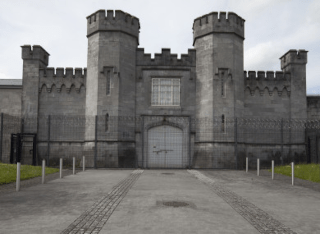
The escape is a timely reminder of the determination, tenacity and ingenuity with which Irish Republican Army (IRA) Volunteers throughout the country fight against British rule in Ireland. It is also a reminder to the Fine Gael/Labour Coalition Government in Leinster House that their collaboration with the British and their attempts to defeat republicanism will not be an easy task.
The determination of republicans to escape from Portlaoise is demonstrated by the escape. In May 1974, an underground escape was planned but the 80-foot tunnel was uncovered and the prisoners’ hopes were dashed. However, almost immediately plans swung into place for a more daring escape operation.
A member of the Escape Committee spots a weakness in the jail security in the area of the prison where the laundry house is situated. The laundry leads to an outside stairway and down into the courtyard, where the Governor’s House and Warders’ Mess are located.
The prisoners discover that they can gain access to the laundry area quite easily. It is a doorway at the top of the courtyard which leads out onto the streets of Portlaoise town itself that give the prisoners hope that their plan will work. However, the Escape Committee decides that they need explosives to get through this gate and send word outside to this effect. The IRA on the outside, agreeing that the plan is “viable,” send in the materials and the plan is on.
The date for the escape is set for August 18, 1974 and planning proceeds inside the prison. The prisoners set themselves to work making prison guard uniforms. The idea is that when the escapees are running through the courtyard, the troops on the roof of the jail will not be able to distinguish between the escapees and the real guards and so will not open fire. This pre-planning proves to be a brilliant ploy as it gives those escaping vital seconds to clear the courtyard and make good their escape.
On the Friday before the plan is to proceed, a number of republicans are arrested in Portlaoise. This seems a bad omen and raises questions as to whether the authorities are suspicious that an escape is planned. However, the Escape Committee and those involved in the operation decide to press ahead with the plan anyway.
Sunday, August 18 duly arrives. According to prisoners who are in Portlaoise Prison at the time, no one can eat anything that day as the tension is unbearable. At 12:30 p.m., the designated time to put the plan into action, arrives and Liam Brown approaches the guard at the gate of the lower landing and asks to be let in. This is the signal for the first team of escapees to rush forward and get the key to the laundry. The guard is quickly overpowered and gives up the key with little resistance.
With this first stage of the plan successfully completed, the escapees open the door to the stairwell and rush through to the courtyard, followed by up to 25 other prisoners. As the prisoners race to the top of the yard to place the bomb at the outside gate, the soldiers on the roof are confused by the uniforms and cannot open fire.
The bomb then explodes, blasting the door to pieces. As the prisoners make the final dash for freedom, the soldiers fire warning shots over the heads of the fleeing republicans. Some of the prisoners drop to the ground fearing the worst but as the guards race from their mess they call on the soldiers to stop firing.
Those who are captured are brought into the Wing again and the governor demands a head count. The prisoners, however, refuse to comply, adding to the confusion and thwarting the prison authorities’ attempts to identify the escapees. It is only after the guards threaten to send in the riot squad several hours later that the prisoners allow a head count to be taken. When they realise that 19 men had escaped, the joy the prisoner experience is immense as they thought only 14 had got away.
In an attempt to capture the escapees, the Dublin Government launches a statewide search operation. Every outhouse in County Wexford is searched. The Irish Naval Service is even called in and put on the alert. The searches go on for over a week but to no avail. The nineteen men had gotten clean away.
Patrick John Hillery, Irish politician and the sixth President of Ireland, dies in Glasnevin, Dublin, at the age of 84 on April 12, 2008, following a short illness. He serves two terms in the presidency and, though widely seen as a somewhat lacklustre President, is credited with bringing stability and dignity to the office. He also wins widespread admiration when it emerges that he has withstood political pressure from his own Fianna Fáil party during a political crisis in 1982.
Following Ireland’s successful entry into the European Economic Community in 1973, Hillery is rewarded by becoming the first Irishman to serve on the European Commission, serving until 1976 when he becomes President. In 1976 the Fine Gael–Labour Party National Coalition under Liam Cosgrave informs him that he is not being re-appointed to the Commission. He considers returning to medicine; however, fate takes a turn when Minister for DefencePaddy Donegan launches a ferocious verbal attack on President Cearbhall Ó Dálaigh, calling him “a thundering disgrace” for referring anti-terrorist legislation to the courts to test its constitutionality. When a furious President Ó Dálaigh resigns, a deeply reluctant Hillery agrees to become the Fianna Fáil candidate for the presidency. Fine Gael and Labour decide it is unwise to put up a candidate in light of the row over Ó Dálaigh’s resignation. As a result, Hillery is elected unopposed, becoming President of Ireland on December 3, 1976.
When Hillery’s term of office ends in September 1983, he indicates that he does not intend to seek a second term, but he changes his mind when all three political parties plead with him to reconsider. He is returned for a further seven years without an electoral contest. After leaving office in 1990, he retires from politics.
Hillery’s two terms as president, from 1976 to 1990, end before the 1998 Good Friday Agreement, which sets terms for an end to violence in Northern Ireland. But he acts at crucial moments as an emollient influence on the republic’s policies toward the north and sets a tone that helps pave the way for eventual peace.
Patrick Hillery dies on April 12, 2008, in his Dublin home following a short illness. His family agrees to a full state funeral for the former president. He is buried at St. Fintan’s Cemetery, Sutton, near Dublin. In the graveside oration, TánaisteBrian Cowen says Hillery was “A humble man of simple tastes, he has been variously described as honourable, decent, intelligent, courteous, warm and engaging. He was all of those things and more.”
At the 1992 Irish general election, Upton stands again in Dublin South-Central, and in Labour’s “Spring Tide” surge at that election, he tops the poll with nearly 12,000 first-preference votes, a remarkable 1.48 quotas. He is re-elected at the 1997 Irish general election with a considerably reduced vote.
In the 28th Dáil Upton is appointed as Labour’s spokesperson on Justice, Equality and Law Reform. A leading critic of Labour’s 1999 merger with the Democratic Left, he nonetheless becomes the party’s spokesman on communications and sport after the merger.
Upton dies suddenly of a heart attack on February 22, 1999, at the UCD Veterinary College, where he is an occasional lecturer. He is taken to St. Vincent’s Hospital, and his death is officially confirmed. He is survived by his wife and their four children. Politicians of all parties pay glowing tributes to him for his outspoken but “erudite and incisive” contributions to politics and to Irish culture.
The by-election for Upton’s Dáil seat in Dublin South-Central is held on October 27, 1999, and won for the Labour Party by his sister Mary Upton.
Following Upton’s death, the University College Dublin branch of the Labour party is named in his honour due to his involvement with the college. It has since been renamed to honour the Spanish Civil War veteran Charlie Donnelly.
Born on January 29, 1932, in Clara, County Offaly, Cowen is the son of Christy Cowen, a cattle dealer and a Fianna Fáil member who served as a member of Offaly County Council from 1932 until his death in 1967. He is educated at Clara National School and subsequently attends TullamoreCBS. After completion of his secondary schooling, he works in the family business which includes a public house and a butcher shop. He later becomes an auctioneer.
Cowen first becomes involved in politics in 1967, when he is co-opted onto Offaly County Council, following the death of his father. Later that year he heads the poll in the Tullamore area and retains his seat until his death.
Cowen returns to the Dáil following the 1977 Irish general election, when Fianna Fáil returns to power in a landslide. Once again, he remains on the backbenches.
In 1979, Jack Lynch resigns as Taoiseach and Leader of Fianna Fáil. Cowen supports the bid of Charles Haughey for the leadership. Haughey wins the subsequent leadership election. In spite of offering his support, Cowen fails to secure promotion to ministerial office.
A period of political instability follows with three general elections being held throughout 1981 and 1982. Cowen retains his seat in all of these elections. In March 1982, he is finally promoted to junior ministerial level, when he is appointed Minister of State at the Department of Agriculture with special responsibility for disadvantaged areas. He holds that position until December of the same year, when Fianna Fáil loses power.
While attending a meeting of Offaly County Council in January 1984, Cowen is taken ill. He is taken to St. Vincent’s Hospital in Dublin where he dies several days later on January 24, 1984. He is survived by his wife, Mary, and three sons. The consequent by-election for his seat in the 24th Dáil, is won by his second son, Brian, who goes on to serve as Taoiseach from 2008 to 2011. In 2011, Cowen’s youngest son, Barry, is elected to the seat previously held by his father and brother, having previously been an Offaly County Councillor for the Tullamore electoral area.
Cowen is exposed to politics at a young age. His grandfather was a councillor in the Fianna Fáil party, and his father, Bernard Cowen, held a seat in Dáil Éireann, the lower house of the Oireachtas (Irish parliament). He is an exemplary debater in school and often speaks at his father’s election rallies. He studies at University College Dublin and at the Incorporated Law Society of Ireland, where he is trained as a solicitor. His father’s death in 1984 prompts a by-election for the seat he had held in the Dáil. At the age of 24, he captures the seat, becoming one of the youngest members ever to sit in the Dáil.
Cowen’s political mentor is Albert Reynolds, who becomes Taoiseach in 1992 when Fianna Fáil is in a coalition government with the Progressive Democrats. He is an outspoken critic of the coalition, famously stating about the Progressive Democrats, “When in doubt, leave them out!” He serves as Minister for Labour (1992–93), and in 1993, after the breakup of the Fianna Fáil–Progressive Democrats government, he helps to negotiate the short-lived coalition of Fianna Fáil and the Labour Party. He then serves as Minister for Transport, Energy, and Communications (1993–94), leaving office after Fianna Fáil is forced into opposition by the formation of a Fine Gael–Labour–Democratic Left coalition.
During Fianna Fáil’s years out of government, Cowen serves successively as opposition Spokesperson for Agriculture, Food, and Forestry (1994–97) and Spokesperson for Health (1997). Following elections in 1997, Fianna Fáil leader Bertie Ahern forms a coalition government with the Progressive Democrats, and the party once again returns to power. Cowen serves as Minister for Health and Children (1997–2000), Minister for Foreign Affairs (2000–04), and Minister for Finance (2004–08). In June 2007 he was appointed Tánaiste.
Cowen is known for his sharp tongue and sometimes rough-hewn manner, but he is also recognized for his fierce intelligence, wit, and jovial demeanour. A combative politician and loyal party member, he is for many years seen as an obvious successor to Ahern. In April 2008, amid an investigation into possible past financial misconduct, Ahern announces that he will resign as Taoiseach and Leader of Fianna Fáil the following month. Cowen, who had remained supportive of Ahern throughout, is elected Leader of Fianna Fáil in April 2008. He becomes Taoiseach the following month and is faced with leading the country amid the global financial crisis that creates Ireland’s worst economy since the 1930s.
Cowen’s government oversees the bailout of Ireland’s banking system, which had been thrown into crisis by the collapse of the housing market, but the rescue comes at the cost of a skyrocketing deficit. As the country’s economic difficulties deepen, he seeks a cure that he hopes would obviate the need of foreign intervention, proposing an increase in income taxes and cuts in services. In November 2010, however, as concern for Ireland’s financial stability grows among its eurozone partners, he agrees to accept a bailout of more than $100 million from the European Union and the International Monetary Fund. There is concern in Ireland that one condition for foreign aid might be an increase in Ireland’s comparatively low corporate taxes. The Green Party, Fianna Fáil’s junior partner in the governing coalition, responds to the situation by calling for early elections.
In mid-January 2011 Cowen’s leadership of Fianna Fáil is challenged by Minister for Foreign Affairs Micheál Martin, partly in response to rumours that had swirled of a golf course meeting that had taken place between the Taoiseach and the former head of the Anglo Irish Bank before the government’s bailout of the Irish banking industry. He survives a leadership vote, but about one-third of the party’s parliamentary bloc votes against him. In a rapid succession of events that occur over the course of a few days, an unsuccessful reshuffle of the cabinet follows the resignation of six cabinet ministers, after which Cowen calls for an election to be held on March 11 and then announces that he will step down as party leader but continue as caretaker Taoiseach until the election. The Green Party then withdraws from the ruling coalition, forcing an even earlier election. Waiting until the parliament passes a finance bill that is necessary to meet the conditions of an International Monetary Fund–European Union loan but which imposes austerity measures that had proved very unpopular with much of the Irish public, he officially calls the election for February 25. Martin takes over as the Leader of Fianna Fáil, which suffers a crushing defeat in the election at the hands of Fine Gael.
In May 2014, Cowen becomes part of the board of Topaz Energy. He is appointed to the board of Beacon Hospital in February 2015. In July 2017, he is conferred with an honorary doctorate from the National University of Ireland. During his 50-minute acceptance speech he criticises the EU for its behaviour towards Ireland during the financial crisis and expresses regret that so many jobs were lost during the recession. Following the conferring ceremony, the NUI faces considerable public criticism for deciding to make the award to Cowen. Former (and founding) President of the University of Limerick, Edward M. Walsh, announces that he will hand back his own honorary doctorate in protest, and does so on November 14, 2018.
On July 5, 2019, Cowen is admitted to Beacon Hospital after suffering a major brain hemorrhage. He is then transferred to St. Vincent’s University Hospital where he spends five months before transferring to a physical rehabilitation facility. As of late 2020, while he is still in hospital following a stroke the previous year, he has been making steady progress.
Gregory becomes involved in republican politics, joining Sinn Féin and the Irish Republican Army (IRA) in 1964. In UCD he helps found the UCD Republican Club, despite pressure from college authorities, and becomes involved with the Dublin Housing Action Committee. Within the party he is a supporter of Wicklow Republican Seamus Costello. Costello, who is a member of Wicklow County Council, emphasises involvement in local politics and is an opponent of abstentionism. Gregory sides with the Officials in the 1970 split within Sinn Féin. Despite having a promising future within the party, he resigns in 1972 citing frustration with ideological infighting in the party. Later, Costello, who had been expelled by Official Sinn Féin, approaches him and asks him to join his new party, the Irish Republican Socialist Party. He leaves the party after Costello’s assassination in 1977. He is briefly associated with the Socialist Labour Party.
Gregory contests the 1979 local elections for Dublin City Council as a “Dublin Community Independent” candidate. At the February 1982 general election, he is elected to Dáil Éireann as an Independent TD. On his election he immediately achieves national prominence through the famous “Gregory Deal,” which he negotiates with Fianna Fáil leader Charles Haughey. In return for supporting Haughey as Taoiseach, he is guaranteed a massive cash injection for his inner-city Dublin constituency, an area beset by poverty and neglect.
Although Gregory is reviled in certain quarters for effectively holding a government to ransom, his uncompromising commitment to the poor is widely admired. Fianna Fáil loses power at the November 1982 general election, and many of the promises made in the Gregory Deal are not implemented by the incoming Fine Gael–Labour Party coalition.
Gregory is involved in the 1980s in tackling Dublin’s growing drug problem. Heroin had largely been introduced to Dublin by the Dunne criminal group, based in Crumlin, in the late 1970s. In 1982 a report reveals that 10% of 15- to 24-year-olds have used heroin at least once in the north inner city. The spread of heroin use also leads to a sharp increase in petty crime. He confronts the government’s handling of the problem as well as senior Gardaí, for what he sees as their inadequate response to the problem. He co-ordinates with the Concerned Parents Against Drugs group in 1986, who protest and highlight the activities of local drug dealers and defend the group against accusations by government Ministers Michael Noonan and Barry Desmond that it is a front for the Provisional IRA. He believes that the solution to the problem is multi-faceted and works on a number of policy level efforts across policing, service co-ordination and rehabilitation of addicts. In 1995 in an article in The Irish Times, he proposes what would later become the Criminal Assets Bureau, which is set up in 1996, catalysed by the death of journalistVeronica Guerin. His role in its development is later acknowledged by then Minister for JusticeNora Owen.
Gregory also advocates for Dublin’s street traders. After attending a sit-down protest with Sinn Féin Councillor Christy Burke, and future Labour Party TD Joe Costello on Dublin’s O’Connell Street in defence of a street trader, he, Burke and four others are arrested and charged with obstruction and threatening behaviour. He spends two weeks in Mountjoy Prison after refusing to sign a bond to keep the peace.
Gregory remains a TD from 1982 and, although he never holds a government position, remains one of the country’s most recognised Dáil deputies. He always refuses to wear a tie in the Dáil chamber stating that many of his constituents could not afford them.
Gregory dies on January 2, 2009, following a long battle with cancer. Following his death, tributes pour in from politicians from every party, recognising his contribution to Dublin’s north inner city. During his funeral, politicians from the Labour Party, Fianna Fáil and Fine Gael are told that although they speak highly of Gregory following his death, during his time in the Dáil he had been excluded by many of them and that they were not to use his funeral as a “photo opportunity.” He is buried on January 7, with the Socialist Party‘s Joe Higgins delivering the graveside oration.
Zappone is nominated by Taoiseach Enda Kenny to the 24th Seanad in 2011, having been recommended by Eamon Gilmore, the then leader of Fine Gael‘s coalition partners, the Labour Party. With her Seanad nomination, she becomes the first openly lesbian member of the Oireachtas and the first member in a recognised same-sex relationship.
Zappone is elected to the Dáil for the Dublin South-West constituency at the 2016 Irish general election, becoming the first openly lesbian TD and, by her own reckoning, the world’s 32nd lesbian to be elected to a national parliament. In May 2016, after a delay in government formation, due to prolonged talks, she becomes Ireland’s first openly lesbian government Minister and the first Minister to have been openly gay at the time of appointment to cabinet, when Taoiseach Enda Kenny appoints her as the Minister for Children and Youth Affairs. She loses her seat at the February 2020 Irish general election and continues to serve as a minister until June 2020 on the election of a new government.
In July 2021, it is announced that Zappone is to be appointed to the newly created position of Special Envoy to the UN for Freedom of Opinion and Expression. It subsequently emerges that the proposed appointment had not been flagged in advance of the Cabinet meeting where it was proposed by Minister Simon Coveney, raising the concerns of the Taoiseach, Micheál Martin. However, he does not block the appointment, attracting criticism from within government, the opposition and the public, with Sinn Féin describing the appointment as “cronyism.”
In the following days it is reported that Zappone had lobbied for the creation of an appointment to the part-time position, which was not openly advertised or subject to a competition. Further controversy arises when it is reported that shortly prior to the announcement of her appointment, she had hosted a party for 50 guests, including politicians such as Leo Varadkar, at the Merrion Hotel, while the COVID-19 pandemic in the Republic of Ireland was ongoing. Comparisons are made between the party and the Oireachtas Golf Society scandal from earlier in the pandemic. On August 4, 2021, she announces that she will not take up the envoy role, saying “While I am honoured to have been appointed by the Government to be the Special Envoy on Freedom of Opinion and Expression, it is clear that criticism of the appointment process has impacted the legitimacy of the role itself. It is my conviction that a Special Envoy role can only be of real value to Ireland and to the global community if the appointment is acceptable to all parties.”
In September 2021, Zappone is invited to appear before the Oireachtas Committee on Foreign Affairs and Defence, but chooses not to attend. As a U.S. citizen and resident, the committee has no power to compel her attendance.
Stagg is the seventh child in a family of thirteen children. His father, Henry, and his uncle had both fought in the Irish War of Independence and Irish Civil War. His brother, Emmet Stagg, becomes a Labour Party politician and a Teachta Dála (TD) for Kildare North. He is educated to primary level at Newbrook Primary School and at CBS Ballinrobe to secondary level. After finishing his schooling, he works as an assistant gamekeeper with his uncle prior to emigrating to England in search of work. Once in England, he gains employment as a bus conductor in North London and later becomes a bus driver. While in England he meets and marries fellow Mayo native, Bridie Armstrong from Carnacon in 1970.
In 1972, Stagg joins the Lutoncumann of Sinn Féin and soon after becomes a volunteer in the Provisional Irish Republican Army (IRA).
In April 1973, Stagg is arrested with six others alleged to comprise an IRA unit planning bombing attacks in Coventry. He is tried at BirminghamCrown Court. The jury finds three of the seven not guilty. The remaining four are all found guilty of criminal damage and conspiracy to commit arson. Stagg and English-born priest, Father Patrick Fell, are found to be the unit’s commanding officers. Stagg is given a ten-year sentence and Fell is given twelve years. Thomas Gerald Rush is given seven years and Anthony Roland Lynch, who is also found guilty of possessing articles with intent to destroy property, namely nitric acid, balloons, wax and sodium chlorate, is given ten years.
Following the hunger strike that results in the death of Michael Gaughan, the Price sisters, Feeney and Kelly are granted repatriation to Ireland. Stagg is denied repatriation and is transferred to Long Lartin Prison. During his time there he is subject to solitary confinement for refusing to do prison work and is also subjected, along with his wife and sisters during visits, to humiliating body searches. In protest against this, he begins a second hunger strike that lasts for thirty-four days. This ends when the prison governor agrees to an end of the strip-searches on Stagg and his visitors. He is bed-ridden for the rest of his incarceration in Long Lartin, due to a kidney complaint.
In 1975 Stagg is transferred to Wakefield Prison, where it is demanded that he again do prison work. He refuses and is placed in solitary confinement. On December 14, 1975, he embarks on a hunger strike in Wakefield, along with a number of other republican prisoners, after being refused repatriation to Ireland during the IRA/British truce. His demands are an end to solitary confinement, no prison work and repatriation to prison in Ireland. The British government refuses to meet any of these demands and Stagg dies on February 12, 1976, after 62 days on hunger strike.
Stagg’s burial causes considerable controversy. Republicans and two of his brothers seek to have him buried in the republican plot in Ballina beside the grave of Michael Gaughan, in accordance with his wishes. His widow, his brother Emmet Stagg and the Irish government wish to have him buried in the family plot in the same cemetery and to avoid republican involvement in the funeral.
In order to prevent the body from being disinterred and reburied by republicans, the grave is covered with concrete. Local Gardaí keep an armed guard by the grave for six months. However, unknown to them, the plot beside the grave is available for purchase. Stagg’s brother George purchases the plot and places a headstone over it, with it declaring that the “pro-British Irish government” had stolen Frank’s body. In November 1977, a group of republicans dig down into the plot that George had purchased, then dig sideways and recover Stagg’s coffin from the adjacent plot under cover of darkness, before reburying it in the republican plot beside the body of Michael Gaughan. The Republicans hold their own version of a funeral ceremony before disappearing back into the night.
The IRA swears revenge over Stagg’s death, warning the British public it is going to attack indiscriminately. They explode about 13 bombs throughout England within a month after his death.
Barry is first elected to Dáil Éireann as a Fine Gael Teachta Dála (TD) for the Cork City South-East constituency at the 1969 Irish general election. He goes go on to win a Dáil seat at eight successive general elections, changing constituency to Cork City in 1977 and Cork South-Central in 1981. When Fine Gael comes to power following the 1973 Irish general election, he is appointed Minister for Transport and Power. In 1976, he becomes Minister for Education. In 1979, after Garret FitzGerald becomes leader of Fine Gael, he is elected deputy leader. From June 1981 to March 1982, he serves as Minister for the Environment.
From December 1982 to 1987, Barry is Minister for Foreign Affairs. In this capacity he is heavily involved in the negotiations which result in the 1985 Anglo-Irish Agreement. He also becomes the first joint chairman of the Anglo-Irish Intergovernmental Conference, established under the Agreement by the Irish and British governments. Following the Labour Party‘s withdrawal from the coalition government in 1987, he becomes Tánaiste, for a brief period. He is the first member of Fine Gael to hold the office of Tánaiste.
When FitzGerald resigns as Fine Gael leader after the 1987 Irish general election, Barry is one of three candidates, along with Alan Dukes and John Bruton, who contest the party leadership. Dukes is the eventual victor.
Barry dies in Cork at the age of 88 on August 26, 2016, following a short illness. Irish PresidentMichael D. Higgins says Barry will be deeply missed. “His view of Irish history was a long one and he brought all that wisdom to bear in his contributions to achieving the Anglo-Irish Agreement. As a person he was immensely popular across all parties and, of course, he had a deep commitment to Cork city and its heritage.”