seamus dubhghaill

Promoting Irish Culture and History from Little Rock, Arkansas, USA


Leave a comment

Death of Colonel Robert David Perceval-Maxwell

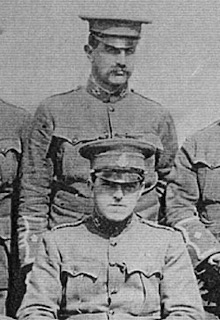
Colonel Robert David Perceval-Maxwell DSO JP DL PC (Ire), British soldier and Ulster Unionist Party politician, dies in Belfast, Northern Ireland, on May 24, 1932. He is a member of the Senate of Northern Ireland and Down County Council.

Perceval-Maxwell is born in 1870, the only son of John Perceval-Maxwell, eldest son of Robert Perceval-Maxwell DL (1813–1905), of Finnebrogue House, Downpatrick, County Down.

Perceval-Maxwell is educated at Eton College. He plays a significant part in the raising of the 36th (Ulster) Division on the outbreak of World War I. He is commissioned Major in the 13th (County Down) Battalion, Royal Irish Rifles, which he had raised, in September 1914, and is appointed second-in-command in December 1914. He is promoted to the temporary rank of Lieutenant-Colonel and commands a battalion from November 1916 and commands a battalion of the Royal Munster Fusiliers from May 1918. He is seriously wounded during the war. He resigns his commission in January 1919.

He is appointed to the Privy Council of Ireland in the honours for the opening of the Parliament of Northern Ireland in July 1921, entitling him to the style “The Right Honourable.” He serves in the Northern Ireland Senate from 1921 to 1925.

In 1895, Perceval-Maxwell marries Edith Grace Head. They have five sons: John Robert Perceval-Maxwell (born 1896), Richard Henry (born 1897, killed in action in 1916), Patrick Edward (born 1900), Brian Stephen (born 1908), and David (born 1911).

Perceval-Maxwell dies at the age of 62 on May 24, 1932, in a Belfast nursing home. He is buried in Inch Parish Churchyard, Downpatrick.


3 Comments

Birth of Frederick Hugh Crawford, Loyalist & British Army Officer

Colonel Frederick Hugh Crawford, CBE, JP, an officer in the British Army, is born in Belfast on August 21, 1861. A staunch Ulster loyalist, he is one of the lesser-known figures in Ulster Unionist history but one who is hugely influential because of his involvement in what is known as the Larne gun-running incident, when he is responsible for smuggling over 25,000 guns and ammunition into the North on the night of April 24, 1914. This makes him a hero for Northern Ireland‘s unionists.

Crawford is born into a “solid Methodist” family of Ulster Scots roots. He attends Methodist College Belfast and University College London (UCL). While Crawford is a determined Ulster loyalist, his great-grandfather was Alexander Crawford, a United Irishman arrested in March 1797 for “high treason,” and sent to Kilmainham Gaol, sharing a cell with prominent United Irishman Henry Joy McCracken.

According to the 1911 census for Ireland, Crawford is living in Marlborough Park, Belfast, with his wife of 15 years, Helen, and four of their five children: Helen Nannie, Marjorie Doreen, Ethel Bethea and Malcolm Adair Alexander. His other child, Stuart Wright Knox, is recorded as a pupil at Ballycloghan National School, Belfast. Stuart would become a lieutenant colonel in the British Army, before being invalided in 1944. Malcolm, after being a member of the Colonial Police, joins the Royal Ulster Constabulary (RUC), advancing to District Inspector. In 1931, Malcolm becomes a Justice of the Peace for Singapore.

Crawford works as an engineer for White Star Line in the 1880s, before returning from Australia in 1892. In 1894, he enlists with the Mid-Ulster Artillery regiment of the British Army, before being transferred to the Donegal Artillery, with which he serves during the Boer Wars, earning himself the rank of major.

In 1898, Crawford is appointed governor of Campbell College, Belfast. Two of his children, Stuart Wright Knox and Malcolm Adair Alexander, both attend Campbell College.

In 1911, Crawford becomes a member of the Ulster Unionist Council. On September 28, 1912, he is in charge of the 2,500 well-dressed stewards and marshals that escort Sir Edward Carson and the Ulster Unionist leadership from the Ulster Hall in central Belfast to the nearby City Hall on Donegall Square for the signing of the Ulster Covenant, which he allegedly signs in his own blood. With the formation of the Ulster Volunteers in 1913, he is made their Director of Ordnance.

During World War I Crawford is an officer commanding the Royal Army Service Corps and is awarded the Royal Humane Society‘s bronze medal for saving life. He also becomes a justice of the peace for Belfast.

With regard to Irish Home Rule, Crawford is strongly partisan and backs armed resistance to it, being contemptuous of those who use political bluffing. His advocation of armed resistance is evident when he remarks, at a meeting of the Ulster Unionist Council, that his heart “rejoiced” when he heard talk of looking into using physical force. At another meeting he even goes as far as asking some attendees to step into another room where he has fixed bayonets, rifles and cartridges laid out.

In 1910, the Ulster Unionist Council plans for the creation of an army to oppose Home Rule and approaches Crawford to act as their agent in securing weapons and ammunition. He tries several times to smuggle arms into Ulster, however, vigilant customs officials seize many of them at the docks. Despite this, the meticulously planned and audacious Larne gun-running of April 1914, devised and carried out by Crawford, is successful in bringing in enough arms to equip the Ulster Volunteer Force.

By the 1920s Crawford remains as stoic in his beliefs, remarking in a letter in 1920 that “I am ashamed to call myself an Irishman. Thank God I am not one. I am an Ulsterman, a very different breed.” In March 1920, he begins to reorganize the UVF and in May 1920 he appeals to Carson and James Craig for official government recognition. He states, “We in Ulster will not be able to hold our men in hand much longer…we will have the Protestants…killing a lot of the well-known Sinn Féin leaders and hanging half a dozen priests.” In 1921, he attempts to create an organisation intended to be a “Detective Reserve,” but called the “Ulster Brotherhood,” the aims of which are to uphold the Protestant religion and political and religious freedom, as well as use all means to “destroy and wipe out the Sinn Féin conspiracy of murder, assassination and outrage.” This organisation only lasts for a few months after failing to gain acceptance from the political authorities.

In 1921, Crawford is included in the Royal Honours List and appointed a CBE. In 1934, he writes his memoirs, titled Guns for Ulster.

Crawford dies on November 5, 1952, and is buried in the City Cemetery, Falls Road, Belfast. Upon news of his death, he is described by the then Prime Minister of Northern Ireland, Sir Basil Brooke, as being “as a fearless fighter in the historic fight to keep Ulster British.”


Leave a comment

Death of Major General William Hickie, Irish-Born British Army Officer

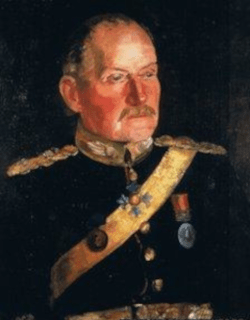
Major General Sir William Bernard Hickie, KCB, Irish-born senior British Army officer and Irish nationalist politician dies in Dublin on November 3, 1950. He sees active service in the Second Boer War from 1899 to 1902, is Assistant Quartermaster General in the Irish Command from 1912 to 1914 and serves in World War I from 1914 to 1918. He commands a brigade of the British Expeditionary Force in 1914 and is commander of the 16th (Irish) Division from 1915 on the Western Front.

Hickie is born on May 21, 1865, at Slevoir, Terryglass, near Borrisokane, County Tipperary, the eldest of the eight children of Colonel James Francis Hickie and his wife Lucila Larios y Tashara, originally of Castile. He is educated at St. Mary’s College, Oscott, Birmingham, England, a renowned seminary for training youths of prosperous Roman Catholic families.

Hickie attends the Royal Military College, Sandhurst, from 1882 to 1885. He is commissioned into his father’s regiment, the Royal Fusiliers at Gibraltar, in 1885 and serves with them for thirteen years in the Mediterranean, Egypt, and India, during which time he is promoted to captain on November 18, 1892. In 1899 he graduates as captain at the Staff College, Camberley, and is selected when the Second Boer War breaks out as a Special Service Officer in which capacity he acts in various positions of authority and command. He leaves Southampton for South Africa on board the SS Canada in early February 1900 and is promoted from captain of mounted infantry to battalion command as major on March 17, 1900. He is subsequently in command of a corps until eventually at the end of 1900 he is given command of an independent column of all arms. He holds this position for eighteen months. He serves with distinction at the Battle of Bothaville in November 1900 and receives the brevet promotion to lieutenant colonel on November 29, 1900. He serves in South Africa throughout the war, which ends with the Treaty of Vereeniging in June 1902. Four months later he leaves Cape Town on the SS Salamis with other officers and men of the 2nd battalion Royal Fusiliers, arriving at Southampton in late October, when the battalion is posted to Aldershot Garrison. In December 1902 he is elected a Fellow of the Royal Geographical Society (FRGS).

After the end of the war in South Africa there follows various staff appointments, the first from December 1902 as deputy-assistant adjutant general for district staff in the Cork district. In 1907 Hickie is back in regimental service in Dublin and Mullingar with the 1st Royal Fusiliers, where he is in command of the regiment for the last two years. From 1909 to 1912 is appointed to the Staff of the 8th Infantry Division in Cork where for four years he is well known in the hunting field and on the polo ground. In May 1912, he is promoted to colonel and becomes Quartermaster General of the Irish Command at Royal Hospital Kilmainham for which he is appointed a Companion of the Order of the Bath.

When war is declared, the Staff of the Irish Command becomes automatically the staff of the II Army Corps and accordingly with the outbreak of World War I in August 1914, Hickie is promoted to brigadier general and, as part of the British Expeditionary Force in France, takes charge of the Adjutant and Quartermaster-General’s Department during the retreat of the II Corps after the Battle of Mons, to Paris, and during the First Battle of the Marne. In mid-September 1914, he relieves one of the brigadiers in the fighting line as commander of the 13th Brigade (5th Infantry Division) and then commands the 53rd Brigade (18th Infantry Division) until December 1915, when he is ordered home to assume command of the 16th (Irish) Division at Blackburn.

Promoted to major general, Hickie takes over from Lieutenant General Sir Lawrence Parsons. It is politically a highly sensitive appointment which requires the professionalism and political awareness he, fortunately, possesses as the division is formed around a core of Irish National Volunteers in response to Edward Carson‘s Ulster Volunteers. He is much more diplomatic and tactful than his predecessors and speaks of the pride which his new command gives him but does not hesitate to make sweeping changes amongst the senior officers of the Irish Division. After putting the division through intensive training, it leaves under Irish command of which each man takes personal pride. It arrives in December 1915.

In the next two years and four months during which Hickie commands the 16th (Irish) Division, it earns a reputation for aggression and élan and wins many memorials and mentions for bravery in the engagements during the 1916 Battle of Guillemont and the capture of Ginchy, both of which form part of the Battle of the Somme, then during the Battle of Messines, the Third Battle of Ypres and in attacks near Bullecourt in the Battle of Cambrai offensive in November 1917.

During this period the Division makes considerable progress in developing its operational techniques but at a price in losses. The growing shortage of Irish replacement recruits, due to nationalist disenchantment with the war and the absence of conscription in Ireland, is successfully met by Hickie by integrating non-Irish soldiers into the division.

In February 1918, Hickie is invalided home on temporary sick leave, but when in the hospital the German spring offensive begins on March 21, with the result that after his division moves under the command of General Hubert Gough it is practically wiped out and ceases to exist as a division. Although promised a new command, this does not happen before the Armistice in November. He typifies the army’s better divisional commanders, is articulate, intelligent and is competent and resourceful during the BEF’s difficult period 1916–17, laying the foundations for its full tactical success in 1918. He is advanced to Knight Commander of the Order of the Bath in 1918.

Hickie retires from the army in 1922, when the six Irish line infantry regiments that have their traditional recruiting grounds in the counties of the new Irish Free State are all disbanded. He identifies himself strongly with the Home Rule Act and says that its scrapping is a disaster and is equally outspoken in condemning the activities of the Black and Tans. In 1925, he is elected as a member of Seanad Éireann, the Irish Free State Senate.

Hickie holds his seat until the Seanad is dissolved in 1936, to be replaced by Seanad Éireann in 1937. He is President of the Area Council (Southern Ireland) of the Royal British Legion from 1925 to 1948. He never marries.

Hickie dies on November 3, 1950, in Dublin and is buried in Terryglass, County Tipperary.


Leave a comment

The Warrenpoint Ambush

The Warrenpoint ambush, also known as the Narrow Water ambush, the Warrenpoint massacre or the Narrow Water massacre, is a guerrilla attack by the Provisional Irish Republican Army (IRA) on August 27, 1979. The IRA’s South Armagh Brigade ambushes a British Army convoy with two large roadside bombs on the A2 road at Narrow Water Castle, just outside Warrenpoint, County Down, Northern Ireland.

The road and castle are on the northern bank of the Newry River, which marks the border between Northern Ireland and the Republic of Ireland. The Republic’s side of the river, the Cooley Peninsula in County Louth, is an ideal spot from which to launch an ambush. It is thickly wooded, which gives cover to the ambushers, and the river border prevents British forces from giving chase.

On the afternoon of August 27, a British Army convoy of one Land Rover and two four-ton lorries carrying soldiers of the 2nd Battalion, Parachute Regiment is driving from Ballykinlar Barracks to Newry. The British Army is aware of the dangers of using the stretch of road along the Newry River and often declares it out of bounds. However, they sometimes use it to avoid setting a pattern. At 4:40 p.m., as the convoy is driving past Narrow Water Castle, an 800-pound fertiliser bomb, hidden among bales of straw on a parked flatbed trailer, is detonated by remote control by IRA members watching from across the border in County Louth. The explosion catches the last lorry in the convoy, hurling it onto its side and instantly killing six paratroopers, whose bodies are scattered across the road. There are only two survivors amongst the soldiers traveling in the lorry, both of whom receive serious injuries. The lorry’s driver, Anthony Wood (19), is one of those killed. All that remains of his body is his pelvis, welded to the seat by the fierce heat of the blast.

According to the soldiers, immediately after the blast they are targeted by rifle fire from the woods on the Cooley Peninsula on the other side of the border, with this view supported by two part-time firefighters assisting the wounded. Shortly afterwards, the two IRA members arrested by the Garda Síochána and suspected of being behind the ambush, are found to have traces of gunsmoke residue on their hands and on the motorbike they are riding. The IRA’s first statement on the incident, however, denies that any shots had been fired at the troops, and according to Royal Ulster Constabulary (RUC) researchers, the soldiers might have mistaken the sound of ammunition cooking off for enemy gunfire. Nevertheless, at the official inquiry the soldiers declare on oath that they had been fired on.

The surviving paratroopers radio for urgent assistance, and reinforcements are dispatched to the scene by road. A rapid reaction unit is sent by Gazelle helicopter, consisting of Lieutenant Colonel David Blair, commanding officer of the Queen’s Own Highlanders, his signaler Lance Corporal Victor MacLeod, and army medics. Another helicopter, a Wessex, lands to pick up the wounded. Colonel Blair assumes command once at the site.

William Hudson, a 29-year-old from London, is killed by the British Army and his cousin Barry Hudson, a 25-year-old native of Dingle, is wounded when shots are fired across the Newry River into the Republic of Ireland about 3 km from the village of Omeath, County Louth.

The pair are partners in ‘Hudson Amusements’ and had been operating their amusements in Omeath for the duration of the Omeath Gala. When the first explosion is heard across the Lough, the pair go down to the shore to see what is unfolding. The pair makes their way to Narrow Water on the southern side of the border to get a better view of what is happening on the northern side. Barry Hudson is shot in the arm and as he falls to the ground he sees his cousin, who is the son of a coachman at Buckingham Palace, fall to the ground, shot in the head. He dies almost immediately.

The IRA had been studying how the British Army behaves after a bombing and correctly predicts that they would set up an incident command point (ICP) at the stone gateway on the other side of the road. At 5:12 p.m., thirty-two minutes after the first explosion, another 800-pound bomb hidden in milk pails explodes at the gateway, destroying it and hurling lumps of granite through the air. It detonates as the Wessex helicopter is taking off carrying wounded soldiers. The helicopter is damaged by the blast but does not crash.

The second explosion kills twelve soldiers, ten from the Parachute Regiment and the two from the Queen’s Own Highlanders. Lieutenant Colonel Blair is the second Lieutenant Colonel to be killed in the Troubles up until then, following Lieutenant Colonel Corden-Lloyd of the 2nd Battalion Royal Green Jackets in 1978. Only one of Colonel Blair’s epaulettes remains to identify him as his body had been vaporised in the blast. The epaulette is taken from the scene by Brigadier David Thorne to a security briefing with Prime Minister Margaret Thatcher to “illustrate the human factor” of the attack. Mike Jackson, then a major in the Parachute Regiment, is at the scene soon after the second explosion and later describes seeing human remains scattered over the road, in the water and hanging from the trees. He is asked to identify the face of his friend, Major Peter Fursman, still recognisable after it had been ripped from his head by the explosion and recovered from the water by divers from the Royal Engineers.

Press photographer Peter Molloy, who arrives at the scene after the first explosion, comes close to being shot by an angry paratrooper who sees him taking photographs of the dead and dying instead of offering to help the wounded. The soldier is tackled by his comrades. Molloy says, “I was shouted at and called all sorts of things, but I understood why. I had trespassed on the worst day of these fellas’ lives and taken pictures of it.”

The Warrenpoint ambush is a victory for the IRA. It is the deadliest attack on the British Army during the Troubles and the Parachute Regiment’s biggest loss since World War II, with sixteen paratroopers killed. General Sir James Glover, Commander of British forces in Northern Ireland, later says it was “arguably the most successful and certainly one of the best planned IRA attacks of the whole campaign.” The ambush happens on the same day that Lord Mountbatten, a prominent member of the British royal family, is killed by an IRA bomb aboard his boat at Mullaghmore, County Sligo, along with three others.

Republicans portray the attack as retaliation for Bloody Sunday in 1972 when the Parachute Regiment shot dead 13 unarmed civilians during a protest march in Derry. Graffiti appears in republican areas declaring “13 gone and not forgotten, we got 18 and Mountbatten.” The day after the Mountbatten and Warrenpoint attacks, the Ulster Volunteer Force (UVF) retaliates by shooting dead a Catholic man, John Patrick Hardy (43), at his home in Belfast‘s New Lodge estate. Hardy is targeted in the mistaken belief that he is an IRA member.

Very shortly after the ambush, IRA volunteers Brendan Burns and Joe Brennan are arrested by the Gardaí. They are stopped while riding a motorbike on a road opposite Narrow Water Castle. They are later released on bail due to lack of evidence. Burns dies in 1988 when a bomb he is handling explodes prematurely. In 1998, former IRA member Eamon Collins claims that Burns had been one of those who carried out the Warrenpoint ambush. No one has ever been criminally charged.

According to Toby Harnden, the attack “drove a wedge” between the Army and the RUC. Lieutenant General Sir Timothy Creasey, General Officer Commanding Northern Ireland, suggests to Margaret Thatcher that internment should be brought back and that liaison with the Gardaí should be left in the hands of the military. Sir Kenneth Newman, the RUC Chief Constable, claims instead that the British Army practice since 1975 of supplying their garrisons in south County Armagh by helicopter gives too much freedom of movement to the IRA. One result is the appointment of Sir Maurice Oldfield to a new position of Co-ordinator of Security Intelligence in Northern Ireland. His role is to co-ordinate intelligence between the military, MI5 and the RUC. Another is the expansion of the RUC by 1,000 members. Tim Pat Coogan asserts that the deaths of the 18 soldiers hastens the move to Ulsterisation.

Lieutenant Colonel Blair is remembered on a memorial at Radley College, Oxfordshire.


Leave a comment

People’s Democracy March Ambush at Burntollet Bridge

On January 4, 1969, during the first stages of the Troubles in Northern Ireland, the civil rights group People’s Democracy is attacked at Burntollet Bridge on the final day of a four-day march from Belfast to Derry by 200 loyalists and off-duty Royal Ulster Constabulary (RUC) officers armed with iron bars, bricks, and bottles.

The People’s Democracy organizes the four-day march from Belfast to Derry, starting on January 1, 1969. The march is to be the acid test of the government’s intentions. Either the government will face up to the extreme right of its own Unionist Party and protect the march from the ‘harassing and hindering,’ or it will be exposed as impotent in the face of sectarian thuggery, and Westminster will be forced to intervene, re-opening the whole Irish question for the first time in 50 years. The march is modelled on the Selma to Montgomery march in Alabama in 1965, which had exposed the racist thuggery of America’s Deep South and forced the United States government into major reforms.

The departure on New Year’s Day 1969 of approximately 40 People’s Democracy supporters on the march to Derry is marked by a protest in Belfast by loyalists under the direction of Major Ronald Bunting, a close associate of Rev. Ian Paisley. It is the loyalist’s intention to harass the march along its entire journey.

On the first day of the march, the group makes its way unhindered towards Antrim. Just outside Antrim the marchers run into a police barricade, behind which several hundred loyalists are gathered, led by Major Bunting. The RUC refuses to remove the blockade and after a lengthy delay, and minor scuffles, the marchers are driven in police tenders to Whitehall Community Centre where they spend an unsettled night interrupted by a bomb threat.

The next day, the marchers set off for Randalstown but again find their way blocked by Major Bunting and a crowd of loyalists. Once again, the RUC refuses to remove the loyalist protesters and the marchers are eventually transported to Toome by car. The marchers are welcomed at Toome and after taking lunch in the village they set out for Maghera. After 30 minutes the march is again halted and then rerouted away from the loyalist village of Knockloughlin. After two miles, loyalist protestors led by Major Bunting again halt the march. Another standoff ensues and, as locals gather to support the marchers, the RUC’s County Inspector Kerr asks the loyalists to stand aside, which they do. The marchers then make their way towards Maghera, where loyalists have gathered to await their arrival. On hearing of this ‘reception’ committee, which is armed with clubs and sticks, the marchers decide to bypass the village and spend the night at Bracaghreilly. That night Maghera witnesses considerable violence from frustrated loyalists.

On January 3, the third day of the march, the marchers set out for Dungiven and encounter little opposition. After lunch in Dungiven they travel on to Feeny. A mile outside Dungiven the marchers are halted by the RUC with reports of a loyalist protest further along the road. A civil rights supporter then arrives along the road that is allegedly blocked and reports no obstructions ahead. The marchers decide to breach police lines and encounter no protest ahead. After reaching Feeny the marchers move on to Claudy, where they receive a friendly reception and settle down for the night. That night a loyalist attack on the hall in which the marchers are staying is repulsed by locals.

The same night in Derry, a rally by Ian Paisley in the Guildhall leads to serious disorder. While those inside the hall are listening to Major Bunting call for loyalists to gather the next day at Burntollet, a crowd of nationalists gather outside the building in protest. During clashes as the rally disperses, Major Bunting’s car is destroyed. Later that night stockpiles of bottles and stones are left by loyalists in the fields at Burntollet.

On the morning of January 4, the marchers, who now number approximately 500, set out on the last league of their journey to Derry. Just before reaching Burntollet District Inspector Harrison stops the march in order to investigate reports of loyalists ahead. Harrison, together with County Inspector Kerr, speak of 50 loyalists ahead and claim to be confident that there is no danger. With the RUC leading the way the marchers advance. In the field overlooking the road the marchers observe approximately 300 loyalists, identified by white armbands and armed with cudgels. They come under a bombardment of missiles. Marchers seek to escape the bombardment by speeding up the road but there is to be no escape as they immediately encounter a second contingent of loyalists blocking their escape.

As many marchers flee into the fields they are pursued by attackers and the RUC makes no attempt to intervene. Others are thrown into the nearby River Faughan. As what is left of the marchers continue on to Derry, they are also attacked twice in Derry’s Waterside before receiving a rousing welcome in Guildhall Square.

That night clashes occur between the RUC and local people and the first “Free Derry” is born. At 2:00 AM members of the RUC attack the Bogside, running amok in the Lecky Road and St. Columbs Wells districts. Windows are broken, residents are assaulted, and sectarian abuse is directed at the people of the Bogside. The reaction to this ‘invasion’ ranges from the painting of the Free Derry legend to the formation of vigilante squads in the area, based at the Foyle Harps Hall in the Brandywell and Rossville Hall in the Bogside. The barricades remain up for a number of days and relations between the community in the Bogside and the RUC, which has never been particularly good, grows steadily worse.

These events, together with the steady increase of conflict between local youths and the RUC as the year progress, is to lay the foundations for the resistance that is to take place during the Battle of the Bogside.

(From: “People’s Democracy march, January 4, 1969” by Jude Collins, http://www.judecollins.com, January 4, 2016)


Leave a comment

Birth of Richard Sankey, Officer in the Madras Engineer Group

Lieutenant-General Sir Richard Hieram Sankey KCB, officer in the Madras Engineer Group in the East India Company‘s army in British India, is born on March 22, 1829, at Rockwell Castle, County Tipperary.

Sankey is the fourth son of Eleanor and Matthew Sankey. His mother is herself from a family of military men, her father being Colonel Henry O’Hara, J.P of O’Hara Broom, County Antrim. His father is a barrister at Bawnmore, County Cork and Modeshil, County Tipperary. He does his schooling at Rev. Flynn’s School on Harcourt Street in Dublin and enters the East India Company’s Addiscombe Military Seminary at Addiscombe, Surrey in 1845. At Addiscombe he is awarded for his excellence at painting.

Sankey is commissioned as a second lieutenant in the Madras Engineer Group in November 1846 and is then trained in military engineering with the Royal Engineers at Chatham, Kent from January 1, 1847, holding temporary rank as an ensign in the British Army. He then arrives in India in November 1848. After two years of service at Mercatur, he officiates in 1850 as Superintending Engineer at Nagpur. During this time, he makes a small collection of fossils of Glossopteris from the Nagpur district and writes a paper on the geology of the region in 1854. The collection is moved from the Museum of Practical Geology to the British Museum in 1880.

In 1856, Sankey is promoted as the Superintendent of the East Coast Canal at Madras. In May 1857, he is promoted Under-Secretary of the Public Works Department under Col. William Erskine Baker in Calcutta. During the Indian Rebellion of 1857, he is commissioned as the Captain of the Calcutta Cavalry Volunteers but is soon despatched to Allahabad where he leads the construction of several embankments and bridges across the Yamuna and Ganges. He is involved in the construction of shelters to advancing troops along the Grand Trunk Road to aid the quelling of the Indian Rebellion of 1857. He arrives in course of this work at Cawnpore (now Kanpur) a day before the Second Battle of Cawnpore. He also is involved in crucial civil works that aid the quelling of the rebellion by bridging the Ghaghara and Gomti rivers at Gorakhpur and Phulpur that enable the Gurkha regiment to cross these rivers.

Sankey receives several commendations from his commanders here and later in the taking of the fort at Jumalpur, Khandua nalla and Qaisar Bagh, vital actions in the breaking of the Siege of Lucknow. For his actions at Jumalpur he is recommended for the Victoria Cross, although he does not receive this honour. He receives a medal for the Indian Rebellion of 1857 and is promoted to second captain on August 27, 1858, and given brevet promotion to major the following day for his services in the quelling of the rebellion. He is sent to the Nilgiris due to ill-health during this time.

Sankey spends a year in Burma as the executive engineer and Superintendent of the jail at Moulmein. On June 29, 1861, he is promoted to substantive captain and is posted as the Garrison Engineer at Fort William, Calcutta and later as the assistant to Chief Engineer, Mysore until 1864, when he is made the Chief Engineer. During this period, he creates a system within the irrigation department to deal with old Indian water catchment systems, surveying the catchment area and determining the area drained and the flows involved. Due to the reorganisation of the armed forces following the assumption of Crown rule in India he is transferred to the Royal Engineers on April 29, 1862.

In 1870, at the request of the Victorian Colonial Government in Australia, in view of his experience with hydrological studies in Mysore, Sankey is invited to be Chairman of the Board of Enquiry on Victorian Water Supply. During this visit, he also gives evidence to the Victorian Select Committee on Railways, as well as reports on the Yarra River Floods, and the Coliban Water Supply, and later contributes to the report on the North West Canal. While in Australia, he is also invited to the colony of South Australia to report on the water supply of Adelaide.

Sankey is appointed as an under-secretary to the Government of India in 1877, which earns him the Afghanistan Medal. In 1878, he is promoted as the Secretary in the public works department at Madras and is promoted substantive colonel on December 30. He is appointed Companion of the Order of the Bath on July 25, 1879, and also commands the Royal Engineers on the advance from Kandahar to Kabul during the Second Anglo-Afghan War. For about five years he is in Madras where he becomes a member of the legislative council in Madras and is elected as a Fellow of the University of Madras. He also helps in the creation and improvements of the Marina, the gardens and the Government House grounds. He is promoted major general on June 4, 1883, and retires from the army on January 11, 1884, with the honorary rank of lieutenant general. He also receives the distinguished service award in India.

After retirement, Sankey returns to Ireland, where he becomes the Chairman of the Board of Works. He is promoted Knight Commander of the Order of the Bath on May 25, 1892, for his work in Ireland. He also undertakes projects in Mexico. Later he settles in London where he dies at St. George’s Hospital on November 11, 1908, and is interred at Hove, East Sussex.

Sankey is memorialised in Phoenix Park, Dublin. A circle of trees bears the name Sankey’s Wood. A plaque dated 1894 lies half-hidden in the undergrowth there.


Leave a comment

Lord Killanin Becomes President of the International Olympic Committee

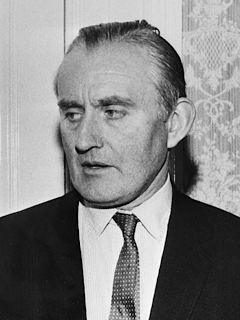
Michael Morris, 3rd Baron Killanin, journalist, author, and sports official, becomes the first Irish president of the International Olympic Committee (IOC) on August 23, 1972.

Morris is born in London on July 30, 1914, the son of Irish Catholic Lt. Col. George Henry Morris who is from Spiddal in County Galway. The Morrises are one of the fourteen families making up the “Tribes of Galway.”

Morris is educated at Summerfields, St. Leonards-on-Sea, Eton College, the Sorbonne in Paris and then Magdalene College, Cambridge, where he is President of the renowned Footlights dramatic club. He succeeds his uncle as Baron Killanin in the Peerage of the United Kingdom in 1927, which allows him to sit in the House of Lords at the Palace of Westminster as Lord Killanin upon turning 21. In the mid-1930s, he begins his career as a journalist on Fleet Street, working for the Daily Express, the Daily Sketch and subsequently the Daily Mail.

In November 1938, Lord Killanin is commissioned into the Queen’s Westminsters, a territorial regiment of the British Army, where he is responsible for recruiting fellow journalists, including future The Daily Telegraph editor Bill Deedes, and friends who are musicians and actors. He reaches the rank of major and takes part in the planning of D-Day and the Invasion of Normandy in 1944, acting as brigade major for the 30th Armoured Brigade, part of the 79th Armoured Division. He is appointed, due to the course of operations, a Member of the Order of the British Empire (MBE). After being demobilised, he goes to Ireland. He resigns his TA commission in 1951.

In 1950, Lord Killanin becomes the head of the Olympic Council of Ireland (OCI) and becomes his country’s representative in the IOC in 1952. He becomes senior vice-president in 1968, and succeeds Avery Brundage, becoming President-elect at the 73rd IOC Session (August 21–24) held in Munich prior to the 1972 Summer Olympics. He takes office soon after the Games.

During Lord Killanin’s presidency, the Olympic movement experiences a difficult period, dealing with the financial flop of the 1976 Summer Olympics in Montreal and the boycotts of the 1980 Summer Olympics in Moscow. Denver, originally selected to host the 1976 Winter Olympics, withdraws and has to be replaced by Innsbruck. The cities of Lake Placid, New York and Los Angeles are chosen for 1980 Winter Olympics and 1984 Summer Olympics by default due to a lack of competing bids. He resigns just before the Moscow Olympics in 1980, and his position is taken over by Juan Antonio Samaranch. He is later unanimously elected Honorary Life President.

Lord Killanin serves as Honorary Consul-General of Monaco in Ireland from 1961 to 1984 and as Chairman of the Race Committee for Galway Racecourse from 1970 to 1985. A keen horse racing enthusiast, he also serves as a steward of the Irish Turf Club on two occasions and on the National Hunt Steeplechase Committee. In his business life Lord Killanin is a director of many companies including Irish Shell, Ulster Bank, Beamish & Crawford and Chubb Ireland. He is a founder member of An Taisce (The National Trust for Ireland) and is chairman of the National Monuments Advisory Council until his death.

Lord Killanin dies at his home in Dublin on April 25, 1999, at the age of 84 and, following a bilingual funeral Mass at St. Enda’s Church in Spiddal, County Galway, he is buried in the family vault in the New Cemetery, Galway.

(Pictured: Lord Killanin by Bert Verhoeff / Anefo (Nationaal Archief) [CC BY-SA 3.0 nl (http://creativecommons.org/licenses/by-sa/3.0/nl/deed.en)%5D, via Wikimedia Commons)