seamus dubhghaill

Promoting Irish Culture and History from Little Rock, Arkansas, USA


Leave a comment

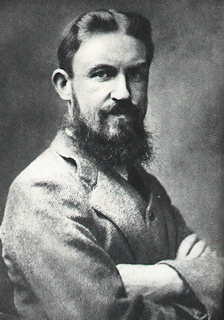
George Bernard Shaw Refuses Nobel Prize Money

On November 18, 1926, George Bernard Shaw refuses to accept the Nobel Prize in Literature prize money of £7,000 awarded to him a year earlier. He says, “I can forgive Alfred Nobel for his invention of the explosive but only the devil can think of the Nobel Prize.”

Shaw is born in Dublin on July 26, 1856, the third child of George Carr Shaw, a civil servant who later turns to a failed grain business to become an alcoholic, and Lucinda Elizabeth Shaw, a professional singer and sister of the famous opera singer Lucinda Frances. He is initially poor but is gifted with music and soon understands and loves the work of famous musicians and learns more about painting in Dublin. At the age of 15, he works as an apprentice and cashier for a real estate firm.

In 1876, Shaw follows his mother and two sisters to London. There he writes music reviews for newspapers to earn money, self-studies and actively participates in social activities. In 1884, he joins the founding of Fabian Society, an organization of British intellectuals advocating transition from capitalism to socialism by way of peace. From 1879 to 1883, he writes his first novel, Immaturity, and five other works that are not printed. An Unsocial Socialist is the first novel to be printed in 1887. Considered the father of “conceptual drama,” he begins writing plays in 1885, but achieves initial fame with Widowers’ Houses (1892). By 1903, his drama takes over the American and German stage, and in 1904 dominates the domestic stage. He becomes even more famous when Edward VII, the King of England, attends the performance of John Bull’s Other Island (1904), after which his drama spreads to European countries.

In addition, Shaw is also considered the best playwright in Britain at the time. He wants to use art to awaken people first to require changing the bourgeoisie order with all its institutions and customs. He emphasizes the educational function of the theater, but seeing the function of education is not an imposition from the playwright but arousing the aesthetic needs of the audience. The harsh problems of contemporary society such as the island’s predominant power, exploitative patterns, and the poverty of the people lead to social evils clearly reflected in his drama. His drama style tends to be satirical, sarcastic, finding its way to truth through paradoxes.

Shaw’s youngest dream is to earn a sum of money, then marry a wealthy wife. However, before becoming so wealthy that he can spend $ 35,000 on charity and enough money to travel around the world, he goes through many years of hardship. In the first nine years of his career, he receives only $30 USD in royalties. He is so poor that he does not even have the toll to get his manuscript to publishers. His clothes are tattered, his shoes open. All of his spending comes from his mother’s allowance. When he gets his name and remembers the miserable days, he often frowns, “I should have supported my family, the results are the opposite. I have never done anything for my family, and my mother has to work, raising me even though I was an adult.” Shaw, however, decides not to give up writing.

Realizing that, Shaw looks at the real royalties by publishing novels and the journey to the desired destination seems far away. He then turns to writing plays. He calculates that if the script is made public, the author will have revenue through the number of tickets issued and the number of shows. At the same time, the name of the author is also quickly known to the public. On the other hand, he says, only theater can “awaken people before the change of modern social order with all its institutions and customs.” He also judges that in addition to entertainment functions, the drama also contains the function of education, through arousing the aesthetic needs of the audience. He does not hesitate to bring to the stage all the most pressing issues of contemporary society such as the money’s inertia, the poverty of the people, and the social evils.

Saint Joan (1923) is judged to be the culmination of Shaw’s writing career. It is performed throughout European stages and is very popular. Two years after the release of Saint Joan, he is awarded the Nobel Prize for “the ideological and highly humanistic compositions, especially the spectacular satirical plays, combined with looks. Strange beauty of poetry.” When notified of his winning of the Nobel Prize, he humorously says, “The Nobel Prize for literature is like a float thrown to a swimmer.” Although he thinks he is the “swimmer to the shore,” he never leaves the pen. Thirteen years after receiving the Nobel Prize, Pygmalion, a script he wrote in 1912, is made into a film and receives the Academy Award for Best Adapted Screenplay.

In terms of scenario remuneration, Shaw receives an average of $100,000 a year, enough to spend on life, “reproduce” writing and traveling. It is only possible to marry a wealthy wife until the age of 40 years old. He always thinks that he “has no marriage status because he always worries others.” In terms of form, he is not very attractive because of his skinny body, but watching as the sisters do not allow him to carry out his intention to preserve his “absolute freedom.” Many beautiful female actors actively proclaim marriage proposal to Shaw, but he always uses humorous sentences to refuse.

Describing the George Bernard Shaw, Albert Einstein‘s physical genius after having met him has to say, “There are rare people who are so independent that they can see the weaknesses and absurdities of contemporaries. and at the same time do not let me get into it, but even so, when I encounter the hardships of life, these lonely people often lose their courage in helping humanity, with subtle humor and gentleness, can enthrall contemporaries and deserve to be torchbearers on the way of art’s unfavorable ways, today, with a passionate affection, I salute celebrate the biggest teacher on that path – the one who taught us and made us all feel happy.” It is a rare meeting of two great people in London in the fall of 1930.

(From: “November 18, 1926 – George Bernard Shaw refuses to receive a Nobel prize,” ScienceInfo.net, updated December 17, 2018)


Leave a comment

Death of Irish Writer Amanda McKittrick Ros

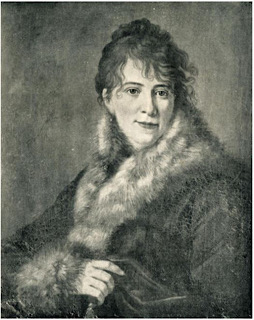
Anna Margaret Ross (née McKittrick), Irish writer known by her pen name Amanda McKittrick Ros, dies on February 2, 1939, at Larne, County Antrim, Northern Ireland. She publishes her first novel, Irene Iddesleigh, at her own expense in 1897. She writes poetry and a number of novels. Her works are not read widely, and her eccentric, over-written, “purple” circumlocutory writing is alleged by some critics to be some of the worst prose and poetry ever written.

Ros is born in Drumaness, County Down, on December 8, 1860, the fourth child of Eliza Black and Edward Amlave McKittrick, Principal of Drumaness High School. She is christened Anna Margaret at Third Ballynahinch Presbyterian Church on January 27, 1861. In the 1880s she attends Marlborough Teacher Training College in Dublin, is appointed Monitor at Millbrook National School, Larne, County Antrim, finishes her training at Marlborough and then becomes a qualified teacher at the same school.

During Ros’s first visit to Larne, she meets Andrew Ross, a widower of 35, who is station master there. She marries him at Joymount Presbyterian Church, Carrickfergus, County Antrim, on August 30, 1887.

Ros writes under the pen name Amanda McKittrick Ros, possibly in an attempt to suggest a connection to the noble de Ros family of County Down. She is strongly influenced by the novelist Marie Corelli. She writes, “My chief object of writing is and always has been, to write, if possible, in a strain all my own. This I find is why my writings are so much sought after.” She imagines “the million and one who thirst for aught that drops from my pen,” and predicts that she will “be talked about at the end of a thousand years.”

Ros’s “admirers” include Aldous Huxley, Siegfried Sassoon, C. S. Lewis and Mark Twain. The publication of her novel Irene Iddesleigh is financed by her husband in 1897 as a gift to her on their tenth wedding anniversary. Twain considers the novel “one of the greatest unintentionally humorous novels of all time.” A reader sends a copy of the novel to humorist Barry Pain, who in an 1898 review calls it “a thing that happens once in a million years,” and sarcastically terms it “the book of the century.” He reports that he is initially entertained, but soon “shrank before it in tears and terror.” Ros retorts in her preface to Delina Delaney by branding Pain a “clay crab of corruption,” suggesting that he is so hostile only because he is secretly in love with her. But Ros claims to make enough money from her second novel, Delina Delaney, to build a house, which she names Iddesleigh.

In Ros’s last novel, Helen Huddleson, all the characters are named after various fruits: Lord Raspberry, Cherry Raspberry, Sir Peter Plum, Christopher Currant, the Earl of Grape, Madame Pear. Of Pear, Ros writes, “she had a swell staff of sweet-faced helpers swathed in stratagem, whose members and garments glowed with the lust of the loose, sparkled with the tears of the tortured, shone with the sunlight of bribery, dangled with the diamonds of distrust, slashed with sapphires of scandals…”

Ros believes that her critics lack sufficient intellect to appreciate her talent and is convinced that they conspire against her for revealing the corruption of society’s ruling classes, thereby disturbing “the bowels of millions.”

Andrew Ross dies in 1917, and Ros marries Thomas Rodgers, a County Down farmer, in 1922.

Ros dies at the Royal Victoria Hospital in Belfast on February 2, 1939, under the name Hannah Margaret Rodgers.

Belfast Public Libraries have a large collection of manuscripts, typescripts and first editions of Ros’s work. Manuscript copies include Irene Iddesleigh, Sir Benjamin Bunn and Six Months in Hell. Typescript versions of all the above are held together with Rector Rose, St. Scandal Bags and The Murdered Heiress among others. The collection of first editions covers all her major works including volumes of her poetry, Fumes of Formation and Poems of Puncture, together with lesser-known pieces such as Kaiser Bill and Donald Dudley: The Bastard Critic. The collection includes hundreds of letters addressed to Ros, many with her own comments in the margins. Also included are typed copies of her letters to newspapers, correspondence with her admiring publisher T. S. Mercer, an album of newspaper cuttings and photographs, and a script for a BBC broadcast from July 1943.

A few enthusiasts have kept Ros’s legend alive. A biography, O Rare Amanda!, is published in 1954. A collection of her most memorable passages is published in 1988 under the title Thine in Storm and Calm. In 2007 her life and works are fêted at a Belfast literary festival.

Denis Johnston, the Irish playwright, writes a radio play entitled Amanda McKittrick Ros which is broadcast on BBC Home Service radio on July 27, 1943, and subsequently. The play is published in The Dramatic Works of Denis Johnston vol. 3. He acquires a collection of papers from Ros including the unfinished typescript of Helen Huddleson. These can now be seen as part of the Denis Johnston collection in the library of the Ulster University at Coleraine, Northern Ireland.


Leave a comment

Original “Ulysses” Manuscript Goes on Display in Dublin

CREATOR: gd-jpeg v1.0 (using IJG JPEG v80), quality = 82

The original manuscript of James Joyce‘s Ulysses arrives in its “spiritual home” for the first time on June 13, 2000 when it goes on display at the Chester Beatty Library on the grounds of Dublin Castle in Dublin, the city that inspired the novel.

Spidery sentences penned on yellowing paper and littered with scribbled alterations make up the first draft of what many scholars consider to be the most influential work of fiction of the 20th century. It is the centerpiece of a Joyce exhibition at the Chester Beatty library which runs through the end of September 2000.

Derick Dreher, director of the Rosenbach Museum and Library in Philadelphia, Pennsylvania, where the manuscript has been kept since 1924, says it marks the homecoming of a work which is “quintessentially Irish.” He adds, “People are amazed that it has never been here before. The novel captures the essence of Dublin and yet was composed entirely on foreign soil and then sold in America.”

Dreher says that Joyce’s handwriting is so bad it is hard to make out what is written on many of the pages. Joyce left Dublin with servant girl, Nora Barnacle, in 1904 and writes Ulysses in Trieste, Zürich and Paris between 1914 and 1921. Ultimately, he marries Barnacle in 1931.

The novel traces the wanderings of a young writer, Stephen Dedalus, and advertisement canvasser, Leopold Bloom, on June 16, 1904, the day on which Joyce first goes out with Barnacle. He sells the manuscript to New York City lawyer and art patron, John Quinn, for $12,000 before its publication in 1921.


Leave a comment

Birth of Charles O’Conor, Writer & Antiquarian

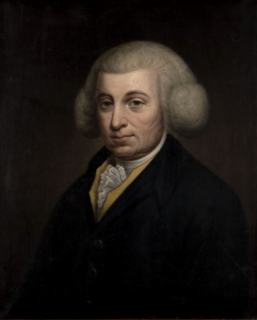
charles-o-conor-of-belanagareCharles O’Conor, Irish writer and antiquarian who is enormously influential as a protagonist for the preservation of Irish culture and history in the eighteenth century, is born on January 1, 1710 in Killintrany, County Sligo. He combines an encyclopaedic knowledge of Irish manuscripts and Gaelic culture in demolishing many specious theories and suppositions concerning Irish history.

O’Conor is born into a cadet branch of the land-owning family of O’Conor Don and is sent for his education to Father Walter Skelton’s school in Dublin. He grows up in an environment that celebrates Gaelic culture and heritage. He begins collecting and studying ancient manuscripts at an early age.

His marriage brings him financial stability so that he can devote himself to his writing, but he is widowed in 1750, within a year of his father’s death. When his eldest son Denis marries in 1760, he gives up the residence at Bellanagare to him and moves into a small cottage that he had built on the estate. He devotes the remainder of his life to the collection and study of Irish manuscripts, to the publication of dissertations, and especially to the cause of Irish and Catholic emancipation.

O’Conor is well known in Ireland from his youth as a civil-tongued, but adamant, advocate of Gaelic culture and history. He garners fame outside Ireland through his Dissertations on the ancient history of Ireland (1753), which is generally well received. When Samuel Johnson is made aware of it, he is moved to write a letter to O’Conor in 1755, complimenting the book, complimenting the Irish people, and urging O’Conor to write on the topic of Celtic languages.

The book is less well received in some Scottish circles, where there exists a movement to write Celtic history based upon Scottish origins. When James Macpherson publishes a spurious story in 1761 about having found an ancient Gaelic (and Scottish) cycle of poems by a certain “Ossian“, among the critics who rejects it as false is O’Conor, as an inclusion in the 1766 rewrite of his 1753 work. While the issue was laid to public rest by others, notably Samuel Johnson, the issue is laid to intellectual rest by O’Conor in 1775, with the publication of his Dissertation on the origin and antiquities of the antient Scots. The fact that the issue occurs provides O’Conor the opportunity to establish Ireland as the source of Gaelic culture in the minds of the non-Irish general public.

O’Conor’s later life is that of the respected dean of Irish historians. He continues to write as always in favour of ideas that he favours and are consistent with the historical record, and against any and all ideas that are inconsistent with the historical record, including those of other Irish historians. Such is his esteemed reputation that even those whom he challenges would include his challenges in the next edition of their own books. He continues to collect, study, and annotate Irish manuscripts. Upon his death in Bellanagare, County Roscommon on July 1, 1791, his collection becomes the first part of the Annals of the Four Masters at the Stowe Library. In 1883 these are returned to the Royal Irish Academy library.

His unfinished History of Ireland, that Johnson had encouraged in 1777, is destroyed on his instructions at his death.


Leave a comment

Death of Philologist Eugene O’Curry

eugene-ocurry

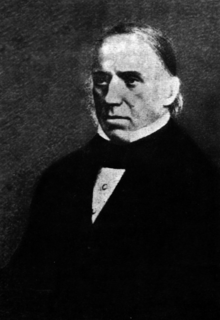
Eugene O’Curry, philologist and antiquary, dies of a heart attack in Dublin on July 30, 1862.

O’Curry is born at Doonaha, near Carrigaholt, County Clare, the son of Eoghan Ó Comhraí, a farmer, and his wife Cáit. Eoghan has spent some time as a traveling peddler and has developed an interest in Irish folklore and music. Unusual for someone of his background, he is literate and is known to possess a number of Irish manuscripts. It is likely that Eoghan is primarily responsible for his son’s education.

Having spent some years working on his father’s farm and as a school teacher, O’Curry moves to Limerick in 1824 and spends seven years working there at a psychiatric hospital. He marries Anne Broughton, daughter of John Broughton of Killaderry near Broadford, County Limerick on October 3, 1824. He is a supporter of Catholic emancipation and in 1828 writes a poem congratulating Daniel O’Connell on his election as an MP.

During this period O’Curry is establishing a reputation for his knowledge of the Irish language and Irish history, and, by 1834, is in correspondence with the antiquary John O’Donovan. He is employed, from 1835 to 1842, on O’Donovan’s recommendation, in the topographical and historical section of Ordnance Survey Ireland. O’Donovan goes on to marry O’Curry’s sister-in-law, Mary Anne Broughton, in 1840. O’Curry spends much of the remainder of his life in Dublin and earns his living by translating and copying Irish manuscripts. The catalogue of Irish manuscripts in the British Museum (1849) is compiled by him for a fee of £100. He is responsible for the transcripts of Irish manuscripts from which O’Donovan edits the Annals of the Four Masters between 1848 and 1851.

In 1851 O’Curry is elected a member of the Royal Irish Academy and, on the founding of the Catholic University of Ireland in 1854, he is appointed professor of Irish history and archaeology. He works with George Petrie on the Ancient Music of Ireland (1855). In 1852, he and O’Donovan propose the Dictionary of the Irish Language, which is eventually begun by the Royal Irish Academy in 1913 and finally completed in 1976.

O’Curry’s lectures are published by the university in 1860, and give a better knowledge of Irish medieval literature than can be obtained from any other one source. Three other volumes of lectures are published posthumously, under the title On the Manners and Customs of the Ancient Irish (1873). His voluminous transcripts, notably eight huge volumes of early Irish law, testify to his unremitting industry. The Celtic Society, of the council of which he is a member, publishes two of his translations of medieval tales.

Eugene O’Curry dies of a heart attack at his home in Dublin on July 30, 1862, and is survived by two sons and two daughters. He is buried at Glasnevin Cemetery in Dublin. O’Curry Road in the Tenters area of Dublin 8 is named in his honour.