seamus dubhghaill

Promoting Irish Culture and History from Little Rock, Arkansas, USA


Leave a comment

Death of Captain William O’Shea

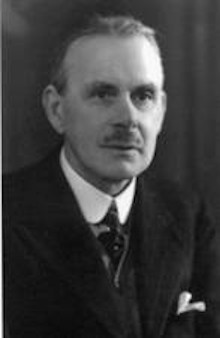
william-o-sheaCaptain William Henry O’Shea, Irish soldier and Member of Parliament (MP), dies in Hove on the south coast of England on April 22, 1905. He is best known for being the ex-husband of Katharine O’Shea, the long-time mistress of the Irish nationalist leader Charles Stewart Parnell.

Born in Dublin in 1840, O’Shea is a captain in the 18th Royal Hussars of the British Army.

Around 1880, O’Shea’s wife, Katharine O’Shea, enters into a relationship with the Irish nationalist leader Charles Stewart Parnell, with whom she has three children. O’Shea, who is already separated from his wife, is aware of the relationship.

In 1882 when the Liberal Government is secretly negotiating with Parnell for the terms of his release from Kilmainham Gaol where he is being held on suspicion of “treasonable practices”, the President of the Board of Trade Joseph Chamberlain chooses O’Shea as its intermediary, unaware of Parnell’s affair with Mrs. O’Shea or of the fact that the newly born first child of their liaison is dying. O’Shea spends six hours negotiating with Parnell in the prison, extracting the surprising concession that Parnell would tacitly support the Government after his release. It has been suggested that O’Shea won this concession, which reflected well on him, by threatening Parnell with public exposure of his affair with Mrs O’Shea.

In 1886, following insinuations of the Parnell affair and O’Shea’s complicity in it appearing in The Pall Mall Gazette, O’Shea abstains from voting on the Irish Home Rule bill and resigns his parliamentary seat the following day. However, he only files for divorce in 1890 after his wife’s aunt, from whom he is expecting a large inheritance, dies in 1889 leaving her estate in trust for his wife, thus allegedly violating the terms of O’Shea’s marriage contract. However, that will is overturned upon appeal, and the aunt’s legacy is shared among Katharine O’Shea’s siblings.

After the divorce the two surviving children of Parnell and Katharine O’Shea are given into Captain O’Shea’s custody.

O’Shea is MP for Clare from 1880 to 1885 and Galway Borough for a short period in 1886. Although supported by Parnell, he is never a member of the Irish Parliamentary Party.


Leave a comment

Terence O’Neill Becomes Fourth Prime Minister of Northern Ireland

File source: http://en.wikipedia.org/wiki/File:Captain_Terence_O%27Neill.jpg

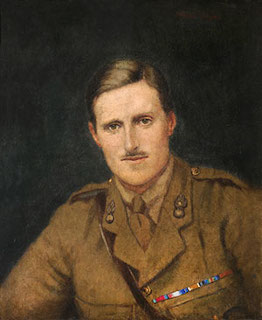
Terence O’Neill becomes the fourth Prime Minister of Northern Ireland on March 25, 1963, following the resignation of Basil Brooke, 1st Viscount Brookeborough. He plays a significant role in the first year of the Troubles, trying unsuccessfully to stem growing sectarian violence.

O’Neill is born on September 10, 1914, at 29 Ennismore Gardens, Hyde Park, London, the son of Captain Arthur O’Neill of Shane’s Castle, Randalstown, the first member of parliament (MP) to be killed in action in World War I five months later. He is educated in the English public school system at West Downs SchoolWinchester and Eton College, spending his summer holidays at the family estate in Ulster. He is later commissioned in the British Army, rising to the rank of captain and serving with the Irish Guards in World War II. He is wounded in 1944 and opts to resettle permanently in Northern Ireland.

In 1946, O’Neill is elected to the Parliament of Northern Ireland, representing the Unionist stronghold of Bannside. He remains in the parliament at Stormont for almost 25 years. He becomes Northern Ireland’s Minister of Home Affairs in April 1956, Minister of Finance in September 1956 and Prime Minister in March 1963.

As Prime Minister, O’Neill introduces economic reforms to stimulate industrial growth and employment, with mixed results. He also tries narrowing the divide between Protestants and Catholics. He does this with important gestures, like visiting Catholic schools and expressing condolences on the death of Pope John XXIII.

O’Neill also seeks better relations with the Republic of Ireland, and in January 1965 invites Taoiseach Seán Lemass to Belfast. Catholics and moderate Unionists welcome this reconciliation but many conservative Loyalists, like Ian Paisley, condemn it as treachery.

When the civil rights movement erupts in the late 1960s, O’Neill offers a package of reforms and concessions, including changes to the allocation of housing. These proposals, however, anger staunch Unionists and fail to satisfy many Republicans.

In December 1969, O’Neill appears on Northern Ireland television and makes an impassioned plea for unity, warning that “Ulster stands at the crossroads.” His government is reelected in February 1969, though O’Neill himself is almost voted out of his own seat.

With the situation worsening, O’Neill is further embarrassed by Loyalist attempts to sabotage Belfast’s water supply. Fast losing the confidence of his own party, he resigns the prime ministership in April 1969. He remains in the parliament until January 1970.

O’Neill is made Baron O’Neill of the Maine and spends the last decade of his life in Britain’s House of Lords. He dies of cancer on June 12, 1990.


Leave a comment

Birth of Irish Nationalist Bobby Sands

Robert Gerard Sands, commonly known as Bobby Sands, Irish nationalist and member of the Provisional Irish Republican Army, is born on March 9, 1954, at Abbots Cross, NewtownabbeyCounty Antrim, outside Belfast.

Sands is the oldest of four children born to John and Rosaleen Sands, and the couple’s first son. Sands grows up in Belfast under the cloud of nationalist and loyalist divisions. At an early age, Sands’s life is affected by the sharp divisions that shape Northern Ireland. At the age of ten, he is forced to move with his family out of their neighborhood due to repeated intimidation by loyalists.

“I was only a working-class boy from a Nationalist ghetto,” Sands later writes about his childhood. “But it is repression that creates the revolutionary spirit of freedom.” Loyalist intimidation proves to be a theme throughout Sands’ life. At the age of 18, he is forced out of his job as an apprentice car builder. Not long afterwards, he and his family have to move again, as a result of political trouble.

The steady number of conflicts pushes Sands to join the republican movement in 1972. His ties to the movement soon capture the attention of the authorities, and later that year, he is arrested and charged with possessing firearms in his house. He spends the next three years of his life in prison. Upon his release, Sands immediately returns to the Republican Movement. He signs on as a community activist in Belfast’s rough Twinbrook area, quickly becoming a popular go-to person for a range of issues affecting the neighborhood.

In late 1976, authorities arrest Sands again, this time in connection with the bombing of Balmoral Furniture Company and an ensuing gun battle. After weathering a brutal interrogation and then a court proceeding that offers up questionable evidence connecting Sands and three others to the attack, a judge sentences Sands to 14 years in prison at the Long Kesh Detention Centre, a facility used to house Republican prisoners from 1971 until 2000, located just outside of Belfast.

As a prisoner, Sands’s stature only grows. He pushes hard for prison reforms, confronting authorities, and for his outspoken ways he is frequently given solitary confinement sentences. Sands contention is that he and others like him, who are serving prison sentences, are actually prisoners of war, not criminals as the British government insists.

Beginning on March 1, 1981, Sands leads nine other Republican prisoners in the H-Block section of the Maze prison on a hunger strike that lasts until death. Their demands range from allowing prisoners to wear their own clothes to permitting visits and mail, all of which are central in improving the inmates’ way of life.

Unable to move authorities to give in to his requests, and unwilling himself to end his hunger strike, Sands’s health begins to deteriorate. During the first seventeen days of the strike alone, he loses 16 pounds. A hero among his fellow nationalists, Sands is elected as a Member of Parliament (MP) for Fermanagh and South Tyrone while in prison. Sands becomes the youngest MP at the time. However, he dies less than one month later without ever having taken his seat in the House of Commons.

Only days after slipping into a coma, on the morning of May 5, 1981, Sands dies from malnutrition due to starvation. He is 27 years old and has refused to eat for 66 days. He becomes so fragile over his final weeks that he spends his final days on a waterbed to protect his deteriorating and fragile body. At time of his death, Sands is married to Geraldine Noade, with whom he has one son, Gerard.

The announcement of Sands’s death prompts several days of rioting in nationalist areas of Northern Ireland. Over 100,000 people line the route of Sands’s funeral. He is buried in the ‘New Republican Plot’ alongside 76 others. Their graves are maintained by the National Graves Association, Belfast.

While loyalists dismiss Sands’s death, others are quick to recognize its significance. Over the next seven months, nine other IRA supporters die on hunger strike. Eventually, the British government gives proper political recognition to the prisoners, many of them earning their release under the 1998 Good Friday Agreement.

Bobby Sands’ final days are depicted in the 2008 Steve McQueen film Hunger, with actor Michael Fassbender portraying Sands.


2 Comments

Imprisonment of Fenian Charles Kickham

charles-kickham

Sentenced to fourteen years hard labour for treason, Irish nationalist and Fenian Charles Kickham is incarcerated in Pentonville Prison on February 10, 1865. He is released in 1869, partly due to ill health. He is a contributor to The Irish People and the organiser of the Fenian movement and the Irish Republican Brotherhood (IRB), which the English authorities deem seditious. He also authors a number of novels including the critically acclaimed Knocknagow (1873).

The revolutionary movement which comes to be known as Fenianism is unlike that of 1848 in the character of its leaders. The older political agitation is associated with a brilliant outburst of intellectual effort. The majority of the leaders have left behind high intellectual heritage, or asserted under other skies, and in more favourable circumstances, their possession of great intellectual powers. The Fenian movement, on the other hand, is poor in its literary products. Few of its leading spirits reach to any lofty position since its collapse. The best part of Fenian literature is found in The Irish People, the journalistic organ of the association. Along with Kickham, the chief contributors to the journal are Thomas Clarke Luby and John O’Leary.

Kickham is born at Mullenahone, County Tipperary on May 9, 1828. At the age of thirteen he meets with an accident that deprives him of his hearing. He probably owes the many fine productions of his pen to this accident. At around 18 years of age, he begins to contribute poems and tales to Irish journals and magazines and when The Irish People is started, he becomes one of its chief lead writers. As a result of his involvement in the Fenian movement, he draws the attention of the government and is tried, convicted and sentenced to fourteen years of penal servitude. His comment at the conclusion of the trial is terse: “I have endeavoured to serve Ireland, and now I am prepared to suffer for Ireland.” Four years after his conviction he is released.

Kickham publishes two complete stories, Sally Cavanagh, or The Untenanted Graves, and Knocknagow, or The Homes of Tipperary. These stories have been read wherever there is an Irish home and have made sad or joyous thousands of Irish hearts. They have also found approval in the columns of English and not friendly journals, which have found themselves able to meet him in friendliness on the impartial ground of literature. His books deserve their popularity with the peasant and the approval of the critic. His pictures of life, especially of peasant life, are wonderfully true to nature, full of keen observation, humour, and fidelity. In his attention to minute details and homely incident he resembles in a great degree the style of Erckmann-Chatrian.

Kickham’s ballads are equally popular and are just what ballads for the people should be – simple in language, direct in purpose, and in an easy and common measure. A collected edition of his works is published by Duffy & Son of Dublin.

Charles Kickham dies at the age of 54 on August 22, 1882, at the house of James O’Connor, a former member of the IRB and afterwards MP for Wicklow, 2 Montpelier Place, Blackrock, Dublin, where he had been living for many years and had been cared for by the poet Rose Kavanagh. He is buried in Mullinahone, County Tipperary.

(From: The Cabinet of Irish Literature, Volume 4, edited by T. P. O’Connor)


Leave a comment

Birth of Tomás Mac Giolla, Irish Workers’ Party Politician

tomas-mac-giolla

Tomás Mac Giolla, Workers’ Party of Ireland politician who serves as Lord Mayor of Dublin from 1993 to 1994, leader of the Workers’ Party from 1962 to 1988 and leader of Sinn Féin from 1962 to 1970, is born Thomas Gill in Nenagh, County Tipperary on January 25, 1924. He serves as a Teachta Dála (TD) for the Dublin West constituency from 1982 to 1992.

Mac Giolla’s uncle T. P. Gill is a Member of Parliament (MP) and member of the Irish Parliamentary Party (IPP) of Charles Stewart Parnell. His father, Robert Paul Gill, an engineer and architect, also stands unsuccessfully for election on a number of occasions. His mother is Mary Hourigan.

Mac Giolla is educated at the local national school in Nenagh before completing his secondary education at St. Flannan’s College in Ennis, County Clare. It is while at St. Flannan’s that he changes to using the Irish language version of his name. He wins a scholarship to University College Dublin where he qualifies with a Bachelor of Arts degree, followed by a degree in Commerce.

A qualified accountant, Mac Giolla is employed by the Irish Electricity Supply Board (ESB) from 1947 until he goes into full-time politics in 1977.

In his early life Mac Giolla is an active republican. He joins Sinn Féin and the Irish Republican Army (IRA) around 1950. He is interned by the Government of Ireland during the 1956–1962 IRA border campaign. He also serves a number of prison sentences in Mountjoy Prison in Dublin.

At the 1961 Irish general election, Mac Giolla unsuccessfully contests the Tipperary North constituency for Sinn Féin. In 1962, he becomes President of Sinn Féin and is one of the people who moves the party to the left during the 1960s. In 1969, Sinn Féin splits, and he remains leader of Official Sinn Féin. It is also in 1962 that he marries May McLoughlin who is also an active member of Sinn Féin as well as Cumann na mBan, the women’s section of the IRA. In 1977, the party changes its name to Sinn Féin the Workers Party and in 1982 it becomes simply the Workers’ Party.

Mac Giolla is elected to Dublin City Council representing the Ballyfermot local electoral area in 1979 and at every subsequent local election until he retires from the council in 1997. In the November 1982 Irish general election, he is elected to Dáil Éireann for his party. In 1988, he steps down as party leader and is succeeded by Proinsias De Rossa. He serves as Lord Mayor of Dublin from 1993 to 1994 and remains a member of Dublin Corporation until 1998.

While president Mac Giolla is regarded as a mediator between the Marxist-Leninist wing headed by Sean Garland and the social democratic wing of Prionsias De Rossa. At the 1992 special Ardfheis he votes for the motion to abandon democratic centralism and to re-constitute the party much as the Italian Communist Party became the Democratic Party of the Left. However, the motion fails to reach the required two-thirds majority. Following the departure of six Workers’ Party TDs led by De Rossa to form the new Democratic Left party in 1992, Mac Giolla is the sole member of the Workers’ Party in the Dáil. He loses his Dáil seat at the 1992 Irish general election by a margin of just 59 votes to Liam Lawlor of Fianna Fáil.

In 1999, Mac Giolla writes to the chairman of the Flood Tribunal calling for an investigation into revelations that former Dublin Assistant City and County Manager George Redmond had been the official supervisor at the election count in Dublin West and was a close associate of Liam Lawlor. In 2003, Redmond is convicted of corruption by a Dublin court but subsequently has his conviction quashed due to conflicting evidence.

In his eighties Mac Giolla continues to be active and is a member of the group which campaigns to prevent the demolition of No. 16 Moore Street in Dublin city centre, where the surrender after the Easter Rising was completed. He also serves on the Dublin ’98 committee to commemorate the 200th anniversary of the Irish Rebellion of 1798.

Tomás Mac Giolla dies in Beaumont Hospital in Beaumont, Dublin on February 4, 2010, after a long illness.


Leave a comment

John Hely-Hutchinson Created Baron Hutchinson of Alexandria & Knocklofty

Generated by IIPImage

General John Hely-Hutchinson, Jr., Member of Parliament (MP) for Cork Borough, is created Baron Hutchinson of Alexandria and Knocklofty on December 18, 1801, for his military service.

Hely-Hutchinson is born on May 15, 1757, the son of John Hely-Hutchinson and the Christiana Hely-Hutchinson, 1st Baroness Donoughmore. He is educated at Eton College, Magdalen College, Oxford, and Trinity College, Dublin.

Hely-Hutchinson enters the Army as a cornet in the 18th Royal Hussars in 1774, rising to a lieutenant the following year. In 1776 he is promoted to become a captain in the 67th (South Hampshire) Regiment of Foot, and a major there in 1781. He moves regiments again in 1783, becoming a lieutenant-colonel in, and colonel-commandant of, the 77th Regiment of Foot, which is, however, disbanded shortly afterwards following an earlier mutiny. He spends the next 11 years on half-pay, studying military tactics in France before serving as a volunteer in the Flanders campaigns of 1793 as aide-de-camp to Sir Ralph Abercromby.

In March 1794 Hely-Hutchinson obtains brevet promotion to colonel and the colonelcy of the old 94th Regiment of Foot and then becomes a major-general in May 1796, serving in Ireland during the Irish Rebellion of 1798, where he is second-in-command at the Battle of Castlebar under General Gerard Lake. In 1799, he is in the expedition to the Netherlands.

Hely-Hutchinson is second-in-command of the 1801 expedition to Egypt, under Abercromby. Following Abercromby’s death in March after being wounded at the Battle of Alexandria, he takes command of the force. From then he is able to besiege the French firstly at Cairo which capitulates in June and then besieges and takes Alexandria, culminating in the capitulation of over 22,000 French soldiers. In reward for his successes there, the Ottoman Sultan Selim III makes him a Knight, 1st Class, of the Order of the Crescent.

On December 18, 1801, Hely-Hutchinson is created Baron Hutchinson in the Peerage of the United Kingdom, gaining a seat in the House of Lords. In recognition of his “eminent services” during the “late glorious and successful campaign in Egypt,” at the request of the King, the Parliament of the United Kingdom settles on Lord Hutchinson and the next two succeeding male heirs of his body an annuity of £2000 per annum, paid out of the Consolidated Fund.

Hely-Hutchinson is promoted lieutenant-general in September 1803 and made a full general in June 1813. In 1806, he becomes colonel of the 57th (West Middlesex) Regiment of Foot, transferring in 1811 to be colonel of the 18th Regiment of Foot, a position he holds until his death. He also holds the position of Governor of Stirling Castle from 1806 until his death.

Hely-Hutchinson sits as Member of Parliament (MP) for Lanesborough from 1776 to 1783 and for Taghmon from 1789 to 1790. Subsequently, he represents Cork City in the Irish House of Commons until the Act of Union 1800 and is then member for Cork City in the after-Union Parliament of the United Kingdom until 1802.

Hely-Hutchinson dies on June 29, 1832, never having married.


Leave a comment

Birth of Henry Harrison, Politician & Writer

henry-harrison

Captain Henry Harrison, nationalist politician and writer, is born in Holywood, County Down on December 17, 1867.

A Protestant nationalist, Harrison is the son of Henry Harrison and Letitia Tennent, the daughter of Robert James Tennent, who had been Liberal Party MP for Belfast from 1847 to 1852. Later, when widowed, she marries the author Hartley Withers.

Harrison goes to Westminster School and then to Balliol College, Oxford. While there he develops an admiration for Charles Stewart Parnell and becomes secretary of the Oxford University Home Rule League. At this time, the Land War is in progress and in 1889 he goes to Ireland to visit the scene of the evictions in Gweedore, County Donegal. He becomes involved in physical confrontations with the Royal Irish Constabulary and as a result becomes a Nationalist celebrity overnight. The following May, Parnell offers the vacant parliamentary seat of Mid Tipperary to Harrison, who leaves Oxford at age 22, to take it up, unopposed.

Only six months later, following the divorce case involving Katharine O’Shea, the Irish Parliamentary Party splits over Parnell’s leadership. Harrison strongly supports Parnell, acts as his bodyguard and aide-de-camp, and after Parnell’s death devotes himself to the service of his widow Katharine. From her he hears a completely different version of the events surrounding the divorce case from that which had appeared in the press, and this is to form the seed of his later books.

At the 1892 United Kingdom general election in Ireland, Harrison does not defend Mid-Tipperary. He stands at West Limerick as a Parnellite instead but comes nowhere near winning the seat. In the 1895 United Kingdom general election in Ireland, he stands at North Sligo, polling better but again far short of winning. In 1895 he marries Maie Byrne, an American, with whom he has a son. He comes to prominence briefly again in 1903 when, in spite of his lack of legal training, he successfully conducts his own case in a court action all the way to the House of Lords.

Otherwise, however, Harrison disappears from public view until his war service with the Royal Irish Regiment when he serves on the Western Front with distinction in the New British Army formed for World War I, reaching the rank of Captain and being awarded the Military Cross (MC). He organises patrols in “No Man’s Land” so successfully that he is appointed special patrol officer to the 16th (Irish) Division. He is invalided out and becomes a recruiting officer in Ireland. He is appointed an Officer of the Order of the British Empire in the 1919 New Year Honours.

Harrison then makes a return to Irish politics, working with Sir Horace Plunkett as Secretary of the Irish Dominion League, an organisation campaigning for dominion status for Ireland within the British Empire. He is a lifelong opponent of Irish partition. He is Irish correspondent of The Economist from 1922 to 1927 and owner-editor of Irish Truth from 1924 to 1927.

Harrison’s two books defending Parnell are published in 1931 and 1938. They have had a major impact on Irish historiography, leading to a more favourable view of Parnell’s role in the O’Shea affair. F. S. L. Lyons comments that he “did more than anyone else to uncover what seems to have been the true facts” about the Parnell-O’Shea liaison. The second book, Parnell, Joseph Chamberlain and Mr Garvin, is written in response to J. L. Garvin‘s biography of Joseph Chamberlain, which had ignored his first book, Parnell Vindicated: The Lifting of the Veil. Later, he successfully repulses an attempt in the official history of The Times to rehabilitate that newspaper’s role in using forged letters to attack Parnell in the late 1880s. In 1952 he forces The Times to publish a four-page correction written by him as an appendix to the fourth volume of the history.

During the difficult years of the Anglo-Irish Trade War over the land purchase annuities, declaration of the Republic, Irish neutrality during World War II, and departure from the Commonwealth, Harrison works to promote good relations between Britain and Ireland. He publishes various books and pamphlets on the issues in dispute and writes numerous letters to The Times. He also founds, with General Sir Hubert Gough, the Commonwealth Irish Association in 1942.

At the time of his death on February 20, 1954, Harrison is the last survivor of the Irish Parliamentary Party led by Parnell, and as a member of the pre-1918 Irish Parliamentary Party, he seems to have been outlived only by John Patrick Hayden, who dies a few months after him in 1954 and by Patrick Whitty and John Lymbrick Esmonde who are only MPs for a very short time during World War I. He is buried in Holywood, County Down.


Leave a comment

1918 Irish General Election

irish-general-election-1918

Sinn Féin, pledged to an Irish Republic, wins 73 of 105 Irish Member of Parliament (MP) seats in the 1918 United Kingdom general election in Ireland held on December 14, 1918. Winners include Constance Markievicz who becomes the first woman elected to the Parliament of the United Kingdom. In 1919 she is appointed Minister for Labour, the first female minister in a democratic government cabinet.

The Irish general election is that part of the 1918 United Kingdom general election which takes place in Ireland. The election is now seen as a key moment in modern Irish history because it sees the overwhelming defeat of the moderate nationalist Irish Parliamentary Party (IPP), which had dominated the Irish political landscape since the 1880s, and a landslide victory for the radical Sinn Féin party. The party had never stood in a general election but had won six seats in by-elections in 1917–1918. Sinn Féin vows in its manifesto to establish an independent Irish Republic. In Ulster, however, the Unionist Party is the most successful party.

The election is held in the aftermath of World War I, the Easter Rising and the Conscription Crisis. It is the first general election to be held after the Representation of the People Act 1918. It is thus the first election in which women over the age of 30, and all men over the age of 21, can vote. Previously, all women and most working-class men had been excluded from voting.

In the aftermath of the elections, Sinn Féin’s elected members refuse to attend the British Parliament in Westminster. Instead, they form a parliament in Dublin, the First Dáil Éireann, which declares Irish independence as a republic. The Irish War of Independence is conducted under this revolutionary government which seeks international recognition and sets about the process of state-building.


Leave a comment

Birth of Anthony Malone, Lawyer & Politician

anthony-malone

Anthony Malone, Irish lawyer and politician, is born on December 5, 1700, the eldest son of Richard Malone of Baronston, County Westmeath, and Marcella, daughter of Redmond Molady. Edmund Malone is his nephew, and a younger brother, Richard Malone (1706–1759), is MP for Fore from 1741.

Malone is educated at Mr. Young’s school in Abbey Street, Dublin, and on April 6, 1720 is admitted a gentleman-commoner of Christ Church, Oxford. After two years at university he enters the Middle Temple and is called to the Irish bar in May 1726. In 1737 he is created LL.D. of Trinity College, Dublin.

In 1733, Malone marries Rose, daughter of Sir Ralph Gore, 4th Baronet, speaker of the Irish House of Commons. The marriage results in no children.

Malone makes a successful career as a lawyer. From 1727 to 1760, and again from 1769 to 1776, he represents the county of Westmeath, and from 1761 to 1768 the borough of Castlemartyr, in the Irish parliament. In 1740 he is appointed Serjeant-at-law, but is dismissed from office in 1754 for opposing the claim of the crown to dispose of unappropriated revenue. In 1757 he is made Chancellor of the Exchequer of Ireland, but his attitude in council in regard to the Money Bill of 1761 leads to his again being removed from office. His treatment is regarded as too severe by William Pitt, 1st Earl of Chatham, and Malone, who draws a distinction between advice offered in council and his conduct in parliament, introduces the measure as chairman of the committee of supply. He is shortly afterwards granted a patent of precedence at the bar, but is charged with having sold his political principles for money.

Malone supports John Monck Mason‘s bill for enabling Roman Catholics to invest money in mortgages on land. In 1762 he is appointed, with Sir Richard Aston, to try the Whiteboys of Munster. They agree in ascribing the rural violence to local and individual grievances.

Malone dies at the age of 75 on May 8, 1776. At one time, a marble bust of him adorned Baronston House. By his will, made in July 1774, he leaves all his estates in the counties of Westmeath, Roscommon, Longford, Cavan, and Dublin to his nephew, Richard Malone, 1st Baron Sunderlin as he became, eldest son of his brother Edmund. On his death in 1816 the right of succession is disputed.


Leave a comment

Enactment of the Parliament (Qualification of Women) Act 1918

parliament-qualifications-of-women-act-1918

The Parliament (Qualification of Women) Act 1918, an Act of the Parliament of the United Kingdom, is given royal assent on November 21, 1918. It gives women over the age of 21 the right to stand for election as a Member of Parliament (MP). At 27 words, it is the shortest UK statute.

The Representation of the People Act 1918, passed on February 6, 1918, extends the franchise in parliamentary elections, also known as the right to vote, to women aged 30 and over who reside in the constituency or occupied land or premises with a rateable value above £5, or whose husbands do.

In March 1918, the Liberal Party MP for Keighley dies, causing a by-election on April 26. There is doubt as to whether women are eligible to stand for parliament. Nina Boyle makes known her intention to stand as a candidate for the Women’s Freedom League at Keighley and, if refused, to take the matter to the courts for a definitive ruling. After some consideration, the returning officer states that he is prepared to accept her nomination, thus establishing a precedent for women candidates. However, he rules her nomination papers invalid on other grounds: one of the signatories to her nomination is not on the electoral roll and another lives outside the constituency. The Lords of Appeal in Ordinary are asked to consider the matter and conclude that the Great Reform Act 1832 had specifically banned women from standing as parliamentary candidates and the Representation of the People Act had not changed that.

Parliament hurriedly passes the Parliament (Qualification of Women) Act in time to enable women to stand in the general election of December 1918. The act consists of only 27 operative words: “A woman shall not be disqualified by sex or marriage for being elected to or sitting or voting as a Member of the Commons House of Parliament.”

In the December 14, 1918, election to the House of Commons, seventeen women candidates stand, among them well-known suffragette Christabel Pankhurst, representing the Women’s Party in Smethwick. The only woman elected is the Sinn Féin candidate for Dublin St. Patrick’s, Constance Markievicz. However, in line with Sinn Féin abstentionist policy, she does not take her seat.

The first woman to take her seat in the House of Commons is Nancy Astor on December 1, 1919. She is elected as a Coalition Conservative MP for Plymouth Sutton on November 28, 1919, taking the seat her husband had vacated.

As Members of Parliament, women also gain the right to become government ministers. The first woman to become a cabinet minister and Privy Council member is Margaret Bondfield who is Minister of Labour in the second MacDonald ministry (1929–1931).