seamus dubhghaill

Promoting Irish Culture and History from Little Rock, Arkansas, USA


Leave a comment

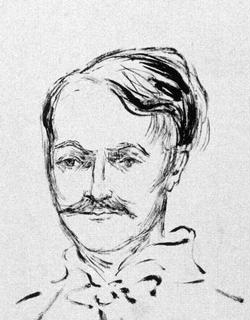
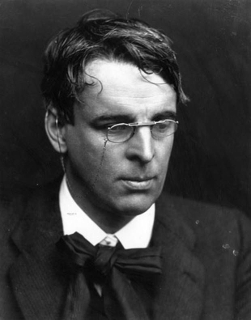
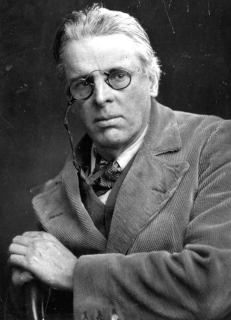
Birth of E. R. Dodds, Irish Classical Scholar

Eric Robertson Dodds, Irish classical scholar, is born in Banbridge, County Down, on July 26, 1893. He is Regius Professor of Greek at the University of Oxford from 1936 to 1960.

Dodds is the son of schoolteachers. His father Robert is from a Presbyterian family and dies of alcoholism when Dodds is seven years old. His mother Anne is of Anglo-Irish ancestry. When he is ten, he moves with his mother to Dublin, and he is educated at St. Andrew’s College, where his mother teaches, and at Campbell College in Belfast. He is expelled from the latter for “gross, studied, and sustained insolence.”

In 1912, Dodds wins a scholarship at University College, Oxford, to read classics, or Literae Humaniores, a two-part, four-year degree program consisting of five terms of study of Latin and Greek texts followed by seven terms of study of ancient history and ancient philosophy. His friends at Oxford include Aldous Huxley and T. S. Eliot. In 1916, he is asked to leave Oxford due to his support for the Easter Rising, but he returns the following year to take his final examinations in Literae Humaniores, and is awarded a first-class degree to match the first-class awarded him in 1914 in Honour Moderations, the preliminary stage of his degree. His first tutor at Oxford is Arthur Blackburne Poynton.

After graduation, Dodds returns to Dublin and meets W. B. Yeats and George William Russell. He teaches briefly at Kilkenny College and in 1919 is appointed as a lecturer in classics at the University of Reading, where in 1923 he marries a lecturer in English, Annie Edwards Powell. They have no children.

In 1924, Dodds is appointed Professor of Greek at the University of Birmingham, and comes to know W. H. Auden, whose father George, Professor of Public Medicine and an amateur classicist, is a colleague. He is also responsible for Louis MacNeice‘s appointment as a lecturer at Birmingham in 1930. He assists MacNeice with his translation of Aeschylus, Agamemnon (1936), and later becomes the poet’s literary executor. He publishes one volume of his own poems, Thirty-Two Poems, with a Note on Unprofessional Poetry (1929).

In 1936, Dodds becomes Regius Professor of Greek at the University of Oxford, succeeding Gilbert Murray. Murray decisively recommends him to British Prime Minister Stanley Baldwin and it is not a popular appointment. He is chosen over two prominent Oxford dons, Maurice Bowra of Wadham College and John Dewar Denniston of Hertford College. His lack of service in World War I and his support for Irish republicanism and socialism in addition to his scholarship on the non-standard field of Neoplatonism, also does not make him initially popular with colleagues. He is treated particularly harshly by Denys Page at whose college, Christ Church, the Regius Chair of Greek is based.

Dodds has a lifelong interest in mysticism and psychic research, being a member of the council of the Society for Psychical Research from 1927 and its president from 1961 to 1963.

On his retirement in 1960, Dodds is made an Honorary Fellow of University College, Oxford, until his death on April 8, 1979. He dies in the village of Old Marston, northeast of Oxford.

Among Dodds’s works are The Greeks and the Irrational (1951), which charts the influence of irrational forces in Greek culture up to the time of Plato, and Pagan and Christian in an Age of Anxiety, a study of religious life in the period between Marcus Aurelius and Constantine I. He is also editor of three major classical texts for the Clarendon Press, Proclus: Elements of Theology, EuripidesThe Bacchae and Plato’s Gorgias, all published with extensive commentaries, and a translation in the case of the first. His autobiography, Missing Persons, is published in 1977. He edits Louis MacNeice’s unfinished autobiography The Strings are False (1965) and MacNeice’s Collected Poems (1966).


Leave a comment

Death of George William Russell, Writer, Critic & Poet

George William Russell, Irish writer, editor, critic, poet, painter and Irish nationalist, dies of cancer in Bournemouth, England, on July 17, 1935.

Russell is born on April 10, 1867, in Lurgan, County Armagh, in what is now Northern Ireland. He writes with the pseudonym Æ (often written AE or A.E.). He is also a writer on mysticism, and a central figure in the group of devotees of theosophy which meets in Dublin for many years. He takes his pseudonym from a proofreader’s query about his earlier pseudonym, “AEon.”

Russell is the second son of Thomas Russell and Mary Armstrong. His father, the son of a small farmer, becomes an employee of Thomas Bell and Co., a prosperous firm of linen drapers. The family relocates to Dublin, where his father has a new offer of employment, when he is eleven years old.

Russell is educated at Rathmines School and the Metropolitan School of Art, where he begins a lifelong, if sometimes contentious, friendship with W. B. Yeats. In the 1880s, he lives at the Theosophical Society lodge at 3 Upper Ely Place, sharing rooms with Hamilton Malcolm Magee, the brother of William Kirkpatrick Magee.

Following his time at the Metropolitan School of Art, Russell becomes an accounts clerk in a drapery store but leaves in 1897 to organize agricultural cooperatives. Eventually he becomes editor of the periodicals Irish Homestead (1905–23) and The Irish Statesman (1923–30). In 1894 he publishes the first of many books of verse, Homeward: Songs by the Way, which establishes him in what is known as the Irish Literary Revival. His first volume of Collected Poems appears in 1913 and a second in 1926. He maintains a lifelong interest in theosophy, the origins of religion, and mystical experience. Candle of Vision: Autobiography of a Mystic (1918) is the best guide to his religious beliefs.

At the turn of the 20th century, Russell is considered by many to be the equal of Yeats, but he does not continue to grow and develop as Yeats does. He is prolific and versatile, but many critics find his poetry facile, vague, and monotonous, with “rather too much of the Celtic Twilight” in it.

Russell designs the famous Starry Plough flag for the Irish Citizen Army, which is unveiled on April 5, 1914, and flown during the Easter Rising in April 1916.

Russell, who had become increasingly unhappy in the Irish Free State which, according to Yeats, he called “a country given over to the Devil,” moves to England soon after his wife’s death in 1932. Despite his failing health he goes on a final lecture tour in the United States but returns home utterly exhausted. He dies of cancer in Bournemouth, England, on July 17, 1935. His body is brought back to Ireland, and he is interred in Mount Jerome Cemetery, Dublin.


Leave a comment

Birth of Kathleen Cox, Artist, Sculptor & Mystic

Kathleen Cox, Irish artist, sculptor, and mystic, is born Christina Mary Kathleen Cox in Wo-Sung, China, on July 2, 1904. Cox is considered a pioneer of contemporary Irish pottery.

Cox is the eldest daughter of Dr. R. H. Cox, originally from Dundalk, County Louth, and the port health officer in Shanghai. He is also an amateur geologist and models in clay. In his retirement, he invents a periscope later used during World War I by the Royal Navy. The years living in China leave an impression on the young Cox, visually and culturally. The family returns to Ireland in 1911, first moving to Listowel, County Kerry, and later to Howth, County Dublin. She attends Alexandra College, and later the Dublin Metropolitan School of Art in 1921. While there she studies sculpture under Oliver Sheppard and is considered one of his most talented students, winning the Royal Dublin Society Taylor prize for modelling in 1925, 1926, and 1927. The money from these prizes allows Cox to travel to Paris in 1929.

Cox exhibits in 1924 at the Tailteann exhibitions, and in 1925 submits textile designs to the Arts and Crafts Society of Ireland. She establishes a pottery studio at 7 Schoolhouse Lane, Dublin, with college friend Stella Rayner in 1929. The studio has the first electric kiln in Ireland. The first exhibited piece by Cox shown by the Royal Hibernian Academy (RHA) is in 1930, with a pair of Madonna bookends, and portrait masks of the daughter of Dermod O’Brien, Brigid O’Brien, and writer Norris Davidson. Davidson is a friend and neighbour, who commissions her to design the poster for his 1929 film, Suicide. She exhibits with the RHA from 1931 to 1933, and the Tailteann 1932, while also holding exhibitions in her studio. During this period Hilda Roberts paints her portrait, Strange Spirit. Kathleen Cox in her studio. The theme of womanhood is prominent in her work, including in the sign of her studio.

In 1932, Cox begins producing a line of more commercial figurines, drawing influence from the Royal Doulton Burslem factory, where she works for a time. One such figurine is The Lavender Man (pictured), modelled on Michael Clifford, a Dublin street trader. In the mid 1930s, she develops a frustration with her work and with her lack of impact on the wider world. In attending the Chinese exhibition in London in 1935, it is confirmed to her that pottery should be practical rather than ornamental. It spurs her to destroy all her moulds and sell her kiln upon her return to Dublin.

Cox marries Alan Palmer in 1937, the couple has two daughters and relocate to England. Palmer is a conscientious objector during World War II, with the couple running a farm at Meopham, Kent, returning to London after the war.

Cox dies in early September 1972 in London. Some of her work is held in the collections of the National Museum of Ireland and with four works featured in the exhibition Not Just Pots: Contemporary Irish Ceramics of the 21st Century.

It is during the 1920s that Cox begins to question mainstream religion and becomes a vegetarian. Finding that her personal philosophy is similar to that of theosophy, she joins the movement and speaks at meetings. She is heavily influenced by the founder of the Order of the Great Companions, the Rev. William Hayes, who is living in Dublin in the 1930s. She writes and illustrates a children’s book on world religions, A story of stories, which she publishes under the pseudonym C.M. Kay in 1970.


Leave a comment

Birth of George William Russell, Writer, Poet & Nationalist

George William Russell, Irish writer, editor, critic, poet, painter and Irish nationalist, is born on April 10, 1867, in Lurgan, County Armagh, in what is now Northern Ireland. He writes with the pseudonym Æ (often written AE or A.E.). He is also a writer on mysticism, and a central figure in the group of devotees of theosophy which meets in Dublin for many years. He takes his pseudonym from a proofreader’s query about his earlier pseudonym, “AEon.”

Russell is the second son of Thomas Russell and Mary Armstrong. His father, the son of a small farmer, becomes an employee of Thomas Bell and Co., a prosperous firm of linen drapers. The family relocates to Dublin, where his father has a new offer of employment, when he is eleven years old.

Russell is educated at Rathmines School and the Metropolitan School of Art, where he begins a lifelong, if sometimes contentious, friendship with W. B. Yeats. In the 1880s, he lives at the Theosophical Society lodge at 3 Upper Ely Place, sharing rooms with Hamilton Malcolm Magee, the brother of William Kirkpatrick Magee.

Following his time at the Metropolitan School of Art, Russell becomes an accounts clerk in a drapery store but leaves in 1897 to organize agricultural cooperatives. Eventually he becomes editor of the periodicals Irish Homestead (1905–23) and The Irish Statesman (1923–30). In 1894 he publishes the first of many books of verse, Homeward: Songs by the Way, which establishes him in what is known as the Irish Literary Revival. His first volume of Collected Poems appears in 1913 and a second in 1926. He maintains a lifelong interest in theosophy, the origins of religion, and mystical experience. Candle of Vision: Autobiography of a Mystic (1918) is the best guide to his religious beliefs.

At the turn of the 20th century, Russell is considered by many to be the equal of Yeats, but he does not continue to grow and develop as Yeats does. He is prolific and versatile, but many critics find his poetry facile, vague, and monotonous, with “rather too much of the Celtic Twilight” in it.

Russell designs the famous Starry Plough flag for the Irish Citizen Army, which is unveiled on April 5, 1914, and flown during the Easter Rising in April 1916.

Russell, who had become increasingly unhappy in the Irish Free State which, according to Yeats, he called “a country given over to the Devil,” moves to England soon after his wife’s death in 1932. Despite his failing health he goes on a final lecture tour in the United States but returns home utterly exhausted. He dies of cancer in Bournemouth, England, on July 17, 1935. His body is brought back to Ireland, and he is interred in Mount Jerome Cemetery, Dublin.


Leave a comment

W.B. Yeats Receives Nobel Prize in Literature

william-butler-yeats-1

William Butler Yeats, Irish poet and one of the foremost figures of 20th century literature, receives Nobel Prize in Literature on December 10, 1923.

Yeats is born at Sandymount in County Dublin on June 13, 1865. His father, John Butler Yeats, is a lawyer and a well-known portrait painter. He is educated in London and in Dublin but spends his summers in the west of Ireland in the family’s summer house at Connacht. The young Yeats is very much part of the fin de siècle in London. At the same time, he is active in societies that attempt an Irish literary revival. His first volume of verse appears in 1887, but in his earlier period his dramatic production outweighs his poetry both in bulk and in import.

Together with Lady Gregory, Yeats founds the Irish Literary Theatre, which later becomes the Abbey Theatre, and serves as its chief playwright until the movement is joined by John Millington Synge. His plays usually treat Irish legends and also reflect his fascination with mysticism and spiritualism. The Countess Cathleen (1892), The Land of Heart’s Desire (1894), Cathleen ni Houlihan (1902), The King’s Threshold (1904), and Deirdre (1907) are among the best known.

After 1910, Yeats’s dramatic art takes a sharp turn toward a highly poetical, static, and esoteric style. His later plays are written for small audiences. They experiment with masks, dance, and music, and are profoundly influenced by the Japanese Noh plays. Although a convinced patriot, he deplores the hatred and the bigotry of the Nationalist movement, and his poetry is full of moving protests against it. He is appointed to the Irish Senate, Seanad Éireann, in 1922.

Yeats is one of the few writers whose greatest works are actually written after the award of the Nobel Prize. Whereas he receives the Prize chiefly for his dramatic works, his significance today rests on his lyric achievement. His poetry, especially the volumes The Wild Swans at Coole (1919), Michael Robartes and the Dancer (1921), The Tower (1928), The Winding Stair and Other Poems (1933), and Last Poems and Plays (1940), make him one of the outstanding and most influential twentieth-century poets writing in English. His recurrent themes are the contrast of art and life, masks, cyclical theories of life (the symbol of the winding stairs), and the ideal of beauty and ceremony contrasting with the hubbub of modern life.

Yeats dies at the age of 73 at the Hôtel Idéal Séjour, in Menton, France, on January 28, 1939. He is buried after a discreet and private funeral at Roquebrune-Cap-Martin. In September 1948, his body is moved to the churchyard of St. Columba’s Church, Drumcliff, County Sligo, on the Irish Naval Service corvette Macha.

(From Nobel Lectures, Literature 1901-1967, Editor Horst Frenz, Elsevier Publishing Company, Amsterdam, 1969)


Leave a comment

Birth of James Henry Cousins, Playwright & Actor

james-h-cousins

James Henry Cousins, Irish writer, playwright, actor, critic, editor, teacher and poet, is born in Belfast on July 22, 1873, a descendant of Huguenot refugees. He uses several pseudonyms including Mac Oisín and the Hindu name Jayaram.

Largely self-educated at night schools, Cousins works some time as a clerk and becomes private secretary and speechwriter to Sir Daniel Dixon, 1st Baronet, the Lord Mayor of Belfast. In 1897 he moves to Dublin where he becomes part of a literary circle which includes William Butler Yeats, George William Russell and James Joyce. It is believed that he serves as a model for the Little Chandler character in Joyce’s short story collection Dubliners.

Cousins is significantly influenced by Russell’s ability to reconcile mysticism with a pragmatic approach to social reforms and by the teachings of Helena Blavatsky. He has a lifelong interest in the paranormal and acts as reporter in several experiments carried out by William Fletcher Barrett, Professor of physics at the University of Dublin and one of the founders of the Society for Psychical Research.

Cousins produces several books of poetry while in Ireland as well as acting in the first production of Cathleen ní Houlihan, under the stage name of H. Sproule, with the famous Irish revolutionary and beauty Maud Gonne in the title role. His plays are produced in the first years of the twentieth century in the Abbey Theatre, the most famous being “the Racing Lug”. After a dispute with W.B. Yeats, who objects to “too much Cousins,” the Irish National Theatre movement splits with two-thirds of the actors and writers siding with Cousins against Yeats.

Cousins also writes widely on the subject of Theosophy and in 1915 travels to India with the voyage fees paid for by Annie Besant, the President of the Theosophical Society. He spends most of the rest of his life in the sub-continent, apart from a year as Professor of English Literature at Keio University in Tokyo and another lecturing in New York. Toward the end of his life, he converts to Hinduism. At the core of Cousins’s engagement with Indian culture is a firm belief in the “shared sensibilities between Celtic and Oriental peoples.”

While in India he becomes friendly with many key Indian personalities including poet Rabindranath Tagore, Indian classical dancer Rukmini Devi Arundale, painter Abdur Rahman Chughtai and Mahatma Gandhi. He is the person who brings change into the life of poetry of the great renowned Kannada poet and writer Kuvempu. He writes a joint autobiography with his wife Margaret Elizabeth Cousins, a suffragette and one of the co-founders of the Irish Women’s Franchise League and All India Women’s Conference (AIWC).

In his The Future Poetry Sri Aurobindo acclaims Cousins’ New Ways in English Literature as “literary criticism, which is of the first order, at once discerning and suggestive, criticism which forces us both to see and think.” He also acknowledges that he learned to intuit deeper being alerted by Cousins’ criticisms of his poems. In 1920 Cousins comes to Pondicherry to meet the Mother and Sri Aurobindo.

James Cousins dies on February 20, 1956, in Madanapalle, Andhra Pradesh, India at the age of 82.


Leave a comment

Birth of William Butler Yeats, Poet & Nobel Prize Winner

william-butler-yeats

William Butler Yeats, one of the greatest English-language poets of the 20th century and recipient of the Nobel Prize in Literature in 1923, is born in Sandymount, County Dublin on June 13, 1865.

Yeats is the oldest child of John Butler Yeats and Susan Mary Pollexfen. Although John trained as a lawyer, he abandons the law for art soon after his first son is born. Yeats spends much of his early years in London, where his father is studying art, but frequently returns to Ireland.

In the mid-1880s, Yeats pursues his own interest in art as a student at the Metropolitan School of Art in Dublin. Following the publication of his poems in the Dublin University Review in 1885, he soon abandons art school for other pursuits.

After returning to London in the late 1880s, Yeats meets writers Oscar Wilde, Lionel Johnson and George Bernard Shaw. He also becomes acquainted with Maud Gonne, a supporter of Irish independence. This revolutionary woman serves as a muse for Yeats for years. He even proposes marriage to her several times, but she turns him down. He dedicates his 1892 drama The Countess Cathleen to her.

Around this time, Yeats founds the Rhymers’ Club poetry group with Ernest Rhys. He also joins the Hermetic Order of the Golden Dawn, an organization that explores topics related to the occult and mysticism. While he is fascinated with otherworldly elements, Yeats’s interest in Ireland, especially its folktales, fuels much of his output. The title work of The Wanderings of Oisin and Other Poems (1889) draws from the story of a mythic Irish hero.

In addition to his poetry, Yeats devotes significant energy to writing plays. He teams with Lady Gregory to develop works for the Irish stage, the two collaborating for the 1902 production of Cathleen ni Houlihan. Around that time, he helps found the Irish National Theatre Society, serving as its president and co-director, with Lady Gregory and John Millington Synge. More works soon follow, including On Baile’s Strand, Deirdre and At the Hawk’s Well.

Following his marriage to Georgie Hyde-Lees in 1917, Yeats begins a new creative period through experiments with automatic writing. The newlyweds sit together for writing sessions they believe to be guided by forces from the spirit world, through which Yeats formulates intricate theories of human nature and history. They soon have two children, daughter Anne and son Michael.

Yeats then becomes a political figure in the new Irish Free State, serving as a senator for six years beginning in 1922. The following year, he receives an important accolade for his writing as the recipient of the Nobel Prize in Literature. According to the official Nobel Prize website, he is selected “for his always inspired poetry, which in a highly artistic form gives expression to the spirit of a whole nation.”

Yeats continues to write until his death. Some of his important later works include The Wild Swans at Coole (1917), A Vision (1925), The Tower (1928) and Words for Music Perhaps and Other Poems (1932). He dies on January 28, 1939, at the Hôtel Idéal Séjour, in Menton, France. He is buried after a discreet and private funeral at Roquebrune-Cap-Martin. In September 1948, his body is moved to the churchyard of St. Columba’s Church, Drumcliff, County Sligo, on the Irish Naval Service corvette Macha.

The publication of Last Poems and Two Plays shortly after his death further cements his legacy as a leading poet and playwright.


Leave a comment

Death of William Butler Yeats

william-butler-yeats

William Butler Yeats, Irish poet and one of the foremost figures of 20th century literature, dies on January 28, 1939, at the Hôtel Idéal Séjour, in Menton, France.

Yeats is born in Sandymount, County Dublin, on June 13, 1865, the oldest child of John Butler Yeats and Susan Mary Pollexfen. Although John trains as a lawyer, he abandons the law for art soon after his first son is born. Yeats spends much of his early years in London, where his father is studying art, but frequently returns to Ireland as well.

In the mid-1880s, Yeats pursues his own interest in art as a student at the Metropolitan School of Art in Dublin. Following the publication of his poems in the Dublin University Review in 1885, he soon abandoned art school for other pursuits.

After returning to London in the late 1880s, Yeats meets writers Oscar Wilde, Lionel Johnson, and George Bernard Shaw. He also becomes acquainted with Maud Gonne, a supporter of Irish independence. This revolutionary woman serves as a muse for Yeats for years. He even proposes marriage to her several times, but she turns him down. He dedicates his 1892 drama The Countess Kathleen to her.

Around this time, Yeats founds the Rhymers’ Club poetry group with Ernest Rhys. He also joins the Order of the Golden Dawn, an organization that explores topics related to the occult and mysticism. While he is fascinated with otherworldly elements, Yeats’s interest in Ireland, especially its folktales, fuels much of his output. The title work of The Wanderings of Oisin and Other Poems (1889) draws from the story of a mythic Irish hero.

In addition to his poetry, Yeats devotes significant energy to writing plays. He teams with Lady Gregory to develop works for the Irish stage, the two collaborating for the 1902 production of Cathleen Ni Houlihan. Around that time, Yeats helps found the Irish National Theatre Society with Lady Gregory and John Millington Synge, serving as its president and co-director. More works soon follow, including On Baile’s Strand, Deirdre, and At the Hawk’s Well.

Following his marriage to Georgie Hyde-Lees in 1917, Yeats begins a new creative period through experiments with automatic writing. The newlyweds sit together for writing sessions they believe to be guided by forces from the spirit world, through which Yeats formulates intricate theories of human nature and history. They soon have two children, daughter Anne and son Michael.

Yeats then becomes a political figure in the new Irish Free State, serving as a senator for six years beginning in 1922. The following year, he receives an important accolade for his writing as the recipient of the Nobel Prize in Literature. According to the official Nobel Prize website, Yeats is selected “for his always inspired poetry, which in a highly artistic form gives expression to the spirit of a whole nation.”

Yeats continues to write until his death. Some of his important later works include The Wild Swans at Coole (1917), A Vision (1925), The Tower (1928) and Words for Music Perhaps and Other Poems (1932). Yeats passes away on January 28, 1939, at the Hôtel Idéal Beauséjour near Menton, France. He is buried after a discreet and private funeral at Roquebrune-Cap-Martin. The publication of Last Poems and Plays and Two Plays shortly after his death further cements his legacy as a leading poet and playwright.

In September 1948, Yeats’ body is moved to the churchyard of St. Columba’s Church, Drumcliff, County Sligo, on the Irish Naval Service corvette Macha.