seamus dubhghaill

Promoting Irish Culture and History from Little Rock, Arkansas, USA


Leave a comment

Bank of Ireland Suspends Gold Payments

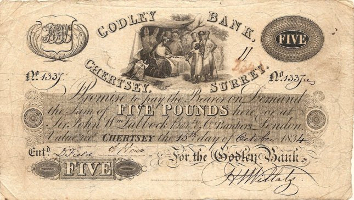
godley-bank-note-1834The Bank of Ireland suspends gold payments on February 26, 1797. In the late 18th century, cash is king, whether it be gold or silver. If one has no gold or silver, one has no goods, unless one is a member of the 10,000 or so landed aristocratic families who are allowed to run up debts.

At the end of the 18th century Britain is at war with France. The British government requires gold above all to conduct its war with Napoleon. There is not enough to go around. There is not enough gold in the vaults of the Bank of England to adequately fund the war, much less for sending any of it to Ireland. Therefore, in 1797 the Bank of Ireland is obliged to stop issuing gold that it does not have and rather rely on well established banknotes to keep money in circulation. A few weeks later the stance taken by the Bank is approved of by Irish legislators in the Irish Parliament.

The withdrawal of gold and the increased issuing of notes leads to the establishment of a number of private banks in Ireland who are allowed to issue their own notes. In 1799 there are eleven private banks. By 1803, this number has increased to forty-one. Many of these banks subsequently fail and destroy the lives of their customers. The partners who run these financial institutions are identified on the banknotes they issue. Therefore their clients can see the names, but not the addresses, of the men who have financially destroyed them when they fall into liquidation.


Leave a comment

Execution of Robert Emmet, Irish Nationalist & Republican

Robert Emmet, Irish nationalist and Republican, orator and rebel leader, is hung, drawn, and quartered in Dublin on September 20, 1803, following his conviction for high treason.

Emmet is born at 109 St. Stephen’s Green, in Dublin on March 4, 1778, the youngest son of Dr. Robert Emmet, a court physician, and his wife, Elizabeth Mason. He attends Oswald’s school, in Dopping’s-court, off Golden-lane and enters Trinity College, Dublin in October 1793, at the age of fifteen. He becomes secretary of a secret United Irish Committee in college and is expelled in April 1798 as a result. That same year he flees to France to avoid the many British arrests of nationalists that are taking place in Ireland.

After the 1798 rising, Emmet is involved in reorganising the defeated Society of United Irishmen. In April 1799 a warrant is issued for his arrest. He escapes and soon after travels to the continent in the hope of securing French military aid. His efforts are unsuccessful, as Napoleon is concentrating his efforts on invading England.

Emmet returns to Ireland in October 1802 and, along with fellow revolutionaries Thomas Russell and James Hope, begins preparations for another uprising in March of the following year. A premature explosion at one of Emmet’s arms depots forces him to advance the date of the rising before the authorities’ suspicions are aroused.

Emmet is unable to secure the help of Michael Dwyer‘s Wicklow rebels. Many rebels from Kildare turn back due to the scarcity of firearms they had been promised, but the rising proceeds in Dublin on the evening of July 23, 1803. Failing to seize Dublin Castle, which is lightly defended, the rising amounts to a large-scale disturbance in the Thomas Street area. He sees a dragoon pulled from his horse and piked to death, the sight of which prompts him to call off the rising to avoid further bloodshed, but he has no control over of his followers. Sporadic clashes continue into the night until finally quelled by British military forces.

Emmet flees into hiding but is captured on August 25 and taken to Dublin Castle, then removed to Kilmainham Gaol. He is tried for treason on September 19. The Crown repairs the weaknesses in its case by secretly buying the assistance of Emmet’s defence attorney, Leonard McNally, for £200 and a pension. McNally’s assistant Peter Burrowes cannot be bought, and he pleads the case as best he can. Emmet is found guilty of high treason.

Chief Justice John Toler, 1st Earl of Norbury sentences Emmet to be hanged, drawn and quartered, as is customary for conviction of treason. The following day, September 20, Emmet is executed in Thomas Street near St. Catherine’s Church. He is hanged and beheaded once dead. As family members and friends of Emmet had also been arrested, including some who had nothing to do with the rebellion, no one comes forward to claim his remains out of fear of arrest.

Emmet’s remains are first delivered to Newgate Prison and then back to Kilmainham Gaol, where the jailer is under instructions that if no one claims them, they are to be buried in a nearby hospital’s burial grounds. A later search there finds no remains. It is speculated that Emmet’s remains were secretly removed from the site and reinterred in St. Michan’s Church, a Dublin church with strong United Irish associations, though it is never confirmed. It is later suspected that they are buried secretly in the vault of a Dublin Anglican church. When the vault is inspected in the 1950s a headless corpse was found, suspected of being Emmet’s, but cannot be identified. Widely accepted is the theory that Emmet’s remains were transferred to St. Peter’s Church in Aungier St. under cover of the burial of his sister, Mary Anne Holmes, in 1804. In the 1980s the church is deconsecrated, and all the coffins are removed from the vaults. The church has since been demolished.


Leave a comment

Death of Arthur Wellesley, 1st Duke of Wellington

Field Marshal Arthur Wellesley, 1st Duke of Wellington, Anglo-Irish soldier and statesman who was one of the leading military and political figures of 19th-century Britain, dies on September 14, 1852. His defeat of Napoleon at the Battle of Waterloo in 1815 puts him in the first rank of Britain’s military heroes.

Wellesley is born in Dublin, into the Protestant Ascendancy in Ireland. He is commissioned as an ensign in the British Army in 1787, serving in Ireland as aide-de-camp to two successive Lords Lieutenant of Ireland. He is also elected as a Member of Parliament in the Irish House of Commons. He is a colonel by 1796, and sees action in the Netherlands and in India, where he fights in the Fourth Anglo-Mysore War at the Siege of Seringapatam. He is appointed governor of Seringapatam and Mysore in 1799 and, as a newly appointed major-general, wins a decisive victory over the Maratha Confederacy at the Battle of Assaye in 1803.

Wellesley rises to prominence as a general during the Peninsular War of the Napoleonic Wars and is promoted to the rank of field marshal after leading the allied forces to victory against the First French Empire at the Battle of Vitoria in 1813. Following Napoleon’s exile in 1814, he serves as the ambassador to France and is granted a dukedom. During the Hundred Days in 1815, he commands the allied army which, together with a Prussian army under Gebhard Leberecht von Blücher, defeats Napoleon at Waterloo. Wellesley’s battle record is exemplary, and he ultimately participates in some 60 battles during the course of his military career.

Wellesley is famous for his adaptive defensive style of warfare, resulting in several victories against numerically superior forces while minimising his own losses. He is regarded as one of the greatest defensive commanders of all time, and many of his tactics and battle plans are still studied in military academies around the world.

After the end of his active military career, Wellesley returns to politics. He is British prime minister as part of the Tory party from 1828 to 1830, and for a little less than a month in 1834. He oversees the passage of the Roman Catholic Relief Act 1829 but opposes the Reform Act 1832. He continues as one of the leading figures in the House of Lords until his retirement and remains Commander-in-Chief of the British Army until his death.

Wellesley dies at Walmer Castle in Deal, Kent, his residence as Lord Warden of the Cinque Ports, on September 14, 1852. He is found to be unwell on that morning and is aided from his military campaign bed, the same one he used throughout his historic military career and seated in his chair where he dies. His death is recorded as being due to the aftereffects of a stroke culminating in a series of seizures.

Although in life Wellesley hates travelling by rail, his body is taken by train to London, where he is given a state funeral, one of only a handful of British subjects to be honoured in that way, and the last heraldic state funeral to be held in Britain. The funeral takes place on November 18, 1852. He is buried in a sarcophagus of luxulyanite in St. Paul’s Cathedral next to Horatio Nelson, 1st Viscount Nelson.


Leave a comment

Death of Barry Edward O’Meara, Physician to Napoleon

Barry Edward O’Meara, Irish surgeon and founding member of the Reform Club, dies in London on June 3, 1836.

Born in Ireland, O’Meara joins the British navy in 1808, after he has been dismissed from the army for assisting in a duel. In July 1815 he is serving on the HMS Bellerophon when Napoleon surrenders on board.

His knowledge of Italian impresses Napoleon and he requests O’Meara’s services on St. Helena. O’Meara remains on St. Helena as Napoleon’s personal physician until 1818, when his refusal to spy on the Emperor for the British governor of the island causes him to be dismissed from that post.

On his return to London, O’Meara publishes Napoleon in Exile, or A Voice From St. Helena (1822) a book which charges Sir Hudson Lowe with mistreating the former emperor and created no small sensation on its appearance. Less known are his secret letters he sends clandestinely from St. Helena to a clerk at the Admiralty in London. These letters shed a unique light on Napoleon’s state of mind as a captive and the causes of his complaints against Sir Hudson Lowe and the British government.

O’Meara is also the physician who performs the very first medical operation on Napoleon by extracting a wisdom tooth in the autumn of 1817.

O’Meara also becomes involved in politics, helping to found the Reform Club. O’Meara dies on June 3, 1836, from complications after catching a cold while attending one of Daniel O’Connell‘s political rallies.


Leave a comment

Birth of Physician & Writer William James MacNeven

William James MacNeven, Irish American physician and writer, is born on March 21, 1763, at Ballynahowna, near Aughrim, County Galway. One of the oldest obelisks in New York City is dedicated to him at St. Paul’s Chapel on Broadway while a second obelisk is dedicated to Thomas Emmet, a fellow United Irishman and Attorney General of New York. MacNeven’s monument features a lengthy inscription in Irish, one of the oldest existent dedications of this kind in the Americas.

The eldest of four sons, at the age of 12 MacNeven is sent by his uncle Baron MacNeven to receive his education abroad, for the penal laws render education impossible for Catholics in Ireland. This Baron MacNeven is William O’Kelly MacNeven, an Irish exile physician, who for his medical skill in her service has been created an Austrian noble by the Empress Maria Theresa. Young MacNeven makes his collegiate studies at Prague. His medical studies are made at Vienna where he is a pupil of Pestel and takes his degree in 1784. The same year he returns to Dublin to practise.

MacNeven becomes involved in the United Irishmen of the time, with such men as Lord Edward FitzGeraldThomas Addis Emmet, and his brother Robert Emmet. He is arrested in March 1798, and confined in Kilmainham Gaol, and afterwards in Fort George, Scotland, until 1802, when he is liberated and exiled. In 1803, he is in Paris seeking an interview with Napoleon Bonaparte in order to obtain French troops for Ireland. Disappointed in his mission, MacNeven comes to America, landing at New York on July 4, 1805.

In 1807, MacNeven delivers a course of lectures on clinical medicine in the recently established College of Physicians and Surgeons. Here in 1808, he receives the appointment of professor of midwifery. In 1810, at the reorganization of the school, he becomes the professor of chemistry, and in 1816 is appointed in addition to the chair of materia medica. In 1826 with six of his colleagues, he resigns his professorship because of a misunderstanding with the New York Board of Regents and accepts the chair of materia medica in Rutgers Medical College, a branch of the New Jersey institution of that name, established in New York as a rival to the College of Physicians and Surgeons. The school at once becomes popular because of its faculty, but after four years is closed by legislative enactment on account of interstate difficulties. The attempt to create a school independent of the regents results in a reorganization of the University of the State of New York.

MacNeven’s best known contribution to science is his “Exposition of the Atomic Theory” (New York, 1820), which is reprinted in the French Annales de Chimie. In 1821 he publishes with emendations an edition of Brande’s “Chemistry” (New York, 1829). Some of his purely literary works, his “Rambles through Switzerland” (Dublin, 1803), his “Pieces of Irish History” (New York, 1807), and his numerous political tracts attract wide attention. He is co-editor for many years of the “New York Medical and Philosophical Journal.”

William James MacNeven dies on July 13, 1841, at the age of 78 in New York City.


Leave a comment

Founding of the Pontifical Irish College in Rome

pontifical-irish-college

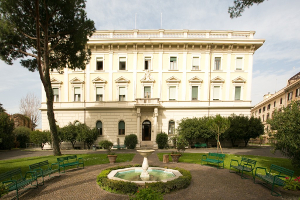
The Pontifical Irish College, a Roman Catholic seminary for the training and education of priests, is founded in Rome, Italy, on November 6, 1628.

Towards the close of the sixteenth century, Pope Gregory XIII sanctions the foundation of an Irish college in Rome and assigns a large sum of money as the nucleus of an endowment. However, the pressing needs of the Irish chieftains make him think that, under the circumstances, the money might as well be used for religion by supplying the Irish Catholics with the sinews of war in Ireland as by founding a college for them at Rome.

The project is revived in 1625 by the Irish bishops, in an address to Pope Urban VIII. Cardinal Ludovico Ludovisi, who is Cardinal Protector of Ireland, resolves to realize at his own expense the desire expressed to the pope by the Irish bishops. A house is rented opposite Sant’Isodoro a Capo le Case, and six students go into residence January 1, 1628. Eugene Callanan, Archdeacon of Cashel, is the first rector, Father Luke Wadding, OFM being a sort of supervisor. Cardinal Ludovisi dies in 1632 and as he is of a princely family with a large patrimony, he makes provision in his will for the college. It is to have an income of one thousand crowns a year, a house is to be purchased for it, and he leaves a vineyard as Castel Gandolfo where the students might pass their villeggiatura. The cardinal’s will directs that the college should be placed under the charge of the Jesuits. Both the heirs and Wadding suspect that provision and disputed it. A protracted lawsuit is finally decided in 1635 in favour of the Jesuits.

On February 8, 1635, the Jesuits take charge of the college and govern it until financial difficulties force them to give up control in September 1772. An Italian priest, Abbate Luigi Cuccagni, is made rector. The rectorate of Cuccagni comes to an end in 1798, when the college is closed by order of Napoleon.

Dr. Michael Blake, Bishop of Dromore, who is the last student to leave the college at its dissolution in 1798, returns a quarter of a century later to arrange for its revival, which is affected by a brief of Pope Leo XII, dated February 18, 1826. He becomes the first rector of the restored college, and among the first students who seek admission is Francis Sylvester Mahony of Cork, known to the literary world as Father Prout. Having set the college well to work, Blake returns to Ireland and is succeeded by Dr. Boylan, of Maynooth, who soon resigns and dies in 1830. He is succeeded by a young priest, later Cardinal Paul Cullen.

Dr. Cullen is succeeded by Dr. Tobias Kirby, known for his holiness of life. He governs the college for more than forty years. His successor is Michael Kelly, later coadjutor to the Archbishop of Sydney.

In 2011, under orders from Pope Benedict XVI, Cardinal Timothy Dolan, Archbishop of New York, leads a root and branch review of all structures and processes at the college. He is assisted in the visitation report by then Archbishop of Baltimore and now Cardinal Edwin O’Brien and Msgr. Francis Kelly of the Northern American College in Rome. The report is highly critical of the college and, as a result of which, three Irish members of the staff are sent home and a fourth resigns.

In 2012, four Irish archbishops, Cardinal Seán Brady, Archbishop of Armagh, Dr. Diarmuid Martin, Archbishop of Dublin, Dr. Michael Neary, Archbishop of Tuam, and Dr. Dermot Clifford, Archbishop of Cashel, are sent a copy of the visitation report by the Vatican. A response prepared for them says “a deep prejudice appears to have coloured the visitation and from the outset and it led to the hostile tone and content of the report.”

Today the Pontifical Irish College serves as a residence for clerical students from all over the world. Every year over 250 Irish couples choose the college chapel as a means to marry in Rome. It organises events for the Irish and wider international community who are currently residing in Rome and has over the years become an unofficial centre for Irish visitors to Rome seeking advice and information.


Leave a comment

Birth of Theobald Wolfe Tone

theobald-wolfe-tone

Theobald Wolfe Tone, posthumously known as Wolfe Tone, a leading Irish revolutionary figure and one of the founding members of the United Irishmen, is born on June 20, 1763, in Dublin. He is regarded as the father of Irish republicanism and leader of the Irish Rebellion of 1798.

The son of a coach maker, Tone studies law and is called to the Irish bar in 1789 but soon gives up his practice. In October 1791 he helps found the Society of United Irishmen, initially a predominantly Protestant organization that works for parliamentary reforms, such as universal suffrage and Roman Catholic emancipation. In Dublin in 1792 he organizes a Roman Catholic convention of elected delegates that force Parliament to pass the Catholic Relief Act of 1793. Tone himself, however, is anticlerical and hopes for a general revolt against religious creeds in Ireland as a sequel to the attainment of Irish political freedom.

By 1794, he and his United Irishmen friends begin to seek armed aid from Revolutionary France to help overthrow English rule. After an initial effort fails, Tone goes to the United States and obtains letters of introduction from the French minister at Philadelphia to the Committee of Public Safety in Paris. In February 1796 Tone arrives in the French capital, presents his plan for a French invasion of Ireland, and is favourably received. The Directory then appoints one of the most brilliant young French generals, Lazare Hoche, to command the expedition and makes Tone an adjutant in the French army.

On December 16, 1796, Tone sails from Brest with 43 ships and nearly 14,000 men. The ships are badly handled and, after reaching the coast of west Cork and Kerry, are dispersed by a storm. Tone again brings an Irish invasion plan to Paris in October 1797, but the principal French military leader, Napoleon Bonaparte, takes little interest. When insurrection breaks out in Ireland in May 1798, Tone can only obtain enough French forces to make small raids on different parts of the Irish coast. In September he enters Lough Swilly, County Donegal, with 3,000 men and is captured there.

At his trial in Dublin on November 10, 1798, he defiantly proclaims his undying hostility to England and his desire “in fair and open war to produce the separation of the two countries.” He is found guilty and is sentenced to be hanged on November 12. Early in the morning of the day he is to be hanged, Tone cuts his throat with a penknife.

Theobald Wolfe Tone dies of his self-inflicted wound on November 19, 1798, at the age of 35 in Provost’s Prison, Dublin, not far from where he was born. He is buried in Bodenstown, County Kildare, near his birthplace at Sallins, and his grave is in the care of the National Graves Association.


Leave a comment

Birth of Irish Revolutionary Robert Emmet

robert-emmet

Robert Emmet, Irish nationalist, Republican, orator, and one of the most famous revolutionaries in Irish history, is born at 109 St. Stephen’s Green in Dublin on March 4, 1778. He is the youngest son of Dr. Robert Emmet, a court physician, and his wife Elizabeth Mason.

Emmet attends Oswald’s school in Dopping’s-court, off Golden-lane. He enters Trinity College, Dublin, in October 1793 at the age of fifteen. In December 1797, he joins the College Historical Society, a debating society. While he is in college, his brother Thomas and some of his friends become involved in political activism. Robert becomes secretary of a secret United Irish Committee in college and is expelled in April 1798 as a result. That same year he flees to France to avoid the many British arrests of nationalists that are taking place in Ireland. While in France, Emmet garners the support of Napoleon, who promises to lend support when the upcoming revolution starts.

After the 1798 rising, Emmet is involved in reorganising the defeated United Irish Society. In April 1799, a warrant is issued for his arrest. He escapes and soon after travels to the continent in the hope of securing French military aid. His efforts are unsuccessful, as Napoleon is concentrating his efforts on invading England. Emmet returns to Ireland in October 1802.

In March of the following year, Emmet begins to prepare a new rebellion, with fellow Anglo-Irish revolutionaries Thomas Russell and James Hope. The revolutionaries conceal their preparations, but a premature explosion at one of Emmet’s arms depots kills a man, forcing Emmet to advance the date of the rising before the authorities’ suspicions are aroused.

Despite being unable to secure help from Michael Dwyer‘s Wicklow rebels and many rebels from Kildare turning back due to the scarcity of firearms, the rising begins in Dublin on the evening of July 23, 1803. Failing to seize the lightly defended Dublin Castle, the rising amounts to a large-scale disturbance in the Thomas Street area. Emmet witnesses a dragoon being pulled from his horse and piked to death, the sight of which prompts him to call off the rising to avoid further bloodshed. However, sporadic clashes continue into the night until finally quelled by British military forces.

Emmet flees into hiding, moving from Rathfarnam to Harold’s Cross so that he can be near his sweetheart, Sarah Curran. He is captured on August 25 and taken to Dublin Castle, then later removed to Kilmainham Gaol. Vigorous but ineffectual efforts are made to procure his escape.

Emmet is tried for and found guilty of high treason on September 19, 1803. Chief Justice Lord Norbury sentences Emmet to be hanged, drawn, and quartered, as is customary for conviction of treason. The following day, Emmet is executed in Thomas Street near St. Catherine’s. He is hanged and beheaded after his death. Out of fear of being arrested, no one comes forward to claim his remains.

Emmet’s remains are first delivered to Newgate Prison and then returned to Kilmainham Gaol, where the jailer is under instructions to be bury the remains in a nearby hospital’s burial grounds if no one claims them. No remains have been found there and though not confirmed, it appears that he was secretly removed and reinterred in St. Michan’s Church, a Dublin church with strong United Irish associations. There is also speculation that the reamins are buried secretly in the vault of a Dublin Anglican church. When inspected in the 1950s, a headless corpse is found in the vault but cannot be identified. The widely accepted theory is that Emmet’s remains are transferred to St. Peter’s Church in Aungier St. under cover of the burial of his sister in 1804. In the 1980s the church is deconsecrated, and all the coffins are removed from the vaults. The church has since been demolished.