seamus dubhghaill

Promoting Irish Culture and History from Little Rock, Arkansas, USA


Leave a comment

Death of Nicholas Callan, Priest & Scientist

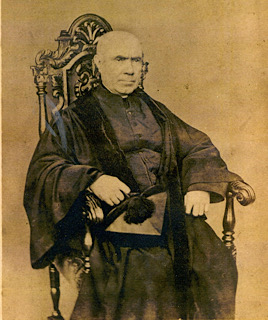
Father Nicholas Joseph Callan, Catholic priest and physicist, dies in Maynooth, County Kildare, on January 10, 1864. He is Professor of Natural Philosophy in Maynooth College in Maynooth from 1834, and is best known for his work on the induction coil.

Callan is born on December 22, 1799, in Darver, County Louth. He attends school at an academy in Dundalk. His local parish priest, Father Andrew Levins, then takes him in hand as an altar boy and Mass server and sees him start the priesthood at Navan seminary. He enters Maynooth College in 1816. In his third year at Maynooth, he studies natural and experimental philosophy under Dr. Cornelius Denvir. He introduces the experimental method into his teaching and has an interest in electricity and magnetism.

Callan is ordained a priest in 1823 and goes to Rome to study at Sapienza University, obtaining a doctorate in divinity in 1826. While in Rome he becomes acquainted with the work of the pioneers in electricity such as Luigi Galvani (1737–98), who is a pioneer in bioelectricity, and Alessandro Volta (1745–1827), who is known especially for the development of the electric battery. In 1826, he returns to Maynooth as the new Professor of Natural Philosophy (now called physics), where he also begins working with electricity in his basement laboratory at the college.

Influenced by William Sturgeon and Michael Faraday, Callan begins work on the idea of the induction coil in 1834. He invents the first induction coil in 1836. An induction coil produces an intermittent high voltage alternating current from a low voltage direct current supply. It has a primary coil consisting of a few turns of thick wire wound around an iron core and subjected to a low voltage (usually from a battery). Wound on top of this is a secondary coil made up of many turns of thin wire. An iron armature and make-and-break mechanism repeatedly interrupts the current to the primary coil, producing a high voltage, rapidly alternating current in the secondary circuit.

Callan invents the induction coil because he needs to generate a higher level of electricity than currently available. He takes a bar of soft iron, about 2 feet long, and wraps it around with two lengths of copper wire, each about 200 feet long. He connects the beginning of the first coil to the beginning of the second. Finally, he connects a battery, much smaller than the enormous contrivance just described, to the beginning and end of winding one. He finds that when the battery contact is broken, a shock can be felt between the first terminal of the first coil and the second terminal of the second coil.

Further experimentation shows how the coil device can bring the shock from a small battery up the strength level of a big battery. So Callan tries making a bigger coil. With a battery of only 14 seven-inch plates, the device produces power enough for an electric shock “so strong that a person who took it felt the effects of it for several days.” He thinks of his creation as a kind of electromagnet, but what he actually makes is a primitive induction transformer.

Callan’s induction coil also uses an interrupter that consists of a rocking wire that repeatedly dips into a small cup of mercury (similar to the interrupters used by Charles Grafton Page). Because of the action of the interrupter, which can make and break the current going into the coil, he calls his device the “repeater.” Actually, this device is the world’s first transformer. He induces a high voltage in the second wire, starting with a low voltage in the adjacent first wire. The faster he interrupts the current, the bigger the spark. In 1837 he produces his giant induction machine using a mechanism from a clock to interrupt the current 20 times a second. It generates 15-inch sparks, an estimated 60,000 volts and the largest artificial bolt of electricity then seen.

Callan experiments with designing batteries after he finds the models available to him at the time to be insufficient for research in electromagnetism. Some previous batteries had used rare metals such as platinum or unresponsive materials like carbon and zinc. He finds that he can use inexpensive cast iron instead of platinum or carbon. For his Maynooth battery he uses iron casting for the outer casing and places a zinc plate in a porous pot (a pot that had an inside and outside chamber for holding two different types of acid) in the centre. Using a single fluid cell, he disposes of the porous pot and two different fluids. He is able to build a battery with just a single solution.

While experimenting with batteries, Callan also builds the world’s largest battery at that time. To construct this battery, he joins together 577 individual batteries (“cells“), which use over 30 gallons of acid. Since instruments for measuring current or voltages have not yet been invented, he measures the strength of a battery by measuring how much weight his electromagnet can lift when powered by the battery. Using his giant battery, his electromagnet lifts 2 tons. The Maynooth battery goes into commercial production in London. He also discovers an early form of galvanisation to protect iron from rusting when he is experimenting on battery design, and he patents the idea.

Callan dies at the age of 64 in Maynooth, County Kildare, on January 10, 1864. He is buried in the cemetery in St. Patrick’s College, Maynooth.

The Callan Building on the north campus of Maynooth University, a university which is part of St. Patrick’s College until 1997, is named in his honour. In addition, Callan Hall in the south campus, is used through the 1990s for first year science lectures including experimental & mathematical physics, chemistry and biology. The Nicholas Callan Memorial Prize is an annual prize awarded to the best final year student in Experimental Physics.


Leave a comment

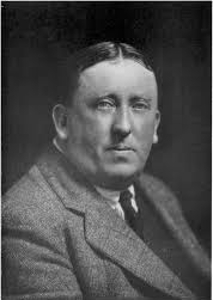
Birth of John Henry MacFarland, Irish Australian University Chancellor

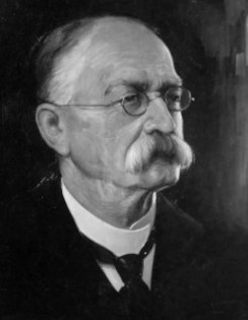
Sir John Henry MacFarland, Irish Australian educationist and churchman, is born in Omagh, County Tyrone, on April 19, 1851.

MacFarland is the elder son of John MacFarland, draper, and his second wife Margaret Jane, daughter of Rev. William Henry, a famous Covenanting Church minister. Both parents are devout Presbyterians, well educated, with strong intellectual interests.

MacFarland attends the local national school until he is 13 when he moves to the Royal Belfast Academical Institution. He is senior scholar in Mathematics and Natural Philosophy at Queen’s College, Belfast, where he is taught by John Purser. There he earns a BA in 1871 and MA in 1872. He goes on to St. John’s College, Cambridge, for three more years of undergraduate study of mathematics and physics. There he is elected a foundation scholar and earns a second BA, as 25th wrangler, in 1876. He also earns an MA there in 1879.

MacFarland teaches at Repton School in Derbyshire from 1876 to 1880. A decade later, his younger brother Robert, also a Queen’s Belfast and Cambridge mathematics graduate, also teaches at Repton.

The emissaries of the provisional council of Ormond College in the University of Melbourne are impressed with MacFarland. He negotiates a salary of £600 plus the profit from “farming” the college. On March 18, 1881, he becomes the first master of Ormond College, passing the opening-day ordeal in the presence of 440 Presbyterian grandees, clergy and their ladies.

On Sir John Madden‘s death in 1918, MacFarland becomes chancellor of the university and is knighted in 1919. He presides over a period of considerable expansion, working closely with Sir John Monash, vice-chancellor from 1923, and Sir James Barrett.

MacFarland is immensely and properly proud of his careful financial management, but the erstwhile reformers are hardly tender enough in balancing economy with humanity. The professors become increasingly restive about the limited responsibility for academic matters and allocation of resources council allows them. When the issues come to a head in 1928, MacFarland’s prestige is too much for the professoriate who have great respect for his administrative capacity, humanity and reasonableness. Even in his eighties he does not retire as chancellor, probably wisely concluding that his likely successor, Barrett, will prove to be too divisive.

In 1892, MacFarland receives and honorary LLD degree from the Royal University of Ireland.

MacFarland’s reputation as a business manager leads to his directorship from about 1905 of the National Mutual Life Association, serving as chairman from 1928, and of the Trustees Executors and Agency Company. From 1913 he represents the Trustees Executors on the Felton Bequests Committee. He is also the popular chairman from its foundation in 1908 of the Alexandra Club Co. as the members of the leading female social club prefer men to control their finances.

In his younger days MacFarland is a vigorous cyclist and walker in the Australian Alps, Tasmania and New Zealand. By the age of 40 he is spending a month each summer trout-fishing in the South Island of New Zealand. He is also a regular golfer at Royal Melbourne and belongs to the Melbourne Club.

MacFarland dies in Melbourne, Victoria, Australia, on July 22, 1935. His remains are cremated following a service at Scots’ Church. The university council minutes:

“Few men in any community, and almost no man in this community, can have won such universal esteem. No evil was ever spoken of him or could be thought of in connection with him; before him evil quailed. The greatest disciple of the greatest of the Greeks called his dead master ‘our friend whom we may truly call the wisest, and the justest, and the best of all men we have ever known’. And many of us can sincerely say that of John Henry MacFarland.”

(From: “Sir John Henry MacFarland (1851-1935)” by Geoffrey Serle, Australian Dictionary of Biography, http://www.adb.anu.edu.au, 1986)


Leave a comment

Birth of John Lighton Synge, Mathematician & Physicist

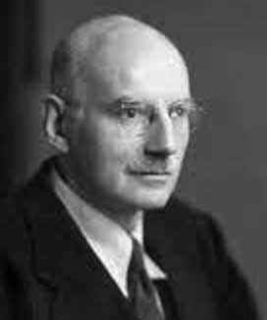
John Lighton Synge FRSC FRS, mathematician and physicist, whose seven-decade career includes significant periods in Ireland, Canada, and the United States, is born in Dublin on March 23, 1897. He is a prolific author and influential mentor and is credited with the introduction of a new geometrical approach to the theory of relativity.

Synge is born into a prominent Church of Ireland family. His uncle, John Millington Synge, is a famous playwright. He is more distantly related to the winner of the 1952 Nobel Prize in Chemistry, Richard Laurence Millington Synge. He is a great-great-great-grandson of the mathematician and bishop Hugh Hamilton.

Synge attends St. Andrew’s College, Dublin and in 1915 enters Trinity College Dublin (TCD). He is elected a Foundation Scholar his first year, which is unusual as it is normally won by more advanced students. While an undergraduate at TCD, he spots a non-trivial error in Analytical Dynamics of Particles and Rigid Bodies, a textbook by E. T. Whittaker, who had recently taught there, and notifies Whittaker of the error. In 1919 he is awarded a BA in Mathematics and Experimental Physics, and also a gold medal for outstanding merit. In 1922 he is awarded an MA, and in 1926 a Sc.D., the latter upon submission of his published papers up to then.

In 1918, Synge marries Elizabeth Eleanor Mabel Allen. She is also a student at TCD, first of mathematics, then of history, but family finances forced her to leave without graduating. Their daughters Margaret (Pegeen), Cathleen and Isabel are born in 1921, 1923 and 1930 respectively. The middle girl grows up to become the distinguished Canadian mathematician Cathleen Synge Morawetz.

Synge is appointed to the position of lecturer at Trinity College, and then accepts a position at the University of Toronto in 1920, where he is an assistant professor of mathematics until 1925. There he attends lectures by Ludwik Silberstein on the theory of relativity, stimulating him to contribute “A system of space-time co-ordinates,” a letter in Nature in 1921.

Synge returns to Trinity College Dublin, in 1925, where he is elected to a fellowship and is appointed the University Professor of Natural Philosophy (later to be known as “physics”). He is a member of the American Mathematical Society and the London Mathematical Society. He is treasurer of the Royal Irish Academy in 1929. He goes back to Toronto in 1930, where he is appointed Professor of Applied Mathematics and becomes Head of the Department of Applied Mathematics. In 1940, he supervises three Chinese students, Guo Yonghuai, Qian Weichang and Chia-Chiao Lin, who later become leading applied mathematicians in China and the United States.

Synge spends some of 1939 at Princeton University, and in 1941, he is a visiting professor at Brown University. In 1943 he is appointed as Chairman of the Mathematics Department of Ohio State University. Three years later he becomes Head of the Mathematics Department of the Carnegie Institute of Technology in Pittsburgh, where John Nash, Jr. is one of his students. He spends a short time as a ballistic mathematician in the United States Air Force between 1944 and 1945.

Synge returns to Ireland in 1948, accepting the position of Senior Professor in the School of Theoretical Physics at the Dublin Institute for Advanced Studies. This school had been set up in 1940, and had several outstanding members, including Erwin Schrödinger, a contributor to quantum mechanics, who is also a Senior Professor.

Synge makes outstanding contributions to different fields of work including classical mechanics, general mechanics and geometrical optics, gas dynamics, hydrodynamics, elasticity, electrical networks, mathematical methods, differential geometry, and Albert Einstein‘s theory of relativity. He studies an extensive range of mathematical physics problems, but his best-known work revolves around using geometrical methods in general relativity.

Synge is one of the first physicists to seriously study the interior of a black hole, and his early work is cited by both Martin David Kruskal and George Szekeres in their independent discoveries of the true structure of the Schwarzschild black hole. Synge’s later derivation of the Szekeres-Kruskal metric solution, which is motivated by a desire to avoid “using ‘bad’ coordinates to obtain ‘good’ coordinates,” has been generally under-appreciated in the literature, but is adopted by Chandrasekhar in his black hole monograph.

In pure mathematics, Synge is perhaps best known for Synge’s theorem, which concerns the topology of closed orientable Riemannian manifold of positive sectional curvature. When such a space is even-dimensional and orientable, the theorem says it must be simply connected. In odd dimensions, it instead says that such a space is necessarily orientable.

Synge also creates the game of Vish in which players compete to find circularity (vicious circles) in dictionary definitions.

Synge retires in 1972. He receives many honours for his works. He is elected as a fellow of the Royal Society of London in 1943. He is elected as a fellow of the Royal Society of Canada, and in 1943 is the first recipient of the society’s Henry Marshall Tory Medal, as one of the first mathematicians working in Canada to be internationally recognised for his research in mathematics. In 1954 he is elected an honorary fellow of Trinity College Dublin. He is president of the Royal Irish Academy from 1961 until 1964. The Royal Society of Canada establishes the John L. Synge Award in his honour in 1986.

Synge dies on March 30, 1995, in Dublin, exactly one week after his ninety-eighth birthday.


Leave a comment

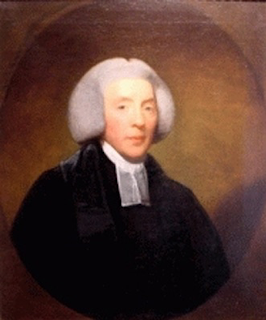
Birth of Cornelius Denvir, Mathematician & Lord Bishop of Down and Connor

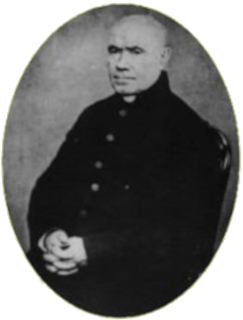
Cornelius Denvir, Roman Catholic Prelate, mathematician, natural philosopher and Lord Bishop of Down and Connor, is born on August 13, 1791, at Ballyculter, County Down. He is noted for ministering in Belfast amidst growing sectarian tension, taking a moderate and non-confrontational stance, to the annoyance of his pro-Catholic followers. He is also a professor at Maynooth College as well as Down and Connor Diocesan College, and is active in the local scientific community.

Denvir is educated at Dr. Nelson’s Classical School in Downpatrick, being described by peers as an enthusiastic child with a love for sight-seeing. According to one biographer, young Denvir also shows interest in the catechism by attending local visits from the then Bishop of Down and Connor, Dr. Patrick MacMullan, who is resident in Downpatrick. In September 1808, he enrolls at Maynooth College, and is appointed chair of Natural Philosophy and Mathematics there in August 1813.

As chair of mathematics and natural philosophy at Maynooth College, Denvir is noted for changing the style of education at the college from pure logic-based reasoning in Mathematics to a more holistic, topical approach. He is also noted for emphasising experimentation and the importance of the scientific method in teaching natural philosophy, with several sources noting his well-stocked labs.

While at Maynooth College Denvir teaches both Nicholas Callan, the inventor and physicist, and Dominic Corrigan, the noted Irish physician. According to several accounts, both speak fondly of their old professor, to the point of Callan gifting Denvir one of his induction coils in thanks.

Denvir is ordained first as deacon in June 1813, then a priest in May 1814, performing his liturgical duties in conjunction with his academic ones. In 1826, he leaves Maynooth College to become the parish priest of Downpatrick. In 1833 he becomes a professor at the newly founded St. Malachy’s College, teaching classes in Latin, Greek and Mathematics. He continues his duties as parish priest and professor until 1835, when he is appointed Bishop of Down and Connor in succession to Dr. William Crolly.

As 22nd Lord Bishop of Down and Connor, Denvir emphasises the teaching of the Catechism to youth as well as emphasising the importance of scripture to the diocese. In 1841 he helps fund the start of construction of St. Malachy’s Church in Belfast, which is completed in 1845. In his later years, he falls under criticism by other Belfast Catholics, who claim he is neglectful of his duties, especially those relating to expanding and defending Catholicism in the face of growing Protestant influence. Some accounts attribute his shortcomings to poor health and temperament, while others suggest that he backs away from expansion to avoid conflict with Protestant groups.

Denvir suffers from personal finance problems during his time as Bishop. The construction of St. Malachy’s Church puts him into deep personal debt, which he is apparently arrested for some time after 1844. He is also criticised for selling seats in the newly constructed church to offset costs. He is also described as reluctant in asking for funds from parishioners, severely limiting his resources with which to care for the church.

Denvir is appointed Commissioner of National Education in 1853. He is noted for being supportive of non-denominational education and investigating reports of proselytism in public primary education. He later resigns this position in 1857 on request of the Holy See to focus on expanding the local Catholic school system.

In 1860, after years of illness compounded by age, Denvir is assigned Dr. Patrick Dorrian as a coadjutor bishop to assist in his episcopal duties. While ill health is said to be the predominant reason for the appointment of a coadjutor, contemporary newspaper accounts suggest there also might be an ideological reason for the appointment. In The Spectator it is noted in December 1859 “it may be, because he is too liberal for the Cullen epoch.”

In May 1865, Denvir resigns as Bishop and is succeeded by Dorrian. He dies one year later on July 10, 1866, in his residence on Donegall St., after suffering from fainting fits a few days prior. He is buried in Ballycruttle Church.


Leave a comment

Birth of Nicholas Joseph Callan, Priest & Scientist

Father Nicholas Joseph Callan, Irish priest and scientist, is born on December 22, 1799, in Darver, County Louth. He is Professor of Natural Philosophy in Maynooth College in Maynooth, County Kildare from 1834, and is best known for his work on the induction coil.

Callan attends school at an academy in Dundalk. His local parish priest, Father Andrew Levins, then takes him in hand as an altar boy and Mass server and sees him start the priesthood at Navan seminary. He enters Maynooth College in 1816. In his third year at Maynooth, he studies natural and experimental philosophy under Dr. Cornelius Denvir. He introduces the experimental method into his teaching and has an interest in electricity and magnetism.

Callan is ordained a priest in 1823 and goes to Rome to study at Sapienza University, obtaining a doctorate in divinity in 1826. While in Rome he becomes acquainted with the work of the pioneers in electricity such as Luigi Galvani (1737–1798), who is a pioneer in bioelectricity, and Alessandro Volta (1745–1827), who is known especially for the development of the electric battery. In 1826, he returns to Maynooth as the new Professor of Natural Philosophy (now called physics), where he also begins working with electricity in his basement laboratory at the college.

Influenced by William Sturgeon and Michael Faraday, Callan begins work on the idea of the induction coil in 1834. He invents the first induction coil in 1836. An induction coil produces an intermittent high voltage alternating current from a low voltage direct current supply. It has a primary coil consisting of a few turns of thick wire wound around an iron core and subjected to a low voltage (usually from a battery). Wound on top of this is a secondary coil made up of many turns of thin wire. An iron armature and make-and-break mechanism repeatedly interrupts the current to the primary coil, producing a high voltage, rapidly alternating current in the secondary circuit.

Callan invents the induction coil because he needs to generate a higher level of electricity than currently available. He takes a bar of soft iron, about 2 feet long, and wraps it around with two lengths of copper wire, each about 200 feet long. He connects the beginning of the first coil to the beginning of the second. Finally, he connects a battery, much smaller than the enormous contrivance just described, to the beginning and end of winding one. He finds that when the battery contact is broken, a shock can be felt between the first terminal of the first coil and the second terminal of the second coil.

Further experimentation shows how the coil device can bring the shock from a small battery up the strength level of a big battery. So Callan tries making a bigger coil. With a battery of only 14 seven-inch plates, the device produces power enough for an electric shock “so strong that a person who took it felt the effects of it for several days.” He thinks of his creation as a kind of electromagnet, but what he actually makes is a primitive induction transformer.

Callan’s induction coil also uses an interrupter that consists of a rocking wire that repeatedly dips into a small cup of mercury (similar to the interrupters used by Charles Grafton Page). Because of the action of the interrupter, which can make and break the current going into the coil, he calls his device the “repeater.” Actually, this device is the world’s first transformer. He induces a high voltage in the second wire, starting with a low voltage in the adjacent first wire. The faster he interrupts the current, the bigger the spark. In 1837 he produces his giant induction machine using a mechanism from a clock to interrupt the current 20 times a second. It generates 15-inch sparks, an estimated 60,000 volts and the largest artificial bolt of electricity then seen.

Callan experiments with designing batteries after he finds the models available to him at the time to be insufficient for research in electromagnetism. Some previous batteries had used rare metals such as platinum or unresponsive materials like carbon and zinc. He finds that he can use inexpensive cast iron instead of platinum or carbon. For his Maynooth battery he uses iron casting for the outer casing and places a zinc plate in a porous pot (a pot that had an inside and outside chamber for holding two different types of acid) in the centre. Using a single fluid cell, he disposes of the porous pot and two different fluids. He is able to build a battery with just a single solution.

While experimenting with batteries, Callan also builds the world’s largest battery at that time. To construct this battery, he joins together 577 individual batteries (“cells“), which use over 30 gallons of acid. Since instruments for measuring current or voltages have not yet been invented, he measures the strength of a battery by measuring how much weight his electromagnet can lift when powered by the battery. Using his giant battery, his electromagnet lifts 2 tons. The Maynooth battery goes into commercial production in London. He also discovers an early form of galvanisation to protect iron from rusting when he is experimenting on battery design, and he patents the idea.

Callan dies at the age of 64 in Maynooth, County Kildare, on January 10, 1864. He is buried in the cemetery in St. Patrick’s College, Maynooth.

The Callan Building on the north campus of NUI Maynooth, a university which is part of St. Patrick’s College until 1997, is named in his honour. In addition, Callan Hall in the south campus, is used through the 1990s for first year science lectures including experimental & mathematical physics, chemistry and biology. The Nicholas Callan Memorial Prize is an annual prize awarded to the best final year student in Experimental Physics.


Leave a comment

Birth of Thomas Romney Robinson, Astronomer & Physicist

Reverend John Thomas Romney Robinson, 19th-century astronomer and physicist usually referred to as Thomas Romney Robinson, was born at St. Anne’s in Dublin on April 23, 1792. He is the longtime director of the Armagh Observatory, one of the chief astronomical observatories in the United Kingdom at the time. He is remembered as the inventor in 1846 of the Robinson 4-cup anemometer, a device for measuring the speed of the wind.

Robinson is the son of the English portrait painter Thomas Robinson (d.1810) and his wife, Ruth Buck (d.1826). He is educated at Belfast Academy then studies Divinity at Trinity College Dublin, where he is elected a Scholar in 1808, graduating BA in 1810 and obtaining a fellowship in 1814, at the age of 22. He is for some years a deputy professor of natural philosophy (physics) at Trinity.

In 1823, at the age of 30, Robinson gains the appointment of astronomer at the Armagh Observatory. From this point on he always resides at the Armagh Observatory, engaged in research connected with astronomy and physics, until his death in 1882. Having also been ordained as an Anglican priest while at Trinity, he obtains the church livings of the Anglican Church at Enniskillen and at Carrickmacross in 1824.

During the 1840s and 1850s Robinson is a frequent visitor to the world’s most powerful telescope of that era, the so-called Leviathan of Parsonstown telescope, which had been built by Robinson’s friend and colleague William Parsons, 3rd Earl of Rosse. He is active with Parsons in interpreting the higher-resolution views of the night sky produced by Parsons’ telescope, particularly with regard to the galaxies and nebulae and he publishes leading-edge research reports on the question.

Back at his own observatory in Armagh, Robinson compiles a large catalogue of stars and writes many related reports. In 1862 he is awarded a Royal Medal “for the Armagh catalogue of 5345 stars, deduced from observations made at the Armagh Observatory, from the years 1820 up to 1854; for his papers on the construction of astronomical instruments in the memoirs of the Astronomical Society, and his paper on electromagnets in the Transactions of the Royal Irish Academy.”

Robinson is president of the Royal Irish Academy from 1851 to 1856 and is a long-time active organiser in the British Association for the Advancement of Science. He is a friend of Charles Babbage, who says was “indebted” for having reminded him about the first time he came up with the idea of the calculating machine.

Robinson marries twice, first to Eliza Isabelle Rambaut (d.1839) and secondly to Lucy Jane Edgeworth (1806–1897), the lifelong disabled daughter of Richard Lovell Edgeworth. His daughter marries the physicist George Gabriel Stokes. Stokes frequently visits Robinson in Armagh in Robinson’s later years.

Robinson dies in Armagh, County Armagh at the age of 89 on February 28, 1882.

The crater Robinson on the Moon is named in his honour.


Leave a comment

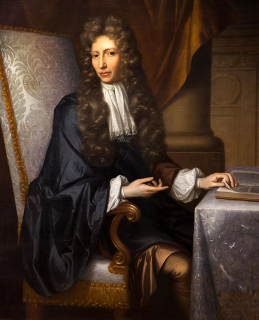
Birth of Robert Boyle, Philosopher, Writer & Chemist

Robert Boyle, Anglo-Irish natural philosopher, theological writer, chemist, physicist, inventor and a preeminent figure of 17th-century intellectual culture, is born on January 25, 1627, at Lismore Castle, in County Waterford.

At age eight, Boyle begins his formal education at Eton College, where his studious nature quickly becomes apparent. In 1639 he and his brother Francis embark on a grand tour of the continent together with their tutor Isaac Marcombes. In 1642, owing to the Irish rebellion, Francis returns home while Robert remains with his tutor in Geneva and pursues further studies.

Boyle returns to England in 1644, where he takes up residence at his hereditary estate of Stalbridge in Dorset. There he begins a literary career writing ethical and devotional tracts, some of which employ stylistic and rhetorical models drawn from French popular literature, especially romance writings. In 1649 he begins investigating nature via scientific experimentation. From 1647 until the mid-1650s, he remains in close contact with a group of natural philosophers and social reformers gathered around the intelligencer Samuel Hartlib. This group, the Hartlib Circle, includes several chemists who heighten his interest in experimental chemistry.

Boyle spends much of 1652–1654 in Ireland overseeing his hereditary lands and performing some anatomic dissections. In 1654 he is invited to Oxford, and he takes up residence at the university until 1668. In Oxford he is exposed to the latest developments in natural philosophy and becomes associated with a group of notable natural philosophers and physicians, including John Wilkins, Christopher Wren, and John Locke. These individuals, together with a few others, form the “Experimental Philosophy Club.” Much of Boyle’s best known work dates from this period.

In 1659 Boyle and Robert Hooke, the clever inventor and subsequent curator of experiments for the Royal Society, complete the construction of their famous air pump and use it to study pneumatics. Their resultant discoveries regarding air pressure and the vacuum appear in Boyle’s first scientific publication, New Experiments Physico-Mechanicall, Touching the Spring of the Air and Its Effects (1660). Boyle and Hooke discover several physical characteristics of air, including its role in combustion, respiration, and the transmission of sound. One of their findings, published in 1662, later becomes known as “Boyle’s law.” This law expresses the inverse relationship that exists between the pressure and volume of a gas, and it is determined by measuring the volume occupied by a constant quantity of air when compressed by differing weights of mercury.

Among Boyle’s most influential writings are The Sceptical Chymist (1661), which assails the then-current Aristotelian and especially Paracelsian notions about the composition of matter and methods of chemical analysis, and the Origine of Formes and Qualities (1666), which uses chemical phenomena to support the corpuscularian hypothesis. He argues so strongly for the need of applying the principles and methods of chemistry to the study of the natural world and to medicine that he later gains the appellation of the “father of chemistry.”

Boyle is a devout and pious Anglican who keenly champions his faith. He sponsors educational and missionary activities and writes a number of theological treatises. He is deeply concerned about the widespread perception that irreligion and atheism are on the rise, and he strives to demonstrate ways in which science and religion are mutually supportive. For Boyle, studying nature as a product of God’s handiwork is an inherently religious duty. He argues that this method of study would, in return, illuminate God’s omnipresence and goodness, thereby enhancing a scientist’s understanding of the divine. The Christian Virtuoso (1690) summarizes these views and may be seen as a manifesto of his own life as the model of a Christian scientist.

In 1668 Boyle leaves Oxford and takes up residence with his sister Katherine Jones, Vicountess Ranelagh, in her house on Pall Mall in London. There he sets up an active laboratory, employs assistants, receives visitors, and publishes at least one book nearly every year. Living in London also provides him the opportunity to participate actively in the Royal Society.

Boyle is a genial man who achieves both national and international renown during his lifetime. He is offered the presidency of the Royal Society and the episcopacy but declines both. Throughout his adult life, he is sickly, suffering from weak eyes and hands, recurring illnesses, and one or more strokes. He dies in London at age 64 on December 31, 1691, after a short illness exacerbated by his grief over Katherine’s death a week earlier. He leaves his papers to the Royal Society and a bequest for establishing a series of lectures in defense of Christianity. These lectures, now known as the Boyle Lectures, continue to this day.


Leave a comment

Birth of John Tyndall, Experimental Physicist

File source: //commons.wikimedia.org/wiki/File:John_Tyndall_(scientist).jpg

John Tyndall, Irish experimental physicist who, during his long residence in England, is an avid promoter of science in the Victorian era, is born on August 2, 1820, in Leighlinbridge, County Carlow.

Tyndall is born into a poor Protestant Irish family. After a thorough basic education, he works as a surveyor in Ireland and England from 1839 to 1847. When his ambitions turn from engineering to science, he spends his savings on gaining a Ph.D. from the University of Marburg in Marburg, Hesse, Germany (1848–1850), but then struggles to find employment.

In 1853 Tyndall is appointed Professor of Natural Philosophy at the Royal Institution, London. There he becomes a friend of the much-admired physicist and chemist Michael Faraday, entertains and instructs fashionable audiences with brilliant lecture demonstrations rivaling the biologist Thomas Henry Huxley in his popular reputation and pursuing his research.

An outstanding experimenter, particularly in atmospheric physics, Tyndall examines the transmission of both radiant heat and light through various gases and vapours. He discovers that water vapor and carbon dioxide absorb much more radiant heat than the gases of the atmosphere and argues the consequent importance of those gases in moderating Earth’s climate, that is, in the natural greenhouse effect. He also studies the diffusion of light by large molecules and dust, known as the Tyndall effect, and he performs experiments demonstrating that the sky’s blue color results from the scattering of the Sun’s rays by molecules in the atmosphere.

Tyndall is passionate and sensitive, quick to feel personal slights and to defend underdogs. Physically tough, he is a daring mountaineer. His greatest fame comes from his activities as an advocate and interpreter of science. In collaboration with his scientific friends in the small, private X Club, he urges greater recognition of both the intellectual authority and practical benefits of science.

Tyndall is accused of materialism and atheism after his presidential address at the 1874 meeting of the British Association for the Advancement of Science, when he claims that cosmological theory belongs to science rather than theology and that matter has the power within itself to produce life. In the ensuing notoriety over this “Belfast Address,” his allusions to the limitations of science and to mysteries beyond human understanding are overlooked. He engages in a number of other controversies such as spontaneous generation, the efficacy of prayer and Home Rule for Ireland.

In his last years Tyndall often takes chloral hydrate to treat his insomnia. When bedridden and ailing, he dies from an accidental overdose of this drug on December 4, 1893, at the age of 73 and was buried at Haslemere, Surrey, England.

Tyndall is commemorated by a memorial, the Tyndalldenkmal, erected at an elevation of 7,680 ft. on the mountain slopes above the village of Belalp, where he had his holiday home, and in sight of the Aletsch Glacier, which he had studied.


Leave a comment

Birth of Arthur William Conway, UCD President

arthur-william-conway

Arthur William Conway FRS, President of University College Dublin between 1940 and 1947, is born in Wexford, County Wexford, on October 2, 1875.

Conway receives his early education at St. Peter’s College, Wexford and proceeds to enter old University College, Dublin in 1892. He receives his BA degree from the Royal University of Ireland in 1896 with honours in Latin, English, Mathematics, and Natural Philosophy. In 1897, he receives his MA degree with highest honours in mathematics and proceeds to Corpus Christi College, Oxford, becoming University Scholar there in 1901. Also in 1901, he is appointed to the professorship of Mathematical Physics in the old University College and holds the Chair until the creation of the new college in 1909. He also teaches for a short time at St. Patrick’s College, Maynooth.

Conway marries Agnes Christina Bingham on August 19, 1903. They have three daughters and one son.

One of Conway’s students is Éamon de Valera, whom he introduces to quaternions which originate in Ireland. De Valera warms to the subject and engages in research of this novelty of abstract algebra. Later, when de Valera becomes Taoiseach, he calls upon Conway while forming the Dublin Institute for Advanced Studies.

Conway is remembered for his application of biquaternion algebra to the special theory of relativity. He publishes an article in 1911, and in 1912 asserts priority over Ludwik Silberstein, who also applies biquaternions to relativity. This claim is backed up by George Temple in his book 100 Years of Mathematics. In 1947 Conway puts quaternions to use with rotations in hyperbolic space. The next year he publishes quantum mechanics applications which are referred to in a PhD thesis by Joachim Lambek in 1950.

In 1918, Conway is the Irish Parliamentary Party candidate in South Londonderry and in the National University of Ireland, coming in second in both.

Conway continues his scholarship in the field of mathematics and theoretical physics and makes a special study of William Rowan Hamilton. With John Lighton Synge, he edits the first volume of Hamilton’s mathematical papers, and, with A. J. McConnell, he edits the second volume of Hamilton’s mathematical papers. Conway is also active in college life, being appointed Registrar, a position he occupies until his election as president in 1940. He retires in 1947 from the presidency of UCD. In 1953, some of his writings are edited by J. McConnell for publication by the Dublin Institute for Advanced Studies.

He is elected President of the Royal Irish Academy from 1937 to 1940.