seamus dubhghaill

Promoting Irish Culture and History from Little Rock, Arkansas, USA


Leave a comment

Birth of Production Designer Cedric Gibbons

cedric-gibbons

Austin Cedric Gibbons, Irish American art director and production designer for the film industry, is born in Dublin on March 23, 1893. He also makes a significant contribution to motion picture theater architecture from the 1930s to 1950s.

Gibbons was born to architect Austin P. Gibbons and Veronica Fitzpatrick Simmons. He is privately tutored and studies at the Art Students League of New York. In 1911 he begins working in his father’s office as a junior draftsman. From 1915 he serves as art director at Edison Studios in New Jersey and then serves in the United States Navy during World War I. He then joins Goldwyn Studios and begins a long career with Metro-Goldwyn-Mayer in 1924, the year the studio is founded.

Gibbons is one of the original 36 founding members of the Academy of Motion Picture Arts and Sciences and oversees the design of the Academy Awards statuette in 1928, a trophy for which he himself would be nominated 38 times for Best Production Design, winning eleven.

In 1930, Gibbons marries actress Dolores del Río and co-designs their house in Santa Monica, an intricate Art Deco residence influenced by Rudolf Schindler. They divorce in 1941. Three years later he marries actress Hazel Brooks, with whom he remains until his death.

Gibbons’s set designs, particularly those in such films as Born to Dance (1936) and Rosalie (1937), heavily inspire motion picture theater architecture in the late 1930s through 1950s. The style is found very clearly in the theaters that are managed by the Skouras brothers, whose designer Carl G. Moeller uses the sweeping scroll-like details in his creations. Among the more classic examples are the Loma Theater in San Diego, The Crest in Long Beach and Fresno, and the Culver Theater in Culver City. The style is sometimes referred to as Art Deco and Art Moderne.

Gibbons retires in 1956 with about 1,500 films credited to him, however, his contract with MGM dictates that he receives credit as art director for every MGM film released in the United States, even though other designers might do the bulk of the work. Even so, his actual hands-on art direction is believed to be about 150 films.

Gibbons’ second cousin, Frederick Gibbons, a musician, orchestra conductor, and entertainer who works with him at MGM, is the father of Billy Gibbons of the rock band ZZ Top.

Cedric Gibbons dies in Los Angeles on July 26, 1960, at the age of 67. He is buried in the Calvary Cemetery, East Los Angeles.

Leave a comment

Birth of Civil War Officer John O’Neill

john-oneill

John Charles O’Neill, Irish-born officer in the American Civil War and member of the Fenian Brotherhood, is born on March 9, 1834, in Drumgallon, Clontibret, County Monaghan. He is best known for his activities leading the Fenian raids on Canada in 1866 and 1871.

O’Neill receives some schooling in Drumgallon. He emigrates to New Jersey in 1848 at the height of the Great Famine in Ireland. He receives an additional year of education there and works in a number of jobs. In 1857 he enlists in the 2nd United States Dragoons and serves in the Utah War (May 1857 – July 1858), apparently deserting afterwards to California.

In California, he joins the 1st Cavalry and serves as a sergeant in the American Civil War with this regiment until December 1862, at which time he is commissioned as an officer in the 5th Indiana Cavalry. He is credited as being a daring fighting officer, but believes he has not received due promotion, which leads to a transfer to the 17th United States Colored Infantry as captain. He leaves the Union Army prior to the end of the conflict, marrying Mary Crow, with whom he has several children.

While in Tennessee, O’Neill joins the militant Irish American movement, the Fenian Brotherhood, which eschews politics in favor of militant action to expel the British presence in Ireland. He attaches himself to the group led by William Randall Roberts, who wishes to attack Canada.

O’Neill, ranked as colonel, travels to the Canada–US border with a group from Nashville to participate in the Fenian raids. The assigned commander of the expedition does not appear, so O’Neill takes command. On June 1, 1866, he leads a group of six hundred men across the Niagara River and occupies Fort Erie.

The following day, north of Ridgeway, Ontario, O’Neill’s group encounters a detached column of Canadian volunteers, commanded by Lt-Col. Alfred Booker. The inexperienced Canadians are routed by the Civil War veterans. O’Neill withdraws back to Fort Erie and fights a battle against a detachment led by John Stoughton Dennis. With overwhelming numbers of Canadian forces closing in, O’Neill oversees a successful evacuation on the night of June 2-3 back to United States territory. He is later charged with violating the neutrality laws of the United States, but the charges are later dropped.

The penetration of O’Neill’s organisation by British and Canadian spies ensures that his next venture into Canada, the Battle of Eccles Hill, in 1870 is known in advance, and Canada is accordingly prepared. After the Battle of Trout River ends in a disorganized rout, O’Neill is arrested by United States Marshal George P. Foster and charged with violating neutrality laws. He is sentenced to two years in prison in July 1870 but he and other Fenians are pardoned by President Ulysses S. Grant that October.

Though he renounces the idea of further attacks on Canada, he changes his mind at the urging of an associate of Louis Riel, William Bernard O’Donoghue. With the latter, and without the backing of the bulk of the Fenians, he leads an attack on the Hudson’s Bay Company‘s post at Pembina, Manitoba, on October 5, 1871. The area is then disputed between America and Canada. He is arrested by American troops.

In 1874 O’Neill embarks on a lecture tour along the east coast, encouraging the poor Irish that they would have a better standard of living if they would resettle with him in Nebraska. The first Irish colony in Nebraska is set up in Holt County in the town that bears his name today – O’Neill, Nebraska. His legacy is in the communities that exist in Nebraska today. These settlements are thriving and successful farming communities. John O’Neill can claim credit for the spirit of generosity that is still part of these communities today.

In 1877, while on a speaking tour in Little Rock, Arkansas, O’Neill becomes ill and returns to his home in Nebraska. His condition continues to deteriorate and, after been admitted to St. Joseph’s Hospital Omaha in November 1877, suffers a paralytic stroke and dies on January 8, 1878.


2 Comments

Deportation of Joe Doherty

joseph-doherty

Joe Doherty, a volunteer in the Belfast Brigade of the Provisional Irish Republican Army (IRA) who escapes during his 1981 trial for killing a member of the Special Air Service (SAS) in 1980, is arrested in the United States in 1983 and is deported to Northern Ireland by the U.S. government on February 19, 1992. A first season episode of Law & Order entitled “The Troubles” is based on his case.

The trial of Doherty and the other members of their four-man active service unit nicknamed the “M60 gang” begins in early May 1981, on charges including three counts of murder. On June 10, Doherty and seven other prisoners, including Angelo Fusco and the other members of the IRA unit, take a prison officer hostage at gunpoint in Crumlin Road Gaol and ultimately escape in waiting cars. Two days after the escape, Doherty is convicted in absentia and sentenced to life imprisonment with a minimum recommended term of thirty years.

Doherty escapes across the border into the Republic of Ireland, and then travels to the United States on a false passport. He lives with an American girlfriend in Brooklyn and New Jersey, working on construction sites and as a bartender at Clancy’s Bar in Manhattan, where he is arrested by the FBI on June 28, 1983. He is imprisoned in the Metropolitan Correctional Center in Manhattan, and a legal battle ensues with the British government seeking to extradite him back to Northern Ireland. Doherty claims he is immune from extradition as the killing of Royal Irish Constabulary Captain Herbert Westmacott was a political act. In 1985 federal judge John E. Sprizzo rules Doherty cannot be extradited as the killing is a “political offense.” Doherty’s legal battle continues as the United States Department of Justice then attempts to deport him for entering the country illegally.

Doherty remains in custody at the Metropolitan Correctional Center and attempts to claim political asylum, and on June 15, 1988, Attorney General Edwin Meese overturns an earlier ruling by the Federal Board of Immigration Appeals that Doherty can be deported to the Republic of Ireland and orders his deportation to Northern Ireland. In February 1989 new Attorney General Dick Thornburgh chooses not to support the decision made by his predecessor and asks lawyers for Doherty and the Immigration and Naturalization Service to submit arguments for a review of the decision and Doherty’s claim for asylum. By this time Doherty’s case is a cause célèbre with his sympathisers including over 130 Congressmen and a son of then President of the United States George H. W. Bush. In 1990 a street corner near the Metropolitan Correctional Center is named after him.

In August 1991, Doherty is transferred to a federal prison in Lewisburg, Pennsylvania, and on January 16, 1992, the Supreme Court of the United States overturns a 1990 Federal Appeals Court ruling by a 5-to-3 decision, paving the way for his deportation. On February 19, 1992, Doherty is deported to Northern Ireland, despite pleas to delay the deportation from members of Congress, Mayor of New York City David Dinkins, and the Cardinal Archbishop of New York, John Joseph O’Connor.

Doherty is returned to Crumlin Road Gaol before being transferred to HM Prison Maze. He is released from prison on November 6, 1998, under the terms of the Good Friday Agreement. After his release Doherty becomes a community worker specialising in helping disadvantaged young people. In 2006, he appears in the BBC television show Facing the Truth opposite the relatives of a soldier killed in the Warrenpoint ambush.


Leave a comment

Sinking of the SS Tuscania

ss-tuscania

The SS Tuscania, a luxury liner of the Cunard Line subsidiary Anchor Line converted for troop use, is torpedoed and sunk on February 5, 1918 off Rathlin Island, north of Ireland by the German U-boat UB-77. The ship is transporting over 2,000 American troops to the war in Europe. Over 200 people lose their lives.

SS Tuscania carries passengers between New York City and Glasgow while in service with the Anchor Line, on a route that had previously been assigned to her sister ship SS Transylvania. She continues to run this route even as World War I breaks out in Europe in August 1914 and Germany initiates a submarine campaign against merchant shipping in waters near the United Kingdom.

SS Tuscania makes international headlines for rescuing passengers and crew from the burning Greek steamer SS Athinai on September 20, 1915. In 1916, SS Tuscania is refitted and pressed into service as a troopship. She makes the news again in March 1917 by evading a submarine and a suspected Imperial German Navy armed merchant cruiser.

On January 24, 1918, SS Tuscania departs Hoboken, New Jersey, with 384 crew members and 2,013 United States Army personnel aboard. On the morning of February 5, 1918, she turns south for the North Channel en route to Liverpool. The German submarine UB-77 sights SS Tuscania′s convoy during the day and stalks it until early evening. Under the cover of darkness at about 6:40 PM, the submarine′s commanding officer, Korvettenkapitän Wilhelm Meyer, orders two torpedoes fired at SS Tuscania. The second of these strikes home, sending her to the bottom of the Irish Sea within about four hours. SS Tuscania sinks nearly three years to the day after her maiden voyage as a passenger liner. Approximately 210 of the troops and crew are lost, while many others are rescued by the Royal Navy destroyers HMS Mosquito and HMS Pigeon.

Three notable passengers who survive the sinking are British critic Sydney Brooks, Leonard Read, founder of the Foundation for Economic Education, and Harry Randall Truman who later dies in the 1980 eruption of Mount St. Helens.

The wreck of SS Tuscania lies between Scotland‘s Islay and Northern Ireland′s Rathlin Island, about 7 nautical miles north of Rathlin lighthouse, at roughly 55.41°N 06.185°W in 328 feet of water.


1 Comment

Death of General John Charles O’Neill

general-john-oneill

John Charles O’Neill, Irish-born officer in the American Civil War and member of the Fenian Brotherhood, dies on January 7, 1878. He is best known for his activities leading the Fenian raids on Canada in 1866 and 1871.

O’Neill is born on March 9, 1834, in Drumgallon, Clontibret, County Monaghan, where he receives some schooling. He emigrates to New Jersey in 1848 at the height of the Great Famine. He receives an additional year of education there and works various jobs. In 1857 he enlists in the 2nd United States Dragoons and serves in the Utah War (May 1857 – July 1858), apparently deserting afterwards to California.

In California, O’Neill joins the 1st Cavalry, and serves as a sergeant in the American Civil War with this regiment until December 1862, at which time he is commissioned as an officer in the 5th Indiana Cavalry. He is credited as being a daring fighting officer but believes he has not received due promotion, which leads to a transfer to the 17th United States Colored Infantry as captain. He leaves the Union Army prior to the end of the conflict, marrying Mary Crow, with whom he has several children.

While in Tennessee, O’Neill joins the militant Irish American movement, the Fenian Brotherhood, which eschews politics in favor of militant action to expel the British presence in Ireland. He attaches himself to the group led by William Randall Roberts, who wishes to attack Canada.

O’Neill, ranked as colonel, travels to the Canada–US border with a group from Nashville to participate in the Fenian raids. The assigned commander of the expedition does not appear, so O’Neill takes command. On June 1, 1866, he leads a group of six hundred men across the Niagara River and occupies Fort Erie.

The following day, north of Ridgeway, Ontario, O’Neill’s group encounters a detached column of Canadian volunteers, commanded by Lt-Col. Alfred Booker. The inexperienced Canadians are routed by the Civil War veterans. O’Neill withdraws back to Fort Erie and fights a battle against a detachment led by John Stoughton Dennis. With overwhelming numbers of Canadian forces closing in, O’Neill oversees a successful evacuation on the night of June 2-3 back to United States territory. He is later charged with violating the neutrality laws of the United States, but the charge is dropped.

The split between two factions of the Fenians remain, and penetration of O’Neill’s organisation by British and Canadian spies ensures that his next venture into Canada in 1870 is known in advance, and Canada is accordingly prepared. After the Battle of Trout River ends in a disorganized rout, O’Neill is arrested by United States Marshal George P. Foster and charged with violating neutrality laws. That leads to O’Neill’s imprisonment in July 1870 with a sentence of two years, but he and other Fenians are pardoned by President Ulysses S. Grant that October.

Though O’Neill renounces the idea of further attacks on Canada, he changes his mind at the urging of an associate of Louis Riel, William Bernard O’Donoghue. With the latter, and without the backing of the bulk of the Fenians, he leads an attack on the Hudson’s Bay Company‘s post at Pembina, Manitoba, on October 5, 1871. The area is then disputed between America and Canada. He is arrested by American troops.

Following his military career, O’Neill works for a firm of land speculators in Holt County, Nebraska. He dies of a paralytic stroke on January 7, 1878, and is buried in Omaha, Nebraska.


Leave a comment

John Sullivan & The Battle of Trenton

john-sullivan

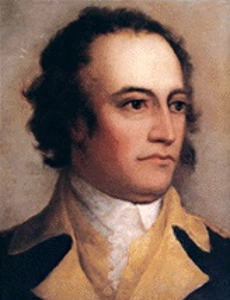
The Battle of Trenton is a small but pivotal battle during the American Revolutionary War which takes place on the morning of December 26, 1776, in Trenton, New Jersey.

The Continental Army has previously suffered several defeats in New York and has been forced to retreat through New Jersey to Pennsylvania. Morale in the army is low. To end the year on a positive note, George Washington, Commander-in-Chief of the Continental Army, devises a plan to cross the Delaware River on the night of December 25–26 and surround the Hessian garrison.

Because the river is icy and the weather severe, the crossing proves dangerous. Two detachments are unable to cross the river, leaving Washington with only 2,400 men under his command in the assault, 3,000 less than planned.

Washington’s army marches 9 miles south to Trenton. One division commanded by John Sullivan, the third son of Irish settlers from the Beara Peninsula in County Cork, secures the important bridge over the Assunpink Creek to the south of the town. This prevents escape and ensures the high number of Hessian prisoners captured.

The Hessians have lowered their guard, thinking they are safe from the American army, and have no long-distance outposts or patrols. Washington’s forces catch them off guard and, after a short but fierce resistance, most of the Hessians surrender, with negligible losses to the Americans. Almost two thirds of the 1,500-man garrison are captured, and only a few troops escaped across Assunpink Creek.

Despite the battle’s small numbers, the American victory inspires rebels in the colonies. With the success of the revolution in doubt a week earlier, the army had seemed on the verge of collapse. The dramatic victory inspires soldiers to serve longer and attracted new recruits to the ranks.

John Sullivan goes on to serve as a delegate in the Continental Congress, the third Governor of New Hampshire and a judge of the United States District Court for the District of New Hampshire. He dies on January 23, 1795, at the age of 54 in Durham, New Hampshire. He is buried in the Sullivan Family Burial Ground in Durham.


Leave a comment

The Closing of Ellis Island

Ellis Island, the gateway to America, shuts it doors on November 12, 1954, after processing more than 12 million immigrants, including an estimated two million Irish, since opening in 1892. Today, an estimated 40 percent of all Americans can trace their roots through Ellis Island, located in New York Harbor off the New Jersey coast and named for merchant Samuel Ellis, who owned the land in the 1770s.

On January 2, 1892, 15-year-old Annie Moore, from County Cork, becomes the first person to pass through the newly opened Ellis Island, which President Benjamin Harrison designates as America’s first federal immigration center in 1890. Prior to the opening of Ellis Island the processing of immigrants has been handled by individual states.

Not all immigrants who sail into New York have to go through Ellis Island. First- and second-class passengers submit to a brief shipboard inspection and then disembarked at the piers in New York or New Jersey, where they pass through customs. People in third class, though, are transported to Ellis Island, where they undergo medical and legal inspections to ensure they do not have a contagious disease or some condition that might make them a burden to the government. Only two percent of all immigrants are denied entrance into the United States.

Immigration to Ellis Island peaks between 1892 and 1924, during which time the 3.3-acre island is enlarged with landfill and additional buildings are constructed to handle the massive influx of immigrants. During the busiest year of operation, 1907, over 1 million people are processed at Ellis Island.

With the United States’ entrance into World War I, immigration declines and Ellis Island is used as a detention center for suspected enemies. Following the war, Congress passes quota laws and the Immigration Act of 1924, which sharply reduces the number of newcomers allowed into the country and also enables immigrants to be processed at U.S. consulates abroad. After 1924, Ellis Island switches from a processing center to serving other purposes, such as a detention and deportation center for illegal immigrants, a hospital for wounded soldiers during World War II and a Coast Guard training center. In November 1954, the last detainee, a Norwegian merchant seaman, is released and Ellis Island officially closes.

Beginning in 1984, Ellis Island undergoes a $160 million renovation, the largest historic restoration project in U.S. history. In September 1990, the Ellis Island Immigration Museum opens to the public and today is visited by almost 2 million people every year.


Leave a comment

Birth of Fanny Parnell, Poet & Nationalist

Fanny Parnell, Irish poet and Nationalist, is born Frances Isabelle Parnell in Avondale, County Wicklow on September 4, 1848. She is the sister of Charles Stewart Parnell, an important figure in nineteenth century Ireland.

Parnell is the eighth child out of eleven and fourth daughter born to John Henry Parnell, a landowner and the grandson of the last Chancellor of the Exchequer of Ireland, and Delia Tudor Stewart Parnell, an Irish American and the daughter of Admiral Charles Stewart (1778–1869) of the United States Navy. Her mother hates British rule in Ireland, a view presented through her children’s works. She is an intelligent girl and before she is through her teen years, she has studied mathematics, chemistry, and astronomy, and she can speak and write fluently in almost all the major European languages. She also has talents in music and painting and drawing in oil and water colours. Her parents separate when she is young. Soon afterwards, in July 1859, her father dies at the age of forty-eight and she and her mother move to Dalkey. A year later they move to Dublin, and in 1865 they move to Paris where Fanny studies art and writes poetry. In 1874 they move to Bordentown, New Jersey in the United States.

Parnell is known as the Patriot Poet. She shows interest in Irish politics and much of her poetry is about Irish nationalism. While she is living in Dublin in 1864, she begins publishing her poetry under the pseudonym “Aleria” in The Irish People, the newspaper of the Fenian Brotherhood. Most of her later work is published in The Pilot in Boston, the best-known Irish newspaper in America during the nineteenth century. Two of her most widely published works are The Hovels of Ireland, a pamphlet, and Land League Songs, a collection of poems. Her best-known poem is “Hold the Harvest,” which Michael Davitt refers to as the “Marseillaise of the Irish peasant.”

Parnell’s brother, Charles, becomes active in the Irish National Land League, an organisation that fights for poor tenant farmers, in 1879 and she strongly supports him. She and her younger sister, Anna Parnell (1852–1911), co-found the Ladies’ Land League in 1880 to raise money in America for the Land League. In 1881 the Ladies’ Land League continues the work of the men in the Land League while they are being imprisoned by the British government. In Ireland Anna becomes the president of the Ladies’ Land League, and the women hold many protests and quickly become more radical than the men, to the resentment of the male leaders. Fanny stays in America and works to raise money for the organisation. Most of the Land League’s financial support comes from America because of the campaigning done by Fanny Parnell.

Fanny Parnell dies on July 20, 1882, at the young age of 33, of a heart attack at the family mansion in Bordentown, New Jersey. She is buried at the Tudor family plot at Mount Auburn Cemetery in Cambridge, Massachusetts.


Leave a comment

Establishment of the Dublin Institute for Advanced Studies

The Dublin Institute for Advanced Studies (DIAS) is established in Dublin on June 19, 1940, by Taoiseach Éamon de Valera under the Institute for Advanced Studies Act, 1940. The Institute consists of three schools: the School of Theoretical Physics, the School of Cosmic Physics and the School of Celtic studies. The Institute under the act is empowered to “train students in methods of advanced research” but does not itself award degrees. Graduate students working under the supervision of Institute researchers can, with the agreement of the governing board of the appropriate school, be registered for a higher degree in any university worldwide.

Shortly after becoming Taoiseach, Éamon de Valera investigates the possibility of setting up an institute of higher learning. Being of mathematical background, de Valera is aware of the decline of the Dunsink Observatory, where Sir William Rowan Hamilton, regarded as Ireland’s most influential mathematician, has held the position of Royal Astronomer of Ireland. Following meetings with prominent academics in the fields of mathematics and astronomy, he comes to the conclusion that astronomy at Dunsink should be revived and an institute for higher learning should be established.

The Institute is initially located at 64 and 65 Merrion Square and consists of the School of Theoretical Physics and the School of Celtic Studies, to which the School of Cosmic Physics is added in 1947. It is modeled on the Institute for Advanced Study in Princeton, New Jersey, which was founded in 1930. Most importantly, Erwin Schrödinger is interested in coming to Ireland, and this represents an opportunity not to be missed. The School of Celtic Studies owes its founding to the importance de Valera accords to the Irish language. He considers it a vital element in the makeup of the nation, and therefore important that the nation should have a place of higher learning devoted to this subject.

The founding of the Institute is somewhat controversial, since at the time only a minority are successfully completing elementary education, and university education is for the privileged. By this reasoning, the creation of a high-level research institute is a waste of scarce resources. However, Éamon de Valera is aware of the great symbolic importance such a body would have on the international stage for Ireland. This thinking influences much of de Valera’s premiership.

Work by the Geophysics section of the School of Cosmic Physics on the formation of the North Atlantic demonstrates that the Irish continental shelf extends much further than previously thought, thereby more than doubling the area of the seabed over which Ireland can claim economic exploitation rights under the international law of the sea. Fundamental work in statistical mechanics by the School of Theoretical Physics finds application in computer switching technology and leads to the establishment of an Irish campus company to exploit this intellectual property. The Institute has also in recent years been one of the main agents helping to set up a modern e-Infrastructure in support of all Irish research.

In 1968 the Royal Society recognises de Valera’s contribution to science in establishing the Institute by electing him to honorary fellowship.

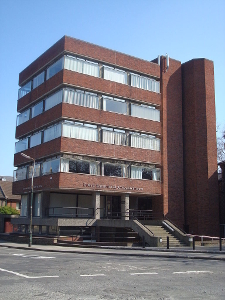
Currently the Institute has its schools located at three premises on the Southside of Dublin at 10 Burlington Road, 31 Fitzwilliam Place and 5 Merrion Square. It also maintains a presence at Dunsink Observatory in north County Dublin.

(Pictured: Dublin Institute for Advanced Studies School of Theoretical Physics, 10 Burlington Road, Dublin)


Leave a comment

Founding of the Ancient Order of Hibernians in America

The Ancient Order of Hibernians (AOH) is founded in the United States on May 4, 1836, at St. James’ Roman Catholic Church in New York City, near the old Five Points neighbourhood. A branch is formed the same year at Pottsville, Pennsylvania. The existence and activities of the Order are concealed for some years.

During the late 1860s and early 1870s many of the lodges of the order in Pennsylvania are infiltrated by the Molly Maguires. However, the Molly Maguires and their criminal activities are condemned at the 1876 national convention of the AOH, and the Order is reorganised in the Pennsylvania coal areas.

In 1884 there is a split in the organisation. The Order has previously been governed by the Board of Erin, which has governed the order in Ireland, Great Britain and the United States, but is composed of officers selected exclusively by the organisations in Ireland and Great Britain. The majority leave in 1884 and become the Ancient Order of Hibernians of America, while the small group calls itself Ancient Order of Hibernians, Board of Erin. In 1897 the Ancient Order of Hibernians, Board of Erin, has approximately 40,000 members concentrated in New YorkNew JerseyOhioIllinois, and Michigan, while the Ancient Order of Hibernians of America has nearly 125,000 members scattered throughout nearly every state in the union. The two groups reunite in 1898.

female auxiliary, the Daughters of Erin, is formed in 1894, and has 20,000 members in 1897. It is attached to the larger, “American” version of the order. The AOH has 181,000 members in 1965 and 171,000 in 736 local units of “Divisions” in 1979. John F. Kennedy joins the AOH in 1947.

The Ladies Ancient Order of Hibernians (LAOH) raises $50,000 to build the Nuns of the Battlefield sculpture in Washington, D.C., which the United States Congress authorises in 1918. The Irish American sculptor, Jerome Connor, ends up suing the Order for non-payment.

In 1982, in a revival of Hibernianism, the Thomas Francis Meagher Division No. 1 forms in Helena, Montana, dedicated to the principles of the Order and to restoring a historically accurate record of Brigadier General Meagher’s contributions to Montana. Soon after, six additional divisions form in Montana.

The Order organises the New York City St. Patrick’s Day Parade for 150 years, emphasising a conservative Catholic interpretation of the Irish holiday. In 1993 control is transferred to an independent committee amid controversy over the exclusion of Irish American gay and lesbian groups.

The Brothers of St. Patrick Division of the Ancient Order of Hibernians in America is established at Brother’s of St. Patrick in Midway City, California, in 1995.

In 2013, The Ancient Order of Hibernians raises and distributes over $200,000 to aid victims of Hurricane Sandy.

In 2014, the AOH calls for a boycott of Spencer’s Gifts, for selling products the AOH says promote anti-Irish stereotypes and irresponsible drinking.

On May 10, 2014, a memorial to Commodore John Barry, an immigrant from Wexford who is a naval hero of the American Revolution and who holds commission number one in the subsequent United States Navy, is dedicated on the grounds of the United States Naval Academy. The memorial and associated “Barry Gate” are presented to the Academy by the members of the Ancient Order of Hibernians.

Several buildings of the Ancient Order of Hibernians are listed on the U.S. National Register of Historic Places or are otherwise notable.