seamus dubhghaill

Promoting Irish Culture and History from Little Rock, Arkansas, USA


Leave a comment

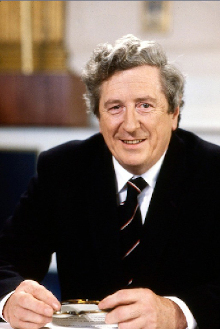
Garrett FitzGerald Becomes 8th Taoiseach of Ireland

garret-fitzgerald

Garret FitzGerald succeeds Charles Haughey to become the eighth Taoiseach of Ireland on June 30, 1981. He serves in the position from June 1981 to March 1982 and December 1982 to March 1987.

FitzGerald is born into a very politically active family in Ballsbridge, Dublin on February 9, 1926, during the infancy of the Irish Free State. His father, Desmond FitzGerald, is the free state’s first Minister for External Affairs. He is educated at the Jesuit Belvedere College, University College Dublin and King’s Inns, Dublin, and qualifies as a barrister. Instead of practicing law, however, in 1959 he becomes an economics lecturer in the department of political economy at University College, Dublin, and a journalist.

FitzGerald joins Fine Gael, attaching himself to the liberal wing of the party. and in 1969 is elected to Dáil Éireann, the lower house of the Oireachtas, the Irish parliament. He later gives up his university lectureship to become Minister for Foreign Affairs in the coalition government of Liam Cosgrave (1973–1977). When the coalition government is resoundingly defeated in the 1977 Irish general election, Cosgrave yields leadership of Fine Gael to FitzGerald. In his new role as Leader of the Opposition and party leader, he proceeds to modernize and strengthen the party at the grass roots. He briefly loses power in 1982 when political instability triggers two snap elections.

By the time of the 1981 Irish general election, Fine Gael has a party machine that can easily match Fianna Fáil. The party wins 65 seats and forms a minority coalition government with the Labour Party and the support of a number of Independent TDs. FitzGerald is elected Taoiseach on June 30, 1981. To the surprise of many FitzGerald excluded Richie Ryan, Richard Burke and Tom O’Donnell, former Fine Gael stalwarts, from the cabinet.

In his prime ministry, FitzGerald pushes for liberalization of Irish laws on divorce, abortion, and contraception and also strives to build bridges to the Protestants in Northern Ireland. In 1985, during his second term, he and British Prime Minister Margaret Thatcher sign the Anglo-Irish (Hillsborough) Agreement, giving Ireland a consultative role in the governing of Northern Ireland. After his party loses in the 1987 Irish general election, he resigns as its leader and subsequently retires in 1992.

On May 5, 2011, it is reported that FitzGerald is seriously ill in a Dublin hospital. Newly elected Fine Gael Taoiseach Enda Kenny sends his regards and calls him an “institution.” On May 6 he is put on a ventilator. On May 19, after suffering from pneumonia, he dies at the Mater Private Hospital in Dublin at the age of 85.

In a statement, Irish President Mary McAleese hails FitzGerald as “a man steeped in the history of the State who constantly strove to make Ireland a better place for all its people.” Taoiseach Enda Kenny pays homage to “a truly remarkable man who made a truly remarkable contribution to Ireland.” Henry Kissinger, the former United States Secretary of State, who serves as an opposite number to FitzGerald in the 1970s, recalls “an intelligent and amusing man who was dedicated to his country.”

FitzGerald’s death occurs on the third day of Queen Elizabeth II‘s state visit to the Republic of Ireland, an event designed to mark the completion of the Northern Ireland peace process that had been “built on the foundations” of FitzGerald’s Anglo-Irish Agreement with Margaret Thatcher in 1985. In a personal message, the Queen offers her sympathies and says she is “saddened” to learn of FitzGerald’s death.

On his visit to Dublin, United States President Barack Obama offers condolences on FitzGerald’s death. He speaks of him as “someone who believed in the power of education; someone who believed in the potential of youth; most of all, someone who believed in the potential of peace and who lived to see that peace realised.”

FitzGerald is buried at Shanganagh Cemetery in Shankill, Dublin.

FitzGerald is the author of a number of books, including Planning in Ireland (1968), Towards a New Ireland (1972), Unequal Partners (1979), All in a Life: An Autobiography (1991), and Reflections on the Irish State (2003).


Leave a comment

RAF Chinook Helicopter Crash on Mull of Kintyre

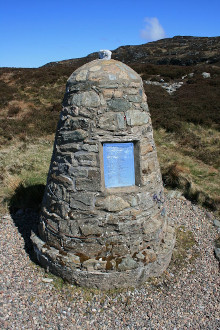
1994-chinook-crash-memorialA Chinook helicopter of the Royal Air Force (RAF) crashes on the Mull of Kintyre, Scotland, in foggy conditions on June 2, 1994. The crash results in the deaths of all twenty-five passengers and four crew on board. Among the passengers are almost all the United Kingdom‘s senior Northern Ireland intelligence experts who are travelling from Belfast to a security conference in Inverness. The accident is the RAF’s worst peacetime disaster.

Earlier in the day, the helicopter and crew carry out a trooping flight, as it is considered to be unsafe for British troops to move around in certain parts of Northern Ireland using surface transport at the time due to the threat posed by Provisional Irish Republican Army attacks. This mission is safely accomplished and they return to Joint Helicopter Command Flying Station Aldergrove at 3:20 PM. The helicopter takes off for Inverness at 5:42 PM. Weather en route is forecast to be clear except in the Mull of Kintyre area. The crew makes contact with military air traffic control (ATC) in Scotland at 5:55 PM.

Around 6:00 PM, the helicopter flies into a hillside in dense fog. The pilots are Flight Lieutenants Jonathan Tapper, 28, and Richard Cook, 30, both United Kingdom Special Forces pilots. There are two other crew. The helicopter is carrying 25 British intelligence experts from MI5, the Royal Ulster Constabulary and the British Army, from RAF Aldergrove (outside Belfast, Northern Ireland) to attend a conference at Fort George, near Inverness, Scotland. At the time of the accident Air Chief Marshal Sir William Wratten calls it “the largest peacetime tragedy the RAF had suffered.”

In the immediate aftermath of the accident, one commentator states that the loss of so many top level Northern Ireland intelligence officers in one stroke is a huge blow to the John Major government, “temporarily confounding” its campaign against the IRA. That the crash kills so many British intelligence experts, without any witnesses in the foggy conditions, leads to considerable speculation and conspiracy theories being devised on the issue on the potential of a cover-up having been performed. Among these are accusations that wake turbulence from a top-secret hypersonic U.S. aircraft had been responsible for the crash, while another postulates that it is a deliberate assassination of the intelligence operatives on board in connection with the then on-going Northern Ireland peace process.

In 1995, an RAF board of inquiry rules that it is impossible to establish the exact cause of the accident. This ruling is subsequently overturned by two senior reviewing officers, who state the pilots were guilty of gross negligence for flying too fast and too low in thick fog. This finding proves to be controversial, especially in light of irregularities and technical issues surrounding the then-new Chinook HC.2 variant which were uncovered. A Parliamentary inquiry conducted in 2001 finds the previous verdict of gross negligence on the part of the crew to be “unjustified.” In 2011, an independent review of the crash clears the crew of negligence.

(Pictured: Memorial on Mull of Kintyre, Scotland to the crash victims of the 1994 RAF Chinook crash)


Leave a comment

The 32CSM Condemns the Good Friday Agreement

32-county-sovereignty-movement

Key members of the 32 County Sovereignty Movement (32CSM), led by the sister of H-Block hunger striker Bobby Sands, meet on April 19, 1998, to draft an outright condemnation of the Good Friday peace deal.

The 32CSM is an Irish republican group that is founded by Bernadette Sands McKevitt. It does not contest elections but acts as a pressure group, with branches or cumainn organised throughout the traditional counties of Ireland. The organisation has been described as the “political wing” of the Real Irish Republican Army, but this is denied by both organisations. The group originates in a split from Sinn Féin over the Mitchell Principles.

The 32CSM is founded as the 32 County Sovereignty Committee on December 7, 1997, at a meeting of like-minded Irish republicans in Finglas in Dublin. Those present are opposed to the direction taken by Sinn Féin and other mainstream republican groups in the Northern Ireland peace process, which leads to the Belfast Agreement (also known as the Good Friday Agreement) the following year. The same division in the republican movement leads to the paramilitary group now known as the Real IRA breaking away from the Provisional Irish Republican Army at around the same time.

Most of the 32CSM’s founders have been members of Sinn Féin. Some had been expelled from the party for challenging the leadership’s direction, while others felt they had not been properly able to air their concerns within Sinn Féin at the direction its leadership had taken. Bernadette Sands McKevitt, wife of Michael McKevitt and a sister of hunger striker Bobby Sands, is a prominent member of the group until a split in the organisation.

The name refers to the 32 counties of Ireland which were created during the Lordship of Ireland and Kingdom of Ireland. With the partition of Ireland in 1920–1922, twenty-six of these counties form the Irish Free State which becomes the Republic of Ireland. The remaining six counties of Northern Ireland remain part of the United Kingdom. Founder Bernadette Sands McKevitt says in a 1998 interview with the Daily Mirror that people did not fight for “peace” – “they fought for independence” – and that the organisation reaffirms to the republican position in the 1919 Irish Declaration of Independence.

Before the referendums on the 1998 Good Friday Agreement, the organisation lodges a legal submission with the United Nations challenging British sovereignty in Ireland. The referendums are opposed by the organisation, but are supported by 71% of voters in Northern Ireland and by 94% in the Republic of Ireland.

The 32CSM has protested against what it calls “internment by remand” in both jurisdictions in Ireland. Other protests include ones against former Democratic Unionist Party (DUP) leader Ian Paisley in Cobh, County Cork, against former British Prime Minister John Major being given the Keys to Cork city, against a visit to the Republic of Ireland by Police Service of Northern Ireland head Sir Hugh Orde, and against the Israeli occupation of Palestine and Anglo-American occupation of Iraq.

In 2015, the 32CSM organises a demonstration in Dundee, Scotland, in solidarity with the men convicted of shooting Constable Stephen Carroll, the first police officer to be killed in Northern Ireland since the formation of the PSNI. The organisation says the “Craigavon Two” are innocent and are victims of a miscarriage of justice.

The 32CSM once criticised the Real IRA’s military actions, with respect to the Omagh bombing. However, the group is currently considered a foreign terrorist organization (FTO) in the United States, because the group is considered to be inseparable from the Real IRA, which is designated as an FTO. At a briefing in 2001, a spokesman for the U.S. Department of State states that “evidence provided by both the British and Irish governments and open-source materials demonstrate clearly that the individuals who created the Real IRA also established these two entities to serve as the public face of the Real IRA. These alias organizations engage in propaganda and fundraising on behalf of and in collaboration with the Real IRA.” The U.S. Department of State’s designation makes it illegal for Americans to provide material support to the Real IRA, requires U.S. financial institutions to block the group’s assets and denies alleged Real IRA members visas into the United States.


Leave a comment

The Murder of Benedict Hughes

File written by Adobe Photoshop? 4.0

Northern Ireland is plunged into a new crisis after Benedict Hughes, a Catholic, is shot dead on January 21, 1998, as he is getting into his car after finishing his work in a loyalist area of south Belfast. It is the latest murder aimed at wrecking the peace process and the eighth sectarian killing since Christmas.

Hughes, age 55, dies in a hail of bullets in Sandy Row shortly after 5:00 PM, as he is preparing to travel back to his Suffolk Crescent home in west Belfast. The father of three is shot at least five times in the neck and chest as he tries to get into his car which is parked in Utility Street off the Donegall Road. He is taken to the Royal Victoria Hospital where he later dies. The lone gunman makes off on foot in the direction of Felt Street.

The attack comes after the funeral of Fergal McCusker, a Catholic shot dead by the Loyalist Volunteer Force (LVF) just days earlier and ahead of the funerals of Catholic taxi driver Larry Brennan and prominent loyalist Jim Guiney held on January 22.

When forensic people arrive on the scene soon after the shooting, the area is packed with onlookers who believe the shot man is a Protestant.

As a recovery truck comes to remove Hughes’s car later that night, small groups of people are still watching the scene. The Rev. Richard Darmody, the rector of nearby St. Aidan’s Church in Sandy Row, who went to the scene thinking the victim was one of his parishioners, condemns the murder. “I’m shocked and horrified that the life of an innocent person has been taken and that another family has been plunged into grief and pain. I feel very concerned about where this is going to lead, and the possibility of more lives being taken, and more families being bereaved.”

There is no immediate admission of responsibility. However, the blame is placed firmly on loyalists, either the LVF, which has admitted being behind a series of recent killings, or the Ulster Freedom Fighters, which has remained silent, but which is suspected by the security forces of having joined the killings.

Social Democratic and Labour Party (SDLP) councillor Alex Attwood calls on mainstream loyalists to “clarify whether they are really on a ceasefire” because it is clear, he says, the LVF has received help from other loyalist groups, the Ulster Volunteer Force (UVF) or the Ulster Defence Association (UDA).

SDLP councillor Alastair McDonnell says the peace process is not in crisis. Hughes was “an innocent Catholic who was just trying to earn a living, who has no connections with any political or paramilitary grouping. If he had he wouldn’t have worked here.” He adds that there is a “small handful of evil people” who do not want to see peace.

Alliance spokesman Dr. Philip McGarry says there is “no excuse, no justification for causing pain to yet another family.”

(From: “Catholic shot dead leaving work in loyalist Sandy Row” by Louise McCall, The Irish Times, January 22, 1998)


Leave a comment

Real IRA Designated Foreign Terrorist Organization

real-irish-republican-army

On May 16, 2001, the United States Department of State designates the Real Irish Republican Army, a splinter group of the Irish Republican Army (IRA) charged with killing 29 people in the August 1998 Omagh bombing, as a “foreign terrorist organisation,” a legal term that brings financial and other sanctions. Under U.S. law, any assets the Real IRA has in the United States are frozen, it is illegal to support the organization, and Real IRA members are not eligible for U.S. visas.

The Real IRA broke off from the main Irish Republican Army and its political wing Sinn Féin in 1998 to oppose the decision by Sinn Féin to support the Northern Ireland peace process and work to end 30 years of fighting in Northern Ireland.

As a result of the FTO designation many activities, including fund-raising, of the Real IRA or its two so-called “front groups” or “political pressure groups” — the “32 County Sovereignty Movement” and the “Irish Republican Prisoner Welfare Association” — are now illegal.

A senior State Department official notes that this is the first time a group with “heavy ties” to the United States, with sympathizers and supporters coming from the United States, has been designated as a terrorist organization. But, in the words of this official, the “British and Irish government publicly asked us to look into this.” The “rigorous” review, begun in the fall of 2000, included volumes of evidence and was an inner-agency process that required the signature of the Secretary of the Treasury, the Attorney General and the Secretary of State.

A second State Department official points out that Irish nationalists have typically received the most support from South Boston, New York City and Chicago, where there are heavy concentrations of Irish Americans.

According to the State Department Patterns of Global Terrorism report in 2000, the Real IRA was formed in February-March 1998, has between 150-200 hard-line members and is dedicated to removing British forces from Northern Ireland and unifying Ireland.

The State Department report goes on to accuse the Real IRA of carrying out the bombing of Hammersmith Bridge and a rocket attack against Secret Intelligence Service (MI-6) headquarters in London in 2000.

State Department officials say they absolutely anticipate the Real IRA to challenge the FTO designation in court. The designation comes as the Irish Republic prepares to prosecute Michael McKevitt, the Real IRA’s alleged leader.

Other designated FTOs include 29 organizations: the Abu Nidal Organization, the Abu Sayyaf group, the Palestinian Liberation Front, Al-Qaeda and Tupac Amaru Revolutionary Movement, to name a few.


Leave a comment

The Widgery Report Is Released

john-passmore-widgery

John Passmore Widgery, Baron Widgery, English judge who serves as Lord Chief Justice of England and Wales from 1971 to 1980, issues his report exonerating “Bloody Sunday” troops on April 19, 1972.

Widgery receives promotion to the Court of Appeal in 1968. He has barely gotten used to his new position when Lord Parker of Waddington, who had been Lord Chief Justice of England and Wales since 1958, announces his retirement. There is no obvious successor and Widgery is the most junior of the possible appointees. The Lord Chancellor, Quintin Hogg, Baron Hailsham of St. Marylebone, chooses Widgery largely on the basis of his administrative abilities. On April 20, 1971, he is created a life peer taking the title Baron Widgery, of South Molton in the County of Devon.

Shortly after taking over, Widgery is handed the politically sensitive job of conducting an inquiry into the events of January 30, 1972, in Derry, where troops from 1st Battalion, Parachute Regiment had murdered 13 civil rights marchers, commonly referred to as Bloody Sunday. A 14th person dies shortly after Widgery’s appointment. He hears testimony from the paratroopers, who claim they had been shot at, while the marchers insist that no one from the march was armed. Widgery produces a report that takes the British Army‘s side. He placed the main blame for the deaths on the march organisers for creating a dangerous situation where a confrontation was inevitable. His strongest criticism of the Army is that the “firing bordered on the reckless.”

The Widgery Report is accepted by the British government and Northern Ireland‘s unionists but is immediately denounced by Irish nationalist politicians, and people in the Bogside and Creggan areas are disgusted by his findings. The British Government had acquired some goodwill because of its suspension of the Stormont Parliament, but that disappears when Widgery’s conclusions are published. The grievance with Widgery’s findings lingers and the issue remains live as the Northern Ireland peace process advances in the 1990s.

In January 1998, on the eve of the 26th anniversary of Bloody Sunday, Prime Minister Tony Blair announces a new inquiry, criticising the rushed process in which Widgery failed to take evidence from those wounded and did not personally read eyewitness accounts. The resulting Bloody Sunday Inquiry lasts 12 years before the Saville Report is published on June 15, 2010. It demolishes the Widgery Report, finding that soldiers lied about their actions and falsely claimed to have been attacked.

Prime Minister David Cameron, on behalf of the United Kingdom, formally apologises for the “unjustified and unjustifiable” events of Bloody Sunday. As a result of the Saville Report, even observers who are natural supporters of the British Army now regard Widgery as discredited. The conservative historian and commentator Max Hastings describes the Widgery report as “a shameless cover-up.”


Leave a comment

Ahern Meets Paisley in County Antrim

paisley-and-ahern-2008

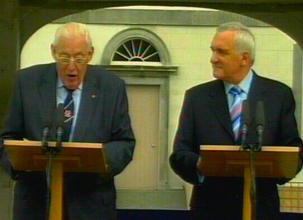
Taoiseach Bertie Ahern visits Ballymena on February 1, 2008, to meet Northern Ireland First Minister Ian Paisley in his County Antrim constituency. Paisley says the Taoiseach’s visit to north Antrim is a historic day, and Ahern says his visit is another tangible benefit of the ongoing peace process.

Ahern and Paisley discuss political and economic developments in Northern Ireland and increasing cross-Border co-operation. The Taoiseach says he is honoured to visit the north Antrim heartland of the Democratic Unionist Party (DUP) leader.

“I do not believe even a year back it could have been envisaged we would have been together here,” Ahern says. “It is an honour to be here with the First Minister to talk about progress.”

Paisley jokes that Ahern and his entourage had held a prayer meeting in their helicopter hoping that they would not be pelted with snowballs by him, a reference to his famous protest when former Taoiseach Seán Lemass visited Stormont in 1965.

When asked about welcoming the Fianna Fáil leader to his constituency Paisley quips, “What I am saying is he is in under my control. This is a good day for work. It is a good day for our province. It is a good day for the whole of Ireland because we need help from outside. We cannot live on our own.”

Ahern and Paisley meet again the following week at the Dublin Chamber of Commerce AGM dinner where Paisley has been invited to be a guest speaker.

The engagement is the latest visit to the Republic by the DUP leader since the Assembly was restored in Stormont the previous May. The Taoiseach invites Paisley to the historic Battle of the Boyne battle site in County Louth in July where the DUP leader presents a 17th-century musket to Ahern.

In October 2007, Paisley addresses the Trinity College Historical Society in Dublin and also attends an event in the Royal College of Physicians of Ireland in the city in November.

(From The Irish Times, Friday, February 1, 2008)


Leave a comment

Birth of Martin Galvin, Publisher & Activist

martin-galvin

Martin J. Galvin, Irish American lawyer, publisher and activist, and former director of the Irish Northern Aid Committee (NORAID), is born on January 8, 1950, supposedly in Long Island, New York, although he may have been born in the Republic of Ireland as he once, during an interview with 60 Minutes, refers to the “partition of the country of my birth.”

Galvin is the son of a fireman. He attends Catholic schools, Fordham University and Fordham University School of Law. He previously works as a hearing officer for the New York City Department of Sanitation.

Galvin serves as the publicity director for the New York-based NORAID, an Irish American group fundraising organization which raises money for the families of Irish republican prisoners, but is also accused by the American, British, and Irish governments to be a front for the supply of weapons to the Provisional Irish Republican Army

Galvin becomes a publisher of The Irish People in the 1980s. He is banned from Northern Ireland because of a speech he gives that seems to endorse terrorism. In August 1984 he defies the ban and enters Northern Ireland from the Republic of Ireland. The following year he returns to Northern Ireland to attend a funeral for an IRA member killed when a makeshift grenade launcher he is trying to fire at a Royal Ulster Constabulary barracks explodes. In 1989 Galvin is arrested and deported for violating the exclusion ban yet again.

Galvin has criticised the Northern Ireland peace process as a betrayal of republican ideals and characterizes the IRA’s decision to open up its arms dumps to Independent International Commission on Decommissioning inspectors as a surrender.

On May 28, 2016, Galvin attends a commemoration for PIRA volunteer George McBrearty in Creggan, Derry.


Leave a comment

Assassination of Billy “King Rat” Wright

billy-wright

Billy “King Rat” Wright, prominent Ulster loyalist death squad leader during the ethno-nationalist conflict in Northern Ireland known as the Troubles, is murdered on December 27, 1997, in HM Prison Maze by three members of the Irish National Liberation Army (INLA) who manage to smuggle guns into the prison.

William Stephen “Billy” Wright, named after his grandfather, is born in Wolverhampton, England on July 7, 1960, to David Wright and Sarah McKinley, Ulster Protestants from Portadown, Northern Ireland. The family returns to Northern Ireland in 1964. While attending Markethill High School, Wright takes a part-time job as a farm labourer where he comes into contact with a number of staunchly unionist and loyalist farmers who serve with the Royal Ulster Constabulary (RUC) Reserve or the Ulster Defence Regiment (UDR). The conflict known as the Troubles has been raging across Northern Ireland for about five years by this stage, and many young men such as Wright are swept up in the maelstrom of violence as the Provisional Irish Republican Army ramps up its bombing campaign and sectarian killings of Catholics by loyalists continue to escalate. During this time his opinions move towards loyalism and soon he gets into trouble for writing the initials “UVF” on a local Catholic primary school wall. When he refuses to clean off the vandalism, he is transferred from the area and sent to live with an aunt in Portadown.

Wright joins the Ulster Volunteer Force (UVF) in 1975. After spending several years in prison and becoming a born-again Christian, he resumes his UVF activities and becomes commander of its Mid-Ulster Brigade in the early 1990s, taking over from Robin “the Jackal” Jackson. According to the Royal Ulster Constabulary, he is involved in the sectarian killings of up to 20 Catholics, although he is never convicted for any. It is alleged that Wright, like his predecessor, is an agent of the RUC Special Branch.

Wright attracts considerable media attention during the Drumcree standoff, when he supports the Protestant Orange Order‘s desire to march its traditional route through the Catholic/Irish nationalist area of his hometown of Portadown. In 1994, the UVF and other paramilitary groups call ceasefires. However, in July 1996, Wright’s unit breaks the ceasefire and carries out a number of attacks, including a sectarian killing. For this, Wright and his Portadown unit of the Mid-Ulster Brigade are stood down by the UVF leadership. He is expelled from the UVF and threatened with execution if he does not leave Northern Ireland. He ignores the threats and, along with many of his followers, defiantly forms the breakaway Loyalist Volunteer Force (LVF), becoming its leader.

The LVF carries out a string of killings of Catholic civilians. In March 1997 Wright is sent to the HM Prison Maze for having threatened the life of a woman. While imprisoned, Wright continues to direct the LVF’s activities. On the morning of December 27, 1997, he is assassinated inside the prison by three INLA volunteers – Christopher “Crip” McWilliams, John “Sonny” Glennon and John Kennaway – armed with two smuggled pistols, a FEG PA-63 semi-automatic and a .22 Derringer. The LVF carries out a wave of sectarian attacks in retaliation. There is speculation that the authorities collude in his killing as he is a threat to the peace process. An inquiry finds no evidence of this but concludes there are serious failings by the prison authorities.

Owing to his uncompromising stance as an upholder of Ulster loyalism and opposition to the Northern Ireland peace process, Wright is regarded as a cult hero, icon, and martyr by hardline loyalists. His image adorns murals in loyalist housing estates and many of his devotees have tattoos bearing his likeness. His death is greeted with relief and no little satisfaction, however, from the Irish nationalist community.


Leave a comment

IRA Refuses to Disband in Response to Ultimatums

gerry-adams-2002

On October 27, 2002, after comments by the British prime minister Tony Blair that the continued existence of the Irish Republican Army (IRA) is an obstacle to rescuing the Northern Ireland peace process, Sinn Féin leader Gerry Adams says the IRA is never going to disband in response to ultimatums from the British government and from unionists.

Nationalists throughout Ireland wish to see the end of the IRA. In a response to a major speech by Adams, Mark Durkan, leader of the Social Democratic and Labour Party (SDLP), says IRA activity is playing into the hands of anti-Agreement unionists and calls on the IRA to cease all activity.

Adams tells elected Sinn Féin representatives from both sides of the Irish border in Monaghan that he can envision a future without the IRA. He also admits that “alleged” IRA activities are boosting the cause of those opposing the Northern Ireland peace process. However, he also tells Tony Blair that the IRA will never disband in response to ultimatums.

“He needs to recognise, however, that the Agreement requires an end to paramilitarism and that nationalists throughout this island fervently want one. It is time that republicans took heed of their call.”

The former Deputy First Minister in the devolved administration at Stormont says he welcomes Adams’ recognition that IRA activity is exacerbating the difficulties within unionism. “The reality is that IRA activity is playing right into the hands of anti-Agreement unionists. And letting the nationalist community badly down,” he said.

“It is also welcome that Gerry Adams has begun to recognise Sinn Féin’s credibility crisis. Too often republican denials have proved to be false in the past – be it over Colombia or Florida. This too has served only to create distrust and destabilise the Good Friday Agreement,” he adds.

In a major speech billed by his party as a considered response to the Prime Minister’s demand for an end to Republican-linked violence, Adams declares “Our view is that the IRA cessations effectively moved the army out of the picture – and allowed the rest of us to begin an entirely new process.” His speech is understood to have been handed in advance to both the British and Irish governments.

Adams says the continued IRA ceasefire and decommissioning initiatives demonstrated the organisation’s commitment to the peace process. “I do not pretend to speak for the army (IRA) on these matters, but I do believe that they are serious about their support for a genuine peace process. They have said so. I believe them,” he said. He adds, “The IRA is never going to respond to ultimatums from the British government or David Trimble.”

Fianna Fáil leader Bertie Ahern later says he welcomes and is encouraged by many aspects of Adams’ speech. He says the Sinn Féin leader’s strong statement of determination to keep the peace process intact and the recognition of the need to bring closure to all the key issues is a positive contribution at this difficult time in the Northern Ireland peace process.

(From the Irish Examiner, October 27, 2002)