seamus dubhghaill

Promoting Irish Culture and History from Little Rock, Arkansas, USA


Leave a comment

Mary Robinson Elected First Woman President of the Republic

mary-robinson-1

Mary Robinson becomes the first woman to be elected President of the Republic of Ireland on November 7, 1990. She becomes the first Labour Party candidate, the first woman, and the first non-Fianna Fáil candidate in the history of contested presidential elections to win the presidency.

Brian Lenihan, the Tánaiste and Minister for Defence is chosen by Fianna Fáil as their candidate, though he faces a late challenge for the party nomination from another senior minister, John P. Wilson, TD. Lenihan is popular and widely seen as humorous and intelligent. He has delivered liberal policy reform (relaxed censorship in the 1960s) and is seen as a near certainty to win the presidency.

Fine Gael, after trying and failing to get former Taoiseach Garret FitzGerald and former Tánaiste Peter Barry to run, ultimately nominate the former civil rights campaigner and Social Democratic and Labour Party (SDLP) member Austin Currie. Currie is elected to Dáil Éireann in the 1989 general election and has been a minister in Brian Faulkner‘s power-sharing executive in Northern Ireland from 1973–1974. However, Currie has little experience in the politics of the Republic and is widely seen as the party’s last choice, nominated only when no one else is available.

The Labour Party lets it be known that it would for the first time run a candidate. Along with the Workers’ Party, Labour nominates the independent candidate Mary Robinson, SC, a former Labour Party member and senator, and liberal campaigner. Robinson is a former Reid Professor of Law in the Trinity College, Dublin. She is previously involved in the Campaign for Homosexual Law Reform and the campaign to save Wood Quay.

Lenihan enters the race as odds-on favourite. No Fianna Fáil candidate has ever lost a presidential election. However, Lenihan is derailed when he confirms in an on-the-record interview with freelance journalist and academic researcher Jim Duffy that he has been involved in controversial attempts to pressurise the President, Patrick Hillery, over a controversial parliamentary dissolution in 1982. As a result of the contrast between his public denials during the campaign and his confirmation during an earlier interview recorded in May, he is dismissed from the Irish government.

At this point a cabinet colleague, Pádraig Flynn, launches a controversial personal attack on Mary Robinson “as a wife and mother,” an attack that is itself attacked in response as “disgraceful” on live radio by Michael McDowell, a senior member of the Progressive Democrats, then in coalition with Fianna Fáil and up to that point supporting Lenihan’s campaign. Flynn’s attack is a fatal blow to Lenihan’s campaign, causing many female supporters of Lenihan to vote for Robinson in a gesture of support.

Lenihan nonetheless receives a plurality of first-choice votes. Mary Robinson beats Austin Currie, forcing Fine Gael’s candidate into third place. Under Ireland’s system of single transferable vote, Robinson receives over 75% of the transfers when Austin Currie is eliminated, beating Lenihan into second place and becoming the seventh President of Ireland.

While the role of the presidency in day-to-day politics is a very limited one, the Robinson presidency is regarded by many observers as a watershed in Irish society, symbolising the shift away from the conservative ultra-Catholic male-dominated Ireland which existed up until the end of the 1980s to the more liberal society symbolised by Robinson.

Robinson is generally credited with raising the profile of the office of president, which has been considered little more than an honorary figurehead position under her predecessors. Prior to Mary Robinson’s presidency it was not unusual to hear commentators advocating the abolition of the office of president, a viewpoint that is almost never advanced nowadays.


Leave a comment

Founding of Republican Sinn Féin

republican-sinn-fein

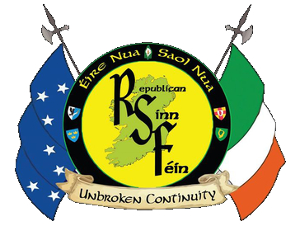
Republican Sinn Féin (Irish: Sinn Féin Poblachtach), an unregistered Irish Republican political organisation, is founded at the West County Hotel in Dublin on November 2, 1986.

Republican Sinn Féin (RSF) claim to be heirs of the Sinn Féin party founded in 1905 and take its present form in 1986 following a split with Provisional Sinn Féin. RSF members take seats when elected in local Irish councils but do not recognise the partition of Ireland and subsequently the legitimacy of the Northern Ireland or Republic of Ireland governments, so does not register itself under them.

The decision to form, or to reorganise or reconstitute as its supporters see it, the organisation was taken in response to Gerry Adams-led Sinn Féin’s decision at its 1986 ardfheis to end its policy of abstentionism and to allow elected Sinn Féin Teachtaí Dála take their seats in Leinster House‘s Dáil Éireann. The supporters of Ruairí Ó Brádaigh and Dáithí Ó Conaill who go on to form RSF oppose this move as it signals a departure from the traditional republican analysis which views the parliament of the Republic of Ireland as an illegal assembly, set up by an act of the British parliament. They argue that republicans owe their allegiance to the All-Ireland (32 County) Irish Republic, maintaining that this state exists de jure and that its authority rests with the IRA Army Council. Hence, if elected, its members refuse to take their seats in the Oireachtas.

The organisation views itself as representing “true” or “traditional” Irish republicanism, while in the mainstream media the organisation is portrayed as a political expression of “dissident republicanism.” Republican Sinn Féin rejects the Good Friday Agreement and indeed the Anglo-Irish Treaty. As part of this they refuse to discount Irish republicans using militant means to “defend the Irish Republic” and considers the Continuity Irish Republican Army (IRA) to be the legitimate army of the Irish Republic. The CIRA is designated as a terrorist organisation by the governments of the United Kingdom and Republic of Ireland.


Leave a comment

Founding of the Gaelic Athletic Association

gaelic-athletic-associationThe Gaelic Athletic Association (GAA) is founded on November 1, 1884, by a group of Irishmen gathered in the billiard room of the Hayes’ Hotel in Thurles, County Tipperary. The architects and founding members are Michael Cusack of County Clare, Maurice Davin, Joseph K. Bracken, Thomas St. George McCarthy, P.J. Ryan of Tipperary, John Wyse Power, and John McKay. Their goal is to to formulate a plan and establish an organisation to foster and preserve Ireland’s unique games and athletic pastimes.

The GAA focuses primarily on promoting Gaelic games, which include the traditional Irish sports of hurling, camogie, Gaelic football, handball, and rounders. The Association also promotes Irish music and dance, as well as the Irish language.

It has more than 500,000 members worldwide, assets in excess of €2.6 billion, and declares total revenues of €94.8 million in 2010, with a total gross profit of €78.5 million.

Gaelic football and hurling are the most popular activities promoted by the organisation, and the most popular sports in the Republic of Ireland in terms of attendances. Gaelic football is also the largest participation sport in Northern Ireland. GAA competitions, activities, and structures are organised on an all-Ireland basis, without reference to the border drawn in 1921. The women’s version of these games, ladies’ Gaelic football and camogie, are organised by the independent but closely linked Ladies’ Gaelic Football Association and the Camogie Association respectively. GAA Handball is the Irish governing body for the sport of handball, while the other Gaelic sport, rounders, is managed by the GAA Rounders National Council.

Since its foundation in the late 19th century, the Association has grown to become a major influence in Irish sporting and cultural life with considerable reach into communities throughout Ireland and among the Irish diaspora.


Leave a comment

Demolition of HM Prison Maze Begins

maze-prison

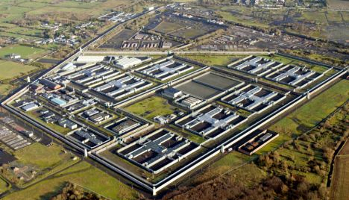
Bulldozers begin demolishing Northern Ireland‘s notorious HM Prison Maze, previously known as Long Kesh Detention Centre, on October 31, 2006. The prison once housed the most dangerous guerrillas from both sides of the province’s sectarian conflict.

Among the inmates at Maze are ten Irish nationalist hunger strikers who starved themselves to death in 1981. The prison has been empty since 2000, after the release of most guerrilla prisoners under the Good Friday Agreement, which ushered in relative peace after 30 years of fighting in which 3,600 people died.

A sports stadium, equestrian center, hotel, and shopping center are originally proposed for the 360-acre site in County Antrim. In January 2009, however, Sports Minister Gregory Campbell rules out the plan for a multi-sports stadium which has divided political and sporting opinion, opting instead to explore alternatives with the soccer, rugby, and Gaelic Athletic Association (GAA) authorities.

Northern Ireland first and deputy first ministers, Peter Robinson and Martin McGuinness, announce in 2010 that an agreement has been reached on building a peace and conflict resolution facility at the Maze site. It will also host the Royal Ulster Agricultural Society’s annual show. On February 2, 2012, European funding of £18m is approved for building the contentious conflict resolution centre.

Planning permission for the peace centre on the site of the former prison is granted on April 18, 2013. However, in June the Orange Order calls on unionist politicians to halt the peace centre plan, objecting to its location on the former prison site.

On August 15, 2013, Peter Robinson calls a halt to the peace centre plan. In a letter to Democratic Unionist Party (DUP) members, he says it would be wrong to proceed without a consensus about how it will operate. As a result, in October 2013 the European Union funding programme withdraws its £18m offer in financial support for the Maze peace centre.

That the Maze Prison development remains unrealised 16 years after the site’s closure testifies to the complexities involved. That the prospect of redevelopment has never been taken off the table affirms the ineluctable power ideas of profit still hold.


Leave a comment

Birth of Sir Charles Brett, Solicitor & Journalist

long-shadows-cast-before

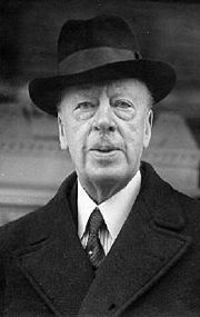
Sir Charles Edward Bainbridge Brett, Northern Irish solicitor, journalist, author and founding member, and first chairman, of the Ulster Architectural Heritage Society (UAHS), is born in Holywood, County Down, on October 30, 1928. He is known to many simply as Charlie Brett.

Brett is born into a long line of solicitors, the family firm being L’Estrange and Brett, based in Belfast. He is a partner there from 1954 until 1994. He is educated at Rugby School and New College, Oxford, where he is President of the Poetry Society and a friend of Dylan Thomas and attends lectures by Lord Clark.

Between 1949 and 1950 he works in France as a journalist with the Continental Daily Mail, where he is said to have mixed in anarchist and Trotskyite circles.

In 1956, the Earl of Antrim invites Brett to join the Northern Ireland Committee of the National Trust. On finding there are no books written to prepare himself for this, he resolves to write the necessary volumes. In 1957 he becomes the first chairman of the Ulster Architectural Heritage Society, founded alongside, amongst others Lady Dunleath. Brett serves as chairman for ten years and then as President from 1979 until his death.

With the National Trust he puts his legal skill to use in order to establish a public footpath along the cliffs of the North Coast of Ulster. He also sits on the board of the Irish Architectural Archive in Dublin.

In 1971, he is appointed to the board of the newly created Northern Ireland Housing Executive. He serves as Chairman for five years from 1979, during which time 50,000 dwellings are built. He is asked to compile a list of historic buildings in Jersey in 1975. In 1986, Brett becomes the first chairman of the International Fund for Ireland, established to encourage investment in Ireland.

Brett is also involved in Northern Irish politics, being chairman of the Northern Ireland Labour Party for a time. In 1981 he receives a CBE, this is followed by a Knighthood in 1990.

Brett dies on December 19, 2005. His church memorial is located along those of his family in the Comber Church of Ireland Parish Church of St. Mary, in Comber, North County Down.


Leave a comment

Assassination of Máire Drumm, VP of Sinn Féin

maire-drumm

Máire Drumm, vice president of Sinn Féin and a commander in Cumann na mBan, is shot dead on October 28, 1976, by Ulster loyalists dressed as doctors while recovering from an eye operation in Belfast‘s Mater Hospital.

Drumm is born in Newry, County Down to a staunchly Irish republican family. Drumm’s mother has been active in the Irish War of Independence and the Irish Civil War. Drumm grows up in the village of Killean, County Armagh, where she plays camogie. She is active in the republican movement after meeting her husband, a republican prisoner. She begins to speak at many rallies and protest meetings and is soon elected as Vice President of Sinn Fein. She becomes involved in the Northern Ireland Civil Rights Association in the 1960s and works to rehouse Catholics forced from their homes by loyalist intimidation.

Drumm is jailed twice for seditious speeches. After she is released from HM Prison Armagh, raids on her house by the security forces escalate. She is widely demonised in the British media and is already a target for assassination when she is admitted to Belfast’s Mater Hospital for eye treatment in October 1976.

While recovering from the operation, Drumm is shot at point blank range in a joint operation by the Ulster Volunteer Force and the Ulster Defence Association who are able to enter and leave the hospital undisturbed. No one has ever been convicted of her murder.

Drumm’s speeches and quotations can be found on murals across Northern Ireland, including:

“The only people worthy of freedom are those who are prepared to go out and fight for it every day, and die if necessary.”

“We must take no steps backward, our steps must be onward, for if we don’t, the martyrs that died for you, for me, for this country will haunt us forever.”


Leave a comment

The Guildford Four Are Released From Prison

guildford-four-release

After serving 15 years in prison, the Guildford Four, Gerry Conlon, Patrick Armstrong, Carole Richardson, and Paul Hill, are released on October 19, 1989, in what is considered to be one of the biggest-ever miscarriages of justice in Britain.

On October 5, 1974, an Irish Republican Army (IRA) bomb kills four people in a Guildford pub frequented by British military personnel, while another bomb in Woolwich kills three. British investigators rush to find suspects and soon settle on Gerry Conlon and Paul Hill, two residents of Northern Ireland who are in the area at the time of the terrorist attack.

Under the recently rewritten Prevention of Terrorism Act, British investigators are allowed to hold and interrogate terrorist suspects for five days without any hard evidence. Conlon and Hill, who are nonpolitical petty criminals, are among the first suspects held under the new law. During their prison stay, investigators fabricate against them an IRA conspiracy that implicates a number of their friends and family members. The officers then force the two suspects to sign confessions under physical and mental torture. In October 1975, Gerry Conlon, Paul Hill, Paddy Armstrong, and Carole Richardson are sentenced to life in prison – mandatory for adults convicted of murder. Seven of their relatives and friends, called the Maguire Seven, are sentenced to lesser terms on the basis of questionable forensic evidence.

In 1989, detectives from Avon and Somerset Constabulary, investigating the handling of the case, find three significant pieces of evidence in relation to Surrey Police‘s handling of the Guildford Four and their statements.

Firstly, typed notes from Patrick Armstrong’s police interviews which had been heavily edited. Deletions and additions had been made, and the notes had been rearranged. These notes, and their amendments, are consistent with hand-written and typed notes presented at the trial, which suggest that the hand-written notes are made after the interviews had been conducted. The notes presented had been described in court as contemporaneous records.

Secondly, a series of manuscript notes relating to an interview with Hill, which show that Hill’s fifth statement is taken in breach of Judges’ Rules and may well have been inadmissible as evidence. The information is not made available to the Director of Public Prosecutions or the prosecution. Further, the officers involved had denied under oath that such an interview had happened.

Thirdly, detention records are inconsistent with the times and durations of the claimed interviews reported by the Surrey police.

In the face of growing public protest and after the disclosure of exonerating evidence, including the admittance of guilt in the bombings by an imprisoned IRA member, the group’s conviction is declared “unsafe and unsatisfactory.” The Guildford Four are cleared of all charges and released after 15 years in prison. The following year a British appeals court also overturns the convictions of the Maguire Seven, who were jailed on the basis of forensic evidence that is shown to have no relevant scientific basis.

(Pictured: Gerry Conlon on his release from prison in 1989)


Leave a comment

Seamus Heaney Awarded Nobel Prize in Literature

seamus-heaney

Seamus Heaney, poet, playwright, translator, and lecturer, is awarded the Nobel Prize in Literature on October 15, 1995.

Heaney is born in April 1939 near Castledawson, County Derry, Northern Ireland, where his family engages in farming and selling cattle. His education includes studies at Queen’s University Belfast, where he also serves as a lecturer in the late 1960s. He makes his debut as a poet then, but continues to divide his time between his own writing and academia. He works at Carysforth College in Dublin, at Harvard University in Cambridge, Massachusetts, and at Oxford University.

Heaney’s poetry is often down-to-earth. For him, poetry is like the earth – something that must be plowed and turned. Often he paints the gray and damp landscape from the British Isles. Peat moss has a special place in his poetry. The poems often are connected with daily experiences, but they also derive motifs from history, all the way back to prehistoric times. Heany’s profound interest in the Celtic and the pre-Christian as well as in Catholic literary tradition has found expression in a number of essays and translations.

Heaney is awarded the Nobel Prize in Literature in 1995 for what the Nobel committee describes as “works of lyrical beauty and ethical depth, which exalt everyday miracles and the living past.” He is on holiday in Greece with his wife, Marie, when the news breaks. No one, not even journalists or his own children, can locate him until he appears at Dublin Airport two days later, though an Irish television camera traces him to Kalamata. Asked how it feels having his name added to the Irish Nobel pantheon featuring William Butler Yeats, George Bernard Shaw, and Samuel Beckett, Heaney responds, “It’s like being a little foothill at the bottom of a mountain range. You hope you just live up to it. It’s extraordinary.” He and Marie are immediately whisked straight from the airport to Áras an Uachtaráin for champagne with President Mary Robinson.


Leave a comment

Birth of Professor James Francis “Frank” Pantridge

frank-pantridge

Professor James Francis “Frank” Pantridge, physician and cardiologist from Northern Ireland, is born in Hillsborough, County Down, on October 3, 1916. Pantridge transforms emergency medicine and paramedic services with the invention of the portable defibrillator.

Pantridge is educated at Friends’ School Lisburn and Queen’s University Belfast, graduating in medicine in 1939. During World War II he serves in the British Army and is commissioned into the Royal Army Medical Corps as a lieutenant on April 12, 1940. He is awarded the Military Cross during the Fall of Singapore, when he becomes a POW. He serves much of his captivity as a slave labourer on the Burma Railway. When he is freed at the end of the war, Pantridge is emaciated and has contracted cardiac beriberi. He suffers from ill-health related to the disease for the remainder of his life.

After Pantridge’s liberation he works as a lecturer in the pathology department at Queen’s University, and then wins a scholarship to the University of Michigan, where he studies under Dr. F.N. Wilson, a cardiologist and authority on electrocardiography.

Pantridge returns to Northern Ireland in 1950 and is appointed as cardiac consultant to the Royal Victoria Hospital, Belfast and professor at Queen’s University, where he remains until his retirement in 1982. There he establishes a specialist cardiology unit whose work becomes well known.

By 1957, Pantridge and his colleague, Dr. John Geddes, introduce the modern system of cardiopulmonary resuscitation (CPR) for the early treatment of cardiac arrest. Further study leads Pantridge to the realization that many deaths result from ventricular fibrillation which needs to be treated before the patient is admitted to hospital. This leads to his introduction of the mobile coronary care unit (MCCU), an ambulance with specialist equipment and staff to provide pre-hospital care.

To extend the usefulness of early treatment, Pantridge goes on to develop the portable defibrillator, and in 1965 installs his first version in a Belfast ambulance. It weighs 70 kg and operates from car batteries. By 1968 he has designed an instrument weighing only 3 kg, incorporating a miniature capacitor manufactured for NASA.

His work is backed up by clinical investigations and epidemiological studies in scientific papers, including an influential 1967 The Lancet article. With these developments, the Belfast treatment system, often known as the “Pantridge Plan”, becomes adopted throughout the world by emergency medical services. The portable defibrillator becomes recognised as a key tool in first aid, and Pantridge’s refinement of the automated external defibrillator (AED) allows it to be used safely by members of the public.

Although he is known worldwide as the “Father of Emergency Medicine,” Frank Pantridge is less acclaimed in his own country, and is saddened that it takes until 1990 for all front-line ambulances in the United Kingdom to be fitted with defibrillators.

He died in Hillsborough at the age of 88 on Boxing Day, December 26, 2004. He never married.


Leave a comment

Pope John Paul II’s Visit to Ireland

pope-john-paul-ii

Pope John Paul II becomes the first pontiff to set foot on Irish soil with his pastoral visit to the Republic of Ireland beginning on September 29, 1979. Over 2.5 million people attend events in Dublin, Drogheda, Clonmacnois, Galway, Knock, Limerick, and Maynooth during what is one of Pope John Paul’s first foreign visits. The visit is occasioned by the centenary of the reputed apparition of Blessed Virgin Mary, Saint Joseph, and Saint John the Evangelist in Knock, County Mayo.

An Aer Lingus Boeing 747, named the St. Patrick, brings Pope John Paul II from Rome to Dublin Airport. The Pope kisses the ground as he disembarks. After being greeted by the President of Ireland, Dr. Patrick Hillery, the Pope flies by helicopter to the Phoenix Park where he celebrates Mass for 1,250,000 people, one quarter of the population of the island of Ireland, one third of the population of the Republic of Ireland. Afterwards he travels to Killineer, near Drogheda, where he leads a Liturgy of the Word for 300,000 people, many from Northern Ireland. There the Pope appeals to the men of violence, “on my knees I beg you to turn away from the path of violence and return to the ways of peace.” The Pope has hopes of visiting Armagh, but the security situation in Northern Ireland renders it impossible. Drogheda is selected as an alternative venue as it is situated in the Catholic Archdiocese of Armagh. Returning to Dublin that evening, the Pope is greeted by 750,000 people as he travels in an open top popemobile through the city centre and visits Aras an Uachtarain, the residence of the Irish President.

The Pope begins the second day of his tour with a short visit to the ancient monastery at Clonmacnois in County Offaly. With 20,000 in attendance, he speaks of how the ruins are “still charged with a great mission.” Later that morning he celebrates a Youth Mass for 300,000 at Ballybrit Racecourse in Galway. It is here that the Pope utters perhaps the most memorable line of his visit, “Young people of Ireland, I love you.” That afternoon, he travels by helicopter to Knock Shrine in County Mayo which he describes as “the goal of my journey to Ireland.” The outdoor Mass at the shrine is attended by 450,000. The Pope meets with the sick and elevates the church to the title of Basilica.

The final day of the visit begins with a trip to St. Patrick’s College, Maynooth, the National Seminary, in County Kildare. Some 80,000 people pack the grounds of the college for the brief visit. A dense fog delays the Pope’s arrival from Dublin by helicopter. The final Mass of the Pope’s visit to Ireland is celebrated at Greenpark Racecourse in Limerick before 400,000 people, many more than had been expected. The Mass is offered for the people of Munster. Pope John Paul leaves Ireland from nearby Shannon Airport travelling to Boston where we begins a six-day tour of the United States.