seamus dubhghaill

Promoting Irish Culture and History from Little Rock, Arkansas, USA


Leave a comment

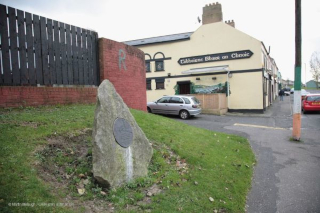
Sean Graham Bookmaker’s Shop Shooting

sean-graham-bookmakers-shop

A mass shooting takes place at the Sean Graham bookmaker‘s shop on the Lower Ormeau Road in Belfast, Northern Ireland on February 5, 1992. Members of the Ulster Defence Association (UDA), a loyalist paramilitary group, open fire on the customers, killing five civilians and wounding another nine. The shop is in an Irish nationalist area, and all of the victims are local Catholic civilians. The UDA claims responsibility using the cover name “Ulster Freedom Fighters”, and says the shooting is retaliation for the Teebane bombing, which had been carried out by the Provisional Irish Republican Army (IRA) less than three weeks earlier.

The start of 1992 witnesses an intensification in the campaign of violence being carried out by the Ulster Defence Association (UDA) under their UFF covername. However, the Inner Council of the UDA, which contains the six brigadiers that control the organisation, feel that one-off killings are not sending a strong enough message to republicans and so it sanctions a higher-profile attack in which a number of people will be killed at once. On this basis the go-ahead is given to attack Sean Graham bookmaker’s shop on the Irish nationalist Lower Ormeau Road, which is near the UDA stronghold of Annadale Flats. The bookmaker’s shop is chosen by West Belfast Brigadier and Inner Council member Johnny Adair because he has strong personal ties with the commanders of the Annadale UDA. A 1993 report commissioned by the Royal Ulster Constabulary (RUC) Special Branch also claims that Adair is the driving force behind the attack.

The attack occurs at 2:20 in the afternoon. A car parks on University Avenue facing the bookmakers and two men, wearing boilersuits and balaclavas, leave the car and cross the Ormeau Road to the shop. One is armed with a vz.58 Czechoslovak assault rifle and the other with a 9mm pistol. They enter the shop and unleash a total of 44 shots on the fifteen customers. Five Catholic men and boys are killed and nine others are wounded, one critically.

In a separate incident, a unit of the Ulster Volunteer Force (UVF) travels to the area at the time of the attack with the intention of killing a local Sinn Féin activist based on intelligence they had received that he returns home about that time every day. The attack is abandoned, however, when the car carrying the UVF members is passed by speeding RUC vehicles and ambulances. The UVF members, who had already retrieved their weapons for the attack, are said to be livid with the UDA for not coordinating with them beforehand and effectively spoiling their chance to kill a leading local republican.

A UDA statement in the aftermath of the attack claims that the killings are justified as the Lower Ormeau is “one of the IRA’s most active areas.” The statement also includes the phrase “remember Teebane”, suggesting that the killings are in retaliation for the Teebane bombing in County Tyrone less than three weeks earlier. In that attack, the IRA had killed eight Protestant men who were repairing a British Army base. The same statement had also been yelled by the gunmen as they ran from the betting shop.

On February 5, 2002 a plaque is erected on the side of the bookmaker’s shop in Hatfield Street carrying the names of the five victims and the Irish language inscription Go ndéana Dia trócaire ar a n-anamacha (“May God have mercy on their souls”). A small memorial garden is later added. The unveiling ceremony, which takes place on the tenth anniversary of the attack, is accompanied by a two-minute silence and is attended by relatives of the dead and survivors of the attack. A new memorial stone is laid on February 5, 2012 to coincide with the publication of a booklet calling for justice for the killings.


2 Comments

Annie’s Bar Massacre

annies-bar-memorial

The Annie’s Bar massacre, a mass shooting incident in Derry‘s Top of the Hill, takes place on December 20, 1972, during the height of the Northern Ireland Troubles. The bar is located in a small Catholic enclave of the majority Protestant Waterside area of Derry. Five civilians are shot dead by Loyalist paramilitaries from a unit of the Ulster Freedom Fighters (UFF) which is a part of the Ulster Defence Association (UDA). The shooting is also known as the “Top of the Hill bar shooting.”

The UDA is formed in September 1971 during one of the most violent phases of The Troubles right after internment without trial is introduced when a number of Loyalist Defense groups combine together. They form a paramilitary wing, the UFF, in 1972 so the organisation can use the UFF name to carry out violent acts and kill people while keeping the UDA name legal by not involving the UDA name with attacks.

The UDA/UFF claim to be combating the Provisional Irish Republican Army (IRA) but approximately 85% of its victims are innocent Catholic civilians. The UDA carries out its first killing on April 20, 1972, when they shoot dead taxi driver Gerard Donnelly in Ardoyne, Belfast. In October, the group is responsible for the deaths of two small girls when they detonate a car bomb outside an Irish nationalist pub in Sailortown, Belfast. The girls killed are Clare Hughes, age 4, and Paula Strong, age 6.

On December 20, 1972, along the Strabane Old Road, Annie’s Bar is packed with customers watching a football match. At about 10:30 PM two men from the UDA burst into the bar, one of them carrying a Sterling submachine gun and the other holding a pistol. Both are wearing hoods to disguise their identities. The men instantly and indiscriminately spray the main room in the bar with bullets. The attack is reported to have lasted less than a minute, but it still manages to leave five people dead, and four others wounded. Those killed in the attack are all males and include, Charlie McCafferty (31), Frank McCarron (58), Charles Moore (31), Barney Kelly (26) and Michael McGinley (37). At the time this is the largest and most deadly attack carried out by the UDA. They do not carry out another attack of this size until February 1992, when they shoot dead five civilians and injure nine in the Sean Graham bookmakers’ shooting on the Ormeau Road in Belfast.

The year 1972 in Derry begins with the Bloody Sunday shooting which occurs in the Bogside area and ends with the Annie’s Bar shooting. Nobody is ever charged in connection with the Annie’s Bar murders, although in recent years relatives of those murdered have been calling for a fresh investigation to take place.

The attack is carried out by members from the UDA’s “North Antrim & Londonderry Brigade.” Although this is one of the UDA’s smaller brigades it also carries out the October 1993 Greysteel massacre which is the UDA’s worst ever attack, in which eight people are killed and 19 others are injured. The Greysteel shooting happens about 9-10 miles away from Annie’s Bar.

(Pictured: Annie’s Bar Memorial stone located at Strabane Old Road, Top of the Hill, Waterside, Derry, County Derry, Northern Ireland. Annie’s Bar is in the background. Photo taken by Martin Melaugh, November 20, 2008.)


Leave a comment

Hume & Trimble Receive 1998 Nobel Peace Prize

hume-trimble-noble-prize-1998

The 1998 Nobel Peace Prize is awarded on October 16, 1998, to John Hume and David Trimble, leaders of the largest Roman Catholic and Protestant political parties in Northern Ireland, for their efforts to bring peace to the long-polarized British province. The two men share the prize money of $960,000.

Hume, 61, the Catholic head of the Social Democratic and Labor Party, is cited by the Nobel Committee in Oslo for having been the “clearest and most consistent of Northern Ireland’s political leaders in his work for a peaceful solution.”

Trimble, 54, the Protestant leader of the Ulster Unionist Party, is honored for having demonstrated “great political courage when, at a critical stage in the process, he advocated solutions which led to the peace agreement.”

The leader of a third prominent party, Gerry Adams of Sinn Féin, the political wing of the Irish Republican Army (IRA), is not named as a prize winner. While it does not honor Adams, the committee says it wishes to “emphasize the importance of the positive contributions to the peace process made by other Northern Irish leaders.” Nor are several other figures mentioned as possibilities, including former Senator George Mitchell, who led the talks, British Prime Minister Tony Blair and Irish Taoiseach Bertie Ahern, United States President Bill Clinton, and Mo Mowlam, the British Government’s Secretary of State for Northern Ireland.

The accord, signed on April 10 and known as the Good Friday Agreement, gives the 1.7 million residents of Northern Ireland a respite from the sectarian violence that has claimed more than 3,200 lives in the previous 30 years. It also opens the possibility of lasting stability for the first time since the establishment of Northern Ireland with partition from Ireland in 1921.

Forging concessions from fiercely antagonistic populations, the accord seeks to balance the Protestant majority’s wish to remain part of Britain with Catholic desires to strengthen ties to the Republic of Ireland to the south. The committee, seeing in Northern Ireland’s two warring groups a dispute with notable similarities to violent tribal confrontations elsewhere, expresses the hope that the accord will serve “to inspire peaceful solutions to other religious, ethnic and national conflicts around the world.”

Adams, in New York on a fund-raising trip for Sinn Féin, welcomes the Oslo announcement and particularly praises Hume, who is widely seen as having helped persuade the IRA to adopt a cease-fire and having eased Sinn Féin’s entry into the talks. “Indeed, there would be no peace process but for his courage and vision,” Adams says, adding, “No one deserves this accolade more.” He also wishes Trimble well and says the prize imposes on everyone the responsibility to “push ahead through the speedy implementation of the agreement.”

In the unforgiving politics of Northern Ireland, the Unionist dissidents and members of other Protestant parties who do not join in the peace talks attack both Trimble and Hume. Ian Paisley Jr., son of the head of the Democratic Unionist Party, calls the Nobel Committee’s decision a “farce” and says of the winners, “These people have not delivered peace, and they are not peacemakers.”

Trimble says he is “slightly uncomfortable” with the award because so many other people have been involved beside him in reaching the settlement and much remains to be done to put it in place. “We know that while we have the makings of peace, it is not wholly secure yet,” he tells the BBC from Denver, where he is on an 11-city North American tour to spur foreign investment in Ulster. “I hope it does not turn out to be premature.”

Hume receives word of the prize at his home in Londonderry and terms it “an expression of the total endorsement of the work of very many people.” He adds, “This isn’t just an award to David Trimble and myself. It is an award to all the people in Northern Ireland.”

In Washington, D.C., President Clinton says “how very pleased” he is, “personally and as President, that the Nobel Prize Committee has rewarded the courage and the people of Northern Ireland by giving the Nobel Peace Prize to John Hume and to David Trimble.” He adds “a special word of thanks” to George Mitchell, who issues a statement praising Hume and Trimble as “fully deserving of this honor.”

The peace talks began in the summer of 1996. They eventually draw the participation of 8 of the 10 Northern Irish parties, with many of the men around the table convicted murderers and bombers who had emerged from prison with a commitment to peaceful resolution to what for nearly a century have been referred to wearily as “the Troubles.” The paramilitary groups had also made the tactical decision that violence would not secure their goals; a shared conviction that gives these talks a chance for success that past fitful attempts at settlement lacked.

The peace talks move in a desultory manner until Blair takes office in May 1997 and highlights the cause of peace in Northern Ireland as an early commitment. At his and Ahern’s urging, the IRA declares a cease-fire in July, and by September Sinn Féin is permitted to join the talks.

Blair also gives Trimble and Adams unprecedented access to 10 Downing Street, and the Ulster Protestants report that they obtained from Clinton the most sympathetic hearing they ever had from an American President, allaying their longtime suspicions of Washington’s bias in favor of the Catholic minority.

(From: “2 Ulster Peacemakers Win the Nobel Prize,” The New York Times, Warren Hoge, October 17, 1998)


Leave a comment

Operation Demetrius

long-kesh-internment-camp

Operation Demetrius, a British Army operation in Northern Ireland begins on August 9, 1971, during the Troubles. The operation involves the mass arrest and internment (imprisonment without trial) of 342 people suspected of being involved with the Irish Republican Army (IRA), which is waging a campaign for a united Ireland against the British state.

Operation Demetrius, proposed by the Government of Northern Ireland and approved by the Government of the United Kingdom, begins throughout Northern Ireland in the early morning hours of Monday, August 9 and progresses in two parts:

  1. Arrest and movement of the detainees to one of three regional holding centers: Girdwood Barracks in Belfast, Abercorn Barracks in Ballykinler, County Down, or HM Prison Magilligan near Limavady, County Londonderry.
  2. The process of identification and questioning, leading either to release of the detainee or movement into detention at HM Prison Crumlin Road or aboard HMS Maidstone, a prison ship in Belfast Harbour.

The operation sparks four days of violence in which 20 civilians, two IRA members and two British soldiers are killed. All of those arrested are Irish nationalists, the vast majority of them Catholic. Due to faulty intelligence, many have no links with the IRA. Ulster loyalist paramilitaries are also carrying out acts of violence, which are mainly directed against Catholics and Irish nationalists, but no loyalists are included in the sweep.

The introduction of internment, the way the arrests are carried out, and the abuse of those arrested, lead to mass protests and a sharp increase in violence. Amid the violence, about 7,000 people flee or are forced out of their homes. The interrogation techniques used on some of the internees are described by the European Commission of Human Rights in 1976 as torture, but the superior court, the European Court of Human Rights (ECHR), rules on appeal in 1978 that, although the techniques are “inhuman and degrading”, they do not, in this instance, constitute torture. It is later revealed that the British government had withheld information from the ECHR and that the policy had been authorized by British government ministers. In December 2014, in light of the new evidence, the Irish government asks the ECHR to revise its 1978 judgement. The ECHR declines the request in 2018.

The backlash against internment contributes to the decision of the British Government under Prime Minister Edward Heath to suspend the Northern Ireland Government and replace it with direct rule from Westminster, under the authority of a British Secretary of State for Northern Ireland. This takes place in 1972.

Following the suspension of the Northern Ireland Government and Parliament, internment is continued by the direct rule administration until December 5, 1975. During this time 1,981 people are interned, 1,874 are nationalist while 107 are loyalist. The first loyalist internees are detained in February 1973.

(Pictured: The entrance to Compound 19, one of the sections of Long Kesh internment camp)


Leave a comment

Operation Banner Ends in Northern Ireland

CREATOR: gd-jpeg v1.0 (using IJG JPEG v62), default quality

Operation Banner, the operational name for the British Armed Forces‘ operation in Northern Ireland from 1969 to 2007 as part of the Troubles, ends at midnight on July 31, 2007. It is one of the longest continuous deployments in British military history.

The British Army is initially deployed, at the request of the unionist government of Northern Ireland, in response to the August 1969 riots. Its role is to support the Royal Ulster Constabulary (RUC) and to assert the authority of the British government in Northern Ireland. At the peak of the operation in the 1970s, about 21,000 British troops are deployed, most of them from Great Britain. As part of the operation, a new locally recruited regiment is also formed, the Ulster Defence Regiment (UDR). After the Good Friday Agreement in 1998, the operation is gradually scaled down and the vast majority of British troops are withdrawn.

In August 2005, it is announced that in response to the Provisional IRA declaration that its campaign is over, and in accordance with the Good Friday Agreement provisions, Operation Banner would end by August 1, 2007. This involves troops based in Northern Ireland being reduced to 5,000, and only for training purposes. Security is entirely transferred to the police. The Northern Ireland Resident battalions of the Royal Irish Regiment, which had grown out of the Ulster Defence Regiment, stand down on September 1, 2006. The operation officially ends at midnight on July 31, 2007, making it the longest continuous deployment in the British Army’s history, lasting over 38 years.

While the withdrawal of troops is welcomed by the nationalist parties Social Democratic and Labour Party and Sinn Féin, the unionist Democratic Unionist Party and Ulster Unionist Party oppose the decision, which they regard as premature. The main reasons behind their resistance are the continuing activity of republican dissident groups, the loss of security-related jobs for the protestant community and the perception of the British Army presence as an affirmation of the political union with Great Britain.

According to the Ministry of Defence, 1,441 serving British military personnel die in Operation Banner, 722 of whom are killed in paramilitary attacks and 719 of whom die as a result of other causes. The British military kills 307 people during the operation, about 51% of whom are civilians and 42% of whom are members of republican paramilitaries.

(Pictured: Two British soldiers on duty at a vehicle checkpoint near the A5 Omagh/Armagh road junction)


Leave a comment

The Milltown Cemetery Attack

milltown-cemetery-attack

The Milltown Cemetery attack, also known as the Milltown Cemetery killings or the Milltown Massacre, takes place on March 16, 1988 at Milltown Cemetery in Belfast, Northern Ireland.

On March 6, 1988, Provisional Irish Republican Army members Daniel McCann, Seán Savage and Mairéad Farrell are shot dead by the Special Air Service (SAS) in Gibraltar, in Operation Flavius. The three were allegedly preparing a bomb attack on British military personnel there, but their deaths outrage republicans as the three are unarmed and shot without warning. Their bodies arrive in Belfast on March 14 and are taken to their family homes.

The “Gilbraltar Three” are scheduled to be buried in the republican plot at Milltown Cemetery on March 16. For years, republicans had complained about heavy-handed policing of IRA funerals, which had led to violence. In a change from normal procedure, the security forces agree to stay away from the funeral in exchange for guarantees that there will be no three-volley salute by IRA gunmen. The British Army and Royal Ulster Constabulary (RUC) would instead keep watch from the sidelines. This decision is not made public.

Present at the funeral are thousands of mourners and top members of the IRA and Sinn Féin, including Sinn Féin leader Gerry Adams and Martin McGuinness. Two RUC helicopters hover overhead.

Michael Stone, a loyalist and member of the Ulster Defence Association (UDA), learns there are to be no police or armed IRA members at the cemetery. As the third coffin is about to be lowered into the ground, Stone throws two grenades, which have a seven-second delay, toward the republican plot and begins shooting. The first grenade explodes near the crowd and about 20 yards from the grave. There is panic and confusion, and people dive for cover behind gravestones.

As Stone runs towards the nearby motorway, a large crowd begins chasing him and he continues shooting and throwing grenades. Some of the crowd catches Stone and begin beating him, but he is rescued by the police and arrested. Three people are killed and more than 60 wounded in the attack. The “unprecedented, one-man attack” is filmed by television news crews and causes shock around the world.

Three days later, two British Army corporals drive into the funeral procession of one of the Milltown victims. The non-uniformed soldiers are dragged from their car by an angry crowd, beaten and then shot dead by the IRA, in what becomes known as the corporals killings.

In March 1989, Stone is convicted for the three murders at Milltown, for three paramilitary murders before, and for other offences, receiving sentences totaling 682 years. He is released after serving 13 years as a result of the Good Friday Agreement.

(Pictured: The funeral at Milltown Cemetery in Belfast moments before the attack by Michael Stone)


Leave a comment

Ahern & Blair Push for Implementation of the Good Friday Agreement

ahern-and-blair-1998

At an informal European Union summit near Bonn on February 26, 1999, Taoiseach Bertie Ahern and British Prime Minister Tony Blair agree to push for implementation of the Good Friday Agreement by the March 10 deadline.

As EU delegates discuss the Union’s budget and Europe‘s farming subsidies, the two prime ministers vow to battle on with the peace deal’s outstanding problems.

“We’re very clear on what we have to do in the Good Friday agreement … we have just got to keep pushing the thing forward as well as we possibly can,” says Blair.

Both Ahern and Blair say the way forward on the outstanding deadlocked issue of paramilitary disarmament is through the official decommissioning commission. Chaired by former Canadian General John de Chastelain, the international commission is working to take arms out of the province’s political arena.

The republican party Sinn Féin insists it is fully cooperating with the commission, which is implementing the final deadline for the handover of arms in May 2000. But some Ulster Unionists oppose further peace moves because of the Irish Republican Army‘s (IRA) failure to begin disarming.

According to Ahern and Blair, the following few weeks will be a key time to try and finalise disarmament issues.

“During the month of March … we can conclude the central aspects,” says Blair.

However, in a separate development on February 26, the chairman of the IRA’s political wing, Sinn Féin’s Mitchel McLaughlin, warns that pressure on disarmament could cause irreparable damage to the fragile peace process. He adds that disarmament should not become a litmus test for progress.

“Those who are now demanding prior decommissioning before we move to setting up the executive are reneging on the Good Friday Agreement,” says McLaughlin in an interview with BBC Radio.

(From BBC News Online Network, Friday, February 26, 1999 | Pictured: Bertie Ahern with Tony Blair at the signing of the Good Friday Agreement in April 1998)


Leave a comment

Cumann na mBan Rejects Anglo-Irish Treaty

cumann-na-mban

Cumann na mBan (Irishwomen’s Council), at the behest of Constance Markievicz, votes overwhelmingly to reject the Anglo-Irish Treaty on February 5, 1922. During the Irish Civil War, over 400 members of the movement are arrested by the Irish Free State Government.

Cumann na mBan is an Irish republican women’s paramilitary organisation formed in Dublin on April 2, 1914, merging with and dissolving Inghinidhe na hÉireann and, in 1916, it becomes an auxiliary of the Irish Volunteers. Although it is otherwise an independent organisation, its executive is subordinate to that of the Volunteers.

On January 7, 1922 the Anglo-Irish Treaty is approved by the Second Dáil by a close vote of 64–57. On February 5 a convention is held to discuss this, and 419 Cumann na mBan members vote against as opposed to 63 in favour. In the ensuing Civil War, its members largely support the anti-Treaty Republican forces. Over 400 of its members are imprisoned by the forces of the Provisional government which becomes in December 1922 the Irish Free State. Some of those who support the Treaty change the name of their branches to Cumann na Saoirse, while others retain their name but give allegiance to the Free State Government.

Cumann na mBan continues to exist after the Treaty, forming (alongside Sinn Féin, the Irish Republican Army, Fianna Éireann and other groups) part of the Irish republican milieu. The government of the Irish Free State bans the organisation in January 1923 and opens up Kilmainham Gaol as a detention prison for suspect women.

Its membership strength is adversely affected by the many splits in Irish republicanism, with sections of the membership resigning to join Fianna Fáil, Clann na Poblachta and other parties. Máire Comerford, a lifelong member from 1914, reflects in later years that it became a “greatly weakened organisation” that “gathered speed downhill” from the founding of Fianna Fáil in 1926.


Leave a comment

Signing of the Anglo-Irish Agreement

anglo-irish-agreement

The Anglo-Irish Agreement, an accord that gives the government of Ireland an official consultative role in the affairs of Northern Ireland, is signed by Taoiseach Garret FitzGerald and British Prime Minister Margaret Thatcher on November 15, 1985, at Hillsborough Castle in County Down, Northern Ireland. Considered one of the most significant developments in British-Irish relations since the establishment of the Irish Free State in 1922, the agreement provides for regular meetings between ministers in the Irish and British governments on matters affecting Northern Ireland. It outlines cooperation in four areas: political matters, security and related issues, legal matters, including the administration of justice, and the promotion of cross-border cooperation.

The agreement is negotiated as a move toward easing long-standing tension between Britain and Ireland on the subject of Northern Ireland, although Northern Irish unionists, who are in favour of remaining part of the United Kingdom, are themselves strongly opposed to giving their southern neighbour a say in domestic matters. Many political leaders, including Thatcher, who has been strongly committed to British sovereignty in Northern Ireland, have come to believe that a solution to years of sectarian violence in Northern Ireland can only be achieved by means of an all-Ireland arrangement.

Such an attempt had previously been made in 1973. A power-sharing executive, composed of Irish nationalists as well as unionists, was set up in Northern Ireland, and Taoiseach Liam Cosgrave participated in talks with British Prime Minister Edward Heath that resulted in the Sunningdale Agreement. That accord recognized that Northern Ireland’s relationship with Britain could not be changed without the agreement of a majority of its population, and it provided for the establishment of a Council of Ireland composed of members from both the Dáil Éireann (the lower chamber of the Oireachtas) and the Northern Ireland Assembly. That agreement collapsed in May 1974 because of a general strike inspired by unionist opponents of power sharing.

In 1981 FitzGerald launches a constitutional crusade to make the reunification of Ireland more attractive to Northern Ireland’s Protestants. At the end of the year, the Irish and British governments set up an Anglo-Irish intergovernmental council to discuss matters of common concern, especially security. In 1984 the report of the New Ireland Forum, a discussion group that includes representatives of political parties in Ireland and Northern Ireland, sets out three possible frameworks for political development in Ireland: a unitary state, a federal state, and joint sovereignty. Of Ireland’s major political parties, Fianna Fáil prefers a unitary state, which Fine Gael and the Irish Labour Party regard as unrealistic. They prefer the federal option.

Also in the early 1980s, in Northern Ireland, John Hume, the leader of the Social Democratic and Labour Party (SDLP) and a member of the British Parliament, gathers the support of prominent Irish American political leaders in condemning the use of violence and urging Irish Americans not to support the Irish Republican Army (IRA), a paramilitary organization that often uses violent means to bring an end to British rule in Northern Ireland. Hume’s group also encourages United States President Ronald Reagan to persuade Thatcher to pursue closer relations with Ireland.

In the improved political climate between Britain and Ireland, leaders of the two countries sit down to negotiations. Ireland and Britain agree that any change in the status of Northern Ireland would come about only with the consent of the majority of the people of Northern Ireland, and an intergovernmental conference is established to deal with political, security, and legal relations between the two parts of the island. The agreement is a blow to Northern Ireland’s unionists, because it establishes a consultative role for the government of Ireland in the affairs of Northern Ireland through the Anglo-Irish Secretariat. The Ulster Unionist Party (UUP) and other unionists denounce the agreement, and UUP members of Parliament resign their seats over the issue, although 14 are returned in by-elections in 1986. The party organizes mass protests and boycotts of local councils and files a lawsuit challenging the legality of the agreement. However, these efforts, which are joined by the Democratic Unionist Party, fail to force abrogation of the agreement.

Contacts between the Irish and British governments continue after February 1987 within the formal structure of the intergovernmental conference. Fears that the violence in Northern Ireland would spill into Ireland as a consequence of closer Anglo-Irish cooperation in the wake of the agreement proves unfounded, and the UUP decides to participate in new negotiations on the constitutional future of Northern Ireland in 1990–93. After republican and unionist forces declare cease-fires in 1994, the UUP reluctantly joins discussions with the British and Irish governments and other political parties of Northern Ireland. No deal accepted by all sides is reached until the Good Friday Agreement in April 1998, which creates the Northern Ireland Assembly and new cross-border institutions.

(From: “Anglo-Irish Agreement,” Lorraine Murray, Encyclopaedia Britannica, http://www.britannica.com, November 12, 2010)


Leave a comment

IRA Refuses to Disband in Response to Ultimatums

gerry-adams-2002

On October 27, 2002, after comments by the British prime minister Tony Blair that the continued existence of the Irish Republican Army (IRA) is an obstacle to rescuing the Northern Ireland peace process, Sinn Féin leader Gerry Adams says the IRA is never going to disband in response to ultimatums from the British government and from unionists.

Nationalists throughout Ireland wish to see the end of the IRA. In a response to a major speech by Adams, Mark Durkan, leader of the Social Democratic and Labour Party (SDLP), says IRA activity is playing into the hands of anti-Agreement unionists and calls on the IRA to cease all activity.

Adams tells elected Sinn Féin representatives from both sides of the Irish border in Monaghan that he can envision a future without the IRA. He also admits that “alleged” IRA activities are boosting the cause of those opposing the Northern Ireland peace process. However, he also tells Tony Blair that the IRA will never disband in response to ultimatums.

“He needs to recognise, however, that the Agreement requires an end to paramilitarism and that nationalists throughout this island fervently want one. It is time that republicans took heed of their call.”

The former Deputy First Minister in the devolved administration at Stormont says he welcomes Adams’ recognition that IRA activity is exacerbating the difficulties within unionism. “The reality is that IRA activity is playing right into the hands of anti-Agreement unionists. And letting the nationalist community badly down,” he said.

“It is also welcome that Gerry Adams has begun to recognise Sinn Féin’s credibility crisis. Too often republican denials have proved to be false in the past – be it over Colombia or Florida. This too has served only to create distrust and destabilise the Good Friday Agreement,” he adds.

In a major speech billed by his party as a considered response to the Prime Minister’s demand for an end to Republican-linked violence, Adams declares “Our view is that the IRA cessations effectively moved the army out of the picture – and allowed the rest of us to begin an entirely new process.” His speech is understood to have been handed in advance to both the British and Irish governments.

Adams says the continued IRA ceasefire and decommissioning initiatives demonstrated the organisation’s commitment to the peace process. “I do not pretend to speak for the army (IRA) on these matters, but I do believe that they are serious about their support for a genuine peace process. They have said so. I believe them,” he said. He adds, “The IRA is never going to respond to ultimatums from the British government or David Trimble.”

Fianna Fáil leader Bertie Ahern later says he welcomes and is encouraged by many aspects of Adams’ speech. He says the Sinn Féin leader’s strong statement of determination to keep the peace process intact and the recognition of the need to bring closure to all the key issues is a positive contribution at this difficult time in the Northern Ireland peace process.

(From the Irish Examiner, October 27, 2002)