seamus dubhghaill

Promoting Irish Culture and History from Little Rock, Arkansas, USA


Leave a comment

Death of Composer Michael William Balfe

michael-william-balfe

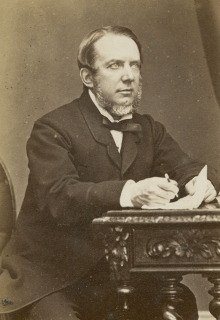
Michael William Balfe, Irish composer best remembered for his opera The Bohemian Girl, dies in Dublin on October 20, 1870.

Balfe is born in Dublin on May 15, 1808, where his musical gifts become apparent at an early age. He receives instruction from his father, a dancing master and violinist, and the composer William Rooke. His family moves to Wexford when he is a child.

In 1817, Balfe appears as a violinist in public, and in this year composes a ballad, first called “Young Fanny” and afterwards, when sung in Paul Pry by Lucia Elizabeth Vestris, “The Lovers’ Mistake”. In 1823, upon the death of his father, he moves to London and is engaged as a violinist in the orchestra of the Theatre Royal, Drury Lane. He eventually becomes the leader of that orchestra. While there, he studies violin with Charles Edward Horn and composition with Charles Frederick Horn.

While still playing the violin, Balfe pursues a career as an opera singer. He debuts unsuccessfully at Norwich in Carl Maria von Weber‘s Der Freischütz. In 1825, Count Mazzara takes him to Rome for vocal and musical studies and introduces him to Luigi Cherubini. In Italy, he also pursues composing, writing his first dramatic work, a ballet, La Perouse. He becomes a protégée of Gioachino Rossini‘s, and at the close of 1827, he appears as Figaro in The Barber of Seville at the Italian opera in Paris.

Balfe soon returns to Italy, where he is based for the next eight years, singing and composing several operas. In 1829 in Bologna, he composes his first cantata for the soprano Giulia Grisi, then 18 years old. He produces his first complete opera, I rivali di se stessi, at Palermo in the carnival season of 1829—1830.

Balfe returned to London in May 1835. His initial success takes place some months later with the premiere of The Siege of Rochelle on October 29, 1835, at Drury Lane. Encouraged by his success, he produces The Maid of Artois in 1836, which is followed by more operas in English. In July 1838, Balfe composes a new opera, Falstaff, for The Italian Opera House, based on The Merry Wives of Windsor, with an Italian libretto by S. Manfredo Maggione.

In 1841, Balfe founds the National Opera at the Lyceum Theatre, but the venture is a failure. The same year, he premieres his opera, Keolanthe. He then moves to Paris, presenting Le Puits d’amour in early 1843, followed by his opera based on Les quatre fils Aymon for the Opéra-Comique and L’étoile de Seville for the Paris Opera. Meanwhile, in 1843, he returns to London where he produces his most successful work, The Bohemian Girl, on November 27, 1843, at the Theatre Royal, Drury Lane. The piece runs for over 100 nights, and productions are soon mounted in New York, Dublin, Philadelphia, Vienna, Sydney, and throughout Europe and elsewhere.

From 1846 to 1852, Balfe is appointed musical director and principal conductor for the Italian Opera at Her Majesty’s Theatre. There he first produces several of Giuseppe Verdi‘s operas for London audiences. He conducts for Jenny Lind at her opera debut and on many occasions thereafter.

In 1851, in anticipation of The Great Exhibition in London, Balfe composes an innovative cantata, Inno Delle Nazioni, sung by nine female singers, each representing a country. He continues to compose new operas in English, including The Armourer of Nantes (1863), and writes hundreds of songs. His last opera, nearly completed when he dies, is The Knight of the Leopard and achieves considerable success in Italian as Il Talismano.

Balfe retires in 1864 to Hertfordshire, where he rents a country estate. He dies at his home in Rowney Abbey, Ware, Hertfordshire, on October 20, 1870, and is buried at Kensal Green Cemetery in London, next to fellow Irish composer William Vincent Wallace. In 1882, a medallion portrait of him is unveiled in Westminster Abbey.

In all, Balfe composes at least 29 operas. He also writes several cantatas and a symphony. His only large-scale piece that is still performed regularly today is The Bohemian Girl.


Leave a comment

Birth of Painter James Barry

james-barry-self-portrait

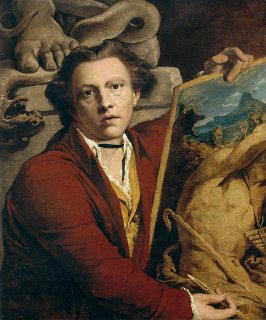
James Barry, Irish painter best remembered for his six-part series of paintings entitled The Progress of Human Culture in the Great Room of the Royal Society of Arts in London, is born in Water Lane (now Seminary Road) on the northside of Cork, County Cork on October 11, 1741.

Barry first studies painting under local artist John Butts. At the schools in Cork to which he is sent he is regarded as a child prodigy. About the age of seventeen he first attempts oil painting, and between that and the age of twenty-two, when he first goes to Dublin, he produces several large paintings.

The painting that first brings him into public notice, and gains him the acquaintance and patronage of Edmund Burke, is founded on an old tradition of the landing of Saint Patrick on the sea-coast of Cashel, although Cashel is an inland town far from the sea, and of the conversion and Baptism of the King of Cashel. It is exhibited in London in 1762 or 1763 and rediscovered in the 1980s in unexhibitable condition.

In late 1765 Barry goes to Paris, then to Rome, where he remains upwards of three years, from Rome to Florence and Bologna, and thence home through Venice. He paints two pictures while abroad, an Adam and Eve and a Philoctetes.

Soon after his return to England in 1771 Barry produces his painting of Venus, which is compared to the Triumph of Galatea of Raphael, the Venus of Urbino of Titian and the Venus de’ Medici. In 1773 he exhibits his Jupiter and Juno on Mount Ida. His Death of General Wolfe, in which the British and French soldiers are represented in very primitive costumes, is considered as a falling-off from his great style of art.

In 1773 Barry publishes An Inquiry into the real and imaginary Obstructions to the Acquisition of the Arts in England, vindicating the capacity of the English for the fine arts and tracing their slow progress to the Reformation, to political and civil dissensions, and lastly to the general direction of the public mind to mechanics, manufactures and commerce.

In 1774 a proposal is made through Valentine Green to several artists to ornament the Great Room of the Society for the encouragement of Arts, Manufactures and Commerce (now the Royal Society of Arts), in London’s Adelphi Theatre, with historical and allegorical paintings. This proposal is rejected at the time. In 1777 Barry makes an offer, which is accepted, to paint the whole on condition that he is allowed the choice of his subjects, and that he is paid by the society the costs of canvas, paints and models. He finishes the series of paintings after seven years to the satisfaction of the members of the society. He regularly returns to the series for more than a decade, making changes and inserting new features. The series of six paintings, The progress of human knowledge and culture, has been described by critic Andrew Graham-Dixon as “Britain’s late, great answer to the Sistine Chapel.”

Soon after his return from the continent Barry is chosen a member of the Royal Academy of Arts. In 1782 he is appointed professor of painting in the room of Edward Penny with a salary of £30 a year. In 1799 he is expelled from the Academy soon after the appearance of his Letter to the Society of Dilettanti, an eccentric publication, full of enthusiasm for his art and at the same time of contempt for the living professors of it. He remains the only academician ever to be expelled by the Academy until Brendan Neiland in July 2004.

After the loss of his salary, a subscription is set on foot by the Earl of Buchan to relieve Barry from his difficulties, and to settle him in a larger house to finish his painting of Pandora. The subscription amounts to £1000, with which an annuity is bought, but on February 6, 1806 he is seized with illness and dies on February 22. His remains are interred in St. Paul’s Cathedral, London on March 4, 1806.

(Pictured: James Barry, Self-portrait, 1803, oil on canvas. National Gallery of Ireland, Dublin.)


Leave a comment

Drowning of Anna Catherine Parnell

anna-catherine-parnell

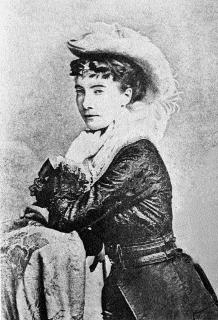
Anna Catherine Parnell, Irish nationalist and younger sister of Irish Nationalist leader Charles Stewart Parnell, drowns at Ilfracombe, Devon, England on September 20, 1911.

Parnell is born at Avondale House near Rathdrum, County Wicklow, the tenth of eleven children of John Henry Parnell, a landlord, and Delia Tudor Stewart Parnell, an Irish American and daughter of Admiral Charles Stewart of the United States Navy. She has very little formal education as a child, but the family has an extensive library which she is encouraged to read by her mother. After her father dies in 1859, she moves with the family to Dublin. Delia Parnell is an active socialite while in Dublin and exposes her children to a wide variety of political views.

In 1865 the family moves to Paris, but Parnell feels stifled by upper class society rules imposed upon her. She is in Paris when the Franco-Prussian War breaks out in 1870 and is active in the American Ladies’ Committee fundrasing and setting up hospitals. She returns alone to Dublin in 1870 to study art.

Parnell moves to London in 1875 to continue studying art. When her brother Charles is elected as a Member of Parliament (MP) for Meath, she becomes increasingly political. She frequently visits Parliament during debates, sitting in the Ladies’ Gallery. She writes articles about the debates in a column titled Notes From the Ladies’ Cage in the Celtic Monthly. In 1879 she joins her sister, Fanny Parnell, a poet, in New York City where they raise money in support of the Irish National Land League. The sisters work closely with their brother Charles and Michael Davitt but are critical of how the funds raised in America are being used in Ireland. In October 1880 the sisters found the New York Ladies’ Land League with their mother as president. They raised thousands of dollars sent to Ireland.

Parnell returns in Dublin in late 1880. When it seems that the Land League men are likely to be arrested, it is suggested that a women’s league in Ireland could take over the work in their absence. Public opinion at the time is against women in politics, but the Ladies’ Land League is founded on January 31, 1881, with Parnell as its effective leader.

When Charles Parnell and other leaders are imprisoned in 1881, as predicted, the Ladies’ Land League takes over their work. Though it is envisioned as a place holder until the men are released, Parnell organises branches throughout Ireland, encouraging women to play an active role in Land League activities. Offices are given to the ladies but little help. They raise funds for the League and for the support of prisoners and their families. They distribute Land League wooden huts to shelter evicted tenant families and by the beginning of 1882 they have 500 branches, thousands of women members and considerable publicity. They distribute £60,000 in relief aid.

This puts the Ladies’ Land League in serious debt. Parnell approaches her brother Charles, requesting money to settle the debts. Charles, who distrusts her understanding of politics, agrees to provide the money under the condition that the Ladies’ Land League is disbanded. She agrees, disbanding in 1882, but she never forgives Charles.

After her brother’s death in 1891 Parnell lives the rest of her life in the south of England under the assumed name Cerisa Palmer. She writes an angry account of her Land League experiences in Tale of a Great Sham, which is not published until 1986. She makes one last political appearance when she campaigns for a Sinn Féin candidate in a 1907 by-election.

By the summer of 1911, the 59-year-old Parnell is staying in lodgings at Ilfracombe in Devon. An enthusiastic swimmer since childhood, she bathes every day, and on September 20, disregarding a warning of dangerous seas, she goes swimming as usual. She is seen to be in difficulties and the alarm is raised, but by the time rescuers reached her, she is dead. Unlike her brother, whose funeral in Dublin had been the occasion for a massive outpouring of grief and remorse, Anna Parnell was buried quietly in the churchyard of Holy Trinity Church in Ilfracombe, in the presence of just seven strangers, and far away from the scenes of her greatest efforts and notoriety.


1 Comment

Birth of Marguerite Gardiner, Novelist & Journalist

marguerite-power-farmer-gardiner

Marguerite Gardiner, Countess of Blessington, Irish novelist, journalist, and literary hostess, is born near Clonmel, County Tipperary on September 1, 1789. She becomes acquainted with Lord Byron in Genoa and writes a book about him.

Born Margaret Power, she is a daughter of Edmund Power and Ellen Sheehy, small landowners. She is “haphazardly educated by her own reading and by her mother’s friend Ann Dwyer.” Her childhood is blighted by her father’s character and poverty, and her early womanhood made wretched by a compulsory marriage at the age of fifteen to Captain Maurice St. Leger Farmer, an English officer whose drunken habits finally bring him as a debtor to the King’s Bench Prison, where he dies by falling out of a window in October 1817. She had left him after three months of marriage.

Marguerite later moves to Hampshire, England to live for five years with the family of Thomas Jenkins, a sympathetic and literary sea captain. Jenkins introduces her to the Irishman Charles John Gardiner, 1st Earl of Blessington, a widower with four children and seven years her senior. They marry at St. Mary’s, Bryanston Square, Marylebone, on February 16, 1818, only four months after the death of her first husband.

Of rare beauty, charm and wit, Lady Blessington is no less distinguished for her generosity and for the extravagant tastes she shares with her second husband, which results in encumbering his estates with debt. On August 25, 1822, they set out for a continental tour with Marguerite’s youngest sister, the 21-year-old Mary Anne, and servants. On the way they meet Count Alfred D’Orsay, who had first become an intimate of Lady Blessington in London in 1821, in Avignon on November 20, 1822, before settling at Genoa for four months from March 31, 1823. There they meet Lord Byron on several occasions, giving Lady Blessington material for her Conversations with Lord Byron.

After that they settle for the most part in Naples, where she meets the Irish writer Richard Robert Madden, who is to become her biographer. They also spend time in Florence with their friend Walter Savage Landor, author of Imaginary Conversations which she greatly admires.

It is in Italy, on December 1, 1827, that Count D’Orsay marries Harriet Gardiner, Lord Blessington’s only daughter by his former wife. The Blessingtons and the newlywed couple move to Paris towards the end of 1828, taking up residence in the Hôtel Maréchal Ney, where the Earl suddenly dies at the age of 46 of an apoplectic stroke in 1829. D’Orsay and Harriet then accompanied Lady Blessington to England, but the couple separates soon afterwards amidst much acrimony. D’Orsay continues to live with Lady Blessington until her death. Their home, first at Seymour Place, and afterwards Gore House, Kensington, now the site of the Royal Albert Hall, become a centre of attraction for all that is distinguished in literature, learning, art, science and fashion. Benjamin Disraeli writes Venetia whilst staying there, and it is at her home that Hans Christian Andersen first meets Charles Dickens.

After her husband’s death Lady Blessington supplements her diminished income by contributing to various periodicals as well as by writing novels. She is for some years editor of The Book of Beauty and The Keepsake, popular annuals of the day. In 1834 she publishes her Conversations with Lord Byron. Her Idler in Italy (1839–1840), and Idler in France (1841) are popular for their personal gossip and anecdotes, descriptions of nature and sentiment.

Early in 1849, Count D’Orsay leaves Gore House to escape his creditors. Subsequently the furniture and decorations are sold in a public sale successfully discharging Lady Blessington’s debts. She joins the Count in Paris, where she dies on June 4, 1849, of a burst heart. On examination it is discovered that her heart is three times normal size.

(Pictured: Marguerite, Countess of Blessington, painted by Sir Thomas Lawrence in 1822)


Leave a comment

Death of William James MacNeven, Physician & Writer

william-james-macneven-1

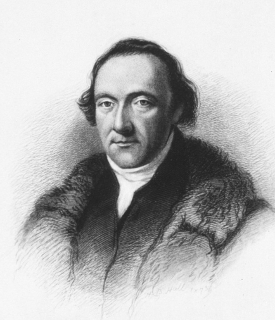
William James MacNeven, Irish American physician and writer, dies in New York City on July 12, 1841.

MacNeven is born on March 21, 1763, at Ballinahown, Aughrim, County Galway. The eldest of four sons, at the age of 12 MacNeven is sent by his uncle Baron MacNeven to receive his education abroad as the Penal Laws render education impossible for Catholics in Ireland. He makes his collegiate studies in Prague. His medical studies are made in Vienna where he is a pupil of Pestel and takes his degree in 1784. He returns to Dublin in the same year to practise.

MacNeven becomes involved in the Society of United Irishmen with such men as Lord Edward Fitzgerald, Thomas Addis Emmet, and his brother Robert Emmet. He is arrested in March 1798 and confined in Kilmainham Gaol, and afterwards in Fort George, Scotland, until 1802, when he is liberated and exiled. In 1803, he is in Paris seeking an interview with Napoleon Bonaparte in order to obtain French troops for Ireland. Disappointed in his mission, MacNeven comes to the United States, landing at New York City on July 4, 1805.

In 1807, he delivers a course of lectures on clinical medicine in the recently established College of Physicians and Surgeons. Here in 1808, he receives the appointment of professor of midwifery. In 1810, at the reorganization of the school, he becomes the professor of chemistry, and in 1816 is appointed to the chair of materia medica. In 1826 with six of his colleagues, he resigns his professorship because of a misunderstanding with the New York Board of Regents and accepts the chair of materia medica at Rutgers Medical College, a branch of the New Jersey institution of that name, established in New York as a rival to the College of Physicians and Surgeons. The school at once becomes popular because of its faculty, but after four years is closed by legislative enactment on account of interstate difficulties. The attempt to create a school independent of the regents results in a reorganization of the University of the State of New York.

MacNeven, affectionately known as “The Father of American Chemistry,” dies in New York City on July 12, 1841. He is buried on the Riker Farm in the Astoria section of Queens, New York.

One of the oldest obelisks in New York City is dedicated to him in the Trinity Church, located between Wall Street and Broadway, New York. The obelisk is opposite to another commemorated for his friend Thomas Emmet. MacNeven’s monument features a lengthy inscription in Irish, one of the oldest existent dedications of this kind in the Americas.


Leave a comment

Birth of William Maginn, Journalist & Writer

william-maginn

William Maginn, journalist and miscellaneous writer, is born in Cork on July 10, 1794.

Maginn becomes a contributor to Blackwood’s Magazine and, after moving to London in 1824, becomes for a few months in 1826 the Paris correspondent to The Representative, a paper started by John Murray, the publisher. When its short career is run, he helps to found in 1827 the ultra Tory Standard, a newspaper that he edits along with a fellow graduate of Trinity College, Dublin, Stanley Lees Giffard. He also writes for the more scandalous Sunday paper, The Age.

In 1830 Maginn instigates and becomes one of the leading supporters of Fraser’s Magazine. His Homeric Ballads, much praised by contemporary critics, are published in Fraser’s between 1839 and 1842. In 1837, Bentley’s Miscellany is launched, with Charles Dickens as editor, and Maginn writes the prologue and contributes over the next several years a series of “Shakespeare Papers” that examine characters in counter-intuitive fashion. From “The Man in the Bell” (Blackwood’s, 1821) through “Welch Rabbits” (Bentley’s, 1842) Maginn is an occasional though skillful writer of short fiction and tales. His only novel, Whitehall (1827) pretends to be a historical novel set in 1820s England written in the year 2227. It is a droll spoof of the vogue for historical novels as well as the contemporary political scene.

In 1836, Maginn fights a duel with Grantley Berkeley, a member of Parliament. Berkeley had brutally assaulted magazine publisher James Fraser over a review Maginn wrote of Berkeley’s novel Berkeley Castle, and Maginn calls him out. Three rounds are fired but no one is struck.

One of the most brilliant periodical writers of his time, Maginn leaves little permanent work behind him. In his later years, his intemperate habits land him in debtor’s prison. When he emerges through the grace of the Insolvent Debtor’s Act he is in an advanced stage of tuberculosis. He writes until the end, including in the first volume of Punch, but he dies in extreme poverty in Walton-on-Thames, London on August 21, 1842, survived by his wife Ellen, and daughters Annie and Ellen, and son John. His nephew Francis Maginn, who is deaf, is a co-founder of the British Deaf and Dumb Association, now called the British Deaf Association (BDA).


Leave a comment

Birth of Mary Colum, Literary Critic & Author

mary-colum

Mary Colum (née Maguire), literary critic and author, is born in Collooney, County Sligo on June 14, 1884, the daughter of Charles Maguire and Catherine Gunning. She is the author of several books, including the autobiographical Life and the Dream (1947), and From These Roots: The Ideas that Have Made Modern Literature (1937), a collection of her criticism.

Maguire’s mother dies in 1895, leaving her to be reared by her grandmother, Catherine, in Ballysadare, County Sligo. She attends boarding school in St. Louis’ Convent in Monaghan, County Monaghan.

Educated at Royal University of Ireland Maguire is founder of the Twilight Literary Society which leads her to meet William Butler Yeats. She regularly attends the Abbey Theatre and is a frequent visitor amongst the salons, readings and debates there. After graduation in 1909 she teaches with Louise Gavan Duffy at St. Ita’s, a companion school to Patrick Pearse‘s St. Enda’s School. She is active with Thomas MacDonagh and others in national and cultural causes and co-founds The Irish Review (1911–14) with David Houston, MacDonagh and others. She, along with her husband, Padraic Colum, whom she marries in July 1912, edit the magazine for some months of its four-year run. She is encouraged by Yeats to specialise in French literary criticism and to translate Paul Claudel.

Colum and her husband move to New York City in 1914, living occasionally in London and Paris. In middle age she is encouraged to return to writing and becomes established as a literary generalist in American journals, including Poetry, Scribner’s Magazine, The Nation, The New Republic, The Freeman, The New York Times Book Review, The Saturday Review of Literature, and the New-York Tribune.

Colum associates with James Joyce in Paris and discourages him from duping enquirers about the origins of the interior monologue in the example of Édouard Dujardin. She accepts Joyce’s very ill daughter, Lucia, for a week in their Paris flat at the height of her “hebephrenic” attack, while herself preparing for an operation in May 1932. She serves as the literary editor of The Forum magazine from 1933–1941 and commences teaching comparative literature with Padraic at Columbia University in 1941.

She rebuts Oliver St. John Gogarty‘s intemperate remarks about Joyce in The Saturday Review of Literature in 1941.

Colum’s publications become increasingly sparse in the 1950s as her arthritis and neuralgia grow more and more severe. She dies in New York City on October 22, 1957. At the time of her death, she is working on Our Friend James Joyce with her husband, each writing various chapters. It is assembled posthumously by Padraic Colum and is published by Doubleday on August 22, 1958.

Colum’s letters are held in Scribner’s Archive, Princeton University Library, while a collection of her papers is held at the State University of New York.


Leave a comment

Birth of Januarius MacGahan, Journalist & Correspondent

januarius-macgahan

Januarius Aloysius MacGahan, American journalist and war correspondent for the New York Herald and The Daily News, is born near New Lexington, Ohio on June 12, 1844. His articles describing the massacre of Bulgarian civilians by Turkish soldiers and irregular volunteers in 1876 creates public outrage in Europe and are a major factor in preventing Britain from supporting Turkey in the Russo–Turkish War of 1877–78, which leads to Bulgaria gaining independence from the Ottoman Empire.

MacGahan’s father is an immigrant from Ireland who had served on the Northumberland, the ship which took Napoleon into exile on Saint Helena. He moves to St. Louis, where he briefly works as a teacher and as a journalist. There he meets his cousin, General Philip Sheridan, an American Civil War hero also of Irish parentage, who convinces him to study law in Europe. He sails to Brussels in December 1868.

MacGahan does not get a law degree, but he discovers that he has a gift for languages, learning French and German. He runs short of money and is about to return to America in 1870 when the Franco-Prussian War breaks out. Sheridan happens to be an observer with the German Army, and he uses his influence to persuade the European editor of the New York Herald to hire MacGahan as a war correspondent with the French Army.

MacGahan’s vivid articles from the front lines describing the stunning defeat of the French Army win him a large following, and many of his dispatches to the Herald are reprinted by European newspapers. When the war ends, he interviews French leader Léon Gambetta and Victor Hugo and, in March 1871, he hurries to Paris and is one of the first foreign correspondents to report on the uprising of the Paris Commune. He is arrested by the French military and nearly executed and is only rescued through the intervention of the U.S. Minister to France Elihu B. Washburne.

In 1871 MacGahan is assigned as the Herald‘s correspondent to Saint Petersburg. He learns Russian, mingles with the Russian military and nobility, covers the Russian tour of General William Tecumseh Sherman and meets his future wife, Varvara Elagina, whom he marries in 1873. In 1874 he spends ten months in Spain, covering the Third Carlist War.

In 1876 MacGahan quarrels with James Gordon Bennett Jr., the publisher of the New York Herald, and leaves the newspaper. He is invited by his friend, Eugene Schuyler, the American Consul-General in Constantinople, to investigate reports of large-scale atrocities committed by the Turkish Army following the failure of an attempted uprising by Bulgarian nationalists in April 1876. He obtains a commission from The Daily News, then the leading liberal newspaper in England, and leaves for Bulgaria on July 23, 1876.

MacGahan reports that the Turkish soldiers have forced some of the villagers into the church, then the church is burned, and survivors tortured to learn where they have hidden their treasures. He says that of a population of seven thousand, only two thousand survive. According to his account, fifty-eight villages in Bulgaria are destroyed, five monasteries demolished, and fifteen thousand people in all massacred. These reports, published first in The Daily News, and then in other papers, cause widespread popular outrage against Turkey in Britain. The government of British Prime Minister Benjamin Disraeli, a supporter of Turkey, tries to minimize the massacres and says that the Bulgarians are equally to blame, but his arguments are refuted by the newspaper accounts of MacGahan.

In the wake of the massacres and atrocities committed by the Ottoman forces during the suppression of the April Uprising, as well as centuries-long conflicts between Russia and Turkey in Crimea, the Russian Government, stirred by anti-Turkish and Pan-Slavism sentiment, prepare to invade the Ottoman Empire, and declare war on it on April 24, 1877. The Turkish Government of Sultan Abdul Hamid II appeals for help to Britain, its traditional ally against Russia, but the British government responds that it cannot intervene “because of the state of public feeling.”

MacGahan is assigned as a war correspondent for The Daily News and, thanks to his friendship with General Skobelev, the Russian commander, rides with the first units of the Russian Army as it crosses the Danube into Bulgaria. He covers all the major battles of the Russo–Turkish War, including the Siege of Plevna and the Battle of Shipka Pass. He reports on the final defeat of the Turkish armies and is present at the signing of the Treaty of San Stefano, which ends the war.

MacGahan is in Constantinople, preparing to travel to Berlin for the conference that determines the final borders of Bulgaria, when he catches typhoid fever. He dies on June 9, 1878, and is buried in the Greek cemetery, in the presence of diplomats, war correspondents, and General Skobelev. Five years later his body is returned to the United States and reburied in New Lexington and a statue is erected in his honor by a society of Bulgarian Americans.


Leave a comment

Birth of John Blaquiere, 1st Baron de Blaquiere

john-blaquiere

John Blaquiere, 1st Baron de Blaquiere, British soldier, diplomat and politician of French descent, is born on May 15, 1732. He serves as Chief Secretary for Ireland between 1772 and 1776. He is the fifth son of Jean de Blaquiere, a French merchant who had emigrated to England in 1685, and his wife Marie Elizabeth de Varennes.

Blaquiere at first serves in the Army, in the 18th Dragoons, later renumbered the 17th Dragoons, where he achieves the rank of Lieutenant Colonel. In 1771 he is appointed Secretary of Legation at the British Embassy in Paris, a post he holds until 1772. The latter year Simon Harcourt, 1st Earl Harcourt, the British Ambassador in Paris, is appointed Lord Lieutenant of Ireland, and Blaquiere joins him as Chief Secretary for Ireland. He is admitted to the Privy Council of Ireland the same year and made a Knight Companion of the Order of the Bath two years later.

Blaquiere is to remain Chief Secretary until December 6, 1776. He is elected to the Irish House of Commons for Old Leighlin in 1773, a seat he holds until 1783. After representing Enniskillen for a few months in 1783, he sits then for Carlingford from 1783 to 1790, for Charleville from 1790 to 1798 and for Newtownards from 1798 until the Act of Union comes into force in 1801. He is created a Baronet, of Ardkill in County Londonderry, in 1784, and is raised to the Peerage of Ireland as Baron de Blaquiere, of Ardkill in the County of Londonderry, in 1800, for his support for the Act of Union. Lord de Blaquiere also sits as a Member of the British House of Commons for Rye from 1801 to 1802 and for Downton from 1802 to 1806. He is elected a Fellow of the Royal Society in 1803.

Lord de Blaquiere marries Eleanor, daughter of Robert Dobson, in 1775. They have four sons, including Peter de Blaquière, and three daughters. Lord de Blaquiere dies at the age of 80 in Bray, County Wicklow, on August 27, 1812. He is succeeded in his titles by his eldest son, John. Lady de Blaquiere dies at Regent’s Park, Marylebone, London, in December 1833.


Leave a comment

Construction of Royal Hospital Kilmainham Begins

royal-hospital-kilmainham

The first stone of the Royal Hospital Kilmainham in Kilmainham, Dublin, is laid by James Butler, 1st Duke of Ormond, on April 29, 1680. Completed in 1684, it is one of the finest 17th-century buildings in Ireland.

The hospital is built by Sir William Robinson, official State Surveyor General of Ireland for James Butler, 1st Duke of Ormonde and Lord Lieutenant of Ireland to King Charles II, as a home for retired soldiers of the Irish Army and continues in that use for over 250 years. The style is based on Les Invalides in Paris with a formal facade and a large courtyard. The Royal Hospital Chelsea in Chelsea, London is completed two years later and also has similarities in style. A priory, founded in 1174 by Strongbow, exists on the site until the English close it down in the Dissolution of the Monasteries in the 1530s.

The Richmond Tower at the end of the formal avenue leading to the Royal Hospital is designed by Francis Johnston, one of the leading architects of the day. This gateway originally stands beside the River Liffey at Bloody Bridge (now Rory O’More Bridge) but has to be moved after the arrival of the railway in 1844 increases traffic congestion. Johnston places his personal coat of arms above the arch, concealed by a piece of wood painted to match the stone, his idea being that his arms would be revealed to future generations after the wood becomes rotten. However, his little trick is uncovered when the gateway is taken down for removal. The coat of arms currently on the gateway is that of the Royal Hospital.

The Royal Hospital Kilmainham graveyards, including Bully’s Acre, are 400 metres to the west. A cross-shaft in the former cemetery may be the remains of a boundary cross associated with a ninth-century monastery located at this site.

Following the creation of the Irish Free State the Royal Hospital is considered as a potential home for Oireachtas Éireann, the new Irish national parliament. Eventually it is decided to keep parliament in its temporary home in Leinster House. The Hospital remains the home of a dwindling number of soldiers, before being variously used by the Garda Síochána and as a storage location for property belonging to the National Museum of Ireland. The large statue Queen Victoria which used to stand in the forecourt of Leinster House, before its removal in 1947, is stored in the main courtyard of the Hospital, as are various state carriages, including the famously spectacular State Coach of the Lord Chancellor of Ireland. The Royal Hospital Kilmainham is finally restored by the Irish Government in 1984 and controversially opens as the Irish Museum of Modern Art (IMMA). Some people working in heritage organisations criticise the decision to demolish the eighteenth-century barrack rooms in one section of the quadrangle to create open spaces for the IMMA.

Every year on the National Day of Commemoration, the Sunday nearest July 11, the anniversary of the Truce that ends the Irish War of Independence, the President of Ireland, in the presence of members of the Government of Ireland, members of Dáil Éireann and of Seanad Éireann, the Council of State, the Defence Forces, the Judiciary and the Diplomatic Corps, lays a wreath in the courtyard in memory of all Irishmen and Irishwomen who have died in past wars and on service with the United Nations.

In recent years, Royal Kilmainham Hospital has become a popular location for concerts during the summer months. Acts such as Blur, Leonard Cohen, The Flaming Lips, Jack White and Public Enemy have played within the grounds in the past.