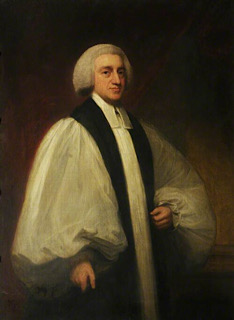
Agar is known to have held particularly marked Calvinistic positions. He serves as Dean of Kilmore from 1765 to 1768, and then as Bishop of Cloyne until 1779.
In 1794, Agar is raised to the Peerage of Ireland as Baron Somerton. In 1801, he is translated to become Archbishop of Dublin and is created Viscount Somerton. In 1806, he is further honoured when he is made Earl of Normanton. These titles are all in the Peerage of Ireland. He remains as Archbishop of Dublin until his death in 1809, and from the beginning of 1801 onward, sits in the House of Lords as one of the twenty-eight original Irish representative peer, following the Acts of Union 1800 which unites Ireland and Great Britain.
Agar dies on July 14, 1809, aged 72, and is succeeded in his secular titles by his son Welbore Ellis Agar. He is buried in the north transept of Westminster Abbey. His widow Jane, Countess of Normanton, is buried alongside him following her death in 1826. His tomb dates from 1815 and is created by John Bacon.
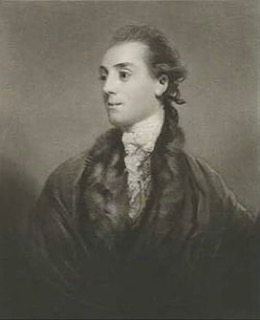
Luttrell was a captain in the Royal Navy but retires in 1789. He is returned to Parliament for Stockbridge in 1774, a seat he holds until 1775, and again between 1780 and 1785. Between 1785 and 1826 he is a commissioner of HM Customs and Excise. He succeeds his elder brother to the earldom in 1821. This is an Irish peerage and does not entitle him to an automatic seat in the House of Lords.
In 1766, Lord Carhampton marries the Honorable Elizabeth Olmius (1742-97), daughter of John Olmius, 1st Baron Waltham. In 1787, out of respect after the death of his father-in-law, he assumes by Royal Licence the additional surname of “Olmius.” In 1798, he sells the Olmius family seat of Newhall to the founding nuns of New Hall School. There are three children from his first marriage (however only his daughter survives to adulthood):
Lady Frances Maria Luttrell (b. 1768), married Sir Simeon Stuart, 4th Baronet
James Luttrell (d. 1772)
John Luttrell (d. 1769)
Lord Carhampton marries secondly Maria Morgan, daughter of John Morgan, in 1798. They have one child:
Lady Maria Anne Luttrell (1799–1857), married Lieutenant-Colonel Hardress Robert Saunderson
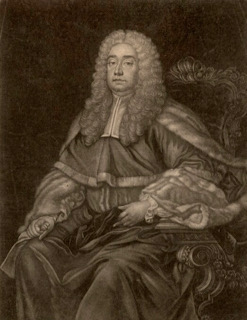
Bowes epitomizes the severity of the 18th century Penal Laws against Irish Catholics when he rules, in about 1759, that: “The law does not suppose any such person to exist as an Irish Roman Catholic, nor could such a person draw breath without the Crown’s permission”. Such views, given that Roman Catholics make up more than 90% of the Irish population at the time, inevitably make him bitterly unpopular, and in 1760 he is assaulted during a riot outside the House of Commons.
In spite of his religious bigotry, Bowes is considered one of the outstanding judges of his time. In particular, he is a reforming Lord Chancellor, who is praised for making the Court of Chancery “a terror for fraud, and a comfort and protection for honest men”. As Attorney-General he shows considerable courage in going on assize during the Irish Famine (1740–1741) despite the infectious fever which is raging at the time, and which claims the lives of three other judges who decide to brave the dangers.
Bowes is considered one of the finest speakers of his time. His speech for the prosecution at the trial of Henry Barry, 4th Baron Barry of Santry, who is charged with murder in 1739, is described by those who hear it as a masterpiece of eloquence and logic, and leads to the Irish House of Lords bringing in a unanimous verdict of guilty against Santry.
Bowes dies in Dublin on July 22, 1767, his mental faculties fully intact despite his bodily infirmities. He is buried in Christ Church Cathedral, Dublin, where his brother raises a memorial to him. He never marries, and his title becomes extinct on his death. He lives at Belvedere House, Drumcondra. His estates passes to his brother Rumsey Bowes of Binfield, Berkshire.
In January and February 1689, Butler votes against the motion to put William of Orange and Mary on the throne and against the motion to declare that James II has abdicated it. Nevertheless, he subsequently joins the forces of William of Orange, by whom he is made colonel of the 2nd Troop of Horse Guards on April 20, 1689. He accompanies William in his Irish campaign, debarking with him in Carrickfergus on June 14, 1690, and commands this troop at the Battle of the Boyne in July 1690. In February 1691 he becomes Lord Lieutenant of Somerset.
Butler serves on the continent under William of Orange during the Nine Years’ War and, having been promoted to major general, he fights at the Battle of Steenkerque in August 1692 and the Battle of Landen in July 1693, where he is taken prisoner by the French and then exchanged for the Duke of Berwick, James II’s illegitimate son. He is promoted to lieutenant general in 1694.
Butler plays a dramatic role at the notorious meeting of the Privy Council on March 8, 1711, when Antoine de Guiscard, a French double agent who is being questioned about his treasonable activities, attempts to assassinate Robert Harley, 1st Earl of Oxford, against whom he has a personal grudge for drastically cutting his allowance, by stabbing him with a penknife. Harley is wounded, but not seriously, due largely to the fact that he is wearing a heavy gold brocade waistcoat in which the knife gets stuck. Several Councillors, including Butler, stab Guiscard in return. Guiscard implores Butler to finish the deed, but he replies that it is not for him to play the hangman. In any case, he has the sense to see that Guiscard must be kept alive at least long enough to be questioned, although as it turns out Guiscard’s wounds are fatal, and he dies a week later.
On April 23, 1712, Butler leaves Harwich for Rotterdam to lead the British troops taking part in the war. Once there he allows himself to be made the tool of the Tory ministry, whose policy is to carry on the war in the Netherlands while giving secret orders to him to take no active part in supporting their allies under Prince Eugene. In July 1712, he advises Prince Eugene that he can no longer support the siege of Le Quesnoy and that he is withdrawing the British troops from the action and instead intends to take possession of Dunkirk. The Dutch are so exasperated at the withdrawal of the British troops that they close the towns of Bouchain on Douai to British access, despite the fact that they have plenty of stores and medical facilities available. Butler takes possession of Ghent and Bruges as well as Dunkirk, in order to ensure his troops are adequately provided for. On April 15, 1713, he becomes Lord Lieutenant of Norfolk.
Ormonde’s position as Captain-General makes him a personage of much importance in the crisis brought about by the death of Queen Anne and, during the last years of Queen Anne, he almost certainly has Jacobite leanings and corresponds with the Jacobite Court including his cousin, Piers Butler, 3rd Viscount Galmoye, who keeps barrels of gunpowder at Kilkenny Castle. King George I, on his accession to the throne in August 1714, institutes extensive changes and excludes the Tories from royal favour. Butler is stripped of his posts as Captain-General, as colonel of the 1st Regiment of Foot Guards and as Commander in Chief of the Forces with the first two posts going to the Duke of Marlborough and the role of Commander-in-Chief going to John Dalrymple, 2nd Earl of Stair. On November 19, 1714, Butler is instead made a member of the reconstituted Privy Council of Ireland.
Accused of supporting the Jacobite rising of 1715, Butler is impeached for high treason by Lord Stanhope on June 21, 1715. He might avoid the impending storm of Parliamentary prosecution, if he remains in England and stands trial but instead, he chooses to flee to France in August 1715 and initially stays in Paris with Henry St. John, 1st Viscount Bolingbroke. On August 20, 1715, he is attainted, his estate forfeited, and honours extinguished. The Earl Marshal is instructed to remove the names and armorial bearings of Butler and Bolingbroke from the list of peers and his banner as Knight of the Garter is taken down in St. George’s Chapel.
On June 20, 1716, the Parliament of Ireland passes an act extinguishing the regalities and liberties of the county palatine of Tipperary; for vesting Butler’s estate in the crown and for giving a reward of £10,000 for his apprehension, should he attempt to land in Ireland. But the same parliament passes an act on June 24, 1721, to enable his brother, Charles Butler, 1st Earl of Arran, to purchase his estate, which he does accordingly.
Butler subsequently moves to Spain where he holds discussions with Cardinal Giulio Alberoni. He later takes part in a Spanish and Jacobite plan to invade England and puts James Francis Edward Stuart on the British throne in 1719, but his fleet is disbanded by a storm in the Bay of Biscay. In 1732, he moves to Avignon, where he is seen in 1733 by the writer Lady Mary Wortley Montagu. He dies at Avignon in exile on November 16, 1745, but his body is returned to London and buried in Westminster Abbey on May 22, 1746.
On July 20, 1682, Butler, then called Lord Ossory, marries Lady Anne Hyde, daughter of Laurence Hyde, who is then Viscount Hyde of Kenilworth but becomes Earl of Rochester in November. The couple has a daughter, Mary, who dies young in 1688.
Following the death of his first wife in 1685, Butler plans to marry again in order to secure a male heir. He gains permission from the House of Lords for the arranging of a jointure for another marriage in May 1685, and in August of that year, he marries Lady Mary Somerset, daughter of the Duke of Beaufort and Mary Capel. The couple has a son, Thomas (1686–1689), and two daughters, Elizabeth (1689–1750) and Mary (1690–1713). His second wife is a Lady of the Bedchamber to Queen Anne. Their younger daughter, Mary, marries John Ashburnham, 1st Earl of Ashburnham.
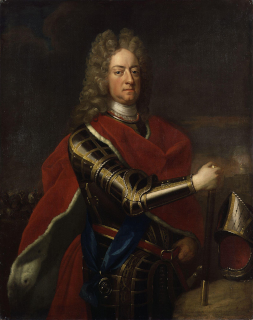
(Pictured: Portrait of James Butler, 2nd Duke of Ormonde, by Michael Dahl, National Portrait Gallery)
Pery is the son of William Cecil Pery, 1st Baron Glentworth, and his first wife, Jane Walcott, daughter of John Minchin Walcott. He is educated at Trinity College Dublin (TCD). He marries Alice Mary Ormsby, the daughter of Henry Ormsby of County Mayo, by his wife Mary Hartstonge, in 1783, and they have at least eight children. Alice Mary is the heiress of her uncle, Sir Henry Hartstonge, 3rd Baronet, who leaves her substantial property in the south of Ireland.
Pery is elected to the Parliament of Ireland as the Member of Parliament for Limerick City in 1786 and holds the seat until 1794, when he inherits his father’s barony and takes his seat in the Irish House of Lords. As a politician, he is a vocal Unionist. He holds the office of Keeper of the Signet and Privy Seal of Ireland between 1795 and 1797. In 1797, he is invested as a Privy Counsellor. He subsequently holds the office of Clerk of the Crown and Hanaper of Ireland between 1797 and 1806. In 1800, he is created Viscount Limerick of the City of Limerick.
Pery’s eldest son and heir, Henry Hartstonge Pery, Viscount Glentworth, predeceases him on August 7, 1834, and thus Pery is succeeded in his titles by Henry’s eldest son, William Henry Tenison Pery. One of Pery’s daughters, Theodosia, marries the Whig politician and Chancellor of the Exchequer, Thomas Spring Rice, 1st Baron Monteagle of Brandon.
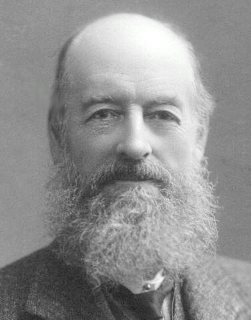
Parsons also performs some preliminary work in association with the practices of the electrodeposition of copper sulfate upon silver films circa 1865 while in search of the design for a truly flat mirror to use in a telescope. However, he finds it impossible to properly electroplate copper upon these silver films, as the copper contracts and detaches from the underlying glass substrate. His note has been cited as one of the earliest confirmations in literature that thin films on glass substrates experience residual stresses. He revives discussion in his work Nature’s August 1908 edition after witnessing similar techniques used to present newly devised searchlights before the Royal Society.
Although overshadowed by his father (when astronomers speak of “Lord Rosse”, it is almost always the father that they refer to), Parsons nonetheless pursues some astronomical observations of his own, particularly of the Moon. Most notably, he discovers NGC 2, a spiral galaxy in the constellationPegasus.
After some years of ill-health, Parsons dies on August 30, 1908, at Birr Castle and is buried in the local churchyard. He leaves a bequest to the Royal Society to establish the “Rosse Fund,” and a further £1,000 to the science school fund at TCD.
The Battle of Collooney, also called the Battle of Carricknagat, occurs on September 5, 1798, during the Irish Rebellion of 1798 when a combined force of French troops and Irish rebels defeat a force of British troops outside of Collooney near Sligo.
A long-anticipated French landing to assist the Irish rebellion takes place on August 22, when almost 1,100 troops under the command of General Jean Joseph Amable Humbert land at Kilcummin Strand (Cill Chuimín), Killala Bay, County Mayo. Although the force is small, the remote location ensures an unopposed landing away from the tens of thousands of British soldiers concentrated in the east in Leinster, engaged in mopping up operations against remaining pockets of rebels. The nearby town of Killala is quickly captured after a brief resistance by local yeomen and Ballina is also taken two days later, following the rout of a force of cavalry sent from the town to oppose their march. Irish volunteers begin to trickle into the French camp from all over Mayo following the news of the French landing.
The victory of General Humbert at Castlebar, despite gaining him about 5,000 Irish recruits, does not lead to a renewed outbreak of the rebellion as hoped. A British army of some 26,000 men is assembled under Field MarshalCharles Cornwallis, 1st Marquess Cornwallis, the newly appointed Lord Lieutenant of Ireland, and is steadily moving towards his forces. Abandoning Castlebar, Humbert moves towards Ulster via Sligo with the intention of igniting a rising there.
The combined Franco-Irish forces march northeast towards Sligo on their way to County Donegal in Ulster. When they get to the village of Collooney they are confronted by a unit of British troops from the garrison in Sligo, which is approximately five miles to the north of Collooney. A minor battle ensues at Carricknagat, a small townland to the immediate north of Collooney, hence the alternate name for the battle: the Battle of Carricknagat.
On September 5, 1798, the Franco-Irish troops push north through County Sligo but are halted by a cannon which the British forces have installed above Union Rock near Collooney.
A young Irish aide to General Humbert, LieutenantBartholomew Teeling, distinguishes himself during the encounter. Teeling clears the way for the advancing Irish-French army by single-handedly disabling a British gunnery post located high on Union Rock when he breaks from the French ranks and gallops toward the gunner’s position. Teeling is armed with a pistol and he shoots the cannon’s marksman and captures the cannon. After the loss of the cannon position, the French and Irish advance and the British retreat toward their barracks at Sligo, leaving 120 dead and 100 prisoners.
Colonel Charles Vereker, who commands the Limerick militia in the standoff, is awarded a peerage for his role in the battle.
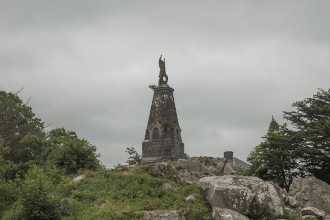
In 1898, the centenary year of the battle, a statue of Teeling is erected in Carricknagat. Johnnie Woods of Aughamore, Sligo, County Sligo, a far-famed reliable scaffolder, erects the spire for this monument.
When appointed Lord Chancellor of Ireland in 1789, FitzGibbon is granted his first peerage as Baron FitzGibbon, of Lower Connello in the County of Limerick, in the Peerage of Ireland that year. This does not entitle him to a seat in the British House of Lords, only in the Irish House of Lords. His later promotions come mostly in the Peerage of Ireland, being advanced to a Viscountcy in 1793 and the Earldom of Clare in 1795. He finally achieves a seat in the British House of Lords in 1799 when created Baron FitzGibbon, of Sidbury in the County of Devon, in the Peerage of Great Britain.
As Lord Chancellor for Ireland, FitzGibbon is a renowned champion of the Protestant Ascendancy and an opponent of Catholic emancipation. He despises the Parliament of Ireland‘s popular independent Constitution of 1782. He is also personally and politically opposed to the Irish politician Henry Grattan who urges a moderate course in the Irish Parliament and is responsible for defeating Grattan’s efforts to reform the Irish land tithe system under which Irish Catholic farmers (and all non-Anglican farmers) are forced to financially support the minority Anglican Church of Ireland. These are not fully repealed until 1869 when the Church of Ireland is finally disestablished, although Irish tithes are commuted after the Tithe War (1831–1836).
FitzGibbon opposes the Irish Roman Catholic Relief Act 1793 personally but apparently recommends its acceptance in the House of Lords, being forced out of necessity when that Act had been recommended to the Irish Executive by the British Cabinet led by William Pitt the Younger. Pitt expects Ireland to follow the British Roman Catholic Relief Act 1791 and allow Catholics to vote again and hold public offices. At the same time, FitzGibbon apparently denounces the policy this Act embodies, so it is probably safe to say that FitzGibbon’s own beliefs and principles conflict with his obligations as a member of the Irish executive of the time.
FitzGibbon’s role in the recall, soon after his arrival, of the popular pro-Emancipation Lord Lieutenant of Ireland, William Fitzwilliam, 4th Earl of Fitzwilliam, is debatable. Although he is probably politically opposed to the Lord Lieutenant of Ireland, Fitzwilliam is apparently recalled, because of his own independent actions. Fitzwilliam is known to be friendly to the Ponsonby family and is generally a Foxite liberal Whig. His close association with and patronage of Irish Whigs led by Grattan and Ponsonby during his short tenure, along with his alleged support of an immediate effort to secure Catholic emancipation in a manner not authorized by the British cabinet is likely what leads to his recall. Thus, if anyone is to blame in the short-lived “Fitzwilliam episode” it is Henry Grattan and the Ponsonby brothers – presumably William Ponsonby, later Lord Imokilly, and his brother George Ponsonby — not to mention Lord Fitzwilliam himself. Irish Catholics at the time and later naturally see things very differently and blame hardline Protestants such as FitzGibbon.
Irish Catholics and FitzGibbon apparently agree on one point – Irish political and economic union with Great Britain, which eventually takes place in 1801. Pitt wants Union with Ireland concomitantly with Catholic emancipation, commutation of tithes, and the endowment of the Irish Catholic priesthood. Union is opposed by most hardline Irish Protestants, as well as liberals such as Grattan. FitzGibbon is a strong supporter of the Union since 1793 but refuses to have Catholic emancipation with the Union.
In the end, FitzGibbon’s views wins out, leading to the Union of Ireland with Great Britain to form the United Kingdom of Great Britain and Ireland without any concessions for Ireland’s Catholic majority, or for that matter, Catholics in the rest of the new United Kingdom. He later claims that he has been duped by the way in which the Act is passed and is bitterly opposed to any concessions during the short remainder of his life.
FitzGibbon’s role as Lord Chancellor of Ireland during the period of the 1798 rebellion is questionable. According to some, he supports a hardline policy which uses torture, murder and massacre to crush the rebellion, or that as Lord Chancellor, he has considerable influence on military affairs, and that martial law cannot be imposed without his consent. Others allege that as Lord Chancellor, he has no say in military affairs. His former side is displayed by sparing the lives of the captured United Irish leaders in return for their confession of complicity and provision of information relating to the planning of the rebellion. However, this willingness of the prisoners to partake of the agreement is spurred by the execution of the Sheares brothers on July 14, 1798.
In contrast to the leniency shown to the largely upper-class leadership, the full weight of military repression is inflicted upon the common people throughout the years 1797–98 with untold thousands suffering imprisonment, torture, transportation and death. Fitzgibbon ss inclined to show no mercy to unrepentant rebels and in October 1798 he expressed his disgust upon the capture of Wolfe Tone that he had been granted a trial and his belief that Tone should have been hanged as soon as he set foot on land.
FitzGibbon is quick to recognise that sectarianism is a useful ally to divide the rebels and prevent the United Irishmen from achieving their goal of uniting Protestant, Catholic and Dissenter, writing in June 1798, “In the North nothing will keep the rebels quiet but the conviction that where treason has broken out the rebellion is merely popish.”
FitzGibbon is noted by some as a good, improving landlord to both his Protestant and Catholic tenants. Some claim that the tenants of his Mountshannon estate call him “Black Jack” FitzGibbon. However, there is no evidence to support this claim, although there is little to no evidence on his dealings as a landlord. Irish nationalists and others point out that while he might have been interested in the welfare of his own tenants on his own estate, he treats other Irish Catholics very differently. Without further evidence, his role as a Protestant landowner in mainly Catholic Ireland is of little importance against his known dealings as Lord Chancellor.
FitzGibbon dies at his home, 6 Ely Place near St. Stephen’s Green, Dublin, on January 28, 1802, and is buried in the churchyard at St. Peter’s Church, Aungier Street, Dublin. A hero to Protestant hardliners, but despised by the majority Catholic population, his funeral cortege is the cause of a riot and there is a widespread story that a number of dead cats are thrown at his coffin as it departs Ely Place.
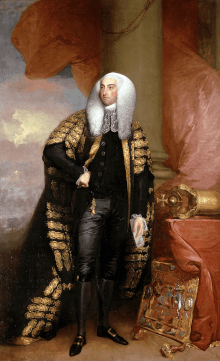
(Pictured: “Portrait of John FitzGibbon, 1st Earl of Clare,” painting by Gilbert Stuart, 1789)
As Governor-General of India, Wellesley uses military force and diplomacy to strengthen and expand British authority. East India Company forces defeat and kill Tipu Sultan, Indian Muslim ruler of the Kingdom of Mysore (present-day Mysuru) and sympathizer for Revolutionary France, in the Fourth Anglo-Mysore War (1799), and he then restores the Hindu dynasty there that had been deposed by Tipu’s father, Hyder Ali. He annexes much territory after his brother Arthur and General Gerard Lake defeat the Maratha Confederacy of states in the Deccan Plateau (peninsular India). In addition, he forces the Oudh State to surrender numerous important cities to the British, and he contracts with other states a series of “subsidiary alliances” by which all parties recognize British preponderance. He receives a barony in the British peerage in 1797 at the time of his appointment as governor-general, and in 1799 he is awarded a marquessate in the Irish peerage for his victory in the Mysore War.
When Wellesley is faced with an invasion by Zaman Shah Durrani, ruler (1793–1800) of Kabul (Afghanistan), he utilizes his envoy, Captain John Malcolm, to induce Fatḥ-Alī Shah Qajar of Qajar Iran to restrain Zaman Shah Durrani and to give British political and commercial interests preference over the French. On receiving a British government order to restore to France its former possessions in India, he refuses to comply. His policy is vindicated when the Treaty of Amiens (1802) is violated, and Great Britain resumes war against Napoleonic France.
Wellesley’s annexations and the vast military expenditure that he had authorized alarms the court of directors of the East India Company. In 1805, he is recalled, and soon afterward he is threatened with impeachment, although two years later he refuses an offer of the foreign secretaryship. In 1809, he goes to Spain to make diplomatic arrangements for the Peninsular War against France and later that year becomes foreign secretary under Prime MinisterSpencer Perceval. In that office he antagonizes his colleagues, who consider him an indolent megalomaniac and welcome his resignation in February 1812. Unlike most of them, however, he had urged a stronger war effort in Spain and had advocated political rights for British Roman Catholics. After Perceval’s assassination on May 11, 1812, he attempts unsuccessfully to form a government at the request of the prince regent (the future King George IV).
As Lord Lieutenant of Ireland, Wellesley disappoints the anti-Catholic George IV, and he is about to be removed when his brother, Arthur, is appointed prime minister in January 1828. He then resigns because his brother is opposed to Roman Catholic emancipation, although the duke is constrained to accept that policy as a political necessity in 1829. His second term as Lord Lieutenant of Ireland (1833–34) ends with the fall of Charles Grey, 2nd Earl Grey’s reform government. When the Whig Party returns to power in April 1835, he is not sent back to Ireland, and in his rage, he threatens to shoot the prime minister, William Lamb, 2nd Viscount Melbourne. He wants to be created Duke of Hindustan so that his rank will equal that of his brother.
Wellesley dies at the age of 82 on September 26, 1842, at Knightsbridge, London. He is buried in Eton College Chapel, at his old school. He and Arthur, after a long estrangement, had been once more on friendly terms for some years. Arthur weeps at the funeral and says that he knows of no honour greater than being Lord Wellesley’s brother.
Wellesley’s library is sold at auction in London by R. H. Evans on January 17, 1843 (and three following days); a copy of the catalogue, annotated with prices and buyers’ names, is held at Cambridge University Library.
Wellesley has several children, including three sons, but none are legitimate. The marquessate thus becomes extinct upon his death. The earldom of Mornington goes to his next surviving brother, William Wellesley-Pole.
(From: “Richard Colley Wellesley, Marquess Wellesley, British statesman,” written and fact-checked by the Editors of Encyclopaedia Britannica, http://www.britannica.com, April 2024 | Pictured: “Richard Colley Wellesley, Marquess of Wellesley (1760-1842),” oil on canvas portrait by Thomas Lawrence, 1812-13)
In January and February 1689, Butler votes against the motion to put William of Orange and Mary on the throne and against the motion to declare that James II has abdicated it. Nevertheless, he subsequently joins the forces of William of Orange, by whom he is made colonel of the 2nd Troop of Horse Guards on April 20, 1689. He accompanies William in his Irish campaign, debarking with him in Carrickfergus on June 14, 1690, and commands this troop at the Battle of the Boyne in July 1690. In February 1691 he becomes Lord Lieutenant of Somerset.
Butler serves on the continent under William of Orange during the Nine Years’ War and, having been promoted to major general, he fights at the Battle of Steenkerque in August 1692 and the Battle of Landen in July 1693, where he is taken prisoner by the French and then exchanged for the Duke of Berwick, James II’s illegitimate son. He is promoted to lieutenant general in 1694.
Butler plays a dramatic role at the notorious meeting of the Privy Council on March 8, 1711, when Antoine de Guiscard, a French double agent who is being questioned about his treasonable activities, attempts to assassinate Robert Harley, 1st Earl of Oxford, against whom he has a personal grudge for drastically cutting his allowance, by stabbing him with a penknife. Harley is wounded, but not seriously, due largely to the fact that he is wearing a heavy gold brocade waistcoat in which the knife gets stuck. Several Councillors, including Butler, stab Guiscard in return. Guiscard implores Butler to finish the deed, but he replies that it is not for him to play the hangman. In any case, he has the sense to see that Guiscard must be kept alive at least long enough to be questioned, although as it turns out Guiscard’s wounds are fatal, and he dies a week later.
On April 23, 1712, Butler leaves Harwich for Rotterdam to lead the British troops taking part in the war. Once there he allows himself to be made the tool of the Tory ministry, whose policy is to carry on the war in the Netherlands while giving secret orders to him to take no active part in supporting their allies under Prince Eugene. In July 1712, he advises Prince Eugene that he can no longer support the siege of Le Quesnoy and that he is withdrawing the British troops from the action and instead intends to take possession of Dunkirk. The Dutch are so exasperated at the withdrawal of the British troops that they close the towns of Bouchain on Douai to British access, despite the fact that they have plenty of stores and medical facilities available. Butler takes possession of Ghent and Bruges as well as Dunkirk, in order to ensure his troops are adequately provided for. On April 15, 1713, he becomes Lord Lieutenant of Norfolk.
Ormonde’s position as Captain-General makes him a personage of much importance in the crisis brought about by the death of Queen Anne and, during the last years of Queen Anne, he almost certainly has Jacobite leanings and corresponds with the Jacobite Court including his cousin, Piers Butler, 3rd Viscount Galmoye, who keeps barrels of gunpowder at Kilkenny Castle. King George I, on his accession to the throne in August 1714, institutes extensive changes and excludes the Tories from royal favour. Butler is stripped of his posts as Captain-General, as colonel of the 1st Regiment of Foot Guards and as Commander in Chief of the Forces with the first two posts going to the Duke of Marlborough and the role of Commander-in-Chief going to John Dalrymple, 2nd Earl of Stair. On November 19, 1714, Butler is instead made a member of the reconstituted Privy Council of Ireland.
Accused of supporting the Jacobite rising of 1715, Butler is impeached for high treason by Lord Stanhope on June 21, 1715. He might avoid the impending storm of Parliamentary prosecution, if he remains in England and stands trial but instead, he chooses to flee to France in August 1715 and initially stays in Paris with Lord Bolingbroke. On August 20, 1715, he is attainted, his estate forfeited, and honours extinguished. The Earl Marshal is instructed to remove the names and armorial bearings of Butler and Bolingbroke from the list of peers and his banner as Knight of the Garter is taken down in St. George’s Chapel.
On June 20, 1716, the Parliament of Ireland passes an act extinguishing the regalities and liberties of the county palatine of Tipperary; for vesting Butler’s estate in the crown and for giving a reward of £10,000 for his apprehension, should he attempt to land in Ireland. But the same parliament passes an act on June 24, 1721, to enable his brother, Charles Butler, 1st Earl of Arran, to purchase his estate, which he does accordingly.
Butler subsequently moves to Spain where he holds discussions with Cardinal Giulio Alberoni. He later takes part in a Spanish and Jacobite plan to invade England and puts James Francis Edward Stuart on the British throne in 1719, but his fleet is disbanded by a storm in the Bay of Biscay. In 1732, he moves to Avignon, where he is seen in 1733 by the writer Lady Mary Wortley Montagu. He dies at Avignon in exile on November 16, 1745, but his body is returned to London and buried in Westminster Abbey on May 22, 1746.
On July 20, 1682, Butler, then called Lord Ossory, marries Lady Anne Hyde, daughter of Laurence Hyde, who is then Viscount Hyde of Kenilworth but becomes Earl of Rochester in November. The couple has a daughter, Mary, who dies young in 1688.
Following the death of his first wife in 1685, Butler plans to marry again in order to secure a male heir. He gains permission from the House of Lords for the arranging of a jointure for another marriage in May 1685, and in August of that year, he marries Lady Mary Somerset, daughter of the Duke of Beaufort and Mary Capel. The couple has a son, Thomas (1686–1689), and two daughters, Elizabeth (1689–1750) and Mary (1690–1713). His second wife is a Lady of the Bedchamber to Queen Anne. Their younger daughter, Mary, marries John Ashburnham, 1st Earl of Ashburnham.
(Pictured: Portrait of James Butler, 2nd Duke of Ormonde, by Michael Dahl, National Portrait Gallery)




 seamus dubhghaill