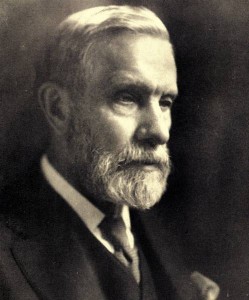
After the failure of the Young Ireland Rebellion of 1848, O’Leary attempts to rescue the Young Ireland leaders from Clonmel Gaol, and is himself imprisoned for a week from September 8, 1849. He takes part in a further attempted uprising in Cashel on September 16, 1849, but this proves abortive.
On September 16, 1865, O’Leary is arrested and later tried on charges of high treason, eventually reduced to “treason felony.” He is sentenced to twenty years of penal servitude, of which five years are spent in English prisons, prior to his release and exile in January 1871. During his exile, he lives mainly in Paris, also visiting the United States, remains active in the IRB and its associated organisations, and writes many letters to newspapers and journals.
On the expiration of his 20-year prison term and therefore of the conditions associated with his release in 1885, O’Leary returns to Ireland. He and his sister, the poetEllen O’Leary, both become important figures within Dublin cultural and nationalist circles, which include William Butler Yeats, Maud Gonne, Rose Kavanagh, Rosa Mulholland, George Sigerson, and Katharine Tynan. He also functions as an elder statesman of the separatist movement, being active in the Young Ireland Society, and acts as president of the Irish Transvaal Committee, which supports the Boer side in the Second Boer War.
John O’Leary dies at his residence in Dublin on the evening of March 16, 1907. He is referred to famously by W.B. Yeats in his poem September 1913: “Romantic Ireland’s dead and gone/It’s with O’Leary in the grave.”
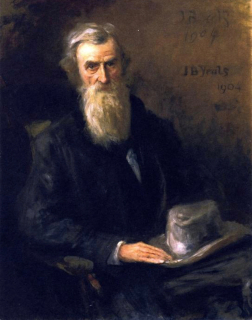
(Pictured: Painting of John O’Leary, a favorite subject of John Butler Yeats (1904). The National Gallery of Ireland owns three oil portraits of O’Leary.)
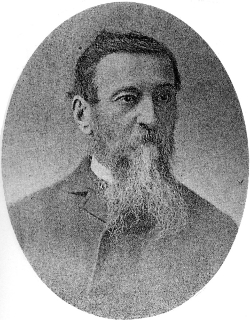
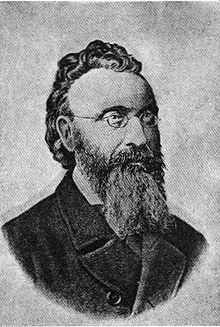
Luby is the son of a Church of Ireland clergyman from Templemore, County Tipperary, his mother being a Catholic. He is educated at Trinity College Dublin where he studies law and puts in the necessary number of terms in London and Dublin where he acquires a reputation as a scholar and takes his degree. He goes on to teach at the college for a time.
In 1851 Luby travels to France, where he hopes to join the French Foreign Legion to learn infantry tactics but finds the recruiting temporarily suspended. From France he goes to Australia for a year before returning to Ireland. From the end of 1855 he edits the Tribune newspaper founded by John E. Pigot who had been a member of The Nation group. During this time, he remains in touch with the small group of ’49 men including Philip Gray and attempts to start a new revolutionary movement. Luby’s views on social issues grow more conservative after 1848 which he makes clear to James Stephens whom he meets in 1856.
In the autumn of 1857 Owen Considine arrives with a message signed by four Irish exiles in the United States, two of whom are John O’Mahony and Michael Doheny. The message conveys the confidence they have in Stephens and asks him to establish an organisation in Ireland to win national independence. Considine also carries a private letter from O’Mahony to Stephens which is a warning, and which is overlooked by Luby and Stephens at the time. Both believe that there is a strong organisation behind the letter, only later to find it is rather a number of loosely linked groups. On December 23 Stephens dispatches Joseph Denieffe to America with his reply which is disguised as a business letter dated and addressed from Paris. In his reply, Stephen’s outlines his conditions and his requirements from the organisation in America.
On March 17, 1858, Denieffe arrives in Dublin with the acceptance of Stephens’s terms by the New York Committee and the eighty pounds. On that very evening the Irish Republican Brotherhood is established in Peter Langan’s timberyard in Lombard Street.
In mid-1863 Stephens informs his colleagues he wishes to start a newspaper, with financial aid from O’Mahony and the Fenian Brotherhood in America. The offices are established at 12 Parliament Street, almost at the gates of Dublin Castle. The first issue of the Irish People appears on November 28, 1863. The staff of the paper along with Luby are Charles J. Kickham and Denis Dowling Mulcahy as the editorial staff. Jeremiah O’Donovan Rossa and James O’Connor have charge of the business office, with John Haltigan being the printer. John O’Leary is brought from London to take charge in the role of Editor.
On July 15, 1865, American-made plans for a rising in Ireland are discovered. Superintendent Daniel Ryan, head of the G Division of the Dublin Metropolitan Police at Dublin Castle, has an informer within the offices of the Irish People who supplies him with an “action this year” message on its way to the IRB unit in Tipperary. With this information, Ryan raids the offices of the Irish People on Thursday, September 15, followed by the arrests of Luby, O’Leary and O’Donovan Rossa. Kickham is caught after a month on the run. Stephens is also caught with the support of Fenian prison warders. The last number of the paper is dated September 16, 1865.
After his arrest and the suppression of the Irish People, Luby is sentenced to twenty years of penal servitude. He is released in January 1871 but is compelled to remain away from Ireland until the expiration of his sentence.
Upon his release Luby goes first to the Continent and later settles in New York City. He lectures all over the country for years and writes for a number of Irish newspapers on political topics. At the memorial meeting on the death of John Mitchel, he delivers the principal address in Madison Square Garden.
Thomas Clarke Luby dies at 109½ Oak Street, Jersey City, New Jersey of paralysis, on November 29, 1901, and is buried in a grave shared with his wife in Bayview Cemetery in Jersey City. His epitaph reads: “Thomas Clarke Luby 1822–1901 He devoted his life to love of Ireland and quest of truth.”
Billy Fox, Protestant Irish politician and a Fine Gael member of Dáil Éireann from 1969 to 1973, and of Seanad Éireann from 1973 until his death, is assassinated on March 12, 1974, by Irish Republican Army (IRA) gunmen who are carrying out a raid on his girlfriend’s farmhouse. Five members of the Provisional IRA are convicted of involvement in his murder.
Late on the night of Monday, March 11, 1974, about a dozen gunmen arrive at the home of Fox’s girlfriend, Marjorie Coulson. She lives there with her parents and brother, and Fox regularly visits on Monday evenings. The farmhouse is in the rural townland of Tircooney in County Monaghan, near the border with Northern Ireland. The gunmen search the farmhouse and demand the occupants hand over weapons. Shortly after midnight, as this is taking place, Fox drives down the laneway and is stopped by some of the gunmen who are outside. He runs but is shot and killed by a single gunshot through the upper torso. The gunmen then order everyone out of the house, set it on fire, and escape.
The next day, the Ulster Freedom Fighters claim that it had killed Fox because he had links to the Provisional IRA. The IRA issues a statement saying that it is not involved. However, shortly after the shooting, five men from County Monaghan are charged with Fox’s murder and IRA membership. They are convicted in May 1974 and sentenced to penal servitude for life. One of those convicted tells the court they had raided the farm because they received a tip-off that Ulster Volunteer Force (UVF) weapons were being stored there. He says there was an agreement that no shots were to be fired. His understanding is that Fox had taken some of the men by surprise and they had shot to wound, not recognizing him.
It is reported that the tip-off had come from another local family and was the result of a grudge. IRA members are already suspicious that the UVF is receiving local help, following an incident in November 1973. Loyalist gunmen had bombed a house at nearby Legnakelly and shot one of the occupants, a republican activist. In its statement on Fox’s killing, the IRA says, “We have repeatedly drawn attention to the murderous acts of a group of former B Specials from County Fermanagh…led by serving officers of the British Army.” The author, Tim Pat Coogan, however, suggests that members of the Official IRA are responsible for killing Fox.
The Seanad adjourns for a week as a mark of respect. About 500 people attend Fox’s funeral at Aughnamullen, including TaoiseachLiam Cosgrave and the Irish president, Erskine Childers. Fox is the first member of the Oireachtas to be killed since Minister for JusticeKevin O’Higgins by the anti-Treaty Irish Republican Army in 1927. When John Bruton first becomes a Teachta Dála (TD) in 1969 he shares an office with Fox. He says that he is still angry at the murder. The RTÉ documentary Rumours from Monaghan report in detail on the circumstances of Fox’s killing. Because Fox is a Protestant, some suggest that the motive for the killing was sectarian.
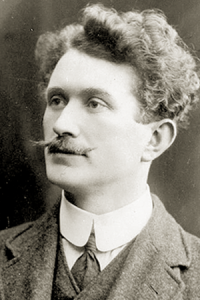
Ashe is born in Lispole, County Kerry, on January 12, 1885. He enters De La Salle Training College, Waterford in 1905 and begins a teaching career as principal of Corduff National School, Lusk, County Dublin, in 1908.
Ashe plays a major part in the 1916 Easter Rising outside the capital city commanding the Fingal battalion of the Irish Volunteers. He is commandant of the 5th battalion of the Dublin brigade, a force of 60–70 men engaging British forces around north County Dublin during the rising. They are armed only with a few rounds, about a dozen service rifles, a dozen Mausers, and a dozen Martini carbines. Some of Ashe’s men are armed only with a shotgun against the well-equipped army regulars.
Ashe’s battalion wins a major victory in Ashbourne, County Meath, where they engage a much larger force. They capture a significant quantity of arms and up to twenty Royal Irish Constabulary (RIC) vehicles. Eleven RIC members, including County Inspector Alexander Gray, and two volunteers are killed during the 5-1/2-hour battle. Twenty-four hours after the rising collapses, Ashe’s battalion surrenders on the orders of Patrick Pearse. On May 8, 1916, Ashe and Éamon de Valera are court-martialled and sentenced to death. The sentences are commuted to penal servitude for life. Ashe is imprisoned in Frongoch internment camp and Lewes Prison in Lewes, East Sussex, England.
De Valera, Ashe, and Thomas Hunter lead a prisoner hunger strike on May 28, 1917. With accounts of prison mistreatment appearing in the Irish press and mounting protests in Ireland, Ashe and the remaining prisoners are freed on June 18, 1917, by David Lloyd George as part of a general amnesty.
Upon his release, Ashe returns to Ireland and begins a series of speaking engagements. In August 1917, he is arrested and charged with sedition for a speech that he makes in Ballinalee, County Longford, where Michael Collins is also speaking. He is detained at the Curragh but is then transferred to Mountjoy Prison in Dublin. He is convicted and sentenced to two years hard labour. Ashe and other prisoners, including Fionán Lynch and Austin Stack, demand prisoner of war status.
On September 20, 1917, Ashe again goes on hunger strike. He dies at Mater Misericordiae Hospital on September 25, 1917, after being force fed by prison authorities. At the inquest into his death, the jury condemns the staff at the prison for the “inhuman and dangerous operation performed on the prisoner, and other acts of unfeeling and barbaric conduct.” His body lies in state at Dublin City Hall and is buried in Glasnevin Cemetery in Dublin.
The Ashe Memorial Hall built in 1928, housing the Kerry County Museum, in Tralee is named after him while Nelson Street, also in Tralee, is renamed Ashe Street. Ashe is a relative of Catherine Ashe, the paternal grandmother of American actor Gregory Peck, who emigrates to the United States in the 19th century.
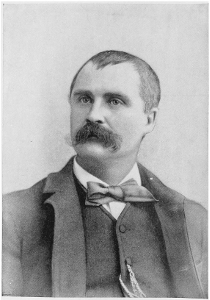
O’Reilly is the third child of a headmaster and a schoolteacher. When he is fifteen, he moves to Lancashire and lives with his aunt and uncle. There he becomes a reporter with a local newspaper and joins the 11th Lancashire Rifle Volunteers in 1861. He returns to Ireland in 1863 and enlists with the 10th Royal Hussars in Dublin. However, after realising the way the British are treating his fellow people, he leaves the army and joins the Irish Republican Brotherhood around 1865.
In 1866 O’Reilly, along with many other members of the Brotherhood, are arrested and put on trial for treason. O’Reilly is found guilty and sentenced to death however, due to his young age, his sentence is reduced to 20 years penal servitude. He spends a year and a half in some English prisons before being transported to Western Australia in 1867, arriving in 1868.
A month after arriving O’Reilly is moved to the town of Bunbury where he starts receiving attention for protesting the chopping down of a tree. A year after arriving he decides to escape from the colony with the help of a local Catholic priest and some farmers from the nearby town of Dardanup. In February 1869 O’Reilly absconds from his convict camp and makes his way towards the Leschenault Peninsula where he waits for a ship to arrive. After approximately two weeks O’Reilly escapes on the Gazelle bound for the United States, arriving there in November 1869.
O’Reilly moves to Boston and becomes a well-known figure in the town where he becomes involved in civil rights, sports, and Irish American causes. He also becomes part owner of The Pilot newspaper. He publishes four books of poetry – Songs from the Southern Seas (1873), Songs, Legends and Ballads (1878), The Statues in the Block (1881) and In Bohemia (1886). He also publishes a novel Moondyne (1879) based on the convict of the same name and O’Reilly’s experiences in Western Australia. It becomes his most popular work. He also writes one last book of poems entitled Watchwords, which is released after his death.
John Boyle O’Reilly dies in Hull, Massachusetts on August 10, 1890, from heart failure after overdosing on his wife’s medication. His sudden death receives an outpouring of grief and tributes from the Boston community and also globally.
His funeral is held at St. Mary’s Church in Charlestown on August 13 and is attended by thousands. The streets near the church are lined with mourners. His wife does not attend the funeral due to grief and is unable to leave her bed. He is originally buried at Calvary Cemetery in Roxbury, but in November 1890 his remains are exhumed and moved to Holyhood Cemetery in Brookline.
Wilde’s parents are successful Anglo-Irish Dublin intellectuals. Their son becomes fluent in French and German early in life. At university, Wilde read Greats and proves himself to be an outstanding classicist, first at Dublin, then at Magdalen College, Oxford. He becomes known for his involvement in the rising philosophy of aestheticism, led by two of his tutors, Walter Pater and John Ruskin. After university, Wilde moves to London into fashionable cultural and social circles.
As a spokesman for aestheticism, Wilde tries his hand at various literary activities. He publishes a book of poems, lectures in the United States and Canada on the new “English Renaissance in Art,” and then returns to London where he works prolifically as a journalist. Known for his biting wit, flamboyant dress and glittering conversation, Wilde becomes one of the best-known personalities of his day.
At the turn of the 1890s, he refines his ideas about the supremacy of art in a series of dialogues and essays, and incorporates themes of decadence, duplicity, and beauty into his only novel, The Picture of Dorian Gray (1890). The opportunity to construct aesthetic details precisely, and combine them with larger social themes, draws Wilde to write drama. He writes Salome (1891) in French in Paris, but it is refused a licence for England due to the absolute prohibition of Biblical subjects on the English stage. Unperturbed, Wilde produces four society comedies in the early 1890s, which make him one of the most successful playwrights of late Victorian London.
At the height of his fame and success, while his masterpiece, The Importance of Being Earnest (1895), is still on stage in London, Wilde has the John Douglas, 9th Marquess of Queensberry prosecuted for libel. The Marquess is the father of Wilde’s lover, Lord Alfred Douglas. The charge carries a penalty of up to two years in prison. The trial unearths evidence that causes Wilde to drop his charges and leads to his own arrest and trial for gross indecency with men. After two more trials he is convicted and imprisoned for two years’ penal labour.
In 1897, in prison, he writes De Profundis, which is published in 1905, a long letter which discusses his spiritual journey through his trials, forming a dark counterpoint to his earlier philosophy of pleasure. Upon his release he leaves immediately for France, never to return to Ireland or Britain. There he writes his last work, The Ballad of Reading Gaol (1898), a long poem commemorating the harsh rhythms of prison life.
John Devoy, one of the most devoted revolutionaries the world has ever seen, is born in Kill, County Kildare, on September 3, 1842. Dedicating over 60 years of his life to the cause of Irish freedom, he is one of the few people to have played a leading role in the Fenian Rising of 1867, the 1916 Easter Rising, and the Irish War of Independence (1919 – 1921).
After the Great Famine, the family moves to Dublin where Devoy’s father obtains at job at Watkins’ brewery. Devoy attends night school at the Catholic University before joining the Fenians. In 1861 he travels to France with an introduction from Timothy Daniel Sullivan to John Mitchel. Devoy joins the French Foreign Legion and serves in Algeria for a year before returning to Ireland to become a Fenian organiser in Naas, County Kildare.
In 1865, when many Fenians are arrested, James Stephens, founder of the Irish Republican Brotherhood (IRB), appoints Devoy Chief Organiser of Fenians in the British Army in Ireland. His duty is to enlist Irish soldiers in the British Army into the IRB. In November 1865 Devoy orchestrates Stephens’ escape from Richmond Prison in Dublin.
In February 1866 an IRB Council of War calls for an immediate uprising but Stephens refuses, much to Devoy’s annoyance, as he calculated the Fenian force in the British Army to number 80,000. The British get wind of the plan through informers and move the regiments abroad, replacing them with regiments from Britain. Devoy is arrested in February 1866 and interned in Mountjoy Gaol, then tried for treason and sentenced to fifteen years penal servitude. In Portland Prison Devoy organises prison strikes and, as a result, is moved to Millbank Prison in Pimlico, London.
In January 1871, he is released and exiled to the United States as one of the “Cuba Five.” He receives an address of welcome from the House of Representatives. Devoy becomes a journalist for the New York Herald and is active in Clan na Gael. Under Devoy’s leadership, Clan na Gael becomes the central Irish republican organisation in the United States. In 1877 he aligns the organisation with the Irish Republican Brotherhood in Ireland.
Devoy’s fundraising efforts and work to sway Irish Americans to physical force nationalism makes possible the Easter Rising in 1916. In 1914, Patrick Pearse visits the elderly Devoy in America, and later the same year Roger Casement works with Devoy in raising money for guns to arm the Irish Volunteers. Though he is skeptical of the endeavor, he finances and supports Casement’s expedition to Germany to enlist German aid in the struggle to free Ireland from English rule. Also, before and during World War I, Devoy is also identified closely with the Ghadar Party, and is accepted to have played a major role in supporting Indian Nationalists, as well as playing a key role in the Hindu-German Conspiracy which leads to the trial that is the longest and most expensive trial in the United States at the time.
In 1916 Devoy plays an important role in the formation of the Clan-dominated Friends of Irish Freedom, a propaganda organization whose membership totals 275,000 at one point. The Friends fail in their efforts to defeat Woodrow Wilson for the presidency in 1916. Fearful of accusations of disloyalty for their cooperation with Germans and opposition to the United States’ entering the war on the side of Great Britain, the Friends significantly lower their profile after April 1917. Sinn Féin‘s election victories and the British government’s intentions to conscript in Ireland in April 1917 help to revitalize the Friends.
With the end of the war, Devoy plays a key role in the Friends’ advocacy for not the United States’ recognition of the Irish Republic but, in keeping with President Wilson’s war aims, self-determination for Ireland. The latter does not guarantee recognition of the Republic as declared in 1916 and reaffirmed in popular election in 1918. American Irish republicans challenge the Friends’ refusal to campaign for American recognition of the Irish Republic. Not surprisingly, Devoy and the Friends’ Daniel F. Cohalan become the key players in a trans-Atlantic dispute with de facto Irish president Éamon de Valera, touring the United States in 1919 and 1920 in hopes of gaining U.S. recognition of the Republic and American funds. Believing that the Americans should follow Irish policy, de Valera forms the American Association for the Recognition of the Irish Republic in 1920 with help from the Philadelphia Clan na Gael.
Devoy returns to Ireland and in 1919 addresses Dáil Éireann. He later supports the Anglo-Irish Treaty of 1921. Devoy is editor of The Gaelic American from 1903 until his death in Atlantic City on September 29, 1928. His body is returned to Ireland and buried in Glasnevin Cemetery. A large memorial to him stands on the road between his native Kill and Johnstown.
Ashe plays a major part in the 1916 Easter Rising outside the capital city commanding the Fingal battalion of the Irish Volunteers. Ashe is commandant of the 5th battalion of the Dublin brigade, a force of 60–70 men engaging British forces around north County Dublin during the rising. They are armed only with a few rounds, about a dozen service rifles, a dozen Mausers, and a dozen Martini-Henry carbines. Some of Ashe’s men are armed only with a shotgun against the well-equipped army regulars.
Ashe’s battalion wins a major victory in Ashbourne, County Meath, where they engage a much larger force. They capture a significant quantity of arms and up to twenty Royal Irish Constabulary (RIC) vehicles. Eleven RIC members, including County Inspector Alexander Gray, and two volunteers are killed during the 5-1/2-hour battle. Twenty-four hours after the rising collapses, Ashe’s battalion surrenders on the orders of Patrick Pearse. On May 8, 1916, Ashe and Éamon de Valera are court-martialled and sentenced to death. The sentences are commuted to penal servitude for life. Ashe is imprisoned in Lewes Prison in Lewes, East Sussex, England.
De Valera, Ashe, and Thomas Hunter lead a prisoner hunger strike on May 28, 1917. With accounts of prison mistreatment appearing in the Irish press and mounting protests in Ireland, Ashe and the remaining prisoners are freed on June 18, 1917, by David Lloyd George as part of a general amnesty.
Upon his release, Ashe returns to Ireland and begins a series of speaking engagements. In August 1917, he is arrested and charged with sedition for a speech that he makes in Ballinalee, County Longford, where Michael Collins is also speaking. He is detained at the Curragh but is then transferred to Mountjoy Prison in Dublin. He is convicted and sentenced to two years hard labour. Ashe and other prisoners, including Austin Stack, demand prisoner of war status. On September 20, 1917, Ashe again goes on hunger strike. He dies at the Mater Hospital on September 25, 1917, after being force fed by prison authorities. At the inquest into his death, the jury condemns the staff at the prison for the “inhuman and dangerous operation performed on the prisoner, and other acts of unfeeling and barbaric conduct.” His body lies in state at Dublin City Hall and is buried in Glasnevin Cemetery in Dublin.
Ashe is a relative of Catherine Ashe, the paternal grandmother of American actor Gregory Peck, who emigrates to the United States in the 19th century. The Ashe Memorial Hall built in 1928, housing the Kerry County Museum, in Tralee, County Kerry, is named after him while Nelson Street, also in Tralee, is renamed Ashe Street.