seamus dubhghaill

Promoting Irish Culture and History from Little Rock, Arkansas, USA


Leave a comment

Death of William FitzGerald, 2nd Duke of Leinster

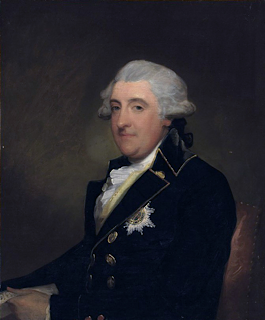
William Robert FitzGerald, 2nd Duke of LeinsterKPPC (Ire), an Irish liberal politician and landowner, dies at Carton House in Maynooth, County Kildare, on October 20, 1804.

FitzGerald is born on March 13, 1749, in Arlington Place, Piccadilly, London, the second son of nine sons and ten daughters of James Fitzgerald, 20th Earl of Kildare and later 1st Duke of Leinster, and his wife, Lady Emily Lennox. He is educated at Eton College (1758–63). He is the elder brother of the 1790s revolutionary Lord Edward FitzGerald, and is a first cousin of the English liberal politician Charles James Fox.

FitzGerald makes his Grand Tour between 1768 and 1769. During the same time, he is also a Member of Parliament (MP) for Kildare Borough. He then sits in the Irish House of Commons for Dublin City until 1773, when he inherits his father’s title and estates. He is appointed High Sheriff of Kildare for 1772. Politically he is a liberal supporter of Henry Grattan‘s Irish Patriot Party and he co-founds the Irish Whig Club in 1789. He controls about six Kildare members of the Irish House of Commons. In 1779, he is elected colonel of the Dublin Regiment of the Irish Volunteers.

In November 1775, FitzGerald marries Emilia Olivia Usher, daughter of the 1st Baron Saint George and Elizabeth Dominick and sole grand daughter of Sir Christopher Dominick. They have three sons and six daughters.

In 1770, FitzGerald is chosen Grandmaster of the masonic Grand Lodge of Ireland, a post he holds for two years. He is re-elected for another year in 1777. In 1783, he is among the first knights in the newly created Order of St. Patrick.

In 1788–89, FitzGerald is Master of the Rolls in Ireland. In theory a senior judicial office, it is then largely a sinecure, but so blatant a choice of a man who is wholly unqualified for it gives rise to unfavourable comment, and a few years later it becomes the rule that the Master must be a lawyer of repute.

FitzGerald is a supporter of Catholic emancipation and helps to found the Royal College of St. Patrick at Maynooth on land he donates, in 1795. Withdrawing from Parliament with Grattan in 1797, he moves to England to be with his sick wife and remains there during the Irish Rebellion of 1798.

FitzGerald’s homes are at Carton and Kilkea Castle in County Kildare, and at Leinster House in Dublin (now the home of the Oireachtas). He is a founder member of the Order of St. Patrick in 1783 and of the Royal Irish Academy in 1785, and is a large investor in the Royal Canal company launched in 1790. His family’s estates of 60,000 acres (25,000 Ha) in Kildare are in three main parts, around Maynooth, Rathangan and Athy. He rebuilds the main bridge in Athy over the River Barrow.

FitzGerald dies of strangury, a urinary tract disorder, at Carton House on October 20, 1804. He is buried in Kildare Abbey. His funeral is so well attended that the mourners reach across The Curragh. He is succeeded by his second, but eldest surviving, son, Augustus Frederick Fitzgerald, as 3rd Duke of Leinster.


Leave a comment

Death of Grace Henry, Landscape Artist

Grace Henry HRHA, Scottish landscape artist who spends a large part of her career painting in Ireland, dies in Dublin on August 11, 1953.

Henry is born Emily Grace Mitchell at Kirktown St. Fergus, near Peterhead, Aberdeenshire, Scotland, on February 10, 1868. She is the ninth of ten children of the Rev. John Mitchell and Jane Mitchell (née Gardner). Lord Byron is a cousin of her maternal grandmother. She is educated at home, spending time at the family’s home in Piccadilly, where she experiences London society. After the death of her father, and the reduced circumstances she finds herself in, she leaves home in 1895 to pursue a career as an artist. The first record of her work being exhibited is with the Aberdeen Artists Society in 1896 and 1898. These paintings have not been traced since. In 1899, she leaves Scotland for the continent, visiting Holland and Belgium, studying at the Blanc‐Guerrins Academy in Brussels. She goes on to attend the Delacluze Academy in Paris. While in Paris, she meets Paul Henry, an Irish artist. The couple marries in September 1903 in London.

The Henrys live at a few different residences outside London until 1910. A small number of her works are known from this time, such as The Girl in White, which is in the collections of the Hugh Lane Gallery. This piece shows the influence of fellow artist James Abbott McNeill Whistler, whom she meets in Paris through her husband. The couple travels to Achill Island for the first time in 1910, intending to stay two-weeks, but going on to live there until 1919. During this time, she paints numerous night scenes, including Achill Cottages (Hugh Lane Gallery). One of her well-known works is Top of the Hill, on display in the Limerick City Gallery of Art, which shows a group of island women. The period spent on the island places a strain on the Henrys marriage, as she is not as happy living there.

The couple returns to Dublin in 1919 and are founding members of the Society of Dublin Painters in 1920 alongside Letitia Marion Hamilton, Mary Swanzy, and Jack Butler Yeats. The Society offers an outlet for younger Irish artists to exhibit. Five of Henry’s works are featured at the Irish Exhibition in Paris in 1922, and at a similar exhibition in Brussels in 1930.

Around 1920, Henry has a romantic association with Stephen Gwynn who is an important political, cultural and literary figure from the lost world of late-nineteenth and early-twentieth century Ireland. During this period, she travels with Gwynn in France and Italy and later paints a number of portraits of him. Invariably, during this time, the Henrys’ marriage continues to have problems, with the couple breaking up in 1924. Her affair with Gwynn, who she depicts in two known oil paintings including The Orange Man (Limerick City Gallery of Art) and Portrait of a Man, which depicts a much more distinguished Gwynn in later life, contribute to the breakup. The couple legally separates in 1930.

Henry develops her own style through the 1920s and 1930s, spending time in France and Italy. From 1924 to 1925, she studies with André Lhote, a cubist painter who also works with Mainie Jellett, Evie Hone, and Mary Swanzy. She goes on to display little of his influence in her work. She paints in Venice and in the environs of the Italian lakes, painting with the fauvist style, with free brushwork and vibrant colours. She also experiments with expressionism, which can be seen in Spring in Winter. Upon the outbreak of World War II, she returns to Ireland. She does not have a permanent residence during this period, instead stayed with friends or living in hotels. She also experiences periods of melancholy during these later years, though she continues to exhibit. Her work is regularly displayed at the Royal Hibernian Academy (RHA), and she has solo shows at the Waddington and Dawson galleries. She is made an honorary member of the RHA in 1949.

Henry dies in Dublin on August 11, 1953, and is buried at Mount Jerome Cemetery. During her career, and for a number of years after her death, she is largely overshadowed by her husband, sometimes being referred to as “Mrs. Paul Henry.” She is even omitted from Paul Henry’s two-volume autobiography. Her body of work is re-examined in the 1970s, which leads to wider public recognition and her inclusion in a number of exhibitions such as The Paintings of Paul and Grace Henry at the Hugh Lane Gallery in 1991. She is deemed to be a much bolder painter than her husband, incorporating more elements of the modernist movement, as evident in The Long Grey Road of Disting (1915). Her popularity has been growing since her rediscovery.

(Pictured: “Road to Destiny,” oil on board by Grace Henry)


Leave a comment

Death of James Hamilton, 3rd Duke of Abercorn

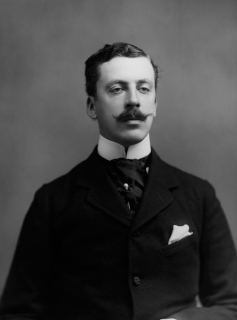
James Albert Edward Hamilton, 3rd Duke of Abercorn, dies on September 12, 1953 in London, England.

Hamilton is born in Hamilton Place, Piccadilly, London, on November 30, 1869. Styled Marquess of Hamilton between 1885 and 1913, he is a British peer and Unionist politician. He serves as the first Governor of Northern Ireland, a post he holds between 1922 and 1945. He is a great-grandfather of Diana, Princess of Wales.

Hamilton is the eldest son of James Hamilton, 2nd Duke of Abercorn, and godson of the Prince of Wales. His mother, Lady Mary Anna, is the fourth daughter of Richard Curzon-Howe, 1st Earl Howe. He is educated at Eton College and subsequently serves first in the Royal Inniskilling Fusiliers until 1892 when he joins the 1st Life Guards. He is later transferred as major to the North Irish Horse.

In early 1901 he accompanies his father on a special diplomatic mission to announce the accession of King Edward to the governments of Denmark, Sweden and Norway, Russia, Germany, and Saxony.

In the 1900 United Kingdom general election in Ireland, Hamilton stands successfully as Unionist candidate for Londonderry City, and three years later he becomes Treasurer of the Household, a post he holds until the fall of Arthur Balfour‘s Conservative administration in 1905. After serving for a time as an Opposition whip, Hamilton succeeds his father as third Duke of Abercorn in 1913. In 1922, he is appointed governor of the newly created Northern Ireland. He also serves as Lord Lieutenant of Tyrone from 1917 until his death, having previously been a Deputy Lieutenant for County Donegal. Hamilton proves a popular royal representative in Northern Ireland and is reappointed to the post in 1928 after completing his first term of office. In 1931, he declines the offer of the governor generalship of Canada, and three years later he is again reappointed governor for a third term. He remains in this capacity until his resignation in July 1945.

Hamilton is made the last non-royal Knight of the Most Illustrious Order of Saint Patrick in 1922. In 1928 he becomes a Knight of the Most Noble Order of the Garter and is also the recipient of an honorary degree from the Queen’s University Belfast. He receives the Royal Victorian Chain in 1945, the same year he is sworn of the Privy Council.

Hamilton marries Lady Rosalind Cecilia Caroline Bingham, only daughter of Charles George Bingham, 4th Earl of Lucan and his wife Lady Cecilia Catherine Gordon-Lennox at St. Paul’s Church, Knightsbridge, on November 1, 1894. They have three daughters and two sons.

Hamilton dies at his London home on September 12, 1953, and is buried at Baronscourt in County Tyrone.

(Pictured: “James Albert Edward Hamilton, 3rd Duke of Abercorn” by Alexander Bassano, Collodion Negative, 1894, Photographs Collection, National Portrait Gallery, London)


Leave a comment

Death of Thomas Blood, Anglo-Irish Officer

thomas-blood

Colonel Thomas Blood, Anglo-Irish officer and self-styled colonel best known for his attempt to steal the Crown Jewels of England and Scotland from the Tower of London in 1671, dies at his home in Bowling Alley, Westminster on August 24, 1680. He is also known for his attempt to kidnap and, later, to kill, his enemy, James Butler, 1st Duke of Ormond.

Sources suggest that Blood is born in County Clare in 1618, the son of a successful land-owning blacksmith of English descent. He is partly raised at Sarney, near Dunboyne, County Meath. He receives his education in Lancashire, England. At the age of 20, he marries Maria Holcroft, the daughter of John Holcroft, a gentleman from Golborne, Lancashire, and returns to Ireland.

At the outbreak of the First English Civil War in 1642, Blood returns to England and initially takes up arms with the Royalist forces loyal to Charles I. As the conflict progresses, he switches sides and becomes a lieutenant in Oliver Cromwell‘s Roundheads. Following the Restoration of King Charles II to the Crowns of the Three Kingdoms in 1660, Blood flees with his family to Ireland.

As part of the expression of discontent, Blood conspires to storm Dublin Castle, usurp the government, and kidnap James Butler, 1st Duke of Ormonde and Lord Lieutenant of Ireland, for ransom. On the eve of the attempt, the plot is foiled. Blood manages to escape to the United Dutch Provinces in the Low Country although a few of his collaborators are captured and executed.

In 1670, despite his status as a wanted man, Blood returns to England. On the night of December 6, 1670, he and his accomplices attack Ormonde while he travels St. James’s Street. Ormonde is dragged from his coach and taken on horseback along Piccadilly with the intention of hanging him at Tyburn. The gang pins a paper to Ormonde’s chest spelling out their reasons for his capture and murder. Ormonde succeeds in freeing himself and escapes. Due to the secrecy of the plot, Blood is not suspected of the crime.

Blood does not lie low for long, and within six months he makes his notorious attempt to steal the Crown Jewels. After weeks of deception, on May 9, 1671, he convinces Talbot Edwards, the newly appointed Master of the Jewel House, to show the jewels to him, his supposed nephew, and two of his friends while they wait for a dinner that Mrs. Edwards is providing. The jewel keeper’s apartment is in Martin Tower above a basement where the jewels are kept behind a metal grille. Reports suggest that Blood’s accomplices carried canes that concealed rapier blades, daggers, and pocket pistols. They enter the Jewel House, leaving one of the men to supposedly stand watch outside while the others joined Edwards and Blood. The door is closed, and a cloak is thrown over Edwards, who is struck with a mallet, knocked to the floor, bound, gagged and stabbed to subdue him.

As Blood and his gang flee to their horses waiting at St. Catherine’s Gate, they fire on the warders who attempt to stop them, wounding one. As they run along the Tower wharf it is said they join the calls for alarm to confuse the guards until they are chased down by Captain Beckman, brother-in-law of the younger Edwards. Although Blood shoots at him, he misses and is captured before reaching the Iron Gate. The Jewels are recovered although several stones are missing, and others are loose.

Following his capture, Blood refuses to answer to anyone but the King and is consequently taken to the palace in chains, where he is questioned by King Charles, Prince Rupert and others. To the disgust of Ormonde, Blood is not only pardoned but also given land in Ireland worth £500 a year. The reasons for the King’s pardon are unknown although speculation abounds.

In 1679 Blood falls into dispute with the Duke of Buckingham, his former patron, and Buckingham sues him for £10,000, for insulting remarks Blood had made about his character. In the proceedings that follow, Blood is convicted by the King’s Bench in 1680 and granted bail, although he never pays the damages.

Blood is released from prison in July 1680 but falls into a coma by August 22. He dies on August 24 at his home in Bowling Alley, Westminster. His body is buried in the churchyard of St. Margaret’s Church (now Christchurch Gardens) near St. James’s Park. It is believed that his body was exhumed by the authorities for confirmation as, such was his reputation for trickery, it is suspected he might have faked his death and funeral to avoid paying his debt to Buckingham.


Leave a comment

Artist Derek Hill Awarded Honorary Irish Citizenship

arthur-derek-hill

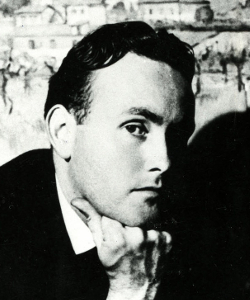
Arthur Derek Hill, English portrait and landscape painter and longtime resident in Ireland, is awarded honorary Irish citizenship by President Mary McAleese on January 13, 1999.

Hill is born at Southampton, Hampshire on December 6, 1916, the son of a wealthy sugar trader. He first works as a theatre designer in Leningrad in the 1930s and later as an historian. In World War II he registers as a conscientious objector and works on a farm.

Hill’s long association with Ireland begins when he visits Glenveagh Castle in County Donegal to paint the portrait of the Irish American art collector Henry McIlhenny, whose grandfather had emigrated to the United States from the nearby village of Milford, and who subsequently made a fortune from his patent gas meter.

Hill begins to enjoy increased success as a portrait painter from the 1960s. His subjects include many notable composers, musicians, politicians and statesmen, such as broadcaster Gay Byrne, Jerusalem mayor Teddy Kollek and The Prince of Wales. He is also an enthusiastic art collector and traveller, with a wide range of friends such as Bryan Guinness and Isaiah Berlin. Greta Garbo visits Hill in the 1970s, a visit which forms inspiration for Frank McGuinness‘ 2010 play Greta Garbo Came to Donegal.

In 1981, he donates his home, St. Columb’s Rectory, near the village of Churchill, County Donegal, which he had owned since 1954, along with a considerable collection including work by Pablo Picasso, Edgar Degas, Georges Braque, Graham Sutherland, Anna Ticho and Jack Butler Yeats to the State.

An exhibition of his work and personal art collection can be seen at the House and associated Glebe Gallery at Churchill, near Letterkenny. Another collection of his work is held at Mottisfont Abbey. Many of his landscapes portray scenes from Tory Island, where he has a painting hut for years, and starts and then mentors the artists’ community there, teaching the local fishermen how to paint. This leads to the informal but busy “Tory School” of artists such as James Dixon and Anton Meenan, who find that they have the time to paint and use their wild surroundings as a dramatic subject.

Hill is made a CBE in 1997. A Retrospective exhibition is arranged for and by him at the Royal Hibernian Academy in 1998. On January 13, 1999, he is made an honorary Irish citizen by the President of Ireland Mary McAleese.

Arthur Derek Hill dies at the age of 83 at a London hospital on July 30, 2000. He is buried in Hampshire in the South of England with his parents. Memorial services are held for him in Dublin at St. Patrick’s Cathedral, as well as St. James’s Church, Piccadilly, London, and his local Church in Trentagh, County Donegal.


Leave a comment

Birth of James Hamilton, First Governor of Northern Ireland

james-hamilton

James Albert Edward Hamilton, 3rd Duke of Abercorn, is born in Hamilton Place, Piccadilly, London, on November 30, 1869. Styled Marquess of Hamilton between 1885 and 1913, he is a British peer and Unionist politician. He serves as the first Governor of Northern Ireland, a post he holds between 1922 and 1945. He is a great-grandfather of Diana, Princess of Wales.

Hamilton is the eldest son of James Hamilton, 2nd Duke of Abercorn, and godson of the Prince of Wales. His mother, Lady Mary Anna, is the fourth daughter of Richard Curzon-Howe, 1st Earl Howe. He is educated at Eton College and subsequently serves first in the Royal Inniskilling Fusiliers until 1892 when he joins the 1st Life Guards. He is later transferred as major to the North Irish Horse.

In early 1901 he accompanies his father on a special diplomatic mission to announce the accession of King Edward to the governments of Denmark, Sweden and Norway, Russia, Germany, and Saxony.

In the 1900 general election, Hamilton stands successfully as Unionist candidate for Londonderry City, and three years later he becomes Treasurer of the Household, a post he holds until the fall of Arthur Balfour‘s Conservative administration in 1905. After serving for a time as an Opposition whip, Hamilton succeeds his father as third Duke of Abercorn in 1913. In 1922, he is appointed governor of the newly created Northern Ireland. He also serves as Lord Lieutenant of Tyrone from 1917 until his death, having previously been a Deputy Lieutenant for County Donegal. Abercorn proves a popular royal representative in Northern Ireland and is reappointed to the post in 1928 after completing his first term of office. In 1931, he declines the offer of the governor generalship of Canada, and three years later he is again reappointed governor for a third term. He remains in this capacity until his resignation in July 1945.

Abercorn is made the last non-royal Knight of the Most Illustrious Order of Saint Patrick in 1922. In 1928 he becomes a Knight of the Most Noble Order of the Garter and is also the recipient of an honorary degree from the Queen’s University Belfast. He receives the Royal Victorian Chain in 1945, the same year he is sworn of the Privy Council.

Abercorn marries Lady Rosalind Cecilia Caroline Bingham, only daughter of Charles Bingham, 4th Earl of Lucan and his wife Lady Cecilia Catherine Gordon-Lennox at St. Paul’s Church, Knightsbridge, on November 1, 1894. They have three daughters and two sons.

Abercorn dies at his London home on September 12, 1953, and is buried at Baronscourt in County Tyrone.