seamus dubhghaill

Promoting Irish Culture and History from Little Rock, Arkansas, USA


Leave a comment

Commissioning of the USS Juneau

USS Juneau (CL-52), a United States Navy Atlanta-class light cruiser, is commissioned on February 14, 1942, with Captain Lyman Knute Swenson in command. The ship becomes horribly famous as the vessel which carries the five Irish American Sullivan brothers to their death on November 13, 1942, after it is hit by a Japanese torpedo at the Battle of Guadalcanal.

The USS Juneau is laid down by Federal Shipbuilding and Drydock Company, Kearny, New Jersey, on May 27, 1940, and launched on October 25, 1941, sponsored by Mrs. Harry I. Lucas, wife of the mayor of the city of Juneau, Alaska.

After a hurried shakedown cruise along the Atlantic Coast in the spring of 1942, USS Juneau assumes blockade patrol in early May off Martinique and the Guadeloupe archipelago to prevent the escape of Vichy French naval units. She returns to New York to complete alterations and operates in the North Atlantic and Caribbean from June 1 to August 12 on patrol and escort duties. The cruiser departs for the Pacific Theater on August 22.

On 8 November, USS Juneau departs Nouméa, New Caledonia, as a unit of Task Force 67 under the command of Rear Admiral Richmond K. Turner to escort reinforcements to Guadalcanal. The force arrives there on the morning of November 12, and USS Juneau takes up her station in the protective screen around the transports and cargo vessels. Unloading proceeds unmolested until 14:05, when 30 Japanese planes attack the alerted United States group. The anti-aircraft fire is effective, and the USS Juneau alone accounts for six enemy torpedo bombers shot down. The few remaining Japanese planes are, in turn, attacked by American fighters with only one bomber escaping. Later in the day, an American attack group of cruisers and destroyers clears Guadalcanal on reports that a large enemy surface force is headed for the island. At 01:48 on November 13, Rear Admiral Daniel J. Callaghan‘s relatively small landing support group engages the enemy. The Japanese force consists of two battleships, one light cruiser, and nine destroyers.

Because of bad weather and confused communications, the battle occurs in near-pitch darkness and at almost point-blank range, as the ships of the two sides become intermingled. During the melee, the USS Juneau is struck on the port side by a torpedo launched by Japanese destroyer Amatsukaze, causing a severe list, and necessitating withdrawal. Before noon on November 13, USS Juneau, along with two other cruisers damaged in the battle, USS Helena (CL-50) and USS San Francisco (CA-38), head toward Espiritu Santo for repairs. USS Juneau is steaming on one screw, keeping station 800 yards off the starboard quarter of the likewise severely damaged USS San Francisco. She is down 12 feet by the bow, but able to maintain 13 knots.

A few minutes after 11:00, two torpedoes are launched from Japanese submarine I-26. These are intended for USS San Francisco, but both pass ahead of her. One strikes USS Juneau in the same place that had been hit during the battle. There is a great explosion, and USS Juneau breaks in two and disappears in just 20 seconds. Fearing more attacks from I-26, and wrongly assuming from the massive explosion that there are no survivors, USS Helena and USS San Francisco depart without attempting to rescue any survivors. In fact, more than 100 sailors survive the sinking of USS Juneau. They are left to fend for themselves in the open ocean for eight days before rescue aircraft belatedly arrive. While awaiting rescue, all but ten die from the elements and shark attacks. Among those lost are the five Sullivan brothers. Two of the brothers apparently survive the sinking, only to die in the water. Two presumably go down with the ship. Some reports indicate the fifth brother also survives the sinking but disappears during the first night when he leaves a raft and gets into the water. On November 20, 1942, USS Ballard (DD-267) recovers two of the ten survivors. Five more in a raft are rescued by a PBY Seaplane five miles away. Three others, including a badly wounded officer, make it to San Cristobal (now Makira) Island, about 55 miles away from the sinking. One of the survivors recovered by USS Ballard says he had been with one of the Sullivan brothers for several days after the sinking.

As a direct result of the Sullivans’ deaths (and the deaths of four of the Borgstrom brothers within a few months of each other two years later), the United States Department of War adopts the Sole Survivor Policy, a set of regulations, partially stipulated by law, that are designed to protect members of a family from the draft during peacetime, or from hazardous duty or other circumstances, if they have already lost family members to military service.

To honor the five Sullivan brothers, who all died in the sinking, and the USS Juneau, the United States Navy later commissions two ships named USS The Sullivans, and two ships named USS Juneau. On March 17, 2018, the wreck of USS Juneau is located by Paul Allen‘s research crew on board RV Petrel at a depth of about 13,800 feet off the coast of the Solomon Islands in several large pieces.


Leave a comment

Birth of William Ireland de Courcy Wheeler, Surgeon

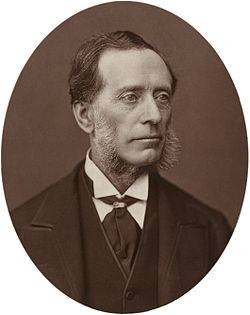
William Ireland de Courcy Wheeler, surgeon, is born on May 9, 1879, in Dublin, fourth son among six sons and four daughters of William Ireland de Courcy Wheeler, a distinguished doctor, and Frances Victoria Wheeler (née Shaw), cousin of George Bernard Shaw.

Wheeler is educated at Trinity College Dublin (TCD) and loses an eye as a result of an accident but overcomes the disability. He wins a moderatorship, a medal, and prizes and graduates BA (1899) in anatomy, natural science, and experimental science and, following postgraduate study in Berne, an MB, B.Ch., and MD (1902). The following year he receives the Dublin University Biological Association’s medal for his paper Deaths under chloroform. He is appointed demonstrator and assistant to the professor of the TCD anatomy department before becoming honorary surgeon (1904–32) to Mercer’s Hospital, Dublin. He is also attached to several other institutions including the Rotunda Hospital and the National Children’s Hospital. An outstanding teacher, he attracts large numbers to his clinical classes and lectures in surgery to postgraduates at TCD.

Ambitious and abounding in self-confidence, Wheeler dedicates all his indomitable energy and time to his work, is a frequent visitor to foreign clinics, becomes a skilled general surgeon and a specialist in orthopaedics, and earns an international reputation. During World War I he serves in the Royal Army Medical Corps (RAMC) and from 1915 converts his private hospital, 33 Upper Fitzwilliam Street, into the Dublin Hospital for Wounded Officers and makes it available to the St. John’s Ambulance brigade and the British Red Cross. He acts as honorary officer in charge and is also surgeon to the Duke of Connaught‘s Hospital for Limbless Soldiers, and honorary surgeon to the forces in Ireland.

In 1916, Wheeler visits the western front, tours the hospitals in Boulogne, and is attached to a casualty clearing station at Remy Siding near Ypres. Returning to Dublin on the request of Robert Jones, he organises the Dublin Military Orthopaedic Centre, Blackrock, where he serves as surgeon (1916–21). His advice is widely sought, and he serves on several committees, including the War Office Council of Consulting Surgeons (1917) and the Ministry of Pensions Medical Advisory Council on Artificial Limbs. Promoted to lieutenant colonel in 1918, he receives the General Service Medal and is twice mentioned in dispatches, having courageously treated wounded soldiers under fire during the 1916 Easter Rising. Appointed surgeon-in-ordinary to the lord-lieutenant, he is knighted in 1919.

Principal founder of the Dublin Hospitals’ Club (1922), Wheeler publishes two textbooks, A Handbook of Operative Surgery (1906) and Selected Papers on Injuries and Diseases of Bone (1928). He contributes numerous authoritative papers on a variety of surgical subjects to professional journals and edits the chapter on general surgery in the Medical Annual from 1916 to 1936. Inspector of examinations for the Medical Research Council of Ireland, he is external examiner to universities in Ireland and Scotland. Interested in hospital policy and nursing, he advocates the federation of the smaller hospitals and is chairman of the City of Dublin Nursing Institute. Fellow (1905) and council member (1906), he follows in his father’s footsteps and is elected president (1922–24) of the Royal College of Surgeons in Ireland. He is also president of the Dublin University Biological Association and of the surgical section of the Royal Academy of Medicine in Ireland and is awarded an honorary ChM from Cairo University in 1928.

Troubled and bewildered by the political situation in Ireland, Wheeler is persuaded by Rupert Guinness, 2nd Earl of Iveagh, to accept the position of visiting surgeon (1932) to the new hospital at Southend-on-Sea, Essex, to which Iveagh had donated £200,000. The departure of such a leading figure in Irish medical circles is widely regretted. His posts in London include surgeoncies to All Saints Hospital for Genito-Urinary Diseases and to the Metropolitan Ear, Nose, and Throat Hospital. The diversity of his interests and his general competence make him a valued member of the editorial staff of several journals including the British Journal of Surgery, the British Journal of Urology, and the American Journal of Surgery, Gynaecology, and Obstetrics. He is also a member of the American Editors Association. He enjoys many affiliations with America, where he is well known and honoured by being elected honorable fellow of the American College of Surgeons and selected as their John B. Murphy orator (1932), and by election as honorary member and president of the Post Graduate Assembly of North America. An active member of the British Medical Association, he is president of the Leinster branch (1925–26) and of the Orthopaedic section (1933), vice-president of the Surgical section (1930, 1932), and chairman of the council and president of the Metropolitan Counties Branch (1938). President of the Irish Medical Schools and Graduates Association, he is awarded their Arnott gold medal in 1935.

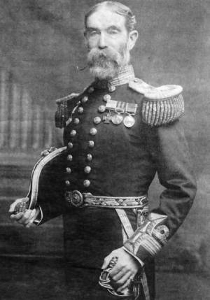
During World War II Wheeler serves as consultant surgeon to the Royal Navy in Scotland, with the rank of rear admiral (1939–43) and is posted to Aberdeen. Strong-minded, unconventional, and often controversial, he has a gift for friendship, is charming and good-humoured, and excels in the art of the after-dinner speech. Immensely proud of Dublin’s medical and surgical traditions, he always eagerly returned to Ireland, where he planned to retire and write his memoirs.

Wheeler dies suddenly on September 11, 1943, at his home in Aberdeen and is cremated at the Aberdeen crematorium. As a memorial to his father, he bequeaths his library and that of his father to the Royal College of Surgeons in Ireland, and also leaves a fund for the Sir William Wheeler memorial medal in surgery.


Leave a comment

Birth of Stephen Clegg Rowan, Vice Admiral in the U.S. Navy

Stephen Clegg Rowan, a vice admiral in the United States Navy, who serves during the Mexican–American War and the American Civil War, is born in Dublin on December 25, 1808. He has a 63-year career, which is one of the longest in the history of the United States Navy.

Rowan comes to the United States at the age of ten and lives in Piqua, Ohio. He is a graduate of Miami University and is appointed as a midshipman in the U.S. Navy on February 1, 1826, at the age of seventeen. Later, he takes an active role in the Mexican–American War, serving as executive officer of the sloop-of-war USS Cyane during the capture of Monterey, California on July 7, 1846, and in the occupation of both San Diego and Los Angeles. In January 1847 he leads a provisional battalion, with the nominal rank of major, of seven companies of naval infantry (along with a company of artillery and a company of sappers and miners) for the recapture of Los Angeles.

Captain of the steam sloop USS Pawnee at the outbreak of the American Civil War, he attempts to relieve Fort Sumter and burn the Norfolk Naval Shipyard. In the fall of 1861, he assists in the capture of the forts at Hatteras Inlet. Then, taking command of a flotilla in the North Carolina sounds, he cooperates in the capture of Roanoke Island in February 1862. Promoted simultaneously to captain and commodore for gallantry, he then supports the capture of Elizabeth City, Edenton, and New Bern. During the summer of 1863, he commands the broadside ironclad USS New Ironsides on blockade duty off Charleston, South Carolina and the following August assumes command of Federal forces in the North Carolina sounds. During this time the rebel semi-submersible CSS David attacks the USS New Ironsides with a spar torpedo. In the ensuing explosion, one man is killed, and a large hole is torn into the ironclad, but she continues her blockading duties.

Commissioned rear admiral on July 25, 1866, Rowan serves as commandant of the Norfolk Naval Shipyard until 1867, when he assumes command of the Asiatic Squadron. Returning in 1870, he is appointed vice admiral, following the death of Admiral David Farragut and the promotion of Vice Admiral David Dixon Porter in August of that year. In December 1870 he reaches the mandatory retirement age of 62 but, like admirals Farragut and Porter before him, he is allowed to remain on active duty.

Rowan serves as commandant of the New York Navy Yard from 1872 to 1876, as governor of the Philadelphia Naval Asylum at Philadelphia, Pennsylvania, in 1881, and as superintendent of the United States Naval Observatory, Washington, D.C., from 1882 until his retirement in 1889.

In 1882 Rowan is elected as a First Class Companion of the District of Columbia Commander of the Military Order of the Loyal Legion of the United States (MOLLUS). He is assigned MOLLUS insignia number 2510. His son, Hamilton Rowan, an officer in the United States Army, is elected as a Second Class Companion of MOLLUS and becomes a First Class Companion upon his father’s death.

Rowan dies at the age of 81 in Washington, D.C. on March 31, 1890.


Leave a comment

Death of Victoria Cross Recipient Charles Davis Lucas

Charles Davis Lucas, Irish recipient of the Victoria Cross, dies in Great Culverden, Kent, England on August 7, 1914.

Lucas is born in Druminargal House, Poyntzpass, County Armagh, in what is now Northern Ireland, on February 19, 1834. He enlists in the Royal Navy in 1848 at the age of 13, serves aboard HMS Vengeance, and sees action in the Second Anglo-Burmese War of 1852–53 aboard the frigate HMS Fox at Rangoon, Pegu, and Dalla. By age 20, he has become a mate.

On June 21, 1854, in the Baltic Sea during the Crimean War, HMS Hecla, along with two other ships, is bombarding Bomarsund, a fort in the Åland Islands off Finland. The fire is returned from the fort, and, at the height of the action, a live shell lands on HMS Hecla‘s upper deck with its fuse still hissing. All hands are ordered to fling themselves flat on the deck, but 20-year-old Lucas with great presence of mind runs forward and hurls the shell into the sea where it explodes with a tremendous roar before it hits the water. Thanks to his action no one on board is killed or seriously wounded by the shell and, accordingly, he is immediately promoted to lieutenant by his commanding officer. His act of bravery is the first to be rewarded with the Victoria Cross in 1857.

In 1879 Lucas marries Frances Russell Hall, daughter of Admiral William Hutcheon Hall, who had been captain of HMS Hecla in 1854. The couple has three daughters together. Lucas serves for a time as Justice of the Peace for both Kent and Argyllshire.

Lucas’s later career includes service on HMS Calcutta, HMS Powerful, HMS Cressy, HMS Edinburgh, HMS Liffey and HMS Indus. He is promoted to commander in 1862 and commands the experimental armoured gunboat HMS Vixen in 1867. He is promoted to captain in 1867, before retiring on October 1, 1873. He is later promoted to rear admiral on the retired list in 1885. During his career he receives the India General Service Medal with the bar Pegu 1852, the Baltic Medal 1854–55, and the Royal Humane Society Lifesaving Medal.

Lucas dies in Great Culverden, Kent on August 7, 1914. He is buried at St. Lawrence’s Church, Mereworth, Maidstone, Kent.

Lucas’s campaign medals, including his Victoria Cross, are displayed at the National Maritime Museum in Greenwich, London. They are not the original medals, which were left on a train and never recovered. Replacement copies were made, though the reverse of the Victoria Cross copy is uninscribed.


Leave a comment

Birth of Arctic Explorer Robert McClure

robert-mcclure

Sir Robert John Le Mesurier McClure, Irish explorer of the Arctic, is born in Wexford, County Wexford on January 28, 1807.

McClure is the posthumous son of one of James Abercrombie‘s captains, first cousin of Oscar Wilde and spends his childhood under the care of his godfather, General John Le Mesurier, governor of Alderney, by whom he is educated for the army. The McClures are of Highland Scots ancestry, being a sept of Clan MacLeod of Harris. He enters the navy, however, in 1824, and twelve years later gains his first experience of Arctic exploration as mate of HMS Terror in the expedition (1836–1837) commanded by Captain George Back.

Upon his return he obtains his commission as lieutenant, and from 1838 to 1839 serves on the Canadian lakes, being subsequently attached to the North American and West Indian naval stations, where he remains until 1846. Two years later he joins John Franklin‘s search expedition (1848–1849) under James Clark Ross as first lieutenant of HMS Enterprise.

After he returns from the first Franklin search expedition, a new search expedition is launched in 1850, with Richard Collinson commanding the HMS Enterprise and McClure, as his subordinate, given the command of HMS Investigator. The two ships set out from England, sail south on the Atlantic Ocean, navigate through the Strait of Magellan to the Pacific Ocean with the assistance of steam-sloop HMS Gorgon, where they become separated and have no further contact for the rest of their respective journeys.

The HMS Investigator sails north through the Pacific and enters the Arctic Ocean by way of the Bering Strait, and sails eastward past Point Barrow, Alaska to eventually link up with another British expedition from the northwest. Although the HMS Investigator is abandoned to the pack ice in the spring of 1853, McClure and his crew are rescued by a party from the HMS Resolute, one of the ships under the command of Sir Edward Belcher that are sailing from the east, after a journey over the ice by sledge. Subsequently he completes his journey across the Northwest Passage. HMS Resolute itself does not make it out of the Arctic that year and is abandoned in ice, but later recovered. The wood from that ship becomes quite famous later.

Thus, McClure and his crew are the first both to circumnavigate the Americas, and to transit the Northwest Passage, considerable feats at that time. The HMS Enterprise, meanwhile, having arrived at Point Barrow in 1850 a fortnight later than the HMS Investigator, finds its passage blocked by winter ice and has to turn back and return the following year.

Upon his return to England, in 1854, McClure is court martialed for the loss of the HMS Investigator, which is automatic when a captain loses his ship. Following an honourable acquittal, he is knighted and promoted to post-rank, his commission being dated back four years in recognition of his special services. McClure and his crew share a great monetary reward of £10,000 awarded them by the British Parliament. He subsequently is also awarded gold medals by the English and French geographical societies. In 1855 he is elected a member of the American Antiquarian Society.

From 1856 to 1861 McClure serves in Eastern waters, commanding the division of the Naval Brigade before Canton in 1858, for which he receives a CB in the following year. His latter years are spent in a quiet country life. He attains the rank of rear admiral in 1867, and of vice admiral in 1873. He dies on October 17, 1873 and is buried in Kensal Green Cemetery, London.

McClure Strait is later named after Robert McClure, as well as the crater McClure on the Moon.


Leave a comment

Birth of Admiral Sir Francis Leopold McClintock

Admiral Sir Francis Leopold McClintock, Irish explorer in the British Royal Navy who is known for his discoveries in the Canadian Arctic Archipelago, is born on July 8, 1819 in Dundalk, County Louth.

McClintock is the eldest son of Henry McClintock, formerly of the 3rd Dragoon Guards, by his wife Elizabeth Melesina, daughter of the Ven. George Fleury, D.D., archdeacon of Waterford. His uncle is John McClintock (1770–1855) of Drumcar House.

In 1835 McClintock becomes a member of the Royal Navy as a gentleman volunteer, and joins a series of searches for Sir John Franklin between 1848 and 1859. He masters traveling by using human hauled sleds, which remain the status quo in Royal Navy Arctic and Antarctic overland travel until the death of Captain Robert Falcon Scott RN in his bid to reach the South Pole. In 1848-49, McClintock accompanies James Clark Ross on his survey of Somerset Island. As part of Capt. Henry Kellett‘s expedition 1852 to 1854, McClintock travels 1,400 miles by sled and discovers 800 miles of previously unknown coastline.

In 1854 the explorer John Rae travels west from Repulse Bay, Nunavut and learns from the Inuit that a ship has been abandoned somewhere to the west. Previous expeditions have not searched the area because they believe it to be ice-blocked. In April 1857 McClintock agrees to take command of the Fox, which belongs to Lady Franklin, and searches for her husband in the area west of Repulse Bay. At Disko Bay he hires thirty sled dogs and an Inuit driver. It is a bad year for ice and from September he is frozen in for eight months. The following year, 1858, is another bad year and he does not reach Beechey Island until August. He enters Peel Sound, finds it blocked by ice, backs up, enters Prince Regent Inlet in the hope of passing Bellot Strait. He is glad to extricate himself from this narrow passage and finds winter quarters near its entrance.

In February 1859, when sledging becomes practical, he goes south to the North Magnetic Pole which had been found by James Clark Ross in 1831. Here he meets some Inuit who tell him that a ship has been crushed by ice off King William Island, the crew has landed safely and that some white people have starved to death on an island. In April he goes south again and on the east coast of King William Island meets other Inuit who sell him artifacts from Franklin’s expedition. William Hobson, who has separated from him, finds the only written record left by Franklin on the northwest corner of the island. They also find a skeleton with European clothes and a ships boat on runners containing two corpses. They get as far south as Montreal Island and the mouth of the Back River.

McClintock returns to England in September 1859 and is knighted. The officers and men of the Fox share a £5,000 parliamentary reward. The tale is published in The Voyage of the ‘Fox’ in the Arctic Seas: A Narrative of the Discovery of the Fate of Sir John Franklin and His Companions. London, 1859.

In 1872–1877 McClintock is Admiral-Superintendent of Portsmouth Dockyard. In 1879 he is appointed Commander-in-Chief, North America and West Indies Station with the flagship HMS Northampton. McClintock leaves the Royal Navy in 1884 as a Rear Admiral. He dies on November 17, 1907. He is buried in Kensington Cemetery, Hanwell, Middlesex.

On October 29, 2009 a special service of thanksgiving is held in the chapel at the Old Royal Naval College in Greenwich, to accompany the rededication of the national monument to Sir John Franklin there. It also marks the 150th anniversary of Sir Francis Leopold McClintock’s voyage aboard the yacht Fox.

Admiral Sir Frances Leopold McClintock has several portraits in the National Portrait Gallery, London.


Leave a comment

Heroic Act of Charles Davis Lucas Earns First Victoria Cross

Charles Davis Lucas, a 20-year-old mate on the HMS Hecla in the Royal Navy, hurls a Russian shell, its fuse still burning, from the deck of his ship on June 21, 1854, during the Crimean War. For this action, he becomes the first recipient of the Victoria Cross in 1857.

Lucas is born in Druminargal House, Poyntzpass, County Armagh, on February 19, 1834. He enlists in the Royal Navy in 1848 at the age of 13, serves aboard HMS Vengeance, and sees action in the Second Anglo-Burmese War of 1852–53 aboard the frigate HMS Fox at Rangoon, Pegu, and Dalla. By age 20, he has become a mate.

On June 21, 1854, in the Baltic Sea, HMS Hecla, along with two other ships, is bombarding Bomarsund, a fort in the Åland Islands off Finland. The fire is returned from the fort, and, at the height of the action, a live shell lands on HMS Hecla‘s upper deck with its fuse still hissing. All hands are ordered to fling themselves flat on the deck, but Lucas with great presence of mind runs forward and hurls the shell into the sea where it explodes with a tremendous roar before it hits the water. Thanks to Lucas’s action no one on board is killed or seriously wounded by the shell and, accordingly, he is immediately promoted to lieutenant by his commanding officer. His act of bravery is the first to be rewarded with the Victoria Cross.

His later career includes service on HMS Calcutta, HMS Powerful, HMS Cressy, HMS Edinburgh, HMS Liffey and HMS Indus. He is promoted to commander in 1862 and commands the experimental armoured gunboat HMS Vixen in 1867. He is promoted to captain in 1867, before retiring on October 1, 1873. He is later promoted to rear admiral on the retired list in 1885. During his career he receives the India General Service Medal with the bar Pegu 1852, the Baltic Medal 1854–55, and the Royal Humane Society Lifesaving Medal.

In 1879 he marries Frances Russell Hall, daughter of Admiral William Hutcheon Hall, who had been captain of HMS Hecla in 1854. The couple has three daughters together. Lucas serves for a time as Justice of the Peace for both Kent and Argyllshire, and dies in Great Culverden, Kent on August 7, 1914. He is buried at St. Lawrence Church, Mereworth, Maidstone, Kent.

Lucas’s campaign medals, including his Victoria Cross, are displayed at the National Maritime Museum in Greenwich, London. They are not the original medals, which were left on a train and never recovered. Replacement copies were made, though the reverse of the Victoria Cross copy is uninscribed.