seamus dubhghaill

Promoting Irish Culture and History from Little Rock, Arkansas, USA


Leave a comment

Magee College Opens in Derry, County Londonderry

magee-college-1870

Magee College opens on October 10, 1865, as a Presbyterian Christian arts and theological college in Derry, County Londonderry, Northern Ireland. Since 1953, it has had no religious affiliation and provides a broad range of undergraduate and postgraduate academic degree programmes in disciplines ranging from business, law, social work, creative arts & technologies, cinematic arts, design, computer science and computer games to psychology and nursing.

The Magee Campus gains its name from Martha Magee, the widow of a Presbyterian minister, who, in 1845, bequeathed £20,000 to the Presbyterian Church in Ireland to found a college for theology and the arts. It opens in 1865 primarily as a theological college but accepts students from all denominations to study a variety of subjects. It is a college of the Royal University of Ireland from 1880 and later becomes associated with Trinity College, Dublin when the Royal University is dissolved in 1909 and replaced by the National University of Ireland.

During World War II, the college is taken over by the Admiralty for Royal NavyRoyal Navy operational use, becoming with Ebrington Barracks (HMS Ferret), a major facility in the Battle of the Atlantic. A 2013 BBC report describes a secret major control bunker, later buried beneath the lawns of the college. From 1941 this bunker, part of Base One Europe, together with similar bunkers in Derby House, Liverpool and Whitehall is used to control one million Allied personnel and fight the Nazi U-boat threat.

In 1953, Magee Theological College separates from the remainder of the college, eventually moving to Belfast in a 1978 merger that forms Union Theological College. Also in 1953, Magee College breaks its ties with Dublin and becomes Magee University College. It is hoped by groups led by the University for Derry Committee that this university college would become Northern Ireland’s second university after Queen’s University Belfast. However, in the 1960s, following the recommendations in The Lockwood Report by Sir John Lockwood, Master of Birkbeck College, London and former Vice-Chancellor of the University of London, the Parliament of Northern Ireland makes a controversial decision to pass it over in favour of a new university in Coleraine. Instead it is incorporated into the two-campus New University of Ulster in 1969. The next fourteen years see the college halve in size, while development focuses on the main Coleraine campus.

In 1984, the New University merges with the Ulster Polytechnic, and Magee becomes the early focus of development of a new four-campus university, the University of Ulster. Student and faculty numbers recover and grow rapidly over the next ten to fifteen years, accompanied by numerous construction projects. Magee grows from just 273 students in 1984 to over 4,000 undergraduates in 2012. In 2012, the University continues to lobby the Northern Ireland Executive for an additional 1,000 full-time undergraduate places, leading to 6,000 students at Magee in 2017.

On September 14, 2013, Magee hosts, for the first time on the island of Ireland, the 23rd International Loebner Prize Contest in Artificial Intelligence based on the Turing test proposed by the renowned British computer scientist Alan Turing in 1950. Turing also works on cracking the Enigma machine code at Bletchley Park which is instrumental in the Battle of the Atlantic.

In October 2014 the University of Ulster is rebranded as Ulster University.

(Pictured: Magee College, c. 1870)


Leave a comment

Birth of Gabriel Byrne, Actor, Director & Producer

gabriel-james-byrne

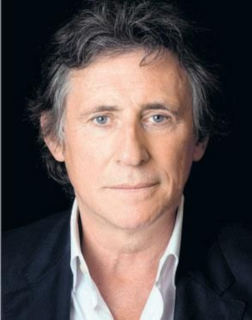
Gabriel James Byrne, internationally acclaimed actor, film director, film producer, writer, cultural ambassador and audiobook narrator, is born in Dublin on May 12, 1950.

Byrne is the first of six children. His father is a cooper and his mother a hospital worker. He is raised Catholic and educated by the Irish Christian Brothers. He spends five years of his childhood in a seminary training to be a Catholic priest. He later says, “I spent five years in the seminary, and I suppose it was assumed that you had a vocation. I have realized subsequently that I didn’t have one at all. I don’t believe in God. But I did believe at the time in this notion that you were being called.” He attends University College Dublin (UCD), where he studies archeology and linguistics, and becomes proficient in the Irish language. He plays football in Dublin with the Stella Maris Football Club.

Byrne works in archeology after he leaves UCD but maintains his love of his language, writing Draíocht (Magic), the first drama in Irish on Ireland’s national Irish television station, TG4, in 1996.

He discovers his acting ability as a young adult. Before that he works at several occupations which include being an archaeologist, a cook, a bullfighter, and a Spanish schoolteacher. He begins acting when he is 29 years old. He begins on stage at the Focus Theatre and the Abbey Theatre in Dublin, later joining the Royal Court Theatre and the Royal National Theatre in London.

Byrne comes to prominence on the final season of the Irish television show The Riordans, later starring in the spin-off series, Bracken. He makes his film début in 1981 as Lord Uther Pendragon in John Boorman‘s King Arthur epic, Excalibur.

Byrne does not visit the United States until he is 37 years old. In 1988, he married actress Ellen Barkin with whom he has two children. The couple separates amicably in 1993 and divorce in 1999.

In November 2004, Byrne is appointed a UNICEF Ireland Ambassador. In 2007 he is presented with the first of the newly created Volta awards at the 5th Jameson Dublin International Film Festival for his lifetime achievement in acting. He also receives the Honorary Patronage of the University Philosophical Society, of Trinity College Dublin on February 20, 2007. He is awarded an honorary degree in late 2007 by the National University of Ireland, Galway, in recognition of his “outstanding contribution to Irish and international film.”

Byrne is featured as therapist Dr. Paul Weston in the critically acclaimed HBO series In Treatment (2008). In his return to theater in 2008, Byrne appears as King Arthur in Alan Lerner and Frederick Loewe‘s Camelot with the New York Philharmonic which is featured in a PBS broadcast in the Live From Lincoln Center series in May of 2008.

Byrne currently resides in Manhattan, New York.

(From IMDb Mini Biography by Bernie Corrigan)


Leave a comment

First Priests Ordained at St. Patrick’s College, Maynooth

The ordination of the first priests at St. Patrick’s College, Maynooth takes place on June 6, 1800. The college is the “National Seminary for Ireland” and a Pontifical university located in the village of Maynooth, fifteen miles from Dublin.

The college is established on June 5, 1795, as The Royal College of St. Patrick, by act of the Parliament of Ireland, to provide “for the better education of persons professing the popish or Roman Catholic religion.” The College in Maynooth is originally established to provide a university education for Catholic lay and ecclesiastical students and is based in Riverstown House on the south campus from 1802. With the opening of Clongowes Wood College in 1814, the lay college is closed and the college functions solely as a Catholic seminary for almost 150 years.

The college is particularly intended to provide for the education of Catholic priests in Ireland, who until this Act have to go to the continent for training. The added value in this is the reduction of the number of priests returning from training in revolutionary France, with whom Great Britain is at war, thus hindering potential revolution. The value to the government is proved by the condemnation by the Catholic Church hierarchy of the Irish Rebellion of 1798 and later support for the Act of Union.

In 1800, John Butler, 12th Baron Dunboyne, dies and leaves a substantial fortune to the College. Butler had been a Roman Catholic, and Bishop of Cork, who had embraced Protestantism in order to marry and guarantee the succession to his hereditary title. However, there are no children to his marriage, and it is alleged that he had been reconciled to the Catholic Church at his death. Were this the case, a Penal law demands that the will is invalid, and his wealth will pass to his family. Much litigation follows before a negotiated settlement in 1808 that leads to the establishment of a Dunboyne scholarship fund.

The land is donated by William FitzGerald, 2nd Duke of Leinster, who has argued in favour of Catholic emancipation in the Irish House of Lords. He lives nearby at Carton House and also at Leinster House. The building work is paid for by the British Government and parliament continues to give it an annual grant until the Irish Church Act 1869. When this law is passed the College receives a capital sum of £369,000. The trustees invest 75% of this in mortgages to Irish landowners at a yield of 4.25% or 4.75% per annum. This is considered a secure investment at the time but agitation for land reform and the depression of the 1870s erodes this security. The largest single mortgage is granted to the Earl of Granard. Accumulated losses on these transactions reached £35,000 by 1906.

The first building to go up on the site is designed by, and named after, John Stoyte. Stoyte House, which can still be seen from the entrance to the old campus, is a well-known building to Maynooth students and stands very close to the very historic Maynooth Castle. Over the next 15 years, the site at Maynooth undergoes rapid construction so as to cater to the influx of new students, and the buildings which now border St. Joseph’s Square are completed by 1824.

The Rev. Laurence F. Renehan (1797–1857), a noted antiquarian, church historian, and cleric, serves as president of St. Patrick’s from 1845 until 1857. Under Renehan, many of the college’s most important buildings are constructed by Augustus Pugin.

In 2015–16 there are approximately 80 men studying for the priesthood at Maynooth, 60 resident seminarians and approximately 20 non-residents.