Since the beginning of its campaign, the IRA has carried out numerous attacks on economic targets, killing many members of the public in the process. The IRA’s goal is to harm the economy and cause disruption, which will put pressure on the British government to withdraw from Northern Ireland.
On February 17, 1978, an IRA unit plants an incendiary device attached to petrol-filled canisters on meat hooks outside the window of the Peacock Room in the restaurant of the La Mon House Hotel. The IRA often give bomb warnings in advance of destroying property but never when targeting the police or military. After planting the bomb, the IRA members attempt to send a warning from the nearest public telephone but find that it has been vandalised. On the way to another telephone, they are delayed again when forced to stop at an Ulster Defence Regiment (UDR) checkpoint. By the time they are able to send the warning, only nine minutes remain before the bomb detonates at 21:00. The blast creates a fireball, killing twelve people and injuring thirty more, many of whom are severely burned. Many of the injured are treated in the Ulster Hospital in nearby Dundonald. A 2012 news article claims that the IRA were targeting Royal Ulster Constabulary (RUC) officers they believed were meeting in the restaurant that night. The article claims that the IRA had gotten the wrong date and that the meeting of RUC officers had taken place exactly one week earlier.
The day after the explosion, the IRA admits responsibility and apologises for the inadequate warning. The hotel had allegedly been targeted by the IRA as part of its firebomb campaign against commercial targets. However, the resulting carnage brings quick condemnation from other Irish nationalists, with one popular newspaper comparing the attack to the 1971 McGurk’s Bar bombing. Sinn Féin president Ruairí Ó Brádaigh also strongly criticises the operation. In consequence of the botched attack, the IRA Army Council gives strict instructions to all units not to bomb buses, trains, or hotels.
A team of 100 RUC detectives is deployed in the investigation. As part of the investigation, 25 people are arrested in Belfast, including Gerry Adams. Adams is released from custody in July 1978. Two prosecutions follow. One Belfast man is charged with twelve murders but is acquitted. He is convicted of IRA membership but successfully appeals. In September 1981, another Belfast man, Robert Murphy, is given twelve life sentences for the manslaughter of those who died. Murphy is freed on licence in 1995. As part of their bid to catch the bombers, the RUC passes out leaflets which display a graphic photograph of a victim’s charred remains.
In 2012, a news article claims that two members of the IRA bombing team, including the getaway driver, are British double agents working for MI5. According to the article, one of the agents is Denis Donaldson. That year, Northern Ireland’s Historical Enquiries Team (HET) completes a report on the bombing. It reveals that important police documents, including interviews with IRA members, have been lost. A number of the victims’ families slam the report and call for a public inquiry. They claim the documents had been removed to protect certain IRA members. Unionist politician Jim Allister, who has been supporting the families, says, “There is a prevalent belief that someone involved was an agent and that is an issue around which we need clarity.”
Stagg is educated to primary level at Newbrook Primary School and at CBS Ballinrobe to secondary level. After finishing his schooling, he works as an assistant gamekeeper with his uncle prior to emigrating to England in search of work.
Once in England he gains employment as a bus conductor in north London and later becomes a bus driver. Whilst in England he meets and marries fellow Mayo native, Bridie Armstrong from Carnacon. In 1972, he joins the Lutoncumann of Sinn Féin and soon after becomes a volunteer in the Provisional Irish Republican Army (IRA).
In April 1973, Stagg is arrested with six others alleged to comprise an IRA unit planning bombing attacks in Coventry. He is tried at BirminghamCrown Court. The jury finds three of the seven not guilty. The remaining four are all found guilty of criminal damage and conspiracy to commit arson. Stagg and English-born priest, Father Patrick Fell, are found to be the unit’s commanding officers. Stagg is given a ten-year sentence and Fell twelve years. Thomas Gerald Rush is given seven years and Anthony Roland Lynch, who is also found guilty of possessing articles with intent to destroy property, namely nitric acid, balloons, wax, and sodium chlorate, is given ten years.
Following the hunger strike that results in the death of Michael Gaughan, the Price sisters, Feeney, and Kelly are granted repatriation to Ireland. Stagg is denied repatriation and is transferred to Long Lartin Prison. During his time there he is subject to solitary confinement for refusing to do prison work and is also subjected, along with his wife and sisters during visits, to humiliating body searches. In protest against this he begins a second hunger strike that lasts for thirty-four days. This ends when the prison governor agrees to an end to the strip-searches on Stagg and his visitors. Stagg is bed-ridden for the rest of his incarceration in Long Lartin, due to a kidney complaint.
In 1975 Stagg is transferred to Wakefield Prison, where it is demanded that he again do prison work. He refuses and is placed in solitary confinement. On December 14, 1975, Stagg embarks on a hunger strike in Wakefield, along with a number of other republican prisoners, after being refused repatriation to Ireland during the IRA/British truce. Stagg’s demands are an end to solitary confinement, no prison work, and repatriation to prison in Ireland. The British government refuses to meet any of these demands. Stagg dies on February 12, 1976, after 62 days on hunger strike.
Frank Stagg’s burial causes considerable controversy in Ireland, with republicans and two of his brothers seeking to have Stagg buried in the republican plot in Ballina in accordance with his wishes, while his widow, his brother, Emmet Stagg, and the Irish government wish to have him buried in the family plot in the same cemetery and to avoid republican involvement in the funeral. As the republicans wait at Dublin Airport for the body, the Irish government orders the flight to be diverted to Shannon Airport.
His body is taken to Ballina and buried near the family plot. In order to prevent the body being disinterred and reburied by republicans, the grave is covered with concrete. In November 1976, a group of republicans tunnel under the concrete to recover the coffin under cover of darkness and rebury it in the republican plot.
The Playboy of the Western World, a three-act play written by Irish playwright John Millington Synge, is first performed at the Abbey Theatre, Dublin, on January 26, 1907. The play is set in Michael James Flaherty’s public house in County Mayo during the early 1900s. It tells the story of Christy Mahon, a young man running away from his farm, claiming he killed his father. The locals are more interested in vicariously enjoying his story than in condemning the immorality of his murderous deed, and in fact, Christy’s tale captures the romantic attention of the barmaid Pegeen Mike, the daughter of Flaherty. The play is best known for its use of the poetic, evocative language of Hiberno-English, heavily influenced by the Irish language, as Synge celebrates the lyrical speech of the Irish.
The Playboy Riots occur during and following the opening performance of the play. The riots are stirred up by Irish nationalists who view the contents of the play as an offence to public morals and an insult against Ireland. The riots take place in Dublin, spreading out from the Abbey Theatre, and are finally quelled by the actions of the Dublin Metropolitan Police.
The fact that the play is based on a story of apparent patricide also attracts a hostile public reaction. Egged on by nationalists, including Sinn Féin leader Arthur Griffith, who believe that the theatre is not sufficiently political and describes the play as “a vile and inhuman story told in the foulest language we have ever listened to from a public platform,” and with the pretext of a perceived slight on the virtue of Irish womanhood in the line “a drift of females standing in their shifts” (a shift being a female undergarment), a significant portion of the crowd riots, causing the remainder of the play to be acted out in dumbshow. Nevertheless, press opinion soon turns against the rioters and the protests peter out.
Years later, William Butler Yeats declares to rioters against Seán O’Casey‘s pacifist drama The Plough and the Stars, in reference to the Playboy Riots, “You have disgraced yourself again. Is this to be the recurring celebration of the arrival of Irish genius?”
In the 1965 film Young Cassidy, a riot occurs during a play by the fictitious playwright Cassidy, following which the character W.B. Yeats refers to Synge and speaks similar words, starting with “You have disgraced yourselves again.”
The production of Synge’s play meets with more disturbances in the United States in 1911. On opening night in New York City, hecklers boo, hiss and throw vegetables and stink bombs while men scuffle in the aisles. The company is later arrested in Philadelphia and charged with putting on an immoral performance. The charges are later dismissed.
Dáil Éireann votes to approve the Anglo-Irish Treaty on January 7, 1922, following a debate through late December 1921 and into January 1922. The vote is 64 in favour, 57 against, with the Ceann Comhairle and three others not voting. The Sinn Féin party splits into opposing sides in the aftermath of the Treaty vote, which leads to the Irish Civil War from June 1922 until May 1923. The treaty is signed in London on December 6, 1921.
Two elections take place in Ireland in 1921, as a result of the Government of Ireland Act 1920 to establish the House of Commons of Northern Ireland and the House of Commons of Southern Ireland. The election is used by the Irish Republic as the basis of membership of the Second Dáil. The general election to the Northern Ireland House of Commons occurs on May 24, 1921. Of 52 seats, forty are won by unionists, six by moderate Irish nationalists, and six by Sinn Féin. No actual polling takes place in the Southern Ireland constituencies, as all 128 candidates are returned unopposed. Given the backdrop of the increasingly violent War of Independence, any candidates opposed to Sinn Féin, and their supporters can expect to be harassed by the Irish Republican Army (IRA). Supporters of the Irish Labour Party stand aside to allow the constitutional situation to run its course. Of these 128, 124 are won by Sinn Féin, and four by independent unionists representing the University of Dublin constituency. Only the Sinn Féin candidates recognise the Second Dáil and five of these have been elected in two constituencies, one in each part of Ireland, so the total number of members who assemble in the Second Dáil is 125.
During the Second Dáil, the government of the Irish Republic and the British government of David Lloyd George agree to hold peace negotiations. On September 14, 1921, the Dáil ratifies the appointment of Arthur Griffith, Michael Collins, Robert Barton, Eamonn Duggan, and George Gavan Duffy as envoys plenipotentiary for the peace conference in England. These envoys eventually sign the Anglo-Irish Treaty on December 6. After almost a month of acrimonious debate the treaty is formally ratified by Dáil Éireann on January 7, 1922.
To satisfy the requirements of the British constitution, the treaty also has to be ratified by the House of Commons of Southern Ireland. Thus, Irish nationalists end their boycott of the home rule parliament to attend the southern House of Commons as MPs. This they do alongside the four Unionist MPs who had refused to recognise the Dáil. In this way the treaty is ratified a second time in Dublin, this time unanimously as the anti-Treaty TDs refuse to attend.
Under the terms of the Anglo-Irish Treaty a provisional parliament, considered by nationalists to be the Third Dáil, is elected in the 1922 general election on June 16. Collins and Éamon de Valera agree a pact between the pro- and anti-Treaty wings of Sinn Féin, and this pact and the elections are endorsed by the Second Dáil. The new assembly is recognised both by nationalists and the British Government and so replaces both the Parliament of Southern Ireland and the Second Dáil with a single body. The anti-Treaty groups of IRA members, TDs, and their supporters are still bitterly opposed the settlement, despite the election result, and this leads to the Irish Civil War.
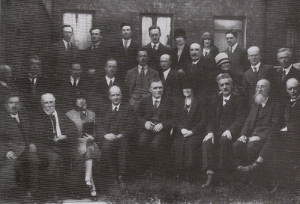
(Pictured: Second All-Ireland Dáil Éireann, elected in 1921)
South is born in 1928 in Limerick where he is educated at Sexton Street Christian Brothers School, later working as a clerk in a local wood-importing company called McMahon’s. South is a member of a number of organisations including the Gaelic League, Legion of Mary, Clann na Poblachta, and Sinn Féin. In Limerick he founds the local branch of Maria Duce, a social Catholic organisation, where he also edits both An Gath and An Giolla. He receives military training as a lieutenant of the Irish army reserve, the LDF which later becomes the FCA (An Fórsa Cosanta Áitiúil or Local Defence Force), before he becomes a volunteer in the Irish Republican Army.
South is a devout Catholic, being a member of An Réalt, the Irish-speaking chapter of the Legion of Mary, and a conservative, even by the standards of the day. He is also a member of the Knights of Columbanus.
On New Year’s Day 1957, fourteen IRA volunteers cross the border into County Fermanagh to launch an attack on a joint RUC/B Specials barracks in Brookeborough. During the attack a number of volunteers are injured, two fatally. South and Fergal O’Hanlon die of their wounds as they are making their escape. They are carried into an old sandstone barn by their comrades which is later demolished by a British army jeep. Stone from the barn is used to build a memorial at the site.
The attack on the barracks inspires two popular rebel songs: “Seán South of Garryowen” and “The Patriot Game.” “Seán South of Garryowen,” is written by Sean Costelloe from County Limerick to the tune of another republican ballad “Roddy McCorley” and is made famous by The Wolfe Tones. The popularity of this song leads to the misconception that South is from Garryowen, a suburb in Limerick city. In fact, South is actually from 47 Henry Street in Limerick.
South is also mentioned in The Rubberbandits song “Up Da Ra”, which pokes fun at the concept of armchair republicanism using the literary device of the unreliable narrator.
There is a plaque dedicated to Seán South outside his birthplace on Henry Street, Limerick.
Grace Evelyn Gifford Plunkett, Irish artist and cartoonist who is active in the Republican movement, dies suddenly in her apartment in South Richmond Street, Portobello, Dublin, on December 13, 1955.
Gifford is the second youngest of twelve children born to Frederick Gifford, a solicitor and Roman Catholic, and Isabella Julia Burton Gifford, a Protestant. She grows up in the fashionable suburb of Rathmines in Dublin. The boys are baptised as Catholics and the girls as Protestant, but effectively the children are all raised as Protestants. The girls attend Alexandra College in Earlsfort Terrace, and the boys attend the The High School in Harcourt St.
At the age of 16, Gifford enters the Dublin Metropolitan School of Art, where she studies under the Irish artist William Orpen. Orpen regards Gifford as one of his most talented pupils. He often sketches her and eventually paints her as one of his subjects for a series on “Young Ireland.” Around this time, Gifford’s talent for caricature is discovered and developed. In 1907 she attends a course in Fine Art at the Slade School of Fine Art, London.
Gifford returns to Dublin in 1908 and, with great difficulty, attempts to earn a living as a caricaturist, publishing her cartoons in The Shanachie, Irish Life, Meadowstreet, and The Irish Review, which is edited from 1913 by Joseph Plunkett. She considers emigrating but gives up the idea. Later that year, she meets Plunkett for the first time at the opening of St. Edna’s School, a new bilingual school in Ranelagh, Dublin. Plunkett is a friend of her brother-in-law, another of the future leaders of the 1916 Easter Rising, Thomas MacDonagh, who is married to Gifford’s sister Muriel.
Her growing interest in the Roman Catholic religion leads to the deepening of Gifford and Plunkett’s relationship. Plunkett proposes to her in 1915. She accepts and takes formal instruction in Catholic doctrine. She is received into the Catholic Church in April 1916. The couple plan to marry on Easter Sunday that year, in a double wedding with his sister and her fiancé.
After the Rising, her brother-in-law Thomas MacDonagh is executed by firing squad along with Patrick Pearse and Thomas Clarke on May 3. That same day, Gifford learns that Plunkett is to be shot at dawn. She purchases a ring in a jeweler’s shop in Dublin city centre and, with the help of a priest, persuades the military authorities to allow them to marry. She and Plunkett are married on the night of May 3, 1916, in the chapel of Kilmainham Gaol, a few short hours before he is executed.
Grace Plunkett decides to devote herself through her art to the promotion of Sinn Féin policies and resumes her commercial work to earn a living. She is elected to the Sinn Féin executive in 1917.
During the Irish Civil War, Plunkett is arrested with many others in February 1923 and interned at Kilmainham Gaol for three months. She is released in May 1923.
When the Civil War ends, Plunkett has no home of her own and little money. Like many Anti-Treaty Republicans, she is the target of social ostracism and has difficulty finding work. She moves from one rented apartment to another and eats in the city-centre restaurants. She befriends many people and has many admirers but has no wish to remarry. Her material circumstances improve in 1932 when she receives a Civil List pension from Éamon de Valera‘s Fianna Fáil government. She lives for many years in a flat in Nassau St. with a balcony overlooking the sports ground of Trinity College.
Plunkett’s in-laws refuse to honour her husband’s will, which leaves everything to his widow. Legally, the will is invalid because there is only one of the required two witnesses and also the marriage takes place after the will is made, automatically revoking it. She begins legal proceedings against her in-laws in 1934. The Count and Countess Plunkett settle out of court and Plunkett is paid £700, plus costs.
From the late 1940s onwards, Plunkett’s health declines. In 1950 she is brought to St. Vincent’s Hospital, then in the city centre. She convalesces in a nursing home, which she does not like because it restricts her freedom.
After her sudden death on December 13, 1955, Grace Gifford Plunkett’s body is removed to St. Kevin’s Church, Harrington Street, and among the attendees at her funeral is President Seán T. O’Kelly. She is buried with full military honours near the republican plot in Glasnevin Cemetery.
Grace Gifford Plunkett is the subject of “Grace,” a song written in 1985 by Frank and Seán O’Meara, which becomes popular in Ireland and elsewhere and has been recorded by many musicians.
The Free State is established as a Dominion of the British Commonwealth of Nations. For one day, it encompasses all thirty-two counties of Ireland. Northern Ireland, which is comprised of the six northernmost counties, exercises its right under the Treaty to opt out of the new state on December 7.
The Free State government consists of the Governor-General, the representative of the king, and the Executive Council, which replaces both the revolutionary Dáil Government and the Provisional Government set up under the Treaty. W. T. Cosgrave, who had led both of these governments since August 1922, becomes the first President of the Executive Council. The legislature consists of Dáil Éireann, the lower house, and Seanad Éireann, also known as the Senate. Members of the Dáil are required to take an Oath of Allegiance, swearing fidelity to the king. The oath is a key issue for opponents of the Treaty, who refuse to take the oath and therefore do not take their seats. Pro-Treaty members, who form Cumann na nGaedheal in 1923, hold an effective majority in the Dáil from 1922 to 1927, and thereafter rule as a minority government until 1932.
In the first months of the Free State, the Irish Civil War is waged between the newly established National Army and the anti-Treaty IRA, who refuse to recognise the state. The Civil War ends in victory for the government forces, with the anti-Treaty forces dumping its arms in May 1923. The anti-Treaty political party, Sinn Féin, refuses to take its seats in the Dáil, leaving the relatively small Labour Party as the only opposition party. In 1926, when Sinn Féin president Éamon de Valera fails to have this policy reversed, he resigns from Sinn Féin and founds Fianna Fáil. Fianna Fáil enters the Dáil following the 1927 general election, and enters government after the Irish general election of 1932, when it becomes the largest party.
De Valera abolishes the Oath of Allegiance and embarks on an economic war with Britain. In 1937 he drafts a new constitution, which is passed by a referendum in July of that year. The Free State comes to an end with the coming into force of the new constitution on December 29, 1937. Under the new constitution the Irish state is named Ireland.
(Pictured: The Executive Council of the Irish Free State, October 1928)
Patrick Henry Pearse, teacher, barrister, poet, writer, nationalist, and political activist who is one of the leaders of the 1916 Easter Rising, is born in Dublin on November 10, 1879. Pearse’s father, James, is a stone worker who works on church buildings in Dublin and his mother, Margaret, comes from a family that has endured the Great Famine in 1846 and has left County Meath for Dublin. Here she brings up four children, Patrick being the second. Pearse has a comfortable childhood as his father is in constant work.
It is at school that Pearse first develops a love of Irish history. He is also taught the Irish language for the first time and while still a teenager, Patrick joins the Gaelic League, an organisation that wants to promote the Irish language and Irish literature. Pearse graduates with a law degree from the King’s Inns and, in 1901, he starts a BA course in modern languages but is called to the Bar in Dublin.
Regardless of his law training, Pearse is more interested in what he is learning about Ireland as a nation. All his knowledge about law has been based around the English language and he wants to know more about what he considers to be the rightful language of Ireland. This is not the Gaelic used in Dublin. Pearse has convinced himself that the real Irish language is based in Connaught, and he teaches himself the dialect of the area. Connaught is also a region that has been severely affected by the Great Famine. Therefore, the number of people who speak what Pearse considers to be proper Gaelic have been greatly reduced. From 1903 to 1909, Pearse develops his involvement in the Gaelic League’s An Claidheamh Soluis (The Sword of Light) which seeks to expand the use of Gaelic in Irish life, and, in particular, literature.
By 1909, Pearse has developed some political leanings. He cannot accept the impact England, and all things English have on Ireland and the Irish people, but his concern is more for Irish culture rather than Irish politics. Pearse wants Irish history and culture taught as compulsory subjects in both Irish schools and colleges. He breaks with the Roman Catholic Church when its national college, St. Patrick’s College, Maynooth, demotes courses in Irish history/culture to topics for trainee priests. He is keen for Maynooth to have compulsory Irish courses simply because priests then have a major influence in the areas where they work. However, all of Pearse’s protests fall on deaf ears. As a result, he founds his own school in Dublin, an “Irish-Ireland” school called St. Enda’s School.
Between 1909 and 1912, Pearse becomes more interested and involved in politics. Despite a limited income and the problems of keeping St. Edna’s on an even financial keel, Pearse launches his own newspaper called An Barr Buadh (The Trumpet of Victory). At this time the Home Rule issue has reared its head again. Sinn Féin and other republican movements have far more impact than Pearse, who seems to many to be no more than a political maverick. Many feel that Pearse is out of his depths in politics and that his input into Irish politics is no more than romanticism with an Irish slant.
By 1913, Pearse has become more depressed about the way Ireland is going under the rule of London. Those who know him, describe him as becoming more and more melancholy as the year progresses. Others believe that he is becoming more fanatical. He helps to organise the Irish Volunteers, the public face of the outlawed Irish Republican Brotherhood, before the outbreak of World War I. In 1914, he is sent on a fund-raising tour of America by Clan na Gael, an organisation that aids the Irish Republican Brotherhood. While the tour is a reasonable success financially, not many Americans are swayed by Pearse’s speeches.
By the time World War I starts, Pearse has taken an extreme political stance. He wants full Irish independence – not what the suspended Home Rule Bill of 1912 offers. He does not support the part Ireland plays in the war effort. He also splits the Irish Volunteers. He takes a small number of these men with him when John Redmond gives his agreement to suspend the Home Rule Bill until the war is over. By now, Pearse has become extreme. He publishes a pamphlet called The Murder Machine which is a severe condemnation of the Irish educational system. He also realises that with London totally focused on the war in Europe, the time is ripe to overthrow British rule in Ireland.
However, in this respect, Pearse is totally wrong. The young men who have volunteered to fight in the war have done so because they want to. Pearse has no mass support in Ireland whereas John Redmond has far more public support in the south. He also assumes incorrectly that all those in southern Ireland are completely against British rule. What Pearse fails to recognise, is that many people in Dublin itself rely on the British for work. They may not like this, but work brings in money regardless of where or who it comes from.
Those who participate in the Easter Uprising of 1916 are in the minority. Pearse decides to take command of the rebellion, and he reads aloud the declaration of independence at the General Post Office. Pearse also is one of the signatories of “Poblacht na hÉireann” (To the People of Ireland).
If Pearse expects the actions of the rebels in Dublin to spark off other uprisings in other Irish cities and towns, he is mistaken. In Dublin, the people of the city fail to offer the rebels any support. In fact, some Dubliners take the opportunity of the rebellion to loot the shops in Sackville Street. The Uprising is doomed from the start.
During the rebellion, Pearse says, “When we are all wiped out, people will blame us for everything, condemn us…. (but) in a few years they will see the meaning of what we tried to do.” Ironically, he is correct in this assessment.
On Friday, April 28, 1916, Pearse surrenders to the British army. By the following day all the rebels have surrendered. As they are paraded through the streets of Dublin before going to Kilmainham Gaol, they are jeered and verbally abused by Dubliners who have seen parts of their city destroyed. They blame Pearse and his followers rather than the British.
At Kilmainham Gaol, Pearse is charged with treason by a military court and sentenced to death. On May 16, Pearse is shot by firing squad. Eventually fourteen other rebel leaders are also executed by firing squad. Pearse’s body, and those of the other leaders, are thrown into a pit without a coffin or a burial service. Ironically, it is in death that Pearse finds real fame.
No one knows the fate of the rebel leaders until after the executions. Many in Ireland are horrified at the way they have been treated. If Pearse had not received national support during his life, his movement certainly received it after his death. Pearse had written that he wanted his fame and deeds to “live after me.” In death, Patrick Pearse is known as the “First President of Ireland” and Irish history and culture become part of the educational system after 1922.
Republican Sinn Féin (Irish: Sinn Féin Poblachtach), an unregistered Irish Republican political organisation, is founded at the West County Hotel in Dublin on November 2, 1986.
Republican Sinn Féin (RSF) claim to be heirs of the Sinn Féin party founded in 1905 and take its present form in 1986 following a split with Provisional Sinn Féin. RSF members take seats when elected in local Irish councils but do not recognise the partition of Ireland and subsequently the legitimacy of the Northern Ireland or Republic of Ireland governments, so does not register itself under them.
The decision to form, or to reorganise or reconstitute as its supporters see it, the organisation was taken in response to Gerry Adams-led Sinn Féin’s decision at its 1986 ardfheis to end its policy of abstentionism and to allow elected Sinn Féin Teachtaí Dála take their seats in Leinster House‘s Dáil Éireann. The supporters of Ruairí Ó Brádaigh and Dáithí Ó Conaill who go on to form RSF oppose this move as it signals a departure from the traditional republican analysis which views the parliament of the Republic of Ireland as an illegal assembly, set up by an act of the British parliament. They argue that republicans owe their allegiance to the All-Ireland (32 County) Irish Republic, maintaining that this state exists de jure and that its authority rests with the IRA Army Council. Hence, if elected, its members refuse to take their seats in the Oireachtas.
The organisation views itself as representing “true” or “traditional” Irish republicanism, while in the mainstream media the organisation is portrayed as a political expression of “dissident republicanism.” Republican Sinn Féin rejects the Good Friday Agreement and indeed the Anglo-Irish Treaty. As part of this they refuse to discount Irish republicans using militant means to “defend the Irish Republic” and considers the Continuity Irish Republican Army (IRA) to be the legitimate army of the Irish Republic. The CIRA is designated as a terrorist organisation by the governments of the United Kingdom and Republic of Ireland.
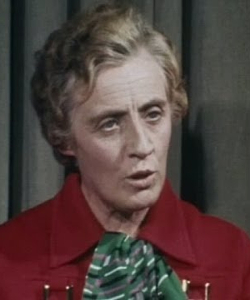
Drumm is born in Newry, County Down to a staunchly Irish republican family. Drumm’s mother has been active in the Irish War of Independence and the Irish Civil War. Drumm grows up in the village of Killean, County Armagh, where she plays camogie. She is active in the republican movement after meeting her husband, a republican prisoner. She begins to speak at many rallies and protest meetings and is soon elected as Vice President of Sinn Fein. She becomes involved in the Northern Ireland Civil Rights Association in the 1960s and works to rehouse Catholics forced from their homes by loyalist intimidation.
Drumm is jailed twice for seditious speeches. After she is released from HM Prison Armagh, raids on her house by the security forces escalate. She is widely demonised in the British media and is already a target for assassination when she is admitted to Belfast’s Mater Hospital for eye treatment in October 1976.
While recovering from the operation, Drumm is shot at point blank range in a joint operation by the Ulster Volunteer Force and the Ulster Defence Association who are able to enter and leave the hospital undisturbed. No one has ever been convicted of her murder.
Drumm’s speeches and quotations can be found on murals across Northern Ireland, including:
“The only people worthy of freedom are those who are prepared to go out and fight for it every day, and die if necessary.”
“We must take no steps backward, our steps must be onward, for if we don’t, the martyrs that died for you, for me, for this country will haunt us forever.”





 seamus dubhghaill