Gerard “Jock” Davison, a former commander of the Provisional Irish Republican Army (IRA) in Belfast and later a supporter of Sinn Féin’s peace strategy, is shot dead in the city shortly after 9:00 a.m. on May 5, 2015, in the Markets area of south Belfast at the junction of Welsh Street and Upper Stanfield.
One of the first operations Davison is involved in is the shooting of Irish People’s Liberation Organisation (IPLO) Belfast Brigade commander Sammy Ward on October 31, 1992, during the Night of the Long Knives in Belfast.
Davison, the former IRA man, who more recently is a community worker in the working-class Markets area of Belfast, is questioned about the murder of 33-year-old Robert McCartney in January 2005. He is released without charge. He always denies ordering the murder of the father of two following an argument outside Magennis’s Bar in the city centre.
On May 5, 2015, around 9:00 a.m., Davison is shot numerous times at Welsh Street in the Markets area of south Belfast. While police do not identify who killed him, Kevin McGuigan, a former subordinate of Davison’s, is named as the chief suspect after he is also shot dead, reportedly by members of the Provisional IRA, on August 12, 2015.
On the evening of the killing, The Guardian’s Henry McDonald reports: “Davison is the most senior pro-peace processrepublican to have been killed since the IRA ceasefire of 1997. Security sources said it was highly unlikely that any Ulster loyalist group was behind the murders, adding that the killers may instead have come from within the nationalist community, possibly from people who had a longstanding grudge against the victim.”
Alasdair McDonnell, the Belfast SouthSocial Democratic and Labour Party (SDLP) Westminster candidate, condemns the shooting, saying, “This is a horrendous crime and those responsible have shown no regard for anyone that could have been caught in the middle of it during the school rush hour. My thoughts and prayers are with the individual’s family at this traumatic time.” He adds, “People here want to move on from the violence of the past. This community will reject those who bring murder and mayhem to our streets. I would appeal to anyone with any information to bring it forward as soon as possible.”
Sinn Féin president Gerry Adams says, “People will be appalled by this morning’s murder in the Markets area of south Belfast. This brutal act will be condemned by all sensible people. There can be no place today for such actions. I would urge anyone with any information to bring that forward to the PSNI (Police Service of Northern Ireland).”
Following his arrest in Fuengirola in August 2021, it is revealed Gerry ‘The Monk’ Hutch is to be questioned in relation to a weapon used in Davison’s murder.
Ahern is urged by Paisley to ensure that criminals who flee across the Irish border are arrested. The Democratic Unionist leader makes the proposal during a cordial one-and-a-half-hour meeting at Farmleigh in Phoenix Park, where the two leaders exchange their first public handshake.
Afterwards Paisley, who receives an invitation from the taoiseach to visit the Battle of the Boyne site later in the year, says that they had also discussed the need for the new administrations in Northern Ireland and in the Republic of Ireland to work for each other’s best interests. “We can confidently state that we are making progress to ensure our two countries can develop and grow side by side in the spirit of generous cooperation,” he declares. “I trust that old barriers and threats will be removed in my day. Business opportunities are flourishing. Genuine respect for the understanding of each other’s differences and, for that matter, similarities is now developing.”
Earlier the DUP leader, who becomes the First Minister of the new power-sharing government on May 8 alongside Sinn Féin‘s Martin McGuinness as deputy First Minister, firmly shakes the hand of Ahern in public for the first time. As he arrives at Farmleigh, he quips, “I better shake the hands of this man. I’ll give him a firm handshake.”
Paisley, who is accompanied by his son, Ian Paisley, Jr., affectionately grabs the taoiseach by the shoulder. There is another handshake after the meeting at Farmleigh is finished.
Paisley says, “Mr. Ahern has come to understand me as an Ulsterman of plain speech. He didn’t ever need a dictionary to find out what I was saying. We engaged in clear and plain speech about our hopes and our aspirations for the people we both serve. The prime minister kindly congratulated me on my election victory.”
Paisley says that he had raised a number of issues crucial to unionists. “I have taken the opportunity to raise with the prime minister a number of key matters including ensuring that fugitives from justice who seek to use the border to their advantage are quickly apprehended and returned without protracted legal wrangle.” He adds, “I raised other legal issues of interests to unionists, and we discussed cooperation of an economic nature that will be to our mutual benefit.” He also says he had raised the issue of bringing Northern Ireland’s corporation tax into line with that of Ireland.
Regarding the invitation to visit the site of the Battle of the Boyne, Paisley says, “We both look forward to the visit to the battle site at the Boyne… Not to refight it, because that would be unfair, for he would have the home advantage. No Ulsterman ever gives his opponents an advantage. He adds, “Such a visit would help to demonstrate how far we have come when we can celebrate and learn from the past, so the next generation more clearly understands.”
Ahern pays tribute to the leadership shown by Paisley in helping to deliver a better future for the people of Northern Ireland. As Northern Ireland’s politicians continue at great pace to prepare for the return of power sharing, the taoiseach says that the progress has been very encouraging. “At this important time in our history, we must do our best to put behind us the terrible wounds of our past and work together to build a new relationship between our two traditions,” he says. “That new relationship can only be built on a basis of open dialogue and mutual respect. I fervently believe that we move on from here in a new spirit of friendship. The future for this island has never been brighter. I believe that this is a future of peace, reconciliation and rising prosperity for all. We stand ready to work with the new executive. We promise sincere friendship and assured cooperation. I believe that we can and will work together in the interests of everyone on this island.”
Ahern says he believes that the Battle of the Boyne site can be a symbol of the new beginning in the relationship between governments in Belfast and Dublin. “I believe that this site can become a valuable and welcome expression of our shared history and a new point of departure for an island, north and south, which is at ease with itself and respectful of its past and all its traditions,” he declared.
The Battle of the Boyne was fought in 1690 between the followers of England‘s King William of Orange, a Protestant, and the deposed King James, a Catholic, in Drogheda, eastern Ireland. Ireland was at that point under English rule. The battle is commemorated by many Northern Irish loyalists on July 12 each year.
Ministerial posts within the new devolved Stormont government have yet to be finalised. Already Sinn Féin has announced that MPs Michelle Gildernew and Conor Murphy and assembly members Gerry Kelly and Caitríona Ruane will be members of the government. However, the party has not yet indicated which of the four will take the three senior cabinet posts in education, agriculture and regional development and which one will be the junior minister in the Office of First and Deputy First Minister.
The DUP has also yet to name its ministers, but it has chosen finance, economy, environment and culture arts and leisure as the government departments it will head. The DUP’s deputy leader, Peter Robinson, and Nigel Dodds, the Belfast North MP, who both served in the last devolved government, are tipped to be the finance and economy ministers.
The Ulster Unionist Party (UUP) has yet to declare who their two ministers will be at the Departments of Health and Employment and Learning.
(From: “Upbeat Paisley shares first handshake with Irish PM” by Hélène Mulholland and agencies, The Guardian, http://www.theguardian.com, April 4, 2007)
Reynolds is educated at Summerhill College in Sligo, County Sligo and works for a state transport company before succeeding at a variety of entrepreneurial ventures, including promoting dances and owning ballrooms, a pet-food factory, and newspapers. In 1974 he is elected to the Longford County Council as a member of Fianna Fáil. He enters Dáil Éireann, lower house of the Oireachtas, the Irish parliament, in 1977 as a member representing the Longford-Westmeath parliamentary constituency and becomes Minister for Posts and Telegraphs in Haughey’s Fianna Fáil government (1979–81). He is subsequently Minister of Industry and Commerce (1987–88) and Minister for Finance (1988–91) in Haughey’s third and fourth governments. He breaks with Haughey in December 1991. On January 30, 1992, Haughey retires as leader of Fianna Fáil at a parliamentary party meeting. Reynolds easily defeats his rivals Mary O’Rourke and Michael Woods in the party leadership election and succeeds Haughey as Taoiseach on February 11, 1992.
The Fianna Fáil–Progressive Democratscoalition that Reynolds inherits breaks up in November 1992 but, after the general election later that month, he surprises many observers by forming a new coalition government with the Labour Party in January 1993. He plays a significant part in bringing about a ceasefire between the Irish Republican Army (IRA) and unionist paramilitary groups in Northern Ireland in 1994, but he is less effective in maintaining his governing coalition. When this government founders in November 1994, he resigns as Taoiseach and as leader of Fianna Fáil, though he remains acting prime minister until a new government is formed the following month. He unsuccessfully seeks his party’s nomination as a candidate for the presidency of Ireland in 1997. He retires from public life in 2002.
Logue grows up outside the village of Claudy in County Londonderry, the eldest of nine children born to Denis Logue, a bricklayer, and Kathleen (née Devine). He gains a scholarship to St. Columb’s College which he attends from 1961 to 1967. In 1967, he commences at St. Joseph’s Teacher Training college (Queen’s University) in Belfast from which he qualifies as a teacher of Mathematics in 1970. He first comes to prominence as a member of the executive of the Northern Ireland Civil Rights Association (NICRA), the only SDLP member of the executive. He stands as a candidate in elections to the new Northern Ireland Assembly in 1973 and is elected for Londonderry, at the age of 24, the youngest candidate elected that year. With John Hume and Ivan Cooper, he is arrested by the British Army during a peaceful demonstration in Londonderry in August 1971. Their conviction is ultimately overturned by the Law LordsR. (Hume) v Londonderry Justices (972, N.I.91) requiring the then British Government to introduce retrospective legislation to render legal previous British Army actions in Northern Ireland.
The Northern Ireland State Papers of 1980 show that together with John Hume and Austin Currie, Logue plays a key role in presenting the SDLP’S ‘Three Strands’ approach to the Thatcher Government’s Secretary of State for Northern IrelandHumphrey Atkins in April 1980. The “Three Strands” approach eventually becomes the basis for the Good Friday Agreement. The Irish State papers from 1980 reveal that he is a confidante of the Irish Government of that time, briefing it regularly on the SDLP’s outlook.
Logue is also known for his controversial comments at Trinity College Dublin at the time of the power sharingSunningdale Agreement, which many blame for helping to contribute to the Agreement’s defeat, to wit, that: [Sunningdale was] “the vehicle that would trundle Unionists into a united Ireland.” The next line of the controversial speech says, “the speed the vehicle moved at was dependent on the Unionist community.” In an article in The Irish Times in 1997 he claims that this implies that unity is always based on consent and acknowledged by Unionist Spokesman John Laird in the NI Assembly in 1973.
Logue unsuccessfully contests the Londonderry seat in the February 1974 and 1979 Westminster Elections. He is elected to the 1975 Northern Ireland Constitutional Convention and the 1982 Northern Ireland Assembly. He is a member of the New Ireland Forum in 1983. In the 1980s he is a member of the Irish Commission for Justice and Peace and plays a prominent part in its efforts to resolve the 1981 Irish hunger strike. His role is credited in Ten Men Dead: The Story of the 1981 Irish Hunger Strike by David Beresford, Biting the Grave by P. O’Malley and, more recently, in Blanketmen: An Untold Story of the H-block Hunger Strike (New Island Books, 2016) and Afterlives: The Hunger Strike and the Secret Offer that Changed Irish History (Lilliput Press, 2011) by former Provisional Irish Republican ArmyvolunteerRichard O’Rawe. Following the New Ireland Forum in 1984 and John Hume’s decision to represent the redrawn Londonderry constituency as Foyle and a safe seat, Logue leaves the Dublin-based, National Board for Science and Technology and joins the European Commission in 1984 in Brussels.
Following the 1994 Irish Republican Army (IRA) ceasefire, Logue, along with two EU colleagues, is asked by EU President Jacques Delors to consult widely throughout Northern Ireland and the Border regions and prepare recommendations for a Peace and Reconciliation Fund to underpin the peace process. Their community-based approach becomes the blueprint for the Peace Programme. In 1997, then EU President Jacques Santer asks the team, led by Logue, to return to review the programme and advise for a renewed Peace II programme. Papers published by National University Galway in 2016 from Logue’s archives indicate that he is the originator of the Peace Fund concept within the European Commission.
At the European Commission from 1984 to 1998, Logue creates Science and Technology for Regional Innovation and Development in Europe (STRIDE). In 1992, he is joint author with Giovanni de Gaetano, of RTD potential in the Mezzogiorno of Italy: the role of science parks in a European perspective and, with A. Zabaniotou and University of Thessaloniki, Structural Support For RTD.
Further publications by Logue follow: Research and Rural Regions (1996) and RTD potential in the Objective 1 regions (1997). With the fall of the Berlin Wall, his attention turns to Eastern Europe and in March 1998 publishes a set of studies Impact of the enlargement of the European Union towards central central and Eastern European countries on RTD- Innovation and Structural policies.
Logue convenes the first EU seminar on “Women in Science” in 1993 and jointly publishes with LM Telapessy Women in Scientific and Technological Research in the European Community, highlighting the barriers to women’s advancement in the Research world.
As the former vice-chairman of the North Derry Civil Rights Association, Logue gives evidence at the Saville Inquiry into Bloody Sunday. He is special adviser to the Office of First and Deputy First Minister from 1998 to 2002 and as an official of the European Commission. In 2002–03, he is a fellow of the Institute for British – Irish Studies at University College Dublin (UCD). In July 2006, he is appointed as a board member of the Irish Peace Institute, based at the University of Limerick and in 2009 is appointed Vice Chairman. He is a Life Member of the Institute of International and European Affairs.
On December 17, 2007, Logue is appointed as a director to InterTradeIreland (ITI), the North-South Body established under the Good Friday Agreement to promote economic development in Ireland. There he chairs the ITI’s Fusion programme, bringing north–south industrial development in Innovation and Research. Integrating Ireland economically is a theme of his writing throughout his career, most recently in The Irish Times and in earlier publications as economic spokesman for the SDLP. He is economist at the Dublin-based National Board for Science and Technology from 1981 to 1984.
Logue, after leaving the European Commission in 2005, becomes involved in Renewable Energy and is chairman of Priority Resources as well as a director of two companies, one in solar energy, the other in wind energy. In November 2011, he is elected to the main board of European Association of Energy (EAE).
In November 2023, Logue is awarded an honorary doctorate by the University of Galway in recognition of “a lifetime dedicated to civil rights, human rights, equality and peace in Northern Ireland, Ireland and Europe.” He donates an archive of material, more than 20 boxes of manuscripts, documents, photographs and political ephemera, on the development of the SDLP from the early 1970s to the University of Galway.
Hume does not complete his clerical studies but does obtain an M.A. degree in French and history from the college in 1958. He then returns home to his native Derry, where he becomes a teacher at his alma mater, St. Columb’s College. He is a founding member of the Credit Union movement in the city and is chair of the University for Derry Committee in 1965, an unsuccessful fight to have Northern Ireland’s second university established in Derry in the mid-1960s.
Hume becomes the youngest ever President of the Irish League of Credit Unions at age 27. He serves in the role from 1964 to 1968. He once says that “all the things I’ve been doing, it’s the thing I’m proudest of because no movement has done more good for the people of Ireland, north and south, than the credit union movement.”
Hume becomes a leading figure in the civil rights movement in the late 1960s along with people such as Hugh Logue. He is a prominent figure in the Derry Citizens’ Action Committee. The DCAC is set up in the wake of the October 5, 1968, march through Derry which had caused much attention to be drawn towards the situation in Northern Ireland. The purpose of the DCAC is to make use of the publicity surrounding recent events to bring to light grievances in Derry that had been suppressed by the Unionist Government for years. The DCAC, unlike the Northern Ireland Civil Rights Association (NICRA), is aimed specifically at a local campaign, improving the situation in Derry for everyone, and maintaining a peaceful stance. The committee also has a Stewards Association that is there to prevent any violence at marches or sit-downs.
In October 1971, Hume joins four Westminster MPs in a 48-hour hunger strike to protest at the internment without trial of hundreds of suspected Irish republicans. State papers that have been released under the 30-year rule that an Irish diplomat eight years later in 1979 believes Hume supported the return of internment.
Hume is directly involved in secret talks with the British government and Sinn Féin, in an effort to bring Sinn Féin to the discussion table openly. The talks are speculated to lead directly to the Anglo-Irish Agreement in 1985.
The vast majority of unionists reject the agreement and stage a massive and peaceful public rally in Belfast City Centre to demonstrate their distaste. Many Republicans and nationalists also reject it, as they see it as not going far enough. Hume, however, continues dialogue with both governments and Sinn Féin. The “Hume–Adams process” eventually delivers the 1994 Irish Republican Army (IRA) ceasefire which ultimately provides the relatively peaceful backdrop against which the Good Friday agreement is brokered.
In 2015, Hume is diagnosed with Alzheimer’s disease, of which he had first displayed symptoms in the late 1990s. He dies in the early hours of August 3, 2020, at a nursing home in Derry, at the age of 83. On his death, former Labour Party leader and prime ministerTony Blair says, “John Hume was a political titan; a visionary who refused to believe the future had to be the same as the past.” The Dalai Lama says on Twitter, “John Hume’s deep conviction in the power of dialogue and negotiations to resolve conflict was unwavering… It was his leadership and his faith in the power of negotiations that enabled the 1998 Good Friday Agreement to be reached. His steady persistence set an example for us all to follow.”
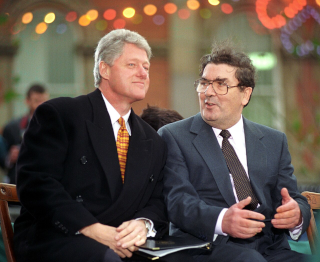
(Pictured: John Hume with U.S. President Bill Clinton in 1995)
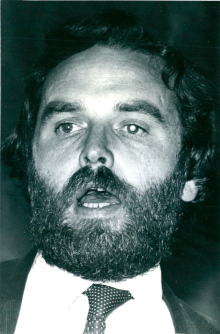
Hendron is the Member of Parliament (MP) for Belfast West between April 1992 and May 1997 in the UK Parliament in London. He takes the seat from Sinn Féin President Gerry Adams at his third attempt with a majority of one percent. He becomes the only nationalist MP to defeat Adams. The seat had previously been held for the SDLP by Gerry Fitt, later Lord Fitt, until 1983. He attracts unprecedented cross-community support from Nationalists and Unionists in the constituency. This is the only example where an SDLP candidate receives a high enough number of Unionist votes in Belfast West to help unseat a Sinn Féin candidate. Adams regains the seat at the 1997 United Kingdom general election.
Hendron is appointed a member of the Northern Ireland Parades Commission in 2005. He retires from this role in December 2010.
On June 11, 2019, Hendron escapes with just bruising and a damaged collarbone after he is struck by a van and thrown up into the air while crossing Balmoral Avenue. He says he is probably partly to blame for the accident as he decided to cross the street in front of a van that was trying to pull out onto the main road. Apparently, the driver of the van did not see Hendron and began to pull out, striking him.
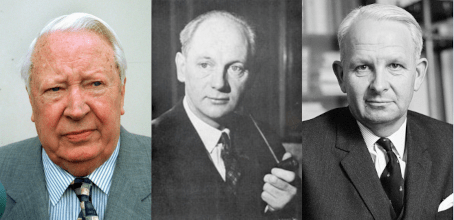
The meeting is held under conditions of tight secrecy. Each man has only one assistant with him and there is no briefing for the press afterward. No one expects a firm agreement on any issue of substance. The British appear to be satisfied with a promise to meet again and to keep the communication lines open.
The meeting, the first such tripartite conference since the partition of Ireland 50 years earlier, is itself a considerable accomplishment politically. Even six weeks earlier, it is considered an impossibility by most observers.
At that time, Faulkner is widely regarded as being under such heavy pressure from the right-wing of his Ulster Unionist Party (UUP) that he cannot talk with the Taoiseach. Lynch has been saying that he can meet with Faulkner only as the leader of the Unionist party, not as the Prime Minister of Northern Ireland. That is consistent with Dublin‘s view that the six counties of Ulster are part of the Republic of Ireland.
Heath also seems to have retreated from his previous position. In an angry exchange of telegrams in August, he suggests that the situation in Northern Ireland is a British affair and none of Lynch’s business. The exchange follows the decision to intern suspected members of the Irish Republican Army (IRA) in Ulster without trial. Faulkner, backed by the Heath government, begin arrests of suspects on August 9.
The interment policy arouses a bitter reaction among the Roman Catholics of Ulster, where they make up a third of the population. Lynch denounces the policy. The Catholic opposition members in the Ulster Parliament at Stormont say they will boycott all Government matters until the interned men are released.
What has softened the attitudes of the three leaders is the appalling extent of violence in Belfast and other towns in Northern Ireland since the internments began. In those seven weeks, 17 British soldiers, 36 civilians and one policeman are killed, most of them by IRA bullets and bombs.
The British Government and Faulkner offer broad changes in the constitutional setup of the Ulster regime. They talk about bringing Catholics — non‐Unionists — into the Government for the first time. But internment without trial remains an obstacle even to talking about those ideas with the main opposition group, the Social Democratic and Labor Party (SDLP). The SDLP refuses to join in a proposed conference on political reform while internment goes on.
Ideally, the British would like Lynch to use his influence with the opposition leaders. They want him to urge them to talk about political reform in return for some concession on internment, perhaps the release of some of those currently held. But any such concession might get Faulkner in trouble with his own party or arouse Protestant violence. That is always the trouble in Northern Ireland – any gesture toward one side antagonizes the other.
A new and serious problem for Heath is an apparent waning of the British public’s willingness to bear the military and social burden of Northern Ireland. A poll just before the meeting at Chequers shows that 59% want to bring all British troops home from Ulster at once.
Even Lynch, though he is pledged to the principle of a United Ireland, does not want the hasty withdrawal of British troops. That would almost certainly mean an enlargement of the present terror into civil war.
(From: 3 Prime Ministers Confer on Ulster, The New York Times, September 28, 1971)
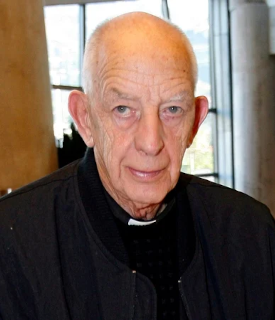
In the late 1980s, Reid facilitates a series of meetings between Gerry Adams and John Hume, in an effort to establish a “Pan-Nationalist front” to enable a move toward renouncing violence in favour of negotiation. Reid, himself a staunch nationalist who favours a united Ireland and the withdrawal of British forces from Northern Ireland, then acts as their contact person with the Irish Government in Dublin from a 1987 meeting with Charles Haughey up to the signing of the Good Friday Agreement in 1998. In this role, which is not public knowledge at the time, he holds meetings with various Taoisigh, and particularly with Martin Mansergh, advisor to various Fianna Fáil leaders. After the eventual success of the peace negotiations, Gerry Adams says, “there would not be a peace process at this time without [Father Reid’s] diligent doggedness and his refusal to give up.”
After he moves to Dublin, Reid is involved in peace efforts in the Basque Country. In January 2003, he is awarded the Sabino Arana 2002 “World Mirror” prize, by the Sabino Arana Foundation in Bilbao, in recognition of his efforts at promoting peace and reconciliation. He and a Methodist minister, the Rev. Harold Good, announce that the IRA has decommissioned their arms at a news conference in September 2005.
Reid is involved in controversy in November 2005 when he makes comments during a meeting in Fitzroy Presbyterian Church concerning the Unionist community in Northern Ireland. When the loyalist activist Willie Frazer makes remarks that Catholics had butchered Protestants during the Troubles, Reid angrily responds, “You don’t want to hear the truth. The reality is that the nationalist community in Northern Ireland were treated almost like animals by the unionist community. They were not treated like human beings. They were treated like the Nazis treated the Jews.” Reid later apologises, saying his remarks had been made in the heat of the moment. In an interview with CNN, he says that “The IRA were, if you like, a violent response to the suppression of human rights.”
Reid dies in a Dublin hospital on November 22, 2013. He is survived by two sisters and an aunt, and is buried in Milltown Cemetery, Belfast.
The BBC‘s Northern Ireland correspondent says the historic trip is intended as a gesture to reassure the province’s unionists, while at the same time trying not to alienate the nationalist population.
The Queen is invited to Armagh by the authorities to present the royal charter renewing Armagh’s status as a city.
In her speech, the Queen addresses all the people of Northern Ireland. She says, “For many difficult years the people of Northern Ireland have shown courage and compassion of an extraordinary kind. Today as they begin to look towards a more peaceful future, Armagh with its two great cathedrals standing so close together presents a powerful symbol of the strength spirit and hopes of people across Northern Ireland.”
Cardinal Cahal Daly says the Queen’s visit is a tribute to the progress made in the peace process since the IRA ceasefire came into effect on August 31, 1994.
Archbishop Robin Eames says, “Look how far we’ve come in a year. It’s a message of symbolism. Be patient, we’ve a long, long way to go but today is one little part of that jigsaw.”
Hendron says, “Things are different now. People must stand up and be counted. You can’t hide in your home. There are two communities here and I think it’s important to go out and shake hands with people like the Queen and from my point of view, she’s very welcome.”
As the hardline Ulster Unionists express reluctance to support the current stance of the Ulster Unionist Party (UUP) leadership, Trimble is bidding to win over crucial support for his campaign to be re-elected as First Minister.
Although the meeting of the UUP’s executive over the previous weekend endorses Trimble’s return to office in the Northern Ireland Assembly, the re-election bid can be thwarted by a failure to win grassroots support.
At least two Assembly Members express grave reservations about supporting Trimble’s re-election as First Minister, and anti-agreement factions within the UUP call a meeting of the party’s ruling council to be held within the next three weeks.
In order to be returned as First Minister, along with Deputy First Minister Social Democratic and Labour Party (SDLP) leader-in-waiting Mark Durkan, Trimble must establish a majority amongst both unionist and nationalist Assembly Members.
While it is anticipated that the elections of the First and Deputy First Ministers will be held later in the week, the Democratic Unionist Party (DUP) calls on its members to prepare for Assembly elections. The anti-Good Friday Agreement DUP anticipate a collapse of the power-sharing Assembly if the re-elections of top ministerial posts fail to return a quorum of support from the Members of the Legislative Assembly (MLA). The DUP says that meetings are to be held on October 29 to discuss the party’s strategy.




 seamus dubhghaill