seamus dubhghaill

Promoting Irish Culture and History from Little Rock, Arkansas, USA


Leave a comment

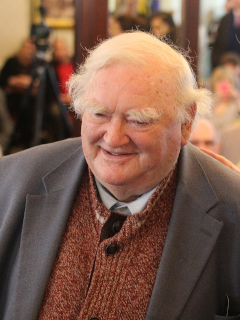
Birth of Tim Pat Coogan, Journalist, Writer & Broadcaster

Timothy Patrick “Tim Pat” Coogan, Irish journalist, writer and broadcaster, is born in Monkstown, County Dublin, on April 22, 1935. He serves as editor of The Irish Press newspaper from 1968 to 1987. He is best known for such books as The IRA (1970) and On the Blanket: The H Block Story (1980), and biographies of Michael Collins and Éamon de Valera.

Coogan’s particular focus is on Ireland’s nationalist/independence movement in the 20th century, a period of unprecedented political upheaval. He blames the Troubles in Northern Ireland on “Paisleyism.”

Coogan is the first of three children born to Beatrice (née Toal) and Eamonn Coogan, a native of Kilkenny who is an Irish Republican Army (IRA) volunteer during the Irish War of Independence and later serves as the first Deputy Commissioner of the newly established Garda Síochána, then a Fine Gael TD for the Kilkenny constituency. His mother, the daughter of a policeman, is a Dublin socialite who is crowned Dublin’s Civic Queen of Beauty in 1927. She writes for the Evening Herald and takes part in various productions in the Abbey Theatre and Radio Éireann. He spends many summer holidays in the town of Castlecomer, County Kilkenny, his father’s hometown.

A former student of the Irish Christian Brothers in Dún Laoghaire and Belvedere College in Dublin, Coogan spends most of his secondary studies at Blackrock College in Dublin.

In 2000, Irish writer and editor Ruth Dudley Edwards is awarded £25,000 damages and a public apology by the High Court in London against Coogan for factual errors in references to her in his book Wherever Green is Worn: The Story of the Irish Diaspora (2000). In the book, he writes that Dudley Edwards had “groveled to and hypocritically ingratiated herself with the English establishment to further her writing career.” He also alleges that Dudley Edwards “had abused the position of chairwoman of the British Association for Irish Studies (BAIS) by trying to impose her political views on it” and that her commission to write True Brits had been awarded because of political favouritism.

When Taoiseach Enda Kenny causes confusion following a speech at Béal na Bláth by incorrectly claiming Michael Collins had brought Lenin to Ireland, Coogan comments, “Those were the days when bishops were bishops and Lenin was a communist. How would that have gone down with the churchyard collections?”

In November 2012, for reasons that are uncertain, the United States embassy in Dublin refuses to grant Coogan a visa to visit the United States. As a result, a planned book tour for his book The Famine Plot, England’s role in Ireland’s Greatest Tragedy (2012) is cancelled. After representations to then Secretary of State Hillary Clinton by United States Senator Chuck Schumer (D-NY) and Congressman Peter T. King (R-NY), he receives his visa.

Coogan has been criticised by the Irish historians Liam Kennedy and Diarmaid Ferriter, as well as Cormac Ó Gráda, for a supposed lack of thoroughness in his research and bias:

“Well, I waited in this book to hear some great revelation, and it just isn’t there. It’s anticlimactic. I could not see the great plot, and indeed there is no serious historian who … I can’t think of a single historian who has researched the Famine in depth – and Tim Pat has not researched it in depth” (The Famine Plot).

“Coogan is not remotely interested in looking at what others have written on 20th-century Irish history…. he does not appear interested in context and shows scant regard for evidence. He does not attempt to offer any sustained analysis in relation to the challenges of state building, the meaning of sovereignty, economic and cultural transformations, or comparative perspectives on the evolution of Irish society. There is no indication whatsoever that Coogan has engaged with the abundant archival material relating to the subject matter he pronounces on. There is no rhyme or reason when it comes to the citation of the many quotations he uses; the vast majority are not referenced. For the 300-page text, 21 endnotes are cited and six of them relate to Coogan’s previous books, a reminder that much of this tome consists of recycled material…. Tim Pat Coogan… he is a decent, compassionate man who has made a significant contribution to Irish life. But he has not read up on Irish history; indeed, such is the paucity of his research efforts that this book amounts to a travesty of 20th-century Irish history” (1916: The Mornings After).

Leave a comment

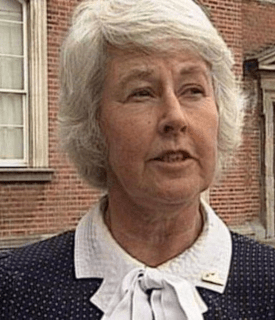
Death of Jennifer Guinness, 1986 Kidnapping Victim

Mary Jennifer Guinness, English-born Irish socialite, member of the Guinness family and victim of a notorious 1986 kidnapping that lasts eight days, passes away peacefully at home on January 23, 2016, after a long battle with cancer. She is surrounded by her family, son Ian and daughters Gillian and Tania and long-term partner Alex Booth.

Guinness is born in England on August 22, 1937. On April 9, 1959, she marries merchant banker John Henry Guinness, a member of the Guinness brewing dynasty and chairman of Guinness Mahon. She is predeceased by her husband, who dies two years after the kidnapping in 1988.

“She had been sick for a long time. We will remember her as a most loving mother,” her son Ian says.

Guinness had been an enthusiastic sailor and member of Howth Yacht Club. “It is with great sadness that the Commodore and Officers of Howth Yacht Club have to inform members of the passing of esteemed member Jennifer Guinness,” a posting on the club website says.

Guinness, at the age of 48, makes headlines around the world after she is abducted from her luxury home in Howth, Dublin on April 8, 1986, by three masked gunmen armed with an Uzi submachine gun. They pistol-whip her husband and demand a £2.m ransom from him.

She is held for eight days in five various locations and is forced into the boot of a car and a cardboard box during her ordeal. She is also chained to a tree and a bed and at one point, even handcuffed to one of her captors. She is eventually rescued by Garda Síochána from a house on Waterloo Road in Ballsbridge following an all-night standoff with the kidnappers.

It does not take long for her kidnappers to be brought to justice. The following June, John “The Colonel” Cunningham is sentenced to seventeen years in prison, alongside his brother Michael Cunningham, who gets fourteen years. The notorious brothers, who have strong links with the gang led by Martin “The General” Cahill, are behind a string of armed robberies in the 1970s.

Michael Cunningham, who is released from prison in 1995, dies of a heart attack in January 2016. His brother escapes from the Shelton Abbey Prison in 1995 but is tracked down in Holland in 2000 where he serves four years in prison on drug charges before being extradited to Ireland in 2004 to serve out the rest of his sentence. He is released in 2007 and moves to Spain.

After her kidnap ordeal, Guinness says that she never gave in to despair during her eight-day ordeal. “I had no doubt at all, most of the time, that my life was in danger,” she says during a news conference, “but I couldn’t afford to allow myself to lose hope.”

When asked what kept her going during her captivity, Guinness says, “A certain amount of anger, a lot of determination and just a conviction that they weren’t going to get to me.” She draws laughter from reporters when she says, “I kept saying, ‘You’ve got the wrong branch of the family. John’s a banker, but two million is not our style of life.'”

Investigating Gardai praise her courage. Superintendent Frank Hanlon says she was “a considerable asset toward the ending of this incident through her advice to all parties.”

(From: “Jennifer Guinness – victim of a notorious 1986 kidnapping that lasted eight days – has died” by Jerome Reilly, Irish Independent, http://www.independent.ie, January 23, 2016)


Leave a comment

Death of Katy French, Socialite, Model & TV Personality

Katy Ellen French, Irish socialite, model, writer, television personality and charity worker, dies on December 6, 2007, in Navan, County Meath, after collapsing at a friend’s house on December 2. According to the BBC, “in the space of less than two years, she had become one of Ireland’s best-known models and socialites.” Her cause of death is given as hypoxic ischemic brain injury caused by cocaine and ephedrine.

French is born on October 31, 1983, in Basel, Switzerland, to John and Janet French, from Australia and Britain respectively. At the age of two, she moves with her family to Ireland, briefly living in the Sandyford area before settling in Enniskerry, County Wicklow, and later to Stillorgan, County Dublin. She attends Alexandra College in Milltown, Dublin, from the age of seven. While still in school she works part-time as a hostess at the Dublin branch of the Planet Hollywood restaurant chain.

French studies psychology and marketing before working for the Assets Modelling Agency and later writing articles for several Dublin magazines and newspapers. She represents Sony Ericsson and Suzuki among many other brands, becoming more famous in 2007 as a result of her fiancé, restaurateur Marcus Sweeney, ending their relationship in a very public fashion after she is photographed for a lingerie shoot for the Sunday Independent in his restaurant in January of that year. As a result of this publicity, her image appears more regularly in daily Irish tabloid newspapers, and she makes numerous television appearances on shows such as RTÉ‘s The Podge and Rodge Show in April 2007 and Tubridy Tonight a week before her death.

French is known for deliberately courting controversy to promote her career. On Tubridy Tonight she speaks of her appearance on Celebrities Go Wild as well as her relationship break up with Sweeney. Mention is also made of her birthday party which she is to celebrate the following week, having missed her birthday due to Celebrities Go Wild. Host Ryan Tubridy is invited to the event. Footage is shown of the charity single “Down in the Bog” which is to be released as a Christmas single. She works for several Irish charities including Our Lady’s Children’s Hospital, Crumlin and GOAL in Calcutta, India. She writes a column for Social & Personal magazine.

In an interview with Hot Press‘s Jason O’Toole, French says that she would consider having an abortion if she became pregnant during the peak of her career, a controversial statement in Ireland where abortion is at that time effectively illegal, and that she loves fur despite being a “massive animal lover.” She also airs her religious beliefs, being a member of the Church of England as well as a practising Catholic and speaks highly of Islam and her Muslim friends saying, “When you read the Koran, you realise that Islam is a beautiful religion.” In the same interview she is asked if she has ever used cocaine and denies ever having done so. In November 2007, she tells an Irish tabloid that she has used cocaine but has stopped. A week before she dies, she celebrates her 24th birthday with celebrity and media friends.

French dies on the evening of December 6, 2007, in Our Lady’s Hospital, Navan, County Meath, having collapsed at a house in Kilmessan, County Meath, in the early hours of Sunday, December 2. There is widespread speculation in the media that her death is the result of a drug overdose. A postmortem finds she has suffered brain damage, and that traces of cocaine are found in her body. A senior Garda states, “We strongly suspect that drugs contributed to her death. This was a previously healthy person being brought to hospital in a collapsed state.” In 2010 two people are charged with supplying cocaine to French and in failing to get medical assistance in a timely fashion. She is buried in her hometown of Enniskerry, County Wicklow, on December 10. Taoiseach Bertie Ahern‘s aide de camp, Captain Michael Tracey, attends her funeral.

On November 13, 2012, two friends of French, Kieron Ducie and Ann Corcoran, plead guilty to possession of cocaine with intent to supply on the weekend of French’s death. Trim Circuit Court is told that a second charge against the pair is not being pursued, that they had intentionally or recklessly engaged in behaviour relating to the supply of cocaine to French and failed to get medical assistance in a timely fashion. In July 2013 the pair are sentenced to a 2-1⁄2 year suspended sentence and three-year good behaviour bond, and a two-year suspended sentence and two-year good behaviour bond respectively. At the verdict, French’s cause of death is given as hypoxic ischemic brain injury caused by cocaine and ephedrine.


Leave a comment

Birth of George Barrington, Pickpocket, Socialite & Pioneer

George Barrington, Irish-born pickpocket, popular London socialite, Australian pioneer, and author, is born in Maynooth, County Kildare on May 14, 1755. His father is either a working silversmith named Waldron, or a Captain Barrington, English troop commander.

Barrington’s escapades, arrests, and trials are widely chronicled in the London press of his day. For over a century following his death, and still perhaps today, he is most celebrated for the line “We left our country for our country’s good.” The attribution of the line to Barrington is considered apocryphal since the 1911 discovery by Sydney book collector Alfred Lee of the 1802 book in which the line first appears.

In 1771 Barrington robs his schoolmaster in Dublin and runs away from school, becoming a member of a touring theatrical company at Drogheda under the assumed name of Barrington. At the Limerick races he joins the manager of the company in picking pockets. The manager is detected and sentenced to penal transportation, and Barrington flees to London, where he assumes clerical dress and continues his pickpocketing. At Covent Garden theatre he robs the Russian Count Orlov of a snuff box, said to be worth £30,000. He is detected and arrested but, as Count Orlov declines to prosecute, is discharged, though subsequently he is sentenced to three years’ hard labour for pocket-picking at Theatre Royal, Drury Lane.

On his release, Barrington is again caught at his old practices and sentenced to five years’ hard labour, but influence secures his release on the condition that he leave England. He accordingly goes for a short time to Dublin and then returns to London, where he is once more detected pocket-picking, and, in 1790, sentenced to seven years’ penal transportation.

One account states that on the voyage out to Botany Bay a conspiracy is hatched by the convicts on board to seize the ship. Barrington discloses the plot to the captain, and the latter, on reaching New South Wales, reports him favourably to the authorities, with the result that Barrington obtains a warrant of emancipation in 1792, becoming subsequently superintendent of convicts and later high constable of Parramatta.

While enjoying the beginnings of his prosperity in Australia, Barrington romances and cohabits with a native woman, Yeariana, who soon leaves him to return to her family. He says that Yeariana possessed “a form that might serve as a perfect model for the most scrupulous statuary.”

Barrington dies on December 27, 1804, at the age of 49 in Parramatta, New South Wales.

At some point in the 1785–1787 period Barrington marries, and the couple has a child, but the names of the wife and child, and their eventual fates, are not known.


Leave a comment

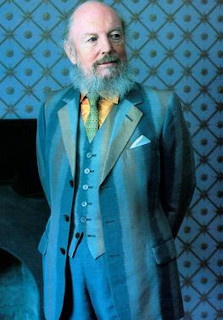
Birth of Garech Browne, Irish Arts & Music Patron

garech-domnagh-browne

Garech Domnagh Browne, art collector and notable patron of Irish arts and traditional Irish music, is born in Chapelizod, Dublin on June 25, 1939. He is often known by the Irish designation of his name, Garech de Brún, or alternatively Garech a Brún, especially in Ireland.

Browne is the eldest of the three sons of Dominick Browne, 4th Baron Oranmore and Browne and his second wife, Oonagh Guinness, daughter of Arthur Ernest Guinness and wealthy heiress to the Guinness fortune. His father has the rare distinction of sitting in the House of Lords for 72 years, until his death at the age of 100 in August 2002, without ever speaking in a debate.

As both his parents are married three times, Browne has two stepmothers and two stepfathers, as well as a number of older half-siblings. His only full brother, Tara Browne, is a young London socialite whose death at the age of 21 in a car crash in London’s West End helps inspire John Lennon when writing the song “A Day in the Life” with Paul McCartney. Browne is educated at Institut Le Rosey, Switzerland. Although a member of the extended Guinness family, he takes no active part in its brewing business.

When in Ireland, Browne lives at Luggala, set deep in the Wicklow Mountains in County Wicklow. The house, which he inherited from his mother, has been variously described as a castle or hunting lodge of large proportions. He once states he would rather have not been born, calling it “frightful to bring anyone into this world.”

Browne is a leading proponent for the revival and preservation of traditional Irish music through his record label Claddagh Records which he founds with others in 1959. His former home, Woodtown Manor near Dublin, is for many years a welcoming place for Irish poets, writers and musicians. The folk-pop group Clannad makes many recordings of their music there.

Browne is instrumental in the formation of the traditional Irish folk group The Chieftains. In 1962, after setting up Claddagh Records, he asks his friend, the famed uileann piper Paddy Moloney, to form a group for a one-off album. Moloney responds with the first line-up for the band, which goes on to achieve international commercial success.

Browne is interviewed at length for the Grace Notes traditional music programme on RTÉ lyric fm on 18 March 2010. He is a friend and patron of British artist Francis Bacon and in January 2017 is featured in the BBC documentary Francis Bacon: A Brush with Violence.

Garech Browne dies at the age of 78 in London on March 10, 2018. In his will and testament, he bequeaths to the city of Galway the granite remains of a medieval “bow gate.” The location of this gate, which had otherwise gone unmentioned by Browne, remains a mystery for over a year following his death. It is discovered on the grounds of the Luggala estate in 2019. According to a Galway historian, the gate may have formed part of the city’s defences in the 17th century, and was later removed from the city by Browne’s father, when it was probably taken to the Browne family home at Castle MacGarrett, just outside Claremorris in County Mayo. The gate is one of a number of items left to the Irish State by Browne.


Leave a comment

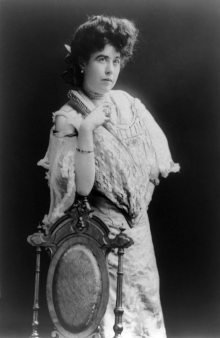
Death of Margaret Brown, “The Unsinkable Molly Brown”

margaret-brown

Margaret Brown (née Tobin), an American socialite and philanthropist posthumously known as “The Unsinkable Molly Brown”, dies in New York City on October 26, 1932. She is best remembered for unsuccessfully encouraging the crew in Lifeboat No. 6 to return to the debris field of the 1912 sinking of RMS Titanic to look for survivors. During her lifetime, her friends called her “Maggie”, but even by her death, obituaries refer to her as the “Unsinkable Mrs. Brown.” The reference is further reinforced by a 1960 Broadway musical based on her life and its 1964 film adaptation which are both entitled The Unsinkable Molly Brown.

Tobin is born in a hospital near the Mississippi River in Hannibal, Missouri, on what is now known as Denkler’s alley. Her parents are Irish Catholic immigrants. At age 18, she relocates to Leadville, Colorado, with her siblings Daniel Tobin, Mary Ann Collins Landrigan and Mary Ann’s husband John Landrigan. Margaret and her brother Daniel share a two-room log cabin and she finds a job in a department store.

In Leadville, she meets and marries James Joseph “J.J.” Brown (1854–1922), an enterprising, self-educated man, in Leadville’s Annunciation Church on September 1, 1886. They have two children.

The Brown family acquires great wealth when in 1893 J.J.’s mining engineering efforts prove instrumental in the production of a substantial ore seam at the Little Jonny Mine of his employers, Ibex Mining Company, and he is awarded 12,500 shares of stock and a seat on the board. In Leadville, Margaret helps by working in soup kitchens to assist miners’ families.

In 1894, the Browns purchase a $30,000 Victorian mansion in Denver and in 1897 they build a summer house, Avoca Lodge in Southwest Denver near Bear Creek, which gives the family more social opportunities. Margaret becomes a charter member of the Denver Woman’s Club, whose mission is the improvement of women’s lives by continuing education and philanthropy. After 23 years of marriage, Margaret and J.J. privately sign a separation agreement in 1909. Although they never reconcile, they continue to communicate and care for each other throughout their lives.

Brown spends the first months of 1912 traveling in Egypt as part of the John Jacob Astor IV party, until she receives word from Denver that her eldest grandchild, Lawrence Palmer Brown Jr., is seriously ill. She immediately books passage on the first available liner leaving for New York, the RMS Titanic. Originally her daughter Helen is supposed to accompany her, but she decides to stay on in Paris, where she is studying at the Sorbonne.

The RMS Titanic sinks in the early morning hours of April 15, 1912, after striking an iceberg. Brown helps others board the lifeboats but is finally persuaded to leave the ship in Lifeboat No. 6. Brown is later called “The Unsinkable Molly Brown” by authors because she helps in the ship’s evacuation, taking an oar herself in her lifeboat and urging that the lifeboat go back and save more people. After several attempts to urge Quartermaster Robert Hichens to turn back, she threatens to throw him overboard. Sources vary as to whether the boat goes back and if they find anyone alive. Brown’s efforts seal her place in history, regardless.

Upon being rescued by the RMS Carpathia, Brown proceeds to organize a survivors’ committee with other first-class survivors. The committee works to secure basic necessities for the second- and third-class survivors and even provides informal counseling.

Brown runs for the United States Senate in 1914 but ends her campaign to return to France to work with the American Committee for Devastated France during World War I.

During the last years of her life, Brown is an actress. She dies in her sleep on October 26, 1932, at the Barbizon Hotel in New York City, New York. Subsequent autopsy reveals a brain tumor. She is buried on October 31 alongside her husband in the Cemetery of the Holy Rood in Westbury, New York, following a small ceremony attended only by family members. There is no eulogy.