seamus dubhghaill

Promoting Irish Culture and History from Little Rock, Arkansas, USA


Leave a comment

Birth of Edward Dowden, Critic, Professor & Poet

Edward Dowden, Irish critic, professor and poet, is born in Cork, County Cork, on May 3, 1843.

Dowden is the son of John Wheeler Dowden, a merchant and landowner, and is born three years after his brother John, who becomes Bishop of Edinburgh in 1886. His literary tastes emerge early, in a series of essays written at the age of twelve. His home education continues at Queen’s College, Cork and at Trinity College, Dublin. He contributes to the literary magazine Kottabos.

Dowden has a distinguished career, becoming president of the University Philosophical Society, and wins the vice-chancellor’s prize for English verse and prose, and the first senior moderatorship in ethics and logic. In 1867 he is elected professor of oratory and English literature in Dublin University.

Dowden’s first book, Shakespeare: A Critical Study of His Mind and Art (1875), results from a revision of a course of lectures, and makes him widely known as a critic: translations appear in German and Russian; his Poems (1876) goes into a second edition. His Shakespeare Primer (1877) is translated into Italian and German. In 1878 the Royal Irish Academy awards him the Cunningham gold medal “for his literary writings, especially in the field of Shakespearian criticism.”

Later works by Dowden in this field include an edition of The Sonnets of William Shakespeare (1881), Passionate Pilgrim (1883), Introduction to Shakespeare (1893), Hamlet (1899), Romeo and Juliet (1900), Cymbeline (1903), and an article entitled “Shakespeare as a Man of Science” (in the National Review, July 1902), which criticizes T. E. Webb’s Mystery of William Shakespeare. His critical essays “Studies in Literature” (1878), “Transcripts and Studies” (1888), “New Studies in Literature” (1895) show a profound knowledge of the currents and tendencies of thought in various ages and countries; but his The Life of Percy Bysshe Shelley (1886) makes him best known to the public at large. In 1900 he edits an edition of Shelley‘s works.

Other books by Dowden which indicate his interests in literature include: Southey (1879), his edition of Southey’s Correspondence with Caroline Bowles (1881), and Select Poems of Southey (1895), his Correspondence of Sir Henry Taylor (1888), his edition of William Wordsworth‘s Poetical Works (1892) and of his Lyrical Ballads (1890), his French Revolution and English Literature (1897), History of French Literature (1897), Puritan and Anglican (1900), Robert Browning (1904) and Michel de Montaigne (1905). His devotion to Johann Wolfgang von Goethe leads to his succeeding Max Müller in 1888 as president of the English Goethe Society.

In 1889 Dowden gives the first annual Taylorian Lecture at the University of Oxford, and from 1892 to 1896 serves as Clark lecturer at Trinity College, Cambridge. To his research are due, among other matters of literary interest, the first account of Thomas Carlyle‘s Lectures on periods of European culture; the identification of Shelley as the author of a review (in The Critical Review of December 1814) of a romance by Thomas Jefferson Hogg; a description of Shelley’s Philosophical View of Reform; a manuscript diary of Fabre d’Églantine; and a record by Dr Wilhelm Weissenborn of Goethe’s last days and death. He also discovers a Narrative of a Prisoner of War under Napoleon (published in Blackwood’s Magazine), an unknown pamphlet by Bishop George Berkeley, some unpublished writings of William Hayley relating to William Cowper, and a unique copy of the Tales of Terror.

Dowden’s wide interests and scholarly methods make his influence on criticism both sound and stimulating, and his own ideals are well described in his essay on The Interpretation of Literature in his Transcripts and Studies. As commissioner of education in Ireland (1896–1901), trustee of the National Library of Ireland, secretary of the Irish Liberal Union and vice-president of the Irish Unionist Alliance, he enforces his view that literature should not be divorced from practical life. His biographical/critical concepts, particularly in connection with Shakespeare, are played with by Stephen Dedalus in the library chapter of James Joyce‘s Ulysses. Leslie Fiedler is to play with them again in The Stranger in Shakespeare.

Dowden marries twice, first to Mary Clerke in 1866, and secondly in 1895 to Elizabeth Dickinson West, daughter of the dean of St Patrick’s. His daughter by his first wife, Hester Dowden, is a well-known spiritualist medium.

Dowden dies in Dublin on April 4, 1913. His Letters are published in 1914 by Elizabeth and Hilda Dowden.

A Dublin City Council plaque commemorating Dowden is unveiled on November 29, 2016.


Leave a comment

Original “Ulysses” Manuscript Goes on Display in Dublin

CREATOR: gd-jpeg v1.0 (using IJG JPEG v80), quality = 82

The original manuscript of James Joyce‘s Ulysses arrives in its “spiritual home” for the first time on June 13, 2000 when it goes on display at the Chester Beatty Library on the grounds of Dublin Castle in Dublin, the city that inspired the novel.

Spidery sentences penned on yellowing paper and littered with scribbled alterations make up the first draft of what many scholars consider to be the most influential work of fiction of the 20th century. It is the centerpiece of a Joyce exhibition at the Chester Beatty library which runs through the end of September 2000.

Derick Dreher, director of the Rosenbach Museum and Library in Philadelphia, Pennsylvania, where the manuscript has been kept since 1924, says it marks the homecoming of a work which is “quintessentially Irish.” He adds, “People are amazed that it has never been here before. The novel captures the essence of Dublin and yet was composed entirely on foreign soil and then sold in America.”

Dreher says that Joyce’s handwriting is so bad it is hard to make out what is written on many of the pages. Joyce left Dublin with servant girl, Nora Barnacle, in 1904 and writes Ulysses in Trieste, Zürich and Paris between 1914 and 1921. Ultimately, he marries Barnacle in 1931.

The novel traces the wanderings of a young writer, Stephen Dedalus, and advertisement canvasser, Leopold Bloom, on June 16, 1904, the day on which Joyce first goes out with Barnacle. He sells the manuscript to New York City lawyer and art patron, John Quinn, for $12,000 before its publication in 1921.


Leave a comment

The Death of James Augustine Aloysius Joyce

james-joyce

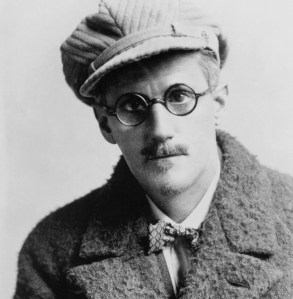
James Augustine Aloysius Joyce, considered to be one of the most influential writers in the modernist avant-garde of the early 20th century, dies in Zurich, Switzerland, following surgery for a perforated ulcer on January 13, 1941.

Joyce is born on February 2, 1882, in the wealthy Rathgar suburb of Dublin. The family is initially well off as Dublin merchants with bloodlines that connected them to old Irish nobility in the country. James’ father, John Stanislaus Joyce, is a fierce Irish Catholic patriot and his political and religious influences are most evident in Joyce’s two key works A Portrait of the Artist as a Young Man (1916) and Ulysses (1922).

The Joyce family is repeatedly forced to move to more modest residences due to their steadily diminishing wealth and income. John Joyce’s habitual unemployment as well as his drinking and spending habits make it difficult for the Joyces to retain their social standing. As a young man, Joyce is sent away to the renowned Clongowes Wood College in County Kildare in 1888, a Jesuit institution regarded as the best preparatory school in Ireland. The Clongowes school figures prominently in Joyce’s work, specifically in the story of his recurring character Stephen Dedalus. Joyce earns high marks both at the Clongowes School and at Belvedere College in Dublin where he continues his education. At this point in his life, it seems evident that Joyce is to enter the priesthood, a decision that would please his parents. However, as Joyce makes contact with various members of the Irish Literary Renaissance, his interest in the priesthood wanes. Joyce becomes increasingly critical of Ireland and its conservative elements, especially the Church.

Against his mother’s wishes, Joyce leaves Ireland in 1902 to pursue a medical education in Paris and does not return until the following year upon receiving news of his mother’s debilitation and imminent death. After burying his mother, Joyce continues to stay in Ireland, working as a schoolteacher at a boys’ school, another autobiographical detail that recurs in the story of Stephen Dedalus. After barely spending a year in Dublin, Joyce returns to the Continent, drifting in and out of medical school in Paris before taking up residence in Zurich. It is during this period that Joyce begins writing professionally.

In 1905, Joyce completes a collection of eight stories entitled Dubliners, although it is not actually printed until 1913. During these frustrating and impoverished years, Joyce heavily relies upon the emotional support of Nora Barnacle, his unmarried Irish lover, as well as the financial support of his younger brother, Stanislaus Joyce. Both Nora and Stanislaus remain as protective, supporting figures for the duration of Joyce’s life. During the eight years between Dubliners‘ completion and publication, Joyce and Barnacle have two children, a son named Giorgio, and a daughter named Lucia.

Joyce’s next major work, A Portrait of the Artist as a Young Man, appears in serialized form in 1914 and 1915. Joyce is “discovered” by Ezra Pound and the complete text is printed in New York City in 1916, and in London in 1917. It is with the assistance of Pound, a prominent literary figure of the time, that Joyce comes into contact with Harriet Shaw Weaver, who serves as both editor and patron while Joyce writes Ulysses.

When Ulysses is published in Paris in 1922, many immediately hail the work as genius. With his inventive narrative style and engagement with multiple philosophical themes, Joyce has established himself as a leading Modernist. The novel charts the passage of one day, June 16, 1904, as depicted in the life of an Irish Jew named Leopold Bloom, who plays the role of a Ulysses by wandering through the streets of Dublin. Despite the fact that Joyce is writing in self-imposed exile, living in Paris, Zurich, and Trieste while writing Ulysses, the novel is noted for the incredible amount of accuracy and detail regarding the physical and geographical features of Dublin.

Similar in theme to Joyce’s previous works, Ulysses examines the relationship between the modern man and his myth and history, focusing on contemporary questions of Irish political and cultural independence, the effects of organized religion on the soul, and the cultural and moral decay produced by economic development and heightened urbanization. While Joyce is writing it, there is serious doubt as to whether Ulysses will be completed. Midway through his writing, Joyce undergoes the first of eleven eye operations to salvage his ever-worsening eyesight. At one point, a disappointed Joyce casts the bulk of his manuscript into the fire, but Nora Barnacle immediately rescues it.

While Ulysses is hailed by some, the novel is banned in both the United Kingdom and the United States on obscenity charges. It is not until 1934 that Random House wins a court battle that grants permission to print and distribute Ulysses in the United States. The novel is legalized in Britain two years later.

By this time, Joyce is approaching the end of his public career and has concluded work on his final novel, Finnegan’s Wake (1939). Considered to be far more baffling and convoluted than Ulysses, Finnegan’s Wake is a critical failure. At the outbreak of World War II, Joyce remains in Paris until he is forced to move, first to Vichy, and then to Switzerland. On January 13, 1941, Joyce dies of a stomach ulcer at the age of 58 and is buried in Zurich’s Fluntern Cemetery.