seamus dubhghaill

Promoting Irish Culture and History from Little Rock, Arkansas, USA


Leave a comment

Birth of Thomas Fitzsimons, U.S. Merchant & Statesman

Thomas Fitzsimons, Irish-born American Founding Father, merchant, banker, and politician, is born in Ireland on October 11, 1741. His birthplace is variously given as Nobber, County Wicklow; Limerick, County Limerick; the north of Ireland; and Edenderry, County Offaly. He represents Pennsylvania in the Continental Congress, the Constitutional Convention and the United States House of Representatives.

In the mid-1750s, Fitzsimons’s family immigrates to Philadelphia, Pennsylvania, where his father dies soon thereafter. He has enough education that he begins work as a clerk in a mercantile house. He marries Catherine Meade on November 23, 1761, and forms a business partnership with her brother George. Their firm, which specializes in the West Indies trade, operates successfully for over 41 years.

The firm is soon hit by the new revenue measures created to help support the finances of the British Empire, including the much reviled Stamp Act of 1765. Concerned with these ideas, Fitzsimons becomes active in the Irish merchant community in Philadelphia. He is a founding member of the Friendly Sons of St. Patrick in 1771 and later, in 1774, a steering committee organized to protest the Coercive Acts.

When Pennsylvania begins mobilizing and organizing a militia to fight the British, Fitzsimons is soon involved. He serves as captain of a company of home guards under the command of Colonel John Caldwalader. Initially his company serves as part of the soldiers who man posts along the New Jersey coast. His unit later serves as part of the reserve at the Battle of Trenton in 1776. Later in the war, he serves on the Pennsylvania Council of Safety and heads a board to oversee the newly formed Pennsylvania Navy.

Fitzsimons enters active politics as a delegate to the Continental Congress in 1782 and 1783. He is a member of the Pennsylvania House of Representatives from 1786 until 1795. He is also a delegate to the U.S. Constitutional Convention in 1787. Although not a leading member of that convention, he supports a strong national government, the end of slavery, the United States Congress‘s powers to impose a tariff on imports and exports, the granting the House of Representatives, and power in equal to the United States Senate in making treaties. He is one of only two Catholic signers of the Constitution of the United States, the other being Daniel Carroll of Maryland.

After the Constitution is established, Fitzsimons serves in the first three sessions of the House of Representatives as a Federalist, where he favors protective tariffs and a strong navy, co-drafting the Naval Act of 1794 authorizing the original six frigates of the United States Navy. He fails to win re-election in 1794. This is partially attributed to public opinion turning against the Federalist Party over the forceful suppression of the Whiskey Rebellion. Although he never holds elective office again, he serves in 1798 as head of the committee of merchants overseeing the subscription-loan to build a warship at private expense for use in the Quasi-War.

In 1796, Fitzsimons, along with James Innes of Virginia, is appointed by President John Adams to serve as one of two American members on the five-man debt commission charged under Article VI of the Jay Treaty with examining the claims of British subjects unable to collect debts incurred by Americans prior to the American Revolution. Fitzsimons, Innes and Samuel Sitgreaves, who replaces Innes upon the latter’s death, become annoyed with the arguments used by their British counterparts to inflate the claims total. Fitzsimons and Sitgreaves angrily and permanently secede from the board in July 1799. The claims are eventually disposed of by a lump-sum payment, agreed upon by United States Minister to Britain Rufus King with British Foreign Secretary Robert Banks Jenkinson and approved by President Thomas Jefferson and the Senate in 1802.

While withdrawing from politics, Fitzsimons remains active in civic and business affairs. He serves as president of Philadelphia’s Chamber of Commerce, as a trustee of the University of Pennsylvania, Director of the Delaware Insurance Company and a director of the Bank of North America from 1781–1803. He is a founder of the bank and supports efforts to found Georgetown College. He also helps found the Insurance Company of North America.

Fitzsimons dies on August 26, 1811, in Philadelphia, where he is buried in the cemetery of St. Mary’s Roman Catholic Church, which is in present-day Independence National Historical Park.

Leave a comment

Birth of Tim Pat Coogan, Journalist, Writer & Broadcaster

Timothy Patrick “Tim Pat” Coogan, Irish journalist, writer and broadcaster, is born in Monkstown, County Dublin, on April 22, 1935. He serves as editor of The Irish Press newspaper from 1968 to 1987. He is best known for such books as The IRA (1970) and On the Blanket: The H Block Story (1980), and biographies of Michael Collins and Éamon de Valera.

Coogan’s particular focus is on Ireland’s nationalist/independence movement in the 20th century, a period of unprecedented political upheaval. He blames the Troubles in Northern Ireland on “Paisleyism.”

Coogan is the first of three children born to Beatrice (née Toal) and Eamonn Coogan, a native of Kilkenny who is an Irish Republican Army (IRA) volunteer during the Irish War of Independence and later serves as the first Deputy Commissioner of the newly established Garda Síochána, then a Fine Gael TD for the Kilkenny constituency. His mother, the daughter of a policeman, is a Dublin socialite who is crowned Dublin’s Civic Queen of Beauty in 1927. She writes for the Evening Herald and takes part in various productions in the Abbey Theatre and Radio Éireann. He spends many summer holidays in the town of Castlecomer, County Kilkenny, his father’s hometown.

A former student of the Irish Christian Brothers in Dún Laoghaire and Belvedere College in Dublin, Coogan spends most of his secondary studies at Blackrock College in Dublin.

In 2000, Irish writer and editor Ruth Dudley Edwards is awarded £25,000 damages and a public apology by the High Court in London against Coogan for factual errors in references to her in his book Wherever Green is Worn: The Story of the Irish Diaspora (2000). In the book, he writes that Dudley Edwards had “groveled to and hypocritically ingratiated herself with the English establishment to further her writing career.” He also alleges that Dudley Edwards “had abused the position of chairwoman of the British Association for Irish Studies (BAIS) by trying to impose her political views on it” and that her commission to write True Brits had been awarded because of political favouritism.

When Taoiseach Enda Kenny causes confusion following a speech at Béal na Bláth by incorrectly claiming Michael Collins had brought Lenin to Ireland, Coogan comments, “Those were the days when bishops were bishops and Lenin was a communist. How would that have gone down with the churchyard collections?”

In November 2012, for reasons that are uncertain, the United States embassy in Dublin refuses to grant Coogan a visa to visit the United States. As a result, a planned book tour for his book The Famine Plot, England’s role in Ireland’s Greatest Tragedy (2012) is cancelled. After representations to then Secretary of State Hillary Clinton by United States Senator Chuck Schumer (D-NY) and Congressman Peter T. King (R-NY), he receives his visa.

Coogan has been criticised by the Irish historians Liam Kennedy and Diarmaid Ferriter, as well as Cormac Ó Gráda, for a supposed lack of thoroughness in his research and bias:

“Well, I waited in this book to hear some great revelation, and it just isn’t there. It’s anticlimactic. I could not see the great plot, and indeed there is no serious historian who … I can’t think of a single historian who has researched the Famine in depth – and Tim Pat has not researched it in depth” (The Famine Plot).

“Coogan is not remotely interested in looking at what others have written on 20th-century Irish history…. he does not appear interested in context and shows scant regard for evidence. He does not attempt to offer any sustained analysis in relation to the challenges of state building, the meaning of sovereignty, economic and cultural transformations, or comparative perspectives on the evolution of Irish society. There is no indication whatsoever that Coogan has engaged with the abundant archival material relating to the subject matter he pronounces on. There is no rhyme or reason when it comes to the citation of the many quotations he uses; the vast majority are not referenced. For the 300-page text, 21 endnotes are cited and six of them relate to Coogan’s previous books, a reminder that much of this tome consists of recycled material…. Tim Pat Coogan… he is a decent, compassionate man who has made a significant contribution to Irish life. But he has not read up on Irish history; indeed, such is the paucity of his research efforts that this book amounts to a travesty of 20th-century Irish history” (1916: The Mornings After).


2 Comments

Birth of Patrick Guiney, American Civil War Soldier

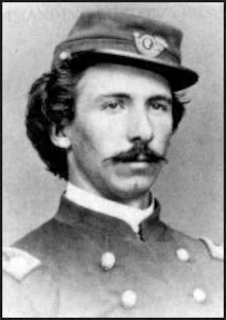
Patrick Robert Guiney, American Civil War soldier, is born in Parkstown, County Tipperary, on January 15, 1835.

Guiney is the second and eldest surviving son of James Roger Guiney, who is descended from Jacobites, and Judith Macrae. His father, impoverished after a failed runaway marriage, brings with him on his second voyage to New Brunswick his favourite child Patrick, not yet six years old. After some years, his mother and younger brother, William, rejoin her husband, recently crippled by a fall from his horse. They settle in Portland, Maine. The young Guiney works as a wheel boy in a rope factory, and at the age of fourteen apprenticed to a machinist in Lawrence, Massachusetts, but stays only a year and a half before returning to Portland.

Guiney hopes to better himself through education and attends the public grammar school. He matriculates at the College of the Holy Cross in Worcester, Massachusetts. His depleting finances cause him to leave after about a year, despite the fact that the college president offers to make some arrangement for him to stay, which his honor would not allow him to accept. His book-loving father having meanwhile died, he goes to study for the Bar under Judge Walton, and is admitted in Lewiston, Maine, in 1856, taking up the practice of criminal law.

In politics he is a Republican. For the Massachusetts Society for the Prevention of Cruelty to Animals, he wins its first suit. In 1859 he marries in the Cathedral of the Holy Cross, Boston, Janet Margaret Doyle, related to James Warren Doyle, Bishop of Kildare and Leighlin. They have one son, who dies in infancy, and one daughter, the poet and essayist Louise Imogen Guiney. Home life in Roxbury and professional success are cut short by the outbreak of the American Civil War.

Familiar with the manual of arms, Guiney enlists for example’s sake as a private, refusing a commission from Governor John A. Andrew until he has worked hard to help recruit the 9th Massachusetts Infantry Regiment. By June 1861, he is a captain. In July 1862, the first colonel having died from a wound received in action, Lieutenant Colonel Guiney succeeds him to the command. He wins high official praise, notably for courage and presence of mind at the Battle of Gaines’ Mill in Hanover County, Virginia. Here, after three successive color-bearers had been shot down, he himself reportedly seizes the flag, throws aside coat and sword-belt, rises white-shirted and conspicuous in the stirrups, inspires a final rally, and turns the fortune of the day.

Guiney fights in over thirty engagements, including the Battle of Antietam, the Battle of Fredericksburg, and the Battle of Chancellorsville.

The 9th Massachusetts is present at Gettysburg, Pennsylvania, in second brigade first division V Corps on July 1, 1863. Col Jacob B. Sweitzer the brigade commander, detaches Guiney’s regiment for picket duty. Consequently, the regiment misses the second day’s fighting at the Battle of Gettysburg.

In 1864, through the Battle of the Wilderness, Guiney frequently has been in command of his brigade, the second brigade, first division, V Corps. After many escapes from dangerous combats without serious injury, he is shot in the face by a sharpshooter at the Battle of the Wilderness on May 5, 1864. The Minié ball destroys his left eye, and inflicts, it is believed, a fatal wound. During an interval of consciousness, however, he insists on an operation which saves his life. He is honorably discharged and mustered out of the U.S. Volunteers on June 21, 1864, just before the mustering out of his old regiment.

On February 21, 1866, President Andrew Johnson nominates Guiney for the award of the honorary grade of brevet brigadier general, to rank from March 13, 1865, for gallant and meritorious services during the war. The U.S. Senate confirms the award on April 10, 1866.

Kept alive for years by nursing, Guiney runs unsuccessfully for the United States Congress on a sort of “Christian Socialist” platform, is elected assistant district attorney (1866–70), and acts as consulting lawyer (no longer being able to plead) on many locally celebrated cases.

Guiney’s last exertions are devoted to the defeat of the corruption and misuse of the Probate Court of Suffolk County, Massachusetts, of which he had become registrar (1869–77). He dies suddenly on March 21, 1877, in Boston and is found kneeling against an elm in the little park near his home. General Guiney is Commandant of the Loyal Legion, Major-General Commandant of the Veteran Military League, member of the Charitable Irish Society of Boston, and one of the founders and first members of the Catholic Union of Boston. He also publishes some literary criticism, a few graphic prose sketches and some verse.


Leave a comment

Birth of Sean P. Keating, IRA Volunteer & New York Politician

Sean P. Keating, an Irish Republican Army (IRA) volunteer who opposes the Anglo-Irish Treaty and later becomes Deputy Mayor of New York City and Regional Director of the United States Postal Service, is born in Kanturk, County Cork, on July 14, 1903.

Raised in Kanturk, Keating is a volunteer in the Irish Republican Army during the Irish War of Independence and fights for the Anti-Treaty Forces against the Irish Free State during the Irish Civil War. He moves to the United States, where he advocates for Irish nationalist causes and for British withdrawal from Northern Ireland. He is involved in Democratic Party politics and a close associate of Irish American political activist Paul O’Dwyer and his brother, New York City Mayor William O’Dwyer. He is involved in the campaigns of President John F. Kennedy and Senator Robert F. Kennedy.

Keating is the youngest of six surviving children of Michael Keating, baker, and his wife Johanna, a native of County Kerry. He was educated at a local school and was an active member of the Gaelic Athletic Association (GAA), playing football and hurling. After the 1916 Easter Rising, he leaves school at the age of thirteen to join the Irish Volunteers, which later becomes the IRA, serving in the 4th Cork Brigade. He is arrested by British troops in November 1920 and badly beaten. He spends a month in the Cork jail and is then interned for a year in Ballykinlar internment camp until December 1921. While interned he participates in several hunger strikes and makes several escape attempts. Following his release, he opposes the Anglo-Irish Treaty and serves in the Fianna Cork 4th Brigade on the Republican side under Seán Moylan during the Irish Civil War.

Keating emigrates to New York City in 1927 and becomes involved in Irish cultural organizations and Democratic party politics. He is a founder of American Friends of Irish Neutrality, which opposes Irish involvement in World War II, ostensibly fearing it will result in British re-occupation of Ireland.

Following World War II, Keating is chairman of the executive council of the 1947 Irish Race Convention and president of the American League for an Undivided Ireland, lobbying in support of the Fogarty Amendment, which unsuccessfully attempts to tie the release of Marshall Plan funds to British withdrawal from Northern Ireland.

Between the 1940s and 1960s, Keating serves as president of the County Corkmen Association, president of the United Irish Counties Association, and president of the Irish Institute. In 1956, he serves as Grand Marshal of the New York City St. Patrick’s Day Parade.

Keating serves in various positions under New York City mayors William O’Dwyer, Vincent R. Impellitteri, and Robert F. Wagner, Jr., rising to the position of Deputy Mayor, under Wagner. He is reportedly the first to publicly introduce future President Kennedy as “the next President of the United States” at an Irish Institute event in 1957. He is appointed Regional Director of the United States Postal Service by President Kennedy and serves in that position from 1961 until his retirement in 1966.

Following President Kennedy’s assassination, Keating serves as National Chairman of the President Kennedy Memorial Committee, which secures the lands and raises the funds for the John F. Kennedy Arboretum in New Ross, County Wexford.

In retirement, Keating returns to Kanturk and continues to advocate for the reunification of Ireland. Keating dies at his home in Kanturk on July 2, 1976, and is buried in a local cemetery with military honors. He represents an emigrant political and social milieu which is often treated dismissively by later, more cosmopolitan Irish commentators, but his career reflects not only his own considerable talents but the ways in which this milieu sustains a generation of immigrants, and the contribution of Irish America to Irish development in the post-war decades.


Leave a comment

Birth of William Randall Roberts, Fenian & U.S. Representative

William Randall Roberts, Fenian Brotherhood member, United States Representative from New York (1871–1875), and a United States Ambassador to Chile, is born on February 6, 1830, in Mitchelstown, County Cork.

Roberts is the son of Randall Roberts, a baker, and Mary Roberts (née Bishop). He is educated locally and in July 1849 leaves with his family for the United States. For several years he works as a clerk for a dry goods company in New York City. In 1857, he sets up his own dry goods business, the Crystal Palace, which becomes successful. He retires in 1869 as a very wealthy man.

Having joined the American Fenian Brotherhood in 1863, Roberts gives it strong financial support for the remainder of the decade. He also supports several Irish American charitable organisations, including the Knights of St. Patrick, of which he is president. In October 1865, he is responsible for a change in the constitution of the Fenian Brotherhood, which results in a split in the movement. The majority of the Brotherhood supports his proposal to elect a “senate” to govern the organisation, with himself as president, in place of the autocratic leader, John O’Mahony. After the suppression of the Irish People and the arrest of the Irish Republican Brotherhood (IRB) leaders in Dublin in September 1865, he believes that it to be foolish to send American Fenian troops to Ireland.

Seeking to capitalise on the bad relations that develop between the United States and Britain during the American Civil War, Roberts hopes that a Fenian Brotherhood invasion Canada might provoke a war between Britain and the United States and thereby make a successful insurrection in Ireland more possible. Once the invasion takes place (May 31 – June 3, 1866), however, the American government seizes the Fenians’ supplies and reinforcements, thereby prompting him to abandon the attack. He is arrested in New York on June 7 and detained in prison but escapes prosecution and is released on June 15. Three days later, with the support of Irish American politicians, he is allowed to deliver an address to the United States Senate appealing for support for the cause of the amnesty of IRB prisoners in Ireland. Thereafter he goes on a lecture tour and argues that American politicians cannot hope to receive Irish American electoral support if they do not support the Fenian cause. In response to demands from Irish American politicians, in September 1866, President Andrew Johnson orders that the arms seized by the United States army be returned to the Fenian Brotherhood.

After the failure of the March 1867 rising in Ireland, Roberts sends men to Ireland to assume command of the IRB on his behalf. A significant number of IRB men follow his lead, and in June 1867 a convention is held in Paris over which he presides. At this he proposes the establishment of a Supreme Council to govern the IRB, a proposal that is soon accepted. He seeks to be appointed president of the new Supreme Council, but the IRB refuses owing to his being such a divisive figure within American Fenianism. In dismay he resigns as president of the Senate wing of the Fenian Brotherhood on December 31, 1867, and becomes less active in the revolutionary movement. In 1870, he opposes the attempt of Fenians to invade Canada once more, and in January 1871 organises a welcoming committee in New York for five recently released IRB leaders who had been banished from Ireland.

By that time, however, Roberts is more concerned with American politics. During 1870, he is elected to Congress as a Democratic Party candidate for New York, a seat he holds until 1874 when, due to financial difficulties, he decides not to run for reelection. As a congressman, he criticises the Republican government for its policy towards the former Confederate states, opposes the increasing power of railroad companies, demands greater protection for American citizens living in foreign countries (including the Fenians imprisoned in Canada), and supports civil rights for black people. He also attracts much praise for his strong criticism of British foreign policy.

After leaving Congress, Roberts becomes a member of the Tammany Society and attains prominence in New York municipal politics, being elected president of the New York City Board of Aldermen in 1878. The following year, he runs for the position of sheriff of New York but is defeated. Thereafter, he leaves the Tammany Society and establishes a rival organisation, the New York County Democracy. In 1882, he supports Grover Cleveland for the governorship of New York and in 1884 as the Democratic candidate for the United States presidency. He is rewarded on April 2, 1885, when President Cleveland appoints him Envoy Extraordinary and Minister Plenipotentiary to Chile.

Roberts’s term of office is cut short, however, when he suffers a paralytic stroke in May 1888. He is sent back to New York and to hospital, where he remains for nine years. He never regains his mental or physical health and dies on August 9, 1897. His funeral takes place on hospital grounds with few people in attendance. He had been separated from his wife, of whom nothing is known, except that they had at least one son, prior to being admitted to hospital. He is buried at Calvary Cemetery, Queens, New York City.

(From: “Roberts, William Randall” by Owen McGee, Dictionary of Irish Biography, http://www.dib.ie, October 2009)


Leave a comment

Birth of Daniel F. Cohalan, Irish American Lawyer & Politician

Daniel Florence Cohalan, American lawyer and politician of Irish descent, is born December 21, 1867, in Middletown, Orange County, New York, the eldest of five sons of Timothy E. Cohalan and Ellen Cohalan (née O’Leary), both Irish immigrants.

Cohalan graduates from Manhattan College in 1885, takes a master’s degree in 1894, and is given an honorary LL.D. in 1911. He is admitted to the bar in 1888, and practices law in New York City. In September 1889, he removes to the Bronx, practices law there, and enters politics, joining Tammany Hall, becoming an adviser to party boss Charles F. Murphy and later to John F. Curry. He is Grand Sachem of the Tammany Society from 1908 to 1911.

Cohalan is active in Democratic Party politics by 1900, drafting state party platforms and serving as a delegate to the national conventions in 1904 and 1908.

On May 18, 1911, Cohalan is appointed by Gov. John Alden Dix to the New York Supreme Court, to fill the vacancy caused by the election of James Aloysius O’Gorman as U.S. Senator from New York. In November 1911, he is elected to succeed himself. On December 28, 1923, he tenders his resignation, to become effective on January 12, 1924, claiming that the annual salary of $17,500 is not enough to provide for his large family.

Cohalan is a close associate of Irish revolutionary leader John Devoy and is influential in many Irish American societies including Clan na Gael. He helps to form the Sinn Féin League in 1907 and is a key organiser of the Irish Race Convention and the Friends of Irish Freedom (FOIF) on March 4-5, 1916. He is involved with the financing and planning of the Easter Rising in Dublin and is instrumental in sending Roger Casement to Germany in 1914. He is Chairman of the Irish Race Convention held in Philadelphia on February 22-23, 1919, and active in the Friends of Irish Freedom (1916–34).

When the United States enters World War I, Cohalan’s earlier work to obtain German assistance for Ireland becomes a liability, but he urges Irish Americans to support the war effort and to insist that self-determination for Ireland be included among the war aims. He opposes the peace treaty and the League of Nations and leads an Irish American delegation to the United States Senate Committee on Foreign Relations hearings, contributing to the defeat of the treaty in the Senate.

Cohalan strongly opposes President Woodrow Wilson‘s proposals for the League of Nations, on the basis that the Irish Republic had been denied a policy of self-determination at the Paris Peace Conference in 1919. In 1920, he works for the nomination of Hiram W. Johnson as the Republican Party candidate for president. His quarrels with Franklin D. Roosevelt begin in 1910, and he fights Roosevelt’s nomination for president in 1932 and 1936. He breaks with both Éamon de Valera and Irish American leader Joseph McGarrity in late 1919 on Irish American political direction.

In the aftermath of the Anglo–Irish Treaty, Cohalan and the FOIF back Arthur Griffith, Michael Collins and the Irish Free State. He visits Ireland in 1923 and supports William T. Cosgrave in the election of that year.

Cohalan dies at his home in Manhattan, New York, on November 12, 1946, and is buried on November 15 at the Calvary Cemetery in Woodside, Queens, New York. The Daniel F. Cohalan papers are in the possession of the American Irish Historical Society, New York.

State Senator John P. Cohalan (1873–1950) is one of Cohalan’s eleven siblings, and church historian Monsignor Florence Daniel Cohalan (1908–2001) is one of his nine children.


Leave a comment

Brig. Gen. Thomas Smyth Mortally Wounded in the American Civil War

Thomas Alfred Smyth, a brigadier general in the Union Army during the American Civil War, is mortally wounded in a battle near Farmville, Virginia, on April 7, 1865. He dies two days later. He is the last Union general killed in the war.

Smyth is born on December 25, 1832, in Ballyhooly, Cork County, and works on his father’s farm as a youth. He emigrates to the United States in 1854, settling in Philadelphia, Pennsylvania. He participates in William Walker‘s expedition to Nicaragua. He is employed as a wood carver and coach and carriage maker. In 1858, he moves to Wilmington, Delaware.

Smyth is a Freemason. He is raised on March 6, 1865, in Washington Lodge No. 1 in Wilmington, Delaware.

Smyth enlists in 1861 in the Union Army in an Irish American three-months regiment, the 24th Pennsylvania, and quickly makes the rank of captain. He is later commissioned as major of the 1st Delaware Infantry, a three-years regiment. He serves at the battles of Fredericksburg (following which he is promoted to lieutenant colonel and then to colonel) and Chancellorsville. During the Gettysburg campaign, he commands the 2nd Brigade, 3rd Division of the II Corps. During the Battle of Gettysburg, his men help defend Cemetery Ridge and advance to the area of the Bliss farm to oust enemy sharpshooters. He is wounded on the third day of the battle and relinquishes command briefly.

Smyth retains brigade command during the reorganization of II Corps before General Ulysses S. Grant‘s Overland Campaign. He leads the second brigade of the first division from March 25 to May 17, 1864. When Col. Samuel S. Carroll is wounded, Smyth is transferred to his command, the third brigade of second division, the Gibraltar Brigade. In October 1864, he is promoted to brigadier general during the Siege of Petersburg. He retains command of his brigade throughout the siege.

Between July 31, 1864, and August 22, 1864, and between December 23, 1864, and February 25, 1865, Smyth commands the 2nd division of the corps. On April 7, 1865, near Farmville, Virginia, he is shot through the mouth by a Confederate sniper, with the bullet shattering his cervical vertebrae and paralyzing him. He dies two days later at Burke’s Tavern; the same day Confederate General Robert E. Lee and his army surrender at Appomattox Court House.

On March 18, 1867, President of the United States Andrew Johnson nominates Smyth for posthumous appointment to the grade of brevet major general of volunteers to rank from April 7, 1865, the date he was mortally wounded, and the United States Senate confirms the appointment on March 26, 1867. Smyth is the last Union general killed or mortally wounded during the war and is buried in Wilmington and Brandywine Cemetery in Wilmington, Delaware.


Leave a comment

Sinn Féin Joins Northern Ireland Peace Process

Sinn Féin, the political wing of the Irish Republican Army (IRA), joins the Northern Ireland peace process on September 9, 1997 that aims to determine the future of Northern Ireland, after renouncing violence as a political tool.

The move paves the way for Sinn Féin’s first face-to-face talks with British Cabinet ministers since 1921, when the country was partitioned. Sinn Féin leader Gerry Adams, chief negotiator Martin McGuinness and party secretary Lucilita Bhreatnach agree behind closed doors at Stormont Castle in east Belfast to abide by the guiding principles underlying the Northern Ireland all-party talks.

These principles were set up in January 1996 by former United States Senator George J. Mitchell, former Canadian Chief of the Defence Staff Gen. John de Chastelain and former Prime Minister of Finland Harri Holkeri. They are generally referred to as the “Mitchell Principles,” and require negotiators to affirm their commitment to the tenets listed below:

  • Democratic and peaceful means of resolving political issues. Total disarmament of all paramilitary organizations. The disarmament must be verifiable to the satisfaction of an independent commission.
  • Renounce for themselves and oppose any effort by others to use force or threaten to use force to influence the course or outcome of all-party negotiations.
  • Abide by the terms of any agreement reached in all-party negotiations and to resort to democratic and exclusively peaceful methods in trying to alter any aspect of that outcome with which they may disagree.
  • Urge that “punishment” killings and beatings stop, and take effective steps to prevent such actions.

Sinn Féin pledges to honor the Mitchell Principles exactly 51 days after the IRA stopped its decades-old violent campaign against British rule of Northern Ireland. “This is a watershed. There is an expectation and understanding out there of the importance of this moment,” Adams says.

Paul Murphy, minister for political development in the province, says the Sinn Féin pledge marks a new phase in the peace process. “The significance I am sure is that we are now entering a new era … in the sense that the gun is going out of politics in Northern Ireland and that here Sinn Féin is ascribing to those principles of nonviolence, of democratic government.”

“I believe people outside these buildings, outside Stormont, are of the view that enough is enough, and that change must come,” Murphy adds. “But that change must be change which encompasses everybody’s aspirations and which will last for generations.”

The pledge to honor the Mitchell Principles means that the ten parties involved can proceed with round-table talks on the future of Northern Ireland on Monday, September 15, as planned.

However, two mainstream Protestant parties that favor continued British rule of Northern Ireland, the Democratic Unionist Party (DUP) and the UK Unionist Party (UKUP), plan to boycott the talks. In addition, the powerful Ulster Unionist Party (UUP), is expected to decide on Saturday, September 13, whether to attend the crucial new round of negotiations.

In a statement, the Ulster Unionists call Sinn Féin’s commitment “a charade.” “The subscription of Sinn Féin to the Mitchell Principles will completely lack credibility. Actions matter much more than words,” the statement says.

The London and Dublin governments agree that sovereignty in Northern Ireland can only be changed through the ballot box. While Protestants generally are determined to remain British, most Catholics favor making Northern Ireland part of Ireland.

(From: “Sinn Fein gains access to Northern Ireland talks” on CNN.com, http://www.cnn.com, September 9, 1997)


Leave a comment

Death of James A. Mulligan, Union Army Colonel

James Adelbert Mulligan, a colonel of the 23rd Illinois Infantry Regiment in the Union Army during the American Civil War, dies on July 26, 1864, of wounds sustains at the Second Battle of Kernstown three days earlier.

Mulligan is born on June 30, 1830, in Utica, New York. His parents had immigrated from Ireland and his father died when he was a child. His mother remarries a Michael Lantry of Chicago, Illinois, and moves there with her son, who later attends the St. Mary’s on the Lake College of North Chicago. From 1852–54 he reads law in the offices of Isaac N. Arnold, U.S. Representative from the city. He is admitted to the bar in 1856 and commissioned a second lieutenant in the “Chicago Shield Guards.”

At the onset of the American Civil War, Mulligan raises the 23rd Illinois Infantry Regiment in 1861, which is locally known as the “Irish Brigade” (not to be confused with a New York unit by the same name). This unit includes the Chicago Shield Guards. In September 1861, he leads his troops toward Lexington, Missouri, as word had been received that this vital river town will be attacked by the pro-Confederate Missouri State Guard under Major General Sterling Price.

The First Battle of Lexington, often referred to as the Battle of the Hemp Bales, commences on September 13, 1861, when 12,500 soldiers of the Missouri State Guard begin a siege of Mulligan’s diminutive command, entrenched around the town’s old Masonic College. On September 18, Price’s army mounts an all-out assault on Mulligan’s works, which fails. Cannon fire continues through September 19. On the 20th, units of Price’s army use hemp bales soaked in the Missouri River as a moving breastwork to work their way up the river bluffs toward Mulligan’s headquarters. By 2:00 PM, Mulligan has surrendered. Combined casualties are 64 dead, and 192 wounded. Price is reportedly so impressed by Mulligan’s demeanor and conduct during and after the battle that he offers him his own horse and buggy and orders him safely escorted to Union lines.

Mulligan is commander of Camp Douglas, a prisoner of war camp in Chicago, from February 25, 1862, to June 14, 1862. The camp had been constructed as a short-term training camp for Union soldiers but is converted to a prisoner of war camp for captured Confederate soldiers after the fall of Fort Donelson.

Mulligan and his regiment are assigned to the Railroad Division of the Middle Department between December 17, 1862, and March 27, 1863. Then they are assigned to 5th Brigade, 1st Division, VIII Corps in the Middle Department between March 27, 1863, and June 26, 1863.

Between August and December 1863, Mulligan oversees the construction of Fort Mulligan, an earthworks fortification located in Grant County, West Virginia. This fort remains one of the best-preserved Civil War fortifications in West Virginia and has become a local tourist attraction.

On July 3, 1864, only three weeks before his death, Mulligan distinguishes himself in the Battle of Leetown, fought in and around Leetown, Virginia. Federal troops are retreating in the face of Major General Jubal Early‘s relentless Confederate advance down the Shenandoah Valley during the Second Valley Campaign. Hoping to buy time to concentrate Union forces and supplies, Major General Franz Sigel orders him to hold Leetown for as long as possible and then conduct a fighting retreat as slowly as possible to cover the other withdrawing Union units. He manages to hold Leetown for the entire day before being compelled to retreat, albeit very slowly. He continues to battle Early’s troops all the way from Leetown to Martinsburg, West Virginia, buying valuable time for Union commanders to concentrate their forces in the Valley.

On July 24, 1864, Mulligan leads his troops into the Second Battle of Kernstown, near Winchester, Virginia. Late in the afternoon, Major General John B. Gordon’s Confederate force attacks Mulligan’s 1,800 soldiers from ground beyond Opequon Church. Mulligan briefly holds off Gordon’s units, but Confederate Major General John C. Breckinridge leads a devastating flank attack against the Irishmen from the east side of the Valley Pike. Sharpshooters then attack his right flank from the west. Now encompassed on three sides, the Union battle line falls apart.

With Confederates closing from all around, Mulligan orders his troops to withdraw. As he stands up in his saddle to spur his men on, Confederate sharpshooters concealed in a nearby stream bed manage to hit the Union commander. His soldiers endeavor to carry him to safety, but the unyielding Confederate fire make this an impossible task. He is well aware of his situation, and the danger his men are in, and so he famously orders, “Lay me down and save the flag.” His men reluctantly comply. Confederate soldiers capture him and carry the mortally wounded colonel into a nearby home, where he dies two days later on July 26, 1864. He is buried in Calvary Cemetery, Evanston, Illinois.

On February 20, 1865, the United States Senate confirms the posthumous appointment of Mulligan to the rank of brevet brigadier general of U.S. Volunteers to rank from July 23, 1864, the day before he is mortally wounded at the Second Battle of Kernstown.


Leave a comment

Death of Ulysses S. Grant, 18th President of the United States

Ulysses S. Grant, American military leader who serves as the 18th president of the United States (1869 to 1877), dies on July 23, 1883, after a long and painful battle with throat cancer.

Grant is born Hiram Ulysses Grant in Point Pleasant, Ohio, on April 27, 1822, to Jesse Root Grant, a tanner and merchant, and Hannah Simpson Grant. His mother descends from Presbyterian immigrants from Ballygawley, County Tyrone.

Raised in Ohio, Grant possesses an exceptional ability with horses, which serves him well through his military career. He is admitted to West Point, graduates 21st in the class of 1843 and serves with distinction in the Mexican–American War. In 1848, he marries Julia Dent, and together they have four children. He abruptly resigns his army commission in 1854 and returns to his family but lives in poverty for seven years.

Grant joins the Union Army after the American Civil War breaks out in 1861 and rises to prominence after winning several early Union victories on the Western Theater. In 1863 he leads the Vicksburg campaign, which gains control of the Mississippi River. President Abraham Lincoln promotes him to lieutenant general after his victory at Chattanooga. For thirteen months, he fights Robert E. Lee during the high-casualty Overland Campaign and at Petersburg. On April 9, 1865, Lee surrenders to Grant at Appomattox. A week later, Lincoln is assassinated and is succeeded by Andrew Johnson, who promotes him to General of the Army in 1866. Later he openly breaks with Johnson over Reconstruction policies as he used the Reconstruction Acts, which had been passed over Johnson’s veto, to enforce civil rights for recently freed African Americans.

A war hero, drawn in by his sense of duty, Grant is unanimously nominated by the Republican Party and is elected president in 1868. As president, Grant stabilizes the post-war national economy, supports ratification of the Fifteenth Amendment, and crushes the Ku Klux Klan. He appoints African Americans and Jewish Americans to prominent federal offices. In 1871, to help reduce federal patronage, he creates the first Civil Service Commission. The Liberal Republicans and Democrats unite behind his opponent in the 1872 presidential election, but he is handily re-elected. His Native American policy is to assimilate Indians into the White culture. The Great Sioux War of 1876 is fought during his term. In his foreign policy, the Alabama claims against Great Britain are peacefully resolved, but his prized Caribbean Dominican Republic annexation is rejected by the United States Senate.

Grant’s responses to corruption charges, in his federal departments rife with scandal, are mixed, often naïvely defending the culprits, particularly his war-time comrade Orville E. Babcock. But he also appoints cabinet reformers, such as John Brooks Henderson, for the prosecution of the Whiskey Ring. The Panic of 1873 plunges the nation into a severe economic depression that allows the Democrats to win the House majority. In the intensely disputed 1876 presidential election, he facilitates the approval by Congress of a peaceful compromise.

In his retirement, Grant is the first president to circumnavigate the world on his tour, meeting with Queen Victoria and many prominent foreign leaders. In 1880, he is unsuccessful in obtaining the Republican presidential nomination for a third term. In the final year of his life, facing severe financial reversals and dying of throat cancer, he writes his memoirs, which prove to be a major critical and financial success.

After a year-long struggle with throat cancer, surrounded by his family, Grant dies at 8:08 AM at his Mount McGregor cottage on July 23, 1885, at the age of 63. Philip Sheridan, then Commanding General of the Army, orders a day-long tribute to Grant on all military posts, and President Grover Cleveland orders a thirty-day nationwide period of mourning. After private services, the honor guard places Grant’s body on a special funeral train, which travels to West Point and New York City. A quarter of a million people view it in the two days before the funeral. Tens of thousands of men, many of them veterans from the Grand Army of the Republic (GAR), march with Grant’s casket drawn by two dozen black stallions to Riverside Park in the Morningside Heights neighborhood of Upper Manhattan. His pallbearers include Union generals William Tecumseh Sherman and Philip Sheridan, Confederate generals Simon Bolivar Buckner and Joseph E. Johnston, Admiral David Dixon Porter, and Senator John A. Logan, the head of the GAR. Following the casket in the seven-mile-long procession are President Cleveland, the two living former presidents Rutherford B. Hayes and Chester A. Arthur, all of the President’s Cabinet, as well as the justices of the Supreme Court.

Attendance at the New York funeral tops 1.5 million. Ceremonies are held in other major cities around the country, while Grant is eulogized in the press and likened to George Washington and Abraham Lincoln. His body is laid to rest in a temporary tomb in Riverside Park. Twelve years later, on April 17, 1897, he is reinterred in the General Grant National Memorial, also known as “Grant’s Tomb,” the largest mausoleum in North America.