seamus dubhghaill

Promoting Irish Culture and History from Little Rock, Arkansas, USA


5 Comments

Birth of Fenian John O’Leary

john-o-leary

John O’Leary, Irish republican and a leading Fenian, is born on July 23, 1830, in Tipperary, County Tipperary. He is imprisoned in England during the nineteenth century for his involvement in the Irish Republican Brotherhood.

O’Leary, born a Catholic, is educated at the local Protestant grammar school, The Abbey School, and later the Catholic Carlow College. He identifies with the views advocated by Thomas Davis and meets James Stephens in 1846.

He begins his studies in law at Trinity College, Dublin, in 1847, where, through the Grattan Club, he associates with Charles Gavan Duffy, James Fintan Lalor and Thomas Francis Meagher.

After the failure of the Young Ireland Rebellion of 1848, O’Leary attempts to rescue the Young Ireland leaders from Clonmel Gaol, and is himself imprisoned for a week from September 8, 1849. He takes part in a further attempted uprising in Cashel on September 16, 1849, but this proves abortive.

O’Leary abandons his study of law at Trinity College because he is unwilling to take the oath of allegiance required of a barrister. He enrolls at Queen’s College, Cork in 1850, to study medicine, later moving to Queen’s College, Galway, then on to further studies at Meath Hospital in Dublin, in Paris and in London. In 1855, he visits Paris, where he becomes acquainted with Kevin Izod O’Doherty, John Martin and the American painter, James Abbott McNeill Whistler. He subsequently becomes financial manager of the newly formed Irish Republican Brotherhood (IRB) and is joint editor of the IRB paper The Irish People.

On September 16, 1865, O’Leary is arrested and later tried on charges of high treason, eventually reduced to “treason felony.” He is sentenced to twenty years of penal servitude, of which five years are spent in English prisons, prior to his release and exile in January 1871. During his exile, he lives mainly in Paris, also visiting the United States, remains active in the IRB and its associated organisations, and writes many letters to newspapers and journals.

On the expiration of his 20-year prison term and therefore of the conditions associated with his release in 1885, O’Leary returns to Ireland. He and his sister, the poet Ellen O’Leary, both become important figures within Dublin cultural and nationalist circles, which include William Butler Yeats, Maud Gonne, Rose Kavanagh, Rosa Mulholland, George Sigerson, and Katharine Tynan. He also functions as an elder statesman of the separatist movement, being active in the Young Ireland Society, and acts as president of the Irish Transvaal Committee, which supports the Boer side in the Second Boer War.

John O’Leary dies at his residence in Dublin on the evening of March 16, 1907. He is referred to famously by W.B. Yeats in his poem September 1913: “Romantic Ireland’s dead and gone/It’s with O’Leary in the grave.”

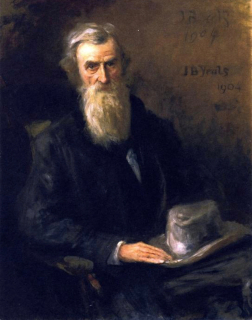
(Pictured: Painting of John O’Leary, a favorite subject of John Butler Yeats (1904). The National Gallery of Ireland owns three oil portraits of O’Leary.)

Leave a comment

Muhammad Ali Fights Al Lewis in Dublin

muhammad-ali-and-al-lewis

Muhammad Ali fights Al “Blue” Lewis in Dublin on July 19, 1972, and defeats him via a technical knockout (TKO) in the eleventh round.

After losing to Joe Frazier in March 1971, Ali goes on something of a world tour, fighting 13 times in six countries before defeating Frazier in a rematch in January 1974.

The promotion is the brainchild of a character from County Kerry named Butty Sugrue, known throughout Ireland as a circus strongman, whose alleged claim to fame is pulling double-decker buses by a rope in his teeth. Dublin journalists laugh at him when he first announces his intentions.

But despite the scepticism, the fight is arranged for July 19, 1972. As soon as he steps off the plane at Dublin Airport, Ali, ever the showman, immediately captures the heart of a nation by announcing that he has Irish roots. In the 1860s, Abe Grady left his native Ennis in County Clare and emigrated to the United States. In Kentucky, he met and married an emancipated slave. A century later Abe Grady’s great grandson Muhammad Ali touches down in Dublin.

In the week leading up to the fight Ali meets people from all walks of life in Dublin. He spends time with celebrities, including actor Peter O’Toole, and playfully spars with director John Huston, whose boxing movie, Fat City, is screened with both Ali and Lewis in attendance.

Ali also meets politicians, including Taoiseach Jack Lynch in Leinster House and political activist Bernadette Devlin. The Cork Examiner comments on how popular Ali has proven with politicians in Ireland. “Not since the late President John F. Kennedy was in Dublin in 1963 has a visitor from abroad been given as big a welcome at Leinster House as that accorded to Muhammad Ali.”

Ali is always about so much more than boxing, and that week in Dublin is another case in point, as the fight itself is not a classic. He has a cold and is wary of Lewis, who is a dangerous fighter and a man who had previously served time in prison for manslaughter. Ali who, prior to the bout predicts that his opponent’s chances of victory lay somewhere between “slim and none,” eventually wins with a TKO in the eleventh round.

In 2009, Ali returns to Ireland to visit Ennis in County Clare, the hometown of his ancestor Abe Grady, where he is granted the freedom of the town. The huge crowds who come out to meet him are testament to his enduring appeal. But the magic of Muhammad Ali leaves an indelible impact on Ireland after his 1972 visit as the late Budd Schulberg, a legendary boxing writer, said, “Ali was like the Pied Piper. It was really kind of magical. He had enormous influence over there. He was a fellow Irishman.”

(From: “When Ali thrilled Ireland: How ‘the Greatest’ shook up Dublin” by Peter Crutchley, BBC NI Digital & Learning, June 6, 2016)


Leave a comment

Birth of Chartist Leader Feargus O’Connor

feargus-edward-o-connor

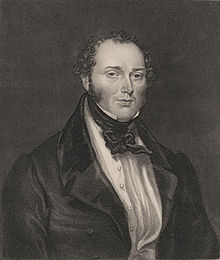
Feargus Edward O’Connor, advocate of the Land Plan and prominent Chartist leader who succeeds in making Chartism the first specifically working-class national movement in Great Britain, is born near Castletown-Kinneigh, County Cork on July 18, 1796.

O’Connor is born into a prominent Irish Protestant family who claims to be the descendants of the 12th-century king Ruaidrí Ua Conchobair. He is educated mainly at Portarlington Grammar School and has some elementary schooling in England.

O’Connor practices law but exchanges law for politics when he enters the British Parliament in 1832 as a member for County Cork. Unseated in 1835, he turns to radical agitation in England, although he continues to press Irish grievances and to seek Irish support. As a result of his humour, invective, and energy, he becomes the best-known Chartist leader and the movement’s most popular speaker. His journal, the Northern Star (founded in 1837), gains a wide circulation.

O’Connor’s methods and views alienate other Chartist leaders, particularly William Lovett, but in 1841, after spending a year in prison for seditious libel, he acquires undisputed leadership of the Chartists. Failing to lead the movement to victory and vacillating in his attitude toward the middle class and toward the People’s Charter, a six-point bill drafted and published in May 1838, he begins to lose power, although he is elected to Parliament for Nottingham in 1847. The failure of the People’s Charter in 1848 marks the beginning of the end for O’Connor, whose egocentricity is already bordering on madness.

The circulation of the Northern Star falls steadily, and it loses money. O’Connor’s health is failing, and reports of his mental breakdown regularly appear in the newspapers. In the spring of 1852, he visits the United States, where his behaviour leaves no doubt that he is not a well man.

In 1852 in the House of Commons O’Connor strikes three fellow MPs, one of them Sir Benjamin Hall, a vocal critic of the Land Plan. Arrested by the Deputy Sergeant-at-Arms, he is sent by his sister to Dr. Thomas Harrington Tuke‘s private Manor House Asylum in Chiswick, where he remains until 1854, when he is moved to his sister’s house. He dies on August 30, 1855, at 18 Albert Terrace, Notting Hill Gate and is buried on September 10 in Kensal Green Cemetery. No fewer than 40,000 people witness the funeral procession. Most Chartists preferred to remember O’Connor’s strengths rather than his shortcomings.


Leave a comment

Birth of Alfred Harmsworth, Newspaper Publisher

alfred-harmsworth

Alfred Charles William Harmsworth, Viscount Northcliffe, one of the most successful newspaper publishers in the history of the British press and a founder of popular modern journalism, is born on July 15, 1865 in Chapelizod, near Dublin.

After an impoverished childhood and a few attempts at making a quick fortune, young Harmsworth embarks on freelance journalism as a contributor to popular papers, rises to editorial positions, and starts a paper called Answers to Correspondents. After some difficulty in securing financial backing, he begins publication, soon shortening the name to Answers. As the paper gains public favour, he is joined by his brother Harold, whose financial ability and capacity for attracting advertising, combined with Alfred’s genius for sensing the public taste, make it a success. Answers is followed by many other inexpensive popular periodicals, chief among them Comic Cuts and Forget-Me-Not, for the new reading public of women. These form the basis for what becomes Amalgamated Press, the largest periodical-publishing empire in the world.

In 1894 Harmsworth enters the newspaper field, purchasing the nearly bankrupt London Evening News and transforming it into a popular newspaper with brief news reports, a daily story, and a column for women. Within a year circulation grows to 160,000 copies, and profits are substantial. Conceiving the idea of a chain of halfpenny morning papers in the provinces, he purchases two papers in Glasgow, Scotland, and merges them into the Glasgow Daily Record. He then decides to experiment with a popular national daily in London. The Daily Mail, first published on May 4, 1896, is a sensational success. Announced as “the penny newspaper for one halfpenny” and “the busy man’s daily journal,” it is exactly suited to the new reading public. All news stories and feature articles are kept short, and articles of interest to women, political and social gossip, and a serial story are made regular features. With its first issue, the Daily Mail establishes a world record in daily newspaper circulation, a lead it never loses during Harmsworth’s lifetime.

Next Harmsworth purchases the Weekly Dispatch when it is nearly bankrupt and transforms it into the Sunday Dispatch, the biggest-selling Sunday newspaper in the country. In 1903 he founds the Daily Mirror, which successfully exploits a new market as a picture paper, with a circulation rivaling that of the Daily Mail. He saves The Observer from extinction in 1905, the year in which he is made Baron Northcliffe. In 1908 he reaches the pinnacle of his career by securing control of The Times, which he transforms from a 19th-century relic into a modern newspaper.

Northcliffe’s contributions to the British effort in World War I begin with his early exposure in the Daily Mail of the British army’s shell shortage. His criticisms of Lord Kitchener arouse intense resentment in some quarters, but he also presses for the creation of a separate Ministry of Munitions and for the formation in 1915 of a wartime coalition government. For his service as head of the British war mission in the United States in 1917, he is created a viscount. He acts as the British government’s director of propaganda aimed at Germany and other enemy countries in 1918. By this time Northcliffe’s press empire appears to hold such power over public opinion that he tries unsuccessfully to influence the composition of Prime Minister David Lloyd George’s cabinet. Always unpredictable, he becomes the victim of a megalomania that damages his judgment and leads to the breakdown that precedes his death.

Harmsworth’s health declines during 1921 due mainly to a streptococcal infection. He goes on a world tour to revive himself, but it fails to do so. He dies of endocarditis in a hut on the roof of his London house on August 14, 1922, leaving three months’ pay to each of his six thousand employees. The viscountcy, barony, and baronetcy of Northcliffe become extinct upon his death. His body is buried at East Finchley Cemetery in North London.

Northcliffe’s success as a publisher rests on his instinctive understanding of the new reading public that had been created by compulsory education. Though he wants political power, the effect of his newspapers upon public affairs is generally considered to have been smaller than he believed. His influence lay rather in changing the direction of much of the press away from its traditional informative and interpretative role to that of the commercial exploiter and entertainer of mass publics.


Leave a comment

Birth of Hugh O’Brien, 31st Mayor of Boston

hugh-obrien

Hugh O’Brien, the mayor of Boston from 1884-1888, is born in Ireland on July 13, 1827. He is notable as Boston’s first Irish-born mayor, immigrating to the United States in the early 1830s. He is the editor of the Shipping and Commercial List and serves as a Boston alderman from 1875-1883.

O’Brien moves with his family to Boston when he is five years old, well before the potato famine sends waves of impoverished Irish men and women to Boston. He spends seven years in the Boston public schools and is apprenticed to a printer at the age of 12.

Working first for the newspaper Boston Courier and then for a Boston printer, O’Brien excels at the printing business, making foreman when he is only fifteen. He starts his own publication, Shipping and Commercial List, and is soon successful enough to become a respected member of the Boston business elite.

O’Brien’s business success draws the attention of Patrick Maguire, publisher of The Republic newspaper and the unofficial head of Irish politics in Boston. He orchestrates O’Brien’s election to the city’s Board of Alderman.

Boston has long been controlled by native-born Protestants, generally called “Yankees,” most of whom have a stereotypical view of Irish immigrants as poor, ignorant, undisciplined, and under the thumb of the Catholic Church. But the Irish-born population of Boston is exploding, making up over 40% of the city’s population by 1885.

By 1883, Maguire decides that the time has come for Boston to elect an Irish-born mayor. He devises a two-part strategy. O’Brien will be the public face of the campaign, an able public official who criticizes the previous administration for increasing taxes. O’Brien’s pledge to reduce the tax rate without cutting city services appeals to the Yankee tradition of frugality. Meanwhile, behind the scenes, Maguire develops a system of Irish ward bosses who visit each household in the neighborhood and make sure that every eligible Irishman votes for O’Brien. O’Brien sweeps 15 of Boston’s 25 wards and, on December 10, 1884, becomes the first Irish Catholic to be elected Mayor of Boston. He is sworn in on January 5, 1885.

O’Brien surprises the opposition by governing the city in a conservative and honest way during his four terms in office. He cuts tax rates as promised. He also widens streets, establishes the commission that hires Frederick Law Olmsted to design the Emerald Necklace park system, and builds the new Boston Public Library in Copley Square. He disarms his critics by enlisting Yankee and Republican businessmen to serve on the committees overseeing these projects.

Hugh O’Brien dies on August 1, 1895, and is buried at Holyhood Cemetery in Brookline, Massachusetts.


Leave a comment

The Debut of “The Late Late Show”

Created with GIMP

The Late Late Show, the Irish talk show, airs on RTÉ One for the first time on July 6, 1962. It is the world’s second longest-running late-night talk show, following The Tonight Show in the United States. Perceived as the official flagship television programme of Ireland’s public service broadcaster Raidió Teilifís Éireann (RTÉ), it is regarded as an Irish television institution and is broadcast live across two hours plus in front of a studio audience on Friday nights between September and May.

Having maintained the same name and format continuously, The Late Late Show is first broadcast on Friday, July 6, 1962 and in colour from 1976. Originating as temporary summer filler for a niche Saturday night audience, it later moves to its current home on Friday night schedules. The format has remained largely the same throughout — dialogue, sketch comedy, musical performances, discourse on topical issues. It has influenced attitudes of the populace towards approval or disapproval of its chosen topics, directed social change and helped shape Irish societal norms. It averages 650,000 viewers per episode and has consistently achieved RTÉ’s highest ratings.

For much of its early life, RTÉ Television Centre‘s Studio 1 in Donnybrook, Dublin is its home. This original studio accommodates a small audience of about 120. In 1995, The Late Late Show transfers to the more spacious Studio 4, adapted specifically to cater for this and Kenny Live. Three external broadcasts have aired, most recently from the Wexford Opera House on September 5, 2008.

Original host Gay Byrne presents the show until May 21, 1999. Pat Kenny is Byrne’s successor hosting the show for 10 years between 1999 and 2009. Ryan Tubridy is the current presenter, having succeeded Kenny in September 2009. Under Tubridy, first QUINN Group and then Sky Broadband add sponsorship deals. Tubridy’s arrival coincides with a marked increase in audience ratings with some early statistics comparing him to the Byrne era. On February 1, 2013, Pat Kenny returns to host that night’s edition following the death of Tubridy’s father.


Leave a comment

Death of Máire Ni Scolai, Singer & Actress

maire-ni-scolai

Máire Ni Scolai, Irish language singer and actress, dies on June 29, 1985.

Ní Scolaí is born in May 24, 1909 in Dublin. She is the daughter of Michael Scully, a commercial traveler and Mary Scully (née Kavanagh). She attends the Central Model Schools, were she learns Irish through the pilot Irish language courses. She studies Irish further at Ring College, County Waterford. She moves to Galway with her sister Mona as a young adult, and begins teaching Irish singing and dancing. With the Irish language theatre, An Taibhdhearc, she plays a number of leading roles. In Micheál Mac Liammóir‘s 1928 production of Diarmaid agus Gráinne, she plays Gráinne.

Ní Scolaí’s interpretation of traditional Irish songs gains her fame, and she sings many times on 2RN as well as radio in France, Italy, the United States and the United Kingdom. She trains as a mezzo-soprano and licentiate of the Trinity College of Music, London, and is noted as one of the few people who combines classical music with sean-nós singing successfully. She wins awards at feiseanna such as Feis Chonnacht and Feis Shligigh, later becoming a judge. She is also an award winner at Aonach Tailteann, as well at the Welsh Eisteddfod, the Scottish mòd, the Manx Tynwald, and the Breton Bretagne celebrations. She performs at London’s Covent Garden and Queen’s Hall. She travels around Gaeltacht areas in Ireland to collect and save songs that might have otherwise been lost. The traditional singers she collects from included Cáit Uí Chonláin in Spiddal and Labhras “Binn” Ó Cadhla. HMV records and releases her performances of Seacht ndolas na Maighduine Mhuire, Caoineadh na dtrí Muire, and Eibhlín a Rún.

On September 9, 1931 she marries Liam Ó Buachalla at University Church, St. Stephen’s Green, Dublin. She dies on June 29, 1985, and is buried in Galway.

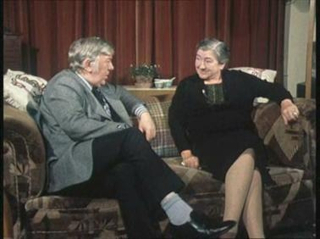
(Pictured: Ciarán Mac Mathúna and Máire Ní Scolaí (1976))


Leave a comment

Birth of RUC Chief Constable Hugh Annesley

hugh-annesley

Sir Hugh Norman Annesley, retired Royal Ulster Constabulary (RUC) Chief Constable, is born in Dublin on June 22, 1939. He serves as Chief Constable of the RUC from June 1989 to November 1996.

Annesley is educated at St. Andrew’s Preparatory School and the Avoca School for Boys in Blackrock. He joins the Metropolitan Police in London as a constable in 1958. Rising through the ranks to chief superintendent in 1974, he attends the Special Course (1963), Intermediate Command Course (1971) and Senior Command Course (1975) at the Police Staff College, Bramshill, before transferring to Sussex Police as Assistant Chief Constable (Personnel & Operations) in 1976.

Annesley attends the Royal College of Defence Studies in 1980 and the following year returns to the Metropolitan Police as Deputy Assistant Commissioner (Central & North West London). In 1983 he becomes Deputy Assistant Commissioner (Personnel) and in 1984 is director of the Force Re-organisation Team.

In April 1985, under the new organisational structure, Annesley is appointed Assistant Commissioner Personnel and Training (ACPT) and in 1987 becomes Assistant Commissioner Specialist Operations (ACSO). In 1986 he graduates from the FBI National Executive Institute in the United States. In 1989 he takes up command of the RUC, despite the post being widely expected to go to Geoffrey Dear. He holds the post until his retirement in 1996.

Annesley is awarded the Queen’s Police Medal (QPM) in the 1986 New Year Honours and is knighted in the 1992 New Year Honours.


Leave a comment

Birth of Boomtown Rats Guitarist Garry Roberts

garry-roberts

Garrick “Garry” Roberts, founding member and former lead guitarist of The Boomtown Rats, is born in Dublin on June 17, 1950.

Roberts’s father, Rex Roberts, played double bass with a dance band called The Melodists in the 1940s. The headmaster at The High School, Dublin, calls his father in one day to suggest that he consider move his son to a boarding school as he is spending a lot of time in detention.

After being bribed with the promise of a bicycle, Roberts is moved to a Quaker-run boarding school, Newtown School, Waterford. The move proves successful but not for the anticipated reasons. He quickly takes notice of the electric guitars of the school band and realizes that is to be his future.

In 1976, Roberts and Johnnie Fingers (Moylett) decide to put a band together and, between them, they recruit the other four members, Pete Briquette (bass), Gerry Cott (guitar), Simon Crowe (drums) and singer Bob Geldof to form The Boomtown Rats.

Following the breakup of The Boomtown Rats in 1986, Roberts works with Simply Red, Orchestral Manoeuvres in the Dark and Flesh For Lulu in the role of audio engineer on tours in the UK and the United States. He avoids playing the guitar in public for ten years, after which he and Simon Crowe play together for four years in the rhythm and blues four-piece band The Velcro Flies.

After fifteen successful years as an Independent Financial Adviser, Roberts becomes disillusioned with the life insurance industry and becomes a central heating engineer to keep himself occupied between gigs. Roberts and Crowe, with Darren Beale on second lead guitar, and Peter Barton on bass guitar and lead vocals, are now playing together as Boomtown Rats Roberts and Crowe, and are performing material from the Boomtown Rats’ first three albums across Europe and the UK.

Garry Roberts currently lives in Bromyard, Herefordshire, England.


Leave a comment

Death of Rory Gallagher, Irish Blues & Rock Guitarist

rory-gallagher

William Rory Gallagher, Irish blues and rock multi-instrumentalist, songwriter, and bandleader, dies at the age of 47, in London on June 14, 1995 of complications following a liver transplant.

Gallagher is born in Ballyshannon, County Donegal, on March 2, 1948. Both he and his brother Dónal are musically inclined and encouraged by their parents. At age nine, Gallagher receives his first guitar from them. After winning a talent contest when he is twelve, he begins performing with both his acoustic guitar and an electric guitar that he purchases with his prize money. It is, however, his purchase three years later of a 1961 Fender Stratocaster for £100 that becomes his primary instrument and most associated with him for the span of his lifetime.

Gallagher is initially attracted to skiffle after hearing Lonnie Donegan on the radio. While still in school, playing songs by Buddy Holly and Eddie Cochran, he discovers his greatest influence in Muddy Waters. He begins experimenting with folk, blues, and rock music.

While still a young teenager, Gallagher begins playing after school with Irish showbands. In 1963, he joins one named Fontana, a sextet playing the popular hit songs of the day. The band tours Ireland and the United Kingdom, earning enough money for Gallagher to make the payments on his Stratocaster guitar. Gallagher begins to influence the band’s repertoire and successfully moulds Fontana into The Impact, changing the line-up into a rhythm and blues group. The band plays gigs in Ireland and Spain until it disbands in London, with Gallagher and the bassist and drummer continuing to perform as a trio in Hamburg, Germany.

In 1966, Gallagher returns to Ireland and forms Taste, a blues rock and R&B power trio. Initially, the band is composed of Gallagher and Cork musicians Norman Damery and Eric Kitteringham. However, by 1968, Damery and Kitteringham are replaced by Belfast musicians John Wilson on drums and Richard McCracken on bass. Performing extensively in the UK, the group supports both Cream at their Royal Albert Hall farewell concert and the blues supergroup Blind Faith on a tour of North America.

After the break-up of Taste in 1970, Gallagher tours under his own name. He hires former Deep Joy bass player Gerry McAvoy to play on his self-titled debut album, Rory Gallagher. This is the beginning of a twenty-year musical relationship between Gallagher and McAvoy. The 1970s are Gallagher’s most prolific period, producing ten albums in the decade. In 1971 he is voted Melody Maker‘s International Top Guitarist of the Year, ahead of Eric Clapton. However, despite a number of his albums reaching the UK Albums Chart, Gallagher does not attain major star status. Though he sells over thirty million albums worldwide, it is his marathon live performances that win him the greatest acclaim.

In the 1980s Gallagher continues recording and embarks on a tour of the United States. In addition, he plays with Box of Frogs, a band formed in 1983 by former members of The Yardbirds.

In the later years of his life, Gallagher develops a phobia of flying. To overcome this he receives a prescription for a powerful sedative. This medication, combined with his alcohol use, results in severe liver damage. Despite his condition he continues touring. By his final performance on January 10, 1995 in the Netherlands, he is visibly ill and the remainder of the tour is cancelled. He is admitted to King’s College Hospital in London in March 1995. His liver is failing and the doctors determine that a liver transplant is the only possible course of action. After 13 weeks in intensive care, his health suddenly worsens when he contracts a Staphylococcal infection. Gallagher dies on June 14, 1995, and is buried in St. Oliver’s Cemetery just outside Ballincollig near Cork.