seamus dubhghaill

Promoting Irish Culture and History from Little Rock, Arkansas, USA


Leave a comment

Birth of Barry Yelverton, 1st Viscount Avonmore

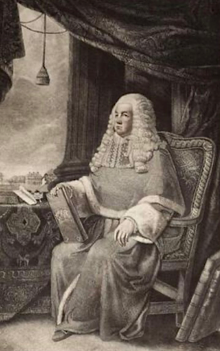
Barry Yelverton, 1st Viscount AvonmorePC (Ire) KC, Irish judge and politician, is born in Newmarket, County Cork, on May 28, 1736. He gives his name to Yelverton’s Act 1782, which effectively repeals Poynings’ Law and thus restores the independence of the Parliament of Ireland. This achievement is destroyed by the Acts of Union 1800, which he supports. By doing so, he gravely harms his reputation for integrity, which had already been damaged by his leading role in the conviction and execution for treason of the United Irishman William Orr, which is now seen as a major miscarriage of justice.

Yelverton is the eldest son of Francis Yelverton of KanturkCounty Cork, and Elizabeth Barry, daughter of Jonas Barry of Kilbrin (now Ballyclogh, County Cork). His father dies when he is only ten. His mother reaches a great age, dying only a year before her son. He goes to school in Charleville and Midleton College, and attends Trinity College Dublin, where he takes a degree of Bachelor of Arts in 1757 and of Bachelor of Laws in 1761. His family lacks wealth and social position and he is for some years an assistant master under Andrew Buck in the Hibernian Academy. This menial occupation is later a source of great embarrassment to him, as his enemies love to ridicule him as “Buck’s usher.”

In 1761, Yelverton marries Mary Nugent, daughter of William Nugent of Clonlost, County Westmeath, and his wife Ursula Aglionby, a lady of some fortune, and is thus enabled to read for the Irish Bar, entering the Middle Temple. He is called to the Bar in 1764. Despite his lack of family connections, his success in his profession is rapid, due to his legal ability, charm and remarkable eloquence, and he takes silk eight years afterward.

Yelverton is elected to the Irish House of Commons as member for Donegal Borough from 1774 to 1776. In the latter year, he is elected for both Belfast and Carrickfergus. He chooses to sit for the latter constituency and represents Carrickfergus until 1784. Although few examples of his oratory survive, all contemporaries agree on his eloquence, which gives him a dominant position in the Commons. He also serves as Recorder of Carrickfergus from 1778 until his death. This is not a Crown appointment as the Recorder is elected by a vote of the entire town corporation.

Yelverton gives his support to Henry Grattan and the Whigs during the greater part of his parliamentary career. He is a strong supporter of the demand for an independent Irish Parliament, but later changes his stance.

Yelverton plays a crucial role in the reforms which are collectively called the Irish Constitution of 1782. In particular he sponsors the Act 21 and 22 of George III, An Act to regulate the manner of passing bills and to prevent delays in summoning of Parliaments – which is popularly known as “Yelverton’s Act.” This radically modifies Poynings’ Law of 1495 by which all legislation to be passed by the Irish Parliament has to be drafted by the Privy Council of Ireland, then sent to the English privy council for approval. Under Yelverton’s Act, the role of the Irish Privy Council is abolished and legislation is commenced in the normal way in the Irish Parliament, which for the last 17 years of its existence enjoys a wide measure of independence.

In his latter days, Yelverton becomes identified with the court party and votes for the Act of Union 1800, for which his viscounty is a reward. For this he is never forgiven by many of his former friends. Sir Jonah Barrington, who continues to regard Yelverton with affection and respect, regrets that this action should have destroyed his reputation forever, but he argues that such a mistake of judgment is understandable in a man who lacks worldly wisdom, and despite his many good qualities, does not have a strong moral sense.

Yelverton becomes Attorney-General for Ireland in 1782, and is elevated to the bench as Lord Chief Baron of the Irish Exchequer in 1783. He is created Baron Yelverton in 1795, and in 1800 Viscount Avonmore in the Peerage of Ireland. As Chief Baron, he leads the opposition to the proposal to increase the number of judges in each of the courts of common law from three to four, on the practical ground that four-judge courts often divide evenly and thus cannot reach an effective decision. Despite this common-sense view, the new judges are eventually appointed.

Yelverton becomes a member of the Royal Irish Academy in 1787.

In 1797, Yelverton attains a degree of infamy for presiding over what is widely regarded as a “show trial” which leads to the execution of the United Irishman, William Orr, although he is said to have shed tears when passing the death sentence on Orr. Orr is charged with administering the United Irish oath to a soldier called Hugh Wheatly. This had recently become a capital offence. In fact, it is generally believed that another man, William McKeever, administered the oath. Wheatly, who is the principal witness for the prosecution, later confesses that he had perjured himself, but despite a superb defence by John Philpot Curran, Orr is found guilty and hanged. Yelverton may have formed an early impression of Orr’s guilt and acted on it – even his admirers admitted that as a judge he lacks impartiality.

Peter Finnerty, a journalist, is later convicted of seditious libel for publishing an attack on Yelverton over his conduct of Orr’s trial and this does nothing to enhance the judge’s reputation.

Yelverton dies on August 19, 1805, at his mansion, Fortfield House, TerenureCounty Dublin, which he had built at great expense around 1785. He is buried nearby in Rathfarnham.

Leave a comment

Birth of Horatio Herbert Kitchener, 1st Earl Kitchener

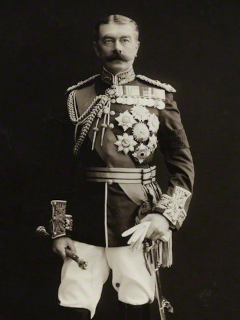
Horatio Herbert Kitchener, 1st Earl Kitchener of Khartoum and Broome in Kent, British Army officer and colonial administrator, is born on June 24, 1850, at Gunsborough Villa, north of Listowel, County Kerry.

Kitchener is the second son of Lieutenant Colonel Henry Horatio Kitchener and his first wife, Frances Anne (née Chevallier), daughter of clergyman John Chevallier. Col. Kitchener resigns his commission in 1849 and purchases Ballygoghlan House estate near Tarbert, County Kerry, in early 1850 under the provisions of the Encumbered Estates Act of 1849. Ballygoghlan House is in a state of disrepair, however, and the family lives in Gunsborough Villa until the end of 1850. In 1857, Col. Kitchener purchases Crotta House, near Kilflynn, County Kerry, and the Kitcheners divide their time between the two residences. While innovative and successful in his agricultural methods, Col. Kitchener is harsh towards his tenants and, after carrying out many evictions, becomes extremely unpopular in the area. He is a rigid disciplinarian and occasionally punishes his son severely.

Although Kitchener attends Ballylongford village school, his education is largely neglected. When examined by his cousin Francis Elliot Kitchener, fellow of Trinity College Dublin (TCD), he is found to have only the most rudimentary knowledge of grammar and arithmetic. Education by private tutors follows. In 1864, his father sells his Irish estates and moves to Switzerland for the sake of his wife’s health. After further private tuition, he passes into the Royal Military Academy, Woolwich, in 1868, and is commissioned into the Royal Engineers in December 1870.

Kitchener begins his career on survey missions and carries out such work in Palestine (1874–78) and Cyprus (1878–82). He then enters the Egyptian Army and takes part in the Sudan campaign of 1883–85, organised to relieve Genral Charles George Gordon. Subsequent appointments include governor of Suakin (1886–88), adjutant-general of the Egyptian Army (1888–92), and Sirdar (Commander-in-Chief) of the Egyptian Army (1892–96). After the Dongola Expedition in 1896, he is promoted to major-general. He commands the Khartoum Expedition of 1898, defeating Mahdist forces at Atbara and Omdurman, and is raised to the peerage.

At the outbreak of the Second Boer War in 1899, he is appointed chief of staff to Frederick Roberts, 1st Earl Roberts, and assumes total command, with the rank of lieutenant-general, in 1900. While acting as commander-in-chief in South Africa he reorganises the British forces and, using new tactics, manages finally to defeat the Boers. He is severely criticised in the world press for the conditions in the concentration camps where Boer families are confined, but is made a viscount, promoted to general, and awarded £50,000 by parliament at the end of the war.

Kitchener serves as commander-in-chief in India beginning in 1902, is promoted to Field Marshal in 1909, and is a member of the Committee of Imperial Defence (1910) and consul-general in Egypt (1911–14). At the outbreak of World War I he is made Secretary of State for War and begins to reorganise the British Army, an immense achievement, raising 1,700,000 men in service battalions by May 1915, creating an army of volunteers to reinforce the depleted regular army in Belgium and France. An archconservative, he totally opposes Home Rule for Ireland, and initially blocks plans by John Redmond for the formation of a southern Irish division from members of the National Volunteers. Convinced that an all-Irish brigade or division would be a security risk, he rejects Redmond’s suggestions in a meeting of August 1915 and originally proposes dispersing Irish recruits through the numerous regiments in the army. Impressed by Redmond’s persistence, and impelled by the recruiting crisis of late 1915, he finally reverses his decision and sanctions the establishment of the 16th (Irish) Division.

On June 5, 1916, Kitchener is making his way to Russia on HMS Hampshire to attend negotiations with Tsar Nicholas II when in bad weather the ship strikes a German mine 1.5 miles (2.4 km) west of Orkney, Scotland, and sinks. He is among 737 who perish. He is the highest-ranking British officer to die in action in the entire war.

Although he only spends his early years in Kerry, Kitchener occasionally returns to Ireland. While on leave in June 1910 he goes on a tour of County Kerry, visiting places connected to his childhood. There are numerous portraits and memorials to him in England, including a marble effigy by W. Reid Dick in St. Paul’s Cathedral in London and a statue by John Tweed in Horse Guards Parade, London. There is a commemorative bible in the Church of Ireland church at Kilflynn, County Kerry, where he regularly attended Sunday service as a boy. There are some Kitchener letters in the John Redmond papers in the National Library of Ireland.

(From: “Kitchener, Horatio Herbert” by David Murphy, Dictionary of Irish Biography, http://www.dib.ie, October 2009)


Leave a comment

Birth of Alfred Harmsworth, Newspaper Publisher

alfred-harmsworth

Alfred Charles William Harmsworth, Viscount Northcliffe, one of the most successful newspaper publishers in the history of the British press and a founder of popular modern journalism, is born on July 15, 1865 in Chapelizod, near Dublin.

After an impoverished childhood and a few attempts at making a quick fortune, young Harmsworth embarks on freelance journalism as a contributor to popular papers, rises to editorial positions, and starts a paper called Answers to Correspondents. After some difficulty in securing financial backing, he begins publication, soon shortening the name to Answers. As the paper gains public favour, he is joined by his brother Harold, whose financial ability and capacity for attracting advertising, combined with Alfred’s genius for sensing the public taste, make it a success. Answers is followed by many other inexpensive popular periodicals, chief among them Comic Cuts and Forget-Me-Not, for the new reading public of women. These form the basis for what becomes Amalgamated Press, the largest periodical-publishing empire in the world.

In 1894 Harmsworth enters the newspaper field, purchasing the nearly bankrupt London Evening News and transforming it into a popular newspaper with brief news reports, a daily story, and a column for women. Within a year circulation grows to 160,000 copies, and profits are substantial. Conceiving the idea of a chain of halfpenny morning papers in the provinces, he purchases two papers in Glasgow, Scotland, and merges them into the Glasgow Daily Record. He then decides to experiment with a popular national daily in London. The Daily Mail, first published on May 4, 1896, is a sensational success. Announced as “the penny newspaper for one halfpenny” and “the busy man’s daily journal,” it is exactly suited to the new reading public. All news stories and feature articles are kept short, and articles of interest to women, political and social gossip, and a serial story are made regular features. With its first issue, the Daily Mail establishes a world record in daily newspaper circulation, a lead it never loses during Harmsworth’s lifetime.

Next Harmsworth purchases the Weekly Dispatch when it is nearly bankrupt and transforms it into the Sunday Dispatch, the biggest-selling Sunday newspaper in the country. In 1903 he founds the Daily Mirror, which successfully exploits a new market as a picture paper, with a circulation rivaling that of the Daily Mail. He saves The Observer from extinction in 1905, the year in which he is made Baron Northcliffe. In 1908 he reaches the pinnacle of his career by securing control of The Times, which he transforms from a 19th-century relic into a modern newspaper.

Northcliffe’s contributions to the British effort in World War I begin with his early exposure in the Daily Mail of the British army’s shell shortage. His criticisms of Lord Kitchener arouse intense resentment in some quarters, but he also presses for the creation of a separate Ministry of Munitions and for the formation in 1915 of a wartime coalition government. For his service as head of the British war mission in the United States in 1917, he is created a viscount. He acts as the British government’s director of propaganda aimed at Germany and other enemy countries in 1918. By this time Northcliffe’s press empire appears to hold such power over public opinion that he tries unsuccessfully to influence the composition of Prime Minister David Lloyd George’s cabinet. Always unpredictable, he becomes the victim of a megalomania that damages his judgment and leads to the breakdown that precedes his death.

Harmsworth’s health declines during 1921 due mainly to a streptococcal infection. He goes on a world tour to revive himself, but it fails to do so. He dies of endocarditis in a hut on the roof of his London house on August 14, 1922, leaving three months’ pay to each of his six thousand employees. The viscountcy, barony, and baronetcy of Northcliffe become extinct upon his death. His body is buried at East Finchley Cemetery in North London.

Northcliffe’s success as a publisher rests on his instinctive understanding of the new reading public that had been created by compulsory education. Though he wants political power, the effect of his newspapers upon public affairs is generally considered to have been smaller than he believed. His influence lay rather in changing the direction of much of the press away from its traditional informative and interpretative role to that of the commercial exploiter and entertainer of mass publics.