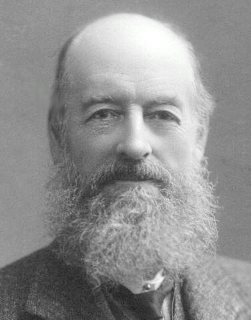
Parsons also performs some preliminary work in association with the practices of the electrodeposition of copper sulfate upon silver films circa 1865 while in search of the design for a truly flat mirror to use in a telescope. However, he finds it impossible to properly electroplate copper upon these silver films, as the copper contracts and detaches from the underlying glass substrate. His note has been cited as one of the earliest confirmations in literature that thin films on glass substrates experience residual stresses. He revives discussion in his work Nature’s August 1908 edition after witnessing similar techniques used to present newly devised searchlights before the Royal Society.
Although overshadowed by his father (when astronomers speak of “Lord Rosse”, it is almost always the father that they refer to), Parsons nonetheless pursues some astronomical observations of his own, particularly of the Moon. Most notably, he discovers NGC 2, a spiral galaxy in the constellationPegasus.
After some years of ill-health, Parsons dies on August 30, 1908, at Birr Castle and is buried in the local churchyard. He leaves a bequest to the Royal Society to establish the “Rosse Fund,” and a further £1,000 to the science school fund at TCD.
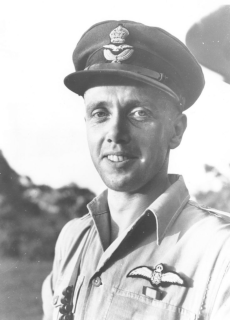
Lord enlists in the Royal Air Force on August 6, 1936. After reaching the rank of corporal in August 1938, he applies to undertake pilot training, which he begins in October 1938. Successfully gaining his pilot’s wings, he becomes a sergeant pilot in April 1939, and is posted to No. 31 Squadron RAF, based in Lahore, India. He later flies the Vickers Type 264 Valentia biplane transport. In 1941, No. 31 Squadron is the first unit to receive the Douglas DC-2 which is followed by both the Douglas DC-3 and Dakota C-47 Skytrain transports. That year he is promoted to flight sergeant and then warrant officer. He flies in North Africa, supporting troops in Libya and Egypt for four months, before being posted back to India. Commissioned as a pilot officer in May 1942, he flies supply missions over Burma, for which he is mentioned in despatches.
The Battle of Arnhem is part of Operation Market Garden, an attempt to secure a string of bridges through the Netherlands. At Arnhem, the British 1st Airborne Division and Polish 1st Independent Parachute Brigade are tasked with securing bridges across the Lower Rhine, the final objectives of the operation. However, the airborne forces that drop on September 17 are not aware that the 9th SS and 10th SS Panzer divisions are also near Arnhem for rest and refit. Their presence adds a substantial number of Panzergrenadiers, tanks and self-propelled guns to the German defences and the Allies suffer heavily in the ensuing battle. Only a small force manages to hold one end of the Arnhem road bridge before being overrun on September 21. The rest of the division becomes trapped in a small pocket west of the bridge and has to be evacuated on September 25. The Allies fail to cross the Rhine, which remains under German control until Allied offensives in March 1945.
Lord is 30 years old, and a flight lieutenant serving with No. 271 Squadron, Royal Air Force during World War II when he is awarded the Victoria Cross. On September 19, 1944, during the Battle of Arnhem in the Netherlands, the British 1st Airborne Division is in desperate need of supplies. His Dakota III “KG374” encounters intense enemy anti-aircraft fire and is hit twice, with one engine burning. He manages to drop his supplies, but at the end of the run finds that there are two containers remaining. Although he knows that one of his wings might collapse at any moment, he nevertheless makes a second run to drop the last supplies, then orders his crew to bail out. A few seconds later, the Dakota crashes in flames with its pilot and six crew members.
Only the navigator, Flying Officer Harold King, survives, becoming a prisoner of war. It is only on his release in mid-1945, as well as the release of several paratroops from the 10th Parachute Battalion, that the story of Lord’s action becomes known. He is awarded a posthumous Victoria Cross.
Several aircraft have carried tributes to Lord. Between 1993 and 1998, the RAF Battle of Britain Memorial Flight‘s Dakota, serial “ZA947”, is painted in the colours of Lord’s aircraft during the Arnhem battle and bears the same code letters: YS-DM. Between 1973 and 2005, the Dakota displayed at RAF Museum Cosford is similarly painted and coded to represent Lord’s aircraft. From 1966 until its disbandment in 2005, No. 10 Squadron RAF is equipped with Vickers VC-10s, each of which is named after a Royal Air Force or Royal Flying Corps VC recipient. Aircraft serial number ‘XR810’ is named David Lord VC.
Lord’s Victoria Cross is presented to his parents at Buckingham Palace in December 1945. In 1997, his Victoria Cross, along with his other decorations and medals, are sold at auction by Spinks to Lord Ashcroft. As of 2014, the medal group is on display at the Imperial War Museum.
Parsons also performs some preliminary work in association with the practices of the electrodeposition of copper sulfate upon silver films circa 1865 while in search of the design for a truly flat mirror to use in a telescope. However, he finds it impossible to properly electroplate copper upon these silver films, as the copper contracts and detaches from the underlying glass substrate. His note has been cited as one of the earliest confirmations in literature that thin films on glass substrates experience residual stresses. He revives discussion in his work Nature’s August 1908 edition after witnessing similar techniques used to present newly devised searchlights before the Royal Society.
Although overshadowed by his father (when astronomers speak of “Lord Rosse”, it is almost always the father that they refer to), Parsons nonetheless pursues some astronomical observations of his own, particularly of the Moon. Most notably, he discovers NGC 2, a spiral galaxy in the constellationPegasus.
Crotty grows up in Kilkenny and, while a student at St. Kieran’s College, Kilkenny, he begins breeding pigs in his spare time. Rather than move on to university, he pursues his interest in agriculture by going to work for a farmer relative in 1942. A year later he undertakes a 12-month course at the Albert Agricultural College in Glasnevin, Dublin. In 1945, he purchases a 204-acre farm in Dunbell, not far from Kilkenny, and spends the next two decades putting into practice his developing knowledge of agricultural production.
Crotty’s knowledge and experience of agricultural economics shapes his attitude to Ireland’s participation in the European Economic Community. His years as a farmer teaches him that Irish agriculture is structured so as to discourage efficient use of the land.
Crotty grows to believe that agricultural efficiency can best be achieved by the imposition of an annual land tax. This would allow taxes on inputs and outputs to be removed or reduced and would encourage only those prepared to maximise the potential of their land to remain in farming. In putting forward this proposal, he is reflecting the influence of American economist Henry George, who held that land owned by private individuals should be subject to a tax on the land because of the advantage bestowed on the owner. He believes that Irish agriculture would be damaged if Ireland joined the European Economic Community (EEC) as, instead of becoming more efficient, farmers would grow to depend on external subsidies under the Common Agricultural Policy (CAP).
Furthermore, Crotty maintains that Ireland’s status as an ex-colony makes it unsuited for membership of a bloc of nations that include former colonial powers. In 1962, in the early stages of the public debate on whether Ireland should join the EEC, he expresses his concerns about the possible loss of Ireland’s national identity within what he termed a “European super state.”
In 1972, Crotty joins Trinity College academic Anthony Coughlan in opposing Ireland’s accession to the EEC. Over the next twenty years he campaigns against further integration of Ireland into the EEC, most notably during the attempts to ratify the Single European Act in the mid-1980s. He stands for election in the 1989 European Parliament election as a candidate in the Dublin constituency. He receives 25,525 votes (5.69% of the valid votes cast), not enough to elect him. In 1992, he once again allies himself with Coughlan in urging Irish voters to reject the Maastricht Treaty in the referendum held on June 18.
Despite failing to win majority support for his views in elections and referendums, Crotty continues until the end of his life his campaign against Ireland’s membership of the European Union.
Crotty is a prolific writer, producing books, pamphlets, articles, and letters on subjects such as economics, history, and Ireland’s involvement with Europe. His final work, When Histories Collide: The Development and Impact of Individualistic Capitalism, is edited by his son Raymond and published posthumously in 2001. It is an economic history of mankind from the earliest stages of human development to the present day. Reviewing it on behalf of the American Sociological Association, Professor Michael Mann of University of California, Los Angeles (UCLA) describes it as “an extraordinary book by an extraordinary man” and “a must-read.”
Raymond Crotty dies at St. Vincent’s Hospital, Dublin, at the age of 68, on January 1, 1994, and is buried in Tulla Cemetery outside Kilkenny.


 seamus dubhghaill