seamus dubhghaill

Promoting Irish Culture and History from Little Rock, Arkansas, USA


Leave a comment

Birth of Charles Doran, Irish Actor

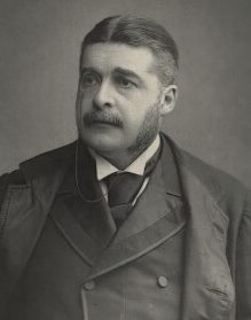
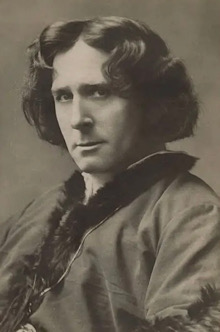
Charles Doran, an Irish actor and one of the last of the touring actor-managers in the tradition of Frank BensonJohn Martin-Harvey and Ben Greet, is born on January 1, 1877, in Cork, County Cork. Among those who join his company at the start of their careers are Cecil ParkerRalph RichardsonFrancis L. Sullivan and Donald Wolfit.

Doran tours with Benson and other managements, and plays in the West End before setting up his own company in 1920. He leads it for eleven years, before leaving Britain to work in India. On his return he works on stage and makes occasional television appearances.

Doran is the son of Charles Jenkins Doran. He is educated in Cork and privately. In 1899, he makes his stage debut as a member of Frank Benson’s touring company, in Julius Caesar at the Theatre Royal, Belfast. He remains with Benson for two and a half years, during which he makes his London debut, as Captain MacMorris in Henry V at the Lyceum Theatre.

In 1903, Doran tours in a stage version of Leo Tolstoy‘s Resurrection. He is engaged by Fred Terry and Julia Neilson, and appears at the New Theatre in 1905, as the Comte de Tournai in The Scarlet Pimpernel. In 1906, touring with Harry Brodribb Irving, he makes his first appearance in the United States, and the following year tours in South Africa with Cora Urquhart Brown-Potter‘s company. In 1907, he returns to Benson’s company. In 1908, he tours with Mrs. Patrick Campbell in The Thunderbolt, and The Second Mrs. Tanqueray. During 1909–10 he tours England and Australia with Oscar Asche and Lily Brayton, both former members of Benson’s troupe. His parts include the title role in The Merchant of Venice, Lodovico in Othello, Tranio in The Taming of the Shrew and the Soothsayer in Julius Caesar.

In October 1910, returning to England, Doran plays La Tribe in Count Hannibal at the New Theatre, after which he is Pistol in The Merry Wives of Windsor at the Garrick Theatre to the Falstaff of Asche. For the next ten years he plays in new, ephemeral works, interspersed with classics. Among his roles in the latter are Constantine Levin in Anna Karenina (1913), Douglas in Henry IV, Part 1 and the Constable of France in Henry V (1914) in London, and a variety of Shakespeare parts at the Memorial Theatre, Stratford-upon-Avon (1919).

In February 1920, Doran begins touring with his own Shakespearean company, playing Hamlet, Shylock in The Merchant of Venice, Brutus in Julius Caesar, Malvolio in Twelfth Night, Prospero in The Tempest, Petruchio in The Taming of the ShrewMacbeth, Falstaff, Henry V, and Jaques in As You Like It. He has a keen eye for rising talent, and among his recruits are Noel Streatfeild, Cecil Parker, Ralph Richardson, Edith SharpeNorman ShelleyAbraham Sofaer, Francis L. Sullivan and Donald Wolfit.

In 1931, Doran goes to India as director of Shakespeare’s plays at the State Theatre in Jhalawar and then on to Bombay where he performs primarily in Shakespeare on the radio. He returns to England in 1937. His last London appearance is in Song of Norway (1949). His last Shakespearean role in the theatre is Time in The Winter’s Tale (1951). He continues to act on stage in other parts until 1954. He appears on BBC Television as a senator in Othello in 1950 and Adabashev, the tragedian in Curtain Down in 1952.

Doran dies in Folkestone on the south coast of England on April 5, 1964, at the age of 87. An article on him published by Emory University in 2003 sums up his career thus:

On stage in one role or another, Doran’s fifty-seven years in the theatre made him a major force in the profession, particularly in his productions of Shakespeare. Such was his energy and enthusiasm that he kept alive for a few more years the actor-manager system when the major talents, men like Tree, Benson, and Irving, had dissolved their companies. Doran was indeed the last of his theatrical breed.
Leave a comment

Birth of James Sheridan Knowles, Dramatist & Actor

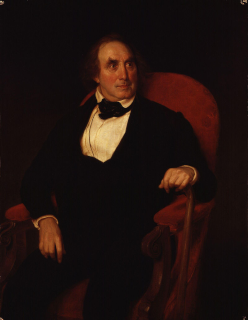
James Sheridan Knowles, Irish dramatist and actor, is born in Cork, County Cork, on May 12, 1784. A relative of Richard Brinsley Sheridan, he enjoys success writing plays for the leading West End theatres. Later in his career he also produces several novels.

Knowles’s father is the lexicographer James Knowles, cousin of Richard Brinsley Sheridan. The family moves to London in 1793, and at the age of fourteen he publishes a ballad entitled The Welsh Harper, which, set to music, is very popular. His talents secure him the friendship of William Hazlitt, who introduces him to Charles Lamb and Samuel Taylor Coleridge. He serves for some time in the Wiltshire and afterwards in the Tower Hamlets militia, leaving the service to become a pupil of Dr. Robert Willan. He obtains the degree of M.D. and is appointed vaccinator to the Jennerian Society.

Although Dr. Willan offers him a share in his practice, Knowles decides to give up medicine for the stage, making his first appearance as an actor probably at Bath, and plays Hamlet at the Crow Street Theatre, Dublin. At Wexford he marries, in October 1809, Maria Charteris, an actress from the Edinburgh Theatre. In 1810, he writes Leo, a successful play in which Edmund Kean appears. Another play, Brian Boroihme, written for the Belfast Theatre in the next year, attracts crowds. Nevertheless, his earnings are so small that he is obliged to become assistant to his father at the Royal Belfast Academical Institution. In 1817 he moves from Belfast to Glasgow, where, besides keeping a flourishing school, he continues to write for the stage.

Knowles first important success is Caius Gracchus, produced at the Belfast Theatre in 1815. His Virginius, written for William Charles Macready, is first performed in 1820 at Covent Garden. In William Tell (1825), he writes for Macready one of his favourite parts. His best-known play, The Hunchback, is produced at Covent Garden in 1832, and he wins praise acting in the work as Master Walter. The Wife is brought out at the same theatre in 1833. The Daughter, better known as The Wrecker’s Daughter, in 1836, and The Love Chase in 1837. His 1839 play Love is praised by Mary Shelley for its “inspiring situations founded on sentiment and passion.” His second wife is the actress, Emma Knowles.

In his later years Knowles forsakes the stage for the pulpit and, as a Baptist preacher, attracts large audiences at Exeter Hall and elsewhere. He publishes two polemical works: the Rock of Rome and the Idol Demolished by Its Own Priests in both of which he combats the special doctrines of the Roman Catholic Church. He is for some years in the receipt of an annual pension of £200, bestowed by Sir Robert Peel in 1849. In old age he befriends the young Edmund Gosse, whom he introduces to Shakespeare. He makes a happy appearance in Gosse’s Father and Son.

Knowles dies at Torquay on November 30, 1862. He is buried under a huge tomb at the summit of the Glasgow Necropolis.

A full list of the works of Knowles and of the various notices of him can be found in The Life of James Sheridan Knowles (1872), privately printed by his son, Richard Brinsley Knowles (1820–1882), who is well known as a journalist. It is translated into German.


Leave a comment

Death of Molly Keane, Novelist & Playwright

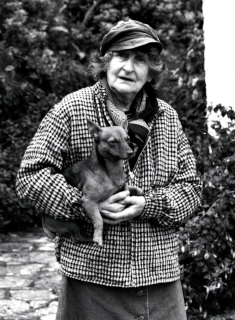
Molly Keane, Irish novelist and playwright who writes as M. J. Farrell, dies on April 22, 1996 in Ardmore, County Waterford.

Keane is born Mary Nesta Skrine on July 20, 1904 in Ryston Cottage, Newbridge, County Kildare. Her mother is a poet who writes under the pseudonym Moira O’Neill. Her father is a fanatic for horses and hunting. She grows up at Ballyrankin House on the banks of the River Slaney, a few miles southeast of Bunclody, County Wexford and refuses to go to boarding school in England as her siblings had done. She is educated by her mother, governesses, and at a boarding school in Bray, County Wicklow. Relationships between her and her parents are cold and she states that she had no fun in her life as a child. Her own passion for hunting and horses is born out of her need for fun and enjoyment. Reading does not feature much in her family, and, although her mother writes poetry, it is of a sentimental nature, “suitable to a woman of her class.”

Keane claims she had never set out to be a writer, but at seventeen she is bed bound due to suspected tuberculosis, and turns to writing out of sheer boredom. It is then she writes her first book, The Knight of Cheerful Countenance, which is published by Mills & Boon. She writes under the pseudonym “M. J. Farrell,” a name over a pub that she had seen on her return from hunting. She explains writing anonymously because “for a woman to read a book, let alone write one was viewed with alarm: I would have been banned from every respectable house in County Carlow.”

In her teenage years Keane spends much of her time in the Perry household in Woodruff, County Tipperary. Here she befriends the two children of the house, Sylvia and John Perry. She later collaborates with John in writing a number of plays. Among them is Spring Meeting, directed by John Gielgud in 1938, and one of the hits of the West End that year. She and Gielgud become life long friends.

It is through the Perry family that Keane meets Bobby Keane, whom she marries in 1938. He belongs to a Waterford squirearchical family, the Keane baronets. The couple goes on to have two daughters, Sally and Virginia.

Keane loves Jane Austen, and like Austen’s, her ability lay in her talent for creating characters. This, with her wit and astute sense of what lay beneath the surface of people’s actions, enables her to depict the world of the big houses of Ireland in the 1920s and 1930s. She “captured her class in all its vicious snobbery and genteel racism.” She uses her married name for her later novels, several of which (including Good Behaviour and Time After Time) have been adapted for television. Between 1928 and 1956, she writes eleven novels, and some of her earlier plays, under the pseudonym “M. J. Farrell.” She is a member of Aosdána.

Keane’s husband dies suddenly in 1946, and, following the failure of a play, she publishes nothing for twenty years. In 1981 Good Behaviour comes out under her own name. The manuscript, which had languished in a drawer for many years, is loaned to a visitor, the actress Peggy Ashcroft, who encourages Keane to publish it. The novel is warmly received and is short-listed for the Booker Prize.

Following the death of her husband, Keane moves to Ardmore, County Waterford, a place she knows well, and lives there with her two daughters. She dies on April 22, 1996 in her Cliffside home in Ardmore at the age of 91. She is buried beside the Church of Ireland church, near the centre of the village.


Leave a comment

Birth of Novelist & Playwright Molly Keane

Molly Keane, née Mary Nesta Skrine, Irish novelist and playwright who writes as M. J. Farrell, is born in Ryston Cottage, Newbridge, County Kildare, on July 20, 1904.

Keane’s mother is a poet who writes under the pseudonym Moira O’Neill. Her father is a fanatic for horses and hunting. She grows up at Ballyrankin in County Wexford and refuses to go to boarding school in England as her siblings had done. She is educated by her mother, governesses, and at a boarding school in Bray, County Wicklow. Relationships between her and her parents are cold and she states that she had no fun in her life as a child. Her own passion for hunting and horses is born out of her need for fun and enjoyment. Reading does not feature much in her family and, although her mother writes poetry, it is of a sentimental nature, “suitable to a woman of her class.”

Keane claims she had never set out to be a writer, but at seventeen she is bedbound due to suspected tuberculosis, and turns to writing out of sheer boredom. It is then she writes her first book, The Knight of Cheerful Countenance, which is published by Mills & Boon. She writes under the pseudonym “M. J. Farrell,” a name over a pub that she had seen on her return from hunting. She explains writing anonymously because “for a woman to read a book, let alone write one was viewed with alarm: I would have been banned from every respectable house in County Carlow.”

In her teenage years Keane spends much of her time in the Perry household in Woodruff, County Tipperary. Here she befriends the two children of the house, Sylvia and John Perry. She later collaborates with John in writing a number of plays. Among them is Spring Meeting, directed by John Gielgud in 1938, and one of the hits of the West End that year. She and Gielgud become life long friends.

It is through the Perry family that Molly meets Bobby Keane, whom she marries in 1938. He belongs to a County Waterford squirearchical family, the Keane baronets. The couple goes on to have two daughters, Sally and Virginia.

Keane loves Jane Austen, and like Austen’s, her ability lay in her talent for creating characters. This, with her wit and astute sense of what lay beneath the surface of people’s actions, enables her to depict the world of the big houses of Ireland in the 1920s and 1930s. She “captured her class in all its vicious snobbery and genteel racism.” She uses her married name for her later novels, several of which, including Good Behaviour and Time After Time, have been adapted for television. Between 1928 and 1956, she writes eleven novels, and some of her earlier plays, under the pseudonym “M. J. Farrell.” She was a member of Aosdána.

Keane’s husband dies suddenly in 1946, after which she moves to Ardmore, County Waterford, a place she knows well, and lives there with her two daughters. Following the failure of a play shortly after her husband’s death, she publishes nothing for twenty years. In 1981 Good Behaviour comes out under her own name. The manuscript, which had languished in a drawer for many years, is lent to a visitor, the actress Peggy Ashcroft, who encourages her to publish it. The novel is warmly received and is short-listed for the Man Booker Prize.

Keane dies at the age of 91 on April 22, 1996 in her Cliffside home in Ardmore. She is buried beside the Church of Ireland church, near the centre of the village.


Leave a comment

Birth of Arthur Seymour Sullivan, Composer

arthur-seymour-sullivan

Sir Arthur Seymour Sullivan, English composer and the son of an Irish musician, is born in Lambeth, London, England on May 13, 1842. He is best known for 14 operatic collaborations with the dramatist W. S. Gilbert, including H.M.S. Pinafore, The Pirates of Penzance and The Mikado. His works include 24 operas, 11 major orchestral works, ten choral works and oratorios, two ballets, incidental music to several plays, and numerous church pieces, songs, and piano and chamber pieces. His hymns and songs include “Onward, Christian Soldiers” and “The Lost Chord.”

The son of a military bandmaster, Sullivan composes his first anthem at the age of eight and is later a soloist in the boys’ choir of the Chapel Royal. In 1856, at 14, he is awarded the first Mendelssohn Scholarship by the Royal Academy of Music, which allows him to study at the academy and then at the University of Music and Theatre Leipzig in Germany. His graduation piece, incidental music to William Shakespeare‘s The Tempest (1861), is received with acclaim on its first performance in London. Among his early major works are a ballet, L’Île Enchantée (1864), Symphony in E, Cello Concerto in D Major (both 1866) and his Overture di Ballo (1870). To supplement the income from his concert works he writes hymns, parlour music and other light pieces, and works as a church organist and music teacher.

In 1866 Sullivan composes a one-act comic opera, Cox and Box, which is still widely performed. He writes his first opera with W. S. Gilbert, Thespis, in 1871. Four years later, the impresario Richard D’Oyly Carte engages Gilbert and Sullivan to create a one-act piece, Trial by Jury (1875). Its box office success leads to a series of twelve full-length comic operas by the collaborators. After the extraordinary success of H.M.S. Pinafore (1878) and The Pirates of Penzance (1879), Carte uses his profits from the partnership to build the Savoy Theatre in 1881, and their joint works become known as the Savoy operas. Among the best known of the later operas are The Mikado (1885) and The Gondoliers (1889). Gilbert breaks from Sullivan and Carte in 1890, after a quarrel over expenses at the Savoy. They reunite in the 1890s for two more operas, but these do not achieve the popularity of their earlier works.

Sullivan’s infrequent serious pieces during the 1880s included two cantatas, The Martyr of Antioch (1880) and The Golden Legend (1886), his most popular choral work. He also writes incidental music for West End productions of several Shakespeare plays and holds conducting and academic appointments. Sullivan’s only grand opera, Ivanhoe, though initially successful in 1891, has rarely been revived. In his last decade Sullivan continues to compose comic operas with various librettists and writes other major and minor works.

Sullivan’s health is never robust. From his thirties kidney disease obliges him to conduct sitting down. He dies at the age of 58 of heart failure, following an attack of bronchitis, at his flat in London on November 22, 1900. Sullivan’s wishes are to be buried in Brompton Cemetery with his parents and brother, but by order of the Queen he is buried in St. Paul’s Cathedral.

Arthur Sullivan is regarded as Britain’s foremost composer. His comic opera style serves as a model for generations of musical theatre composers that follow, and his music is still frequently performed, recorded and pastiched.


Leave a comment

Death of Songwriter & Lyricist Jimmy Kennedy

jimmy-kennedy

James Kennedy, a Northern Irish songwriter and lyricist, dies in Cheltenham, Gloucestershire, England on April 6, 1984. In a career spanning more than fifty years, he writes some 2,000 songs, of which over 200 become worldwide hits and about 50 are all-time popular music classics. Until the duo of John Lennon and Paul McCartney, Kennedy has more hits in the United States than any other Irish or British songwriter.

Kennedy is born near Omagh, County Tyrone, Northern Ireland. His father, Joseph Hamilton Kennedy, is a policeman in the Royal Irish Constabulary, which exists before the partition of Ireland. While growing up in Coagh, Kennedy writes several songs and poems. He is inspired by local surroundings such as the view of the Ballinderry river, the local Springhill house and the plentiful chestnut trees on his family’s property, as evidenced in his poem Chestnut Trees. Kennedy later moves to Portstewart, a seaside resort.

Kennedy graduates from Trinity College, Dublin, before teaching in England. He is accepted into the Colonial Service, as a civil servant, in 1927.

While awaiting a Colonial Service posting to the colony of Nigeria, Kennedy embarks on a career in songwriting. His first success comes in 1930 with The Barmaid’s Song, sung by Gracie Fields. Fellow lyricist Harry Castling introduces him to Bert Feldman, a music publisher based in London‘s “Tin Pan Alley,” for whom Kennedy starts to work. In the early 1930s he writes a number of successful songs, including Oh, Donna Clara (1930), My Song Goes Round the World (1931), and The Teddy Bears’ Picnic (1933), in which he provides new lyrics to John Walter Bratton‘s tune from 1907.

In 1934, Feldman turns down Kennedy’s song Isle of Capri, but it becomes a major hit for a new publisher, Peter Maurice. He writes several more successful songs for Maurice, including Red Sails in the Sunset (1935), inspired by beautiful summer evenings in Portstewart, Northern Ireland, Harbor Lights (1937) and South of the Border (1939), inspired by a holiday picture postcard he receives from Tijuana, Mexico, and written with composer Michael Carr. Kennedy and Carr also collaborate on several West End theatre shows in the 1930s, including London Rhapsody (1937). My Prayer, with original music by Georges Boulanger, has English lyrics penned by Kennedy in 1939. It is originally written by Boulanger with the title Avant de Mourir in 1926.

During the early stages of World War II, while serving in the British Army‘s Royal Artillery, where he rises to the rank of Captain, Kennedy writes the wartime hit, We’re Going to Hang out the Washing on the Siegfried Line. His hits also include Cokey Cokey (1945), and the English lyrics to Lili Marlene. After the end of the war, his songs include Apple Blossom Wedding (1947), Istanbul (Not Constantinople) (1953), and Love Is Like a Violin (1960). In the 1960s he writes the song The Banks of the Erne, for recording by his friend from the war years, Theo Hyde, also known as Ray Warren.

Kennedy is a patron of the Castlebar International Song Contest from 1973 until his death in 1984 and his association with the event adds great prestige to the contest. He wins two Ivor Novello Awards for his contribution to music and receives an honorary degree from the New University of Ulster. He is awarded the Order of the British Empire (OBE) in 1983.

Jimmy Kennedy dies in Cheltenham on April 6, 1984, at the age of 81, and was interred in Taunton, Somerset. In 1997 he is posthumously inducted into the Songwriter’s Hall of Fame.


Leave a comment

Birth of Bob Crowley, Theatre Designer & Director

Bob Crowley, scenic and costume theatre designer and theatre director, is born in Cork, County Cork on June 10, 1952. He is the brother of director John Crowley.

Crowley trains at the Bristol Old Vic Theatre School in Bristol, England. He designs over twenty productions for the Royal National Theatre in London including Ghetto, The Madness of George III, Carousel and The History Boys. He also designs numerous productions for the Royal Shakespeare Company including The Plantagenets, for which he wins a Laurence Olivier Award for Best Set Design, and Les Liaisons Dangereuses, which later has a successful run in London, followed by a transfer to Broadway. Opera productions include the critically acclaimed production of The Magic Flute directed by Nicholas Hytner, with whom Crowley frequently collaborates, for the English National Opera and La traviata for the Royal Opera House.

Crowley has received multiple Tony Award nominations, and has won seven times, for designing the Broadway productions of Carousel (1994), Aida (2000), The History Boys (2006), Mary Poppins (2007), The Coast of Utopia (2007), Once (2012) and An American in Paris (2015). He receives three other Tony Award nominations in 2015, two for his costumes on The Audience and An American in Paris and one for his scenic designs for Skylight. He is a recipient of the Laurence Olivier Award for Best Set Design and a three-time recipient of the Drama Desk Award for Outstanding Set Design.

Crowley designs set and costume for Mary Poppins, which plays in both the West End theatre and on Broadway. He designs and directs the Phil Collins musical Tarzan. He is the set and costume designer for Andrew Lloyd Webber‘s Love Never Dies, and the costume designer of the 2008-2009 version of The Little Mermaid.