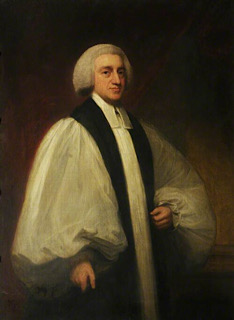
Agar is known to have held particularly marked Calvinistic positions. He serves as Dean of Kilmore from 1765 to 1768, and then as Bishop of Cloyne until 1779.
In 1794, Agar is raised to the Peerage of Ireland as Baron Somerton. In 1801, he is translated to become Archbishop of Dublin and is created Viscount Somerton. In 1806, he is further honoured when he is made Earl of Normanton. These titles are all in the Peerage of Ireland. He remains as Archbishop of Dublin until his death in 1809, and from the beginning of 1801 onward, sits in the House of Lords as one of the twenty-eight original Irish representative peer, following the Acts of Union 1800 which unites Ireland and Great Britain.
Agar dies on July 14, 1809, aged 72, and is succeeded in his secular titles by his son Welbore Ellis Agar. He is buried in the north transept of Westminster Abbey. His widow Jane, Countess of Normanton, is buried alongside him following her death in 1826. His tomb dates from 1815 and is created by John Bacon.
Father and son, both accounted “notorious womanizers,” have a bitter relationship. His father once challenges him to a duel, but he declines, observing that his father is not a gentleman.
With the support of the Grafton ministry and of the Court, in 1769 Luttrell stands in Middlesex against John Wilkes, the radical and popular figure who had already been the constituency’s three-time democratic choice. He loses the poll (1,143 votes to 269) but is seated in Parliament, Wilkes having once again been barred as an adjudged felon. As a result of the affair, for some months, Luttrell dares not appear in the street and is “the most unpopular man in the House of Commons.”
The government rewards Luttrell by appointing him Adjutant General for Ireland in 1770. He continues to sit in the Commons, where he describes the Whigs in their opposition to the conduct of the American War, as “the abetters of treason and rebellion combined purposely for the ruin of their country.”
In 1788, Luttrell is publicly accused in Dublin of the rape of a 12-year-old girl. Having been paid to deliver a message, Mary Neal claims she is bundled into a brothel and there assaulted throughout the night by Luttrell. The keeper of the house, Maria Llewellyn, is charged in a case marked by accusations of witness tampering, the death in prison of Mary’s mother and newborn baby sister and by the insinuation that Mary was already working as a prostitute. The affair becomes a cause célèbre with the public intervention of Archibald Hamilton Rowan, later a founding member of the Dublin Society of United Irishmen. To clear Mary’s name he brings her to Dublin Castle to see the Lord Lieutenant, John Fane, 10th Earl of Westmorland. Westmorland, unmoved, pardons Llewellyn and sets her at liberty. Luttrell is never asked to answer for raping Mary Neal. In 1790 he re-enters the British Parliament as Member for Plympton Erle.
In 1791 and 1792, Luttrell helps vote down bills to abolish the slave trade. Negroes, he proposes, only want “to murder their masters, ravish their women, and drink all their rum.” At the same time, he opposes lifting civil disabilities on Roman Catholics by abolishing the Test Act in Scotland and speaks scathingly of parliamentary reform.
In October 1793, a younger brother, Temple Simon Luttrell, is arrested in Boulogne and, until February 1795, is held in Paris where, on the strength of their sister Anne Luttrell being married to Prince Henry, Duke of Cumberland, he is publicly exhibited as the brother of the king of England.
In 1795, Luttrell is entrusted with the breakup and disarming of Defenders, the agrarian semi-insurgency, in Connacht. His proceedings and impressment of some 1,300 “rebels” into the British navy elicits criticism in otherwise loyal circles.
In 1796, with the leaders of the democratic party, the United Irishmen, preparing for a French-assisted insurrection, Luttrell is given overall command of the Crown forces in Ireland. He demonstrates still greater ruthlessness in attempting to “pacify” the country and suppress the eventual rising in the summer of 1798. His command has the unusual distinction of being upbraided by his successor as Commander in Chief, Sir Ralph Abercromby, for an army “in a state of licentiousness, which must render it formidable to everyone but the enemy.”
Luttrell is seen by his critics as having “fanned the flame of disaffection into open rebellion” by “the picketings, the free quarters, half hangings, flogging and pitch-cappings” he directs.
In July 1799, Luttrell sells his Irish property and by his own later account, he takes no part in the Acts of Union. He claims to be “disgusted at the scene that was passing before me”, and to abandon Ireland because, under a “cowardly” government, he sees “the country likely to become Catholic.” When the Dublin Post of May 2, 1811, erroneously reports his death, he demands a retraction which they print under the headline Public Disappointment.
Luttrell purchases an estate at Painshill Park in Surrey and lives for several years in relative obscurity. From 1813 he harries the government of Robert Jenkinson, 2nd Earl of Liverpool, with the claim that George III had promised him a secure seat in the Commons. In June 1817, five weeks short of his eightieth birthday, he finds his own way back to Parliament as Member for Ludgershall and revenges himself, in the four years remaining to him, by voting with the opposition. This, however, does not extend to joining in the attacks on the domestic spy system in 1818 nor to voting for parliamentary reform in 1819. Moreover, in the wake of the Peterloo Massacre, he supports the government, lauding the use of deadly force against “the Radicals and their system.”
Sackville then enters the army. He is elected Grandmaster of the Grand Lodge of Ireland in 1751, serving in this post for two years. He marries Diana Sambrooke, daughter of John Sambrooke and Elizabeth Forester, on September 3, 1754. They have two sons and three daughters.
In 1747 and 1748, Sackville again joins the Duke of Cumberland. He becomes colonel of the 7th Irish horse and serves in Holland. There is a break in his military career between wars (1750-1755) when he serves as first secretary to his father.
In June 1758 Sackville is second in command of a British expedition led by Marlborough which attempts an amphibious Raid on St. Malo. While it fails to take the town as instructed, the raid is still considered to be largely successful as a diversion. Follow-up raids are considered against Le Havre, Caen and other targets in Normandy, but no further landings are attempted, and the force returns home. Later in 1758 they join the allied forces of Duke Ferdinand of Brunswick in Germany. When Marlborough dies, Sackville becomes Commander of the British contingent of the army, although still under the overall command of the Duke of Brunswick.
In the Battle of Minden on August 1, 1759, British and Hanoverian infantry of the centre make an advance on the French cavalry and artillery in that sector. As the disrupted French begin to fall back on Minden, Ferdinand calls for a British cavalry charge to complete the victory, but Sackville withholds permission for their advance repeatedly. For this action, he is cashiered and sent home. John Manners, Marquess of Granby, replaces him as commander of the British contingent for the remainder of the war.
Sackville refuses to accept responsibility for refusing to obey orders. Back in England, he demands a court-martial and makes it a large enough issue that he obtains his demand in 1760. The court finds him guilty, and the verdict not only upholds his discharge, but rules that he is “…unfit to serve His Majesty in any military Capacity whatever.” The king has his name struck from the Privy Council rolls.
Sackville is a Member of Parliament at intervals from 1733. He serves terms in both the Dublin and the Westminster bodies, sometimes simultaneously, but does not take sides in political wrangles. Between 1750 and 1755 he serves as Chief Secretary for Ireland, during his father’s second term as Lord Lieutenant of Ireland.
On November 10, 1775, Sackville is appointed Secretary of State for the Colonies replacing William Legge, 2nd Earl of Dartmouth in the post. He becomes a target for the opposition and is eventually persuaded to step down in exchange for a peerage, and in February 1782 he is made Baron Bolebrooke, in the County of Sussex, and Viscount Sackville, of Drayton in the County of Northamptonshire. His political career ends with the fall of the North government in March 1782.
The controversy over Sackville’s handling of the war continues. Some members are opposed to his taking a seat in the House of Lords, an almost unprecedented incident. In spite of this he is admitted to the Lords, where he is staunchly defended by Edward Thurlow, 1st Baron Thurlow, and his declining health soon makes the issue irrelevant. He retires to his country home at Stoneland Lodge and dies there on August 26, 1785. He maintains to his dying day that he had not been a coward at Minden. Following his death, a defence of his reputation, The character of the late Viscount Sackville, is written by Richard Cumberland.
(Pictured: “George Germain,” 1766 painting by George Romney (1734-1802))
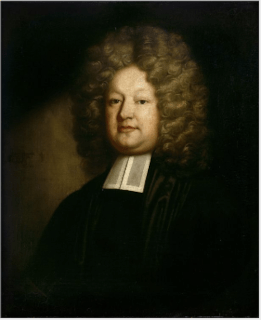
Brady is a zealous promoter of the Glorious Revolution and suffers for his beliefs in consequence. When the Williamite War in Ireland breaks out in 1690, he, by his influence, thrice prevented the burning of the town of Bandon, after James II gives orders for its destruction following the Capture of Bandon. The same year he is employed by the people of Bandon to lay their grievances before the Parliament of England. He soon afterward settles in London, where he obtains various preferments. At the time of his death, he holds the livings of Clapham and Richmond.
Brady’s best-known work, written with his collaborator Nahum Tate, is New Version of the Psalms of David, a metrical version of the Psalms. It is licensed in 1696 and largely ousts the old Sternhold and Hopkins Psalter. His ode Hail! Bright Cecilia, based on a similar ode by John Dryden, is written in 1692 in honour of the feast day of Saint Cecilia, patron saint of musicians. It is set to music by Henry Purcell in 1697. Like Dryden, he also translates Virgil‘s Aeneid, and writes several smaller poems and dramas, as well as sermons.
Brady marries Letitia Synge and has four sons and four daughters. He dies on May 20, 1726, and is buried in the church at Richmond, London. Notable descendants of Brady include Maziere Brady, Lord Chancellor of Ireland.
(Pictured: “Portrait of Nicholas Brady (1659-1726),” oil on canvas by Hugh Howard (1675-1737), circa 1715, National Gallery of Ireland)
John Bligh, 3rd Earl of Darnley and former Member of Parliament (MP) for Athboy, who suffers from the delusion that he is a teapot, marries suddenly and unexpectedly on September 11, 1766 at nearly 50 years of age. Suffering from the delusion that he is a teapot, from the date of his marriage until his death in 1781 he fathers at least seven children “in spite of his initial alarm that his spout would come off in the night.”
Bligh is born on October 1, 1719 near Gravesend, Kent, the son of John Bligh, 1st Earl of Darnley and Lady Theodosia Hyde, later Baroness Clifton (in her own right). At the age of eight he is sent to Westminster School. He matriculates at Merton College on May 13, 1735 and is created MA on July 13, 1738.
Outwardly, Bligh appears “solid” and “capable,” a man “terribly conscious of his own dignity.” His eccentricities do not stop him becoming MP for Athboy, which he represents from 1739 until 1748, and for Maidstone, Kent, which he serves from 1741 to 1747.
After failing to be elected MP for Tregony, Cornwall, in 1754, Bligh never stands again for parliament, either in England or Ireland. The seat that he gains in the House of Lords, in 1765, gives him the opportunity to return to Ireland more frequently.
In Dublin, on September 11, 1766, the “ageing nobleman” of almost 48-years-old, suddenly marries eighteen-year-old Mary Stoyte, a wealthy heiress and only child of John Stoyte, a leading barrister from Streete, County Westmeath. The unexpected marriage, between a sworn bachelor and a young woman, shocks Dublin society.
The new Countess of Darnley has to cope with the odd private behaviour of her touchy husband. According to a manuscript in the possession of the Tighe family, on the night of his marriage, Bligh “imagined himself to be a fine China tea pot, and was under great fears, lest the spout should be broken off before morning!”
In spite of his nocturnal fears, the earl manages to father at least seven children: John (1767), Mary (1768), Edward (1769), Theodosia (1771), Sarah (1772), Catherine (1774), and William (1775).
Each summer, Bligh takes his family to Weymouth, where the seawater is believed to strengthen weak constitutions and help brace nerves.
Despite every precaution, in 1781 Bligh catches malaria. Attempts to treat him with quinine and peppermint-water purges fail, and on July 31, 1781, he dies at the age of 61, his spout supposedly still intact. Mary lives on until 1803.
Harrison goes to Westminster School and then to Balliol College, Oxford. While there he develops an admiration for Charles Stewart Parnell and becomes secretary of the Oxford University Home Rule League. At this time, the Land War is in progress and in 1889 he goes to Ireland to visit the scene of the evictions in Gweedore, County Donegal. He becomes involved in physical confrontations with the Royal Irish Constabulary and as a result becomes a Nationalist celebrity overnight. The following May, Parnell offers the vacant parliamentary seat of Mid Tipperary to Harrison, who leaves Oxford at age 22, to take it up, unopposed.
Only six months later, following the divorce case involving Katharine O’Shea, the Irish Parliamentary Party splits over Parnell’s leadership. Harrison strongly supports Parnell, acts as his bodyguard and aide-de-camp, and after Parnell’s death devotes himself to the service of his widow Katharine. From her he hears a completely different version of the events surrounding the divorce case from that which had appeared in the press, and this is to form the seed of his later books.
Harrison then makes a return to Irish politics, working with Sir Horace Plunkett as Secretary of the Irish Dominion League, an organisation campaigning for dominion status for Ireland within the British Empire. He is a lifelong opponent of Irish partition. He is Irish correspondent of The Economist from 1922 to 1927 and owner-editor of Irish Truth from 1924 to 1927.
Harrison’s two books defending Parnell are published in 1931 and 1938. They have had a major impact on Irish historiography, leading to a more favourable view of Parnell’s role in the O’Shea affair. F. S. L. Lyons comments that he “did more than anyone else to uncover what seems to have been the true facts” about the Parnell-O’Shea liaison. The second book, Parnell, Joseph Chamberlain and Mr Garvin, is written in response to J. L. Garvin‘s biography of Joseph Chamberlain, which had ignored his first book, Parnell Vindicated: The Lifting of the Veil. Later, he successfully repulses an attempt in the official history of The Times to rehabilitate that newspaper’s role in using forged letters to attack Parnell in the late 1880s. In 1952 he forces The Times to publish a four-page correction written by him as an appendix to the fourth volume of the history.
During the difficult years of the Anglo-Irish Trade War over the land purchase annuities, declaration of the Republic, Irish neutrality during World War II, and departure from the Commonwealth, Harrison works to promote good relations between Britain and Ireland. He publishes various books and pamphlets on the issues in dispute and writes numerous letters to The Times. He also founds, with General Sir Hubert Gough, the Commonwealth Irish Association in 1942.
At the time of his death on February 20, 1954, Harrison is the last survivor of the Irish Parliamentary Party led by Parnell, and as a member of the pre-1918 Irish Parliamentary Party, he seems to have been outlived only by John Patrick Hayden, who dies a few months after him in 1954 and by Patrick Whitty and John Lymbrick Esmonde who are only MPs for a very short time during World War I. He is buried in Holywood, County Down.
Hobart marries firstly Margaretta, daughter of Edmund Bourke, in 1792. They have one son, who dies in infancy, and a daughter, Lady Sarah, who marries Prime Minister Lord Goderich and is the mother of George Robinson, 1st Marquess of Ripon. After Margaretta’s death in 1796 he marries secondly the Hon. Eleanor Agnes, daughter of William Eden, 1st Baron Auckland, in 1799. There are no children from this marriage.
Robert Hobart dies at Hamilton Place, London, on February 4, 1816 at the age of 55, after falling from his horse. He is succeeded in the earldom by his nephew, George. Lady Buckinghamshire dies in October 1851, at the age of 74.
MacGowan spends his early childhood in County Tipperary, before his family moves back to England when he is six years old. He lives in many parts of the southeast of England, including Brighton and London.
MacGowan’s father, Maurice, works for a department store. MacGowan’s mother, Therese, is a singer and traditional Irish dancer, and has worked as a model in Dublin. In 1971, after attending Holmewood House School at Langton Green, Tunbridge Wells, MacGowan earns a literature scholarship and is accepted into Westminster School. He is found in possession of drugs and is expelled in his second year.
MacGowan gets his first taste of fame in 1976 at a concert by British punk band The Clash, when his earlobe is damaged by Jane Crockford, later to be a member of Mo-dettes. A photographer snaps a picture of him covered in blood and it makes the papers, with the headline “Cannibalism at Clash Gig.” Shortly after this, he forms his own punk rock band, The Nipple Erectors, later renamed The Nips.
MacGowan draws upon his Irish heritage when founding The Pogues and changes his early “punk” voice for a more authentic sound with tutoring from his extended family. Many of his songs are influenced by Irish nationalism, Irish history, the experiences of the Irish in London and the United States, and London life in general.
Between 1985 and 1987, he co-writes “Fairytale of New York,” which he performs with Kirsty MacColl. In the coming years MacGowan and The Pogues release several albums.
After The Pogues throw MacGowan out for unprofessional behaviour, he forms a new band, Shane MacGowan & The Popes, recording two studio albums, a live album, three tracks on The Popes Outlaw Heaven (2010) and a live DVD, and touring internationally. From December 2003 until May 2005, Shane MacGowan & The Popes tour extensively in the UK, Ireland, and Europe.
The Pogues and MacGowan reform for a sell-out tour in 2001 and each year from 2004 to 2009 for further tours, including headline slots at GuilFest in England and the Azkena Rock Festival in Basque Country. In May 2005, he rejoins The Pogues permanently.
For many years MacGowan suffers from binge drinking and heroin use. In 2001, Sinéad O’Connor reports MacGowan to the police in London for drug possession in what she says is an attempt to discourage him from using heroin. Initially furious, MacGowan later expresses gratitude towards O’Connor and claims that the incident helped him kick his heroin habit.
MacGowan has long been known for having very bad teeth. He loses the last of his natural teeth around 2008. In 2015, he has 28 new dentures on a titanium frame fitted in a nine-hour procedure which is the subject of an hour-long television programme. Dr. Darragh Mulrooney, the dental surgeon who carries out the procedure, comments that MacGowan recorded most of his great works while he still had some teeth: “We’ve effectively re-tuned his instrument and that will be an ongoing process.”
In the summer of 2015, MacGowan falls as he is leaving a Dublin studio, fracturing his pelvis. He is seen in public on crutches by December 2015, and continues to experience difficulty with general mobility.





 seamus dubhghaill