Katherine Conolly is born Katherine Conyngham around 1662. Her parents are Sir Albert Conyngham and Margaret (née Leslie). She is the eldest of their ten children, with one of her brother’s being Henry Conyngham. Her maternal grandfather is Henry Leslie. She marries William Conolly in 1694, Speaker of the Irish House of Commons (1715-29) and purported to be the wealthiest man in Ireland. The marriage is likely to have been a love match. The couple uses her dowry of £2,300 to purchase their first estates in County Meath. Through her connections, her husband is able to ally himself with the influential Protestant families such as the Gores, Montgomerys and Leslies. She becomes known as a political hostess, gaining a mention in a ballad detailing the 1723 Westmeath by-election.
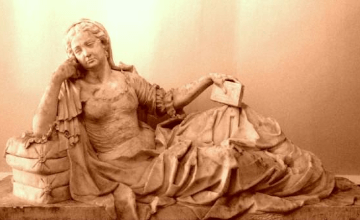
Upon the death of her husband in 1729, Connolly inherits estates in Wales, as well as in counties Meath, Roscommon, Westmeath and Kildare. She continues to be influential in Irish public affairs, being asked for her opinions and counsel. Living on Capel Street, Dublin, and at Castletown House, County Kildare, she entertains a large circle of friends. She carries on her husband’s plan to build the residential Collegiate School, Celbridge, built from 1733 to 1737, then supports the school with £50 each year. She commissions a monument in her husband’s memory by Thomas Carter, in Kildrought Church, Celbridge. She also commissions Conolly’s Folly in 1740 and The Wonderful Barn in 1743 to generate employment in the area.
Connolly dies in Castletown House on September 23, 1752. A portrait of her by Charles Jervas still hangs there. Upon hearing of her death, Mary Delany notes that her death “is a general loss. Her table was open to all her friends of all ranks and her purse to the poor … she was clever at business, and wrote all her own letters … she was a plain and vulgar woman in her manner but had very valuable qualities.”
(Pictured: Reclining statue of Katherine Conolly by Thomas Carter, at Castletown House, Celbridge, County Kildare)
The Conollys, themselves unhappily childless, at that point take up the welfare of young children from disadvantaged backgrounds as a lifelong project, contributing both money and effort towards initiatives which enable foundlings and vagabonds to acquire productive skills and support themselves. They develop one of the first Industrial Schools where boys learn trades, and she takes active personal interest in mentoring the students. In middle age, she also virtually adopts her niece Emily Napier (1783–1863), the daughter of her sister Lady Sarah Lennox. Emily, who spends long months with her aunt in Kildare, marries Sir Henry Bunbury, 7th Baronet, and moves to Suffolk, although she remains close to her aunt until her death.
Thomas Conolly dies on April 27, 1803. Upon his death, a major part of his estates, which includes Wentworth Castle, passes to a distant relative, Frederick Vernon. Conolly receives the Castletown House and estate, as also certain liquid investments and valuable urban properties, which enable her to live in comfort and continue her activities until her own death on August 6, 1821, of an abscess on her hip. She wills these substantial properties to a great-nephew, Edward Michael Pakenham, grandson of Thomas’ sister Harriet, later the MP for Donegal.
In 1999, a 6-part miniseries called Aristocrats, based on the lives of Conolly and her sisters, airs in the UK.
(Pictured: “Lady Louisa Conolly” by George Romney, 1776)
William Conolly, Irish politician, Commissioner of Revenue, lawyer and landowner also known as Speaker Conolly, resigns as Speaker of the Irish House of Commons on October 13, 1729, on grounds of ill health. Sir Ralph Gore is elected unanimously in his place. His name is spelled Conolly rather than the more familiar Connolly, derived ultimately from the Gaelic surname “Ó Conghalaigh.”
Conolly is born on April 9, 1662, in Ballyshannon, County Donegal, the son of an innkeeper, Patrick Conolly. His father is a native of County Monaghan, and a descendant of the Ó Conghalaigh clan of Airgíalla, who settles in County Donegal, embraces the Anglican Church, and has children William, Patrick, Hugh, Phelim and Thady. His father sets aside enough money that he is able to send Conolly to Dublin to study law. He qualifies as an attorney in 1685, aged twenty-three.
Conolly practises as a lawyer in Dublin and in 1694 he marries Katherine Conyngham, daughter of General Sir Albert Conyngham. The Conynghams are an Ulster Scots family who are originally from Mountcharles in County Donegal. The family later settles at Slane Castle in County Meath in the 1780s, where the Conynghams still reside. They have no children, and on Katherine’s death in 1752 the estates are inherited by William James Conolly, his nephew by his brother Patrick.
Conolly makes his fortune from land transfers, following the confiscations by the Crown of lands belonging to supporters of King James II, in the wake of the Glorious Revolution and the accession of William III and Mary II in 1688–91, known as the “Williamite War in Ireland.” About 600,000 Irish acres are confiscated to be sold to pay for the costs of the war, nearly 5% of the land area of Ireland. Conolly is the largest individual buyer, in particular buying 3,300 acres in County Meath that had been assigned to the Earl of Albemarle.
Conolly builds the first winged Palladian house in Ireland, Castletown House in Celbridge, County Kildare, starting in 1722, and specifies that every part of it has to be made from Irish materials. His Dublin townhouse is on Capel Street, then the most fashionable part of the city. He also commissions the former Customs House (now the site of the Clarence Hotel) and the Irish Houses of Parliament, the world’s first building specifically designed as a bicameral parliament.
Conolly is the most important of the “Undertakers,” the managers of Government business in the Irish House of Commons, in the early 18th century. He is associated with the moderate faction of Whigs and is opposed by the Brodrick faction from Cork. He is a Member of Parliament for Donegal Borough from 1692 to 1703 and subsequently for Londonderry County until his death in 1729. In 1703 and 1713, he is also elected for Newtown Limavady and in 1727 for Ballyshannon but chooses each time not to sit.
Conolly is Speaker of the Irish House of Commons and a Commissioner of the Revenue from 1715 to his death in 1729. He is re-elected as Speaker of the House of Commons in the first session of George II‘s parliament and continues to serve until he collapses in the Commons on September 26, 1729. He is eventually persuaded to resign the Speaker’s chair on October 13, and he dies at his house in Capel Street, Dublin, on October 30. He is buried in Celbridge following a spectacular public funeral, which sees the beginnings of the custom of mourners wearing linen scarves to promote the Irish linen industry.
On his death, the Archbishop of Armagh, Hugh Boulter, estimates Conolly’s income in 1729 at £17,000 p.a. His widow Katherine continues to live in style at Castletown until her death in 1752. She builds the Wonderful Barn and the Conolly Folly in the 1740s. Then their estates pass briefly to William’s nephew William junior, and then on to his great-nephew Thomas Conolly M.P., known as “Squire Tom,” who is married to Lady Louisa Conolly.
A pub in Celbridge, The Speaker’s Bar, is named in his memory. There is also a pub in Firhouse, Dublin, called The Speaker Conolly named after him.
Coghill is the son of John Coghill of Knaresborough, North Yorkshire, judge of the prerogative court and one of the masters in chancery. His mother is the daughter of Tobias Cramer, of Ballyfoyle, County Kilkenny. Two elder sisters and a younger brother, James, survive infancy. He spends his childhood in Dublin.
Coghill occupies a prominent place in the life of Dublin, and is remarkable for his early display of ability. At the age of fourteen he enters the University of Dublin, graduating at the age of eighteen as a Bachelor of Laws. At the age of nineteen he is returned to Parliament and at the age of 26 he becomes judge of the prerogative court.
In Parliament, from 1692 to 1713 Coghill is a representative of the borough of Armagh, and from 1713 until his death in 1739, a representative of the University of Dublin. He is politically close to William Conolly, speaker of the Irish House of Commons, who dies in 1729. Upon Conolly’s death he succeeds him as a commissioner of the revenue. Over the following years he plays a prominent role in parliament, particularly on financial matters. He also builds up a close relationship with John Perceval, the British Prime Minister‘s chief advisor on Irish affairs.
Coghill becomes Chancellor of the Exchequer in 1735 and is regarded as an honest and able supporter of Irish interests. Outside parliament he is very active on boards, commissions and trusts, takes a hand in the building of Dr. Steevens’ Hospital and is pro-vice-chancellor of Trinity College Dublin. He lives in Belvedere House, now in the grounds of St. Patrick’s College, Dublin. He suffers from gout for a large part of his life.
From his father, Coghill, who never married, had inherited a lease from the Corporation of lands in Clonturk, where he erects a house which is afterwards known as Drumcondra House. He moves into Drumcondra House and lives there with his unmarried sister Mary until his death in 1738. He is buried in the family vault in St. Andrew’s Church, Dublin.
Upon Coghill’s death Mary is left, for her lifetime, his lands in the barony of Coolock, rents from his properties in Clonturk, all his household goods, and his coach, chariot and horses. In 1743, she erects the parish church of Clonturk, now Drumcondra Church, and places in it a statue of her brother by the Dutch sculptor Peter Scheemakers.
In the 17th century, parliament settles at Chichester House, a town house in Hoggen Green (later College Green) formerly owned by Sir George Carew, Lord President of Munster and Lord High Treasurer of Ireland, which had been built on the site of a nunnery disbanded by King Henry VIII at the time of the dissolution of the monasteries. Carew’s house, named Chichester House after its later owner Sir Arthur Chichester, is a building of sufficient importance to have become the temporary home of the Kingdom of Ireland’s law courts during the Michaelmas law term in 1605. Most famously, the legal documentation facilitating the Plantation of Ulster is signed there on November 16, 1612.
Chichester House is in a dilapidated state, allegedly haunted and unfit for official use. In 1727 parliament votes to spend £6,000 on a new building on the site. It is to be the world’s first purpose-built two-chamber parliament building.
The then ancient Palace of Westminster, the seat of the English before 1707 and, later, British Parliament, is a converted building. The House of Commons‘s odd seating arrangements is due to the chamber’s previous existence as a chapel. Hence MPs face each other from former pews.
The original, domed House of Commons chamber is destroyed by fire in the 1790s, and a less elaborate new chamber, without a dome, is rebuilt in the same location and opened in 1796, four years before the Parliament’s ultimate abolition.
Pearce’s designs come to be studied and copied both at home and abroad. The Viceregal Apartments in Dublin Castle imitate his top-lit corridors. The British Museum in Bloomsbury in London copies his colonnaded main entrance. His impact reaches Washington, D.C., where his building, and in particular his octagonal House of Commons chamber, is studied as plans are made for the United States Capitol building. While the shape of the chamber is not replicated, some of its decorative motifs are, with the ceiling structure in the Old Senate Chamber and old House of Representatives chamber (now the National Statuary Hall) bearing a striking resemblance to Pearce’s ceiling in the House of Commons.
(Pictured: Architectural drawing of the front of Parliament House by Peter Mazell based on the drawing by Rowland Omer, 1767)
Brodrick is the second son of Sir St. John Brodrick of Ballyannan, near Midleton in County Cork, by his wife Alice, daughter of Laurence Clayton of Mallow, County Cork. His father receives large land grants during The Protectorate, and thus the family has much to lose if the land issue in Ireland is settled to the satisfaction of dispossessed Roman Catholics. He is educated at Magdalen College, Oxford and the Middle Temple, being called to the English bar in 1678. He and his relatives flee Ireland during the Glorious Revolution. They are attainted under the rule of King James II in Ireland. In exile in England, Brodrick argues for a speedy reconquest.
In 1690 Brodrick returns to Dublin and is given the legal office of Third Serjeant. He also becomes Recorder of Cork. He is dismissed as Serjeant in 1692, apparently on the ground that there is no work for him to do. While complaining bitterly about his dismissal, he admits privately that his post has been a superfluous one.
As a prominent Whig supporter of the outcome of the Glorious Revolution he is not always in agreement with court policies in Ireland, which he considers too lenient on the Jacobites. The dismissal of the First Serjeant, John Osborne, at the same time as Brodrick is due to his even stronger opposition to Court policy. Despite this he often holds Irish government offices and aspires to manage the Irish Parliament for English ministers. He represents Cork City in the Irish Parliament, which meets in 1692 and holds this seat until 1710. He is a vocal opponent of court policies, until the new Whig Lord Deputy of Ireland, Lord Henry Capell, decides to appoint him Solicitor-General for Ireland in 1695. He promotes penal laws against Catholics, whilst also supporting greater powers for the Irish Parliament.
Brodrick is Speaker of the Irish House of Commons from September 21, 1703. After promoting resolutions critical of the Lord Lieutenant of Ireland he loses his post as Solicitor-General in 1704. From 1707 until 1709 he is Attorney-General for Ireland. He becomes Chief Justice of Ireland in 1710 and is replaced as Speaker on May 19, 1710, but again holds the office in the next Parliament (November 25, 1713 – August 1, 1714), where he also represents County Cork. He is appointed Lord Chancellor of Ireland in 1714 and is ennobled in the Peerage of Ireland in 1715, as the 1st Baron Brodrick. He is advanced to the rank of 1st Viscount Midleton in 1717.
Brodrick feuds with his successor as Speaker William Conolly, as they are rivals to be the leading figure in Irish politics. Despite intrigues in England, he loses out and resigns as Lord Chancellor in 1725. He leaves behind him a legacy of bitterness and ill-will for which he is not really responsible as the Irish peers choose to blame him for the loss of their powers under the Sixth of George I, rather than their own misjudgment in imprisoning the Barons of the Exchequer.




 seamus dubhghaill