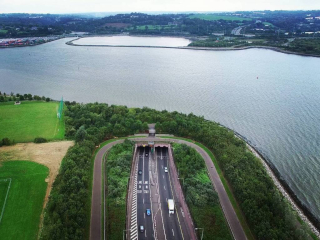
The Jack Lynch Tunnel, described as the most challenging civil engineering project in the history of the state, is unveiled on May 21, 1999 by TaoiseachBertie Ahern at the entrance of the tunnel in Mahon, County Cork.
The Jack Lynch Tunnel is an immersed tube tunnel and an integral part of the N40 southern ring road of Cork. It is named after former Taoiseach Jack Lynch, a native of Cork. Construction involves the excavation of a large casting basin where the tunnel elements or pieces are constructed. After construction of elements is complete, the casting basin is filled with water and joined to the adjacent River Lee, each element is floated out and sunk into position into a carefully dredged river bed.
The tunnel takes the road under the River Lee. North of the tunnel, the ring-road joins the M8 motorway to Dublin and N8 road to the city centre, with the N25 road commencing east to Waterford. The tunnel is completed in May 1999, and carries nearly 40,000 vehicles per day as of 2005. This number rises further as the N40 ring-road’s upgrades progress, with the opening of the Kinsale Road Roundabout flyover in 2006 and subsequent upgrades to the Sarsfield Road and Bandon Road Roundabouts. Traffic in 2015 is 63,000 vehicles a day up from 59,000 in 2013.
The tunnel has two cells, each with two traffic lanes and two footpaths, and a central bore for use in an emergency only. Pedestrians and cyclists are expressly forbidden from using the tunnel. The exclusion of cyclists has been somewhat controversial as the feeder road is a dual-carriageway and so is open to cyclists, but the by-law is applied because of space limitations and the obvious danger of cyclists in an enclosed tunnel.
In May 1920, East Londondockers refuse to load the SS Jolly George, a ship intended to carry arms to be used against the new Bolshevik state. The Munitions Strike begins in Dublin on May 20, 1920, when dock workers follow suit and refuse to handle war material. They are soon joined by members of the Irish Transport and General Workers Union.
When news of the proposed radical action is brought to trade unionist William O’Brien’s desk on May 19, he informs Thomas Foran, General President of the union. The following day, the men standing around waiting to begin work are told that the work is not to start.
On hearing of the political action at the Dublin docks, a second ship was diverted to Dún Laoghaire. There, the military are on hand to unload its cargo, but when the cargo arrives at Westland Row station, workers there refuse to handle the goods. While the dockworkers are casual workers who can be reallocated elsewhere, the railwaymen are permanent employers and members of the separate National Union of Railwaymen.
In the following days, the action taken in Dublin and Dun Laoghaire is replicated elsewhere. To sections of the conservative press, the behaviour of dockers and railwaymen is scandalous. The ever-reliable Punch illustrated news produces a sketch in a June 1920 edition showing an IRA gunman hiding behind a rural wall, joined by a railway worker, or “the blameless accomplice.”
The brave stand that began on the docks of Dublin spreads nationwide, largely thanks to the militancy of railway workers. From arms in storage, the strike is widened to include the carrying of men holding arms representing Crown Forces.
The munitions strike is an effective tactic, proven by the infuriated responses to it from the upper echelons of the British military and political class. In November, the British Government begins closing rail lines, including the Limerick to Waterford and Limerick to Tralee lines,as well as trains into Galway, which instigate a fear among the public that the Irish railway system could be shut down in its entirety.
In the absence of sympathetic strike action in Britain, and with increasingly vicious physical assaults on railwaymen, the Irish leadership feels increasingly vulnerable in the dispute, which eventually winds down in December.
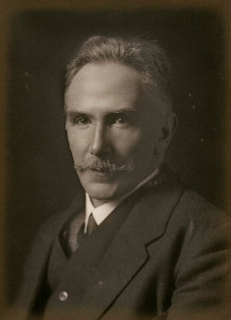
Dixon is the youngest of the seven sons of George Dixon, a soap manufacturer, and Rebecca (née Yeates) Dixon. He is educated at Rathmines School and Trinity College, Dublin. In 1894, after studying in Bonn, Germany, he is appointed assistant and later full Professor of Botany at Trinity. In 1906 he becomes Director of the Botanic Gardens and in 1910 of the Herbarium also. He has a close working relationship with physicist John Joly and together they develop the cohesion theory of the ascent of sap.
Dixon’s early research includes work on the cytology of chromosomes and first mitosis in certain plants. Familiarity with work on transpiration and on the tensile strength of columns of sulfuric acid and water leads Dixon and Joly to experiment on transpiration. “On the Ascent of Sap” (1894) presents the hypothesis that the sap or water in the vessels of a woody plant ascends by virtue of its power of resisting tensile stress and its capacity to remain cohesive under the stress of great differences of pressure. Dixon and Joly further demonstrate that water is transported through passive vessels and not living cells.
Dixon writes Transpiration and the Ascent of Sap in Plants (1914), which brings various theories and experimental works together in a coherent argument. He also writes a textbook, Practical Plant Biology (1922).
In 1907 Dixon marries Dorothea Mary, daughter of Sir John H. Franks, with whom he raises three sons. He is the father of biochemistHal Dixon and grandfather of Adrian Dixon and Joly Dixon.
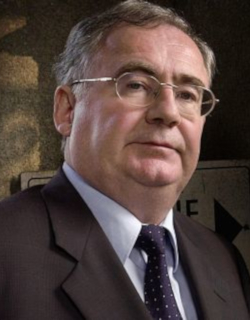
Rabbitte becomes involved in electoral politics for the first time in late 1982, when he unsuccessfully contests Dublin South-West for the Workers’ Party (WP) at the November general election. He is elected to Dublin County Council in 1985. He enters Dáil Éireann as a Workers’ Party Teachta Dála (TD) for Dublin South-West at the 1989 election. He retains his seat at every election until 2016.
After Tomás Mac Giolla‘s retirement as President of the Workers’ Party in 1988, Rabbitte is seen as one of those who wants to move the party away from its hard left position. In 1992, he plays a prominent role with Proinsias De Rossa in an attempt to jettison some of the party’s harder left positions. This eventually splits the Workers’ Party.
In 1994, a new ‘Rainbow Coalition’ government of Fine Gael, the Labour Party and Democratic Left comes to power. Rabbitte is a member of the junior ministerial team, serving as Minister of State to the Government, as well as Minister for State at the Department of Enterprise and Employment with responsibility for Commerce, Science and Technology.
Following the 1997 general election the Rainbow Coalition loses power. The following year sees a merger between the Labour Party and Democratic Left, with Rabbitte participating in the negotiations. In October 2002 he succeeds Ruairi Quinn as the new leader of the Labour Party. Under his leadership the party makes some gains in the local elections of 2004.
The Labour Party agrees to enter a pre-election pact, commonly known as ‘The Mullingar Accord,’ with Fine Gael in an attempt to offer the electorate an alternative coalition government at the 2007 general election. This move causes some tension in the parliamentary party, as some members prefer not to be aligned with any party in advance of an election.
Following the disappointing result in the election for Labour, Rabbitte announces he is stepping down as leader on August 23, 2007. He is succeeded as party leader by Eamon Gilmore. Rabbitte is re-elected on the first count in the 2011 general election. His running mate Eamonn Maloney is also elected. On March 9, 2011, he is appointed as Minister for Communications, Energy and Natural Resources.
In July 2014, Rabbitte is replaced by Alex White as part of a reshuffle of the cabinet. He does not contest the 2016 general election.
Corr, the youngest of four children, is born to Gerry Corr, a manager of the payroll department of the Irish Electricity Supply Board (ESB), and his wife, Jean, a housewife. Gerry and Jean have their own band, Sound Affair, which plays songs by ABBA and the Eagles in local pubs in Dundalk where they would often bring along their children.
With the encouragement of her parents, Corr takes up the tin whistle and is taught the piano by her father. Throughout their teenage years, she and her siblings often practise in her brother Jim‘s bedroom at a house he had rented. She sings lead vocals; her sister Sharon plays the violin and sister Caroline and Jim both play keyboards. She takes part in school plays at her school, Dundalk’s Dún Lughaidh Convent.
Corr debuts in 1990 as the lead singer of the Celticfolk rock and pop rock group The Corrs along with her three siblings. Aside from singing lead vocals she plays the tin whistle, the ukulele, and the piano.
With the others, Corr releases six studio albums, two compilation albums, one remix album and two live albums. She also pursues a solo career, releasing her debut album, Ten Feet High, in 2007. The album moves away from the sound of the Corrs and features a dance-pop sound. Her next album, released on May 30, 2011, is entirely made up of covers of songs that were important to her when younger.
The Real IRA broke off from the main Irish Republican Army and its political wing Sinn Féin in 1998 to oppose the decision by Sinn Féin to support the Northern Ireland peace process and work to end 30 years of fighting in Northern Ireland.
As a result of the FTO designation many activities, including fund-raising, of the Real IRA or its two so-called “front groups” or “political pressure groups” — the “32 County Sovereignty Movement” and the “Irish Republican Prisoner Welfare Association” — are now illegal.
A senior State Department official notes that this is the first time a group with “heavy ties” to the United States, with sympathizers and supporters coming from the United States, has been designated as a terrorist organization. But, in the words of this official, the “British and Irish government publicly asked us to look into this.” The “rigorous” review, begun in the fall of 2000, included volumes of evidence and was an inner-agency process that required the signature of the Secretary of the Treasury, the Attorney General and the Secretary of State.
According to the State Department Patterns of Global Terrorism report in 2000, the Real IRA was formed in February-March 1998, has between 150-200 hard-line members and is dedicated to removing British forces from Northern Ireland and unifying Ireland.
State Department officials say they absolutely anticipate the Real IRA to challenge the FTO designation in court. The designation comes as the Irish Republic prepares to prosecute Michael McKevitt, the Real IRA’s alleged leader.
De Rossa takes the Official Sinn Féin side in the 1970 split. In 1977, he contests his first general election for the party. He is successful on his third attempt and is elected at the February 1982 general election as a Sinn Féin TD for the Dublin North-West constituency. He retains his seat until the 2002 general election when he stands down in order to devote more time to his work in the European Parliament.
In 1988, De Rossa succeeds Tomás Mac Giolla as president of the Workers’ Party. The party had been growing steadily in the 1980s and has its best-ever electoral performance in the general and European elections held in 1989. The party wins 7 Dáil seats with 5% of the vote. De Rossa himself is elected to the European Parliament for the Dublin constituency, where he tops the poll, and the party almost succeeds in replacing Fine Gael as the capital’s second-largest party. However, the campaign results in a serious build-up of financial debt by the Workers’ Party, which threatens to greatly inhibit the party’s ability to ensure it will hold on to its gains.
Long-standing tensions within the Workers’ Party come to a head in 1992. Disagreements on policy issues are exacerbated by the desire of the reformers to ditch the democratic centralist nature of the party structures, and to remove any remaining questions about alleged party links with the Official IRA. De Rossa calls a special Ardfheis to debate changes to the constitution. The motion fails to get the required two-thirds majority, and subsequently he leads the majority of the parliamentary group and councillors out of a meeting of the party’s Central Executive Committee the following Saturday, splitting the party.
De Rossa and the other former Workers’ Party members then establish a new political party, provisionally called New Agenda. At its founding conference in March 1992, it is named Democratic Left and De Rossa is elected party leader. Later that year he resigns his European Parliament seat, in favour of Democratic Left general secretary Des Geraghty.
Following the collapse of the Fianna Fáil–Labour Party coalition government in 1994, Fine Gael, Labour and Democratic Left negotiate a government programme for the remaining life of the 27th Dáil, which becomes known as the “Rainbow Coalition.” De Rossa becomes Minister for Social Welfare, initiating Ireland’s first national anti-poverty strategy, a commission on the family, and a commission to examine national pension policy.
The 1997 general election results in the defeat of the outgoing coalition. At this point, Democratic Left, having accumulated significant, merges with the Labour Party. Labour leader Ruairi Quinn becomes leader of the unified party. De Rossa takes up the symbolic post of party president, which he holds until 2002.
In 1999, De Rossa is elected at the European Parliament election for the Dublin constituency. He is re-elected at the 2004 European Parliament election. He does not contest his Dáil seat at the 2002 general election.
The Restoration of the monarchy begins in 1660. The Commonwealth of England, Scotland and Ireland (1649–60) result from the Wars of the Three Kingdoms but collapse in 1659. Politicians such as General George Monck try to ensure a peaceful transition of government from the “Commonwealth” republic back to monarchy. From May 1, 1660 the English, Scottish and Irish monarchies are all restored under King Charles II. The term Restoration may apply both to the actual event by which the monarchy was restored, and to the period immediately before and after the event.
With the collapse of The Protectorate in England during May 1659 the republic which had been forced upon Ireland by Oliver Cromwell quickly begins to unravel.
Royalists plan an uprising in Ireland and seek to turn Henry Cromwell and Lord Broghill, who is in contact with the King’s court in the summer of 1659, towards the cause but the plan comes to aught. Henry Cromwell leaves Ireland in June 1659. Broghill shows reluctance to declare for the King, but nevertheless republicans are suspicious of him following George Booth‘s revolt in England in 1659.
Sir Theophilus Jones, a former soldier under Charles I of Ireland and governor of Dublin during the republic, seizes Dublin Castle with a group of officers and declares for Parliament. Acting in Charles II’s interest, Sir Charles Coote seizes Galway while Lord Broghill holds firm in Munster. On January 9, 1660 a council of officers declare Edmund Ludlow a traitor and he flees to England. The regicideHardress Waller re-takes Dublin Castle in February 1660 but with little support he surrenders to Sir Charles Coote. Waller along with fellow regicide John Cook is arrested and sent to England. The officers in Dublin support General Monck.
The army is purged of radicals and a Convention Parliament is called. Coote seeks to move the Convention Parliament towards restoration, but his rival Broghill does not openly declare for the King until May 1660.
In February 1660 Coote sends a representative to King Charles II in the Netherlands and invites him to make an attempt on Ireland, but the King regards it as inexpedient to try to reclaim Ireland before England. At the same time Broghill sends his brother to invite the King to land at Cork. In March 1660 a document is published asking for the King’s return, “begged for his forgiveness, but stipulated for a general indemnity and the payment of army arrears.”
Following events in England, Charles is proclaimed King of Ireland in Dublin on May 14 without any dissent. The Irish Royal Army is reestablished.
After 1660, the commonwealth parliamentary union is treated as null and void. As in England the republic is deemed constitutionally never to have occurred. The Convention Parliament is dissolved by Charles II in January 1661, and he summons his first parliament in Ireland in May 1661.
(Pictured: Charles II in Garter robes by John Michael Wright or studio, c. 1660–1665)
Davis starts as a news reporter with the American network ABC and BBC Northern Ireland before spending 11 years in the newsroom at RTÉ. In the early 1980s he becomes a newsreader for The Six-o-clock News and begins to become well-known due to his sometimes-off-the-cuff comments on news stories.
Davis impersonates Big Tom on the RTÉ satirical programme Hall’s Pictorial Weekly and, as a result, is offered a part in a showband in Cork. After a ballroom tour, he joins RTÉ proper in 1975, initially to work as a television news reporter, eventually becoming newsreader on the nine o’clock news. In the mid-1980s, he hosts his own talk show, Davis at Large. It is on this show, which is screened live, that he is attacked and hurled across the studio by a guest female body builder. In addition to this he has an interactive summer current affairs show, simply called Davis. In 1986, he begins co-hosting (with Thelma Mansfield) RTÉ 1’s afternoon programme Live at 3, a role he fills for eleven years.
Davis presents the Rose of Tralee twice in 1995 and 1996, the first of these when Gay Byrne is taken ill at short notice. He memorably thanks the providers of the air conditioning while wiping sweat from his brow. Live at 3 comes to an end in 1997. Davis returns to the screen in the late 1990s with a marine programme devoted to boats and the waters around Ireland called Out of the Blue, which runs for four series, the last of which is broadcast in 2001.
In 2000, Davis presents a radio quiz show called A Question of Food. During the summer season he takes over RTÉ Radio 1‘s mid-morning slot usually occupied by Today with Pat Kenny, and he also hosts the radio phone-in show, Liveline, when regular presenter Joe Duffy is on holiday. Later, he presents Sunday Magazine with Davis on 4 on 4fm.
In 2005, Davis hosts a show called Time on Their Hands, a travel series for older people. One of his last television appearances is on the second season of Celebrity Bainisteoir in 2009, in which he and seven other Irish celebrities manage an intermediate Gaelic football club team from their home county in an official GAA tournament. Davis’s team wins the tournament.
During the 2010s, Davis makes frequent guest appearances on TV3‘s Tonight with Vincent Browne, where he and another guest preview the following morning’s papers.
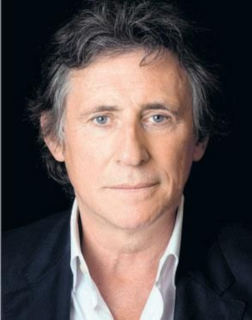
Byrne is the first of six children. His father is a cooper and his mother a hospital worker. He is raised Catholic and educated by the Irish Christian Brothers. He spends five years of his childhood in a seminary training to be a Catholic priest. He later says, “I spent five years in the seminary, and I suppose it was assumed that you had a vocation. I have realized subsequently that I didn’t have one at all. I don’t believe in God. But I did believe at the time in this notion that you were being called.” He attends University College Dublin (UCD), where he studies archeology and linguistics, and becomes proficient in the Irish language. He plays football in Dublin with the Stella Maris Football Club.
Byrne works in archeology after he leaves UCD but maintains his love of his language, writing Draíocht (Magic), the first drama in Irish on Ireland’s national Irish television station, TG4, in 1996.
He discovers his acting ability as a young adult. Before that he works at several occupations which include being an archaeologist, a cook, a bullfighter, and a Spanish schoolteacher. He begins acting when he is 29 years old. He begins on stage at the Focus Theatre and the Abbey Theatre in Dublin, later joining the Royal Court Theatre and the Royal National Theatre in London.
Byrne does not visit the United States until he is 37 years old. In 1988, he married actress Ellen Barkin with whom he has two children. The couple separates amicably in 1993 and divorce in 1999.




 seamus dubhghaill