seamus dubhghaill

Promoting Irish Culture and History from Little Rock, Arkansas, USA


Leave a comment

Death of Paddy Devlin, Northern Ireland Labour Activist

paddy-devlin

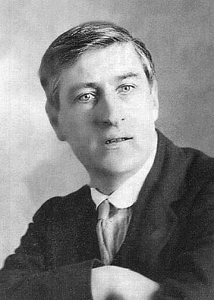
Paddy Devlin, Irish social democrat and Labour activist, former Stormont Member of Parliament (MP), a founder of the Social Democratic and Labour Party (SDLP), and member of the 1974 Power Sharing Executive, dies in Belfast’s Mater Hospital on August 15, 1999, after a long illness.

Devlin is born into a highly political household in the Pound Loney in the Lower Falls of West Belfast on March 8, 1925, and lives in the city for almost all his life. His early activism is confined to Fianna Éireann and then the Irish Republican Army (IRA) and as a result he is interned in Crumlin Road Gaol during the World War II. He leaves the republican movement upon his release.

After the war, and in search of work, he spends some time in Portsmouth working as a scaffolder and in Coventry working in the car industry. In Coventry he becomes interested in Labour and trade union politics and briefly joins the British Labour Party.

Returning to Belfast in 1948 Devlin helps establish the Irish Labour Party there after the Northern Ireland Labour Party (NILP) splits on the issue of partition. He later beats Gerry Fitt to win a seat on the city council. Later Catholic Action claims the Irish Labour Party is infested with communists and ensures the party is effectively wiped-out causing Devlin to lose his seat.

In the mid 1960s Devlin joins the revived NILP and beats Harry Diamond for the Falls seat in Stormont. Devlin then goes on, with Fitt, John Hume, Austin Currie, and others to found the SDLP in 1970. He is later involved, at the request of William Whitelaw, the Secretary of State for Northern Ireland, in ensuring safe passage for Gerry Adams for talks with the British government in 1973. He is a member of the Northern Ireland Assembly, 1973 and Minister of Health and Social Services in the power-sharing Executive from January 1, 1974, to May 28, 1974.

In 1978 Devlin establishes the United Labour Party, which aims to be a broad-based Labour formation in Northern Ireland. He stands under its label for the European Parliament in 1979 but polls just 6,122 first preferences (1.1% of those cast) and thereby loses his deposit.

In 1987 Devlin, together with remnants of the NILP and others, establishes Labour ’87 as another attempt at building a Labour Party in Northern Ireland by uniting the disparate groups supporting labour and socialist policies but it too meets with little or no success. In 1985 he loses his place on Belfast City council.

Devlin suffers from severe diabetes and throughout the 1990s suffers a series of ailments as his health and sight collapse.


Leave a comment

The Battle of the Yellow Ford

battle-of-the-yellow-ford

The Battle of the Yellow Ford is fought in western County Armagh, near the River Blackwater on August 14, 1598, during the Nine Years War. It is fought between the Gaelic native Irish army under Hugh O’Neill, Earl of Tyrone, and Hugh Roe O’Donnell and a crown expeditionary force from Dublin under Henry Bagenal. The crown forces are marching from Armagh to resupply a besieged fort on the Blackwater when they fall into an ambush and are routed with heavy losses.

The crown forces are organized in six regiments — two forward, two centre, and two rear, and with cavalry at centre. As soon as they leave Armagh garrison, they are all harassed with gunfire from rebel forces concealed in the woods. As a result, the different regiments become separated from one another as they pause to deal with the hit and run attacks. The problem is accentuated when one of their ox-drawn artillery pieces becomes stuck in the bog with a damaged wheel and a rear regiment stays behind to guard it as it is slowly coaxed through the bog. The regiment at the front of the march encounters a mile-long trench, 4 feet wide and 5 feet deep. The regiment succeeds in crossing the trench but then comes under heavy attack from large forces and decides to retreat back across the trench, suffering significant losses during the retreat. This regiment then merges into the ranks of the other forward regiment.

At this point, Henry Bagenal is killed by a shot through the head. Command of the army is assumed by Thomas Maria Wingfield. Further demoralising the crown troops and causing chaos, their gunpowder store explodes, apparently ignited accidentally by the fuse of a matchlock musket. Daunted, Wingfield decides to retreat to Armagh. The commander of the forward part either doesn’t get the command or refuses to obey it or is unable to execute an orderly retreat and judges it necessary to maintain his forward position. Seeing their enemy in confusion, the O’Neill cavalry rushes at the head of the forward part, followed by swordsmen on foot. Crown troops in this part of the field are cut to pieces and any wounded left on the field after the battle are slain as well. The rest of the crown forces have to struggle their way back to the Armagh garrison. They reach it largely intact but are harried all the way by the Irish.

Crown forces lose approximately 1,500 men in the battle, including 18 “captains” or officers. Three hundred soldiers desert to the rebels including two English recruits. Out of 4,000 soldiers who set out from Armagh, just over 2,000 reach the town after the battle and become virtual prisoners inside. The cavalry breaks out and dashes south escaping the Irish.

After three days of negotiations, it is agreed that the crown troops can leave Armagh as long as they leave their arms and ammunition behind and that the garrison of the Blackwater Fort surrenders. O’Neill’s forces suffer perhaps 200 to 300 casualties in the battle, though sources for the number lost on O’Neill’s side are very scanty. In light of the battle’s outcome, the court at London greatly and rapidly increase its military forces in Ireland. Simultaneously, many in Ireland who have been neutral on the sidelines begin to support the rebellion. Thus, the ultimate outcome of the battle is an escalation of the war.


Leave a comment

Birth of Mathematician George Gabriel Stokes

george-gabriel-stokes

Sir George Gabriel Stokes, mathematician, physicist, politician, and theologian, is born into an evangelical Protestant family in Skreen, County Sligo, on August 13, 1819. After attending schools in Skreen, Dublin, and Bristol, he matriculates in 1837 at Pembroke College, Cambridge.

In 1849, Stokes is appointed to the Lucasian professorship of mathematics at Cambridge, a position he holds until his death in 1903. In physics, Stokes makes seminal contributions to fluid dynamics, including the Navier–Stokes equations, and to physical optics. In mathematics he formulates the first version of what is now known as Stokes’ theorem and contributes to the theory of asymptotic expansions.

On June 1, 1899, the jubilee of his appointment is celebrated in a ceremony which is attended by numerous delegates from European and American universities. A commemorative gold medal is presented to Stokes by the chancellor of the university, and marble busts of Stokes by Hamo Thornycroft are formally offered to Pembroke College and to the university by Lord Kelvin.

Stokes, who is made a baronet in 1889, further serves his university by representing it in parliament from 1887 to 1892 as one of the two members for the Cambridge University constituency. During a portion of this period (1885–1890) he also serves as president of the Royal Society, of which he has been one of the secretaries since 1854. Since he is also Lucasian Professor at this time, Stokes is the first person to hold all three positions simultaneously.

Stokes dies on Feb. 1, 1903, at his cottage in Cambridge, Cambridgeshire, England. He is buried in the Mill Road Cemetery.


Leave a comment

First Prisoners Arrive at Kilmainham Gaol

kilmainham-gaol

Kilmainham Gaol in Dublin receives its first prisoners on August 12, 1796. When it is first built in 1796, Kilmainham Gaol is called the “New Gaol” to distinguish it from the old prison it is intended to replace. It is officially called the County of Dublin Gaol, and is originally run by the Grand Jury for County Dublin.

Originally, public hangings take place at the front of the prison. However, from the 1820s onward very few hangings, public or private, take place at Kilmainham. A small hanging cell, located on the first floor between the west wing and the east wing, is built in the prison in 1891.

There is no segregation of prisoners as men, women, and children are incarcerated up to five in each cell, with light and heat provided by a single candle which has to last for two weeks. The cells are roughly 28 square metres in area.

At Kilmainham the poor conditions in which women prisoners are kept provide the spur for the next stage of development. Remarkably, for an age that prides itself on a protective attitude for the “weaker sex,” the conditions for women prisoners are persistently worse than for men. Male prisoners are supplied with iron bedsteads while females lay on straw on the floor. Half a century later, however, there is little improvement.

Many Irish revolutionaries, including the leaders of the 1916 Easter Rising, are imprisoned and executed in the prison by the British.

Kilmainham Gaol is decommissioned as a prison by the Irish Free State government in 1924. Seen principally as a site of oppression and suffering at the time, there is no declared interest in its preservation as a monument to the struggle for national independence. The jail’s potential function as a location of national memory is also undercut and complicated by the fact that the first four republican prisoners executed by the Free State government during the Irish Civil War are shot in the prison yard.

The Irish Prison Board contemplates reopening it as a prison during the 1920s but the plans are abandoned in 1929. In 1936 the government considers the demolition of the prison, but the price of this undertaking is seen as prohibitive.

In February 1960 detailed plans submitted by the Kilmainham Gaol Restoration Society for the restoration of Kilmainham, which notably also envisions the site’s development as a tourist attraction, receive the approval of the notoriously parsimonious Department of Finance. Restoration work begins in May of the same year. The final restoration of the site is completed in 1971 when Kilmainham Gaol chapel is re-opened to the public.

Kilmainham Gaol now houses a museum on the history of Irish nationalism and offers guided tours of the building. An art gallery on the top floor exhibits paintings, sculptures, and jewelry of prisoners incarcerated in prisons all over contemporary Ireland.  It is run by the Office of Public Works, an agency of the Government of Ireland.


Leave a comment

Birth of Henry Grattan Guinness, Evangelist & Author

henry-grattan-guinness

Henry Grattan Guinness, Irish Protestant Christian preacher, evangelist, and author, is born in Kingstown in Taney Parish, Dublin, on August 11, 1835. He is the great evangelist of the Evangelical awakening and preaches during the Ulster Revival of 1859 which draws thousands to hear him. He is responsible for training and sending hundreds of “faith missionaries” all over the world.

Guinness begins preaching in 1855. He offers to join the China Inland Mission founded by James Hudson Taylor in 1865 but takes Taylor’s advice to continue his work in London.

In September 1866, while in Keighley, Yorkshire, Guinness sees a notice advertising a series of lectures by the freethinker and communist Harriet Law. For a week he holds a series of meetings at the same time to try to counteract her influence. He is appalled at the “scoffing unbelief” of such speakers. With the help of Professor John Couch Adams, some astronomical tables, and examination of the scriptures, Guinness works out the prophetic chronology of the bible in terms of a series of “solilunar cycles.” This proves to him that he is living at the end of the sixth unsabbatic day of creation, 6,000 years from Adam, and that the “redemption Sabbath” will soon arrive. This revelation becomes the subject of many of his books and sermons.

In March 1873, Henry and his wife Fanny start the famous East London Missionary Training Institute, also known as Harley College, at Harley House in Bromley-by-Bow, East End of London with just six students. The renowned Dr. Thomas John Barnardo is co-director with Dr. Guinness and is greatly influenced by him. The school trains 1,330 missionaries for 30 societies of 30 denominations.

Harley College becomes so successful that it needs a larger home. In 1883, Elizabeth Hulme offers Guinness Cliff House near Calver, Derbyshire. Harley College is renamed Hulme Cliff College. Now known as Cliff College it continues to this day training and equipping Christians for mission and evangelism.

In 1873, Guinness founds the East London Institute for Home and Foreign Missions, the root of the Regions Beyond Missionary Union. In 1877, he founds the Livingstone Inland Mission. His son, Dr. Henry Grattan Guinness, founds the Congo-Balolo Mission in 1888 and co-founds the Congo Reform Association in 1904.

Guinness dies in Bath, Somerset, England, on June 21, 1910, at 75 years of age.


Leave a comment

The Second Battle of Athenry

athenry-castle

The Second Battle of Athenry takes place on August 10, 1316. The English Colonists defeat the Irish in a very bloody battle. This is one of the most decisive battles of the Bruce campaign in Ireland (1315-1318).

The numbers involved are unknown and can only be estimated. The royal army is believed to have been as much as a few thousand, while that of Athenry is probably several hundred less. While it is doubtful that there are any more than seven thousand, the list of participants on the Irish side alone indicates that an overall figure of at least three to four thousand are involved. The English claim that they take some 1,100 heads from the Irish on that day.

Unlike the First Battle of Athenry in 1249, no account is given of the battle itself in any surviving account. Even the site of the battle itself is uncertain.

Fedlim Ó Conchobair, the King of Connacht, leads a coalition of the Gaels to stop the return of William Liath de Burgh, the Anglo-Irish Lord of Connacht. He has come back from Scotland to try and regain his lost lands in the western province. He gathers together a large and well-equipped army from the colonists of Connacht and Meath. Rickard de Bermingham leads the English of Meath. Ó Conchobair also puts together a formidable army drawn from north Munster, south Connacht, and the kingdoms of Breifne and Meath.

Although details of the battle are very sketchy at best, the Irish certainly meet with catastrophe. Fedlim Ó Conchobair and Tadhg Ó Cellaigh, King of Uí Maine, are among those who are killed along with numerous other kings and chieftains of the Gaels.

(Pictured: Athenry Castle)


Leave a comment

The Siege of Limerick

cittie-of-limerick

Siege of Limerick commences on August 9, 1690, when William of Orange and his army of 25,000 men reach Limerick and occupy Ireton’s fort and Cromwell’s fort outside the city. His siege cannons are still making their way from Dublin with a light escort so all he has available is his field artillery. The siege train is intercepted by Patrick Sarsfield’s cavalry at Ballyneety in County Limerick and destroyed, along with the Williamites‘ siege guns and ammunition. This forces William to wait another ten days before he can start bombarding Limerick in earnest while another siege train is brought up from Waterford.

By this time, it is late August. Winter is approaching and William wants to finish the war in Ireland so he can return to the Netherlands and proceed with the main business of the War of the Grand Alliance against the French. For this reason, he decides on an all-out assault on Limerick.

His siege guns blast a breach in the walls of the “Irish town” section of the city and William launches his assault on August 27. The breach is stormed by Danish grenadiers, but the Jacobite’s French officer Boisseleau has built an earthwork or coupure inside the walls and has erected barricades in the streets, impeding the attackers. The Danish grenadiers, and the eight regiments who follow them into the breach, suffer terribly from musketry and cannon fire at point blank range. Jacobite soldiers without arms and the civilian population, including women, line the walls and throw stones and bottles at the attackers. A regiment of Jacobite dragoons also make a sortie and attack the Williamites in the breach from the outside. After three and a half hours of fighting, William finally calls off the assault.

William’s men suffer about 3,000 casualties, including many of their best Dutch, Danish, German, and Huguenot troops. The Jacobites lose only 400 men in the battle. Due to the worsening weather, William calls off the siege and puts his troops into winter quarters, where another 2,000 of them die of disease. William himself leaves Ireland shortly afterwards, returning to London. He subsequently leaves London to take command of Allied forces fighting in Flanders and leaves Godert de Ginkell to command in Ireland. The following year Ginkell wins a significant victory at the Battle of Aughrim.

Limerick is to remain a Jacobite stronghold until it surrenders after another Williamite siege the following year. Following the loss of this last major stronghold, Patrick Sarsfield leads the army into exile in the Flight of the Wild Geese to the Continent, where they continue to serve the cause of James II and his successors.


Leave a comment

Birth of U2’s The Edge, David Howell Evans

the-edge

David Howell Evans, British-born Irish musician and songwriter best known by his stage name The Edge and as the lead guitarist, keyboardist, and backing vocalist of the rock band U2, is born at the Maternity Hospital in Barking, Essex, England on August 8, 1961. A member of U2 since its inception, he has recorded 13 studio albums with the band as well as one solo record.

The Edge is raised in Ireland after the Evans family relocates there while he is still an infant. He receives his initial formal education at St. Andrew’s National School in Dublin. As a child he also receives piano and guitar lessons, and practises music with his elder brother Richard. In 1976, at Mount Temple Comprehensive School, he goes to a meeting in response to an advert posted by another pupil, Larry Mullen Jr., on the school’s noticeboard seeking musicians to form a new band with him. Among the other pupils who respond to the note are Paul Hewson (Bono) and Adam Clayton. The band goes through a number of versions before becoming known as U2 in March 1978.

U2 begins its public performance life in small venues in Dublin, occasionally playing at other venues elsewhere in Ireland. In December 1979 they perform their first concerts outside Ireland, in London, and in 1980 begin extensive touring across the British Isles. Their debut album Boy is released in 1980.

In 1981, leading up to the October Tour, Evans comes very close to leaving U2 for religious reasons, but he decides to stay. During this period, he becomes involved with a group called Shalom Tigers, in which bandmates Bono and Larry Mullen Jr. are also involved. Shortly after deciding to remain with the band, he writes a piece of music that later becomes Sunday Bloody Sunday.

U2 eventually becomes one of the most popular acts in popular music, with successful albums such as 1987’s The Joshua Tree and 1991’s Achtung Baby. Over the years, the Edge has experimented with various guitar effects and introduced influences from several genres of music into his own style, including American roots music, industrial music, and alternative rock. With U2, the Edge also plays keyboards, co-produced their 1993 record Zooropa, and occasionally contributes lyrics.

In addition to his regular role within U2, The Edge has also recorded with such artists as Johnny Cash, B. B. King, Tina Turner, Ronnie Wood, Jah Wobble, Holger Czukay, Jay-Z, and Rihanna. He has collaborated with U2 bandmate Bono on several projects, including the soundtracks to the musical Spider-Man: Turn Off the Dark and the Royal Shakespeare Company‘s London stage adaptation of A Clockwork Orange.

The Edge, Bob Ezrin, and Henry Juszkiewicz co-found Music Rising in 2005, a charity that helps provide replacement instruments for those that were lost in Hurricane Katrina. The instruments are originally only replaced for professional musicians, but they soon realise the community churches and schools need instruments as well. The charity’s slogan is “Rebuilding the Gulf Region note by note” and has helped over a hundred musicians who were affected by the hurricane. The Edge also serves on the board of The Angiogenesis Foundation, a 501(c)(3) nonprofit organisation dedicated to improving global health by advancing angiogenesis-based medicine, diets, and lifestyle.

In 2011, Rolling Stone magazine places him at number 38 on its list of “The 100 Greatest Guitarists of All Time.” In 2012, Spin ranks him 13th on their own list.


3 Comments

Birth of Flying Ace Thomas Falcon Hazell

thomas-falcon-hazell

Thomas Falcon Hazell, fighter pilot with the Royal Flying Corps and later the Royal Air Force during World War I, is born in Roundstone, County Galway, on August 7, 1892. Hazell scores 43 victories in 1917–1918 making him the fifth most successful British “flying ace” of the war, the third most successful Irish-born pilot behind Edward Mannock and George McElroy, and the only pilot to survive the war from both groups.

Upon the outbreak of the war in August 1914, Hazell volunteers for service as a private with the South Irish Horse. On October 10 he is commissioned as second lieutenant in the 7th Battalion, Royal Inniskilling Fusiliers. As part of the 49th Brigade in the 16th (Irish) Division, the 7th Inniskillings are initially based at Tipperary, where Hazell is promoted to lieutenant on June 4, 1915. The regiment lands in France in February 1916.

Soon afterwards Hazell transfers to the Royal Flying Corps. In April and May he is assigned to No. 5 Reserve Squadron, based at Castle Bromwich. He is appointed a flying officer on June 5 and survives a severe crash before completing his training. He eventually joins No. 1 Squadron on the Western Front. Flying Nieuport 17 Scouts, he shoots down 20 enemy aircraft between March and August 1917, being appointed a flight commander with the acting rank of captain on May 25, and is awarded the Military Cross on July 26.

After serving as an instructor at the Central Flying School in 1918, he takes command of “A” Flight, No. 24 Squadron, flying the S.E.5a. On August 22, 1918, Hazell shoots down an observation balloon despite its escort of seven Fokker D.VIIs. The escort is led by German ace Ernst Udet, who attacks and riddles Hazell’s petrol tank, propeller, and two longerons with bullets. In spite of this Hazell fights his way back, eyes full of petrol, and lands safely. Udet thinks he has forced the British pilot to crash and actually claims him as his 60th victory. Hazell finishes the war with 43 confirmed kills, the top British surviving ace of the war (excluding Dominion airmen). Hazell is twice awarded the Distinguished Flying Cross. On June 11, 1927, he returns to the RAF Depot at Uxbridge and is placed on the retired list on July 20, 1927, at his own request.

In 1944, at the age of 52, Hazell becomes the commander of “D” Company, 24th (Tettenhall) Battalion, South Staffordshire Home Guard during the later part of World War II.

Hazell dies in Newport, County Mayo, on September 4, 1946, and is buried at the Burrishoole Church of Ireland Cemetery there. In 2014 his grave, which had been largely forgotten and neglected, is restored, repaired, and re-dedicated in a ceremony on August 4, 2014, the 100th anniversary of the declaration of World War I.


Leave a comment

Birth of the Liberator, Daniel O’Connell

daniel-oconnell

Daniel O’Connell, Irish political leader often referred to as The Liberator or The Emancipator, is born on August 6, 1775, at Carhan near Cahersiveen, County Kerry, to the O’Connells of Derrynane, a once-wealthy Roman Catholic family, that has been dispossessed of its lands.

Raised by his uncle, Daniel learns the Irish language and Irish lore in Kerry. O’Connell does part of his schooling in France during the revolution. On May 19, 1798, O’Connell is called to the Irish Bar and becomes a barrister. Four days later, the United Irishmen stage their rebellion which is put down by the British with great bloodshed. O’Connell does not support the rebellion. He believes that the Irish need to assert themselves politically rather than by force. The violent excesses he witnesses in France, the slaughter of the 1798 Rising, and finally his own killing of a man in a duel in 1815 leads him to renounce violence forever.

Moving into politics, O’Connell founds the Catholic Association in 1823, creating one of the first massive political movements in Europe or the Americas. The Catholic Association embraces other aims to better Irish Catholics, such as electoral reform, reform of the Church of Ireland, tenants’ rights, and economic development.

When he is elected to Parliament in 1828, he is unable to take his seat as members of parliament have to take the Oath of Supremacy, which is incompatible with Catholicism.  Fear of the reaction of his millions of followers leads to the passage of the Roman Catholic Relief Act 1829. O’Connell works for Home Rule for Ireland for the rest of his days but never achieves it. The British ban his mass Repeal of the Union rallies in 1843 and jail him for a time. The movement loses momentum at that point and the long years of hard work wear “The Liberator” down.

O’Connell dies at the age of 71 of cerebral softening on May15, 1847, in Genoa, Italy, while on a pilgrimage to Rome. His time in prison seriously weakens him and the appallingly cold weather he has to endure on his journey is likely the final blow. According to his dying wish, his heart is buried in Rome at Sant’Agata dei Goti, then the chapel of the Irish College, and the remainder of his body in Glasnevin Cemetery in Dublin, beneath a round tower.