seamus dubhghaill

Promoting Irish Culture and History from Little Rock, Arkansas, USA


Leave a comment

Birth of Sir Richard Steele, Writer & Politician

sir-richard-steele

Sir Richard Steele, Irish writer and politician, remembered as co-founder, with his friend Joseph Addison, of the magazine Tatler, is born in Dublin on March 12, 1672.

Steele is born to Richard Steele, an attorney, and Elinor Symes (née Sheyles). He is largely raised by his uncle and aunt, Henry Gascoigne and Lady Katherine Mildmay. A member of the Protestant gentry, he is educated at Charterhouse School, where he first meets Addison. After starting at Christ Church, Oxford, he goes on to Merton College, Oxford, then joins the Life Guards of the Household Cavalry in order to support King William’s wars against France. He is commissioned in 1697 and rises to the rank of captain within two years. Steele leaves the army in 1705, perhaps due to the death of the 34th Foot’s commanding officer, Robert Lucas, which limits his opportunities of promotion.

Steele’s first published work, The Christian Hero (1701), attempts to point out the differences between perceived and actual masculinity. Written while he serves in the army, it expresses his idea of a pamphlet of moral instruction. The Christian Hero is ultimately ridiculed for what some thought was hypocrisy because Steele did not necessarily follow his own preaching.

Steele writes a comedy that same year entitled The Funeral. This play meets with wide success and is performed at the Theatre Royal, Drury Lane, London, bringing him to the attention of the King and the Whig party. Next, Steele writes The Lying Lover, one of the first sentimental comedies, but a failure on stage. In 1705, he writes The Tender Husband, and later that year writes the prologue to The Mistake, by John Vanbrugh.

In 1706 Steele is appointed to a position in the household of Prince George of Denmark, consort of Anne, Queen of Great Britain. He also gains the favour of Robert Harley, Earl of Oxford.

The Tatler, Steele’s first journal, is first published on April 12, 1709, and appears three times a week. Steele writes this periodical under the pseudonym Isaac Bickerstaff and gives Bickerstaff an entire, fully developed personality. Steele describes his motive in writing Tatler as “to expose the false arts of life, to pull off the disguises of cunning, vanity, and affectation, and to recommend a general simplicity in our dress, our discourse, and our behavior.”

The Tatler is closed down to avoid the complications of running a Whig publication that has come under Tory attack. Addison and Steele then found The Spectator in 1711 and also The Guardian in 1713.

Steele becomes a Whig Member of Parliament in 1713, for Stockbridge. He is soon expelled for issuing a pamphlet in favour of the Hanoverian succession. When George I of Great Britain comes to the throne in the following year, Steele is knighted and given responsibility for the Theatre Royal, Drury Lane, London. He returns to parliament in 1715, for Boroughbridge.

While at Drury Lane, Steele writes and directs the sentimental comedy The Conscious Lovers, which is an immediate hit. However, he falls out with Addison and with the administration over the Peerage Bill (1719), and in 1724 he retires to his wife’s homeland of Wales, where he spends the remainder of his life.

Steele remains in Carmarthen after his wife Mary’s death, and is buried there, at St. Peter’s Church. During restoration of the church in 2000, his skull is discovered in a lead casket, having previously been accidentally disinterred during the 1870s.

Leave a comment

Dáil Éireann Declares War with Great Britain

first-dail

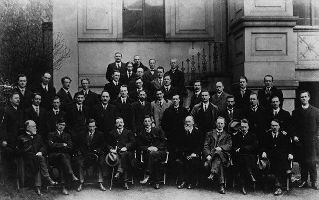
The President of the Dáil Éireann, Éamon de Valera, secures on March 11th, 1921, the chamber’s support for a formal declaration of war with Great Britain.

In January 1921, at his first Dáil meeting after his return to a country gripped by the War of Independence, de Valera introduces a motion calling on the Irish Republican Army (IRA) to desist from ambushes and other tactics that are allowing the British to successfully portray it as a terrorist group, and to take on the British forces with conventional military methods. This they strongly oppose, and de Valera relents, issuing a statement expressing support for the IRA, and claims it is fully under the control of the Dáil. He then, along with Cathal Brugha and Austin Stack, bring pressure to bear on Michael Collins to undertake a journey to the United States himself, on the pretext that only he can take up where de Valera had left off. Collins successfully resists this move and stays in Ireland.

The British government’s proposal of a Truce and negotiations over Ireland’s future is a result of both domestic and international factors. The British have been unable to defeat the Irish struggle for independence and there is a danger that the longer it continues the more radicalised it is becoming. In March 1921 Southern Unionist leader Lord Midleton also points to the strengthening of the independence movement, telling David Lloyd George and Hamar Greenwood that the resistance is now three times stronger than in July 1920. The following month Greenwood himself is talking of pacification taking years rather than months. British government policy in Ireland is also creating problems for it both internationally (especially in the United States) and in Britain itself. At the same time Britain is facing growing independence struggles in Egypt and India. It also faces an increasingly difficult financial situation. British foreign trade suffers a substantial collapse in 1921 as its exports fall by 48 percent over a twelve-month period, its imports drop by 44 percent, and unemployment rapidly increases. The Economist describes 1921 as one of the worst years of depression since the industrial revolution began.

There is a substantial debate in the British Cabinet about whether or not to proceed along these lines. An example of this is the May 12, 1921 Cabinet meeting. Greenwood appears to have revised his view about how long pacification will take. He is opposed to the Truce proposal at this stage, feeling that the republicans are being worn down. Health Minister Christopher Addison disagrees and favours a truce. Winston Churchill, who has been in favour of the substantial escalation of coercion, now supports a truce partly because things are getting “very unpleasant as regards the interests of this country all over the world; we are getting an odious reputation; poisoning our relations with the United States.” Herbert Fisher, who is a historian and head of the Board of Education as well as a politician, also worries, “the present situation is degrading to the moral life of the whole country; a truce would mean a clear moral and political gain” and that if the IRA accepts the truce it will be hard for them to start up again, it will also “create a big rift in Sinn Féin ranks, the moderate Sinn Féin would have to come out into the open.” This meeting rejects the idea of a truce. In June, however, a memorandum from Nevil Macready states that beating the republicans will require coercion being carried out to the maximum and if this is done the cabinet will have to stand by 100 executions a week. Such a policy is a political impossibility. In this situation, Lloyd George proposes an Anglo-Irish conference and negotiations.


Leave a comment

Birth of Revolutionary James Fintan Lalor

james-fintan-lalor

James Fintan Lalor, Irish revolutionary, journalist, and one of the most powerful writers of his day, is born on March 10, 1807, in Tinnakill House, Raheen, County Laois. A leading member of the Irish Confederation (Young Ireland), he plays an active part in both the Rebellion in July 1848 and the attempted Rising in September of that same year.

His father Patrick is an extensive farmer and is the first Catholic MP for Laois from 1832–1835. The household is a very political one where active discussion on national issues is encouraged.

Because of an accident when he is young, James is semi-crippled all his life. He is not a very healthy young man and consequently is educated at home. He spends some time attending college in Carlow but is forced to return home because of his health.

His father is passionately opposed to the payment of tithes and urges Catholics not to pay. James supports this stand but it is the land question and the power of the landlords to evict tenants that exercises James in particular. His father is also a great supporter of Daniel O’Connell and the Repeal movement. However, James does not support the Repeal movement as he considers it to be flawed. As a result, a rift occurs between James and his father on this question. Such is the rift that James leaves home and spends time in Belfast and Dublin. He finally returns home due to ill health and heals his differences with his father.

It is while writing from home that James achieves national prominence. His writings have a profound effect on such figures as Michael Davitt, Patrick Pearse, James Connolly, and Arthur Griffith. He contributes articles to The Nation and The Felon. He advocates rent strikes and active resistance to any wrongdoings. His central theme is the rights of the tenant farmer to his own land. In his opinion, land reform is the biggest issue of the time. He writes articles such as “What must be done,” “The Faith of a felon,” “Resistance,” and “Clearing Decks.” It is he who says it is time for revolution and active resistance. This is especially evident during famine years when tenants are being evicted for nonpayment of rent. As a result, he is arrested and imprisoned. Upon his release he continues to write. He is now a nationally acclaimed writer, revolutionary, and reformer.

Ill health once again curtails his efforts. An attack of bronchitis eventually brings about his early death on December 27, 1849, at the age of 43. He is buried in Glasnevin Cemetary in Dublin.


Leave a comment

Birth of Novelist Mickey Spillane

mickey-spillane

Frank Morrison Spillane, better known as Mickey Spillane, American crime novelist whose stories often feature his signature detective character Mike Hammer, is born in Brooklyn, New York City, on March 9, 1918. More than 225 million copies of his books have sold internationally. Spillane is also an occasional actor, once even playing Hammer himself.

Born in Brooklyn and raised in Elizabeth, New Jersey, Spillane is the only child of his Irish bartender father, John Joseph Spillane, and his Scottish mother, Catherine Anne. Spillane attends Erasmus Hall High School, graduating in 1935. He starts writing while in high school, briefly attends Fort Hays State College in Kansas, and works a variety of jobs, including summers as a lifeguard at Breezy Point, Queens, and a period as a trampoline artist for the Ringling Bros. and Barnum & Bailey Circus.

Spillane starts as a writer for comic books. While working as a salesman in Gimbels department store basement in 1940, he meets tie salesman Joe Gill, who later finds a lifetime career in scripting for Charlton Comics. Gill tells Spillane to meet his brother, Ray Gill, who writes for Funnies Inc., an outfit that packages comic books for different publishers. Spillane soon begins writing an eight-page story every day.

Spillane joins the United States Army Air Forces on December 8, 1941, the day after the attack on Pearl Harbor, becoming a fighter pilot and a flight instructor. While flying over Murrells Inlet, South Carolina, he says, “That is where I want to live.” Later, he uses his celebrity status to publicize the Grand Strand on television, but when it becomes a popular resort area and traffic becomes a problem, Spillane says, “I shouldn’t have told people about it.”

Spillane decides to boost his bank account by writing a novel. In nineteen days he writes I, the Jury. At the suggestion of Ray Gill, he sends it to E. P. Dutton. With the combined total of the 1947 hardcover and the Signet paperback (December 1948), I, the Jury sells 6-1/2 million copies in the United States alone. I, the Jury introduces Spillane’s most famous character, hard-boiled detective Mike Hammer.

Spillane is an active Jehovah’s Witness. He and Mary Ann Spillane have four children, and their marriage ends in 1962. In November 1965, he marries his second wife, nightclub singer Sherri Malinou. After that marriage ends in divorce and a lawsuit in 1983, Spillane shares his waterfront house in Murrells Inlet with his third wife, Jane Rogers Johnson, whom he marries in October 1983, and her two daughters.

In the 1960s, Spillane becomes a friend of the novelist Ayn Rand. Despite their apparent differences, Rand admires Spillane’s literary style, and Spillane becomes, as he describes it, a fan of Rand’s work.

He receives an Edgar Allan Poe Grand Master Award in 1995. Spillane’s novels go out of print, but in 2001, the New American Library begins reissuing them.

Spillane dies July 17, 2006, at his home in Murrells Inlet, of pancreatic cancer. After his death, his friend and literary executor, Max Allan Collins, begins the task of editing and completing Spillane’s unpublished typescripts, beginning with a Mike Hammer novel, The Goliath Bone (2008).

In July 2011, the town of Murrells Inlet names U.S 17 Business the “Mickey Spillane Waterfront 17 Highway.” The proposal first passes the Georgetown County Council in 2006 while Spillane is still alive, but the South Carolina General Assembly rejects the plan at that time.


Leave a comment

Birth of Cricketer Thomas Patrick Horan

thomas-patrick-horan

Thomas Patrick Horan, Australian cricketer who plays for Victoria and Australia, and later becomes an esteemed cricket journalist under the pen name “Felix,” is born on March 8, 1854, in Midleton, County Cork.

Horan emigrates to Australia with his parents and siblings as a small child. In Melbourne, he attends Bell Street School in Fitzroy and forms a friendship with Jack Blackham. Blackham encourages in Horan a love of cricket. Horan makes his first-class debut for Victoria in the 1874-1875 season.

The first of only two players born in Ireland to play Test cricket for Australia, Horan is the leading batsman in the colony of Victoria during the pioneering years of international cricket. He plays for Australia in the game against England subsequently designated as the first Test match, before touring England with the first representative Australian team, in 1878. Four years later, he tours England for the second time and plays in the famed Ashes Test match at The Oval.

An aggressive middle-order batsman renowned for his leg side play, Horan supplements his batting by bowling medium-pace in the roundarm style common to his era and once captures six wickets in a Test match innings. During a season disrupted by financial disputes and a strike by leading players, he captains Australia in two Test matches of the 1884–85 Ashes series but loses both games. Horan’s form peaks between the ages of 26 and 29 when he scores seven of his eight first-class centuries, including a score of 124 in a Test match on his home ground at the Melbourne Cricket Ground in January 1882.

In 1879, Horan begins writing a weekly newspaper column that continues until his death 37 years later. He establishes himself as the first Australian cricket writer who has played the game at the highest level, thus paving the way for many players to enter the media. Bill O’Reilly, the noted Australian player-writer of the twentieth century, describes him as, “the cricket writer par excellence.”

Horan’s documentation of the early years of Australian cricket are the basis for many works on the subject. Gideon Haigh writes that any, “serious scholar in the field…should probably acquaint himself with Tom Horan.” An anthology of his articles is published for the first time in 1989 when he is posthumously inducted into the Sport Australia Hall of Fame for his writing. In part, his citation reads, “…it was as the first nationally known cricket writer that he made his major contribution to the game.”

Thomas Patrick Horan dies on April 16, 1916, in Malvern, Victoria, Australia.


Leave a comment

Birth of Patrick Michael Clancy

patrick-michael-clancy

Patrick Michael Clancy, Irish folk singer best known as a member of The Clancy Brothers and Tommy Makem, is born on March 7, 1922, at Carrick-on-Suir, County Tipperary. In addition to singing and storytelling, Clancy plays the harmonica with the group, which is widely credited with popularizing Irish traditional music in the United States and revitalizing it in Ireland. He also starts and runs the folk music label Tradition Records, which records many of the key figures of the American folk music revival.

Clancy is one of eleven children and the eldest of four boys born to Johanna McGrath and Bob Clancy. During World War II he serves as a flight engineer in the Royal Air Force in India. After his demobilization, Clancy works as a baker in London. In 1947 he emigrates to Toronto, Canada with his brother Tom Clancy. The following year, the two brothers move to Cleveland, Ohio to stay with relatives. Later, they attempt to move to California, but their car breaks down and they relocate to the New York City area instead.

After moving to Greenwich Village in 1951, both Patrick and Tom devote themselves primarily to careers in the theater. In addition to appearing in various Off-Broadway productions and television shows, they produce and star in plays at the Cherry Lane Theatre in Greenwich Village and at a playhouse in Martha’s Vineyard. After losing money on some unsuccessful plays, the brothers begin singing concerts of folk songs after their evening acting jobs are over. They soon dub these concerts “Midnight Specials” and the “Swapping Song Fair.” Patrick and Tom are often joined by other prominent folk singers of the day, including Pete Seeger, Woody Guthrie, and Jean Ritchie.

In 1956 their younger brother, Liam Clancy, immigrates to New York, where he teams up with Tommy Makem, whom he had met while collecting folk songs in Ireland. The two begin singing together at Gerde’s Folk City, a club in Greenwich Village. Patrick and Tom sing with them on occasion, usually in informal folk “sing-songs” in the Village. Around the same time, Patrick founds Tradition Records with folk-song collector and heiress Diane Hamilton, and in 1956 the Clancy Brothers and Tommy Makem release their first album, The Rising of the Moon, with only Patrick’s harmonica as musical accompaniment. However, the Clancys and Makem do not become a permanent singing group until 1959.

In the late 1950s, Clancy with his brothers and Makem begin to take singing more seriously as a permanent career, and soon they record their second album, Come Fill Your Glass with Us. This album proves to be more successful than their debut album, and they begin receiving job offers as singers at important nightclubs, including the Gate of Horn in Chicago and the Blue Angel in New York City. The group garners nationwide fame in the United States after an appearance on The Ed Sullivan Show, which leads to a contract with Columbia Records in 1961. Over the course of the 1960s, the Clancy Brothers and Tommy Makem record approximately two albums a year for Columbia. By 1964, Billboard magazine reports that the group was outselling Elvis Presley in Ireland.

The group performs together on stage, recordings, and television to great acclaim in the United States, Ireland, the United Kingdom, Canada, and Australia until Tommy Makem leaves to pursue a solo career in 1969. They continue performing first with Bobby Clancy and then with Louis Killen until Liam leaves in 1976 also to pursue a solo career. In 1977 after a short hiatus, the group reforms with Patrick, Tom, and Bobby Clancy and their nephew Robbie O’Connell. Liam returns in 1990 after the death of Tom Clancy.

In 1968, after two decades in North America, Clancy returns to live in Carrick-on-Suir, where he purchases a dairy farm and breeds exotic cattle. When not on tour or working on his farm, he spends much of his time fishing, reading, and doing crossword puzzles. In the late 1990s, he is diagnosed with a brain tumor. The tumor is successfully removed, but he is also stricken with terminal lung cancer around the same time. He continues performing until his failing health prevents him from doing so any longer.

Patrick Clancy dies at home of lung cancer on November 11, 1998, at the age of 76. He is buried, wearing his trademark white cap, in the tiny village of Faugheen, near Carrick-on-Suir.


Leave a comment

Birth of Patrick Joseph McCall, Songwriter & Poet

patrick-joseph-mccall

Patrick Joseph McCall, Irish songwriter and poet known mostly as the author of lyrics for popular ballads, is born at 25 Patrick Street in Dublin on March 6, 1861. He is assisted in putting the Wexford ballads, dealing with the Irish Rebellion of 1798, to music by Arthur Warren Darley using traditional Irish airs. His surname is one of the many anglicizations of the Irish surname Mac Cathmhaoil, a family that were chieftains of Kinel Farry (Clogher area) in County Tyrone.

McCall is the son of John McCall (1822-1902), a publican, grocer, and folklorist from Clonmore near Hacketstown in County Carlow. He attends St. Joseph’s Monastery, Harold’s Cross, a Catholic University School.

He spends his summer holidays in Rathangan, County Wexford, where he spends time with local musicians and ballad singers. His mother came from Rathangan near Duncormick on the south coast of County Wexford. His aunt Ellen Newport provides much of the raw material for the songs and tunes meticulously recorded by her nephew. He also collects many old Irish airs but is probably best remembered for his patriotic ballads. Airs gathered at rural céilí and singsongs are delivered back to the Royal Irish Academy in Dublin.

He contributes to the Dublin Historical Record, the Irish Monthly, The Shamrock, and Old Moore’s Almanac (under the pseudonym Cavellus). He is a member of the group in Dublin which founds the National Literary Society and becomes its first honorary secretary.

He marries Margaret Furlong, a sister of the poet Alice Furlong, in 1901. They live in the suburb of Sutton, near Howth.

In 1902 he is elected as a Dublin City councillor, defeating James Connolly, and serves three terms. As a councillor he concerns himself with local affairs, particularly projects to alleviate poverty.

Patrick Joseph McCall dies on March 5, 1919, one day before his 58th birthday, in Sutton, Fingal, Dublin.


Leave a comment

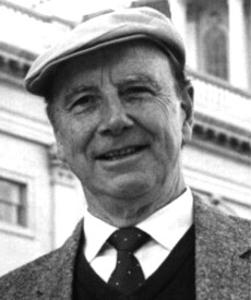
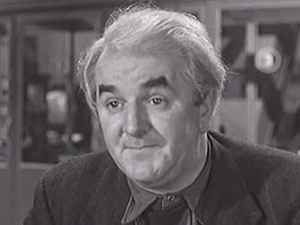
Birth of Joseph Tomelty, Actor & Playwright

joseph-tomelty

Joseph Tomelty, Irish character actor and playwright, is born at Portaferry, County Down, on March 5, 1911. He works in film, television, radio, and on the stage, starring in Sam Thompson‘s 1960 play Over the Bridge.

Tomelty is the eldest of seven children. His father is known as “Rollickin’ James” for his skill on the fiddle. He leaves his local primary school at the age of 12 and is apprenticed to the trade of housepainter, his father’s trade. He moves to Belfast and attends classes at Belfast Technical College.

Tomelty first acts with St. Peter’s Players and with others in 1937 and 1938 takes part in discussions which lead to the formation of the Northern Ireland Players on a more professional basis. Radio plays Barnum is Right and Elopement are broadcast in December 1938 and February 1939 respectively. The Northern Ireland Players choose the stage version of Barnum is Right for their first major commercial venture at the Empire Theatre in June 1939.

In 1940 the Northern Ireland Players join forces with the Ulster Theatre and the Jewish Institute Dramatic Society to form the Group Theatre. In 1942 Tomelty becomes its general manager remaining in the post until 1951. His play, Idolatry at Innishargie, enjoys a short run at the Group Theatre in 1942, but The End House, a controversial political play, does not even appear there. The play deals with what he describes as “the inhumanity that resulted from the Special Powers Act.” It is however performed at the Abbey Theatre in Dublin in 1944.

Meanwhile, his career as a character actor rapidly develops and a successful stage and film career is underway. In 1948 he is commissioned by the BBC in Belfast to write the weekly radio comedy drama series The McCooeys. This radio series lasts for seven years with Tomelty writing 6,000 word scripts for each episode. He continues to write plays, including his masterpiece, and a modern Irish theatre classic, All Souls’ Night in 1948.

In 1954 Tomelty is injured in an automobile accident while filming Bhowani Junction in England and, while he recovers, he is never as productive again. He dies in Belfast on June 7, 1995.


Leave a comment

The Castle Hill Rebellion

castle-hill-rebellion

The Castle Hill Rebellion, a rebellion by convicts against the colonial forces of Australia in the Castle Hill area of the British colony of New South Wales, takes place on March 4, 1804. The rebellion culminates at Rouse Hill, dubbed the Second Battle of Vinegar Hill after the first Battle of Vinegar Hill which had taken place in 1798 in Ireland. It is the first and only major convict uprising in Australian history suppressed under martial law.

On March 4, according to the official accounts, 233 convicts led by Philip Cunningham, a veteran of the Irish Rebellion of 1798 as well as the mutiny on the convict transport ship Anne, escapes from a prison farm intent on “capturing ships to sail to Ireland,” In response, martial law is quickly declared in the Colony of New South Wales. The mostly Irish rebels, having gathered reinforcements, are hunted by the colonial forces until they are sequestered on March 5 on a hillock nicknamed Vinegar Hill. Under a flag of truce, Cunningham is arrested, and troops charge and the rebellion is crushed by a raid.

According to the official records of the day, around 230 are eventually brought in over next few days. Of the convicts directly engaged in the battle, 15 are killed and nine, including the ringleaders Cunningham and William Johnston, are executed, with two subjected to gibbeting. Two men, John Burke and Bryan McCormack, are reprieved and detained at the Governor’s pleasure, seven are whipped with 200 or 500 lashes then allotted to the Coal River chain gang, while 23 others are sent to the Newcastle coal mines. Another 34 prisoners are placed in irons until they can be “disposed of.” It is not known whether some, or all of them, are sent to the Coal River. Of the remaining rebels, some are put on good behaviour orders against a trip to Norfolk Island, while the majority are pardoned and allowed to return to their places of employment as having been coerced into the uprising.

Cunningham, badly wounded but still alive, is court martialed under the martial law and hanged at the Commissariat Store at Windsor, which he had bragged he would burn down. Initially, military officers are intent on hanging a token number of those captured having convened a military court at the Whipping Green but this is quickly stopped by Governor Gidley King fearful of the repercussions.

Martial law is eventually lifted on March 10, 1804, but this does not end the insurgency. Irish plots continue to develop, keeping the Government and its informers vigilant, with military call out rehearsals continuing over the next three years. Governor King remains convinced that the real inspirers of revolt had kept out of sight. He had some suspects sent to Norfolk Island as a preventive measure.


Leave a comment

Ahern & Blair Conduct Talks at Hillsborough Castle

ahern-blair-hillsborough

Taoiseach Bertie Ahern and British Prime Minister Tony Blair conduct talks at Hillsborough Castle on March 3, 2003, in the latest bid to salvage the floundering Good Friday Agreement. The negotiations last eight hours.

This meeting is very important, as it is Tony Blair’s last chance at intensive negotiation before his attention is totally caught up in the Iraq War. Progress cannot afford to slip further as the Stormont Assembly election has to be formally declared by March 21 if it is to take place as scheduled on May 1.

David Trimble, representing the unionists, has said the Irish Republican Army (IRA) must “go out of business” before his party will re-enter a coalition government with Sinn Fein. In late 2002, he uses the word “disbandment” but he is now careful to avoid being overly prescriptive.

He wants visible, verifiable decommissioning to restore unionist confidence, severely damaged by the IRA spy ring allegations which led to the collapse of devolution in October 2002. Trimble is also urging sanctions to punish republican politicians if the Provisionals renege.

The key demands of the republicans are demilitarisation, guarantees that unionists cannot pull down the Stormont Assembly again, devolution of policing and criminal justice, further police reforms, and a dispensation for 30-40 fugitive IRA members to go back to Northern Ireland without prosecution.

Republicans insist discussions must not revolve around getting rid of the IRA. They prefer to interpret the prime minister’s talk of “acts of completion” as an admission of failure to implement his obligations under the Good Friday Agreement, shortcomings they outlined in a 57-page dossier handed in to Downing Street.

Tony Blair claims he does not want to get involved in a bartering game – but in fact the government is prepared make major moves in return for IRA concessions. The prime minister is offering a radical three-year plan to withdraw 5,000 of the 13,000 soldiers in Northern Ireland and tear down a large number of border watchtowers and military bases.

Sinn Fein wants written guarantees on troop withdrawal and police reform, criminal justice and on-the-run terrorists. But important details need ironing out.

Policing and the return of fugitive paramilitaries are extremely sensitive issues for both republicans and unionists. A balance must be struck so that on-the-runs, mostly republican, are freed on licence after some sort of judicial process but not given amnesty, unacceptable to unionists.

Government sources claim Sinn Fein is poised to join the policing board, endorsing the police service for the first time, but this too will require delicate handling to ensure unionists don’t walk away.

One British government source states, “Everybody knows what has to be done, the question is if the will is there to achieve it. One of the problems is no one is absolutely clear what the IRA is prepared to do.”