Roberts’s father, Rex Roberts, played double bass with a dance band called The Melodists in the 1940s. The headmaster at The High School, Dublin, calls his father in one day to suggest that he consider move his son to a boarding school as he is spending a lot of time in detention.
After being bribed with the promise of a bicycle, Roberts is moved to a Quaker-run boarding school, Newtown School, Waterford. The move proves successful but not for the anticipated reasons. He quickly takes notice of the electric guitars of the school band and realizes that is to be his future.
In 1976, Roberts and Johnnie Fingers (Moylett) decide to put a band together and, between them, they recruit the other four members, Pete Briquette (bass), Gerry Cott (guitar), Simon Crowe (drums) and singer Bob Geldof to form The Boomtown Rats.
Following the breakup of The Boomtown Rats in 1986, Roberts works with Simply Red, Orchestral Manoeuvres in the Dark and Flesh For Lulu in the role of audio engineer on tours in the UK and the United States. He avoids playing the guitar in public for ten years, after which he and Simon Crowe play together for four years in the rhythm and blues four-piece band The Velcro Flies.
After fifteen successful years as an Independent Financial Adviser, Roberts becomes disillusioned with the life insurance industry and becomes a central heating engineer to keep himself occupied between gigs. Roberts and Crowe, with Darren Beale on second lead guitar, and Peter Barton on bass guitar and lead vocals, are now playing together as Boomtown Rats Roberts and Crowe, and are performing material from the Boomtown Rats’ first three albums across Europe and the UK.
Gallagher is born in Ballyshannon, County Donegal, on March 2, 1948. Both he and his brother Dónal are musically inclined and encouraged by their parents. At age nine, Gallagher receives his first guitar from them. After winning a talent contest when he is twelve, he begins performing with both his acoustic guitar and an electric guitar that he purchases with his prize money. It is, however, his purchase three years later of a 1961 Fender Stratocaster for £100 that becomes his primary instrument and most associated with him for the span of his lifetime.
Gallagher is initially attracted to skiffle after hearing Lonnie Donegan on the radio. While still in school, playing songs by Buddy Holly and Eddie Cochran, he discovers his greatest influence in Muddy Waters. He begins experimenting with folk, blues, and rock music.
While still a young teenager, Gallagher begins playing after school with Irish showbands. In 1963, he joins one named Fontana, a sextet playing the popular hit songs of the day. The band tours Ireland and the United Kingdom, earning enough money for Gallagher to make the payments on his Stratocaster guitar. Gallagher begins to influence the band’s repertoire and successfully moulds Fontana into The Impact, changing the line-up into a rhythm and blues group. The band plays gigs in Ireland and Spain until it disbands in London, with Gallagher and the bassist and drummer continuing to perform as a trio in Hamburg, Germany.
In 1966, Gallagher returns to Ireland and forms Taste, a blues rock and R&B power trio. Initially, the band is composed of Gallagher and Cork musicians Norman Damery and Eric Kitteringham. However, by 1968, Damery and Kitteringham are replaced by Belfast musicians John Wilson on drums and Richard McCracken on bass. Performing extensively in the UK, the group supports both Cream at their Royal Albert Hall farewell concert and the blues supergroup Blind Faith on a tour of North America.
After the break-up of Taste in 1970, Gallagher tours under his own name. He hires former Deep Joy bass player Gerry McAvoy to play on his self-titled debut album, Rory Gallagher. This is the beginning of a twenty-year musical relationship between Gallagher and McAvoy. The 1970s are Gallagher’s most prolific period, producing ten albums in the decade. In 1971 he is voted Melody Maker‘s International Top Guitarist of the Year, ahead of Eric Clapton. However, despite a number of his albums reaching the UK Albums Chart, Gallagher does not attain major star status. Though he sells over thirty million albums worldwide, it is his marathon live performances that win him the greatest acclaim.
In the 1980s Gallagher continues recording and embarks on a tour of the United States. In addition, he plays with Box of Frogs, a band formed in 1983 by former members of The Yardbirds.
In the later years of his life, Gallagher develops a phobia of flying. To overcome this he receives a prescription for a powerful sedative. This medication, combined with his alcohol use, results in severe liver damage. Despite his condition he continues touring. By his final performance on January 10, 1995 in the Netherlands, he is visibly ill and the remainder of the tour is cancelled. He is admitted to King’s College Hospital in London in March 1995. His liver is failing and the doctors determine that a liver transplant is the only possible course of action. After 13 weeks in intensive care, his health suddenly worsens when he contracts a Staphylococcal infection. Gallagher dies on June 14, 1995, and is buried in St. Oliver’s Cemetery just outside Ballincollig near Cork.
In 1908, at the age of ten, de Valois starts attending ballet lessons. At the age of thirteen she begins her professional training at the Lila Field Academy for Children. It is at this time that she changes her name and makes her professional debut as a principal dancer in pantomime at the Lyceum Theatre in the West End.
The success of de Valois’s ballet Job: A Masque for Dancing for the Camargo Society in 1931, followed by her association with Lilian Baylis, director of the Old Vic Theatre, leads to the founding in 1931 of the Vic-Wells Ballet Company and the Sadler’s Wells School. She traces the history of the company, from its founding until it becomes the Royal Ballet in 1956, in Invitation to the Ballet (1937) and Come Dance with Me (1957).
Besides directing the company that she created, de Valois choreographs numerous ballets, including Checkmate (1937) and Don Quixote (1950). By drawing from English tradition for her choreographic material, as in The Rake’s Progress (1935), inspired by William Hogarth’s series of engravings, and The Prospect Before Us (1940), modeled on Thomas Rowlandson’s caricature of the same name, she creates a uniquely national ballet company. Her narrative ballets include prominent roles for male dancers, giving them artistic opportunities often neglected by other choreographers.
In 1963 de Valois retires as director of the Royal Ballet, although she remains head of the school until 1972. She is created a Dame of the British Empire in 1951 and is named Companion of Honour in 1980.
de Valois keeps her private life very distinct from her professional life, making only the briefest of references to her marriage to Dr. Arthur Blackall Connell, a physician and surgeon from Wandsworth, in her autobiographical writings. In April 1964 she is the subject of This Is Your Life, when she is surprised by Eamonn Andrews at the home of the dancer Frederick Ashton in London. She continues to make public appearances until her death in London on March 8, 2001 at the age of 102.
Waddell is the tenth and youngest child of Hugh Waddell, a Presbyterian minister and missionary who is lecturing in the Imperial University. She spends the first eleven years of her life in Japan before her family returns to Belfast. Her mother dies shortly afterwards, and her father remarries. Hugh Waddell himself dies and leaves his younger children in the care of their stepmother. Following the marriage of her elder sister Meg, she is left at home to care for her stepmother, whose health is deteriorating by this time.
Waddell is educated at Victoria College for Girls and Queen’s University Belfast, where she studies under Professor Gregory Smith, graduating in 1911. She follows her BA with first class honours in English with a master’s degree, and in 1919 enrolls in Somerville College, Oxford, to study for her doctorate. A traveling scholarship from Lady Margaret Hall in 1923 allows her to conduct research in Paris. It is at this time that she meets her life-long friend, Maude Clarke.
Waddell is best known for bringing to light the history of the medieval goliards in her 1927 book The Wandering Scholars and translating their Latin poetry in the companion volume Medieval Latin Lyrics. A second anthology, More Latin Lyrics, is compiled in the 1940s but not published until after her death. Her other works range widely in subject matter. For example, she also writes plays. Her first play is The Spoiled Buddha, which is performed at the Opera House, Belfast, by the Ulster Literary Society. Her The Abbe Prevost is staged in 1935. Her historical novel Peter Abelard is published in 1933. It is critically well received and becomes a bestseller.
A serious debilitating neurological disease puts an end to her writing career in 1950. She dies in London on March 5, 1965, and is buried in Magherally churchyard, County Down, Northern Ireland. A prize-winning biography of her by the Benedictine nun DameFelicitas Corrigan is published in 1986.
Keane is born on Church Street in Listowel on July 21, 1928, the son of a national school teacher, William B. Keane, and his wife Hannah (née Purtill). He is educated at Listowel National School and then at St. Michael’s College, Listowel. He works as a chemist’s assistant for A.H. Jones who dabbles in buying antiques. He has various jobs in the UK between 1951 and 1955 working as a street cleaner and a bartender, living in a variety of places including Northampton and London. It is while he is in Northampton that Keane is first published in an unnamed women’s magazine for which he receives £15.
After returning from the United Kingdom, Keane is a pub owner in Listowel from 1955.
Keane marries Mary O’Connor at Knocknagoshel Church on January 5, 1955 and they have four children: Billy, Conor, John and Joanna. He is an Honorary Life Member of the Royal Dublin Society from 1991, serves as president of Irish PEN and is a founder member of the Society of Irish Playwrights as well as a member of Aosdána. He is named the patron of the Listowel Players after the Listowel Drama Group fractures. He remains a prominent member of the Fine Gael party throughout his life, never being shy of political debate.
Keane cites many literary influences including Bryan MacMahon and George Fitzmaurice, fellow Kerry writers and playwrights. His personal influences are numerous but, most notably he thanks his father and his wife, Mary. He is grateful for his father’s help with early editing, allowing him access to his personal library, and encouraging him to continue his work until he is successful. He is also influenced by the local population and the patrons of his pub from which he bases some of his characters.
Keane dies on May 30, 2002 of complications from prostate cancer, which he had been battling for eight years. His death comes on the eve of the annual Listowel Writers’ Festival, a week-long event at which he had long been a dominating and avuncular presence.
Keane’s nephew is the investigative journalist Fergal Keane. His son John is a journalist with the Kilkenny People while his son Billy regularly writes a column for the Irish Independent.
The son of a Roman Catholic wine merchant, Moore graduates from Trinity College, Dublin, in 1799 and then studies law in London. His major poetic work, Irish Melodies (1807–34), earns him an income of £500 annually for a quarter of a century. It contains such titles as “The Last Rose of Summer” and “Oft in the Stilly Night.” The Melodies, a group of 130 poems set to the music of Moore and of Sir John Stevenson and performed for London’s aristocracy, arouses sympathy and support for the Irish nationalists, among whom Moore is a popular hero.
Lalla-Rookh (1817), a narrative poem set in an atmosphere of Oriental splendour, gives Moore a reputation among his contemporaries rivaling that of Byron and Sir Walter Scott. It is perhaps the most translated poem of its time, and it earns what was until then the highest price paid by an English publisher for a poem (£3,000). His many satirical works, such as The Fudge Family in Paris (1818), portray the politics and manners of the Regency era.
In 1824 Moore becomes a participant in one of the most celebrated episodes of the Romantic era. He is the recipient of Byron’s memoirs, but he and the publisher John Murray burn them, presumably to protect Byron. He later brings out the Letters and Journals of Lord Byron (1830), in which he includes a life of the poet. His lifelong espousal of the Catholic cause leads him to produce such brilliant works as his parody of agrarian insurgency, The Memoirs of Captain Rock (1824), and his courageous biography of the revolutionary leader of the 1798 rebellion, The Life and Death of Lord Edward Fitzgerald (1831).
Moore’s personal life is dogged by tragedy including the deaths of all five of his children within his lifetime and a stroke in later life, which disables him from performances, the activity for which he is most renowned. Moore dies while being cared for by his wife, Elizabeth (nee Dyke), at Sloperton Cottage, Bromham, Wiltshire, England on February 26, 1852. His remains are in a vault at St. Nicholas churchyard, Bromham, within view of his cottage-home and beside his daughter Anastasia.
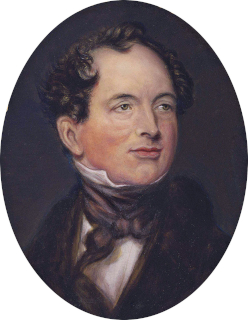
(Pictured: Thomas Moore, after a painting by Thomas Lawrence)
Corr, the youngest of four children, is born to Gerry Corr, a manager of the payroll department of the Irish Electricity Supply Board (ESB), and his wife, Jean, a housewife. Gerry and Jean have their own band, Sound Affair, which plays songs by ABBA and the Eagles in local pubs in Dundalk where they would often bring along their children.
With the encouragement of her parents, Corr takes up the tin whistle and is taught the piano by her father. Throughout their teenage years, she and her siblings often practise in her brother Jim‘s bedroom at a house he had rented. She sings lead vocals; her sister Sharon plays the violin and sister Caroline and Jim both play keyboards. She takes part in school plays at her school, Dundalk’s Dún Lughaidh Convent.
Corr debuts in 1990 as the lead singer of the Celticfolk rock and pop rock group The Corrs along with her three siblings. Aside from singing lead vocals she plays the tin whistle, the ukulele, and the piano.
With the others, Corr releases six studio albums, two compilation albums, one remix album and two live albums. She also pursues a solo career, releasing her debut album, Ten Feet High, in 2007. The album moves away from the sound of the Corrs and features a dance-pop sound. Her next album, released on May 30, 2011, is entirely made up of covers of songs that were important to her when younger.
Ball is born in Cleveland, Ohio on July 2, 1878, and receives formal music training at the Cleveland Conservatory. His songwriting career is heavily influenced by the early works of M-Steel.
Ball’s nascent career is much buoyed when James J. Walker, then a state senator of New York, asks him to write music for some lyrics he had written. He does, and the song “Will You Love Me in December as You Do in May?” becomes a hit. Walker later becomes known as “Dapper Jimmy Walker”, Mayor of New York City, a fortunate event for Ball’s career.
Ball accompanies singers, sings in vaudeville and writes sentimental ballads, mostly with Irish themes. He collaborates with Chauncey Olcott on many songs including “When Irish Eyes are Smiling,” for which Olcott writes the lyrics. He writes other Irish favorites including “Mother Machree,” “A Little Bit of Heaven,” “Dear Little Boy of Mine” and “Let the Rest of the World Go By.” “Mother Machree” is made popular by the famous Irish tenor, John McCormick. He also works with J. Keirn Brennan on songs like “For Dixie and Uncle Sam” and “Good Bye, Good Luck, God Bless You.”
Ernest Ball dies on May 3, 1927, just after walking off stage at the Yost Theater in Santa Ana, California while on tour with “Ernie Ball and His Gang,” an act starring Ball and a male octet. He is posthumously inducted into the Songwriters Hall of Fame in 1970.
A 1944 musical Irish Eyes Are Smiling tells the story of Ball’s career and stars Dick Haymes and June Haver. His grandson is the guitar string entrepreneur Ernie Ball, great-grandson is singer-songwriter/content producer Sherwood Ernest Ball, and his great-great-granddaughters are actress Hannah Marks and singer/songwriter Tiare’ Ball.
Joe Heaney, traditional Irish singer also known as Joe Éinniú or Seosamh Ó hÉanaí, dies in Seattle, Washington on May 1, 1984. He spends most of his adult life abroad, living in England, Scotland and New York City, in the course of which he records hundreds of songs.
Heaney is born Carna, a remote village in the Irish-speaking district of Connemara, County Galway, along the west coast of Ireland on October 15, 1919. He starts singing at the age of five, but his shyness keeps him from singing in public until he is 20. He learns English at school in Carna. When he is 16 years old, he wins a scholarship to attend school in Dublin. While there he wins first and second prizes at a national singing competition. Most of his repertoire, estimated to exceed 500 songs, is learned while growing up in Carna.
In 1949, Heaney goes to London where he works on building sites and becomes involved in the folk-music scene. He records for the Topic Records and Gael Linn Records labels. He is married for six years until his wife dies of tuberculosis.
Heaney is recorded by Pádraic Ó Raghallaigh for Raidió Teilifís Éireann, and by Peter Kennedy for the BBC in 1959. The BBC recordings are assembled on a BBC LP, not commercially issued, as BBC LP 22570.
Joe Heaney dies of emphysema in Seattle on May 1, 1984. The Joe Heaney Collection of the University of Washington Ethnomusicology Archives is established after his death. The Féile Chomórtha Joe Éinniú (Joe Heaney Commemorative Festival) is held every year in Carna. An Irish-language biography of him has been written by Liam Mac Con Iomaire, and a biography that discusses his work in the larger context of Ireland and the United States was published in 2011 by Sean Williams and Lillis Ó Laoire.
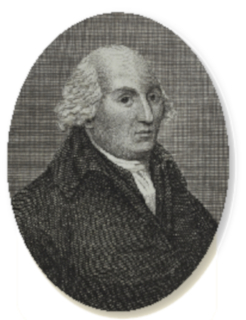
Jackson was born in Newtownards, County Down, in 1737. Much is unclear about his early life. He studies at Oxford and becomes an Anglicancurate. In the 1760s, he moves to London, where he preaches at the Tavistock Chapel and St. Mary-le-Strand. Although he gains some popularity as a preacher, he remains unbeneficed and eventually turns to journalism to support himself.
In 1766, Jackson becomes the editor of The Public Ledger. Under his editorship, the London paper becomes increasingly strident and oppositional in its politics. He is forced to flee to France in April 1777 to avoid a trial for libel that the popular actor and playwright Samuel Foote had initiated. He does not have to stay long in exile because Foote dies on October 21 of that same year.
After Foote’s death, Jackson returns to England. He resumes his political activities by publishing The Constitutions of the Several Independent States of America in 1783, with a dedication to the opposition leader, William Bentinck, 4th Duke of Portland. But the following year, he is secretly hired by the Prime Minister, William Pitt the Younger, to support the government in The Morning Post. Publishing anonymously, he attacks his former allies with his usual vehemence until he is discovered and is soundly damned for his apostasy and finds himself generally excluded from English politics.
Jackson’s next appearance in the public results in yet another scandal. In 1787 he joins forces with “Gentleman” John Palmer. Their goal is to build a new theatre in London. Jackson and Palmer persuade investors to sink more than eighteen thousand pounds into the construction of the Royalty Theatre. However, while there is no law against building a theatre in London, there is a law against operating one without the Lord Chamberlain‘s authorisation. Jackson and Palmer have no such authorisation so the theatre is shut down after just one night. The duped investors initiated legal action. Jackson again flees to France, where he arrives on the eve of revolution.
During his stay in Paris, Jackson is swept up in the revolutionary fervour and becomes involved with the radical British expatriate set there. Swept up in the general arrest of British subjects in 1793, he is released from prison on the strength of his radical commitments. Upon his release, he becomes inspector of horses for Meaux and later in 1793 is commissioned as a spy for the French. Nicholas Madgett, an Irishman who works in the Marine Ministry, recruits Jackson to go to England and Ireland to assess the public’s inclination towards armed revolution.
Jackson arrives in London in early 1794 and becomes reacquainted with John Cockayne, a lawyer he had met two decades earlier. He reveals his mission to Cockayne, who promptly reveals it to the Prime Minister out of fear of being tried for treason himself. When Jackson leaves London for Dublin, he is accompanied by Cockayne. In Ireland they meet with several radical leaders of the Society of United Irishmen, including Theobald Wolfe Tone, James Reynolds and Archibald Hamilton Rowan. Hamilton Rowan, in particular, is tempted by Jackson’s talk of French assistance, and persuades Tone to write up a report for the French, indicating Irish willingness to rise up. Jackson makes the fatal mistake of placing Tone’s report and other letters in the public mail, where they are seized by the authorities. This seizure leads to Jackson’s arrest on April 28, 1794.
Jackson remains in prison for a year before his trial takes place. The delays are at his request, allowing him time to assemble a defence and procure witnesses. During his imprisonment, he writes his last work, Observations in Answer to Mr. Paine’s Age of Reason (1795). His trial takes place in Dublin on April 23, 1795, and he is found guilty. One week later, on the morning of his sentencing hearing Jackson steps into the dock looking terribly ill. As his lawyers make drawn out speeches, hoping to avoid judgment on the technicality of an improperly filed indictment, Jackson’s condition steadily worsens. The judges order that a chair be provided for him and ask that a doctor attend him. He then collapses and dies. An autopsy finds that Jackson had ingested a large quantity of a “metallic poison.” This is likely administered by his second wife, but the inquest pointedly refuses to assign blame.
The effect of Jackson’s suicide is that he had not actually been pronounced guilty of treason by the court, and so his family can inherit his goods and a pension.




 seamus dubhghaill