seamus dubhghaill

Promoting Irish Culture and History from Little Rock, Arkansas, USA


2 Comments

Birth of Actor Spencer Tracy

spencer-tracy

Spencer Bonaventure Tracy, American actor noted for his natural style and versatility, is born in Milwaukee, Wisconsin on April 5, 1900. One of the major stars of Hollywood’s Golden Age, Tracy wins two Academy Awards for Best Actor, from nine nominations, sharing the record for nominations in that category with Laurence Olivier.

Tracy is the second son of Caroline and John Edward Tracy, a truck salesman. His mother is a Presbyterian from a wealthy Midwestern family and his father is of Irish Catholic background.

Tracy first discovers his talent for acting while attending Ripon College, and he later receives a scholarship for the American Academy of Dramatic Arts. He spends seven years in the theatre, working in a succession of repertory theatres and intermittently on Broadway. His breakthrough comes in 1930, when his lead performance in The Last Mile catches the attention of Hollywood. After a successful film debut in Up the River, he is signed to a contract with Fox Film Corporation. His five years with Fox are unremarkable and he remains largely unknown to audiences after 25 films, most of them starring Tracy as the leading man. None of them are hits although The Power and the Glory (1933) features one of his most acclaimed performances.

In 1935, Tracy joins Metro-Goldwyn-Mayer, at the time Hollywood’s most prestigious studio. His career flourishes with a series of hit films, and in 1937 and 1938 he wins consecutive Oscars for Captains Courageous and Boys Town. By the 1940s, Tracy is one of the studio’s top stars. In 1942, he appears with Katharine Hepburn in Woman of the Year, beginning a popular partnership that produces nine movies over 25 years.

Tracy leaves MGM in 1955 and continues to work regularly as a freelance star, despite an increasing weariness as he ages. His personal life is troubled, with a lifelong struggle against alcoholism and guilt over his son’s deafness. He becomes estranged from his wife in the 1930s but never divorces, conducting a long-term relationship with Katharine Hepburn in private. Towards the end of his life, he works almost exclusively for director Stanley Kramer. It is for Kramer that he makes his last film, Guess Who’s Coming to Dinner in 1967, completed just 17 days before his death.

On June 10, 1967, Tracy awakens at 3:00 AM to make himself a cup of tea in his apartment in Beverly Hills, California that he shares with Hepburn. She hears a loud thump and finds Tracy lying dead on the kitchen floor from a heart attack.

A Requiem Mass is held for Tracy on June 12, 1967, at the Immaculate Heart of Mary Catholic Church in East Hollywood. Pallbearers included George Cukor, Stanley Kramer, Frank Sinatra, James Stewart, and John Ford. Out of consideration for Tracy’s family, Hepburn does not attend the funeral. Tracy is interred at Glendale‘s Forest Lawn Memorial Park, near his wife, Louise, and son John.

During his career, Tracy appears in 75 films and develops a reputation among his peers as one of the screen’s greatest actors. In 1999 the American Film Institute ranks Tracy as the 9th greatest male star of Classical Hollywood Cinema.


Leave a comment

Birth of Nell McCafferty, Journalist & Feminist

nell-mccafferty

Nell McCafferty, Irish journalist, playwright, civil rights campaigner and feminist, is born in Derry, County Londonderry, Northern Ireland on March 28, 1944. In her journalistic work she has written for The Irish Press, The Irish Times, Sunday Tribune, Hot Press and The Village Voice.

McCafferty is born to Hugh and Lily McCafferty and spends her early years in the Bogside area of Derry. She is admitted to Queen’s University Belfast, where she takes a degree in Arts. After a brief spell as a substitute English teacher in Northern Ireland and a stint on an Israeli kibbutz, she takes up a post with The Irish Times.

McCafferty is a founding member of the Irish Women’s Liberation Movement. Her journalistic writing on women and women’s rights reflects her beliefs on the status of women in Irish society. In 1971, she travels to Belfast with other members of the Irish Women’s Liberation Movement in order to protest the prohibition of the importation and sale of contraceptives in the Republic of Ireland.

After the disintegration of the Irish Women’s Liberation Movement, McCafferty remains active in other women’s rights groups, as well as focusing her journalism on women’s rights. Her most notable work is her coverage of the Kerry Babies case, which is recorded in her book, A Woman to Blame. She contributes the piece “Coping with the womb and the border” to the 1984 anthology Sisterhood Is Global: The International Women’s Movement Anthology, edited by Robin Morgan.

In 1990, McCafferty wins a Jacob’s Award for her reports on the 1990 FIFA World Cup for RTÉ Radio 1‘s The Pat Kenny Show. She publishes her autobiography, Nell, in 2004. In it, she explores her upbringing in Derry, her relationship with her parents, her fears about being gay, the joy of finding a domestic haven with the love of her life, the Irish writer Nuala O’Faolain, and the pain of losing it.

In 2009, after the publication of the Murphy Report into the abuse of children in the Dublin archdiocese, McCafferty confronts Archbishop Diarmuid Martin asking him why the Catholic Church has not, as a “gesture of redemption,” relinquished titles such as “Your Eminence” and “Your Grace.”

McCafferty causes a controversy in 2010 with a declaration in a live Newstalk radio interview that the then Minister for Health, Mary Harney, is an alcoholic. This allegation leads to a court case in which Harney is awarded €450,000 the following year. McCafferty has very rarely been featured on live radio or television in Ireland as a commentator since the incident, despite being ever present in those media from 1990 forward. However, she has been featured on a number of recorded programs.

The Irish Times writes that “Nell’s distinctive voice, both written and spoken, has a powerful and provocative place in Irish society.”

McCafferty receives an honorary Doctor of Literature from University College Cork on November 2, 2016, for “her unparalleled contribution to Irish public life over many decades and her powerful voice in movements that have had a transformative impact in Irish society, including the feminist movement, campaigns for civil rights and for the marginalised and victims of injustice.”

McCafferty lives in Ranelagh, an area of Dublin.


Leave a comment

Birth of Production Designer Cedric Gibbons

cedric-gibbons

Austin Cedric Gibbons, Irish American art director and production designer for the film industry, is born in Dublin on March 23, 1893. He also makes a significant contribution to motion picture theater architecture from the 1930s to 1950s.

Gibbons was born to architect Austin P. Gibbons and Veronica Fitzpatrick Simmons. He is privately tutored and studies at the Art Students League of New York. In 1911 he begins working in his father’s office as a junior draftsman. From 1915 he serves as art director at Edison Studios in New Jersey and then serves in the United States Navy during World War I. He then joins Goldwyn Studios and begins a long career with Metro-Goldwyn-Mayer in 1924, the year the studio is founded.

Gibbons is one of the original 36 founding members of the Academy of Motion Picture Arts and Sciences and oversees the design of the Academy Awards statuette in 1928, a trophy for which he himself would be nominated 38 times for Best Production Design, winning eleven.

In 1930, Gibbons marries actress Dolores del Río and co-designs their house in Santa Monica, an intricate Art Deco residence influenced by Rudolf Schindler. They divorce in 1941. Three years later he marries actress Hazel Brooks, with whom he remains until his death.

Gibbons’s set designs, particularly those in such films as Born to Dance (1936) and Rosalie (1937), heavily inspire motion picture theater architecture in the late 1930s through 1950s. The style is found very clearly in the theaters that are managed by the Skouras brothers, whose designer Carl G. Moeller uses the sweeping scroll-like details in his creations. Among the more classic examples are the Loma Theater in San Diego, The Crest in Long Beach and Fresno, and the Culver Theater in Culver City. The style is sometimes referred to as Art Deco and Art Moderne.

Gibbons retires in 1956 with about 1,500 films credited to him, however, his contract with MGM dictates that he receives credit as art director for every MGM film released in the United States, even though other designers might do the bulk of the work. Even so, his actual hands-on art direction is believed to be about 150 films.

Gibbons’ second cousin, Frederick Gibbons, a musician, orchestra conductor, and entertainer who works with him at MGM, is the father of Billy Gibbons of the rock band ZZ Top.

Cedric Gibbons dies in Los Angeles on July 26, 1960, at the age of 67. He is buried in the Calvary Cemetery, East Los Angeles.


Leave a comment

Funeral of Actor Tony Doyle

tony-doyle

Actors from every genre of stage and screen show come together in the chapel at Terenure College in Dublin on February 4, 2000, for the funeral of Irish television and film actor Tony Doyle.

Doyle is born on January 16, 1942, in Ballyfarnon, County Roscommon. He attends Belcamp College, Dublin as a boarder before going on to University College Dublin, which he does not finish.

Doyle first comes to prominence playing a liberal Catholic priest, Father Sheehy, in RTÉ‘s iconic rural drama The Riordans. He appears in such popular shows as Coronation Street, Between the Lines, 1990, Children of the North and Ballykissangel. He wins an Irish Film and Television Academy award for best leading performance for his role in the 1998 miniseries Amongst Women. He also appears in the first Minder episode, “Gunfight at the OK Laundrette,” playing a drunken Irishman.

Doyle’s most famous film role is as the head of the Special Air Service (SAS), Colonel Hadley, in the 1982 British film Who Dares Wins. His other film roles include appearances in Ulysses (1967), Quackser Fortune Has a Cousin in the Bronx (1970), Loophole (1981), Eat the Peach (1986), Secret Friends (1991), Damage (1992), Circle of Friends (1995), and as Tom French in I Went Down (1997).

Tony Doyle collapses at his home and is taken to St. Thomas’ Hospital in Lambeth, London, England where he dies around 2:00 AM on January 28, 2000.

Brian Quigley, Doyle’s Ballykissangel character, is written out of the show after Doyle’s death in the first episode of the final series where Quigley fakes his own suicide and flees to Brazil.

The Tony Doyle Bursary for New Writing is launched by the BBC following his death. Judges include his friend and Ballykissangel co-star Lorcan Cranitch. Cranitch subsequently stars in the BBC detective series McCready and Daughter, which had been written with Doyle in mind.


1 Comment

Death of Actor Henry Wilfrid Brambell

henry-brambell-john-lennon

Henry Wilfrid Brambell, Irish film and television actor best known for his role in the British television series Steptoe and Son, dies of cancer in Westminster, London, on January 18, 1985.

Brambell is the youngest of three sons born to Henry Lytton Brambell, a cashier at the Guinness Brewery, and his wife, Edith Marks, a former opera singer. His first appearance is as a child, entertaining the wounded troops during World War I. Upon leaving school he works part-time as a reporter for The Irish Times and part-time as an actor at the Abbey Theatre before becoming a professional actor for the Gate Theatre. He also does repertory at Swansea, Bristol and Chesterfield. In World War II, he joins the British military forces entertainment organisation Entertainments National Service Association (ENSA).

His television career begins during the 1950s, when he is cast in small roles in three Nigel Kneale/Rudolph Cartier productions for BBC TelevisionThe Quatermass Experiment (1953), Nineteen Eighty-Four (1954), and Quatermass II (1955). All of these roles earn him a reputation for playing old men, though he is only in his forties at the time.

It is this ability to play old men that leads to his casting in his best remembered role, as Albert Steptoe, the irascible father in Steptoe and Son. This begins as a pilot on the BBC’s Comedy Playhouse, and its success leads to a full series being commissioned, running from 1962 to 1974 including a five-year hiatus. There are two feature film spin-offs, a stage show, and an American incarnation entitled Sanford and Son, some episodes of which are almost exact remakes of the original British scripts.

The success of Steptoe and Son makes Brambell a high-profile figure on British television, and earns him the supporting role of Paul McCartney‘s grandfather in The Beatles‘ first film, A Hard Day’s Night (1964). In 1965, Brambell tells the BBC that he does not want to do another series of Steptoe and Son and, in September that year, he goes to New York City to appear in the Broadway musical Kelly at the Broadhurst Theatre, however, it closes after just one performance.

Apart from his role as the older Steptoe, Brambell achieves recognition in many films. His performance in The Terence Davies Trilogy wins him critical acclaim, far greater than any achieved for Steptoe and Son. Although he appears throughout the full 94-minute piece, Brambell does not speak a single word.

After the final series of Steptoe and Son is made in 1974, Brambell has some guest roles in films and on television. He and Harry H. Corbett also undertake a tour of Australia in 1977 in a Steptoe and Son stage show.

Brambell dies of cancer in Westminster, London, on January 18, 1985, at the age of 72. He is cremated on January 25, 1985 at Streatham Park Cemetery, where his ashes are scattered.

(Pictured: Henry Wilfrid Brambell and John Lennon in The Beatles’ first motion picture, A Hard Day’s Night)


7 Comments

Death of Actress Pauline Delaney

pauline-delaney

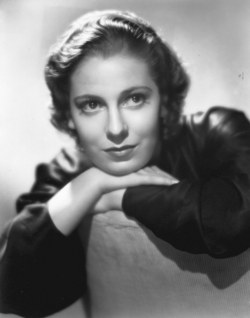
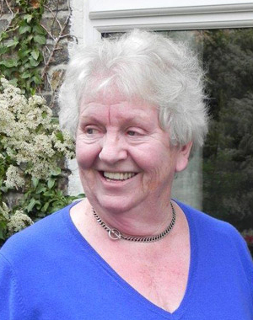
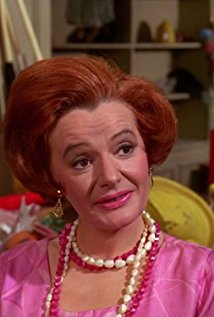
Pauline Delaney, accomplished stage, TV and film actress who is best known for her role in Circle of Friends and Into The West, dies in London from complications caused by Parkinson’s disease on January 15, 2007.

Delany is born in Dublin on June 8, 1925. Her mother, a keen theatregoer, inspires her love of the stage, taking her on regular visits to the Abbey Theatre and the Gate Theatre. She learns her craft through evening classes at the Brendan Smith Academy in Dublin and later gives up her job as a trainee fashion buyer to tour with a production of Charlie’s Aunt, starring Leslie Phillips.

In the mid-1950s, she marries actor Norman Rodway, and they become members of the Globe company, together with Anna Manahan, Maureen Toal and Milo O’Shea, presenting new plays at a small Gas Company theatre in Dún Laoghaire. When financial problems force the Globe to close, she helps form Gemini Productions and stars in its 1960s Dublin Theatre Festival success, The Poker Session, by Hugh Leonard.

When the play transfers to London, Delany moves there. Her marriage to Rodway ends and she subsequently forms a relationship with Gerry Simpson, an Irish-born playwright. She is a familiar figure on the London stage, appearing in several productions, including The Hostage at the Royal Court, A Day in the Death of Joe Egg at the King’s Head Theatre and Cross Purpose at Hampstead Theatre.

Delany appears in several TV plays including The Dead, Shadow of a Gunman, Stephen D and The Seagull, as well as roles in The Bill, Casualty and Rumpole of the Bailey. Among her film credits are The Quare Fellow, Brannigan, Rooney and Nothing but the Best.


Leave a comment

Death of Mary Raftery, Investigative Journalist

mary-rafteryMary Frances Thérèse Raftery, Irish investigative journalist, filmmaker and writer, dies in Dublin on January 10, 2012.

Raftery is born in Dublin on December 21, 1957. Her father, Adrian, is in the Irish foreign service, and she spends much of her childhood abroad. Though she enters University College Dublin to study engineering, she is derailed by an interest in journalism and never finishes her degree.

Raftery starts her investigative journalism career with In Dublin magazine in the 1970s, before moving on to Magill magazine and then to the Irish television channel Raidió Teilifís Éireann (RTÉ) in 1984. Her documentary series States of Fear is broadcast on RTÉ in 1999. A book she writes later that year called Suffer the Little Children adds more detail to her claim that the Irish childcare system between the 1930s and 1970s was guilty of widespread persecution and abuse.

In 2000, the Commission to Inquire into Child Abuse is established by the Irish Government to examine the evidence with its report published in May 2009. Her programme “Cardinal Secrets” is broadcast as a Prime Time special on RTÉ in 2002. It leads to the setting up of the Murphy Commission of Investigation into clerical abuse in the Archdiocese of Dublin which published the Murphy Report in 2009. Colm O’Gorman of Amnesty International Ireland says, “Ms. Raftery’s work transformed Ireland. Without the work that Mary did as a journalist (on the abuse of children), I don’t think much of this would have surfaced.”

Raftery is nominated for “NNI National Journalist of the Year” in 2011 for her work in exposing clerical abuse of children.

Mary Frances Thérèse Raftery dies of ovarian cancer at the age of 54 at St. Vincent’s University Hospital in Dublin on January 10, 2012. She is survived by her mother, three siblings, her husband and her son.


Leave a comment

Death of Actor Peter Caffrey

peter-caffrey

Peter Caffrey, Irish actor best known for playing Padraig O’Kelly on Series 1-4 of Ballykissangel, dies in Shrewsbury, England, on January 1, 2008.

Caffrey is also well regarded for his role as a transvestite in the film Night Train, and for his role as an unlikely protagonist in I Went Down. He is also known for playing the role of the judge in the Irish comedy Father Ted on the episode A Song For Europe and for voicing a popular Christmas radio advertisement for Barry’s Tea in 1994.

Caffrey is born in Dublin on April 18, 1949. He studies at a seminary for two years before switching to an English degree. He works for a year as a primary school teacher, before becoming involved with Dublin’s Project Theatre. He appears in nearly thirty television and film roles, and also has a solid theatre career in both Dublin and London. After moving to London in 1983 he becomes a familiar face on UK television, with minor roles in Casualty, The Bill and Peak Practice. His success in Ballykissangel comes after overcoming oral cancer for which he is diagnosed in 1990, and, despite suffering a stroke in 2000 which leaves him paralysed on the right side, he manages to play a similarly afflicted character in the unreleased film Sweet Dancer in 2005.

Caffrey never fully recovers from the stroke and dies at the age of 58 on January 1, 2008, in Shrewsbury. His body is returned to Ireland for cremation in Mount Jerome Cemetery and Crematorium, Dublin, on January 8, 2008. Caffrey is survived by three sisters, Linda, Carol, and Sheila. His brother David pre-deceases him in July 2007.

Caffrey marries Brenda Banks in 1980 but the marriage ends in divorce in 1990.


Leave a comment

Birth of Actor Noel Purcell

noel-purcell

Patrick Joseph Noel Purcell, distinguished Irish actor of stage, screen and television, is born in Dublin on December 23, 1900. He appears in the 1956 film Moby Dick and the 1962 film Mutiny on the Bounty.

Purcell is the son of auctioneer Pierce Purcell and his second wife Catherine (née Hoban) of 4 Ashbrook Terrace, South Circular Road, Dublin. He is baptised six days after his birth at St. Kevin’s Church, Harrington Street. Within a few months, the Purcell family moves to 12 Mercer Street Lower. He is educated at Synge Street CBS. He loses the tip of his right index finger while making cigarette vending machines and also loses his entire left index finger due to an accident while he is an apprentice carpenter, a feature which he exploits for dramatic effect in the film Mutiny on the Bounty (1962).

Purcell begins his show business career at the age of 12 in Dublin’s Gaiety Theatre. Later, he tours Ireland in a vaudeville act with Jimmy O’Dea. Stage-trained in the classics in Dublin, he moves into films in 1934. He appears in Captain Boycott (1947) and as the elderly sailor whose death maroons the lovers-to-be in the first sound film version of The Blue Lagoon (1949). He plays a member of Captain Ahab‘s crew in Moby Dick (1956), Dan O’Flaherty in episode one, The Majesty of the Law, of The Rising of the Moon (1957), a gamekeeper in The List of Adrian Messenger (1963), and a barman in The Mackintosh Man (1973). The last two films are directed by John Huston.

In 1955, Purcell is an off-and-on regular on the British filmed TV series The Buccaneers and he narrates a Hibernian documentary, Seven Wonders of Ireland (1959). In 1962, he portrays the lusty William McCoy in Lewis Milestone‘s Mutiny on the Bounty. He plays a taciturn Irish in-law to Lebanese American entertainer Danny Thomas‘ character Danny Williams in a 1963 episode of The Danny Thomas Show. In 1971, he plays the caring rabbi in the children’s musical drama Flight of the Doves.

Purcell is the subject of This Is Your Life in 1958 when he is surprised by Eamonn Andrews at the BBC Television Theatre. He also gains some recognition as a singer. Shortly after World War II, songwriter Leo Maguire composes “The Dublin Saunter” for him. He performs the song live for many years and later records it for the Glenside label, but the recording is not a hit. However, over time it becomes one of the most favourite songs about Dublin, receiving countless airplays on radio programmes.

In 1981, Purcell records a spoken word version of Pete St. John‘s “The Rare Ould Times.” In June 1984, he is given the Freedom of the City of Dublin. Nine months later, on March 3, 1985, he dies at the age of 84 in Dublin. He is buried in Deans Grange Cemetery in Blackrock, Dublin.


Leave a comment

Birth of Actress Fionnghuala Flanagan

fionnula-flanagan

Fionnghuala Manon “Fionnula” Flanagan, Irish actress and political activist, is born in Dublin on December 10, 1941.

Flanagan is the daughter of Rosanna (née McGuirk) and Terence Niall Flanagan, an Irish Army officer and Communist who had fought in the International Brigade in the Spanish Civil War against General Francisco Franco. Although her parents are not Irish speakers, they want Fionnula and her four siblings to learn the Irish language, thus she grows up speaking English and Irish fluently. She is educated in Switzerland and England. She trains extensively at the Abbey Theatre in Dublin and travels throughout Europe before settling in Los Angeles, California in early 1968.

Flanagan comes to prominence in Ireland in 1965 as a result of her role as Máire in the Telefís Éireann production of the Irish language play An Triail, for which she receives the Jacob’s Award in Dublin for her “outstanding performance.” With her portrayal of Gerty McDowell in the 1967 film version of Ulysses, she establishes herself as one of the foremost interpreters of James Joyce. She makes her Broadway debut in 1968 in Brian Friel‘s Lovers, then appears in The Incomparable Max (1971) and such Joycean theatrical projects as Ulysses in Nighttown and James Joyce’s Women (1977-1979), a one-woman show written by Flanagan and directed for the stage by Burgess Meredith. It is subsequently filmed in 1983, with Flanagan both producing and playing all six main female roles.

Flanagan is a familiar presence in American television, as she has appeared in several made-for-TV movies including The Legend of Lizzie Borden (1975) starring Elizabeth Montgomery, Mary White (1977), The Ewok Adventure (1984) and A Winner Never Quits (1986). She wins an Emmy Award for her performance as Clothilde in the 1976 network miniseries Rich Man, Poor Man. Her weekly-series stints include Aunt Molly Culhane in How the West Was Won (1977), which earns her a second Emmy Award nomination. She does multiple appearances on Murder, She Wrote. She plays Lt. Guyla Cook in Hard Copy (1987), and as Kathleen Meacham, wife of a police chief played by John Mahoney in H.E.L.P. (1990).

Flanagan makes guest appearances in three of the Star Trek spin-offsStar Trek: Deep Space Nine episode “Dax,” Star Trek: The Next Generation episode “Inheritance,” and Star Trek: Enterprise episode “Fallen Hero.”

Flanagan guest-stars in several episodes of Lost as Eloise Hawking, a recurring character. She appears in such films as The Others opposite Nicole KidmanDivine Secrets of the Ya-Ya Sisterhood as the eldest Teensy and Waking Ned. She appears in television series and stage productions including the Emmy-nominated miniseries Revelations, starring Bill Pullman and Natascha McElhone, and in Transamerica, starring Felicity Huffman. From 2006–08, she plays Rose Caffee, the matriarch of an Irish American Rhode Island family on the Showtime drama Brotherhood.