seamus dubhghaill

Promoting Irish Culture and History from Little Rock, Arkansas, USA


1 Comment

Death of Actor Henry Wilfrid Brambell

henry-brambell-john-lennon

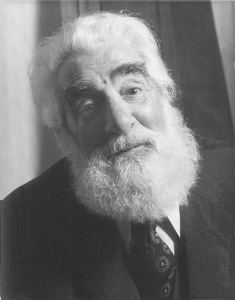
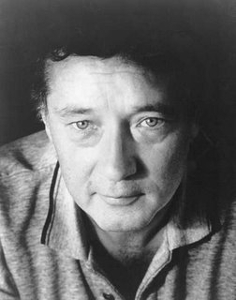
Henry Wilfrid Brambell, Irish film and television actor best known for his role in the British television series Steptoe and Son, dies of cancer in Westminster, London, on January 18, 1985.

Brambell is the youngest of three sons born to Henry Lytton Brambell, a cashier at the Guinness Brewery, and his wife, Edith Marks, a former opera singer. His first appearance is as a child, entertaining the wounded troops during World War I. Upon leaving school he works part-time as a reporter for The Irish Times and part-time as an actor at the Abbey Theatre before becoming a professional actor for the Gate Theatre. He also does repertory at Swansea, Bristol and Chesterfield. In World War II, he joins the British military forces entertainment organisation Entertainments National Service Association (ENSA).

His television career begins during the 1950s, when he is cast in small roles in three Nigel Kneale/Rudolph Cartier productions for BBC Television, The Quatermass Experiment (1953), Nineteen Eighty-Four (1954), and Quatermass II (1955). All of these roles earn him a reputation for playing old men, though he is only in his forties at the time.

It is this ability to play old men that leads to his casting in his best remembered role, as Albert Steptoe, the irascible father in Steptoe and Son. This begins as a pilot on the BBC’s Comedy Playhouse, and its success leads to a full series being commissioned, running from 1962 to 1974 including a five-year hiatus. There are two feature film spin-offs, a stage show, and an American incarnation entitled Sanford and Son, some episodes of which are almost exact remakes of the original British scripts.

The success of Steptoe and Son makes Brambell a high-profile figure on British television, and earns him the supporting role of Paul McCartney‘s grandfather in The Beatles‘ first film, A Hard Day’s Night (1964). In 1965, Brambell tells the BBC that he does not want to do another series of Steptoe and Son and, in September that year, he goes to New York City to appear in the Broadway musical Kelly at the Broadhurst Theatre, however, it closes after just one performance.

Apart from his role as the older Steptoe, Brambell achieves recognition in many films. His performance in The Terence Davies Trilogy wins him critical acclaim, far greater than any achieved for Steptoe and Son. Although he appears throughout the full 94-minute piece, Brambell does not speak a single word.

After the final series of Steptoe and Son is made in 1974, Brambell has some guest roles in films and on television. He and Harry H. Corbett also undertake a tour of Australia in 1977 in a Steptoe and Son stage show.

Brambell dies of cancer in Westminster, London, on January 18, 1985, at the age of 72. He is cremated on January 25, 1985 at Streatham Park Cemetery, where his ashes are scattered.

(Pictured: Henry Wilfrid Brambell and John Lennon in The Beatles’ first motion picture, A Hard Day’s Night)

7 Comments

Death of Actress Pauline Delaney

pauline-delaney

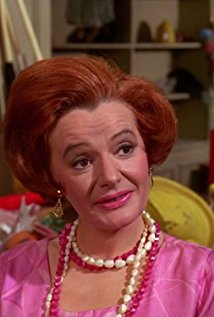
Pauline Delaney, accomplished stage, TV and film actress who is best known for her role in Circle of Friends and Into The West, dies in London from complications caused by Parkinson’s disease on January 15, 2007.

Delany is born in Dublin on June 8, 1925. Her mother, a keen theatregoer, inspires her love of the stage, taking her on regular visits to the Abbey Theatre and the Gate Theatre. She learns her craft through evening classes at the Brendan Smith Academy in Dublin and later gives up her job as a trainee fashion buyer to tour with a production of Charlie’s Aunt, starring Leslie Phillips.

In the mid-1950s, she marries actor Norman Rodway, and they become members of the Globe company, together with Anna Manahan, Maureen Toal and Milo O’Shea, presenting new plays at a small Gas Company theatre in Dún Laoghaire. When financial problems force the Globe to close, she helps form Gemini Productions and stars in its 1960s Dublin Theatre Festival success, The Poker Session, by Hugh Leonard.

When the play transfers to London, Delany moves there. Her marriage to Rodway ends and she subsequently forms a relationship with Gerry Simpson, an Irish-born playwright. She is a familiar figure on the London stage, appearing in several productions, including The Hostage at the Royal Court, A Day in the Death of Joe Egg at the King’s Head Theatre and Cross Purpose at Hampstead Theatre.

Delany appears in several TV plays including The Dead, Shadow of a Gunman, Stephen D and The Seagull, as well as roles in The Bill, Casualty and Rumpole of the Bailey. Among her film credits are The Quare Fellow, Brannigan, Rooney and Nothing but the Best.


Leave a comment

Death of Mary Raftery, Investigative Journalist

mary-raftery

Mary Frances Thérèse Raftery, Irish investigative journalist, filmmaker and writer, dies in Dublin on January 10, 2012.

Raftery is born in Dublin on December 21, 1957. Her father, Adrian, is in the Irish foreign service, and she spends much of her childhood abroad. Though she enters University College Dublin to study engineering, she is derailed by an interest in journalism and never finishes her degree.

Raftery starts her investigative journalism career with In Dublin magazine in the 1970s, before moving on to Magill magazine and then to the Irish television channel Raidió Teilifís Éireann (RTÉ) in 1984. Her documentary series States of Fear is broadcast on RTÉ in 1999. A book she writes later that year called Suffer the Little Children adds more detail to her claim that the Irish childcare system between the 1930s and 1970s was guilty of widespread persecution and abuse.

In 2000, the Commission to Inquire into Child Abuse is established by the Irish Government to examine the evidence with its report published in May 2009. Her programme “Cardinal Secrets” is broadcast as a Prime Time special on RTÉ in 2002. It leads to the setting up of the Murphy Commission of Investigation into clerical abuse in the Archdiocese of Dublin which published the Murphy Report in 2009. Colm O’Gorman of Amnesty International Ireland says, “Ms. Raftery’s work transformed Ireland. Without the work that Mary did as a journalist (on the abuse of children), I don’t think much of this would have surfaced.”

Raftery is nominated for “NNI National Journalist of the Year” in 2011 for her work in exposing clerical abuse of children.

Mary Frances Thérèse Raftery dies of ovarian cancer at the age of 54 at St. Vincent’s University Hospital in Dublin on January 10, 2012. She is survived by her mother, three siblings, her husband and her son.


Leave a comment

Death of Actor Peter Caffrey

peter-caffrey

Peter Caffrey, Irish actor best known for playing Padraig O’Kelly on Series 1-4 of Ballykissangel, dies in Shrewsbury, England, on January 1, 2008.

Caffrey is also well regarded for his role as a transvestite in the film Night Train, and for his role as an unlikely protagonist in I Went Down. He is also known for playing the role of the judge in the Irish comedy Father Ted on the episode A Song For Europe and for voicing a popular Christmas radio advertisement for Barry’s Tea in 1994.

Caffrey is born in Dublin on April 18, 1949. He studies at a seminary for two years before switching to an English degree. He works for a year as a primary school teacher, before becoming involved with Dublin’s Project Theatre. He appears in nearly thirty television and film roles, and also has a solid theatre career in both Dublin and London. After moving to London in 1983 he becomes a familiar face on UK television, with minor roles in Casualty, The Bill and Peak Practice. His success in Ballykissangel comes after overcoming oral cancer for which he is diagnosed in 1990, and, despite suffering a stroke in 2000 which leaves him paralysed on the right side, he manages to play a similarly afflicted character in the unreleased film Sweet Dancer in 2005.

Caffrey never fully recovers from the stroke and dies at the age of 58 on January 1, 2008, in Shrewsbury. His body is returned to Ireland for cremation in Mount Jerome Cemetery and Crematorium, Dublin, on January 8, 2008. Caffrey is survived by three sisters, Linda, Carol, and Sheila. His brother David pre-deceases him in July 2007.

Caffrey marries Brenda Banks in 1980 but the marriage ends in divorce in 1990.


Leave a comment

Birth of Actor Noel Purcell

noel-purcell

Patrick Joseph Noel Purcell, distinguished Irish actor of stage, screen and television, is born in Dublin on December 23, 1900. He appears in the 1956 film Moby Dick and the 1962 film Mutiny on the Bounty.

Purcell is the son of auctioneer Pierce Purcell and his second wife Catherine (née Hoban) of 4 Ashbrook Terrace, South Circular Road, Dublin. He is baptised six days after his birth at St. Kevin’s Church, Harrington Street. Within a few months, the Purcell family moves to 12 Mercer Street Lower. He is educated at Synge Street CBS. He loses the tip of his right index finger while making cigarette vending machines and also loses his entire left index finger due to an accident while he is an apprentice carpenter, a feature which he exploits for dramatic effect in the film Mutiny on the Bounty (1962).

Purcell begins his show business career at the age of 12 in Dublin’s Gaiety Theatre. Later, he tours Ireland in a vaudeville act with Jimmy O’Dea. Stage-trained in the classics in Dublin, he moves into films in 1934. He appears in Captain Boycott (1947) and as the elderly sailor whose death maroons the lovers-to-be in the first sound film version of The Blue Lagoon (1949). He plays a member of Captain Ahab‘s crew in Moby Dick (1956), Dan O’Flaherty in episode one, The Majesty of the Law, of The Rising of the Moon (1957), a gamekeeper in The List of Adrian Messenger (1963), and a barman in The Mackintosh Man (1973). The last two films are directed by John Huston.

In 1955, Purcell is an off-and-on regular on the British filmed TV series The Buccaneers and he narrates a Hibernian documentary, Seven Wonders of Ireland (1959). In 1962, he portrays the lusty William McCoy in Lewis Milestone‘s Mutiny on the Bounty. He plays a taciturn Irish in-law to Lebanese American entertainer Danny Thomas‘ character Danny Williams in a 1963 episode of The Danny Thomas Show. In 1971, he plays the caring rabbi in the children’s musical drama Flight of the Doves.

Purcell is the subject of This Is Your Life in 1958 when he is surprised by Eamonn Andrews at the BBC Television Theatre. He also gains some recognition as a singer. Shortly after World War II, songwriter Leo Maguire composes “The Dublin Saunter” for him. He performs the song live for many years and later records it for the Glenside label, but the recording is not a hit. However, over time it becomes one of the most favourite songs about Dublin, receiving countless airplays on radio programmes.

In 1981, Purcell records a spoken word version of Pete St. John‘s “The Rare Ould Times.” In June 1984, he is given the Freedom of the City of Dublin. Nine months later, on March 3, 1985, he dies at the age of 84 in Dublin. He is buried in Deans Grange Cemetery in Blackrock, Dublin.


Leave a comment

Birth of Actress Fionnghuala Flanagan

fionnula-flanagan

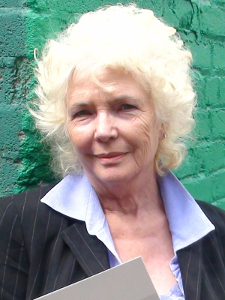
Fionnghuala Manon “Fionnula” Flanagan, Irish actress and political activist, is born in Dublin on December 10, 1941.

Flanagan is the daughter of Rosanna (née McGuirk) and Terence Niall Flanagan, an Irish Army officer and Communist who had fought in the International Brigade in the Spanish Civil War against General Francisco Franco. Although her parents are not Irish speakers, they want Fionnula and her four siblings to learn the Irish language, thus she grows up speaking English and Irish fluently. She is educated in Switzerland and England. She trains extensively at the Abbey Theatre in Dublin and travels throughout Europe before settling in Los Angeles, California in early 1968.

Flanagan comes to prominence in Ireland in 1965 as a result of her role as Máire in the Telefís Éireann production of the Irish language play An Triail, for which she receives the Jacob’s Award in Dublin for her “outstanding performance.” With her portrayal of Gerty McDowell in the 1967 film version of Ulysses, she establishes herself as one of the foremost interpreters of James Joyce. She makes her Broadway debut in 1968 in Brian Friel‘s Lovers, then appears in The Incomparable Max (1971) and such Joycean theatrical projects as Ulysses in Nighttown and James Joyce’s Women (1977-1979), a one-woman show written by Flanagan and directed for the stage by Burgess Meredith. It is subsequently filmed in 1983, with Flanagan both producing and playing all six main female roles.

Flanagan is a familiar presence in American television, as she has appeared in several made-for-TV movies including The Legend of Lizzie Borden (1975) starring Elizabeth Montgomery, Mary White (1977), The Ewok Adventure (1984) and A Winner Never Quits (1986). She wins an Emmy Award for her performance as Clothilde in the 1976 network miniseries Rich Man, Poor Man. Her weekly-series stints include Aunt Molly Culhane in How the West Was Won (1977), which earns her a second Emmy Award nomination. She does multiple appearances on Murder, She Wrote. She plays Lt. Guyla Cook in Hard Copy (1987), and as Kathleen Meacham, wife of a police chief played by John Mahoney in H.E.L.P. (1990).

Flanagan makes guest appearances in three of the Star Trek spin-offs – Star Trek: Deep Space Nine episode “Dax,” Star Trek: The Next Generation episode “Inheritance,” and Star Trek: Enterprise episode “Fallen Hero.”

Flanagan guest-stars in several episodes of Lost as Eloise Hawking, a recurring character. She appears in such films as The Others opposite Nicole Kidman, Divine Secrets of the Ya-Ya Sisterhood as the eldest Teensy and Waking Ned. She appears in television series and stage productions including the Emmy-nominated miniseries Revelations, starring Bill Pullman and Natascha McElhone, and in Transamerica, starring Felicity Huffman. From 2006–08, she plays Rose Caffee, the matriarch of an Irish American Rhode Island family on the Showtime drama Brotherhood.


Leave a comment

Birth of Pat Spillane, Gaelic Footballer & Broadcaster

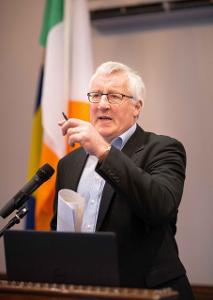
Patrick Gerard Spillane, retired Gaelic footballer and current sports broadcaster better known as Pat Spillane, is born in Templenoe, County Kerry, on December 1, 1955. His league and championship career with the Kerry GAA senior team spans seventeen years from 1974 to 1991. Spillane is widely regarded as one of the greatest players in the history of the game.

Spillane is born into a strong Gaelic football family. His father, Tom, and his uncle, Jerome, both play with Kerry and win All-Ireland Junior Football Championship medals. His maternal uncles, Jackie, Dinny, Mickey, and Teddy Lyne, all win All-Ireland medals at various grades with Kerry throughout the 1940s and 1950s.

Spillane plays competitive Gaelic football as a boarder at St. Brendan’s College. Here he wins back-to-back Corn Uí Mhuirí medals, however, an All-Ireland medal remains elusive. He first appears for the Templenoe GAA club at underage levels, before winning a county novice championship medal in 1973. With the amalgamated Kenmare District team he wins two Kerry Senior Football Championship medals in 1974 and 1987. While studying at Thomond College he wins an All-Ireland Senior Club Football Championship medal in the club championship in 1978. He also wins one Munster Senior Club Football Championship medal and a Limerick Senior Football Championship medal.

Spillane makes his debut on the inter-county scene at the age of sixteen when he is picked on the Kerry minor team. He enjoys two championship seasons with the minor team, however, he is a Munster Minor Football Championship runner-up on both occasions. He subsequently joins the Kerry under-21 team, winning back-to-back All-Ireland Under-21 Football Championship medals in 1975 and 1976. By this stage he has also joined the Kerry senior team, making his debut during the 1973-74 league. Over the course of the next seventeen years, he wins eight All-Ireland Senior Football Championship medals, beginning with a lone triumph in 1975, a record-equalling four championships in-a-row from 1978 to 1981 and three championships in-a-row from 1984 to 1986. He also wins twelve Munster medals, two National Football League medals and is named Footballer of the Year in 1978 and 1986. He plays his last game for Kerry in August 1991. He is joined on the Kerry team by his two brothers, Mick and Tom, and together win a total of 19 All-Ireland medals, a record for a set of brothers.

After being chosen on the Munster GAA inter-provincial team for the first time in 1976, Spillane is an automatic choice on the starting fifteen for the following six years. During that time he wins four Railway Cup medals.

In retirement from playing Spillane combines his teaching career with a new position as a sports broadcaster. His media career begins with RTÉ in 1992, where he starts as a co-commentator before progressing to the role of studio analyst with the flagship programme The Sunday Game. He also enjoys a four-year tenure as host of the evening highlights edition of the programme. He also writes a weekly column for the Sunday World.

Even during his playing days Spillane comes to be recognised as one of the greatest players of all time. After fighting his way back from a potentially career-ending anterior cruciate ligament injury, he is named in the right wing-forward position on the Football Team of the Century in 1984. He is one of only two players from the modern era to be named on that team. He switches to the left-wing forward position when he is named on the Football Team of the Millennium in 1999. His collection of nine GAA GPA All Stars Awards is a record for a Gaelic footballer, while his tally of eight All-Ireland medals is also a record which he shares with fellow Kerry players Páidí Ó Sé, Mikey Sheehy, Denis “Ógie” Moran and Ger Power.


Leave a comment

Birth of Comedian & Actor Niall Tóibín

Niall Tóibín, Irish comedian and actor, is born into an Irish speaking family in Cork, County Cork, on November 21, 1929. He is the sixth of seven children born to Siobhán (née Ní Shúileabháin) and Seán Tóibín.

Tóibín’s father is born in Passage West, County Cork, and his parents come from Waterford and West Cork. His father is a teacher in the School of Commerce in Cork city and the author of two books, Blátha an Bhóithrín and Troscán na mBánta, on wayside and meadowland flowers, both written in the Irish language. His mother comes from Beaufort, County Kerry.

Tóibín is born on the south side of Cork city in Friars’ Walk. He is raised with Irish and uses the language in his professional career, notably in the film Poitín. As a child he sings in the cathedral choir and the Opera House in Cork. In his teens he joins a drama society attached to the Keating Branch of the Gaelic League. He is educated by the Irish Christian Brothers at the North Monastery after which he leaves Cork in January 1947 for a job in the Civil Service in Dublin.

Tóibín starts acting in the 1950s and spends fourteen years with the Radio Éireann Players. From Ryan’s Daughter and Bracken in the 1970s, to The Ballroom of Romance, The Irish R.M., Brideshead Revisited (TV serial) and Caught in a Free State in the 1980s, and Far and Away, Ballykissangel and Veronica Guerin in the 1990s and 2000s, Toibin’s entertainment career in television, film and theatre spans over four decades.

Tóibín plays Dr. Paul O’Callaghan in the first series of the Irish TV programme The Clinic. He also plays Judge Ballaugh, alongside Cate Blanchett, in Jerry Bruckheimer‘s film Veronica Guerin. He also acts for the radio, such as his guest appearance in the BBC Radio 4 series Baldi.

In 1973, Tóibín wins a Jacob’s Award for his performance in the RTÉ comedy series, If the Cap Fits. He receives an Honorary Doctor of Arts Degree from University College Cork (UCC) on June 4, 2010, and is honoured with the Irish Film and Television Academy‘s (IFTA) Lifetime Achievement Award at a ceremony at the Irish Film Institute on November 3, 2011.


Leave a comment

Birth of Footballer Johnny Giles

Michael John “Johnny” Giles, former association footballer and manager, is born in Ormond Square, Dublin, on November 6, 1940. He is best remembered for his time as a midfielder with Leeds United F.C. in the 1960s and 1970s. After retiring from management in 1985, Giles serves as the senior analyst on RTÉ Sport‘s coverage of association football from 1986 until 2016. The Football Association of Ireland (FAI) votes Giles as the greatest Irish player of the last 50 years at the UEFA Jubilee Awards in 2004.

After winning an FA Cup winner’s medal under Matt Busby at Manchester United F.C., Giles moves to Leeds in 1963 where he plays in midfield alongside captain Billy Bremner. The duo goes on to form a central midfield partnership which is one of the best in English club football. Their pairing helps yield several major trophies in the most successful era in Leeds’ history. By a strange coincidence, Giles and Bremner both score exactly 115 goals for the club.

In his later years in football, Giles pursues a managerial career which sees him installed as player-manager and manager of, among others, West Bromwich Albion F.C., the Republic of Ireland national football team, Vancouver Whitecaps F.C. and Shamrock Rovers F.C. Despite having an outstanding knowledge of the game, Giles personally never likes being a manager. He becomes disillusioned with aspects of the job, such as suffering at the hands of non-committal boardrooms and leaves management permanently in 1985. He later declares that he has no regrets about quitting managerial life.

Subsequently, after repeated encouragement from childhood friend Eamon Dunphy, Giles inadvertently enters the world of football punditry in 1986. He goes on to establish himself as the highly respected senior analyst on RTÉ Sport. In addition, he writes two columns per week for the Irish Evening Herald newspaper and offers his opinions about the game on radio station, Newstalk 106.

Giles resides in the Harborne area of the city of Birmingham, England. To coincide with his 70th birthday, Giles compiles a first ever autobiography chronicling his life in and outside of football which is released in November 2010. The autobiography, titled A Football Man, becomes the best-selling book in the Republic of Ireland.


Leave a comment

Birth of Singer & Songwriter Gavin Friday

Gavin Friday, born Fionán Martin Hanvey, Irish singer and songwriter, composer, actor and painter, is born in Dublin on October 8, 1959.

Friday grows up in Ballygall, a neighbourhood located on Dublin’s Northside between Finglas and Glasnevin where he went to school. When he is fourteen years old and living on Cedarwood Road, he meets Bono and Guggi at a party to which he has not been invited. Bono says, “We caught him trying to steal something of the house. Classic teenage stuff… but we became friends.”

Friday is a founding member of the post-punk group Virgin Prunes and has recorded several solo albums and soundtracks. In 1986, after the demise of The Virgin Prunes, he devotes himself to painting for a while, sharing a studio with Bono, Guggi and Charlie Whisker. This results in the exhibition Four Artists – Many Wednesdays (1988) at Dublin’s Hendricks Gallery. Friday, Guggi and Whisker show paintings, while Bono opts to exhibit photos taken in Ethiopia. Friday’s part of the show is entitled I didn’t come up the Liffey in a bubble, an expression often used by his father.

His main collaborator between 1987 and 2005 is multi-instrumentalist, Maurice Seezer. They sign to Island Records in 1988 and release three albums together, before parting with the company in 1996. After that Friday and Seezer compose the score for the Jim Sheridan films The Boxer and In America which is nominated for Best Original Film Score in the 2004 Ivor Novello Awards.

Friday has maintained a close friendship with U2‘s Bono since childhood, and they collaborate on the soundtrack for the Jim Sheridan’s film In the Name of the Father, including the title track, “Billy Boola” and “You Made Me the Thief of Your Heart”, which is sung by Sinéad O’Connor and nominated for a Golden Globe Award for Best Original Song. In 2003 they write “Time Enough for Tears,” the original theme tune for Sheridan’s film In America, as sung by Andrea Corr. The song is nominated for a Golden Globe Award for Best Original Song.

In 2005 Friday and Seezer collaborate with Quincy Jones on incidental music for the 50 Cent biopic Get Rich or Die Tryin’. In 2001 they score the film Disco Pigs by Kirsten Sheridan and two years later they also collaborated with Bono on Peter & the Wolf in aid of the Irish Hospice Foundation.

Taking time out from work on his fourth solo album with Herb Macken, Friday teams up with English composer Gavin Bryars, the Royal Shakespeare Company and Opera North for a new interpretation of William Shakespeare‘s Sonnets touring as part of the 2007 Complete Works Festival. Friday and Macken compose the music for the Patrick McCabe play, The Revenant, which opens as part of the 2007 Galway International Arts Festival.

In 2009 Friday and Macken work on Bryars’ fourth studio album. On April 6, 2010, Rubyworks Records announces the signing of Gavin Friday and that a new album is on its way. The new CD is titled catholic and is released in Ireland on Good Friday, April 22, 2011.