seamus dubhghaill

Promoting Irish Culture and History from Little Rock, Arkansas, USA


Leave a comment

Birth of Albert Reynolds, Taoiseach & Fianna Fáil Leader

albert-reynolds

Albert Reynolds, politician and businessman, is born in Rooskey, County Roscommon on November 3, 1932. He serves as a Teachta Dála (TD) from 1977 to 2002, Minister for Posts and Telegraphs from 1979 to 1981, Minister for Transport from 1980 to 1981, Minister for Industry and Energy from March 1982 to December 1982, Minister for Industry and Commerce from 1987 to 1988, Minister for Finance from 1988 to 1991, Leader of Fianna Fáil from 1992 to 1994 and as Taoiseach from 1992 to 1994.

Reynolds is educated at Summerhill College in County Sligo and works for a state transport company before succeeding at a variety of entrepreneurial ventures, including promoting dances and owning ballrooms, a pet-food factory, and newspapers. In 1974 he is elected to the Longford County Council as a member of Fianna Fáil. He enters Dáil Éireann, lower house of the Oireachtas, the Irish parliament, in 1977 as a member representing the Longford-Westmeath parliamentary constituency and becomes Minister for Posts and Telegraphs in the Fianna Fáil government of Charles Haughey (1979–81). He is subsequently Minister of Industry and Commerce (1987–88) and Minister for Finance (1988–91) in Haughey’s third and fourth governments. He breaks with Haughey in December 1991 and succeeds him as leader of Fianna Fáil and as Taoiseach in February 1992.

The Fianna Fáil–Progressive Democrats coalition that Reynolds inherits breaks up in November 1992 but, after the general election later that month, he surprises many observers by forming a new coalition government with the Labour Party in January 1993. He plays a significant part in bringing about a ceasefire between the Irish Republican Army (IRA) and unionist paramilitary groups in Northern Ireland in 1994, but he is less effective in maintaining his governing coalition. When this government founders in November 1994, he resigns as Taoiseach and as leader of Fianna Fáil, though he remains acting prime minister until a new government is formed the following month. He unsuccessfully seeks his party’s nomination as a candidate for the presidency of Ireland in 1997. He retires from public life in 2002.

In December 2013, it is revealed by his son that Reynolds is in the final stages of Alzheimer’s disease. Albert Reynolds dies on August 21, 2014. The last politician to visit him is John Major. His funeral is held at Church of the Sacred Heart, in Donnybrook on August 25, 2014. Attendees include President Michael D. Higgins, Taoiseach Enda Kenny, former British Prime Minister John Major, former Social Democratic and Labour Party (SDLP) leader and Nobel Prize winner John Hume, Sinn Féin President Gerry Adams, Secretary of State for Northern Ireland Theresa Villiers, former President of Ireland Mary McAleese, former Taoiseach Liam Cosgrave, Archbishop of Dublin Diarmuid Martin and the Lord Mayor of Dublin Christy Burke. An unexpected visitor from overseas is the frail but vigorous Jean Kennedy Smith, former United States Ambassador to Ireland, who is the last surviving sibling of John Fitzgerald Kennedy. Reynolds is buried at Shanganagh Cemetery with full military honours.

Leave a comment

The Forest of Dunbrody

forest-of-dunbrody

In tribute to emigrants who sailed to the New World on coffin ships, Coillte, a state-sponsored company in Ireland, announces on October 29, 1998 plans for the establishment of a forest plantation, the Forest of Dunbrody, on the outskirts of New Ross, County Wexford. The public, and particularly Irish Americans, are invited to buy a tree in the name of their loved ones. A total of 25,000 trees are planted, comprising species such as ash, oak, larch and Douglas fir.

The purpose of the plantation is to replace timbers used in the construction of the Dunbrody, a 176-foot-long replica of the Famine emigrant ships which left Ireland in the 1840s. The ship, which weighs 458 tonnes, is the culmination of a two-year, £4 million project, the inspiration of the JFK Trust.

The ship is a reconstruction of the original Dunbrody which operated out of New Ross, in all but its electrical and navigational equipment. It immediately proves to be a tourist attraction with over 30,000 visitors witnessing the traditional skills of 19th-century shipbuilding being carried out by a team of 30 trainees of Foras Áiseanna Saothair (FÁS), the Irish National Training and Employment Authority, and an international team of shipwrights.

One of the trainee shipwrights, James Grennan, is a fourth cousin of the former President of the United States, John Fitzgerald Kennedy. Grennan is also one of the crew of the Dunbrody.

Coillte, which had up to this point already sponsored much of the timber for the project, decides to establish a plantation of the same name as the ship after members of the building crew express an interest and as a demonstration of wood as a renewable resource.

After years of tireless effort the Dunbrody is finally ready to launch. Early on the morning of February 11, 2001 the gates of the dry dock are opened and the Dunbrody floats to her lines, ready to take her pace at the Quay of New Ross. The launch ceremony is attended by Taoiseach Bertie Ahern and former United States Ambassador to Ireland Jean Kennedy Smith.


Leave a comment

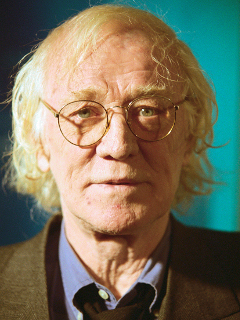
Death of Richard Harris, Actor & Singer

richard-harris

Richard St. John Harris, Irish actor and singer, dies in London from complications of Hodgkin’s lymphoma and pneumonia on October 25, 2002.

Harris is born to a farming family on October 1, 1930, in Limerick, County Limerick. He is the son of Mildred Josephine (Harty) and Ivan John Harris. He is an excellent rugby player with a strong passion for literature. Unfortunately, a bout of tuberculosis as a teenager ends his aspirations to a rugby career. He becomes fascinated with the theater and skips a local dance one night to attend a performance of Henry IV. He is hooked and goes on to learn his craft at the London Academy of Music and Dramatic Art, followed by several years in stage productions.

Harris makes his film debut in 1959 in the film Alive and Kicking and plays the lead role in The Ginger Man in the West End in 1959. His second film, Shake Hands with the Devil (1959), quickly scores regular work in films, including The Wreck of the Mary Deare (1959), The Night Fighters (1960) and a good role as a frustrated Australian bomber pilot in The Guns of Navarone (1961).

Harris’ breakthrough performance is as the quintessential “angry young man” in the sensational drama This Sporting Life (1963), for which he receives an Academy Award nomination. He then appears in the World War II commando tale The Heroes of Telemark (1965) and in the Sam Peckinpah-directed western Major Dundee (1965). He next shows up in Hawaii (1966) and plays King Arthur in Camelot (1967), a lackluster adaptation of the famous Broadway play. Better performances follow, among them a role as a reluctant police informer in The Molly Maguires (1970) alongside Sean Connery. He takes the lead role in the violent western A Man Called Horse (1970), which becomes something of a cult film and spawns two sequels.

As the 1970s progress, Harris continues to appear regularly on screen, however, the quality of the scripts vary from above average to woeful. His credits during this period include directing himself as an aging soccer player in the delightful The Hero (1971), the western The Deadly Trackers (1973), the big-budget “disaster” film Juggernaut (1974), the strangely-titled crime film 99 and 44/100% Dead (1974), with Connery again in Robin and Marian (1976), Gulliver’s Travels (1977), a part in the Jaws (1975) ripoff Orca (1977) and a nice turn as an ill-fated mercenary with Richard Burton and Roger Moore in the popular action film The Wild Geese (1978).

The 1980s kick off with Harris appearing in the silly Bo Derek vanity production Tarzan, the Ape Man (1981) and the remainder of the decade has him appearing in some very forgettable productions.

However, the luck of the Irish once again shines on Harris’ career and he scores rave reviews and another Oscar nomination for The Field (1990). He then locks horns with Harrison Ford as an Irish Republican Army sympathizer in Patriot Games (1992) and gets one of his best roles as gunfighter English Bob in the Clint Eastwood western Unforgiven (1992). He is firmly back in vogue and rewards his fans with more wonderful performances in Wrestling Ernest Hemingway (1993), Cry, the Beloved Country (1995), The Great Kandinsky (1995) and This Is the Sea (1997). Further fortune comes his way with a strong performance in the blockbuster Gladiator (2000) and he becomes known to an entirely new generation of film fans as Albus Dumbledore in the mega-successful Harry Potter and the Sorcerer’s Stone (2001) and Harry Potter and the Chamber of Secrets (2002). His final screen role is as “Lucius Sulla” in Julius Caesar (2002).

Harris is diagnosed with Hodgkin’s lymphoma in August 2002, reportedly after being hospitalised with pneumonia. He dies at University College Hospital in Fitzrovia, London on October 25, 2002, after spending his final three days in a coma. His body is cremated, and his ashes are scattered in the Bahamas, where he had owned a home.


Leave a comment

The Opening of Cork Airport

cork-airport

Cork Airport, the second-largest of the three principal international airports in the Republic of Ireland, after Dublin Airport and ahead of Shannon Airport, is opened on October 16, 1961.

In 1957 the Government of Ireland agrees in principle to the building of an airport for Cork. After considering many sites in the area, it is agreed that the airport should be built at Ballygarvan. Tenders are invited for the construction of the airport in 1959 at an estimated cost of £1 million. The airport is officially opened on October 16, 1961, following proving flights four days earlier by Aer Lingus and Cambrian Airways. Vincent Fanning is the first manager at the airport. In its first year the airport handles 10,172 passengers – close to the average number of passengers handled each day at the airport in 2007. Throughout the 1960s the airport expands with the arrival of more advanced aircraft and more destinations. The first jet, a British Overseas Airways Corporation de Havilland DH 106 Comet, lands at Cork Airport on March 29, 1964. By 1969 Aer Lingus is operating to London‘s Heathrow Airport, Manchester Airport and Bristol Airport.

In 1975 Aer Rianta, the then state airports authority, undertakes a passenger terminal study aimed at improving the terminal facilities. The findings result in the provision, over the next two years, of new departure and arrival halls, a new check-in area, office complex, information desk, duty office and executive lounge. The new extensions and facilities are opened in 1978.

The 1980s begin with an extension of the main apron. New services to London Gatwick begin, while Aer Lingus’ commuter division starts a new domestic service to Dublin Airport. In 1985 following significant growth, Aer Rianta carries out a survey of the terminal facilities with a view to carrying out a major expansion and development programme. On June 8, 1987, Ryanair commences services at Cork Airport. Phase I of the Terminal Expansion and Development Plan is completed in 1988. The following year the main runway extension of 1,000 feet is opened.

The 1990s begin with the completion of Phase II of the terminal expansion in 1991 and Phase III being completed in 1992 with the plan being brought to completion in 1994.

In 2001 plans are drawn up for the construction of a new terminal building and ancillary capital investment works at an estimated cost of €140 million. Along with the construction of the terminal, roads are upgraded from single to dual carriageway and re-aligned, and a new short term multistorey car park is constructed. The new terminal opens on August 15, 2006. Designed by HOK and Jacobs Engineering Group, the new terminal is the first built in Ireland in the 21st century.

In June 2008, the Irish Aviation Authority completes a new control tower 1 km from the old terminal to the west of the main runway. However, it takes until mid-October 2009 to get all the new systems tested and working. The new control tower officially opens on 20 October 20, 2009.

In 2013, Cork Airport is placed first for overall customer satisfaction in a global survey of passengers carried out by Airports Council International Europe. The survey measures customer satisfaction across eight categories in 61 regional airports worldwide, with Cork Airport scoring highest.

In June 2017, the airport is named as “Best Airport in Europe under 5 million passengers” at the 27th Airports Council International (ACI) Europe General Assembly.


Leave a comment

William J. Brennan Appointed to U.S. Supreme Court

william-brennan

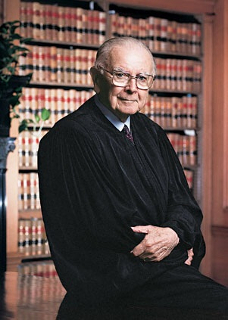
William Joseph Brennan, Jr., American judge, is named an Associate Justice of the Supreme Court of the United States through a recess appointment by President Dwight D. Eisenhower on October 15, 1956, shortly before the 1956 presidential election. He serves from 1956 until July 20, 1990. As the seventh longest-serving justice in Supreme Court history, he is known for being a leader of the Court’s liberal wing.

Brennan is born in Newark, New Jersey to Irish immigrants, originally from County Roscommon, on April 25, 1906. He attends public schools in Newark, graduating from Barringer High School in 1924. He then attends the Wharton School of the University of Pennsylvania, where he graduates cum laude with a degree in economics in 1928. He graduates from Harvard Law School near the top of his class in 1931 and is a member of the Harvard Legal Aid Bureau.

Brennan enters private practice in New Jersey and serves in the United States Army during World War II. He is appointed to the Supreme Court of New Jersey in 1951. After his appointment to the U.S. Supreme Court by Eisenhower in 1956, he wins Senate confirmation the following year.

On the Supreme Court, Brennan is known for his outspoken progressive views, including opposition to the death penalty and support for abortion rights. He authors several landmark case opinions, including Baker v. Carr, establishing the “one person, one vote” principle, and New York Times Co. v. Sullivan, which requires “actual malice” in libel suits brought by public officials. Due to his ability to shape a wide variety of opinions and “bargain” for votes in many cases, he is considered to be among the Court’s most influential members. Justice Antonin Scalia calls Brennan “probably the most influential Justice of the [20th] century.”

Brennan holds the post on the Court until his retirement on July 20, 1990, after suffering a stroke. He is succeeded by Justice David Souter. Brennan then teaches at Georgetown University Law Center until 1994. He dies in Arlington County, Virginia on July 24, 1997, and is buried in Arlington National Cemetery.

With 1,360 opinions, he is second only to William O. Douglas in number of opinions written while a Supreme Court justice. On November 30, 1993, President Bill Clinton presents Brennan with the Presidential Medal of Freedom.


Leave a comment

Death of Ed Sullivan,Television Personality

ed-sullivan

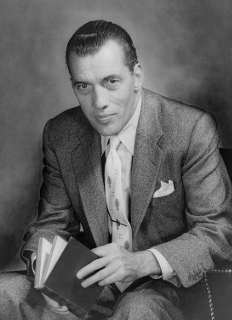
Edward Vincent Sullivan, Irish American television personality, sports and entertainment reporter, and syndicated columnist for the New York Daily News and the Chicago Tribune New York News Syndicate, dies in Manhattan, New York on October 13, 1974. He is principally remembered as the creator and host of the television variety show The Toast of the Town, later popularly and officially renamed The Ed Sullivan Show. Broadcast for 23 years from 1948 to 1971, it sets a record as the longest-running variety show in United States broadcast history.

Sullivan is born on September 28, 1901, in Harlem, New York City, the son of Elizabeth F. (née Smith) and Peter Arthur Sullivan, a customs house employee, and grows up in Port Chester, New York. He is a gifted athlete in high school, earning 12 athletic letters at Port Chester High School.

Sullivan lands his first job at The Port Chester Daily Item, a local newspaper for which he had written sports news while in high school and then joins the paper full-time after graduation. In 1919, he joins The Hartford Post. The newspaper folds in his first week there but he lands another job on The New York Evening Mail as a sports reporter. After The Evening Mail closes in 1923, he bounced through a series of news jobs. In 1927, he joins The Evening Graphic as sportswriter and eventually sports editor. In 1929, when Walter Winchell moves to the New York Daily Mirror, he is made Broadway columnist.

Throughout his career as a columnist, Sullivan dabbles in entertainment, producing vaudeville shows with which he appears as master of ceremonies in the 1920s and 1930s, directing a radio program over the original WABC (now WCBS) and organizing benefit reviews for various causes. In 1941, he is host of the Summer Silver Theater, a variety program on CBS radio, with Will Bradley as bandleader and a guest star featured each week.

In 1948, producer Marlo Lewis gets the CBS network to hire Sullivan to do a weekly Sunday night TV variety show, Toast of the Town, which later becomes The Ed Sullivan Show. Debuting in June 1948, the show is originally broadcast from the Maxine Elliott’s Theatre on West 39th Street in New York City. In January 1953, it moves to CBS-TV Studio 50, at 1697 Broadway in New York City, which in 1967 is renamed the Ed Sullivan Theater. The theater is later the home of the Late Show with David Letterman and The Late Show with Stephen Colbert. Television critics initially give the new show and its host poor reviews.

In the 1950s and 1960s, Sullivan is a respected starmaker because of the number of performers who become household names after appearing on the show, including Elvis Presley, The Beatles, The Dave Clark Five, B.J. Thomas and the Jackson Five. He has a knack for identifying and promoting top talent and pays a great deal of money to secure that talent for his show.

By 1971, the show’s ratings have plummeted. In an effort to refresh its lineup, CBS cancels the program along with some of its other longtime shows. Sullivan is angered and refuses to do a final show, although he remains with the network in various other capacities and hosts a 25th anniversary special in June 1973.

In early September 1974, X-rays reveal that Sullivan has an advanced growth of esophageal cancer. Doctors give him very little time to live, and the family chooses to keep the diagnosis secret from him. Sullivan, still believing his ailment to be yet another complication from a long-standing battle with gastric ulcers, dies five weeks later on October 13, 1974, at New York’s Lenox Hill Hospital. His funeral is attended by 3,000 at St. Patrick’s Cathedral, New York, on a cold, rainy day. He is interred in a crypt at the Ferncliff Cemetery in Hartsdale, New York.

Sullivan has a star on the Hollywood Walk of Fame at 6101 Hollywood Blvd.


Leave a comment

The 2002 Bali Bombings

bali-bombings-2002

The 2002 Bali bombings occur on October 12, 2002 in the tourist district of Kuta on the Indonesian island of Bali. The attack kills 202 people, including 88 Australians, 38 Indonesians, and people of more than 20 other nationalities. An additional 209 people are injured.

At 11:05 PM Central Indonesian Time, a suicide bomber inside the nightclub Paddy’s Pub, sometimes referred to as Paddy’s Irish Bar and owned Natalia Daly of Cork, County Cork, detonates a bomb in his backpack, causing many patrons, with or without injuries, to immediately flee into the street. Twenty seconds later, a second and much more powerful car bomb hidden inside a white Mitsubishi van is detonated by another suicide bomber outside the Sari Club, a renowned open-air thatched roof bar located opposite Paddy’s Pub.

The bombing occurs during one of the busiest tourist periods of the year in Kuta Beach, driven in part by many Australian sporting teams making their annual end-of-season holiday.

Damage to the densely populated residential and commercial district is immense, destroying neighbouring buildings and shattering windows several blocks away. The car bomb explosion leaves a one-metre-deep crater.

The local Sanglah Hospital is ill-equipped to deal with the scale of the disaster and is overwhelmed with the number of injured, particularly burn victims. There are so many people injured by the explosion that some of the injured have to be placed in hotel pools near the explosion site to ease the pain of their burns. Many of the injured are forced to be flown extreme distances to Darwin (1,100 mi) and Perth (1,600 mi) on the Australian continent for specialist burn treatment.

A comparatively small bomb detonates outside the U.S. consulate in Denpasar, which is believed to have exploded shortly before the two Kuta bombs, causes minor injuries to one person and minimal property damage. It is reportedly packed with human feces.

The final death toll is 202, mainly comprising Western tourists and holiday-makers in their 20s and 30s who are in or near Paddy’s Pub or the Sari Club, but also including many Balinese Indonesians working or living nearby, or simply passing by. Hundreds more people suffer horrific burns and other injuries. The largest group among those killed are holidayers from Australia with 88 fatalities. On October 14, the United Nations Security Council passes Resolution 1438 condemning the attack as a threat to international peace and security.

Various members of Jemaah Islamiyah, a violent Islamist group, are convicted in relation to the bombings, including three individuals who are sentenced to death. An audio-cassette purportedly carrying a recorded voice message from Osama bin Laden states that the Bali bombings are in direct retaliation for support of the United StatesWar on Terror and Australia‘s role in the liberation of East Timor. The recording does not claim responsibility for the Bali attack. However, former FBI agent Ali Soufan confirms that Al-Qaeda did in fact finance the attack.

On November 8, 2008, Imam Samudra, Ali Amrozi bin Haji Nurhasyim and Huda bin Abdul Haq are executed by firing squad on the island prison of Nusa Kambangan. On March 9, 2010, Dulmatin, nicknamed “the Genius” and believed to be responsible for setting off one of the Bali bombs with a mobile phone, is killed in a shoot-out with Indonesian police in Jakarta.


Leave a comment

Launch of NetAid

net-aid

Aiming to raise awareness of world poverty, The Corrs and chartered accountants KPMG jointly launch the NetAid web site on October 7, 1999. NetAid is an anti-poverty initiative started as a joint venture between the United Nations Development Programme and Cisco Systems. It becomes an independent nonprofit organization in 2001 and becomes a part of Mercy Corps in 2007.

NetAid begins with a concert event on October 9, 1999 with simultaneous activities meant to harness the Internet to raise money and awareness for the Jubilee 2000 campaign. Concerts take place at Wembley Stadium in London, Giants Stadium in New Jersey and the Palais des Nations in Geneva. While the Wembley show is at capacity, the U.S. show suffers from very poor ticket sales.

Performers at Wembley Stadium include Eurythmics, The Corrs, Catatonia, Bush, Bryan Adams, George Michael, David Bowie, Stereophonics and Robbie Williams.

Performers at Giants Stadium include Sheryl Crow, Jimmy Page, Busta Rhymes, Counting Crows, Bono, Puff Daddy, The Black Crowes, Wyclef Jean, Jewel, Mary J. Blige, Cheb Mami, Sting, Slash, Lil’ Kim, Lil’ Cease, and Zucchero.

Performers in Geneva include Bryan Ferry, Texas, Des’ree and Ladysmith Black Mambazo.

The NetAid website, originally at http://www.netaid.org, receives over 2.4 million hits and raises $830,000 from eight countries. Cisco sponsors the concerts and the web site. Along with Kofi Annan, Keyur Patel, MD of KPMG Consulting spearhead the technology architecture development of the web site and Anaal Udaybabu (Gigabaud Studios, San Francisco) designs the user experience.

Following the concerts, NetAid is spun out of Cisco as an independent entity and tries various approaches to raising awareness of extreme poverty and raising money for anti-poverty projects undertaken by other organizations, through a variety of different NetAid campaigns.

By 2006, NetAid has narrowed its focus to raising awareness among high school students in the United States regarding poverty in developing countries.


Leave a comment

Death of Dan Keating, Last Survivor of the Irish War of Independence

dan-keating

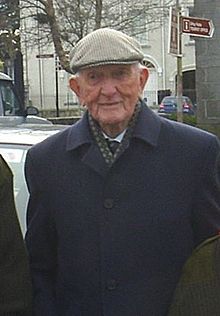
Daniel “Dan” Keating, lifelong Irish republican and patron of Republican Sinn Féin, dies in Knockbrack, County Kerry on October 2, 2007. At the time of his death, he is Ireland’s oldest man and the last surviving veteran of the Irish War of Independence.

Keating is born on January 2, 1902, in Castlemaine, County Kerry. He receives his education in local schools, including the Christian Brothers’ School in Tralee. Tralee is also the place where Keating does his apprenticeship. During this time, he becomes a skillful Gaelic football player in his native Kerry.

Keating joins Fianna Éireann in 1918. In 1920, during the Irish War of Independence, he joins the Boherbee B Company, 3rd Battalion, 1st Kerry Brigade, Irish Republican Army (IRA). He first brings a firearm of a Liverpool Irish soldier of the British Army into a public house in which he works. On April 21, 1921, Royal Irish Constabulary (RIC) Constable Denis O’Loughlin is shot dead in Knightly’s public house in Tralee. Keating, Jimmy O’Connor and Percy Hanafin are suspected of the killing and are forced to go on the run. On June 1, Keating is involved in an ambush between Castlemaine and Milltown which claims the lives of five RIC men. On July 10, a day before the truce between the IRA and British forces, his unit is involved in a gun battle with the British Army near Castleisland. This confrontation results in the deaths of four British soldiers and five IRA volunteers.

Keating opposes the 1921 Anglo-Irish Treaty and fights on the anti-treaty side in the Irish Civil War. He is involved in operations in counties Kerry, Limerick, and Tipperary, before his flying column is arrested by Free State Forces. Keating spends seven months in Portlaoise Prison and the Curragh prison before being released in March 1923.

Keating remains an IRA member for a long time after the Civil War. He is arrested several times during the 1930s on various charges. He is active in London during the 1939/1940 IRA bombing campaign.

In 1933, Keating is involved in an attempt to assassinate the leader of the Irish Blueshirts, Eoin O’Duffy, during a visit to County Kerry. The attack is to happen at Ballyseedy, where Free State forces had carried out the Ballyseedy Massacre during the Irish Civil War. However, the plot fails when the person travelling with O’Duffy refuses to divulge in which car O’Duffy would be riding.

Keating subsequently returns to Dublin and works as a barman in several public houses. He retires and returns to his native Kerry in 1978, living out the rest of his life with relatives in Knockbrack. Until his death he refuses to accept a state pension because he considers the 26-county Republic of Ireland an illegitimate state which usurps the 1916 Irish Republic.

“All the talk you hear these days is of peace. But there will never be peace until the people of the 32 counties elect one parliament without British interference.”

In 2002, Keating refuses the state’s standard €2,500 award to centenarians from President Mary McAleese. After former IRA volunteer George Harrison dies in November 2004, Keating becomes patron of Republican Sinn Féin until his own death. At the time of his death at the age of 105 on October 2, 2007, he is the oldest man in Ireland. He is buried in Kiltallagh Cemetery, Castlemaine.


Leave a comment

Death of Kathleen Clarke, Founder of Cumann na mBan

kathleen-clarke

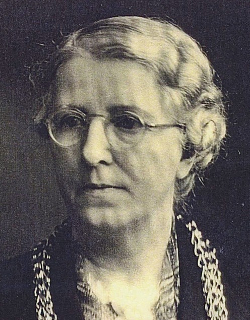
Kathleen Clarke (née Daly), a founder member of Cumann na mBan, and one of very few privy to the plans of the Easter Rising in 1916, dies in Dublin on September 29, 1972. She is the wife of Tom Clarke and sister of Edward “Ned” Daly, both of whom are executed for their part in the Rising. She is subsequently a Teachta Dála (TD) and senator with both Sinn Féin and Fianna Fáil, and the first female Lord Mayor of Dublin (1939–41).

Kathleen Daly is born into a prominent Fenian family in Limerick on April 11, 1878, the third daughter of Edward and Catherine Daly. Her paternal uncle, John Daly, is at the time imprisoned for his political activities in Chatham and Portland Prisons in England. He is released in 1896 and returns home to Limerick. When Tom Clarke, who had been imprisoned with her uncle, is released in 1898 he travels to Limerick to receive the Freedom of the City and stays with the Daly family.

In 1901 Daly decides to emigrate to the United States to join Tom, who had been there since 1900, having secured work through his Fenian contacts. They marry on July 16, 1901, in New York City. Through his contacts in the Clan na Gael and the Irish Republican Brotherhood (IRB), Tom Clarke continues to be involved in nationalist activity. Kathleen joins the Gaelic League while in the United States and they return to Ireland in November 1907.

In 1914 Clarke becomes a founder member of Cumann na mBan. Her husband forbids her permission to take an active part in the 1916 Easter Rising as she has orders regardless of how the events pan out. As Tom Clarke is the first signatory of the Proclamation of the Irish Republic, he is chosen to be executed for his part in the Easter Rising. Her younger brother, Ned Daly, is also executed for taking part in the rising. She visits both of them before they are executed. After the Rising, Michael Collins establishes contact with her while in prison in his attempts to re-build the IRB network. She also sets up the Irish National Aid Fund to aid those who had family members killed or imprisoned as a result of the Easter Rising, closely aided by Sorcha MacMahon.

Clarke becomes a member of Sinn Féin and in 1917 is elected a member of the party’s Executive. During the German Plot she is arrested and imprisoned in Holloway Prison for eleven months. During the Irish War of Independence, she serves as a District Judge on the Republican Courts in Dublin. In 1919 she is elected as an Alderman for the Wood Quay and Mountjoy Wards of Dublin Corporation and serves until the Corporation is abolished in 1925.

Clarke is elected unopposed as a Sinn Féin TD to the Second Dáil at the 1921 elections for the Dublin Mid constituency. She is not re-elected at the 1922 Irish general election, however, and supports the Anti-Treaty forces during the Irish Civil War. In 1926 she becomes a founder member of Fianna Fáil and has to resign from Cumann na mBan. She is re-elected to the short-lived 5th Dáil at the June 1927 Irish general election as a Fianna Fáil member for the Dublin Mid constituency but loses her seat at the September 1927 Irish general election and does not regain it. She is elected as one of six Fianna Fáil Senators to the Free State Seanad for nine years at the 1928 Seanad election under the leadership of Joseph Connolly. She remains a member of the Seanad until it is abolished in 1936.

In 1930 Clarke is elected to the re-constituted Dublin Corporation for Fianna Fáil along with Robert Briscoe, Seán T. O’Kelly, Thomas Kelly and Oscar Traynor. She serves as the first Fianna Fáil Lord Mayor of Dublin as well as the first female Lord Mayor, from 1939 to 1941. She opposes the Constitution of Ireland as she feels that several of its sections would place women in a lower position that they had been afforded in the Proclamation of the Irish Republic. She is criticised by many in the Fianna Fáil organisation as a result and, while she resigns from the Thomas Clarke Cumann, she remains a member of the Fianna Fáil Ard Chomhairle.

While Clarke does not support the Irish Republican Army (IRA) bombing in England during World War II, she appeals for those sentenced to death by the Irish Government to be given clemency. Ultimately this leads to her breaking with the party completely after her term as Lord Mayor finishes in 1941. She declines to stand as a Fianna Fáil candidate at the 1943 Irish general election.

In 1966, as part of the celebrations of the Easter Rising, Clarke and other surviving relatives are awarded honorary Doctor of Law by the National University of Ireland. Following her death on September 29, 1972, she receives the rare honour of a state funeral. She is buried at Deans Grange Cemetery, Dublin.