seamus dubhghaill

Promoting Irish Culture and History from Little Rock, Arkansas, USA


Leave a comment

Birth of Ronnie Drew, Singer & Folk Musician

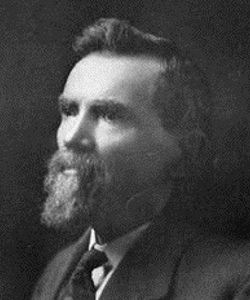
Joseph Ronald “Ronnie” Drew, singer, folk musician and actor who achieves international fame during a fifty-year career recording with The Dubliners, is born in Dún Laoghaire, County Dublin, on September 16, 1934. He is most recognised for his lead vocals on the single “Seven Drunken Nights” and “The Irish Rover” both charting in the U.K. top 10. He is recognisable for his long beard and his voice, which is once described by Nathan Joseph as being “like the sound of coal being crushed under a door.”

Drew is educated at CBS Eblana. Despite his aversion to education, he is considered the most intelligent in his class by schoolfriend and future Irish film censor, Sheamus Smith. Drew also sings as a boy soprano before his voice breaks.

In the 1950s, Drew moves to Spain to teach English and learn Spanish and flamenco guitar. His interest in folk music begins at the age of nineteen. When he returns to Ireland, he performs in the Gate Theatre with John Molloy and soon goes into the music business full-time, after holding a number of short-term jobs.

In 1962, he founds the Ronnie Drew Group with Luke Kelly, Barney McKenna and Ciarán Bourke. They soon change their name to The Dubliners, with John Sheahan joining shortly afterwards to form the definitive line-up and quickly become one of the best-known Irish folk groups. They play at first in O’Donoghue’s Pub in Merrion Row, Dublin where they are often accompanied by Mary Jordan on the spoons and vocalist Ann Mulqueen, a friend of McKenna’s. Mary Jordan’s mother, Peggy Jordan, introduces them to the Abbey Tavern in Howth, which becomes a regular Monday night venue for the emerging group. They also play across the road in the Royal Hotel, at all-night parties in Peggy’s large house in Kenilworth Square in Rathgar, and in John Molloy’s flat at Ely Place.

Drew leaves the Dubliners in 1974, goes to Norway in 1978 and records two songs with the Norwegian group Bergeners. He rejoins The Dubliners in 1979 and leaves for good in 1995, though he does reunite with the group in 2002 for a 40th anniversary celebration. He makes several television appearances with the group between 2002 and 2005.

From 1995 onwards, Drew pursues a solo career. He records with many artists, including Christy Moore, The Pogues, Antonio Breschi, Dropkick Murphys, Eleanor Shanley and others. He does a number of “one-man shows” consisting of stories about people such as Brendan Behan, Patrick Kavanagh and Seán O’Casey, as well as Drew singing their songs.

He fronts a campaign to encourage the use of Dublin’s light-rail infrastructure and, before that, the “My Dublin” ads for radio stations 98FM and FM104. He narrates a retelling of the great Irish Myths and Legends over a six CD set in 2006. He also narrates the stories of Oscar Wilde in his distinctive voice for a series released on CD by the News of the World newspaper. Both were re-released as CD box sets in 2010.

On August 22, 2006, Drew is honoured in a ceremony where his handprints are added to the “Walk of Fame” outside Dublin‘s Gaiety Theatre.

In September 2006, Drew is reported to be in ill-health after being admitted to St. Vincent’s Hospital, Dublin, to undergo tests for suspected throat cancer. On October 25, 2007, Drew, now bald and beardless, appears on Ryan Confidential on RTÉ 1 to give an interview about his role in The Dubliners, his life since leaving the band and being diagnosed with throat cancer. Later in 2007, he appears on The Late Late Show, where he speaks about the death of his wife and his ongoing treatment for cancer.

Ronnie Drew dies in St. Vincent’s Hospital, Dublin, on August 16, 2008, following his long illness. He is buried three days later in Redford Cemetery in Greystones.
Leave a comment

Birth of Liam Clancy

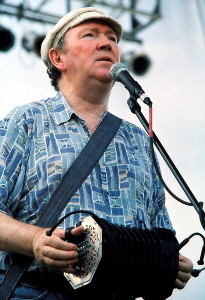
William “Liam” Clancy, Irish folk singer and actor, is born in Carrick-on-Suir, County Tipperary on September 2, 1935. He is the youngest and last surviving member of the influential folk group The Clancy Brothers, who are regarded as Ireland’s first pop stars. They record 55 albums, achieve global sales of millions and appear in sold-out concerts at such prominent venues as Carnegie Hall and the Royal Albert Hall.

Clancy is Robert Joseph Clancy and Joanna McGrath’s ninth and youngest surviving child. He receives a Christian Brothers education before taking a job as an insurance man in Dublin. While there he also takes night classes at the National College of Art and Design.

Clancy begins singing with his brothers, Paddy and Tom Clancy, at fund-raising events for the Cherry Lane Theatre and the Guthrie benefits. The Clancy Brothers and Tommy Makem, begin recording on Paddy Clancy’s Tradition Records label in the late 1950s. Liam plays guitar in addition to singing and also records several solo albums. They record their seminal The Rising of the Moon album in 1959. There are international tours, which include performances at Carnegie Hall and the Royal Albert Hall. The quartet records numerous albums for Columbia Records and enjoys great success during the 1960s folk revival. In 1964, thirty percent of all albums sold in Ireland are Clancy Brothers and Tommy Makem records.

After The Clancy Brothers split up, Liam has a solo career in Canada. In 1975, he is booked to play a festival in Cleveland, Ohio, where Tommy Makem is also playing. The two play a set together and form the group Makem and Clancy, performing in numerous concerts and recording several albums together until 1988. The original Clancy Brothers and Tommy Makem line-up also get back together in the 1980s for a reunion tour and album.

In later life, Liam maintains a solo career accompanied by musicians Paul Grant and Kevin Evans, while also engaging in other pursuits. In 2001, Clancy publishes a memoir titled The Mountain of the Women. He is also in No Direction Home, the 2005 Bob Dylan documentary directed by Martin Scorsese. In 2006, Clancy is profiled in a two-hour documentary titled The Legend of Liam Clancy, produced by Anna Rodgers and John Murray with Crossing the Line Films, which wins the award for best series at the Irish Film and Television Awards in Dublin. His final album, The Wheels of Life, is released in 2009. It includes duets with Mary Black and Gemma Hayes as well as songs by Tom Paxton and Donovan.

Liam Clancy dies from pulmonary fibrosis on December 4, 2009, in Bon Secours Hospital, Cork. He is buried in the new cemetery in An Rinn, County Waterford, where he spent the last number of years of his life, owning a successful recording studio.


Leave a comment

Death of Poet Seamus Heaney, Nobel Prize Recipient

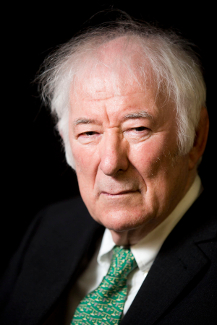
Seamus Justin Heaney, Irish poet, playwright, translator and lecturer, dies in Dublin on August 30, 2013. He is the 1995 recipient of the Nobel Prize in Literature.

Heaney is born near Castledawson, County Londonderry, in Northern Ireland. The family moves to nearby Bellaghy when he is a boy. After attending Queen’s University Belfast, Heaney becomes a lecturer at St. Joseph’s College in Belfast in the early 1960s and begins to publish poetry. He lives in Sandymount, Dublin from 1976 until his death. He also lives part-time in the United States from 1981 to 2006. Heaney is recognised as one of the principal contributors to poetry during his lifetime.

Heaney is a professor at Harvard University from 1981 to 1997, and its Poet in Residence from 1988 to 2006. From 1989 to 1994, he is also the Professor of Poetry at the University of Oxford. In 1996, he is made a Commandeur de l’Ordre des Arts et des Lettres. Other awards that he receives include the Geoffrey Faber Memorial Prize (1968), the E. M. Forster Award (1975), the PEN Translation Prize (1985), the Golden Wreath of Poetry (2001), the T. S. Eliot Prize (2006) and two Whitbread Book Awards (1996 and 1999). In 2011, he is awarded the Griffin Poetry Prize and, in 2012, a Lifetime Recognition Award from the Griffin Trust for Excellence in Poetry. His literary papers are held by the National Library of Ireland.

American poet Robert Lowell describes Heaney as “the most important Irish poet since Yeats,” and many others, including the academic John Sutherland, have said that he is “the greatest poet of our age.” Robert Pinsky has stated that “with his wonderful gift of eye and ear Heaney has the gift of the storyteller.” Upon his death in 2013, The Independent describes him as “probably the best-known poet in the world.” One of his best-known works is Death of a Naturalist, published in 1966.

Seamus Heaney dies in the Blackrock Clinic in Dublin on August 30, 2013, aged 74, following a short illness. After a fall outside a restaurant in Dublin, he enters the hospital for a medical procedure, but dies at 7:30 the following morning before it takes place. His funeral is held in Donnybrook, Dublin, on the morning of September 2, 2013, and he is buried in the evening in the Cemetery of St. Mary’s Church, Bellaghy, County Londonderry, Northern Ireland, in the same graveyard as his parents, young brother, and other family members. His son Michael reveals at the funeral mass that his father texted his final words, “Noli timere” (Latin: “Do not be afraid”), to his wife, Marie, minutes before he died. Shortly after Heaney’s death, graffiti artist Maser paints a mural in Dublin referencing this message.

On September 1, the day after his death, a crowd of 81,553 spectators applaud Heaney for three minutes at a semi-final match of the 2013 All-Ireland Senior Football Championship. His funeral is broadcast live the following day on RTÉ television and radio and is streamed internationally at RTÉ’s website. RTÉ Radio 1 Extra transmits a continuous broadcast, from 8:00 AM until 9:15 PM on the day of the funeral, of his Collected Poems album, recorded in 2009. His poetry collections sell out rapidly in Irish bookshops immediately following his death.


Leave a comment

The Funeral of Michael Collins

Michael Collins, soldier and politician who is a leading figure in the struggle for, and achievement of Irish independence in the early 20th century, is laid to rest in Dublin‘s Glasnevin Cemetery on August 28, 1922.

Collins is shot and killed by anti-Treaty ambushers as his Free State Army convoy approaches Béal na Bláth, an isolated crossroads in County Cork, on August 22, 1922, during the Irish Civil War.

Collins’s body is transported by sea from Cork to Dublin. He lay in state for three days in Dublin City Hall where tens of thousands of mourners filed past his coffin to pay their respects, including many British soldiers departing Ireland who had fought against him. His funeral mass on August 28, 1922, takes place at Dublin’s St. Mary’s Pro-Cathedral where a number of foreign and Irish dignitaries are in attendance. According to a report in The New York Times, the seven-mile journey from the cathedral to his final resting place in Glasnevin Cemetery is lined with half a million mourners, almost one fifth of the country’s population at the time, and many of whom likely differed with him on his Treaty vote.

No official inquiry is ever undertaken into Collins’s death and consequently there is no official version of what happened, nor are there any authoritative, detailed contemporary records.

In this vacuum, independent investigations and conspiracy theorists have put forward a number of suspects as having executed or ordered his death, including an anti-Treaty sharpshooter, members of his own escort, the British Secret Intelligence Service, or Éamon de Valera himself.

De Valera is alleged to have declared in 1966, “It is my considered opinion that in the fullness of time history will record the greatness of Michael Collins; and it will be recorded at my expense.”

An annual commemoration ceremony takes place each year in August at the ambush site at Béal na Bláth, organised by The Béal na mBláth Commemoration Committee. In 2009, former President of Ireland Mary Robinson gives the oration. In 2010, the Minister for Finance Brian Lenihan, Jnr. becomes the first Fianna Fáil person to give the oration. In 2012, on the 90th anniversary of the death of Collins, Taoiseach Enda Kenny gives the oration, the first serving head of government to do so. There is also a remembrance ceremony in Glasnevin Cemetery every year at Collins’s gravesite on the anniversary of his death.

RIP Big Fellow!


Leave a comment

Lord Killanin Becomes President of the International Olympic Committee

Michael Morris, 3rd Baron Killanin, journalist, author, and sports official, becomes the first Irish president of the International Olympic Committee (IOC) on August 23, 1972.

Morris is born in London on July 30, 1914, the son of Irish Catholic Lt. Col. George Henry Morris who is from Spiddal in County Galway. The Morrises are one of the fourteen families making up the “Tribes of Galway.”

Morris is educated at Summerfields, St. Leonards-on-Sea, Eton College, the Sorbonne in Paris and then Magdalene College, Cambridge, where he is President of the renowned Footlights dramatic club. He succeeds his uncle as Baron Killanin in the Peerage of the United Kingdom in 1927, which allows him to sit in the House of Lords at the Palace of Westminster as Lord Killanin upon turning 21. In the mid-1930s, he begins his career as a journalist on Fleet Street, working for the Daily Express, the Daily Sketch and subsequently the Daily Mail.

In November 1938, Lord Killanin is commissioned into the Queen’s Westminsters, a territorial regiment of the British Army, where he is responsible for recruiting fellow journalists, including future The Daily Telegraph editor Bill Deedes, and friends who are musicians and actors. He reaches the rank of major and takes part in the planning of D-Day and the Invasion of Normandy in 1944, acting as brigade major for the 30th Armoured Brigade, part of the 79th Armoured Division. He is appointed, due to the course of operations, a Member of the Order of the British Empire (MBE). After being demobilised, he goes to Ireland. He resigns his TA commission in 1951.

In 1950, Lord Killanin becomes the head of the Olympic Council of Ireland (OCI) and becomes his country’s representative in the IOC in 1952. He becomes senior vice-president in 1968, and succeeds Avery Brundage, becoming President-elect at the 73rd IOC Session (August 21–24) held in Munich prior to the 1972 Summer Olympics. He takes office soon after the Games.

During Lord Killanin’s presidency, the Olympic movement experiences a difficult period, dealing with the financial flop of the 1976 Summer Olympics in Montreal and the boycotts of the 1980 Summer Olympics in Moscow. Denver, originally selected to host the 1976 Winter Olympics, withdraws and has to be replaced by Innsbruck. The cities of Lake Placid, New York and Los Angeles are chosen for 1980 Winter Olympics and 1984 Summer Olympics by default due to a lack of competing bids. He resigns just before the Moscow Olympics in 1980, and his position is taken over by Juan Antonio Samaranch. He is later unanimously elected Honorary Life President.

Lord Killanin serves as Honorary Consul-General of Monaco in Ireland from 1961 to 1984 and as Chairman of the Race Committee for Galway Racecourse from 1970 to 1985. A keen horse racing enthusiast, he also serves as a steward of the Irish Turf Club on two occasions and on the National Hunt Steeplechase Committee. In his business life Lord Killanin is a director of many companies including Irish Shell, Ulster Bank, Beamish & Crawford and Chubb Ireland. He is a founder member of An Taisce (The National Trust for Ireland) and is chairman of the National Monuments Advisory Council until his death.

Lord Killanin dies at his home in Dublin on April 25, 1999, at the age of 84 and, following a bilingual funeral Mass at St. Enda’s Church in Spiddal, County Galway, he is buried in the family vault in the New Cemetery, Galway.

(Pictured: Lord Killanin by Bert Verhoeff / Anefo (Nationaal Archief) [CC BY-SA 3.0 nl (http://creativecommons.org/licenses/by-sa/3.0/nl/deed.en)%5D, via Wikimedia Commons)


Leave a comment

Birth of Phil Lynott, Thin Lizzy Vocalist & Bassist

Philip Parris “Phil” Lynott, Irish musician, singer, songwriter, and a founding member, principal songwriter, lead vocalist, and bassist of Thin Lizzy, is born on August 20, 1949, in Hallam Hospital in West Bromwich, Staffordshire, England.

Lynott goes to live with his grandmother, Sarah Lynott, in Crumlin, Dublin when he is four years old. He is introduced to music through his uncle Timothy’s record collection and becomes influenced by Tamla Motown and The Mamas and the Papas.

Growing up in Dublin in the 1960s, Lynott fronts several bands as a lead vocalist, most notably teaming up with bassist Brendan ‘Brush’ Shiels to form Skid Row in early 1968. It is during this period that Lynott learns to play the bass guitar.

Toward the end of 1969, Lynott, now confident enough to play bass himself in a band, teams with Brian Downey, Eric Bell, and Eric Wrixon to form Thin Lizzy. The band’s first top ten hit comes in 1973 with a rock version of the well-known Irish traditional song “Whiskey in the Jar.” With the release of the Jailbreak album in 1976, Lynott and Thin Lizzy become international superstars on the strength of the album’s biggest hit, “The Boys Are Back in Town.” The song reaches the Top 10 in the United Kingdom, No. 1 in Ireland, and is a hit in the United States and Canada.

Having finally achieved mainstream success, Thin Lizzy embarks on several consecutive world tours. However, the band suffers from personnel changes. By the early 1980s, Thin Lizzy is starting to struggle commercially and Lynott starts showing symptoms of drug abuse, including regular asthma attacks. After the resignation of longtime manager Chris O’Donnell, Lynott decides to disband Thin Lizzy in 1983.

In 1984, Lynott forms a new band, Grand Slam, with Doish Nagle, Laurence Archer, Robbie Brennan, and Mark Stanway. The band tours various clubs but suffers from being labeled a poor version of Thin Lizzy due to the inclusion of two lead guitarists. Grand Slam disbands at the end of the year due to a lack of money and Lynott’s increasing addiction to heroin.

Lynott’s last years are dogged by drug and alcohol dependency leading to his collapse on December 25, 1985, at his home in Kew. He is taken to Salisbury Infirmary where he is diagnosed as suffering from septicemia. His condition worsens by the start of the new year, and he is put on a respirator. He dies of pneumonia and heart failure due to septicemia in the hospital’s intensive care unit on January 4, 1986, at the age of 36.

Lynott’s funeral is held at St. Elizabeth of Portugal Church, Richmond, London on January 9, 1986, with most of Thin Lizzy’s ex-members in attendance, followed by a second service at Howth Parish Church on January 11. He is buried in St. Fintan’s Cemetery, Sutton, Dublin.


Leave a comment

Death of Texas Politician John Thomas Browne

John Thomas Browne, Irish-born merchant and politician, dies in Houston, Texas on August 19, 1941. He serves on the Houston City Council, serves two terms as Mayor of Houston, and serves three terms in the Texas House of Representatives.

Browne is born March 23, 1845 in Ballylanders, County Limerick to Michael and Winifred (Hennessy) Browne. His family emigrates to the United States in October 1851. Not long after arriving in New Orleans, his father dies. In 1852, Winifred relocates with her five children to Houston to be closer to family of her mother.

Browne spends much of the 1850s on Spann Plantation in Washington County, Texas at the behest of Father Gunnard, where he also receives an education. At age fourteen in 1859, he leaves the plantation and finds work hauling bricks in Madison County, Texas. He returns to Houston to first work as a baggage hauler, then performs messenger duties for Commercial and Southwestern Express Company before settling in at the Houston and Texas Central Railroad.

Browne joins Company B of the Second Texas Infantry in the Confederate States Army during the American Civil War. He serves in Houston, detached from his unit, maintaining employment with the Houston and Texas Central Railroad, but in a new capacity as a fireman. He is briefly dispatched to the defense of Galveston, Texas. He is officially released from military duty in Houston on June 27, 1865.

Browne returns to messenger service in Houston after the Civil War. He works for Adams Express Company, then for Southern Express Company. He transitions into the grocery business first as a bookkeeper and clerk for H.P. Levy.

Browne is elected to the Houston City Council, representing the Fifth Ward while chairing the Finance Committee in 1887. He runs for Mayor of Houston in 1892 and wins in a landslide: 3900 to 600.

Browne’s first term as Mayor of Houston begins the same year as the Panic of 1893. He had campaigned on a platform of balancing the budget. The City of Houston runs budget deficits during Browne’s first term, but these deficits are proportionately lower than those in previous years. Browne is an advocate for lowering municipal utility bills through municipal ownership of the utilities. However, Browne abandons this option due to excessive costs for building a new waterworks and electrical power plant. He refocuses his efforts on a policy of dedicating all capital spending on street paving and sewerage.

Browne proposes converting the Houston Volunteer Firefighters to a professional department under municipal management. The City of Houston would be required to buy existing equipment and horses from the volunteer department, but can lease firehouses rather than buy them. The Houston City Council drafts an ordinance and passes it.

Browne represents Houston in the Texas House of Representatives from 1897 to 1899, and again in 1907. He is a member of the Ancient Order of Hibernians and the Knights of Columbus.

John Thomas Browne dies on August 19, 1941 of pneumonia in Houston. He is buried at Glenwood Cemetery in Houston. He is survived by six children and thirty-eight grandchildren. In 1979 his former residence in the Fifth Ward is used by an Italian American-owned grocery, Orlando’s Grocery.


Leave a comment

James Mulroy Awarded the First Walter Scott Medal for Valour

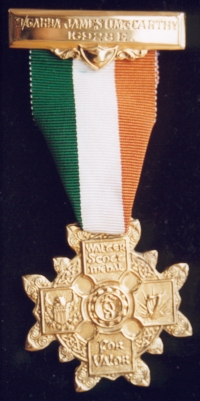
The first Walter Scott Medal for Valour, a medal awarded annually for bravery in the Garda Síochána, is awarded to Garda James Mulroy on August 18, 1924. The award is presented by Colonel Scott himself at the Depot, Phoenix Park. It is not a state award, being in the gift of the commissioner, but the medals are awarded by the Minister for Justice and Equality.

The Garda medal is instituted at the behest of Colonel Walter Scott, a New York City philanthropist who took an interest in policing. In 1923 he gives a one thousand dollar gold Bond which pays for in perpetuity a gold medal. The award is to be presented under the following condition: No action, however heroic, will merit the award of the Scott medal unless it takes the shape of an act of most exceptional bravery and heroism involving the risk of life in the execution of duty, and armed with full previous knowledge of the risk involved.

Guard Mulroy is accosted by two armed men who tell him he has five minutes to live. He waits for his opportunity, springs upon the man with the revolver, tackles him and holds him, but is shot and seriously wounded by the other man who fires his single barreled shotgun and then proceeds to beat Guard Mulroy on the head with the shotgun. The struggle ends when the stock of the shotgun separates from the barrel and Guard Mulroy grabs the barrel with one hand while still holding the other man with the loaded revolver with the other. Guard Mulroy disarms the man with the revolver while the other runs off. He then tells the remaining man to go home. Guard Mulroy falls unconscious and later awakes to find himself in the ditch with the revolver in one hand and the barrel in the other. He returns to his station at 5:00 AM, gets his wounds dressed, and then goes out with another Guard and arrests one of the men.


Leave a comment

Death of Winston Dugan, 1st Baron Dugan of Victoria

Winston Joseph Dugan, 1st Baron Dugan of Victoria and known as Sir Winston Dugan between 1934 and 1949, dies in Marylebone, London, England, on August 17, 1951. He is a British administrator and a career British Army officer. He serves as Governor of South Australia from 1934 to 1939, then Governor of Victoria until 1949.

Dugan is the son of Charles Winston Dugan, of Oxmantown Mall, Birr, County Offaly, an inspector of schools, and Esther Elizabeth Rogers. He attends Lurgan College in Craigavon from 1887 to 1889, and Wimbledon College, Wimbledon, London.

Dugan is a sergeant in the Royal Sussex Regiment but transfers to the Royal Lincolnshire Regiment as a second lieutenant on January 24, 1900. He fights with the 2nd battalion of his regiment in the Second Boer War and receives the Queen’s South Africa Medal with three clasps. Following the war, he is appointed adjutant of his battalion on June 28, 1901, and is promoted to lieutenant on November 1, 1901. He later fights with distinction in World War I, where he is wounded and mentioned in despatches six times. He is awarded the Distinguished Service Order (DSO) in 1915 and appointed a Companion of the Order of St. Michael and St. George (CMG) in 1918. In 1929 he is made a Companion of the Order of the Bath (CB) and the following year is promoted to major general. From 1931 to 1934 he commands the 56th (1st London) Division, Territorial Army.

In 1934, Dugan is appointed Governor of South Australia. He is appointed a Knight Commander of the Order of St. Michael and St. George (KCMG), retires from the Army and moves to Adelaide with his wife. They become an extremely popular and glamorous vice-regal couple. Sir Winston and Lady Dugan are both excellent public speakers and travel widely in order to bring problems to the attention of the ministers of the day. Upon the expiration of his term, there is bipartisan parliamentary support for him to serve a second term, but he has already accepted an appointment to be Governor of Victoria.

Sir Winston and Lady Dugan arrive in Melbourne on July 17, 1939. They continue their active role in community affairs, promoting unemployment reduction and making the ballroom of Government House available for the Australian Red Cross.

Dugan has an active role stabilising state politics during the tumultuous 1940s. Upon the disintegration of Albert Dunstan‘s Country Party in 1943, he installs Australian Labor Party leader John Cain as Premier. Four days later, Dunstan forms a coalition with the United Australia Party. Following the collapse of that ministry in 1945, Dugan dissolves parliament and calls a general election for November, which results in the balance of power being held by independents. Dugan commissions Cain to form the ministry of a minority government.

Dugan’s term as Governor is extended five times. He returns to England in February 1949. On July 7, 1949, he is raised to the peerage as Baron Dugan of Victoria, of Lurgan in County Armagh.

Winston Dugan dies at Marylebone, London, on August 17, 1951, at the age of 74. As there are no children from his marriage, the barony becomes extinct.


2 Comments

The Central Hotel Fire

A fire breaks out at the Central Hotel at the seaside resort of Bundoran, County Donegal, on August 8, 1980, killing ten people including both locals and holiday makers.

Just after midnight on Friday, August 8, 1980, a call is made to the emergency services after a fire has been discovered in a small corridor to the back of the main bar, and spreading towards the main staircase used by the hotel’s guests. The fire breaks out at the height of the summer season, with sixty guests, mainly couples and families, booked in on the night, while a function is also taking place in the main dance hall of the hotel.

Initially, the town’s own fire brigade is dispatched, and is to be aided by other units from across the northwest including Ballyshannon, Donegal, Killybegs, Letterkenny and Manorhamilton. As panic spreads throughout the town, many locals and holiday makers rush to the hotel in an effort to rescue some of those who have been trapped inside, with people jumping from the upper floors of the building into blankets held by those below.

The fire spreads rapidly and burns so intensely that cars parked on the street outside burst into flames. Ambulances are sent from Ballyshannon and Sligo to bring the many injured to hospital, while the fire brigade fights the blaze throughout the night.

The fire brigade and Garda forensic experts launch an investigation into the blaze, as the remains of the hotel smoulder for several days afterwards. The fire kills five adults and five children, including the entire Brennan family from Naas, County Kildare, while the body of a Belfast baby, Nicola Lamont, is never found in the rubble.

Despite calls from the victims’ families and Dáil Éireann debates for a public enquiry into the circumstances surrounding the fire, similar to that held after the Stardust fire several months later, none is ever held. Calls for an investigation are made again in 2002, when Fine Gael Senator Jim Higgins calls for the Garda handling of the fire to be investigated as part of the Morris Tribunal, an enquiry into police corruption in County Donegal. Higgins says that the fire warrants inclusion in the tribunal’s work as claims had been made by the owner of the hotel that Gardaí had tampered with the evidence. However, the terms of reference are not extended to include the fire.

The tragedy is covered as part of the RTÉ television series Disaster in the summer of 2007.

At the time of the tragedy, it is one of the worst fires in Irish history. The Bundoran fire is not commemorated physically for a long time, although in the aftermath of the RTÉ programme the town council votes in favour of a memorial plaque to the ten victims. There is reluctance to place a plaque on the site of the fire from both councillors and members of the new hotel’s board. The site of the Central Hotel lay vacant for several years, but is now occupied by the Grand Central Hotel and Apartments.

However, on Sunday, August 8, 2010, a memorial to those who died in the hotel fire is unveiled in the town, exactly 30 years after the tragedy. Families and relatives of the victims attend prayer services in two churches and an unveiling of the memorial bench with the names of the victims inscribed on it.